


Courtesy: Magpie & WhiskeyJack, By minouette (scientist by vocation artist by avocation): I recently read Lisa Jardine's Ingenious Pursuits, which details, amongst other things, the 17th century so-called scientific revolution, the gathering of many a collection (botanical, zoological, veritable cabinets of curiosity), and the early traveller-adventurer-biologist/artist. There was a time when this sort of science looked like art and art looked like science. To properly do descriptive science one really needed to be an artist.
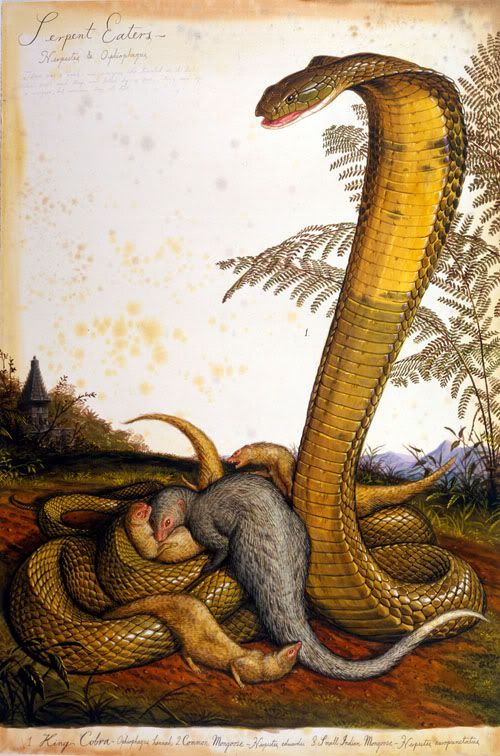
Not only was Robert Hooke a brilliant engineer/experimentalist in physics, astronomy, chemistry and microscopy, he had training in draughtmanship. This helped him communicate his science and explains the impact of Micrograpia. While he travelled the world only in his imagination, many of his contemporaries of a more zoological bent, travelled the world quite literally. Some gathered all and sundry indiscriminately. Others produced invaluable scientific data, in the form of their illustrated bestiaries. These document ecology, zoology and anatomy, and provide a fascinating glimpse at the early dissemination of scientific information. The
European colonists continued to sail the world in search of commercial gain, and with them went many an artist who saw that illustrating exotica was a means of making a living. Collecting prints was cheaper and more practical than gathering cabinets of curiosity, but both practices thrived well into the Victorian age. In The Artificial Kingdom: A Treasury Of The Kitsch Experience, Celeste Olalquiaga traces this tendancy to gather beastiaries andwunderkammer to a morbid fear of death.
European colonists continued to sail the world in search of commercial gain, and with them went many an artist who saw that illustrating exotica was a means of making a living. Collecting prints was cheaper and more practical than gathering cabinets of curiosity, but both practices thrived well into the Victorian age. In The Artificial Kingdom: A Treasury Of The Kitsch Experience, Celeste Olalquiaga traces this tendancy to gather beastiaries andwunderkammer to a morbid fear of death.
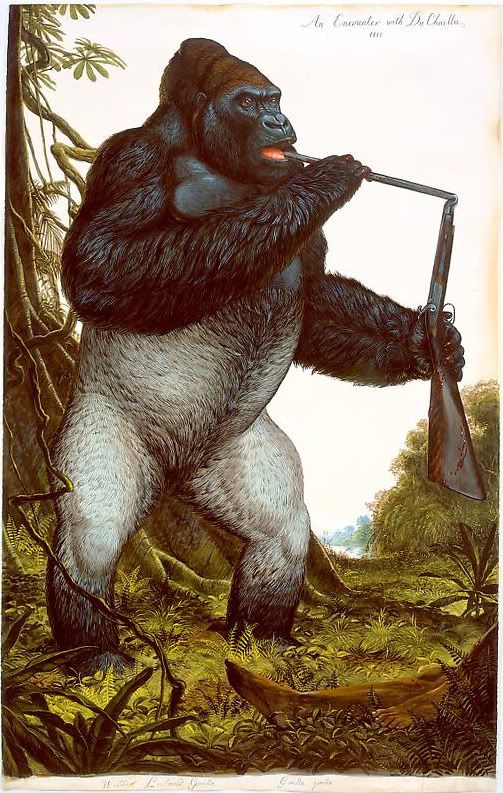
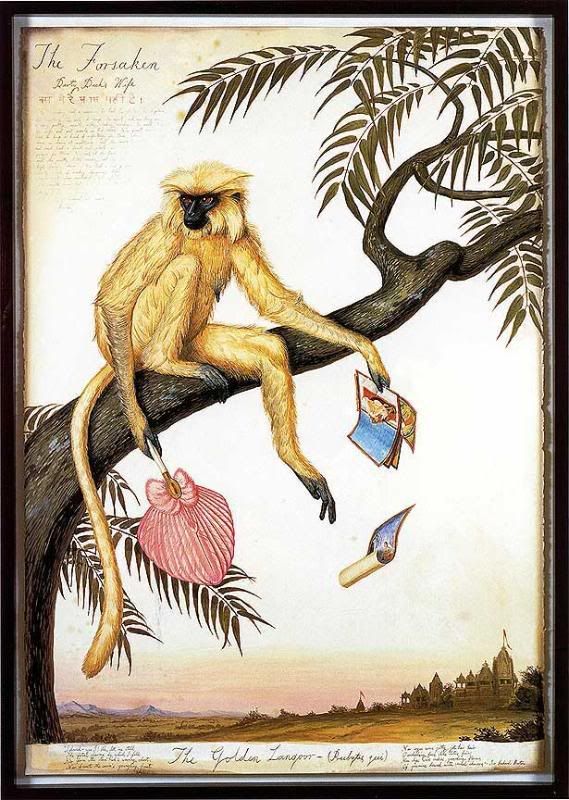
So contemporary artist Walton Ford's images which employ the media of the 17th and 18th century naturalists, in which to make some more provocative statements, with violence, subjugation, suicide and other nasty human habits, ever-so-slightly below the surface, might be heightening tensions already implicit in his sources of visual inspiration. The societal critiques implicit in this art, seem to me to be true of the society which created the original natural histories, as it is of contemporary society.
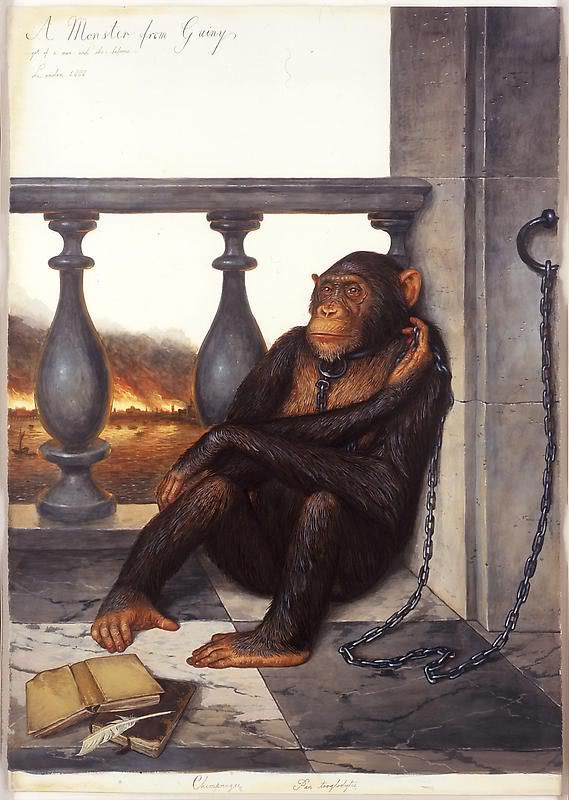
To modern eyes, calling a chimp a "Monster" and chaining him by the neck is barbaric. But we know all to well, this is something we have a history of doing to our fellow humans.
The dying words of the Parakeet might evoke The Death of General Wolfe

(at least, for Canadians), and yet instead of making me see the humanity in
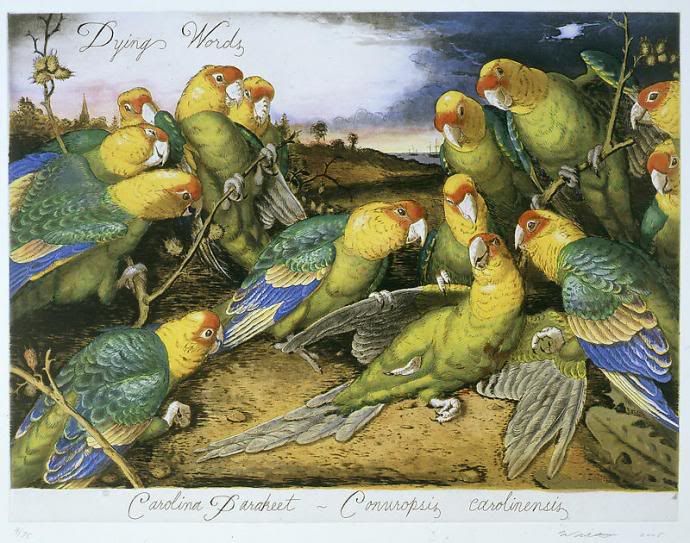 the parakeet, it makes me see the absurdity and the animal in us. Courtesy: Magpie & WhiskeyJack