Jwala the cheetah and her 5 cubs – credit, @byadavbjp
A female cheetah named Jwala in India’s Madhya Pradesh state has given birth to a litter of 5 cubs, the third since she arrived in the country.
India’s Minister for the Environment wrote on X that the birth increases “the number of Indian-born thriving cubs has risen to 33, marking the 10th successful cheetah litter on Indian soil.”
There have been highs and lows for the growing cheetah population in India, reintroduced in 2022 via several groups of animals from African strongholds of Namibia, Botswana, and South Africa.
Their first destination was Madhya Pradesh’s Kuno National Park, where they were historically located before going extinct in the mid-20th century.
Though iconic to Africa, much like the lion and leopard, these cats spanned the Asian landmass as well, and in fact still live today as an isolated, Critically-Endangered population in Iran.
In India they were hunted for centuries for their pelts, and for sport. The government of long-serving Prime Minister Narendra Modi made “Project Cheetah” a keystone demonstration of his administration’s commitment to the environment.
However, mortality among the reintroduced cats has been high—a consequence typical of these sorts of projects—yet one which Modi has nevertheless taken substantial criticism over. 28 cheetahs were brought from Africa, but more than half have passed away. Some ecologists warned that they would have difficulty adapting to the predator density in Kuno, which harbors a robust leopard population.
There are now 53 cheetahs living in the wild and semi-wild habitats in both Kuno and Gandhi Sagar Wildlife Sanctuary. They total 11 animals remaining that were translocated from Africa, and 33 India-born cubs, some of which are reaching sexual maturity.
“This achievement reflects the dedicated efforts, skill, and commitment of the veterinarians, field staff and all involved who continue to work tirelessly on the ground,” said Minister Bhupender Yadav on X.
The birth follows a mid-February litter of 3 cubs to another Namibian female cat named Gamini, the second since she arrived in India.
“A moment of pride for Kuno, and for India—may Gamini and her three little sprinters grow strong and carry the nation’s cheetah revival story forward with speed and grace,” Yadev said at the time.
According to Japan Times which reported on Gamini’s litter, the National Tiger Conservation Authority of India, which oversees the cheetah project, said that survival rates and hunting successes are “comparable to other international cheetah reintroduction efforts, with recorded wild prey kills confirming successful adaptation to the Indian landscape.”Another cheetah reintroduction program is taking place in Saudi Arabia, where cheetahs also once lived but went extinct. New Baby Boom for Cheetahs in India After First-in-the-World Reintroduction
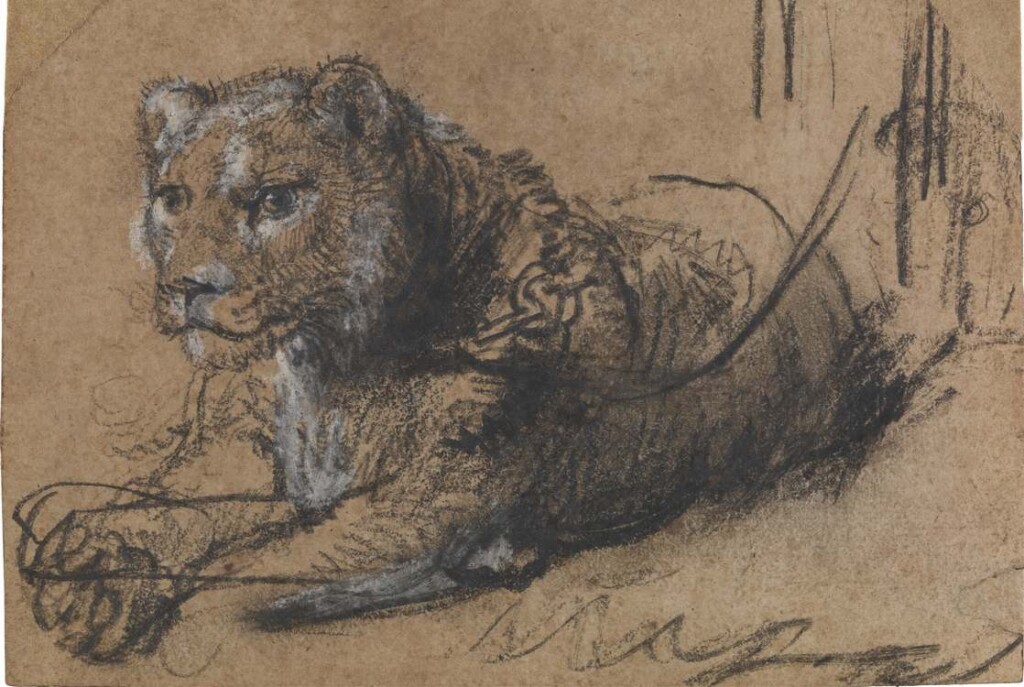
Schatborn, Peter. “Young Lion Resting” (2017). In The Leiden Collection Catalogue, 4th ed. via Sotheby’s
Yesterday, Sotheby’s oversaw the record $18 million sale of a drawing by Rembrandt: one of 6 drafts he made of lions, and the only one to have resided in private hands.
Those hands belong to Dr. Thomas S. Kaplan and his wife, who along with standing foremost among the world’s private Rembrandt collectors, ride in the vanguard of global wildlife conservation on behalf of the very cat the drawing so vividly depicts.
Founder of both the Leiden Collection of Dutch and Flemish master works and Panthera, the world’s leading conservation organization dedicated exclusively to wild cats big and small, Dr. Kaplan has been able to synergistically marry these two passions, leveraging one to fund the other, as all proceeds from the record-setting, $17.9 million sale will help ensure the lion survives long beyond both Rembrandt’s time, and our own.
Called Young Lions Resting, Rembrandt depicts with superb draftsmanship the languid, fearless pose of the lion through loose, confident strokes, particularly in the modeling of the lion’s paws, and a controlled shading that brings its gaze to life.
Dr. Kaplan, who’s spoken to GNN before about his work at Panthera, explained how it was the most he and his wife had ever paid for an object after they embarked upon their anonymous journey of collection Rembrandt and other Dutch/Flemish masters pieces in 2003.
“We recognized immediately the synergy, as my wife told me when I asked her opinion of it when I took her to see it before buying it: she responded ‘it’s a Rembrandt, it’s a lion, and it’s beautiful; if it’s not for you then who’s it for?” Kaplan told GNN.
Only 6 drawings of lions by Rembrandt are currently known. Young Lion Resting is the first drawing by the master to come to the market in a century, and the $17.9 million sale price sets a new record for a drawing by Rembrandt by almost $15 million.
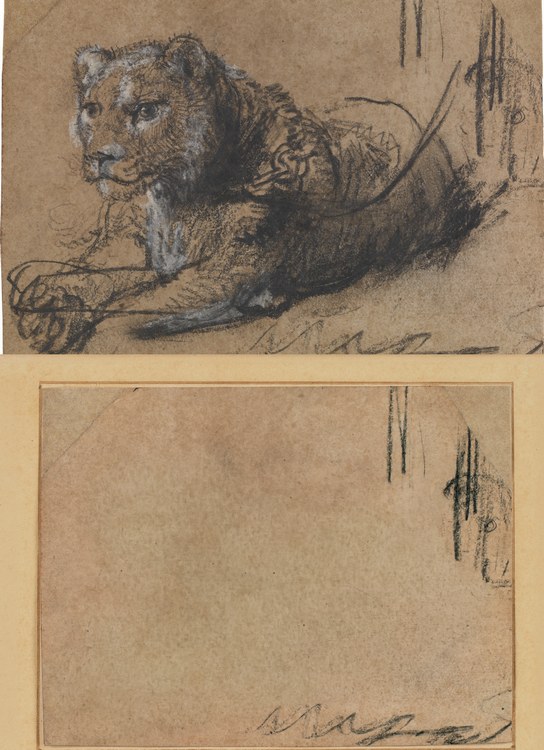
Kaplan founded Panthera along with renowned and late conservationist Dr. Alan Rabinowitz just one year after he bought the painting in 2005. Highlighting the plight of the lion across its entire native range, the sale of Young Lion Resting at Sotheby’s was paired with a faithful reproduction entitled Young Lion Vanished, wherein the animal Rembrandt so skillfully brought to life on the paper is replaced by a void—a reality on our Earth across 95% of the lion’s former range.
“Is it savable? Yes, it is, and with much larger landscapes than with the tiger in India. But, in 26 out of the 48 countries through which it roamed, it’s now extinct,” says Dr. Kaplan, who’s involvement in Panthera goes far beyond his role as its billionaire philanthropist founder, and stretches well into the scientific.
Young Lion Resting (top) Young Lion Vanished (bottom) – credit, supplied by Panthera
While Panthera has achieved incredible results protecting leopards and jaguars, Dr. Kaplan says that as regards the lion, its programs are still about “playing defense.”
“The lion is not there not, but it could be. I don’t believe it will ever be extinct in the wild, but it might come to exist only in fortresses, and we want to see more connectivity.”
Young Lion Resting was co-owned with the chair of Panthera’s board of directors, Jon Ayer, who’s spoken with GNN multiple times, and who provided a statement to mark the sale.
“The pulse of life that Rembrandt captured in this lion’s gaze continues to beat today through our conservation field programs,” said Ayers. “This sale provides Panthera with critical resources to combat poaching and habitat loss globally, ensuring that the majesty Rembrandt admired in the 17th century survives well into the 21st and beyond.”
Those resources come as the organization he chairs and Kaplan founded will celebrate its 20th anniversary this year. The auction proceeds will support science-directed initiatives fostering human-wild cat coexistence and critical landscape protection in some 40 countries across four continents.
“We probably spend 80% of our time working with people to ensure that we’ve protected them from the human-animal conflict that usually precedes the slaughter of the animals. If people don’t have to kill lions, usually they don’t, but if all of your material wellbeing is wrapped up in a cow or a goat, you’re not going to take that loss stoically,” Dr. Kaplan remarked empathetically.
“You’re going to make sure that doesn’t happen again. On the other hand if you create good fences, generally speaking people do not want to kill the cat.”Kaplan told GNN that among those whose job it is to know within the federal government, there is a belief that if Panthera can’t save a wildcat, no one can. If that’s true, then this record Rembrandt auction suggests the lion is in a safe pair of paw Billionaire Auctions Rembrandt Lion Drawing for $18M to Help Save the Animal it Depicts, Thanks to Tom Kaplan
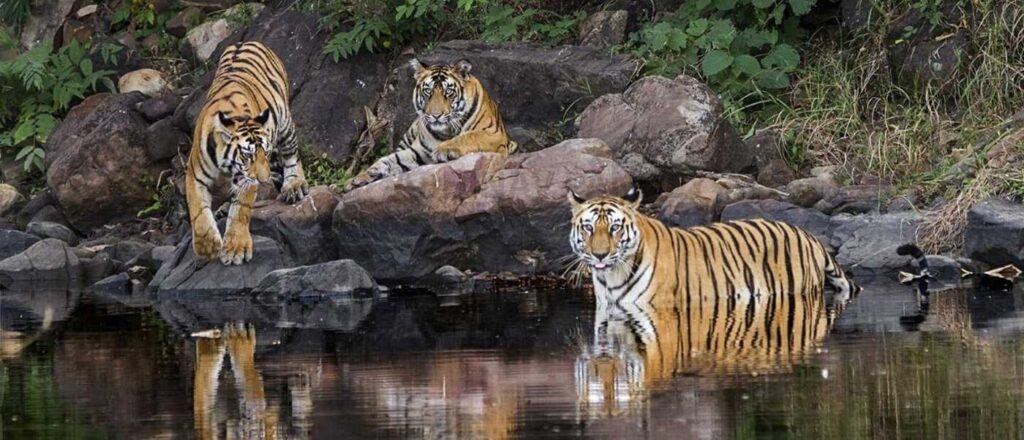
Conservation in India successfully doubled the native population of tigers in the decade before the COVID-19 pandemic, a new study reveals.
In 2010, the nations that make up the remaining range countries of the tiger set a target to double the number of wild tigers worldwide—a goal called Tx2—10 at the St. Petersburg International summit on tiger conservation.
The idea was that by 2022—the Year of the Tiger in the Chinese zodiac, the countries across the Indo-Pacific, East and South Asia, and Russia, would have enough time to effectively support tiger conservation.
By 2022, the objective was estimated to have been achieved when measured across the animal’s whole range, but within that achievement were several localized triumphs even more impressive—Nepal, but also India, had seen their native populations of tiger double.
Despite being the world’s most populous state, Indian governments were able to make room for tigers across 53,360 square miles. By 2018, India’s native tiger population clawed its way above 3,600. Along with being 75% of the world’s tiger population, it was twice as many as the best estimates guessed in 2006.
Published in a study in Science recently, extensive monitoring of the big cat across 20 Indian states every 4 years revealed this increase in the number of tigers, but also the amount of protected-tiger habitat.
As well as there being twice as many tigers since 2006, there is 30% more habitat where they live. The study presents findings that tigers do better in areas of higher economic development where locals and visitors can afford tiger-tourism and governments compensate for tiger-related losses. In contrast, poorer states see increases of human-tiger conflict that make it difficult for the world’s largest cat to endure.
Sharing land with the growing Indian population is increasingly difficult for both man and tiger, but conflict isn’t as common as you might think.
“We lose 35 people to tiger attacks every year, 150 to leopards, and the same number to wild pigs. Additionally, 50,000 people die from snake bites,” Yadvendradev Vikramsinh Jhala, the study’s lead author, told the BBC. “In fact, within tiger reserves, you’re more likely to die from a car accident than from a tiger attack.”
The WWF, which was very involved with the Tx2 goal, published an article late last year entitled “5 reasons for hope for Tigers in 2025, detailing how the cats were spreading naturally into the forests of northern Thailand, northeast China, and northern Myanmar, as well as the extensive preparations made by Kazakhstan for the reintroduction of the tiger in the south of that country where it has been extinct for over a century.They didn’t include that camera traps in Sumatra recently recorded 3-times as many sightings of the Sumatran tiger subspecies than ever before. The Tiger Population Doubled in India in Just Ten Years
Birdwatchers can’t believe what’s been appearing through their binoculars on a small landholding in West Sussex, England, where the nation’s premier rewilding project continues to compound on its already staggering achievements.
The Knepp Estate has increased the number of breeding birds from just 55 individuals of 22 species in 2007, to 559 individuals of 51 species in 2025, a recent survey determined.
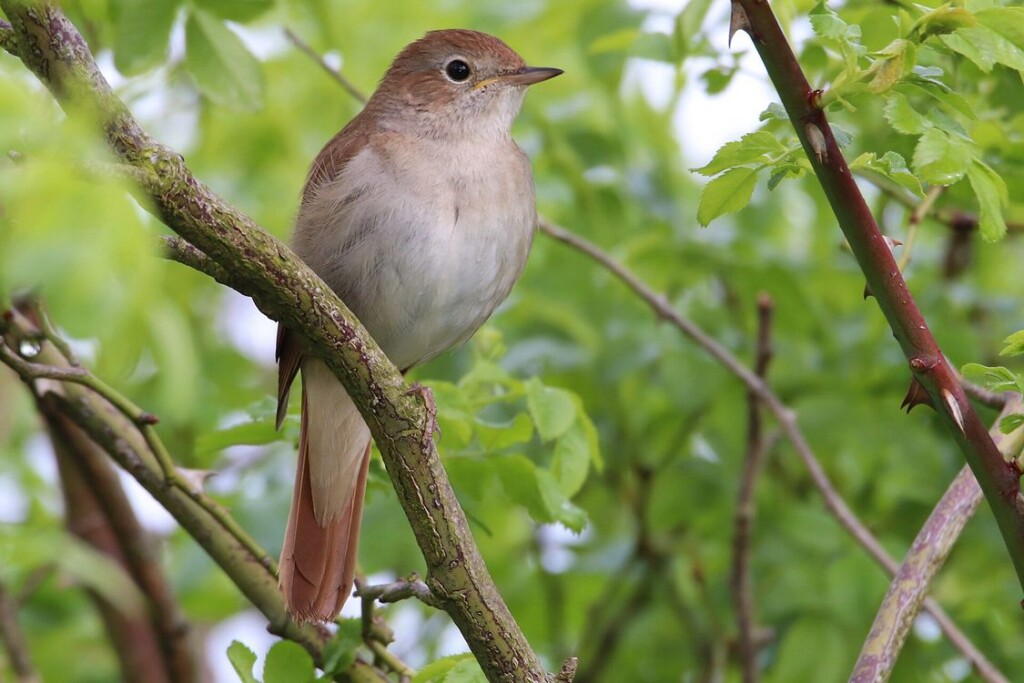
Common nightingale in Belgium – credit CC 4.0. Warrieboy
More than a dozen of these species are threatened with extinction nationally, and the tiny estate is now home to 1% of the entire British nightingale population.
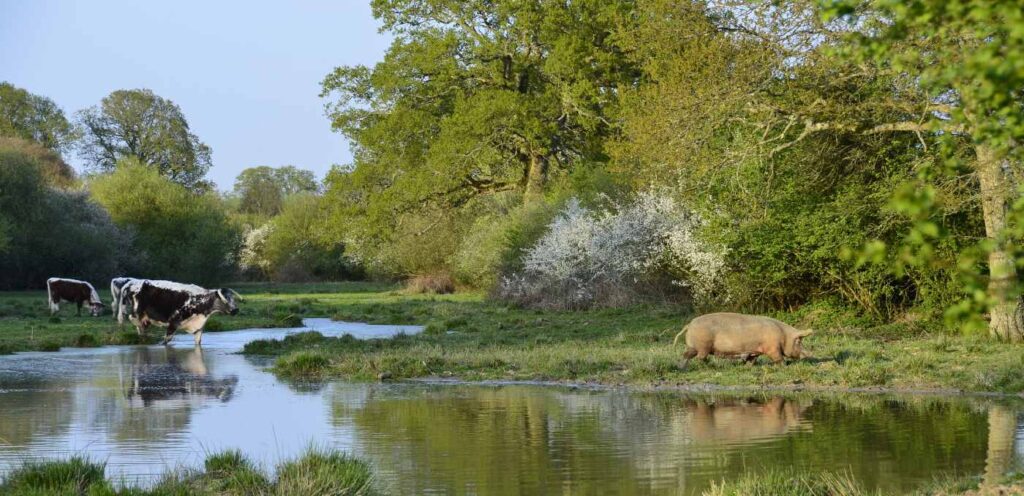
The Knepp Estate stretches across a measly 3,500 acres of once-fallow farmland 41 miles outside of London, where owners Charlie Burrell and his wife Isabella Tree decided in 2000 to take radical action after years of failed crops.
The rewilding project at Knepp has created one of the most biodiverse areas in all of Britain, and it was achieved by “taking our hands off the wheel,” Tree said, in 2021. The estate grounds act as home to nearly all English megafauna, as well as the rarest mammal in Europe, the barbastelle bat.
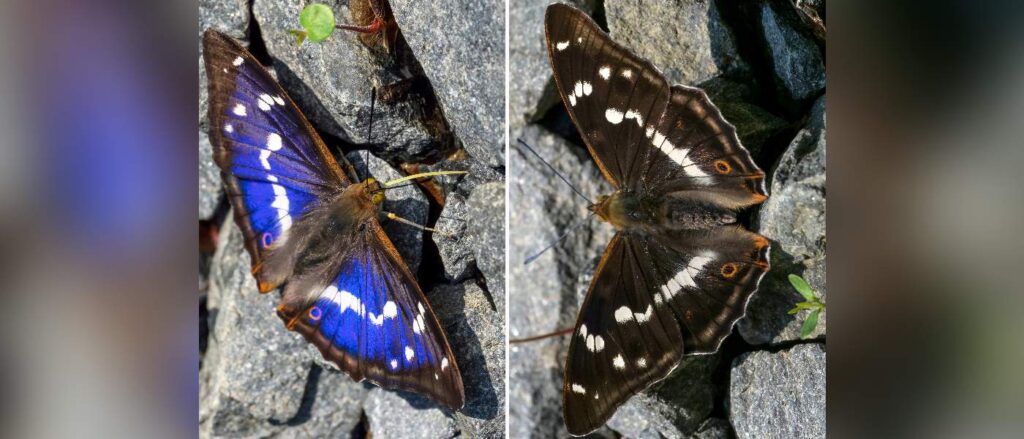
Rare birds such as turtle doves, peregrine falcons, white storks, and all five species of owls found in Great Britain inhabit the grounds, while one summer the Butterfly Conservatory counted 87 male purple emperor butterflies, an exceptional number for anywhere in England.
At the heart of the Knepp Estate is the River Adur, which was restored to a natural state in 2011 with help from the British government by removing four separate weirs and filing in agricultural drainage canals.
A male (left) and female (right) purple emperor butterfly – credit, SWNS
The restored wetlands surrounding the river’s natural meandering path play host to wading birds, amphibians, water insects, sea trout, and other fish, and important endangered wetland plants like the black poplar.
For Charlie and Isabella, their monetary problems disappeared like their once-fallow fields, and along with controlling the herbivore population with free-range organic wild meat, the estate offers camping and “glamping” in a shepherd’s hut, nomad’s yurt, and tree houses. They also offer safari tours of the grounds, fishing, photography workshops, and rewilding courses.
Having just completed their quarter-century of management, this recent bird richness review provides a lovely postage stamp moment for the couple, who have demonstrated that even a small pocket of land, when restored to a wild, native habitat, can have an outsized impact on the overall conservation landscape.
Insects have gotten a boost too. Earlier were mentioned purple emperor butterflies, well in 2025, a single day’s counting recorded 283 individuals. Dragonflies and damselflies showed an 871% increase between 2005 and 2025, with species diversity up 53%. Red-eyed damselflies alone surged 2,000% over five years.Visitors routinely describe seeing wild encounters with nature, such as a white-tailed eagle getting mobbed by kites, and beavers bumping into wading storks on the River Adur. Astonishing 916% Increase in Breeding Birds Seen at England’s Premier Rewilding Project
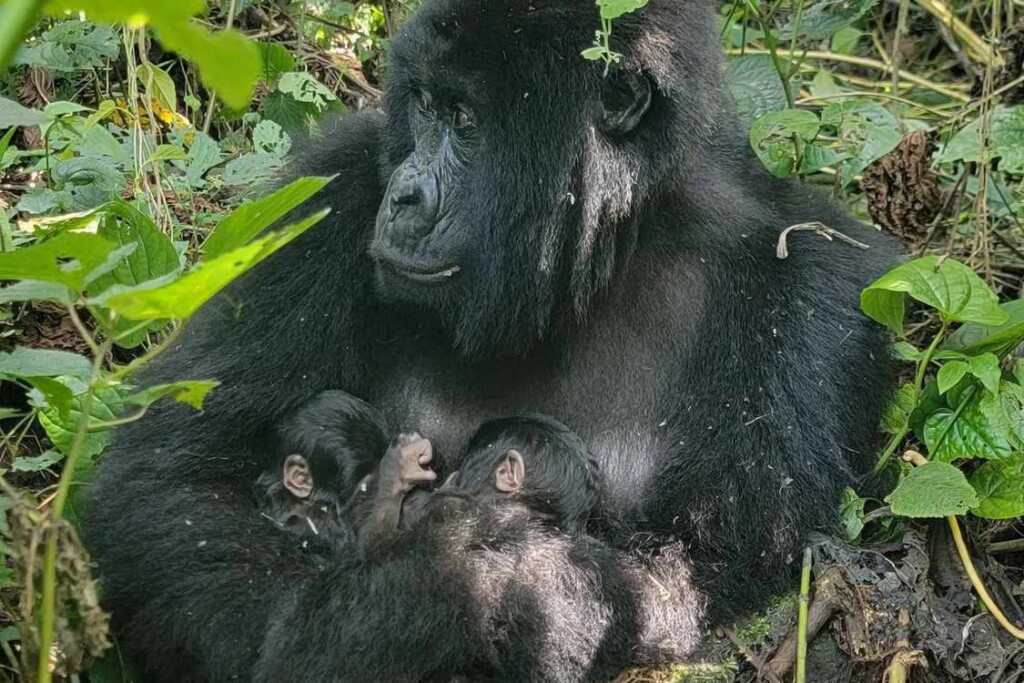
The Bageni family has a pair of blue balloons outside their mailbox, after this Congolese gorilla clan welcomed twins.
Now numbering 59 individuals, the twins were born to an adult female named Makufu, who will be closely monitored during the babies’ childhood.
Mountain gorillas are a critically-endangered subspecies of the eastern gorilla. Their strongholds concentrated in the sub-Saharan African countries of DRC, Uganda, and Rwanda.
Among their most guarded haunts is the Democratic Republic of the Congo’s Virunga National Park, considering the security environment in the country and the threat of the animals from poaching.
Makufu the now 7th-time mom, used to be part of the Kabirizi family of gorillas, which suffered from poaching, including of her mother.
Nonetheless, mountain gorillas now number around 1,000 individuals, up from 400 in the 1980s, the Independent reports.
“Twin births among mountain gorillas are rare and present additional challenges, particularly during the early months when infants are entirely dependent on their mother for care and transport,” park officials said in a statement.
“Following the births, additional monitoring and protection measures will be deployed to closely observe the twins and support their health and survival during this critical early period.”The boys are the first births of this year, and as they appear to be in healthy, robust condition, it’s hoped they will mark an auspicious year for the clan and the species at large. Rare Twins Born to Mountain Gorilla Family in Virunga National Park
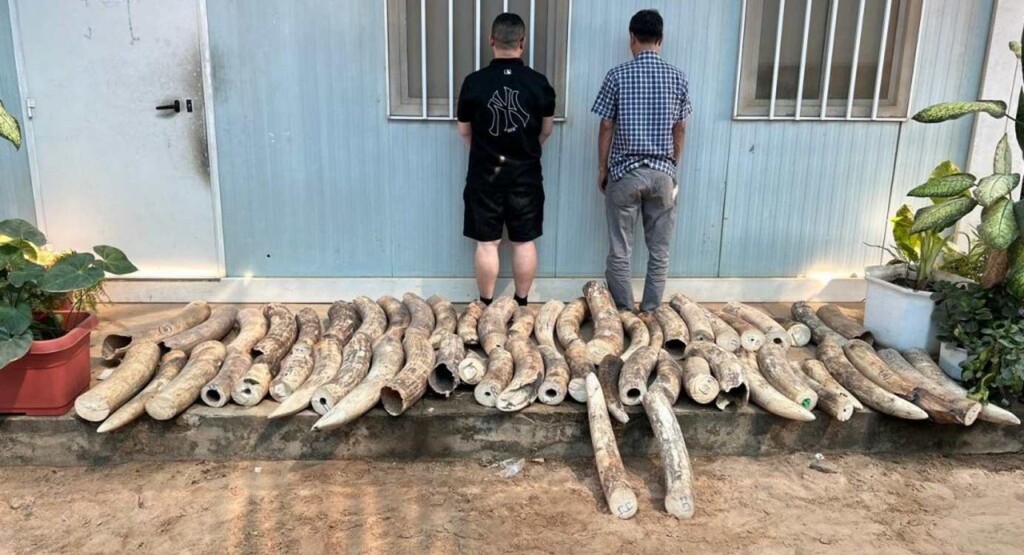
Poaching suspects and the elephant ivory they were holding in Angola – credit, INTERPOL, released
INTERPOL recently executed the largest-ever edition of its annual series of coordinated of raids to dismantle criminal shipments and networks of trafficked and poached wildlife.
Called Operation Thunder, some 30,000 live animals were seized in 4,620 raids across 134 countries, 30% more than last year.
INTERPOL identified 1,100 suspects and issued 69 notices of criminal activity to participating nations’ police forces.
Operation Thunder took place between September 15th and October 15th. It included law enforcement agencies like national police, customs, border security, and forestry and wildlife authorities.
In terms of live animals awaiting transfer or sale into illegal captivity, the operation rescued 6,160 birds, 2,040 terrapins, 1,150 reptiles, 208 primates, 49 pangolins, 10 big cats, and some 19,000 other species, including more infrequently trafficked mammals, fish, amphibians, and a notably larger number of arthropods (insects, arachnids, etc.)
Far larger in number and tonnage was the animal parts and derivates that were seized, such as shark fins, pangolin scales, elephant ivory, tortoise shell, and more.
Encouragingly though, in the largest-ever police bust of wildlife trafficking, merely 7 rhino horns were found amid over 100,000 seized objects, suggesting rhino poaching control is seeing success.
Indeed, large charismatic animals and their body parts are less often found in these annual raids than they used to me. At the same time, increases in exotic arthropods, as well as timber, show the flexibility of poachers. 14,000 tons of illegally logged tree timber were confiscated across the participating nations. This is believed to be as much as one-third of the entire illegal timber market.
Months of preparation for Operation Thunder 2025 centered on the exchange of information, the sharing of actionable intelligence and the coordination of cross-border investigations among participating countries and regions, INTERPOL and the World Customs Organization.
Beyond the immediate arrests and seizures, the intelligence gathered during what is the 9th edition of Operation Thunder will help map global criminal networks. These insights will enable law enforcement agencies worldwide to refine their strategies, anticipate emerging criminal tactics and disrupt illicit supply chain activity, ensuring a sustained and effective response to transnational wildlife crime.INTERPOL did not give estimates on the total valuation of the seizures, but the trafficked goods from just Tanzania exceeded half a million US dollars, suggesting that criminal networks would have lost 7, even 8-figure amounts in illicit revenues. 30,000 Animals Rescued from Illegal Captivity in the Largest Wildlife Trafficking Raid in History
Gaborone, (IANS): Beginning a new chapter in India-Botswana cooperation in wildlife conservation, Botswana on Thursday donated eight cheetahs to India under Project Cheetah. The symbolic donation event took place during the visit of President Droupadi Murmu and her Botswana counterpart Duma Gideon Boko to the Mokolodi Nature Reserve during which the two leaders witnessed release of captured cheetahs originating from the Ghanzi region into the quarantine facility by experts from India and Botswana.
"This event marks Botswana’s symbolic donation of eight cheetahs to India under Project Cheetah. This event signifies the beginning of a new chapter in India-Botswana cooperation in wildlife conservation," the President's Secretariat stated.
According to Cheetah Conservation Botswana (CCB), Botswana hosts one of the world’s largest populations of cheetahs, with an estimated population of approximately 1,700 individuals. This accounts for approximately 25 per cent of the world’s remaining wild cheetahs. Due to Botswana's location in the centre of southern Africa, this population is also crucial to facilitate connectivity between other regional populations.
India's Project Cheetah is a landmark wildlife conservation initiative launched on September 17, 2022 aimed at reintroducing cheetahs to India after their extinction in the late 1940s and early 1950s. As the world's first intercontinental large wild carnivore translocation project, it operates under the umbrella of Project Tiger and aligns with the Cheetah Action Plan to restore and conserve the species. Efforts are underway to expand suitable habitats, ensuring long-term survival and ecological balance in India's grassland ecosystems.
Later, Botswana Vice President Ndaba Nkosinathi Gaolathe and Minister of International Relations Phenyo Butale called on President Droupadi Murmu in Gaborone, commending India on its notable development journey.
During the meeting, the two sides discussed strengthening the enduring collaboration of two nations in strategic sectors.
"In separate meetings, His Honor Ndaba Nkosinathi Gaolathe, Vice President of Botswana and Hon’ble Dr. Phenyo Butale, Minister of International Relations, called on President Droupadi Murmu at Gaborone," the President's Secretariat posted on X.
"They both commended India on its notable development trajectory. Several issues of mutual interest were discussed in these meetings to further strengthen and deepen the enduring collaboration of India-Botswana in strategic sectors," it added.
Earlier in the day, President Murmu addressed the members of Indian community and stressed that the ties between two nations are based on trust, respect and shared democratic values.
While addressing members of Indian community, President Murmu said, "The relationship between India and Botswana is based on trust, respect, and shared democratic values. Today, I had a very productive discussion with President Boko of Botswana. We have decided that our countries will further cooperate in areas such as trade, education, health, digital technologies, agriculture, and renewable energy."
"Human resource development is a strong pillar of our cooperation. Many Botswana citizens have received training in India under India's ITEC and ICCR schemes. They are today playing a leading role in Botswana's development – a testament to the depth of our relationship. India and Botswana are also close partners in the diamond sector, and we are expanding cooperation in new areas such as technology, defence and digital connectivity," she added.
She thanked Indian community for the warm welcome in Botswana and said that the people of India living in Botswana are connected to India's soil, culture and values.
Calling Indian community as living bridge of friendship between two nations, President Murmu said, "Despite staying away, you all remain deeply connected to India's soil, culture, and values...You are living bridges of friendship between India and Botswana. I am told that nearly 10,000 Indians are active here in various fields—education, health, accounting, business, and industry.""Your hard work, honesty, and dedication have earned you respect and affection in Botswana society. You have also played a vital role in local employment and skills development. I congratulate all of you for being proud representatives of India. Your spirit of social service and philanthropy is admirable. I am told that almost every week, the Indian community in Botswana gathers to organise social service or charitable events, whether supporting schools, organising health camps, or helping those in need – your compassion embodies the spirit of 'Vasudhaiva Kutumbakam,' she added. Botswana gifts India eight Cheetahs, lauds India's landmark wildlife conservation initiative | MorungExpress | morungexpress.com
Animals respond to injury in many ways. So far, evidence for animals tending wounds with biologically active materials is rare. Yet, a recent study of an orangutan treating a wound with a medicinal plant provides a promising lead.
Chimpanzees, for example, are known to lick their wounds and sometimes press leaves onto them, but these behaviours are still only partly understood. We still do not know how often these actions occur, whether they are deliberate, or how inventive chimpanzees can be when responding to wounds.
Recent field observations in Uganda, east Africa, are now revealing intriguing insights into how these animals cope with wounds.
As a primatologist, I am fascinated by the cognitive and social lives of chimpanzees, and by what sickness-related behaviours can reveal about the evolutionary origins of care and empathy in people. Chimpanzees are among our closest living relatives, and we can learn so much about ourselves through understanding them.
In our research based in Kibale National Park, Uganda, chimpanzees have been seen applying insects to their own open wounds on five occasions, and in one case to another individual.
Behaviours like insect application show that chimpanzees are not passive when wounded. They experiment with their environment, sometimes alone and occasionally with others. While we should not jump too quickly to call this “medicine”, it does show that they are capable of responding to wounds in inventive and sometimes cooperative ways.
Each new insight adds reveals more about chimpanzees, offering glimpses into the shared evolutionary roots of our own responses to injury and caregiving instincts.
First catch your insect
We saw the insect applications by chance while observing and recording their behaviour in the forest, but paid special attention to chimpanzees with open wounds.Insect application by subadult Damien.
In all observed cases, the sequence of actions seemed deliberate. A chimpanzee caught an unidentified flying insect, immobilised it between lips or fingers, and pressed it directly onto an open wound. The same insect was sometimes reapplied several times, occasionally after being held briefly in the mouth, before being discarded. Other chimpanzees occasionally watched the process closely, seemingly with curiosity.
Most often the behaviour was directed at the chimpanzee’s own open wound. However, in one rare instance, an adolescent female applied an insect to her brother’s wound. A study on the same community has shown that chimpanzees also dab the wounds of unrelated members with leaves, prompting the question of whether insect application of these chimpanzees, too, might extend beyond family members. Acts of care, whether directed towards family or others, can reveal the early foundations of empathy and cooperation.
The observed sequence closely resembles the insect applications seen in Central chimpanzees in Gabon, Africa. The similarity suggests that insect application may represent a more widespread behaviour performed by chimpanzee than previously recognised.
The finding from Kibale National Park broadens our view of how chimpanzees respond to wounds. Rather than leaving wounds unattended, they sometimes act in ways that appear deliberate and targeted.
Insects, however, are a different matter. Pressing insects onto wounds has not yet been shown to speed up healing or reduce infection. Many insects do produce antimicrobial or anti-inflammatory substances, so the possibility is there, but scientific testing is still needed.
For now, what we can say is that the behaviour appears to be targeted, patterned and deliberate. The single case of an insect being applied to another individual is especially intriguing. Chimpanzees are highly social animals, but active helping is relatively rare. Alongside well-known behaviours such as grooming, food sharing, and support in fights, applying an insect to a sibling’s wound hints at another form of care, one that goes beyond maintaining relationships to possibly improving the other’s physical condition.
Big questions
This behaviour leaves us with some big questions. If insect application proves medicative, it could explain why chimpanzees do it. This in turn raises the question of how the behaviour arises in the first place: do chimpanzees learn it by observing others, or does it emerge more spontaneously? From there arises the question of selectivity – are they choosing particular flying insects, and if so, do others in the group learn to select the same ones?
In human traditional medicine (entomotherapy), flying insects such as honeybees and blowflies are valued for their antimicrobial or anti-inflammatory effects. Whether the insects applied by chimpanzees provide similar benefits is still to be investigated.
Finally, if chimpanzees are indeed applying insects with medicinal value and sometimes placing them on the wounds of others, this could represent active helping and even prosocial behaviour. (The term is used to describe behaviours that benefit others rather than the individual performing them.)
Watching chimpanzees in Kibale National Park immobilise a flying insect and gently press it onto an open wound reminds us how much there is still to learn about their abilities. It also adds to the growing evidence that the roots of care and healing behaviours extend much further back in evolutionary time.
If insect applications prove to be medicinal, this adds to the importance of safeguarding chimpanzees and their habitats. In turn, these habitats protect the insects that can contribute to chimpanzee well-being.
Yianoulla Evangelou reunited with Rambi the large green Alexandrine parakeet – SWNS photofoun
A much-loved parakeet has been found in Dorset, England after going missing from its London home more than 100 miles away.
After having never left home before, the large green 7-year-old Alexandrine parakeet named Rambi took off on a Sunday when his cage was left open during a family barbecue.
They launched an extensive search for him in their neighborhood, leading to half of Islington on the lookout for the parakeet.
“Because he’s never really flown before—other than around the house—we thought he’d be nearby,” said owner Yianoulla Evangelou. “We all went to bed that night devastated.
“We searched every street, knocked on every neighbor’s door, put posters up, contacted every vet and pet shop, everything you can think of,” the 50-year-old explained.
They had no luck until weeks later when they received a call from animal charity Wildlife in Need on the south coast of England, near Bournemouth, saying they’d found a parakeet that looked similar to theirs.
The charity was quite doubtful that it was the right bird—even after the number on Rambi’s ankle tag was matched—because they’d never heard anything like it happening before. They were so incredulous that Evangelou had to keep sending photos and videos of Rambi, in order to convince them it was hers.
“It’s a miracle,” Evangelou told SWNS news agency. “We’re so happy now that Rambi’s back. It’s just so amazing.
“But we’re baffled as to how he got to Bournemouth and his journey. We just can’t wrap our brains around it. He’s a domestic bird.”
Yianoulla Evangelou with her Alexandrine parakeet named Rambi SWNS
It’s believed that the bird, which is native to Southeast Asia, may have hitched a ride in, or on, someone’s vehicle to get from the capital to the sunny south coast.
Ms. Evangelou explained that during a family backyard barbecue they brought out their birds to join them, and while giving Rambi some food, she must have inadvertently left his door ajar—and, possibly scared by loud construction going on next door, he fled his cage.
“It was hot so we thought he would be bound to come down into someone’s garden.”
The family later learned that the lost bird was brought into a charity, Wildlife in Need, in Dorset, after landing on a random woman’s shoulder in a Sainsbury’s car park.
“We don’t understand how he got to where he did. He travelled over a hundred miles in the space of six days. That’s unheard of.”
“The only way we will find out exactly what happened is if he tells us at some point—because he does talk,” she joked.
“The woman who took him in said she would’ve loved to have kept Rambi, but she knew he had an owner.”
“We drove for more than two-and-a-half hours the day after we got the call to pick him up,” Ms Evangelou continued.
“It was the best feeling in the world. We thought he was gone forever.
“The community were amazing. There were people out in parks at night, walking their dogs and looking for Rambi.
Ms. Evangelou says her sister, Sheniz, is now even thinking of writing a children’s book about his adventure, called #BringRambiHome.
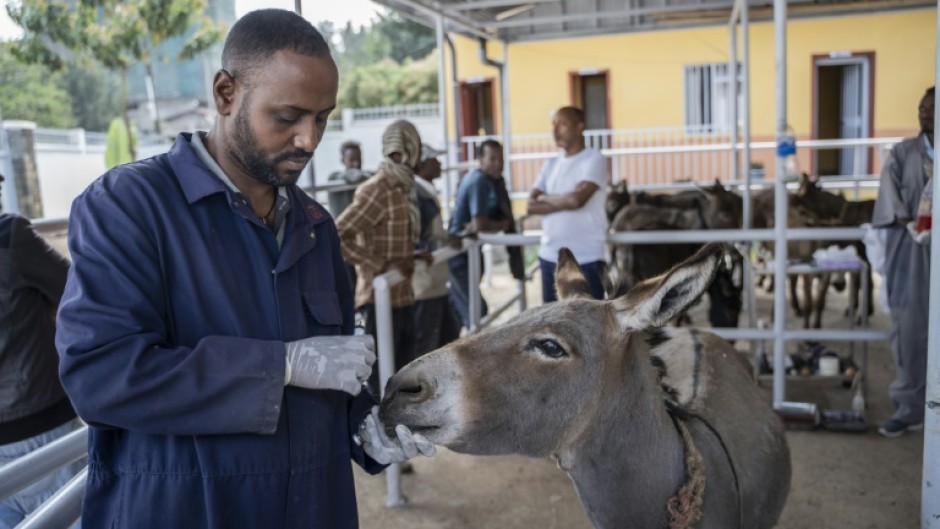
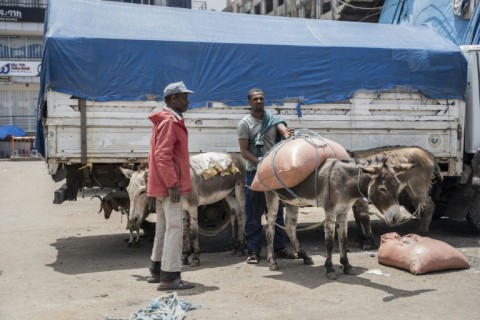
ADDIS ABABA - At a clinic in Ethiopia's capital, a donkey is complaining as a vet tries to trim his nails.
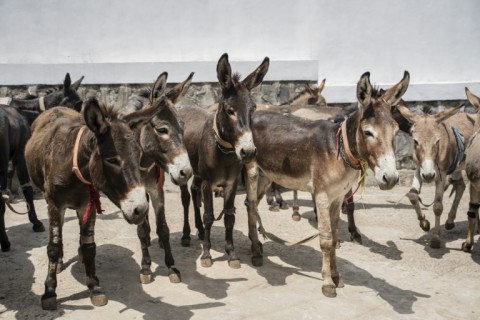
Ethiopia is thought to have the most donkeys in the world, one in five of the global total according to the United Nations, and they form a vital part of the economy.
So the Donkey Sanctuary, run by a British charity that operates around the world, has its work cut out at its free clinic near Merkato, Addis Ababa's vast open-air market.
On a recent visit by AFP, several dozen donkeys were gathered in pens, some agitated and kicking their feet, while others eagerly pounced on food.
Caregivers and veterinarians were taking turns treating injuries, colic and eye problems.
Guluma Bayi, 38, walked more than an hour and a half with his two donkeys to reach the clinic.
"It has been three weeks since my donkeys became sick," he told AFP. "One has a leg problem and the other has a stomach issue."
Like the others making the trip, Guluma relies heavily on his donkeys to make a living. He uses them to transport jerrycans of water to sell to his fellow villagers.
"After they became ill, I couldn't buy bread for my children," he said. "I begged a guy to bring me here."
After successful treatment, Guluma was able to go home with both donkeys.
The UN Food and Agriculture Organisation says Ethiopia had some nine million donkeys as of 2018.
AFP | Amanuel Sileshi
They play a major economic role in the East African country of around 130 million people, ploughing fields and transporting goods, offering a cheaper alternative to vehicles at a time when petrol prices have risen sharply.
"There is a proverb in Ethiopia: if you don't have a donkey, you are a donkey yourself," said Tesfaye Megra, project coordinator for the Donkey Sanctuary, laughing.
The charity operates in several regions across the country and opened its Addis Ababa centre in 2007.
"They are invaluable animals... and they are suffering while they are providing different services to the community," said Tesfaye.
The daily life of donkeys is no picnic.
Urban sprawl in the Ethiopian capital has made green spaces increasingly scarce.
The loads they carry can be heavy, and many are beaten and badly treated.
Another visitor to the clinic, Chane Baye, said he used his two donkeys to carry sacks filled with grain for clients across the city.
They allow him to earn between 200 and 400 birr per day (around $1.50 to $3) -- not bad in a country where a third of the population lives below the World Bank's poverty line of $2.15 per day.
The 61-year-old comes roughly every three months to have his donkeys checked -- "whenever they start limping or have a stomach problem," he said.
"Before this clinic, we used traditional ways to treat them," he added, referring in particular to nails roughly removed from the animals' legs with a knife.
He is pleased his donkeys now get professional treatment for wounds and infections.
Derege Tsegay, a vet at the sanctuary, performs a routine but unsavoury operation, inserting his gloved-up arm deep into a struggling donkey's rectum.
AFP | Amanuel Sileshi
Derege pulls out the large chunk of feces that had accumulated in the animal's stomach.
"It happens often," he said.
A shortage of food in the city means donkeys eat whatever they find, often including plastic which can block their digestive system.
It's not always pleasant, but he knows how important the work can be for local people.
RSPB Geltsdale Reserve – credit: Ian Taylor CC 2.0.
The British equivalent of the Audubon Society has just announced that what was already England’s largest bird reserve will be increased by 33% after a recent land purchase.
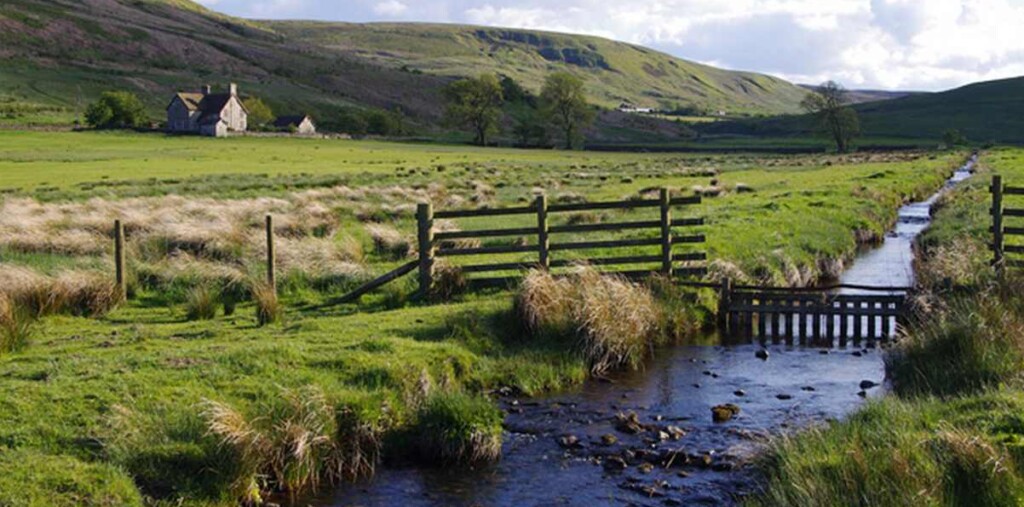
Described as a place that “swarms” with life, the Geltsdale Reserve in the North Pennines range of Cumbria, northern England, will now cover 13,590 acres of moorland, meadows, blanket bog, and woodland.
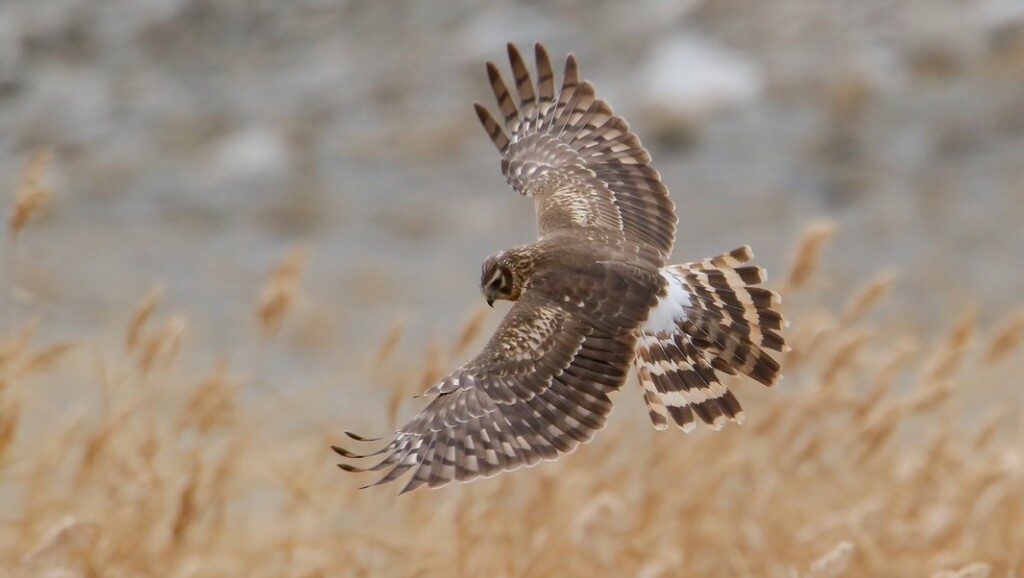
Owned and operated by the Royal Society for the Protection of Birds (RSPB), Geltsdale is one of the last places in Britain where one can see the hen harrier in its natural habitat. Birds of every description and conservation status inhabit the reserve, and it’s also a UNESCO Geopark for its unique geological formations.
“This is going to be a reserve on a different scale from many of our other sites in England,” said Beccy Speight, the RSPB’s chief executive.
“We are going to achieve an abundance of species and a size that will be unmatched for bird reserves elsewhere. It is going to demonstrate what is possible when it comes to rewilding and protecting birds.”
A hen harrier in Baltisan, Pakistan – credit Imran Shah CC 2.0.
For birdwatchers reading, Geltsdale abounds in black grouse, redshank, nightjar, snipe, whinchat, curlews, ospreys, short-eared owls, and lapwings, dispersed across a vertical rise of 650 meters from an achingly green valley bottom up stately moorland and pasture at an elevation similar to the lower-peaks of the Appalachian range.
“Geltsdale is now the biggest in England,” said Speight. “And that size makes such a difference. When you walk through the reserve during breeding season, it is incredible. The place just swarms with birdlife.”
While Geltsdale is by appearance a slice of old-fashioned and natural England, the RSPB says it has some hi-tech solutions in mind for tackling conservation challenges like vagrant livestock grazing.
Speaking with the Guardian, Dave Morris, the RSPB’s area operations manager for Cumbria and Northeast England, said that the society will work with local ranchers whose properties overlap with the reserve to implement a GPS-monitored ‘invisible’ fencing system.
Because traditional wooden fencing is actually a hazard for low-flying birds like black grouse, cattle and calves will be fitted with collars that emit a high-pitched tone if the animal comes too near a boundary line.
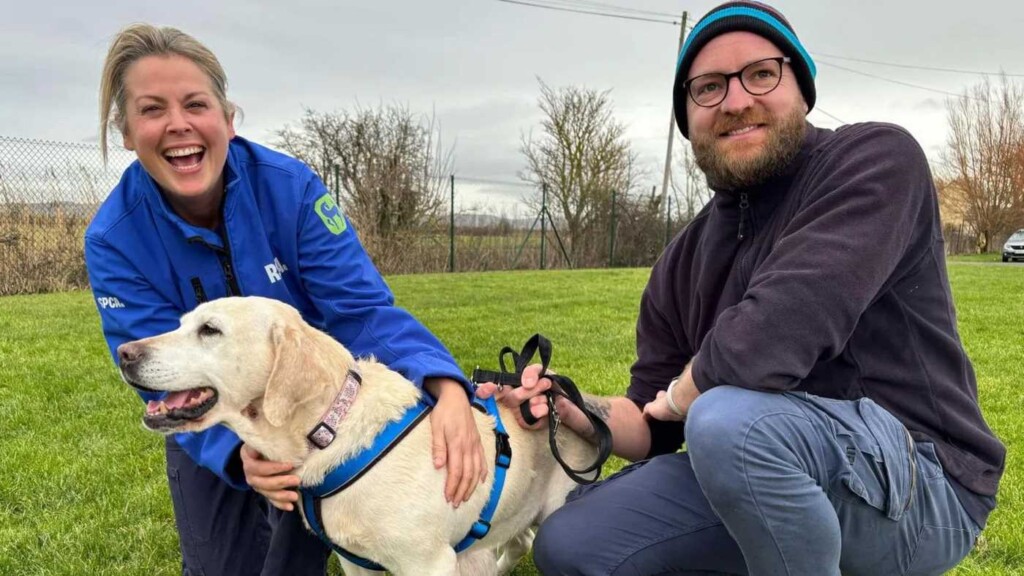
RSPCA inspector Kim Walters (left), pictured with colleague Andy Cook – credit: RSPCA, supplied
An English family has been reunited with their beloved Labrador Daisy who was stolen from their front lawn 7 years ago.
Their tireless search and advocacy for their lost family member attracted the attention of British celebrity and even helped steer a law through Parliament, but the ultimate reward for the devotion to their lost dog was the chance to see her again, elderly and slightly battered, but alive and loving.
In 2017, a truck arrived in front of Rita and Philip Potter’s Norfolk house. Two men hurriedly lept out, grabbed Daisy, and stuffed her into the back—a despicable act seen by neighbors.
Ruling out the possibility that Daisy got lost in the woods somewhere, the Potters contacted the police and urged a response. An RSPCA search in Somerset—200 miles and 7 years later—has recovered a 13-year-old Daisy, who was likely the victim of an illegal pet breeding operation.
A quick microchip scan, and Daisy was on her way home.
“We kept a photograph on the mantlepiece and would look at it every day thinking of her, and where she might be,” Mrs. Potter told the BBC. “It is an absolute dream come true that the RSPCA found her and returned her to us—where she belongs—we are so, so grateful,” said Mrs Potter.
Following Daisy’s abduction, the Potters were active in the press and social media trying to ensure anyone who might have seen the dog understood where she had come from. Tom Hardy, the A-list action star from Dark Knight Rises and Inception, shared their post on his X account.
The Potters then collected 100,000 signatures on a petition for greater government action to fight pet crime. The Pet Abduction Act changed the UK sentencing guidelines, making it a criminal offense with a prison sentence of up to 5 years. Previously, pets were considered property, and abducting them was punished under the UK’s 1986 Theft Act.
During the RSPCA’s investigation, the owner agreed to turn Daisy over to the organization, explaining they had only had her for a few years and didn’t know she could have been stolen. At their facility, a microchip scan revealed Daisy’s provenance and the call to the Potters was an emotional one.
“They were obviously shocked—but elated at the same time,” said RSPCA inspector Kim Walters. “I was a bit choked from listening to them, and clearly how much they loved her, so it was great telling them that we could get her back home soon.”Now in her golden years, and with several health issues from a half-decade of maltreatment, the Potters look forward to loving, spoiling, and caring for her. The Emotional Moment Dog was Returned to Owners 7 Years After Being Stolen
New Zealand has announced plans to ban greyhound racing, citing an unacceptably high rate of injuries. The government plans to wind down the industry over the next 20 months to allow time for the rehoming of racing dogs and for those in the industry to transition to other jobs. The sport has long faced criticism in the country, with some breeders accused of mistreating or doping the animals. Apart from New Zealand, commercial greyhound racing is permitted in Australia, Ireland, the UK, and the US. New Zealand plans to ban greyhound racing, citing high injury rates
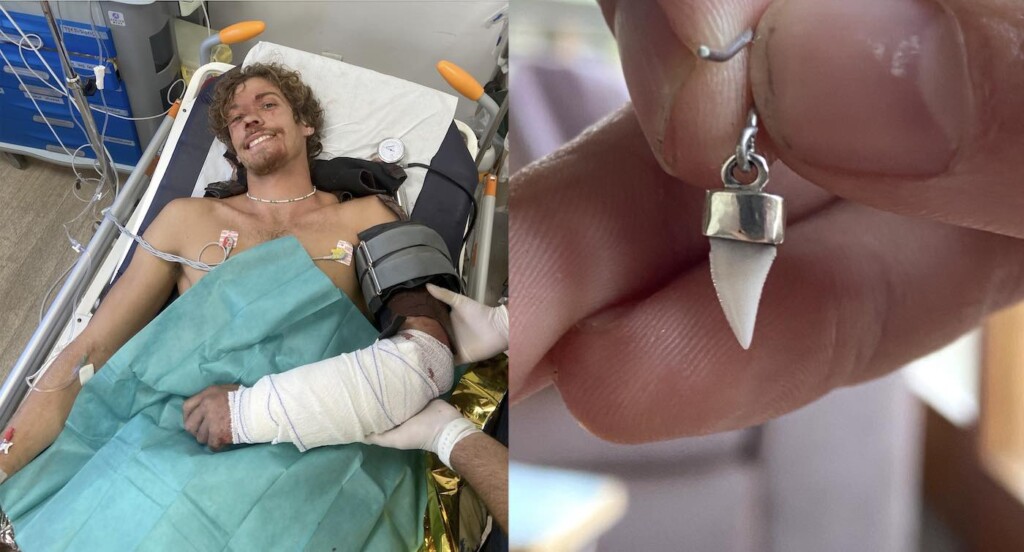
After a shark bite, Angus Kockott used the embedded shark tooth to make an earring – via SWNS
A diver who was attacked by a shark has turned one of its teeth into an earring—and says wearing the ‘trophy’ has given him closure.
Angus Kockott was freediving in the shallow water off a French Polynesian island in May when, out of nowhere, a 7-foot grey reef shark appeared from behind the coral and clamped its jaws on his arm.
The 20-year-old fought off the shark by stabbing it in the gills using a 4-inch knife used for cutting dive lines.
Angus managed to swam back to the boat and tied goggles around his arm to create a makeshift tourniquet.
“If I hadn’t blocked the shark with my arm, it could have gone for my neck,” said the sailor from South Africa. “I would’ve been toast.”
He was rushed by military aircraft to a hospital in Tahiti where, during a six-hour surgery, doctors found a tooth in his arm—and now he wears it with pride.
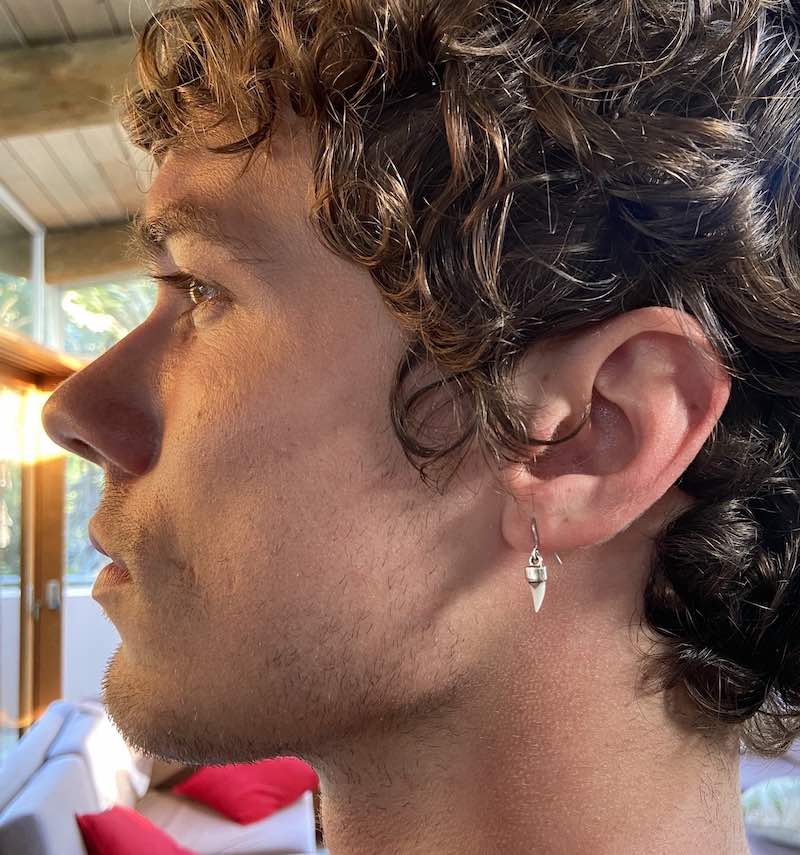
“It’s been a defining experience in my life,” said the young diver. “And that’s why I got the tooth made into an earring.”
“Wearing it feels like the close of this chapter. I got through it, and I’ve got my trophy hanging on my ear.”
But, he doesn’t blame the animal. “My assumption was it was a territory thing. You can’t blame the animal.”
Angus Kockott with shark tooth earring – via SWNS
After a nerve graft and skin graft to try to repair the damage, and three weeks recovering in Tahiti, he flew home to South Africa, where he is undergoing physical therapy and nerve treatments.
Due to the nerve damage Angus was left with little movement or feeling in his arm, but hopes with continued treatment and therapy it will improve.
He said the incident hasn’t deterred him—and he’s itching to get back in the ocean.
The earring, which came out much better than expected, is a vivid reminder that he emerged as a survivor from a near-death encounter.
New Delhi, (IANS) While pet owners in India have a high level of awareness about the potential presence of viruses in their homes, only 27 per cent of them consistently engage in cleaning every day, according to a report.
The Dyson Global Dust Study 2023, based on an online survey undertaken by 33,997 respondents across 39 countries, sheds light on the correlation between being a pet owner, household dust, cleaning habits and the potential implications on our overall well-being.
India’s pet care industry is experiencing remarkable growth at 16.5 per cent yearly. In fact, almost one in every six Indians now has a pet, with dogs being the most beloved companions. It is estimated that the Indian market will grow to a big $1,932.6 million by 2030.
But with pets come pet hair, dander (dead skin flakes), and skin flakes -- all which can cause allergic reactions in humans. Even for those without allergies, excessive pet hair and dander can cause discomfort and respiratory issues due to the dust particles they carry.
However, the report highlights a disconnect between acknowledging the importance of cleaning and implementing regular cleaning habits.
Only 28 per cent of pet owners take complete responsibility for cleaning their homes. Only 21 per cent of pet owners include cleaning their pet baskets as part of their general cleaning routine. Just 41 per cent pet owners believe that household dust can contribute to allergies such as pet allergens, pollen, and dust mites.
This is when the report showed that Indians possess the highest level of awareness regarding the presence of viruses in dust, with a staggering 50 per cent of the population being knowledgeable about this fact.
"Many people think that pet hair is the biggest problem as it is the most visible. Unsurprisingly, people are unaware of the other particles that may reside on their pets because these particles tend to be microscopic in size,” said Monika Stuczen, Research Scientist in Microbiology at Dyson, in a statement.
While regular vacuuming only reduces the amount of pet hair they shed around the home, microscopic particles remain on their pets that can potentially be spread around the home. It’s also important to remember that short-haired or hairless animals contribute dander and allergens to indoor air pollution just as effectively as long-haired animals Indian pets owners highly aware of viruses, few clean homes daily: Report | MorungExpress | morungexpress.com
Qing Bao, the female giant panda soon to grace the National Zoo – credit, Smithsonian National Zoo, and Conservation Biology Institute.
In an elaborate announcement video, First Lady Jill Biden broke the news that she’s expecting—the return of giant pandas to the National Zoo.
Following a prolonged period of diplomatic tension with China, all but one zoo in the country was panda-less, but after signing a new 10-year lease agreement for the purpose of scientific research, improving relations, and delighting visitors, D.C. is set to have a new pair of pandas by the end of this year.
2-year-old Bao Li is the son of Bao Bao, the female panda born at the zoo in 2013 to parents who left last year after tensions between the US and China reached a fever pitch.
Bao Li will be joined by Qing Bao, a 2-year-old female who is believed to be a possible breeding partner.
Arriving via FedEx’s special ‘Panda Express’ airline which has been transporting pandas across the world for 15 years, Chinese ambassador Xie Feng dubbed the duo “our new envoys of friendship.”
Washingtonians and visitors to our nation’s capital from across the country will have 10 years to see them under an agreement that will see the National Zoo pay a $1 million per annum lease fee—100% of which goes to panda conservation in China.
“We’ll have a few years just to enjoy these two, and then people can start asking about cubs,” National Zoo and Conservation Biology Institute director Brandie Smith told Axios.
‘Panda Diplomacy’ by China dates back to late Maoist rule in China, when First Lady Pat Nixon told the country of the arrival of the first giant pandas in an American zoo in 1972 after she and her husband’s historic visit to Beijing.Far from being just a method of warming relations, China’s cooperation with zoos across the world has yielded some of the most important discoveries in panda biology, that have informed conservation and captivity strategies at home.Meet Bao Li and Qing Bao–the National Zoo's Returning Pandas After a Panda-less Year in D.C
New Delhi, May 27 (IANS) Animal abuse has reached a crescendo, with many cases remaining unreported. Ardent animal lovers such as John Abraham, Sunny Leone, and Jacqueliene Fernandez have voiced their opinions and called for "stricter laws" to safeguard the four-legged friends.
From February to May, numerous cases of animal abuse have been reported, including running over animals, throwing them from great heights, starving, beating, and using them for entertainment.
The most recent case was reported from a society in Greater Noida, where a stray dog was thrown from the 15th floor of a residential tower. The remains were found outside the building by a resident on May 11.
Bollywood star John Abraham, who is a doting dad to his fur babies, Sia and Bailey, stated that the surge in “cruelty to animals deeply wounds our collective conscience.”
“It’s a stark reminder of the urgency to take action. Let’s unite in vigilance, reporting every instance of animal abuse and supporting grassroots organisations at the forefront of the fight for animal rights,” John told IANS.
Stricter laws must be implemented for the perpetrator, he said.
“Governments must not falter; they must implement stringent penalties to deter perpetrators and invest in comprehensive educational programmes to foster empathy and reverence for all life forms, and we all must do what we can to safeguard our community animals,” he said.
In India, the Prevention of Cruelty to Animals Act, 1960, outlines punishments for animal cruelty, including penalties such as a maximum fine of Rs 50 for convicted first-time offenders (although the IPC prescribes stronger punishments), according to People for the Ethical Treatment of Animals (PETA). However, enforcement of these laws varies, as many cases go unreported.
Actress Sunny Leone said that the alarming rise in animal abuse cases is an affront to shared humanity.
“The government holds the key – it must enforce strict laws that leave no room for impunity. As individuals, we can each play our part by reporting any acts of cruelty to the police,” she told IANS.
Empathy should be taught to children at an early age.
“Children should be taught to be kind to animals to help them grow into adults who will be kind to everyone. Together, we can build a world where every animal is treated with the dignity and respect they deserve,” she said.
Jacqueliene Fernandez told IANS: “We, as individuals, have a great deal of power to create change by using our voices to stand up for animals by opening our doors to animals in need. The government must also prioritise animal protection by introducing legislation to safeguard animals and ensuring its robust enforcement to build a future where all members of our society, whatever the species, is able to live in peace."
Actress Raveena Tandon, who is vocal about animal rights, told IANS that, as a society, we must not turn a blind eye when animals are suffering at human hands.
“We must be vigilant neighbours, keeping a watchful eye and speaking out against any form of abuse. By reporting acts of cruelty, we send a clear message: animal abuse will not be tolerated,” she told IANS.
Raveena added: “Research shows that people who commit acts of cruelty to animals are often repeat offenders who move on to hurting others, including humans, so it’s imperative for the safety of all of society – humans and other animals alike – that perpetrators are caught and punished to the greatest extent of the law.”
On how to minimise abuse, Sachin Bangera from PETA India, said: “We collaborate closely with local enforcement agencies, offering rewards, registering first information reports, and mobilising our activist network to identify and apprehend those who hurt or neglect animals.”
Ask any parent – welcoming a new baby to the family is exciting, but it comes with a lot of work. And when the new addition is a pair of babies – twins – parents really have their work cut out for them.
For many animal species it’s the norm to have multiple babies at once. A litter of piglets can be as many as 11 or more!
We arefaculty members at Mississippi State University College of Veterinary Medicine. We’ve been present for the births of many puppies and kittens over the years – and the animal moms almost always deliver multiples.
But are all those animal siblings who share the same birthday twins?
They can be identical, which means a single sperm fertilized a single egg that divided into two separate cells that went on to develop into two identical babies. They share the same DNA, and that’s why the two twins are essentially indistinguishable from each other.
Twins can also be fraternal. That’s the outcome when two separate eggs are fertilized individually at the same time. Each twin has its own set of genes from the mother and the father. One can be male and one can be female. Fraternal twins are basically as similar as any set of siblings.
Each kind of animal has its own standard number of offspring per birth. People tend to know the most about domesticated species that are kept as pets or farm animals.
One study that surveyed the size of over 10,000 litters among purebred dogs found that the average number of puppies varied by the size of the dog breed. Miniature breed dogs – like chihuahuas and toy poodles, generally weighing less than 10 pounds (4.5 kilograms) – averaged 3.5 puppies per litter. Giant breed dogs – like mastiffs and Great Danes, typically over 100 pounds (45 kilograms) – averaged more than seven puppies per litter.
When a litter of dogs, for instance, consists of only two offspring, people tend to refer to the two puppies as twins. Twins are the most common pregnancy outcome in goats, though mom goats can give birth to a single-born kid or larger litters, too. Sheep frequently have twins, but single-born lambs are more common.
Horses, which are pregnant for 11 to 12 months, and cows, which are pregnant for nine to 10 months, tend to have just one foal or calf at a time – but twins may occur. Veterinarians and ranchers have long believed that it would be financially beneficial to encourage the conception of twins in dairy and beef cattle. Basically the farmer would get two calves for the price of one pregnancy.
So plenty of animals can give birth to twins. A more complicated question is whether two animal babies born together are identical or fraternal twins.
Female dogs and cats ovulate multiple eggs at one time. Fertilization of individual eggs by distinct spermatazoa from a male produces multiple embryos. This process results in puppies or kittens that are fraternal, not identical, even though they may look very much the same.
Biologists believe that identical twins in most animals are very rare. The tricky part is that lots of animal siblings look very, very similar and researchers need to do a DNA test to confirm whether two animals do in fact share all their genes. Only one documented report of identical twin dogs was confirmed by DNA testing. But no one knows for sure how frequently fertilized animal eggs split and grow into identical twin animal babies.
And reproduction is different in various animals. For instance, nine-banded armadillos normally give birth to identical quadruplets. After a mother armadillo releases an egg and it becomes fertilized, it splits into four separate identical cells that develop into identical pups. Its relative, the seven-banded armadillo, can give birth to anywhere from seven to nine identical pups at one time.
There’s still a lot that scientists aren’t sure about when it comes to twins in other species. Since DNA testing is not commonly performed in animals, no one really knows how often identical twins are born. It’s possible – maybe even likely – that identical twins may have been born in some species without anyone’s ever knowing.
Hello, curious kids! Do you have a question you’d like an expert to answer? Ask an adult to send your question to CuriousKidsUS@theconversation.com. Please tell us your name, age and the city where you live.
And since curiosity has no age limit – adults, let us know what you’re wondering, too. We won’t be able to answer every question, but we will do our best.
Swiss scientists have helped monkeys with spinal cord injuries regain control of non-functioning limbs in research, which might one day lead to paralysed people being able to walk again.
The scientists, who treated the monkeys with a neuroprosthetic interface that acted as a wireless bridge between the brain and spine, say they have started small feasibility studies in humans to trial some components.
"The link between the decoding of the brain and the stimulation of the spinal cord - to make this communication exist - is completely new," said Jocelyne Bloch, a neurosurgeon at the Lausanne University Hospital who surgically placed the brain and spinal cord implants in the monkey experiments.
"For the first time, I can imagine a completely paralyzed patient able to move their legs through this brain-spine interface."
Gregoire Courtine, a neuroscientist at the Swiss Federal Institute of Technology (EPFL) which led the work, cautioned that there are major challenges ahead and "it may take several years before this intervention can become a therapy for humans."
Publishing their results in the journal Nature on Wednesday, the team said the interface works by decoding brain activity linked to walking movements and relaying that to the spinal cord - below the injury - through electrodes that stimulate neural pathways and activate leg muscles.
In bypassing the injury and restoring communication between the brain and the relevant part of the spinal cord, the scientists successful treated two rhesus monkeys each with one leg paralysed by a partial spinal cord lesion.
One of the monkeys regained some use of its paralysed leg within the first week after injury, without training, both on a treadmill and on the ground, while the other took around two weeks to recover to the same point.
"We developed an implantable, wireless system that operates in real-time and enabled a primate to behave freely, without the constraint of tethered electronics," said Courtine.
"We understood how to extract brain signals that encode flexion and extension movements of the leg with a mathematical algorithm. We then linked the decoded signals to the stimulation of specific hotspots in the spinal cord that induced the walking movement."
The brain and spinal cord can adapt and recover from small injuries, but until now that ability has been far too limited to overcome severe damage.
Other attempts to repair spinal cords have focused on stem cell therapy and on combinations of electrical and chemical stimulation of the cord.
Independent experts not directly involved in this work said it was an important step towards a potential future where paralyzed people may be able to walk again.
Simone Di Giovanni, a specialist in restorative neuroscience at Imperial College London, said EPFL's results were "solid, very promising and exciting" but would need to be tested further in more animals and in larger numbers.
"In principle this is reproducible in human patients," he said. "The issue will be how much this approach will contribute to functional recovery that impacts on the quality of life. This is still very uncertain."Source: domain-b.com




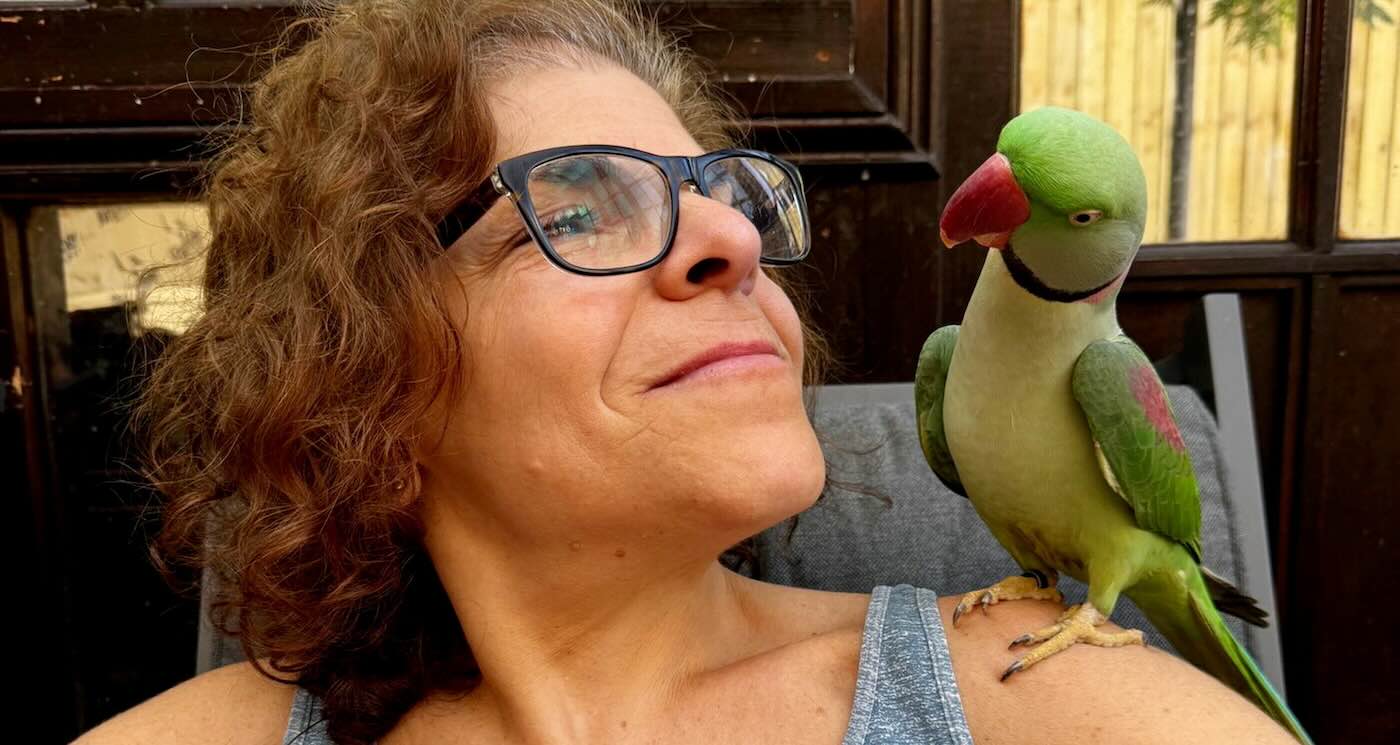 Yianoulla Evangelou reunited with Rambi the large green Alexandrine parakeet – SWNS photofoun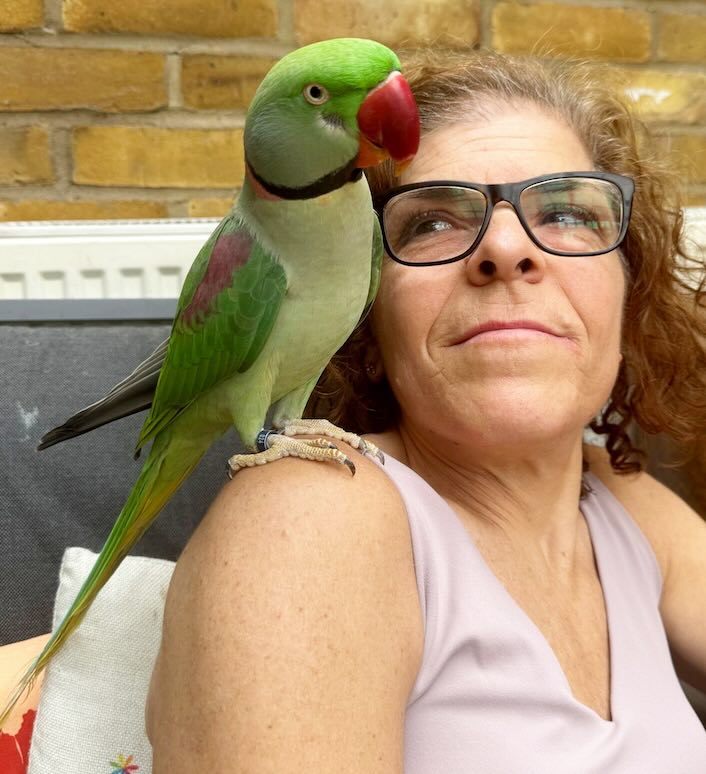
 RSPCA inspector Kim Walters (left), pictured with colleague Andy Cook – credit: RSPCA, supplied