Wednesday, 4 June 2025
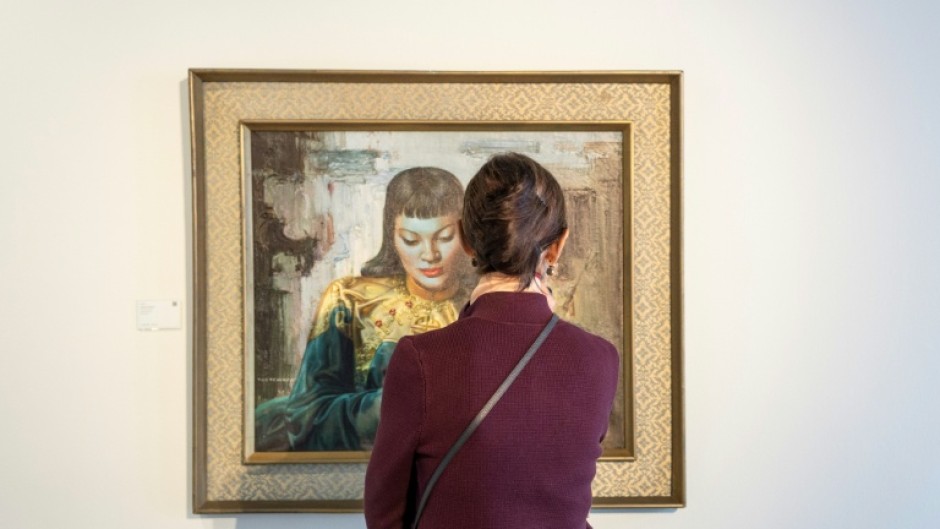
"King of kitsch" Tretchikoff sells for new world record

Wednesday, 12 February 2025
Poetry bestsellers and other oxymorons
Bronwyn Lea, The University of Queensland
At first glance the phrase ‘best-selling poetry book’ looks oxymoronic. Anyone with a vague sense of book publishing is acquainted with the orthodoxy that poetry doesn’t sell: readers don’t want to read it.
Commercial publishers have used this pearl to justify curtailing or, more dramatically, cancelling their poetry lists. Booksellers have relied on it as a way of explaining away - to the few who might enquire - their thin and often uninspired poetry stock. And who can blame them? Publishers and booksellers are not in the business of charity.
But all this bellyaching conceals an interesting fact: some poetry books actually do sell. Some sell very well indeed. Some poetry books are even bestsellers.
Immediately Shakespeare struts upon the stage. And in fact Shakespeare is the best-selling poet in English of all time. The author of - at least as we are able to count his works today - 38 plays, 154 sonnets, two long narrative poems and a handful of others, Shakespeare has been generating sales in a proliferation of editions for the past 400 years.
But what about poetry sales not mounted over time, but poetry titles that sell well in a single year? Well, things get interesting.
Figures out of the United Sates - a significant market for literature in English - do not rank Shakespeare as number one on their bestseller list for poetry. The best-selling poet in America today is not only dead but he - let gender be no surprise - he didn’t write in English and he’s not an American.
The prize for best-selling poet in America goes to a poet in translation: Jalal al-Din Molavi Rumi. A Sufi poet known to Iranians as Mawlana. Or, to Westerners, simply as Rumi.
Rumi was born in Balkh (now in Afghanistan) in 1207, but he lived most of his life in the town of Konya, in what is now Turkey.
His major work is a six-volume poem, Masnavi-ye Manavi (Spiritual Couplets), regarded by some Sufis as the Persian-language Qur'an. Rumi’s general theme is the concept of tawhid - union with his beloved - and his longing to restore it. He writes:
There’s a strange frenzy in my head,
of birds flying,
each particle circulating on its own.
Is the one I love everywhere?
Judging by sales, Rumi’s voice touches the contemporary reader with the same fervour as it did 700 ago. It touches celebrities too: Madonna set his poems to music on Deepak Chopra’s 1998 CD, A Gift of Love. Donna Karan has used recitations of his poetry as a background to her fashion shows; Philip Glass has written an opera - Monsters of Grace - around his poems; and Oliver Stone apparently wants to make a film of his life.
American poet Coleman Barks, perhaps more than anyone, is responsible for bringing Rumi’s poetry to the English-speaking masses. Barks is not a scholar - and he doesn’t speak a word of Persian. But this didn’t stop his book, The Essential Rumi (HarperCollins 1995), from being the most successful poetry book published in the West in recent years.
Coleman has come out with a new book of Rumi translations every September for the past decade. Even the 9/11 attacks didn’t subdue the public’s interest in mystical Islamic verse: Coleman’s The Soul of Rumi, released days after the Trade Centre bombings, went on to become a bestseller. Barks himself seems surprised by his sales and confesses:
“I once calculated that Rumi books sell at least a hundred a day right through weekends and holidays, while my own writing goes at about twelve copies a month, worldwide. In other words, Rumi’s work sells at about 365,000 copies a year; Barks sells 144. Those numbers keep me humble.”
Rumi is popular not only in America but also in Australia. Nevertheless his book sales - Barks’s translations as well as other scholarly editions - fall short of granting him primacy. Neilsen BookScan, which records book sales in Australia since 2002, reveals twentieth-century Lebanese poet, Khalil Gibran, as the clear favourite.
Born in 1883 in Bsharii in modern-day northern Lebanon, Gibran died of liver failure at the age of 48 in New York. The Prophet, his first book, was published in 1923. Its fame spread by word of mouth. By 1931 it had been translated into 20 languages, and in the 60s it was a hit with American youth culture. It’s been popular ever since.
In the fictional set up for The Prophet, Almustafa has lived for 12 years in the foreign city of Orphalese and is heading home when a group of people stop him. He offers to share his wisdom on an array of issues pertaining to life and the human condition: love, marriage, children, giving, eating and drinking, work, joy and sorrow, houses, crime and punishment, beauty, death and so on. The chapter on marriage is perhaps the best known, as it’s a regular in wedding ceremonies. A testament to love (and an argument against co-dependence), it concludes:
Give your hearts but not into each other’s keeping.
For only the hand of Life can contain your hearts.
And stand together yet not too near together:
For the pillars of the temple stand apart,
And the oak tree and they cypress grow not in each other’s shadow.
It’s interesting to consider why Rumi and Gibran are so popular with the reading public. Surely it’s not a matter of quality.
We live in an age where spirituality-lite is a hot commodity in the marketplace. (Rumi himself is not ‘lite’ - he was a devoted Muslim and a respected theologian - but Barks’s bestselling translations have bowdlerised almost every reference to Islam from his poems.) As Western culture has become increasingly secularised and a widespread suspicion of organised religion pervades, it seems many readers have turned to the mystical poem as a vehicle for contemplation.
But thinking about bestselling poetry, there’s one more quality worth mentioning.
Laughter. In terms of sales for an individual poetry title, the second ranked poetry title in Australia is Michael Leunig’s Poems (Viking 2004). Which goes to show that while Australian readers like thinking about god, they have retained a sense of humour. ![]()
Bronwyn Lea, Senior Lecturer in the School of English, Media Studies and Art History, The University of Queensland
This article is republished from The Conversation under a Creative Commons license. Read the original article.
Wednesday, 22 January 2025
Anonymous $3.5 Million Gift to Milwaukee Art Museum Provides Free Admission for Children
The Milwaukee Art Museum’s Art:Forward Gala in 2024 – Credit: Front Room Studios and courtesy of the Milwaukee Art Museum.Saturday, 13 July 2024
Contest Winner Turns Bridge into the Longest Walking Art Gallery in South Korea
Tuesday, 9 July 2024
World's oldest artwork discovered in Indonesian cave

Sunday, 9 June 2024
Brushstrokes Through Time: Indian diaspora artists celebrate Hollywood’s Golden Age

Wednesday, 6 September 2023
From the Easel: Artist Tara Sabharwal’s journey from inner focus to worldly reality
Wednesday, 9 August 2023
Insects in Textiles
Tuesday, 10 April 2018
3,000-yr-old tombs unearthed in Tibet
Monday, 23 May 2016
Tangible treasures of intangible art
- By Sharon Lowen: We all know that dance is an ephemeral art, perhaps more so than any other. More of a musical performance remains in a recording than in the two-dimensional images on a screen of a dance performance with the camera selecting what to focus upon rather than the viewer’s eye. While nothing is ultimately permanent, the printed word, painting, sculpture and architecture are conventionally understood to be accessible long past the creation.
- When we dance, the magic is the fission between artist and audience in the moment of creation/presentation. It is both wonderful and poignant that it is gone as soon as created. Yet the affect and memory can linger a lifetime. The intangible takeaways nourish and support us in many ways, but after the applause fades and the roses soon after, what are the tangible mementos that bring validating memories into focus?
- A pair of Baul gungroos is one such treasure on my shelf. Hitabrata ‘Bachoo’ Roy was the husband of my first Manipuri guru Minati Roy and instrumental in bringing Purnadas Baul and Baul music to the West. To celebrate his birthday, I think 90th, in Shantiniketan just after Paus Mela, both Viswanath Baul and I were offering performances to Bachoo-da and his gathered friends and family. Viswanath Baul was moved by my performance and removed his gungroos and presented them to me. This tribute from a true exponent of the Indian Sufi tradition of Bengal warms my heart every morning as I see it.
- I have several shankh conch shells presented on various occasions, some embellished with silver, but the pride of place is the small battered shank presented by Kelubabu, Padmavibhusan guru Kelucharan Mohapatra,to my small daughter. This shank was used in daily Puja in the Cuttack house shrine. After teaching Tara over time to get good consistent tones, he gave it to her and she continued to use it along with his blessings for years. When she briefly studied the French horn in school she was a natural on this challenging instrument, as it requires the same tricky skill as getting sound from a shank shell or shofar.
- A perennial pleasure is walking past a watercolour dance portrait presented by a lovely Pittsburgh-based NRI artist based on the photo used in one year’s tour poster. She made the effort to get the original slide transparency from Dr. Balwant Dixit, director of the Indian Classical Music Society, and I was happy to carry it home to Delhi. This painting reminds me of the affection and respect experienced touring internationally.
- I deeply treasure the art work given to me by G.R. Santosh, Gaitonde, Shanti Dave, Paramjeet Singh, Satish Gujral, Naresh Kapuria, Narendra Patel, Sarbari Roy Chaudhry, Shanto Dutta, Alka Raghuvanshi and others, but these were given in friendship and not directly because of or related to my dance. Without any doubt, many of my peers and seniors will have far more accumulated mementos than I. Fortunately, I can get all but the largest on several 4-foot-long shelves without needing extra trunks or almiras as they do. Interspersed among these charming presentation pieces and awards is a petite Malaysian pewter vase. It reminds me of the concern of the royal protocol officer to teach me the proper way to do their namaskar variation when the queen would thank me after my performance and present the vase. As a dancer, and at ease with the figure 8 of the head and hands from years of Manipuri, I enjoyed seeing his relief when I got it the first time he showed it!
- On the same shelf among the round, rectangular and square shapes, Natarajs and dancing figures with dates, places and sponsors, is an emu egg painted by a prominent aboriginal artist which takes me back to Perth, Australia, an idyllic village masquerading as a city.
- My happiness quotient always goes up a notch when I enter my roof terrace and am greeted by the whimsical delights gifted by dear late Nek Chand from his world renowned Chandigarh Rock Garden. He never sold his recycled ceramic and bangle creations but generously gifted them. I think he gave me the first one, a classic man holding his arms behind him encircling a planter, either when I did a Manipuri performance there or later when Amitabha Pande asked me to organise a 3-day festival of dance in the Rock Garden for Old Stephanians.
- This recycled ceramic planter man captured my heart so much that a flock of Nek Chand’s ducks and bangle people have joined him. I feel his kindliness and creativity, and gentle crinkly smile, every time I see them.
- A fun memento is the framed page of stamps with my photograph and sun sign on the occasion of a World Philatelic Exhibition. More profound are the photographic memories of my departed gurus and their unstinting guru-kripa. A photo of Manipuri Maibi Guru Kumar Maibi was on his wall in Imphal and he graciously took it down and gave it to me when we met after 27 years.
- The tangible treasures list is actually almost everything around me: the saris collected from the nooks and corners of India wherever I performed until the overstuffed cupboard begged me to stop, the shelf of autographed books and shelf of books with chapters about or by me, a photo with the Imperial Prince and Princess of Japan thanks to Ambassador Aftab Seth and the Japanese protocol officer making this possible after their warm response to my dance recital for them and, of course, boxes of photos of a life in dance and filing cabinets filled with yellowing newsprint .
- All the pleasure of these small material dance treasures are outweighed by the occasional words, “I will never forget seeing you dance” from someone remembering past decades.
- Sharon Lowen is a respected exponent of Odissi, Manipuri and Mayurbhanj and Seraikella Chau whose four-decade career in India was preceded by 17 years of modern dance and ballet in the US and an MA in dance from the University of Michigan. She can be contacted at. Source: The Asian Age
Monday, 11 April 2016
Telling stories of our times
- Gurnaaz KaurJust as we begin the conversation, Sonal Mansingh, a name well-known in the arena of Indian classical dance, says, “All art forms were created conceptualised to educate and not just entertain.” She insists artistes have the responsibility to concentrate on the wide scene of art. “And it’s not just dance, music, poetry, painting, sculpture, languages and philosophy, all are branches of the same tree. They are all connected with the same roots and thus their purpose becomes one,” says the danseuse.
- In her 54-year career, Sonal Mansingh has experienced growth that transcends the obvious and she feels every artist is capable of it. “I am not what I was 15 or 20 years ago and my work reflects that. I’ve grown and so have my performances. I have crossed the known territories and ventured into something new each time, and this hasn’t come easy,” she smiles.
- So, what is the new, the not-so-easy and how has it happened? “You have to critique yourself. There is a lot of thinking and rethinking involved. I knew just one thing: my dance should convey my growth and that meant letting go of comfort zones. For, comfort zones numb your mind, they don’t speak anything about you, and they don’t let you speak.” “As artistes, once we get recognised for a certain art form, we let it become our identity, calling it our niche. But I feel it is a sign that it is time to break the mould and find a new space for yourself. Art means expansion. Then why confine oneself to a particular form or role?” she questions.
- Celebrated for Odissi, Bharatnatyam, Kuchipudi and Chhau, her choreography takes her places. She also enjoys teaching these dance forms, but this isn’t it for her. Sonal Mansingh has been working to add a new flavour to her creation. She says it is the art of telling stories embellished with her own singing, narrative skills and expressive communication through hand gestures, words and a face that reflects myriad emotions. These are stories that are relevant, that touch a nerve with the young and old alike. Sonal calls it Naatya Katha. “My role as an educator has added Naatya Katha to my repertoire. I am now focussing on issues concerning women, environment, prison reforms and re-interpretation of ancient myths,” she shares. But what’s topical about myths, we ask. “Mythology does not suffice the meaning. Indian mythology is not really a myth, since myth is half-truth or fairytale-like. The right word is Purana. Purana means collective memory of the people living in those times. Myths evaporate over time, but the lessons of our puranas are quite pertinent because the stories are real,” she says.
- The latest story that has been keeping Sonal on her toes is Stree. This story is close to her heart and she has spent years in research, reading Rig Veda, the Upanishads and all the contemporary writings on women. “Stree is a sanskrit word, which is used as a synonym for woman in Hindi. But words like nari and abla are also used as its synonyms. There is a huge difference in the meanings of these words and I am making an effort to explain the difference,” the danseuse affirms.
- “While the meaning of stree in shastra is the one who has sweet shabd (word), one who is capable of creating; abla means the one with no strength and nari means one who follows the Narad, the male. We have been using nari and abla so often, why not use stree? It’s because we are living in a patriarchal society. In this male dominated society, words have become empty shells and there is so much verbosity all around. No one wants to delve into the actual meaning of words,” says Sonal, with a sense of disappointment.
- Unhappy about the times, Sonal blames the dependency on internet and Google that has replaced real teachers. “Everyone is so attuned to Wikipedia. Google is the new God. It’s complete nonsense. The state of our youth worries me. If my art and research put together can inculcate the right meanings to even a few minds, I’ve lived the story well,” Sonal smiles.
- The conversation touches its goodbye note, but we can’t resist asking that one last question. What is it you enjoy doing more, the dance performances or reciting stories? And pat comes the answer, “I’ve danced for 55 years, they’ve had themes too. But I was bound by the costume, ghungroo, makeup and time. In Natya Katha, I am explaining all the performances I’ve done so far. I am singing, I am narrating, and there is a continuous flow. It is an elastic form of what I’ve always been doing. Just that makeup is no compulsion and I can add words to my moves. But my real purpose remains the same; it is to narrate brahma vakya, the truth of all times, as artistically and meaningfully as I can.”Source: http://www.tribuneindia.com/
Friday, 5 February 2016
World famous ballet star Sergei Polunin returns to Siberia
currently a principal dancer with Stanislavsky and Nemirovich-Danchenko Moscow Academic Music Theatre and the Novosibirsk Opera and Ballet Theatre, now known as NOVAT. Polunin will be paid 210,000 euros for no more than 20 performances. His last appearance in Novosibirsk was in September 2015. Source: http://siberiantimes.com/
Sunday, 26 July 2015
The longest sketch in the world
Thursday, 1 January 2015
The Best, and Last, of 2014
Friday, 27 December 2013
Saint Stephen's Day
Saturday, 22 June 2013
Alexander the Circus Pony, 1940-60


..jpg)