bloggggg

Home  |  Live  |  Science  |  Lifestyle  |  Entertainment  |  Broadcast  |  Games  |  eBooks  |  Astounds  |  Adbite  |  Cricbell  |  Cyber  |  Idea  |  Digital  |  Privacy  |  Publish  |  ePaper  |  Contact  .Subscribe.Subscribe.Subscribe.Subscribe.Subscribe.Subscribe.Subscribe.Subscribe.Subscribe
Subscribe

Friday, 12 December 2025

Can you wear the same pair of socks more than once?

Primrose Freestone, University of Leicester

It’s pretty normal to wear the same pair of jeans, a jumper or even a t-shirt more than once. But what about your socks?

If you knew what really lived in your socks after even one day of wearing, you might just think twice about doing it.

Our feet are home to a microscopic rainforest of bacteria and fungi – typically containing up to 1,000 different bacterial and fungal species. The foot also has a more diverse range of fungi living on it than any other region of the human body.

The foot skin also contains one of the highest amount of sweat glands in the human body.

Most foot bacteria and fungi prefer to live in the warm, moist areas between your toes where they dine on the nutrients within your sweat and dead skin cells. The waste products produced by these microbes are the reason why feet, socks and shoes can become smelly.

For instance, the bacteria Staphylococcal hominis produces an alcohol from the sweat it consumes that makes a rotten onion smell. Staphylococcus epidermis, on the other hand, produces a compound that has a cheese smell. Corynebacterium, another member of the foot microbiome, creates an acid which is described as having a goat-like smell.

The more our feet sweat, the more nutrients available for the foot’s bacteria to eat and the stronger the odour will be. As socks can trap sweat in, this creates an even more optimal environment for odour-producing bacteria. And, these bacteria can survive on fabric for months. For instance, bacteria can survive on cotton for up to 90 days. So if you re-wear unwashed socks, you’re only allowing more bacteria to grow and thrive.

The types of microbes resident in your socks don’t just include those that normally call the foot microbiome home. They also include microbes that come from the surrounding environment – such as your floors at home or in the gym or even the ground outside.

In a study which looked at the microbial content of clothing which had only been worn once, socks had the highest microbial count compared to other types of clothing. Socks had between 8-9 million bacteria per sample, while t-shirts only had around 83,000 bacteria per sample.

Species profiling of socks shows they harbour both harmless skin bacteria, as well as potential pathogens such as Aspergillus, Candida and Cryptococcus which can cause respiratory and gut infections.

The microbes living in your socks can also transfer to any surface they come in contact with – including your shoes, bed, couch or floor. This means dirty socks could spread the fungus which causes Athlete’s foot, a contagious infection that affects the skin on and around the toes.

This is why it’s especially key that those with Athlete’s foot don’t share socks or shoes with other people, and avoid walking in just their socks or barefoot in gym locker rooms or bathrooms.

What’s living in your socks also colonises your shoes. This is why you might not want to wear the same pair of shoes for too many days in a row, so any sweat has time to fully dry between wears and to prevent further bacterial growth and odours.

Foot hygiene

To cut down on smelly feet and reduce the number of bacteria growing on your feet and in your socks, it’s a good idea to avoid wearing socks or shoes that make the feet sweat.

Washing your feet twice daily may help reduce foot odour by inhibiting bacterial growth. Foot antiperspirants can also help, as these stop the sweat – thereby inhibiting bacterial growth.

It’s also possible to buy socks which are directly antimicrobial to the foot bacteria. Antimicrobial socks, which contain heavy metals such as silver or zinc, can kill the bacteria which cause foot odour. Bamboo socks allow more air flow, which means sweat more readily evaporates – making the environment less hospitable for odour-producing bacteria.

Antimicrobial socks might therefore be exempt from the single-use rule depending on their capacity to kill bacteria and fungi and prevent sweat accumulation.

But for those who wear socks that are made out of cotton, wool or synthetic fibres, it’s best to only wear them once to prevent smelly feet and avoid foot infections.

It’s also important to make sure you’re washing your socks properly between uses. If your feet aren’t unusually smelly, it’s fine to wash them in warm water that’s between 30-40°C with a mild detergent.

However, not all bacteria and fungi will be killed using this method. So to thoroughly sanitise socks, use an enzyme-containing detergent and wash at a temperature of 60°C. The enzymes help to detach microbes from the socks while the high temperature kills them.

If a low temperature wash is unavoidable then ironing the socks with a hot steam iron (which can reach temperatures of up to 180–220°C) is more than enough kill any residual bacteria and inactivate the spores of any fungi – including the one that causes Athlete’s foot.

Drying the socks outdoors is also a good idea as the UV radiation in sunlight is antimicrobial to most sock bacteria and fungi.

While socks might be a commonly re-worn clothing item, as a microbiologist I’d say it’s best you change your socks daily to keep feet fresh and clean.The Conversation

Primrose Freestone, Senior Lecturer in Clinical Microbiology, University of Leicester

This article is republished from The Conversation under a Creative Commons license. Read the original article.

Thursday, 13 November 2025

How to empower teachers and help students prepare for a sustainable future


Education about climate change and sustainability is a vital part of responding to a rapidly changing world, including the negative effects of climate change, biodiversity loss and pollution.

Teachers, including in Brazil and England, help young people live with futures shaped by local and global environmental challenges. However, despite expressing overwhelming concern about issues related to climate change and sustainability, many teachers do not feel equipped to teach it in schools.

Urgent action from policymakers is needed to support them.

Teachers shape how young people understand and respond to environmental crises. Without proper support, students risk leaving school unprepared for some of the most urgent challenges of our time: this is a societal risk, not just an educational issue.

Despite public demand for action in response to climate change, schools often lack the expertise and resources to realise this. Empowering teachers means building stronger communities: when well-equipped teachers foster agency and action, not just knowledge and skills.

Young people can bring ideas home, influence families and drive local change. So climate change and sustainability education becomes a catalyst for resilience and transformation, essential for preparing the next generation to thrive in a rapidly changing world.

Leaders from across the world are coming together in Brazil to discuss progress and negotiate actions in response to climate change as part of an annual UN climate summit (Cop30). This provides a vital opportunity to underline for global leaders the support that teachers and schools need.

Over the last few years, we have worked with hundreds of teachers in both England and Brazil to explore their experiences of teaching climate change and sustainability. Teachers have shared with us the barriers they experience related to climate change and sustainability education and the support they need to overcome them. While there is diversity in terms of geographical context, there are many commonalities.

Barriers

Education systems which have a rigid national curriculum with an emphasis on high-stakes examinations create barriers for teachers in both England and Brazil. Existing systems require teachers to prioritise examination content which frequently has limited focus on climate change and sustainability topics.

Teachers in both countries reported challenges in teaching climate change and sustainability in ways that underlined the real-world relevance to the lives of the young people they teach.

Another limitation is the lack of opportunities for professional learning that support teachers in integrating climate change and sustainability into their teaching. This gap exists throughout their careers, such that they frequently share they have insufficient or insecure knowledge and understanding of climate change and sustainability issues. This lowers teachers’ confidence and limits their classroom practices.

Boosts

Governments can better support teachers by ensuring that climate change and sustainability is explicitly recognised and valued in local, regional and national policies that govern schools. This could include national curricula, professional standards for teachers and school leaders and school-inspection frameworks.

Teachers in both England and Brazil recognise how important it is to have school leaders who value climate change and sustainability and how – when school leaders provide a culture of support across the school community – this is transformational for climate change and sustainability education.

All teachers can benefit from high-quality professional learning focused on climate change and sustainability education from the beginning of their careers and throughout their professional lives. When teachers have the time and support to co-design learning – with each other and with their students – which draws on different ways of understanding climate change and sustainability issues, this builds teacher confidence and provides richer learning experiences for children and young people.

Climate change and sustainability education is essential for preparing young people to navigate and shape a rapidly changing world, but teachers cannot carry this responsibility alone.

By embedding climate change and sustainability in curricula and supporting career-long professional learning for teachers, classrooms can be transformed into sites of agency and local action. This can amplify young people’s influence in their communities and reduce a wider societal risk of leaving a generation unprepared.

Cop30 offers a timely moment for leaders to commit to support for teachers so that policy matches public concern and evidence-based practice translates into real-world resilience.


Don’t have time to read about climate change as much as you’d like?
Get a weekly roundup in your inbox instead. Every Wednesday, The Conversation’s environment editor writes Imagine, a short email that goes a little deeper into just one climate issue. Join the 47,000+ readers who’ve subscribed so far.The Conversation


Nicola Walshe, Professor of Education, UCL; Denise Quiroz Martinez, Lecturer in Education at the Faculty of Social Sciences, University of Stirling, and Luciano Fernandes Silva, Professor, Institute of Chemistry and Physics

This article is republished from The Conversation under a Creative Commons license. Read the original article.

Friday, 17 October 2025

Kate Middleton debuts new lighter locks


The Princess of Wales has seemingly debuted a new hair colour as she was spotted with lighter locks on her way to Sunday church service in Balmoral, the Daily Mail reported.

The Prince of Wales took the wheel as he drove his family, including Princes George and Louis, as well as Princess Charlotte, to Crathie Kirk - with Catherine, 43, beaming as she sat in the passenger seat.

The princess appeared to have coloured her hair a few shades lighter as her cascading tresses looked more blonde than ever before.

Accompanying their parents, Princess Charlotte, 10, cruised in the back seat with her brothers, Prince George, 12, and Prince Louis, seven, who wore matching outfits for the occasion.

Along with the Waleses, King Charles III and Queen Camilla, as well as The Princess Royal, were also seen heading to Crathie Kirk to spend part of their Bank Holiday weekend at the church.The monarch began his annual summer holidays at Balmoral last week, where he has been joined by several other members of the Royal Family to enjoy their break. custom title

Wednesday, 15 October 2025

Lack of fibre is putting the brakes on UK’s data centre expansion, says study


Posted by Harry Baldock, New research from Neos Networks suggests that 82% of data centre operators in the UK have delayed deployment due to a lack of connectivity infrastructure

Access to fibre connectivity could be a significant bottleneck for the UK’s data centre ambitions, suggests a new study commissioned by Neos Networks.

The study, conducted by Censuswide, surveyed 100 data centre decision-makers, 100 large enterprise tech/IT decision-makers, and 100 local government stakeholders, asking them about fibre availability, AI, and their data centre projects.

The results showed that the lack of fibre network availability remains a key factor in hampering data centre deployments and AI implementation. It found that 82% of the data centre representatives had had a deployment or expansion delayed due to the lack of available fibre. In addition, 89% of the local government representatives said infrastructure projects in their region had been similarly delayed by fibre gaps, with 46% saying the region’s fibre networks were not ready to support AI data centres.

Part of the issue here, as Neos Network’s CEO Lee Myall points out, is that the UK’s ‘backbone’ fibre network – the high-capacity, long-distance infrastructure that connects major cities, data centres, internet exchanges, and service providers across the country – is at risk of becoming inadequate.

This is largely an issue of geography; data centre projects are increasingly being planned for rural areas with access to affordable land, water, and power, but fibre network access at these locations is often missing.

“Over the past decade, we’ve seen a huge amount of investment in last-mile fibre builds, but core fibre networks across the country have received much less attention. Without them, workloads cannot move between data centres, data cannot be trained, and investments stall,” said Myall. “The UK has the ambition, the demand and the regional readiness to lead in AI, but if we don’t address fibre gaps, we risk losing out on one of the greatest economic opportunities of our generation.”

The good news here is that the government’s AI Growth Zone strategy, part of its AI Opportunities Action Plan, appears to be working as intended, helping lure data centre developments away from existing deployments in metro areas. These AI Growth Zones will receive significant planning and regulatory support, aimed at removing barriers to AI data centre deployments.

While 23% of data centre operators still expect new investment in Greater London, a greater share pointed to the North of England and the Midlands (39%) for new deployments. According to the report, 96% of the data centre respondents were influenced by the AI Growth Zones when considering site selection, with 44% saying they were influenced ‘strongly’.

At the start of the year, Culham, Oxfordshire, was announced as the UK’s first AI Growth Zone, largely due to the availability of land, power, and its proximity to the UK Atomic Energy Authority’s headquarters, which carries conducts complex energy research. This was followed up last month when the Northeast announced it had secured government backing to become the country’s second AI Growth Zone, expanding existing deployments at Cobalt Park Data Centres in North Tyneside and QTS Cambois Data Centre Campus in Blyth.More of these zones are expected to be developed in future, all of which will rely on the availability of high-quality backbone connectivity.Lack of fibre is putting the brakes on UK’s data centre expansion, says study | Total Telecom

Tuesday, 7 October 2025

Britain’s Oldest Working Brick Windmill Still Spinning After 250 Years–Grinding Grain Into Flour

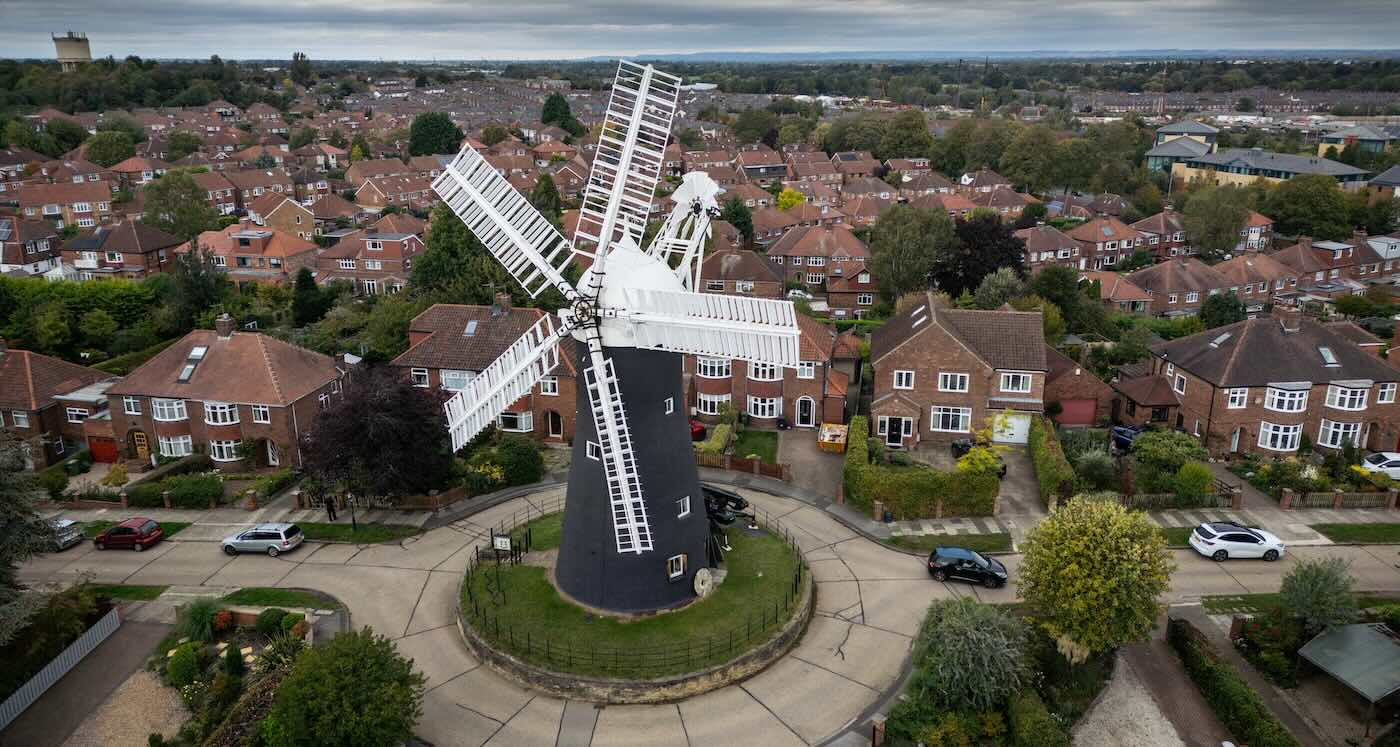
Holgate Windmill, the only remaining working 5-sailed, double-shuttered windmill in England – SWNS

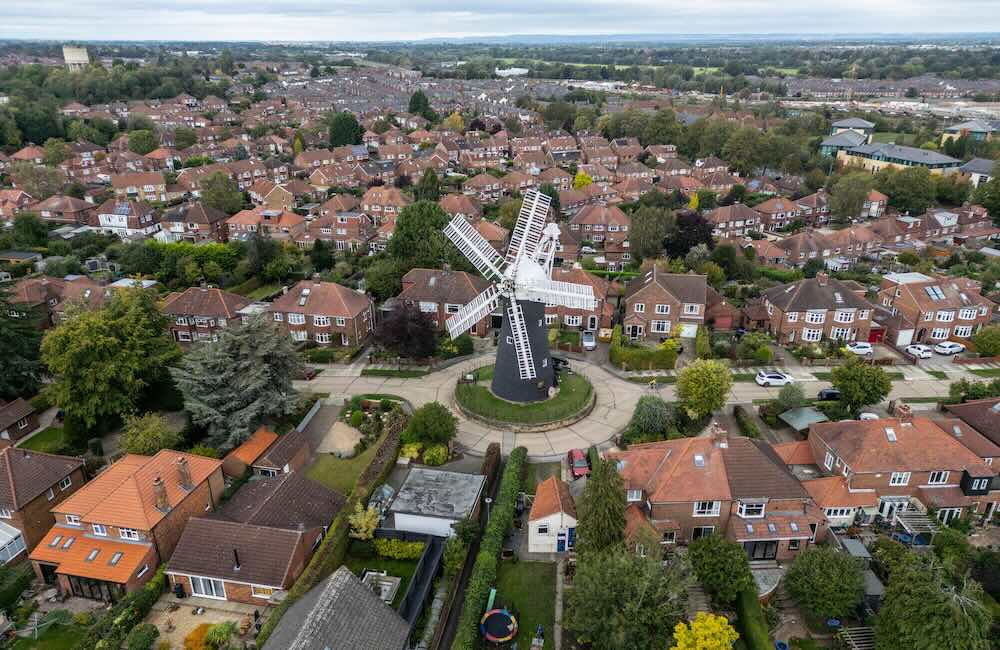
Britain’s oldest brick tower windmill which sits in the middle of a housing development is still operating, more than 250 years after it was first built.

Located in Holgate, a suburb of York, the walled city in northeast England, the Holgate Windmill has been working since 1770 after being built by George Waud, from Selby, after he bought the land in North Yorkshire two years earlier.

The mill, which grinds corn into flour, was built in the open countryside—one of many mills in the Yorkshire region—and overlooked the hamlet of Holgate.

The 90-foot-tall mill now sits on a roundabout in the middle of a housing development built in the 1940s and 50s after World War II.

It went unused for 90 years until 2001 when a preservation society was formed and successfully restored the mill to its former glory 13 years ago.

Steve Potts, a trustee of the group and its head miller, called it an important building.

“Of all of the hundreds of windmills which which were once found around Yorkshire, this is the only working one left.

Holgate Windmill circa 1930s – SWNS

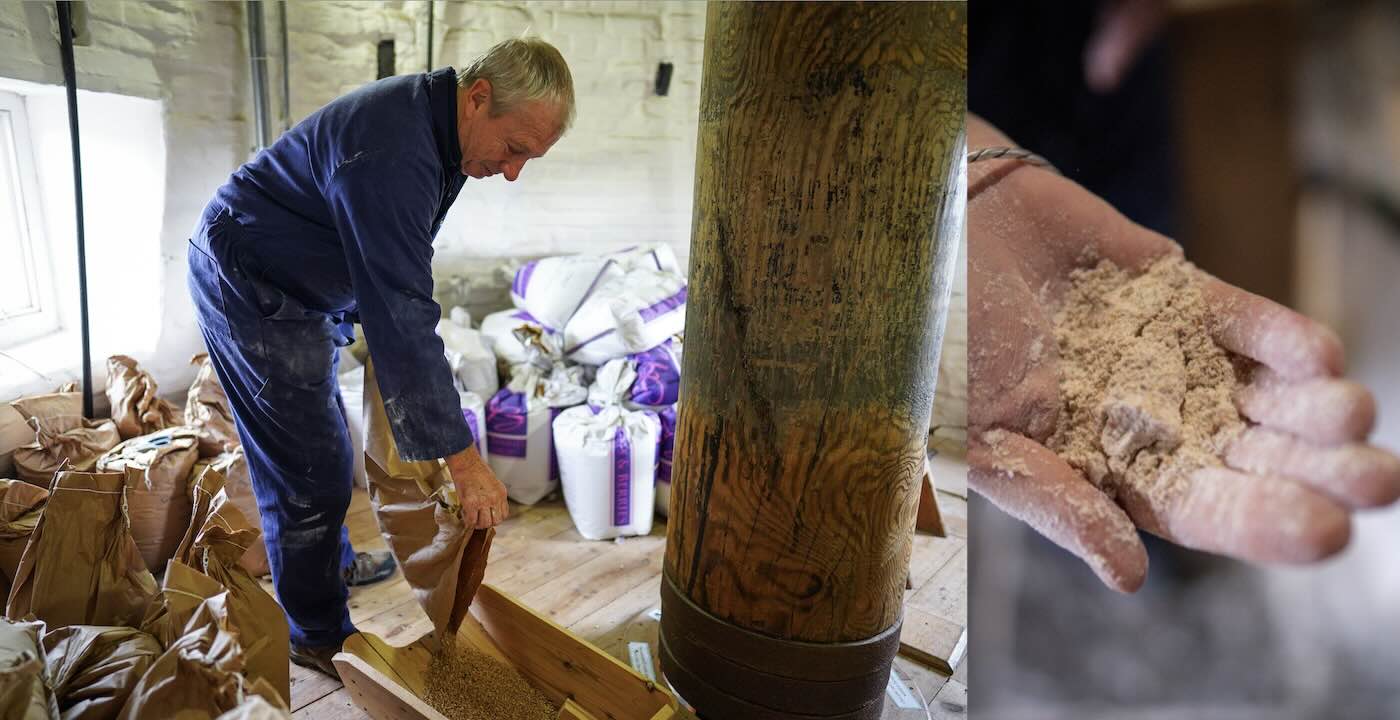
“We are a group of 35 volunteers and we think it is important to keep the industry of milling going. “It is a dying art in many ways and if we weren’t doing it, in a couple of years there may be no one left who knows how to,” the 69-year-old told SWNS news agency.

Steve Potts, the head miller at the Holgate Windmill – SWNS

“Our plan is to keep it’s legacy going forever.”

The volunteers at the windmill have been doing a great job of that these days, as locals can buy wholemeal flour produced at the mill in a number of shops in York.

A quarter-millennium of history

After the mill was erected in 1770, three generations of the Waud family ran it until it was sold in 1851 to John Musham, a local gentleman who hired a tenant miller John Thackwray to take over.


Mr. Musham then sold the mill in 1855 to Joseph Peart who installed a steam engine which worked the milling gear and employed William Bean Horseman and later Joseph Chapman as millers.

After Peart’s death in 1864 it’s unknown who owned the mill, but in 1877 Eliza Gutch, from the Gutch family, took it over—but Chapman continued operating it until he retired.

The milling duties were then taken over by his son Charles but only until 1901, but he died young after breathing in hazardous flour dust.Holgate Windmill circa 1900 – SWNS

Herbert Warters ran the mill from 1901 to 1922 and was followed by Thomas Mollett. Grain was ground into flour here until the 1930’s using wind power, but it ended in 1933 when the Gutch family sold the building to the York City Council after Eliza died. A housing neighborhood soon grew up surrounding the mill after WWII.


Holgate Windmill is the only remaining working 5-sailed, double-shuttered windmill in England – SWNSBut now, for over a decade, it’s been fulfilling that wholesome, age-old mission of sustainable, wind-powered food production in the only working 5-sailed, fully double-shuttered windmill in England. Britain’s Oldest Working Brick Windmill Still Spinning After 250 Years–Grinding Grain Into Flour

Tuesday, 23 September 2025

School Invests $150,000 to Help Low Income Parents, Buying New Uniforms and Laptops for Every Student

Students in Cumberland Community School – credit, Tony Kershaw / SWNS

An English school has forked over $150,000 to buy all 270 incoming students a new blazer, tie, and laptop.

Located in one of the poorest parts of London, the aid comes off the back of sustained improvements in grades and higher education attainments at the school, proving that investing in students’ futures pays off.

The headteacher of Cumberland Community School in the London borough of Newham believes the uniforms help children feel “pride” in the institution, while removing fashion-focused distractions.

According to the Children’s Society, English parents spend on average £422, about $575 a year, on school supplies. Cumberland, however, serves one of the lowest income areas of London.

“For many families at our school the cost of uniform and computer equipment is an expense they can’t afford,” said the Headteacher, Ekhlas Rahman, according to Southwest News Service.

“I have had parents in my office telling me they just can’t afford certain items. As a school we felt like we had to act. We don’t want circumstance to be prohibitive to a good education, so we decided to foot the bill for the most expensive items.”

Head Teacher Ekhlas Rahman – credit, Tony Kershaw / SWNS

Under changes to the UK’s Education Act passed last year, schools in England are meant to be helping cut costs for parents. This could be by promoting cheaper second-hand uniform options, by removing unnecessary branded items from their uniform lists, or allowing generic substitutes.

Explaining his decision to stick with the uniforms even though families could rarely afford them, Rahman said “it gives a sense of pride to the school and the students.”

“By wearing the same outfit, students can focus more on their education and less on social pressures related to fashion.”

When he first took over, he reviewed the cost of the uniform and found it prohibitive, so in observance of the changes to the Education Act, Cumberland did away with the requirements on branded items.

Additionally, for the 270 new students entering the 7th grade this scholastic year, their families were provided with a voucher for £400 ($460) for the purpose of buying uniforms and equipment.

“These are small things, but they do add up,” Rahman said. “We know families are struggling now and we want to do everything we can to help out. We are a school committed to investing in our students, so their ambitions and dreams can become a reality.”

Cumberland Community School has been ranked as the most improved in the country over a five-year period.Grades are up for 70% of all students, and many of the 15 and 16-year-olds were also awarded scholarships facilitated through the school’s Prestigious Colleges Program. School Invests $150,000 to Help Low Income Parents, Buying New Uniforms and Laptops for Every Student

Monday, 22 September 2025

Daredevil Kitesurfer Breaks Guinness World Record Flying 1,500 Feet in the Air Above Iconic Landmark (WATCH)

Jake Scrace on his kite-surfing tow-up over Isle of Wight for Guinness World Record – SWNS

A British kite-surfer has set a new world record for flying over 1,500 feet in the air above an iconic landmark.

Jake Scrace was lifted 450 meters above the spectacular Isle of Wight coastline after being towed-up by a para-motor and then cut loose.

A stunning series of photos show him surfing high above the western tip of the island with its distinctive Needles landmark that features three white chalk stacks rising out of the sea.

The 40-year-old carpenter broke the record for the ‘highest kitesurf tow-up’ by reaching 1,587 feet which is almost double the previous record set at 908.7 feet.

“It was the biggest challenge I’ve ever taken on,” said the man whose first major stunt was kitesurfing over the Worthing Pier in his hometown of Worthing, in West Sussex, England.

“Up there, it was about trusting the team, the conditions, and just going for it.”
Successful on the first try

“The sense of freedom was incredible and I’m buzzing that we got the record on the first attempt.

“I’m already thinking about what the next stunt could be and where we can go with it.”

Jake says the attempt was months in the making and was carried out with a 30-strong crew including safety divers and film specialists on July 23.

From a boat in the English Channel, Jake was lifted into the sky by a para-motor before cutting the machine loose when he reached his goal altitude and gliding back down to the water beneath his kite. (Watch the cool video below…)

The feat was verified using drones, bodycams, altimeter readings, as well as GPS-enabled smartphones recording altitude and flight path.

– SWNS

The project was backed by global property and construction consultancy Gleeds who agreed to fund the goal of reaching 1,500 feet to mark their 150th anniversary.

It also came in the same year that Guinness World Records marks its 70th anniversary of documenting remarkable and odd statistics worldwide.

“We celebrate extraordinary feats that push the boundaries of human achievement,” said Pravin Patel, Guinness World Record’s official adjudicator.

“Gleeds’ record-breaking kitesurf tow-up is a stunning example of innovation, precision, and daring.”

Richard Steer, the company’s chairman, added, “For 150 years, Gleeds has believed in pushing boundaries and turning bold ideas into reality.

SEE ALL THE GUINNESS RECORDS Featured on GNN…“This world record embodies that spirit perfectly as well as our value of professionalism with personality – a reminder that with vision, teamwork, and determination, even the sky is no limit.” Daredevil Kitesurfer Breaks Guinness World Record Flying 1,500 Feet in the Air Above Iconic Landmark (WATCH)

Monday, 4 August 2025

Family’s Escaped Parakeet Found More Than a Hundred Miles Away from Home: ‘That’s Unheard of!’

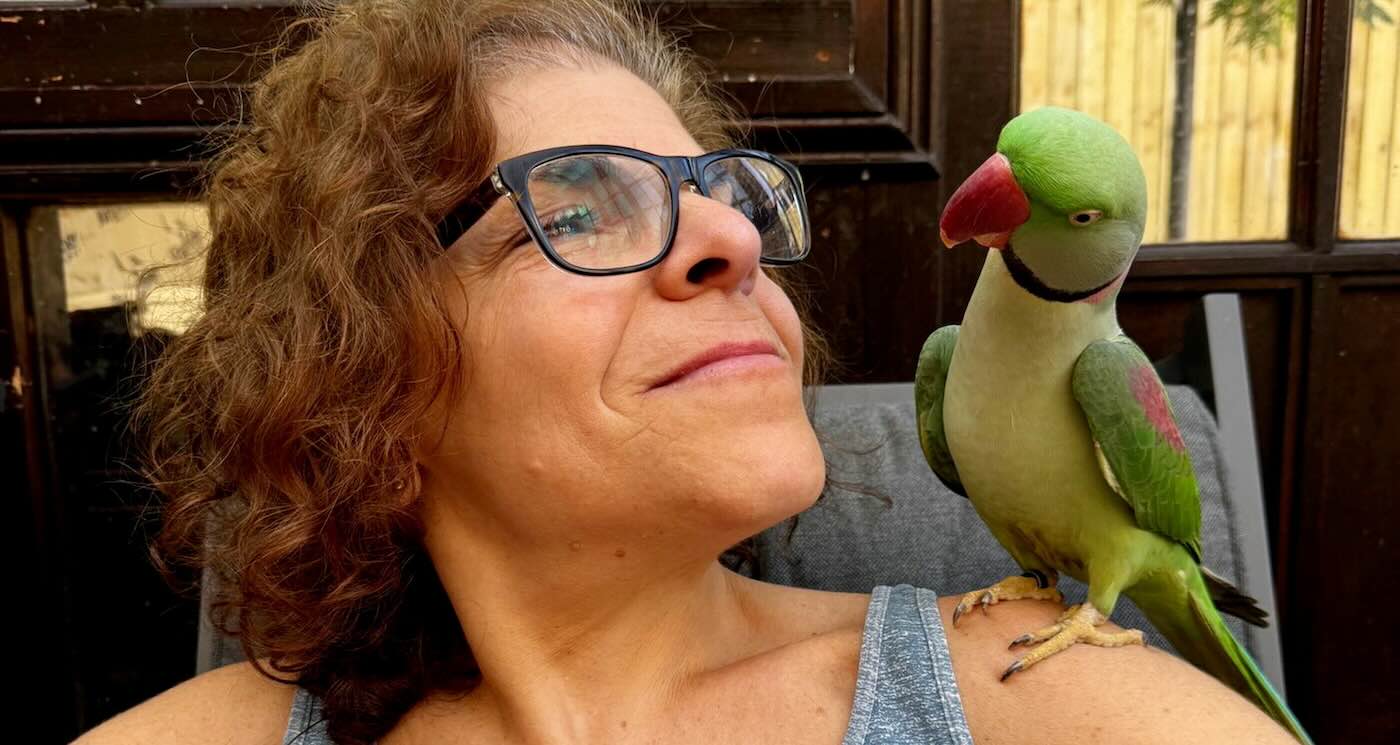
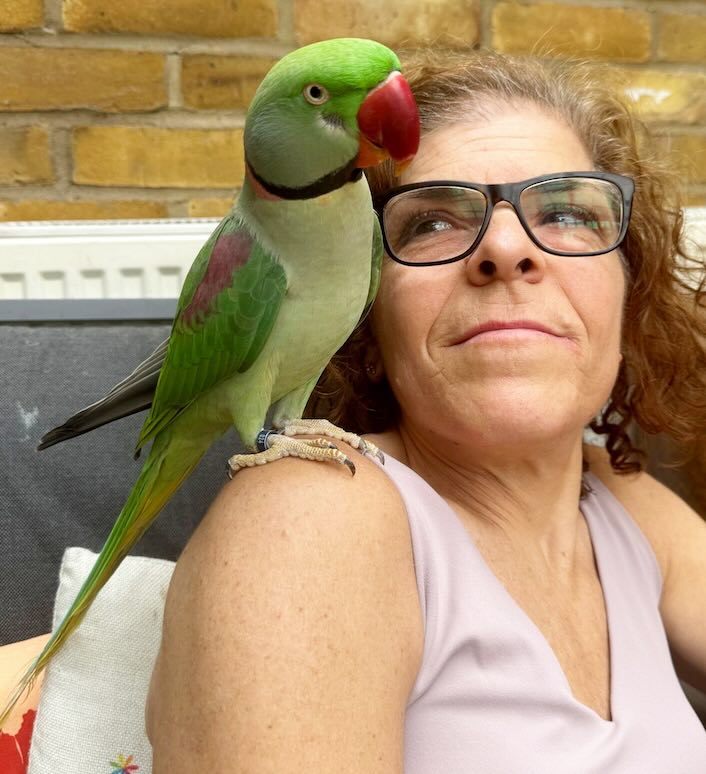
Yianoulla Evangelou reunited with Rambi the large green Alexandrine parakeet – SWNS photofoun

A much-loved parakeet has been found in Dorset, England after going missing from its London home more than 100 miles away.

After having never left home before, the large green 7-year-old Alexandrine parakeet named Rambi took off on a Sunday when his cage was left open during a family barbecue.

They launched an extensive search for him in their neighborhood, leading to half of Islington on the lookout for the parakeet.


“Because he’s never really flown before—other than around the house—we thought he’d be nearby,” said owner Yianoulla Evangelou. “We all went to bed that night devastated.

“We searched every street, knocked on every neighbor’s door, put posters up, contacted every vet and pet shop, everything you can think of,” the 50-year-old explained.

They had no luck until weeks later when they received a call from animal charity Wildlife in Need on the south coast of England, near Bournemouth, saying they’d found a parakeet that looked similar to theirs.

The charity was quite doubtful that it was the right bird—even after the number on Rambi’s ankle tag was matched—because they’d never heard anything like it happening before. They were so incredulous that Evangelou had to keep sending photos and videos of Rambi, in order to convince them it was hers.

“It’s a miracle,” Evangelou told SWNS news agency. “We’re so happy now that Rambi’s back. It’s just so amazing.

“But we’re baffled as to how he got to Bournemouth and his journey. We just can’t wrap our brains around it. He’s a domestic bird.”

Yianoulla Evangelou with her Alexandrine parakeet named Rambi SWNS

It’s believed that the bird, which is native to Southeast Asia, may have hitched a ride in, or on, someone’s vehicle to get from the capital to the sunny south coast.


Ms. Evangelou explained that during a family backyard barbecue they brought out their birds to join them, and while giving Rambi some food, she must have inadvertently left his door ajar—and, possibly scared by loud construction going on next door, he fled his cage.

“It was hot so we thought he would be bound to come down into someone’s garden.”

The family later learned that the lost bird was brought into a charity, Wildlife in Need, in Dorset, after landing on a random woman’s shoulder in a Sainsbury’s car park.

“We don’t understand how he got to where he did. He travelled over a hundred miles in the space of six days. That’s unheard of.”

“The only way we will find out exactly what happened is if he tells us at some point—because he does talk,” she joked.

“The woman who took him in said she would’ve loved to have kept Rambi, but she knew he had an owner.”

“We drove for more than two-and-a-half hours the day after we got the call to pick him up,” Ms Evangelou continued.

“It was the best feeling in the world. We thought he was gone forever.

“The community were amazing. There were people out in parks at night, walking their dogs and looking for Rambi.

Ms. Evangelou says her sister, Sheniz, is now even thinking of writing a children’s book about his adventure, called #BringRambiHome.

“He’s such a loving bird, and he loves to dance,” said Sheniz.“We were worried that a cat or a bird of prey would get to him, because he’s obviously not very streetwise.” Family’s Escaped Parakeet Found More Than a Hundred Miles Away from Home: ‘That’s Unheard of!’

Monday, 30 June 2025

Emotions run high as power outage shuts London's Heathrow


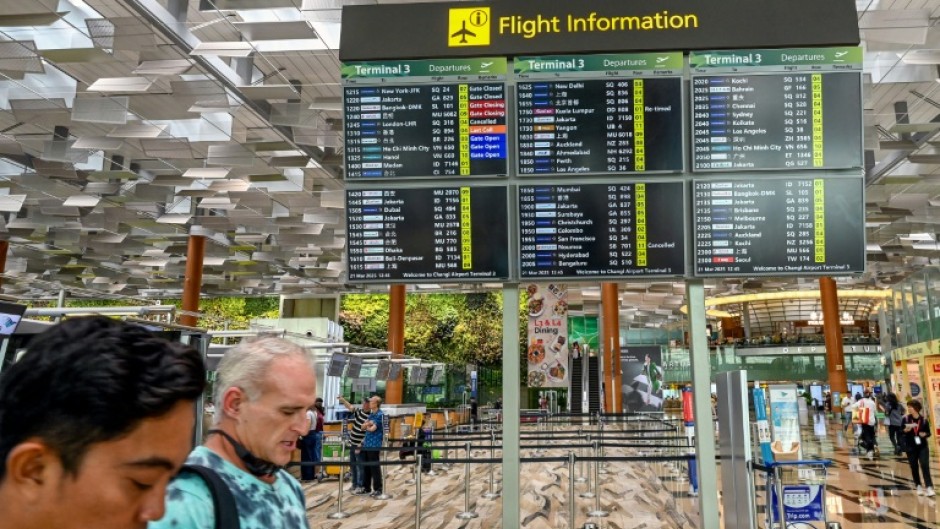
A police helicopter was the only vehicle visible in the sky above Heathrow airport on Friday, as the regular drone of flights went silent after a fire at a power station shuttered Europe's busiest airport.

On the ground, dozens of confused, stranded passengers stood around with their suitcases outside airport hotels. Many who AFP spoke to complained about the cost of shifting their bookings and a lack of information from Heathrow or airlines.

For veteran athlete Kevin Dillon, 70, Heathrow's day-long closure meant he would miss the opening ceremony of the World Masters Athletics Championships in Florida.

The runner, sporting a Great Britain tracksuit, said he had come from Manchester to catch his flight so he could compete.

The authorities are facing questions over how the fire at the electricity substation left such a crucial piece of national infrastructure closed for the day.

"I'm just surprised they didn't have a backup system," Dillon said.

Jake Johnston, from Los Angeles, was set to travel back to the United States on Friday but his airline, Virgin Atlantic, has rebooked his flight for Monday.

The 24-year-old said he and his friends were lucky: they found hotels for around £150 a night ($194).

Since then, several passengers have complained of airport hotels jacking up prices. According to Johnston, when he checked again later, hotel prices had risen to around £600.

- 'Need to be there' -

Bolaji N'gowe was not so optimistic. He was on his way home to Canada after visiting his mother in Lagos, Nigeria, when his flight was diverted from Heathrow to Gatwick airport, south of London.

"I have been in Gatwick since 4:00 am (0400 GMT)," he told AFP at the UK's second-busiest airport, which accepted some flights bound for Heathrow, while others were diverted to Paris, Madrid, Frankfurt and other European cities.

"I'm trying to book another flight... I'm trying to call Air Canada, no one is answering the phone," said N'gowe, adding that the earliest flight he had found was for Sunday.

"Between the ticket and the hotel, I have to spend more that £1,500," he added.

Talia Fokaides was meant to leave London for Athens in the morning to be with her mother, who was due to undergo open-heart surgery.

When she heard Heathrow was closed, she rushed to Gatwick and found a flight to the Greek capital for midday.

"I don't care about the money, I just need to be on a flight and home by the end of the day," Fokaides told AFP, her voice shaking with emotion.

"We were given no info, we were left on our own. I don't understand how it's possible," she added. "I just need to be there."

Some 1,350 flights had been due to land or take off from Heathrow and its five terminals on Friday, according to the flight tracking website Flightradar24.

Heathrow is one of the world's busiest airports and usually handles around 230,000 passengers daily and 83 million every year.

- 'Powerless' -

Mohammed al-Laib, a Tunisian national who works in London, was supposed to go to Dubai to be reunited with his wife, whom he had not seen in months.

AFP | Adrian DENNIS

Heading to the information desk at Gatwick, he said he did not know if another flight would be available.

"I feel powerless," he said.

Meanwhile, 28-year-old Muhammad Khalil had been waiting at London's Paddington station since early morning looking for alternative flights to Pakistan.

He had so far been unsuccessful, with Heathrow the main airport in the UK for long-haul international flights.

Khalil had also hoped to be reunited with his wife after five months. He had been planning the trip for three months.

"I've spent so much money on tickets and everything. I had to take the day off from my job," Khalil told AFP.

"You can't imagine how stressful it is for me."

Callum Burton, 21, from Kent in southern England, was stranded at Newark airport near New York after visiting his girlfriend for his 21st birthday.

Burton told AFP via social media that his flight had boarded and was ready to depart before it was rescheduled for 15 hours later, then cancelled.

He was not expecting to leave until Sunday or Monday, and said that he was "very tired and disappointed".By James Pheby And Alexandra Del Peral Emotions run high as power outage shuts London's Heathrow

Monday, 16 June 2025

UK to Lift 100,000 Kids From Poverty With Free School Lunches for All Low Income Households

– credit Curated Lifestyle for Unsplash +

The UK government has announced that 500,000 additional children will receive a free school lunch following a major expansion in the program that provides it.

Previously, the free meal was available only to students who come from the lowest of low-income households. Following the expansion, most low and middle-class citizens will be able to qualify, and the government says it will lift 100,000 students out of poverty from the cost savings which will amount to around £500 per month, corresponding to nearly $700.

Despite having a ceiling of £7,400-per year for eligibility, last year an estimated 2.1 million students received a free school meal.

A rather arbitrary cut-off point, someone making £8,000 per year hardly possesses greater means to pay for the school meal than someone making below the cutoff point.

Under the new plan, any students from households on the UK’s universal credit will be eligible to receive one free meal a day. The universal credit replaced a number of British welfare programs, and provides a monthly cost of living assistance handout to people living in a variety of situations with a net worth of less than $20,000.

Set to begin at the outset of the 2026 scholastic year, the new expansion will also address food quality, and will be fully, rather than partially funded, to ensure there’s no delay in getting the expansion moving.

“Today’s historic step will help us to deliver excellence everywhere, for every child and give more young people the chance to get on in life,” the UK’s education secretary Bridget Phillipson said, adding “background shouldn’t mean destiny.”

The decision comes amid a record-high level of childhood poverty in one of Europe’s largest economies. The new Labor government under Prime Minister Sir Keir Starmer has vowed to drive down poverty levels in the UK, and the expansion of the student meal program was a part of that.

Free school lunches became a hot topic during the administration of Boris Johnson, when the young black Manchester United star Marcus Rashford decided to criticize Johnson for reducing the size of the free school lunch program.

While some sport pundits believed Rashford’s aim was noble, they also felt he should focus on his soccer. But he persevered and the government relented. Through this and his work with hunger charities in the city of Manchester, he was presented with an MBE, the British order of merit below a knighthood, for his advocacy work on behalf of England’s poorest students. UK to Lift 100,000 Kids From Poverty With Free School Lunches for All Low Income Households

Thursday, 15 May 2025

UK, India strike trade deal amid US tariff blitz


LONDON - The UK on Tuesday agreed a free trade agreement with India, its biggest such deal since leaving the European Union, after negotiations relaunched in February following US tariff threats.

Britain has sought to bolster trade ties across the world since it left the EU at the start of the decade, a need that strengthened after the United States unleashed tariffs that risk weaker economic growth.

"Today we have agreed a landmark deal with India -- one of the fastest growing economies in the world, which will grow the economy and deliver for British people and business," UK Prime Minister Keir Starmer said in a statement.

His Labour government added it is "the biggest and most economically significant bilateral trade deal the UK has done since leaving the EU".

India's Prime Minister Narendra Modi described the deal as "ambitious and mutually" beneficial.

The pact will help "catalyse trade, investment, growth, job creation, and innovation in both our economies", Modi said in a post on social media platform X.

His office said in a statement the deal will "unlock new potential for the two nations to jointly develop products and services for global markets".

It added that Modi had invited Starmer to visit India at an unspecified date.

- Whisky and shoes -

The accord will slash tariffs on imports of UK goods into India, including whisky, cosmetics and medical devices.

Whisky and gin tariffs will be halved to 75 percent, while automotive tariffs will be slashed from more than 100 percent to 10 percent.

In exchange, the UK will cut tariffs on imports of clothes, footwear and food products, including frozen prawns, from India.

It comes after US President Donald Trump hiked tariffs on trading partners and launched sector-specific levies on steel, aluminium and cars.

The UK and India are the sixth and fifth largest global economies respectively, with a trade relationship worth around £41 billion ($54.8 billion) and investment supporting more than 600,000 jobs across both countries.

The free trade agreement is expected to increase trade between the two countries by £25.5 billion, as well as boost the British economy and wages.

The UK called it "the best deal India has ever agreed".

Talks were relaunched between the two countries in February after stalling under Britain's previous Conservative administrations.

In previous negotiations, India had pushed for more UK work and study visas for its citizens in exchange for lowering tariffs.By Alexandra Bacon UK, India strike trade deal amid US tariff blitz

Saturday, 12 April 2025

Neighbors Celebrate 101st Birthday On the Same Day–Living Next Door to Each Other For 4 Decades

Neighbors Josie Church (L) and Anne Wallace-Hadrill outside their homes in Oxford will celebrate their 101st birthdays on April 1 – SWNS

Two longtime English neighbors are celebrating their joint 101st birthday, born on the same day in 1924.

Josie Church and Anne Wallace-Hadrill have lived side-by-side in Oxford since the 1980s, and the great-grans have celebrated their birthdays together for years.

“I think life has gone quite quickly,” said Josie. “I don’t think we’ve thought much about the time passing. It’s just passed.”

Both women threw themselves into volunteering and creative activities after their husbands died—and the women have been fast friends ever since.

“Anne was very busy when she was younger—so was I—always very productive and creative.

“She did a lot of painting and tapestry, and she was always busy, and I was always busy doing something else, somewhere else, because that’s the sort of life we live.”

Anne, studied English at St. Hilda’s College, Oxford University, and served in the Women’s Royal Naval Service as a radio mechanic during the Second World War. After graduating, she worked as a lexicographer for the Oxford English Dictionary.

“I was always interested in words. It was my trade.”

She was very proud to receive a medal for her service from the Royal Navy last year, described as “long overdue” by the representative who gave it to her.

Anne Wallace-Hadrill (R) and Josie Church – SWNS

Josie was trained in nursing for three years at Preston Royal Infirmary and remembers the introduction of the National Health Service.

“In those days,” Josie said, “You had to live (on campus) and you couldn’t get married, and it was very strict. People wouldn’t put up with that sort of life now.” Neighbors Celebrate 101st Birthday On the Same Day–Living Next Door to Each Other For 4 Decades

Friday, 11 April 2025

49-Year-old Becomes First Blind Woman to Swim English Channel: ‘Nothing is Impossible’

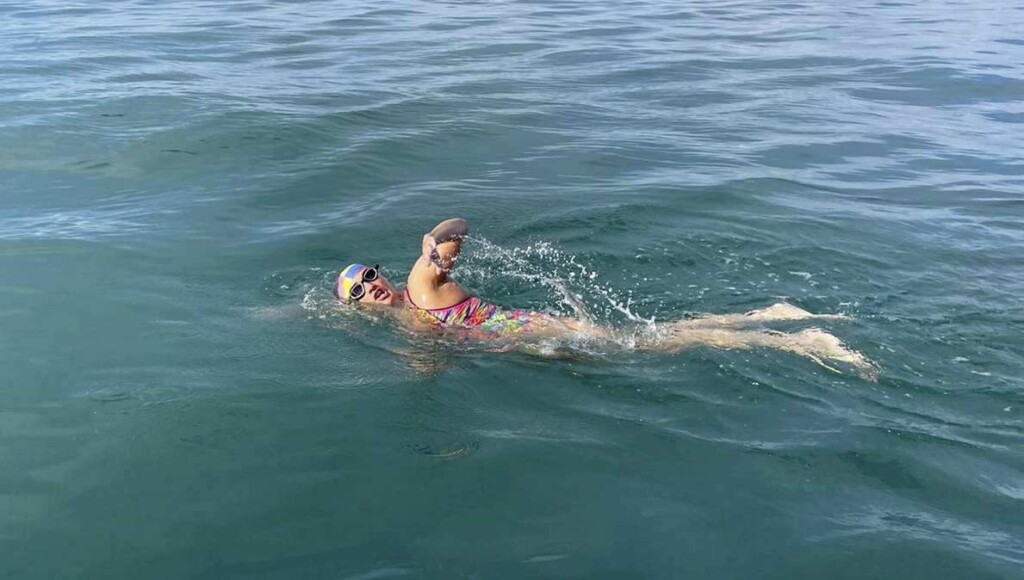
Melanie Barratt out in the English Channel – credit SWNS

A Paralympic gold medalist has become the first blind woman to swim across the English Channel, and she finished under time.

She said that being blind has left her feeling “isolated,” but thanks to swimming, she has a “newfound confidence” and hopes her feat “inspires others”.

49-year-old Melanie Barratt took on the challenge after falling in love with open-water swimming.


She swam the Channel, from Shakespeare Beach in Dover to Cap Gris Nez Beach in France, in 12 hours and 20 minutes, faster than the expected 14 hours, and described it as “a dream come true.”

“My life has been filled with challenges because of my blindness, and it often led me to feel isolated and unsure of myself,” said Barratt.


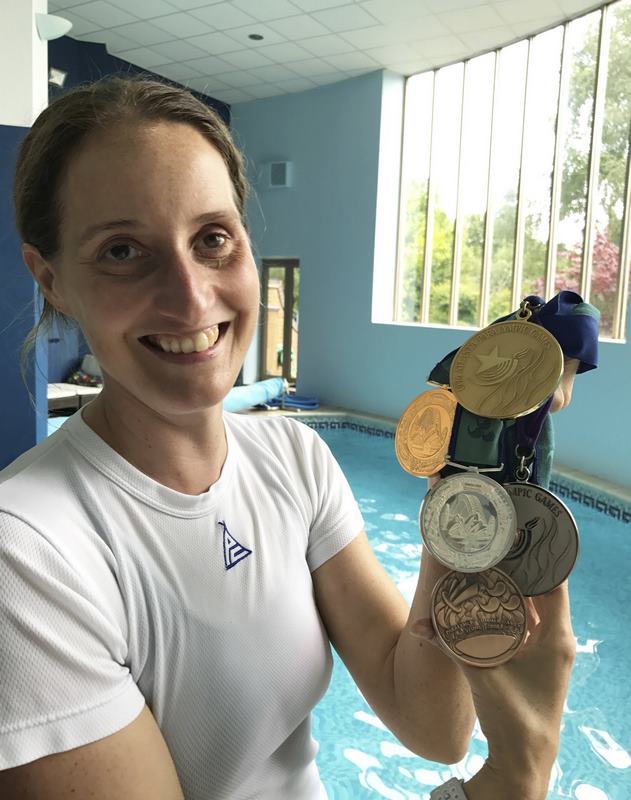
Melanie, now a special needs assistant after winning two gold medals, two silvers, and a bronze at the 1996 Atlanta and 2000 Sydney Paralympics, said she “never thought it would be possible to achieve something like this.”

It’s no mean feat, even for an Olympian, as the Channel weather regularly takes the lives of sailors and refugees in crossing.
Melanie Barratt with her haul from the 1996 and 200 Paralympics – credit SWNS

Melanie was born with scarred eyes after her mom contracted congenital toxoplasmosis during pregnancy. She grew up virtually blind and was only able to make out bright colors and shapes. She first began swimming with the British Blind Sport charity.

“I loved the water,” she remembers. “The charity helped me by teaching me to swim straight and how not to bump my head into the pool ends.”


“I struggled to fit in at school because of my blindness, so I often turned to the pool as an escape.”

Slowly improving, a swimming partner invited her to the Paralympic games, which lit a fire underneath her that pushed her to succeed. After Sydney, Melanie retired from competitive swimming and wanted “something more.”

“Sadly, my guide dog doesn’t swim,” she said, according to English news media outlet SWNS. “But I became friends with an incredible open-water swimmer who took me under her wing.”

“The shock of the cold water made me aware of every single cell of my body, and it was freeing.”

Once hooked on open-water swimming, Melanie competed in several races, including a 10k lake swim, the Thames Marathon, and a relay race in Lake Geneva in July 2023.

It was as freeing as it was frightening, since there were no indicative surfaces or objects for her to use as a reference point. A solution presented itself as her husband paddling alongside her in a kayak, the bright colored paint of which she could see.

“I also started using bone-conducting headphones that allowed him to communicate with me throughout my swims,” she says. “It made open-water swimming more accessible.”

Two years before her Geneva feat, Melanie signed up for the English Channel swim, describing it as “the Everest of swimming,” and on August 28th, 2024, she swam the Channel in 12 hours and 20 minutes, receiving a Guinness World Record for the feat two months later.

“Halfway through the swim, I felt scared and sick. I didn’t think I was going to make it,” she said. “But I had the most amazing team and I was really determined.”

“Life is incredibly difficult being blind, and it’s very limiting, but sport and open-water swimming have given me a newfound confidence and made me proud of who I am.”“My husband and two boys always know I love to push myself and that I always need something to work towards, and I hope I’ve inspired others to do the same.” 49-Year-old Becomes First Blind Woman to Swim English Channel: ‘Nothing is Impossible’

Monday, 7 April 2025

Ofcom wants UK to be ‘first in Europe’ to use direct-to-device satellite services

The regulator is proposing that direct-to-device (D2D) satellite services make use of spectrum already licenced by mobile operators for 4G and 5G

This week, UK telecoms regulator Ofcom has proposed new rules that would allow D2D satellite services to be provided using the same spectrum and terrestrial mobile networks.

The regulator says the rules would make the UK the ‘first country in Europe’ to adopt such an approach, giving the nation a lead in this emerging technology.

“For years, we’ve seen satellite calls in disaster movies on special handsets. We’re now on the cusp of people being able to make them on their everyday smartphones,” said Ofcom’s Spectrum Group Director David Willis. “Ofcom always strives to be at the forefront of technological change, and we’re the first country in Europe to press ahead with the next frontier in mobile connectivity. This would unlock investment, open doors to innovation and growth, and bring much-needed mobile coverage to rural areas.”

D2D satellite communication has been a growing topic of interest for a number of years now, with the technology potentially allowing mobile operators to ensure their customers remain connected wherever they go.

Currently, satellite communications typically require a satellite to connect to a terminal deployed by the end user, which then relays the signal to the end user’s device, or to a specialised satellite phone. D2D services do away with this middleman, allowing customers to connect directly to the satellite itself using an unmodified smartphone.

Elon Musk’s satellite behemoth Starlink is currently testing its D2D capabilities with T-Mobile in the USA, while other players like AST SpaceMobile are also advancing their capabilities. Just last week AST sought permission to launch the latest model of its BlueBird satellite, with the aim of launching commercial D2D services in 2026.

From a regulatory standpoint, however, these emergent services raise a question over spectrum usage. Current mobile spectrum licences for 4G and 5G do not provision for connection to satellites (at least in the UK) and doing so poses the risk of interference of existing mobile services.

Despite these technical challenges, allowing operators to make use of their existing spectrum licences is very attractive, potentially allowing them to roll out D2D services more quickly and efficiently. It could also potentially help them to reach their rural coverage obligations, in some instances.

Ofcom is suggesting three possible approaches to D2D satellite services: (i) a licence exemption; (ii) a variation to the MNO’s existing base station licence accompanied by a licence exemption; or (iii) a new licensing regime. The regulator says its preference is for option (ii) but is seeking comment from the wider industry.The consultation will continue until 20th May 2025, with commercial D2D services potentially becoming available later this year if the proposals are approved. Ofcom wants UK to be ‘first in Europe’ to use direct-to-device satellite services | Total Telecom

Tuesday, 11 March 2025

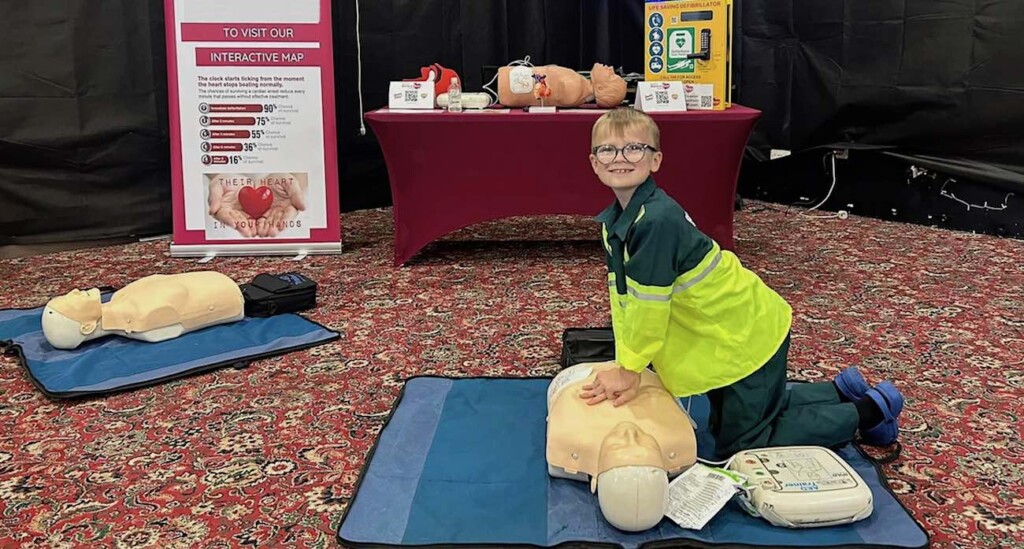
10-Year-old Paramedic Teaches Adults Lifesaving Skills and CPR as ‘The Mini Medic’

10-yo paramedic Jack Dawson teaches lifesaving skills – SWNS

Meet the 10-year-old paramedic who teaches adults life-saving procedures as an in-demand mini-medic.

Jack Dawson was just two-years-old when it became obvious he was interested in becoming a paramedic.

His grandfather owns a first response company in Staffordshire, England, and Jack would ride along in his ambulances with the flashing blue lights. By age three, he would start “randomly performing CPR on his teddies, pumping the bear’s chest”.

“So, at the same time he was learning to speak, my husband and I decided to teach him first aid,” said his mother, Danielle. “He was like a sponge. He just picked everything up so quickly.”

Jack, quickly grasped the act of CPR, understanding the different recovery positions, and learned how to use a defibrillator.

Then, at age seven, the youngster started to lead workshop sessions of his own, overseen by his father and other trainers for their charity, Tamworth Have A Heart, which aims to make automatic defibrillators publicly accessible and train people to use them confidently.

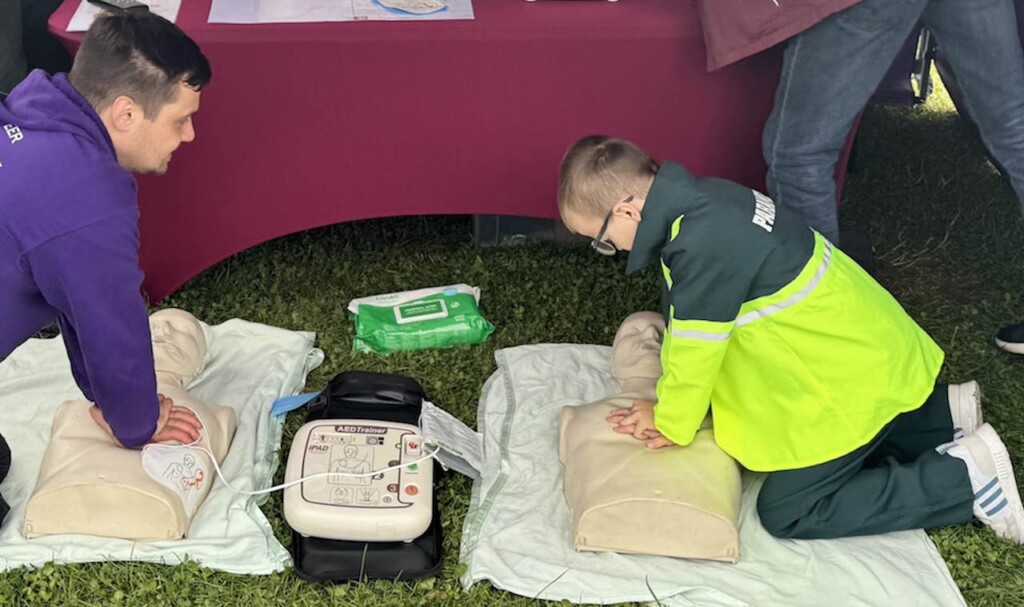
Jack teaches both children and adults how to perform CPR and use defibrillators, while also patrolling his town centre and checking that the public defibrillators’ pads and batteries are up to date and fit for use. (Watch a demonstration at the end of the article…)

“His motto was ‘if I can save a life, then you can’,” says Danielle.

The sessions often draw 20-40 people and sometimes Jack gives presentations teaching in front of 100 people.

10-yo mini-medic Jack Dawson teaches lifesaving skills to adults – SWNS

He does step-by-step walkthroughs on how to perform CPR with practice dummies laid on the floor, informing people about the dangers—including “looking into patients airways before pumping, in case of vomit or blood”. He gives tutorials on how to operate defibrillators which are used to revive someone from sudden cardiac arrest.

“He absolutely loves teaching,” Danielle told SWNS news agency. “I’ve never seen him so confident before and the fact he’s helping people to save a life determines him even more.”

“People are very surprised. He gets a lot of positive feedback and even special requests to teach people.

“I think people appreciate the information coming from a child, as it makes them think that if a 10-year-old can do it, then they can.”

Under the name ‘Mini Medic’, Jack has a YouTube channel and a page on TikTok posting medical tutorials and training nights for those unable to attend.

As a result of his community work, the 10-year-old is a finalist for Children of Courage Birmingham Awards.

Looking forward, Danielle said he’s enthusiastic about going to university and being a paramedic. “It’s all he thinks about!”WATCH the video below from the news agency SWNS.com… 10-Year-old Paramedic Teaches Adults Lifesaving Skills and CPR as ‘The Mini Medic’

Wednesday, 26 February 2025

AI regulation around the world


Countries and economic blocs around the world are at different stages of regulating artificial intelligence, from a relative "Wild West" in the United States to highly complex rules in the European Union.

Here are some key points about regulation in major jurisdictions, ahead of the Paris AI summit on February 10-11:

- United States -

Returning President Donald Trump last month rescinded Joe Biden's October 2023 executive order on AI oversight.

Largely voluntary, it required major AI developers like OpenAI to share safety assessments and vital information with the federal government.

Backed by major tech companies, it was aimed at protecting privacy and preventing civil rights violations, and called for safeguards on national security.

Home to top developers, the United States now has no formal AI guidelines -- although some existing privacy protections do still apply.

Under Trump, the United States has "picked up their cowboy hat again, it's a complete Wild West", said Yael Cohen-Hadria, a digital lawyer at consultancy EY.

The administration has effectively said that "we're not doing this law anymore... we're setting all our algorithms running and going for it", she added.

- China -

China's government is still developing a formal law on generative AI.

A set of "Interim Measures" requires that AI respects personal and business interests, does not use personal information without consent, signposts AI-generated images and videos, and protects users' physical and mental health.

AI must also "adhere to core socialist values" -- effectively banning AI language models from criticising the ruling Communist Party or undermining China's national security.

DeepSeek, whose frugal yet powerful R1 model shocked the world last month, is an example, resisting questions about President Xi Jinping or the 1989 crushing of pro-democracy demonstrations in Tiananmen Square.

While regulating businesses closely, especially foreign-owned ones, China's government will grant itself "strong exceptions" to its own rules, Cohen-Hadria predicted.

- European Union -

In contrast to both the United States and China, "the ethical philosophy of respecting citizens is at the heart of European regulation", Cohen-Hadria said.

"Everyone has their share of responsibility: the provider, whoever deploys (AI), even the final consumer."

The "AI Act" passed in March 2024 -- some of whose provisions apply from this week -- is the most comprehensive regulation in the world.

Using AI for predictive policing based on profiling and systems that use biometric information to infer an individual's race, religion or sexual orientation are banned.

The law takes a risk-based approach: if a system is high-risk, a company has a stricter set of obligations to fulfil.

EU leaders have argued that clear, comprehensive rules will make life easier for businesses.

Cohen-Hadria pointed to strong protections for intellectual property and efforts to allow data to circulate more freely while granting citizens control.

"If I can access a lot of data easily, I can create better things faster," she said.

- India -

Like China, India -- co-host of next week's summit -- has a law on personal data but no specific text governing AI.

Cases of harm originating from generative AI have been tackled with existing legislation on defamation, privacy, copyright infringement and cybercrime.

New Delhi knows the value of its high-tech sector and "if they make a law, it will be because it has some economic return", Cohen-Hadria said.

Occasional media reports and government statements about AI regulation have yet to be followed up with concrete action.

Top AI firms including Perplexity blasted the government in March 2024 when the IT ministry issued an "advisory" saying firms would require government permission before deploying "unreliable" or "under-testing" AI models.

It came days after Google's Gemini in some responses accused Prime Minister Narendra Modi of implementing fascist policies.

Hastily-updated rules called only for disclaimers on AI-generated content.

- Britain -

Britain's centre-left Labour government has included AI in its agenda to boost economic growth.

The island nation boasts the world's third-largest AI sector after the United States and China.

Prime Minister Keir Starmer in January unveiled an "AI opportunities action plan" that called for London to chart its own path.

AI should be "tested" before it is regulated, Starmer said.

"Well-designed and implemented regulation... can fuel fast, wide and safe development and adoption of AI," the action plan document read.

By contrast, "ineffective regulation could hold back adoption in crucial sectors", it added.

A consultation is under way to clarify copyright law's application to AI, aiming to protect the creative industry.

- International efforts -

The Global Partnership on Artificial Intelligence (GPAI) brings together more than 40 countries, aiming to encourage responsible use of the technology.

Members will meet on Sunday "in a broader format" to lay out an "action plan for 2025", the French presidency has said.

The Council of Europe in May last year adopted the first-ever binding international treaty governing the use of AI, with the US, Britain and European Union joining the signatories.

Of 193 UN member countries, just seven belong to seven major AI governance initiatives, while 119 belong to none -- mostly in the Global South.By Tom Barfield With Afp Bureaus AI regulation around the world

Tuesday, 25 February 2025

England’s Largest Bird Sanctuary Grows by 30%: ‘It’s incredible, the place just swarms with birdlife’

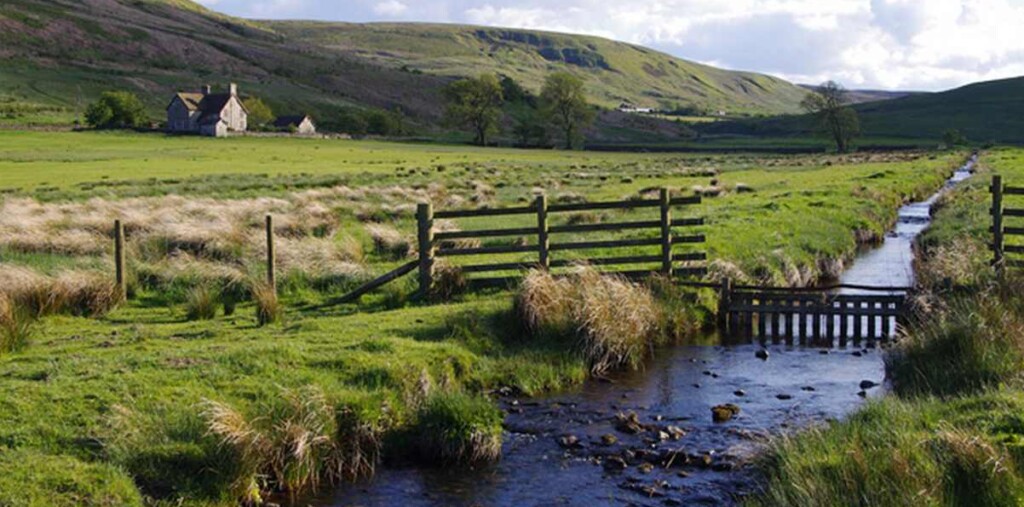
RSPB Geltsdale Reserve – credit: Ian Taylor CC 2.0.

The British equivalent of the Audubon Society has just announced that what was already England’s largest bird reserve will be increased by 33% after a recent land purchase.

Described as a place that “swarms” with life, the Geltsdale Reserve in the North Pennines range of Cumbria, northern England, will now cover 13,590 acres of moorland, meadows, blanket bog, and woodland.

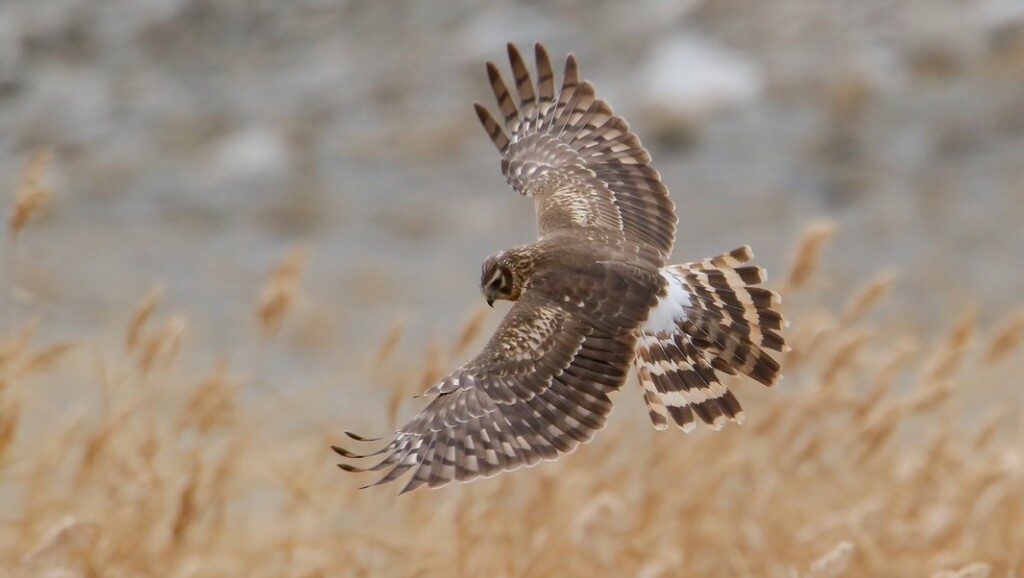
Owned and operated by the Royal Society for the Protection of Birds (RSPB), Geltsdale is one of the last places in Britain where one can see the hen harrier in its natural habitat. Birds of every description and conservation status inhabit the reserve, and it’s also a UNESCO Geopark for its unique geological formations.

“This is going to be a reserve on a different scale from many of our other sites in England,” said Beccy Speight, the RSPB’s chief executive.

“We are going to achieve an abundance of species and a size that will be unmatched for bird reserves elsewhere. It is going to demonstrate what is possible when it comes to rewilding and protecting birds.”

A hen harrier in Baltisan, Pakistan – credit Imran Shah CC 2.0.

For birdwatchers reading, Geltsdale abounds in black grouse, redshank, nightjar, snipe, whinchat, curlews, ospreys, short-eared owls, and lapwings, dispersed across a vertical rise of 650 meters from an achingly green valley bottom up stately moorland and pasture at an elevation similar to the lower-peaks of the Appalachian range.

“Geltsdale is now the biggest in England,” said Speight. “And that size makes such a difference. When you walk through the reserve during breeding season, it is incredible. The place just swarms with birdlife.”

While Geltsdale is by appearance a slice of old-fashioned and natural England, the RSPB says it has some hi-tech solutions in mind for tackling conservation challenges like vagrant livestock grazing.

Speaking with the Guardian, Dave Morris, the RSPB’s area operations manager for Cumbria and Northeast England, said that the society will work with local ranchers whose properties overlap with the reserve to implement a GPS-monitored ‘invisible’ fencing system.

Because traditional wooden fencing is actually a hazard for low-flying birds like black grouse, cattle and calves will be fitted with collars that emit a high-pitched tone if the animal comes too near a boundary line.

The closer the animal comes, the louder the tone will grow until eventually, the cattle will receive a low-level electric shock.Additionally, a lot of age-old practices such as heather burning and moorland draining have been halted to ensure the area can get back to its absolute natural best. England’s Largest Bird Sanctuary Grows by 30%: ‘It’s incredible, the place just swarms with birdlife’

Monday, 24 February 2025

The Emotional Moment Dog was Returned to Owners 7 Years After Being Stolen

RSPCA inspector Kim Walters (left), pictured with colleague Andy Cook – credit: RSPCA, supplied

An English family has been reunited with their beloved Labrador Daisy who was stolen from their front lawn 7 years ago.

Their tireless search and advocacy for their lost family member attracted the attention of British celebrity and even helped steer a law through Parliament, but the ultimate reward for the devotion to their lost dog was the chance to see her again, elderly and slightly battered, but alive and loving.

In 2017, a truck arrived in front of Rita and Philip Potter’s Norfolk house. Two men hurriedly lept out, grabbed Daisy, and stuffed her into the back—a despicable act seen by neighbors.


Ruling out the possibility that Daisy got lost in the woods somewhere, the Potters contacted the police and urged a response. An RSPCA search in Somerset—200 miles and 7 years later—has recovered a 13-year-old Daisy, who was likely the victim of an illegal pet breeding operation.

A quick microchip scan, and Daisy was on her way home.

“We kept a photograph on the mantlepiece and would look at it every day thinking of her, and where she might be,” Mrs. Potter told the BBC. “It is an absolute dream come true that the RSPCA found her and returned her to us—where she belongs—we are so, so grateful,” said Mrs Potter.

Following Daisy’s abduction, the Potters were active in the press and social media trying to ensure anyone who might have seen the dog understood where she had come from. Tom Hardy, the A-list action star from Dark Knight Rises and Inception, shared their post on his X account.

The Potters then collected 100,000 signatures on a petition for greater government action to fight pet crime. The Pet Abduction Act changed the UK sentencing guidelines, making it a criminal offense with a prison sentence of up to 5 years. Previously, pets were considered property, and abducting them was punished under the UK’s 1986 Theft Act.

During the RSPCA’s investigation, the owner agreed to turn Daisy over to the organization, explaining they had only had her for a few years and didn’t know she could have been stolen. At their facility, a microchip scan revealed Daisy’s provenance and the call to the Potters was an emotional one.

“They were obviously shocked—but elated at the same time,” said RSPCA inspector Kim Walters. “I was a bit choked from listening to them, and clearly how much they loved her, so it was great telling them that we could get her back home soon.”Now in her golden years, and with several health issues from a half-decade of maltreatment, the Potters look forward to loving, spoiling, and caring for her. The Emotional Moment Dog was Returned to Owners 7 Years After Being Stolen