bloggggg

Home  |  Live  |  Science  |  Lifestyle  |  Entertainment  |  Broadcast  |  Games  |  eBooks  |  Astounds  |  Adbite  |  Cricbell  |  Cyber  |  Idea  |  Digital  |  Privacy  |  Publish  |  ePaper  |  Contact  .Subscribe.Subscribe.Subscribe.Subscribe.Subscribe.Subscribe.Subscribe.Subscribe.Subscribe
Subscribe

Friday, 23 January 2026

Centre sanctions 24 chip design projects in big push to India's semiconductor industry

IANS File Photo

New Delhi, (IANS): As many as 24 chip design projects have been sanctioned across areas such as video surveillance, drone detection, energy meters, microprocessors, satellite communications, and broadband and IoT Systems-on-Chip (SoCs) under the Centre's Design Linked Incentive Scheme (DLI) scheme, according to an official statement issued on Sunday.

Additionally, 95 companies have received access to industry-grade Electronic Design Automation (EDA) tools, significantly reducing design and infrastructure costs for Indian chip design startups.

Semiconductor chip design is the main value driver in the supply chain, contributing up to 50 per cent of value addition and 30–35 per cent of global semiconductor sales via the fabless segment.

DLI-supported projects are scaling rapidly, with 16 tape-outs, 6 ASIC chips, 10 patents, 1,000+ engineers engaged, and over 3× private investment having been leveraged, the statement said.

The Design Linked Incentive (DLI) Scheme is being implemented by the Ministry of Electronics and Information Technology (MeitY) with an outlay of Rs 76,000 crore. The programme supports investments in semiconductor and display manufacturing as well as the design ecosystem. The DLI Scheme operates under this programme, ensuring end-to-end backing for design, fabrication and productisation. C-DAC, a premier R&D organisation of the MeitY, is responsible for the implementation of the DLI Scheme as the nodal agency.

The Semicon India Programme aims to catalyse a strong, self-reliant chip design ecosystem by providing financial incentives and access to advanced design infrastructure for domestic startups and MSMEs.

The scheme is now driving the transition from design validation to productisation, enabling start-ups and MSMEs to move toward volume manufacturing, system integration, and market deployment. This evolving ecosystem not only strengthens India’s domestic semiconductor capabilities but also positions the country as a credible player in global chip design and innovation, the statement said.

India’s semiconductor ecosystem is being strengthened through a coordinated institutional framework that combines policy leadership, investment support, capacity building, and indigenous technology development. The key programmes and agencies provide end-to-end backing -- from incentivising chip design and manufacturing to developing skilled talent and fostering open-source microprocessor architectures -- ensuring India’s progression toward a self-reliant and globally competitive semiconductor design ecosystem.

The Chips to Startup (C2S) Programme, being implemented, is an initiative aimed at academic organisations spread across the country to generate 85,000 industry-ready manpower at B.Tech, M.Tech, and PhD levels, specialised in semiconductor chip design.

The DLI scheme aims to offset the existing disabilities in India’s domestic semiconductor design industry. It seeks to help Indian companies move up the semiconductor value chain.Without strong fabless capability, a nation remains dependent on imported core technologies even if electronics are manufactured locally. Building a robust fabless ecosystem, therefore, enables India to own the most critical layer of the value chain, retain intellectual property, reduce imports, attract manufacturing, and establish long-term technological leadership, the statement further said. Centre sanctions 24 chip design projects in big push to India's semiconductor industry | MorungExpress | morungexpress.comn

Saturday, 17 January 2026

Meet five women who became entrepreneurs by choice, not by chance

IANS Photo

SAHANA SITARAMAN: In the last 15 years, Romita Ghosh, a scientist by training and an entrepreneur by passion, has co-founded and successfully sustained four companies. She built them from scratch, developing ideas into products and services that touch peoples lives daily. Sadly, she is an exception in the world of business.

According to the Economic Survey, 2019-2020, India ranks third on the global entrepreneurial scale. However, when you tease apart this growth, you notice that women are only contributing a minute percentage towards this ranking. They make up only about 13% of entrepreneurs, of which those with a STEM (science, technology, engineering and maths) focus are even less. This is obviously not because of a lack of aptitude or interest. The problem lies with systemically strengthened stereotypes enmeshed within the fabric of society.

Experiments conducted by researchers at the University of Illinois have showed that six-year-old girls start avoiding games for 'really, really smart' children and exhibit gendered beliefs about intelligence, which tend to have a cascading effect on other choices, such as study of subjects like science and maths that are for 'smart people'.

That is exactly the kind of stereotype that BioPrime AgriSolutions founder Dr Renuka Karandikar tries to avoid while bringing up her child.

"I want people to make gender neutral choices very early on in their child's life. Please give your girls mechanical toys and dinosaurs to play with. Do not give them glitters, clips, dolls and kitchen sets. And if you do, then make sure you give it to your boys as well," says

Of all the scientists, engineers and technologists employed in research institutions in the country, women make up only 14%. With such a low representation, it is no wonder that young girls (or even adults) find themselves dissociated from the sciences. Even those who push past these hurdles to enter the field do not get a welcoming embrace. Despite similar or even better credentials, women are constantly paid lower salaries, given smaller lab spaces, awarded fewer grants and cited fewer times than their male counterparts. Their voices are muted and their contributions ignored. And this is not limited to academia.

Entrepreneurial circles cater to the needs and lifestyles of men as they dominate that space. Women mostly have responsibilities of family and childcare and hence are excluded from these spaces. The system does not make it easy for them to juggle home and work. Dr Srishti Batra (founder, QZense Labs), Dr Aridni Shah (founder, ImmunitoAI) and Dr Shambhavi Naik (founder, CloudKrate Solutions) stress the importance of family support that enabled them to balance work and home life.

Srishti became a mother this year and resumed work 10 days after her delivery. This would not have been possible without the support of her husband, parents and in-laws, each of whom pitched in to take care of the newest member of the family. She believes "the biggest barrier for a woman entering the entrepreneurial field is lack of family support."

Shambhavi has also been extremely lucky in this department. Holding her six-month-old baby in her lap during the interview, Shambhavi told me the story of how a stern, but encouraging talking-to from her dad about being financially independent, even when her husband was earning well, was the "swift kick in the butt she needed to get her company off the ground".

Aridni recounts how encouragement from her husband was key to her starting a business.

"To be very honest, I would have probably not taken that risk if it was just me. His continuous support and encouragement made me fearless. It made me think 'yes, I can try this, there's no harm in trying'," she says with pride.

Women's professional growth is usually affected by lack of childcare facilities, exclusion from networking events outside of working hours, gender bias and workplace harassment and a general dismissive attitude towards them. The victims might be only women, but the repercussions of their exclusion are felt by everyone.

Responses to the ovid-19 pandemic by heads of different countries showed that women-led countries had significantly better outcomes and half as many deaths on average, as compared to those led by men. This was attributed to the fact that women leaders showed more willingness to listen to diverse voices and incorporated suggestions from experts when formulating their strategies. With a gender balanced staff and a majority of women led departments, qZense sets a great example for a diverse and inclusive enterprise. These ratios happened organically, clearly demonstrating that hiring and promoting women is not something to be mandated but celebrated.

A great example is the invention of sanitary belt by Mary Beatrice Davidson Kenner in 1957, long before disposable pads entered the scene. The belt was used to keep the cloth pad in place and prevented blood from leaking and staining garments. I cannot think of a man coming up with such a product, simply because they don't have the need for it.

Despite the wealth of benefits that come with female leadership, somehow, their presence is still not accepted in the business world. An experiment done by researchers at Harvard University and the Massachusetts Institute of Technology showed that most investors preferred to invest in a pitch presented by a male voice. Carol A Nacy, founder of Sequella, Inc., a pharmaceutical company, recounts in this Atlantic article, how on many occasions, ideas explained by her have not inspired confidence in male venture capitalists, but the same words repeated by her male colleague resulted in happy and satisfied faces.

Renuka speaks from experience when she says that "if it takes X effort for a man to earn trust, a woman might have to do 1.5 times of that."

Romita, who founded iHeal HealthTech Pvt Ltd, faced hurdles at multiple stages, including from her parents who were 'ashamed of her leaving a job to start a business', to seeing biased behaviour from investors. In an email interaction, she said, "I have seen investors question women entrepreneurs about the future of their businesses if they decide to marry or become a mother."

She has also seen employees questioning her abilities but has managed to turn them around through her work. Shambhavi says "she never experienced blatant gender bias. But there are benefits to having a male co-founder to deal with situations populated by men."

About her experience of getting funding, Srishti says, "I think acquiring funding, in general, is very hard. But it is difficult to find out if gender bias played any role. More often than not, an investor is just looking for a good business."

Srishti believes that women-led companies could benefit from more female venture capitalists, so that they have someone who understands their point of view.

"Every time I am talking to investors, it is mostly men. There are certain challenges that only women will understand," she sighs.

One of the strategies that has worked for Renuka in convincing VCs to invest is to include them in the scientific process from the first day, even before she actually needed the funds, instead of bombarding them with dense technical data all at once.

A common thread among these trailblazing entrepreneurs is the initial support they received from different sources, giving them room to make mistakes and learn from them. Srishti and Aridni met their respective co-founders at Entrepreneur First, which not only facilitated their collaboration, but also provided them with a starter fund. Shambhavi was selected for the first ever iteration of the IIMB-Goldman Sach's Woman Start up Programme at NSRCEL, which provided her with a stipend and valuable mentorship that helped launch her company.

These women are only five out of the small but growing pool of brilliant women entrepreneurs in the country. Surely, the world needs to know about them. "We need to highlight more women entrepreneurs running small businesses. I do not know if I want a Rs 100-crore company. But I want to make CloudKrate sustainable, help the community and take care of my child. I want to run my business on a small scale and be happy. That is something the business community needs to celebrate," says Shambhavi.To those women who aspire to be an entrepreneur, but are held back by barriers, Srishti says, "Whenever in doubt, just take that first step. And once you do, you will find an ocean of opportunities before you." Meet five women who became entrepreneurs by choice, not by chance | MorungExpress | morungexpress.com

Wednesday, 14 January 2026

63 pc of Indian enterprises believe Gen AI is important for sustainability efforts: Study

IANS Photo

Bengaluru, (IANS) About 63 per cent of Indian enterprises believe that generative AI will be important for their efforts towards sustainability, according to a new study on Tuesday.

The global study conducted by the IBM Institute for Business Value (IBV) is based on a survey of 5,000 C-suite executives across 22 industries and 22 countries.

It stresses the need for companies to embed sustainability into all facets of business operations, instead of just “treating it as an optional addition.”

The study revealed that 63 per cent of Indian business leaders agreed that generative AI is necessary to strive for sustainability, while 76 per cent said they plan to increase investment in generative AI for sustainability.

“In today's business world, sustainability has evolved from being optional to indispensable. With AI reshaping industries, integrating sustainability into core business practices add to the long-term value creation,” said Sandip Patel, Managing Director, IBM India, in a statement.

“The commitment of businesses to invest in Gen AI for sustainability signals a promising move towards a greener, more prosperous future,” he added.

Further, 78 per cent of Indian executives found that sustainability can help get better business, and 68 per cent agree that sustainability is key to their business strategy.

However, funding, skilling and operations were found as a challenge. While high-quality data and transparency (86 per cent) were touted as necessary to achieve sustainability outcomes, the lack of requisite skills was identified as the major hindrance to sustainability progress (44 per cent).“This study not only underscores the environmental responsibility of enterprises but also highlights their readiness to leverage cutting-edge technology for lasting impact and competitiveness,” Patel said. 63 pc of Indian enterprises believe Gen AI is important for sustainability efforts: Study | MorungExpress | morungexpress.com

Friday, 26 December 2025

Gender-neutral clothing challenging societal norms


New Delhi, (IANSlife): In recent years, there has been a remarkable shift in the perception and expression of gender identity, both globally and in India. One powerful aspect of this movement is the rise of gender-neutral clothing, which enables individuals to dress in a way that aligns with their own unique identity, rather than conforming to societal expectations.

The market demand for gender-neutral clothing has been steadily rising. According to a report by GlobalData, the global gender-neutral fashion market was valued at $27 billion in 2019 and is expected to grow at a compound annual growth rate (CAGR) of 15.5 percent from 2020 to 2027. No wonder, many mainstream fashion brands have started to incorporate gender-neutral collections into their offerings

We have all witnessed the evolving landscape of fashion, where our wives, daughters, and women, in general, are breaking free from the confines of gender-specific clothing. They proudly showcase their prowess in un-gendering fashion and embrace a more fluid and inclusive approach to their attire. Let us take a serious look at how gender-neutral clothing is revolutionizing the fashion industry and creating a more inclusive world for the global LGBTQA+ community, including the vibrant community in India.

Breaking Free from Gender Stereotypes

For far too long, fashion has been confined by rigid gender norms, dictating what is considered appropriate attire for men and women. Gender-neutral clothing defies these stereotypes by offering a more fluid and versatile approach to personal style. It encourages individuals to express themselves authentically without the fear of judgment or exclusion based on societal expectations. By rejecting the idea that clothing should be limited to specific genders, we open the doors to a world where self-expression is celebrated and diversity is embraced.

Empowering Self-Expression

Gender-neutral clothing empowers individuals to define their own sense of style, free from the constraints of gender norms. It provides a platform for creative expression, allowing people to mix and match different styles, colours, and silhouettes without feeling restricted by the gender binary. This freedom to experiment with fashion not only enhances personal expression but also encourages self-acceptance and boosts self-confidence. It enables individuals to present themselves authentically, fostering a sense of belonging within the LGBTQA+ community and beyond.

Gender Neutral Clothing Ensures Inclusivity for All

The impact of gender-neutral clothing extends far beyond the LGBTQA+ community. It promotes inclusivity for people of all genders, including those who identify as non-binary, genderqueer, or genderfluid. By challenging the notion that clothing should be limited to masculine or feminine designs, fashion becomes a more accessible and welcoming space for everyone. This revolution is gradually dismantling the barriers that have long separated fashion by gender, allowing people to wear what they love and feel comfortable in, regardless of societal expectations.

How to Further Generate Education and Awareness?

Social media platforms have played a significant role in popularizing gender-neutral fashion. Influencers and activists on platforms like Instagram and TikTok have created a space for discussions, fashion inspiration, and sharing of gender-neutral outfits. This online community has contributed to the normalisation and acceptance of gender-neutral clothing. Thus, now it comes to basic education - schools, media, and communities can play a vital role in providing comprehensive information about gender diversity and celebrating individuality. By incorporating these topics into curricula, workshops, and public discussions, we can create a generation that is more accepting and understanding of different gender expressions.

What is the Fashion Industry's Role?

The fashion industry plays a pivotal role in driving societal change and fostering inclusivity. In recent years, many designers, brands, and retailers have embraced the concept of gender-neutral clothing. They are not only creating collections that cater to diverse gender identities but also challenging the existing norms by featuring genderqueer models and dismantling traditional fashion presentations. This industry-wide support is instrumental in breaking down stereotypes and promoting acceptance on a global scale.

Design Innovation Amid Gender-Inclusive Sizing and Retail

Fashion designers will continue to push boundaries and explore innovative designs that cater to diverse gender identities. Materials and technologies will advance, allowing for garments that are both stylish and adaptable, accommodating different body types and preferences. Customisable and modular clothing will become more prevalent, enabling individuals to express their unique identities through personalized fashion choices. The fashion industry will move away from the traditional binary sizing system, recognizing the need for gender-inclusive measurements.

Inclusive Representation at Fashion Events

The future of fashion will embrace greater diversity and representation. Designers, brands, and retailers will prioritize inclusivity in their campaigns, fashion shows, and advertisements. Unlike a handful of Rainbow Fashion shows today, the future will have a wider range of LGBTQA+ models who will showcase diverse gender identities, body types, ages, and cultural backgrounds. This inclusive representation will foster a sense of belonging and promote self-acceptance within the LGBTQA+ community and beyond.Gender-neutral clothing represents a significant step towards challenging societal norms and fostering inclusivity. By breaking free from traditional gender expectations, individuals can express themselves authentically and confidently. Let us continue to support and embrace the global LGBTQA+ community, advocating for a world where everyone can dress and live without fear of judgment or exclusion. Gender-neutral clothing challenging societal norms | MorungExpress | morungexpress.com

Saturday, 20 December 2025

India is world’s largest makhana producer with 80 pc global share


IANS Photo

New Delhi, (IANS): India is the largest producer of makhana in the world, accounting for nearly 80 per cent of global production, the Parliament was informed on Tuesday.

Bihar remains the backbone of the country’s makhana output, contributing around 85 per cent of national production, with Darbhanga emerging as one of the key hubs for cultivation and processing.

In a written reply in the Rajya Sabha, Minister of State for Agriculture and Farmers Welfare Ramnath Thakur said Darbhanga district has been widely recognised for its strong potential in makhana cultivation and processing.

“Darbhanga district is widely known as one of the primary hubs of Makhana production in Bihar; and it has been acknowledged for its strong potential in cultivation and processing,” the minister said.

The district already hosts the ICAR-National Research Centre on Makhana and has been identified under the One District One Product initiative for makhana, highlighting its importance in the sector.

The minister said the makhana sector holds immense potential to improve the economic condition of farmers and fishermen, especially in states where the crop is widely grown.

To tap this potential, the government has established the National Makhana Board through a gazette notification dated September 14, 2025.

The board aims to improve production, processing, value addition, marketing and export promotion of makhana across the country.

He added that the key focus of the National Makhana Board includes enhancing productivity through scientific research, improved farming practices, and better harvesting and processing technologies.

These measures are expected to strengthen the entire value chain, from farmers to exporters.

The government has also approved a Central Sector Scheme for Development of Makhana with an outlay of Rs 476.03 crore for six years, from 2025–26 to 2030–31.The scheme will support research and innovation, production and distribution of quality seeds, skill development of farmers and other stakeholders, improved post-harvest management, value addition, branding and marketing, and export promotion to boost India’s share in the global makhana trade. India is world’s largest makhana producer with 80 pc global share | MorungExpress | morungexpress.com

Thursday, 18 December 2025

MakeMyTrip urges India and Sri Lanka to unlock next wave of travel growth

  • MakeMyTrip Chief Commercial Officer – Holidays and Experiences Jasmeet Singh says India’s outbound travel boom is major opportunity for Sri Lanka
  • Notes Sri Lanka ranks as fifth largest search destination but awareness gaps persist
  • Says India is projected to generate 50 m outbound travellers by 2030, with 70% choosing short-haul destinations within five hours, placing Sri Lanka in strong competitive position
  • Cites Vietnam’s tourism boom with MakeMyTrip as model Sri Lanka could replicate
MakeMyTrip Holidays and Experiences Chief Commercial Officer Jasmeet Singh - Pic by Ruwan Walpola
By Charumini de Silva:  MakeMyTrip Chief Commercial Officer – Holidays and Experiences Jasmeet Singh last week called for stronger strategic collaboration between Sri Lanka and India’s largest online travel platform to accelerate tourism growth, noting that Sri Lanka has “all the right building blocks” to scale its presence in the world’s fastest-growing outbound travel market.

Speaking at the India–Sri Lanka Tourism Connect forum titled “From the Ganges to the Kelani: A Voyage of Friendship and Discovery”, Singh revealed that Sri Lanka is ranked fifth largest search destination on MakeMyTrip’s two major platforms, indicating strong demand potential.

However, he cautioned that Sri Lanka’s digital presence remains fragmented.

“If you search on Instagram or TikTok for Sri Lanka, you don’t get enough structured information. The content exists, but it is scattered. Bringing all of it together can significantly shift the needle,” he said.

Singh asserted that awareness and engagement must go hand-in-hand. MakeMyTrip’s data-driven personalisation engine, built over years of analysing user journeys can help identify which travellers should be targeted with Sri Lanka content, when, and on which channel.

“Every two hours, user preferences change on our platform. But if Sri Lanka feeds us the right content, we know exactly whom to show it to and how to convert that into bookings,” he added.

Singh outlined several trends shaping India’s rapidly expanding international travel demand. “By 2030, India is expected to generate 50 million outbound travellers annually, with 70% opting for short-haul destinations within roughly five hours of flying time. This places Sri Lanka in a prime position,” he said.

Equally significant are demographic shifts where 50% of India’s international travellers are Millennials and Gen Z, who increasingly choose destinations based on trending content on Instagram or TikTok rather than traditional brochures. “People are now searching for experiences first, and then choosing the destination,” he noted, citing Japan’s surge in Indian arrivals driven by social-media fascination with cherry blossoms.

Singh also identified four fast-growing consumer cohorts on the platform. Premium travellers, who book rooms averaging above $ 150 per night and now account for 30% of outbound international bookings; pilgrimage and spiritual travellers, a segment powering 60% of domestic travel in India and expanding rapidly internationally; experience-seekers, whose decisions are driven by trending activities rather than geography and last-minute travellers, with 50% of domestic room nights booked within three days and 33% of air tickets booked within a week.

“All these cohorts are growing and Sri Lanka fits every single one of them,” he said, noting that the island’s ability to offer beaches, mountains, cloud forests and ancient heritage sites within a few hours’ drive makes it ‘uniquely appealing’ to diverse Indian travel personas.

Against this backdrop Singh proposed deeper collaboration on destination awareness through joint marketing campaigns, high-quality, consolidated digital content, personalised targeting using MakeMyTrip’s data engine, creating season-proof demand, as MakeMyTrip data now shows “no true off-season” for short-haul travel and product innovation and potential charter connectivity where viable

“There is so much Sri Lanka and MakeMyTrip can do together. The demand is there. The cohorts match. The signals are strong. With the right partnerships and focused execution, Sri Lanka’s numbers can grow exponentially,” he stressed.

He highlighted MakeMyTrip’s 25-year evolution from a travel-booking company into India’s first full-fledged travel-tech super app, serving consumers, enterprises, travel agents and affiliate partners through an integrated digital ecosystem.

He noted that MakeMyTrip now works with 50,000 companies for corporate travel, 35,000 travel agents under its MyPartner platform, and major affiliates under its B2B2C vertical. The platform has handled 850 million lifetime transactions, is on track to surpass $ 1 billion in gross bookings this year, and maintains a 33% share of India’s domestic air travel market, meaning “three out of every ten flyers in India book through MakeMyTrip.”

To illustrate how strategic alignment can rapidly drive growth, Singh referenced Vietnam’s transformation in the Indian market.

He cited Phu Quoc, a small island with no direct flights from India, which saw a surge in Indian visitors after Vietnam offered visa-on-arrival and MakeMyTrip launched charter services, halving travel costs for customers. Similar partnerships with tourism authorities, airlines and hotels have helped Vietnam become one of India’s fastest-growing destinations in just two years.

“The takeaway is simple, Sri Lanka has all the building blocks. But the blocks must be aligned and then scaled,” Singh emphasised. MakeMyTrip urges India and Sri Lanka to unlock next wave of travel growth | Daily FT

Wednesday, 10 December 2025

Reinvigorating India’s ghost shopping centres can unlock Rs 357 crore in annual rentals

IANS File Photo

New Delhi, (IANS): Nearly one-fifth of India’s operational shopping centres fall into the category of 'ghost malls' and reinvigorating just 15 such centres with 4.8 million square feet space can unlock Rs 357 crore in annual rentals, a report said on Tuesday.

These 'ghost malls' are assets marked by high vacancies, weak tenant curation, ageing infrastructure and declining relevance.

Across 365 shopping centres, 74 have been classified as ghost assets, representing 15.5 mn sq ft of dormant retail potential.

"Within this pool, 15 centres with a combined area of 4.8 mn sq ft have been identified as high-potential assets that could deliver as much as Rs 357 crore in annual rental revenues if reinvigorated effectively," Knight Frank India said in its recent report surveying retail real estate across 32 cities in the nation.

According to the report, of the 15 shortlisted assets with clear reinvigoration potential, tier 1 cities hold an opportunity of Rs 236 crore in annual rentals, while tier 2 cities add another Rs 121 crore to the reinvigoration landscape.

India’s retail sector is entering a defining phase of growth, supported by strong consumption and a clear shift toward high-quality organised retail formats, said Shishir Baijal, Chairman and Managing Director, Knight Frank India.

"Our analysis shows that reinvigorating 4.8 mn sq ft of dormant mall stock could unlock Rs 357 crore in annual rentals, which is a substantial opportunity for developers and investors. With Grade A malls operating at only 5.7 per cent vacancy and several tier 2 cities demonstrating strong absorption trends, the sector is exceptionally well placed for future expansion," he added.

The study revealed that the ghost mall challenge is not confined to smaller cities or emerging markets. Tier 1 cities account for 11.9 mn sq ft of this dormant stock, Tier 2 cities contribute the remaining 3.6 mn sq ft.

However, Tier 1 cities are beginning to see a decline in ghost shopping centres as redevelopment, new ownership models, design upgrades, and alternate-use conversions bring ageing assets back to life.

"With rising flexible workspace demand and evolving retail formats, dormant centres are finding renewed relevance. While Grade A malls continue to outperform and lower-grade assets struggle, tightening quality supply is shifting attention to these revitalise-able centres," the report highlighted.Tier 1 cities account for 73 per cent of India’s shopping centre stock, but several tier 2 cities such as Mysuru, Vijayawada, Vadodara, Thiruvananthapuram, and Visakhapatnam have performed remarkably with near-full occupancy and balanced tenant mixes, highlighting a growing appetite for organised retail beyond metros. Reinvigorating India’s ghost shopping centres can unlock Rs 357 crore in annual rentals | MorungExpress | morungexpress.com

Tuesday, 9 December 2025

Passing on a family business isn’t easy. Here’s why – and what factors predict success

Francesco Chirico, Macquarie University

Earlier this year, the world watched with interest as the Murdoch family’s real-life Succession drama came to a close.

Media mogul Rupert Murdoch’s children – eyeing an empire estimated to be worth more than US$20 billion (A$30 billion) and control of the Fox Corporation and News Corporation – had disputed a change to their trust that would put control squarely in the hands of only one of his heirs, Lachlan.

A settlement was reached in September, giving Lachlan control and paying three of his siblings to exit.

But the very public and bitter battle was a classic example of the factors at play in succession planning for any family business. In addition to the business implications, it’s often fraught with emotion and power struggles.

For a country such as Australia, which is heavily reliant on family firms, these tensions matter far beyond the headlines. Understanding why succession is difficult – and how to get it right – is essential.

Powerhouse of the economy

Family-owned businesses are a crucial part of Australia’s economy. Small and medium-sized firms account for about 99% of all businesses, with about 70% being family-owned.

Surviving over time can be challenging. The “30-13-3” statistic (30% of firms transition to the second generation, 13% to the third, and 3% beyond that) is well known, despite some researchers now calling it into question.

Global evidence indicates only a minority of family firms successfully transition across multiple generations.

Emotional ties

A major part of what sets family businesses apart from other types of firms relates to what I and other family business scholars call “socioemotional wealth”.

This describes the emotional value families place on their business: legacy, identity, reputation, continuity and the comfort of keeping decision-making “in the family”.

These emotional bonds can be a source of strength. Research has shown family firms can be remarkably steady during moments of upheaval, including mergers and acquisitions and periods of financial distress because they prioritise long-term stability and trust.

But they also explain why successions can become so fraught. When leadership transitions threaten a family’s legacy, identity or long-standing traditions, emotions intensify.

Parents and earlier generations can feel they’re not just losing a role, they’re also losing a part of themselves. They may also make strategic decisions driven only by emotions, leading to conflicts, financial disruption and potential failure.

Kendall, second-eldest son of the fictional Roy family tries negotiating with father Logan in the HBO series Succession.

Openness to change

A recent study of mine adds another important layer, suggesting families adopt one of two mindsets.

One sees reality as relatively fixed, with families cautious of risks that might destabilise their legacy. The other views the business as flexible and adaptable.

These contrasting mindsets may help explain why some successions unfold smoothly – and others erupt into conflict. Families with the latter mindset tend to be more willing to let the next generation reshape the business.

The next generation

Australia is heading for a A$3.5 trillion generational wealth transfer, one of the biggest shifts of assets in its history. This will include many family businesses.

At the same time, digital transformation is reshaping every industry – from agriculture to construction to retail.

Younger successors tend to be digital natives. They often arrive fluent in data analytics, automation and artificial intelligence (AI). Many grew up in environments where constant change was the norm, meaning they naturally lean towards adaptability and flexibility.

Older leaders, particularly founders, often lean the other way. Deeply connected to the business they built, they are shaped by decades of experience and success.

The same socioemotional wealth that sustained the firm can make them reluctant to hand over control or adopt untested digital tools.

Soon-to-be-published research of mine with Nidthida Lin at Macquarie University Innovation, Strategy and Entrepreneurship (ISE) Research Centre has explored the way in Australian family firms, founder influence and long periods of stability often reinforce a mindset that favours tradition and caution. In contrast, family control and a strong desire for dynastic succession, together with the involvement of later generations, tend to encourage change and the adoption of AI technologies.

That tension, between preserving the legacy and the desire to reinvent it, is now one of the biggest challenges Australian family firms face in ensuring “the show goes on”.

Getting it right

Succession planning is not just a financial or legal process. Families need to acknowledge the emotions and feelings involved, including love, fear, grief, pride and ambition.

Avoiding these conversations only increases the risk of misunderstanding and resentment.

Other important steps for success include:

  • creating a governance structure – a clear set of rules and roles that guide how the family and the business make decisions
  • empowering the next generation to lead the digital transformation, and
  • testing the succession plan before a crisis.

Preparing early

The good news is businesses can prepare for this change well in advance. A good example of succession planning comes from family-owned Australian office supplies company, COS. COS has an annual revenue of A$300 million and more than 600 employees, as well as warehouses in every state.

When founder Dominique Lyone died suddenly in 2024, his two daughters, Amie and Belinda, had already stepped into positions as co-chief executive officers, thanks to a smooth succession plan he had initiated many years earlier.

Getting succession right is not just about choosing the next leader. It is about understanding the emotional foundations of the family, recognising the mindsets driving decisions and creating a path that makes room for the future.The Conversation

Francesco Chirico, Professor of Strategy and Family Business, Macquarie University

This article is republished from The Conversation under a Creative Commons license. Read the original article.

Tuesday, 25 November 2025

'Sweet Revolution': India becomes world’s 2nd largest honey exporter

IANS Photo

New Delhi, November 2 (IANS): India has emerged as the second-largest exporter of honey globally with shipments of around 1.07 lakh metric tonnes (MT) of natural honey worth $177.55 million in FY 2023-24, rising steadily from the 9th rank in 2020, an official statement said on Sunday.

The National Beekeeping and Honey Mission (NBHM) is a Central Sector Scheme launched by the government for the overall promotion and development of scientific beekeeping and the production of quality honey and other beehive products.

Implemented through the National Bee Board (NBB), the scheme was announced under the banner of Atmanirbhar Bharat with a total budget outlay of Rs 500 crore for three years (FY 2020–21 to 2022–23). It has since been extended for another three years (FY 2023–24 to 2025–26) with a remaining budget of ₹370 crore from the original allocation, according to the statement.

The Madhukranti portal has been launched for the online registration and traceability of the source of honey and other bee products.

India’s diverse agro-climatic conditions offer vast potential for beekeeping, honey production, and export. Recognising its importance in rural development and agricultural sustainability, the Centre launched the NBHM as part of the “Sweet Revolution”, an ambitious initiative aimed at promoting apiculture to accelerate the production of quality honey and boost farmers’ income through scientific and organised beekeeping.

Beekeeping, an agro-based activity undertaken by farmers and landless labourers in rural areas, forms an integral part of the Integrated Farming System. It plays a crucial role in pollination, thereby enhancing crop yields and farmers’ income while providing honey and other high-value beehive products such as beeswax, bee pollen, propolis, royal jelly, bee venom, etc., all of which serve as important sources of livelihood for rural communities.The NBHM is being implemented through 3 Mini Missions. Under Mini Mission-I, the thrust is being given on production & productivity improvement of various crops through pollination assisted by the adoption of scientific beekeeping. Mini Mission-II concentrates on post-harvest management of beekeeping/beehive products, including collection, processing, storage, marketing, value addition, etc., with a thrust to develop requisite infrastructural facilities for these activities, while Mini Mission-III focuses on research & technology generation for different regions, the statement added. 'Sweet Revolution': India becomes world’s 2nd largest honey exporter | MorungExpress | morungexpress.com

Sunday, 2 November 2025

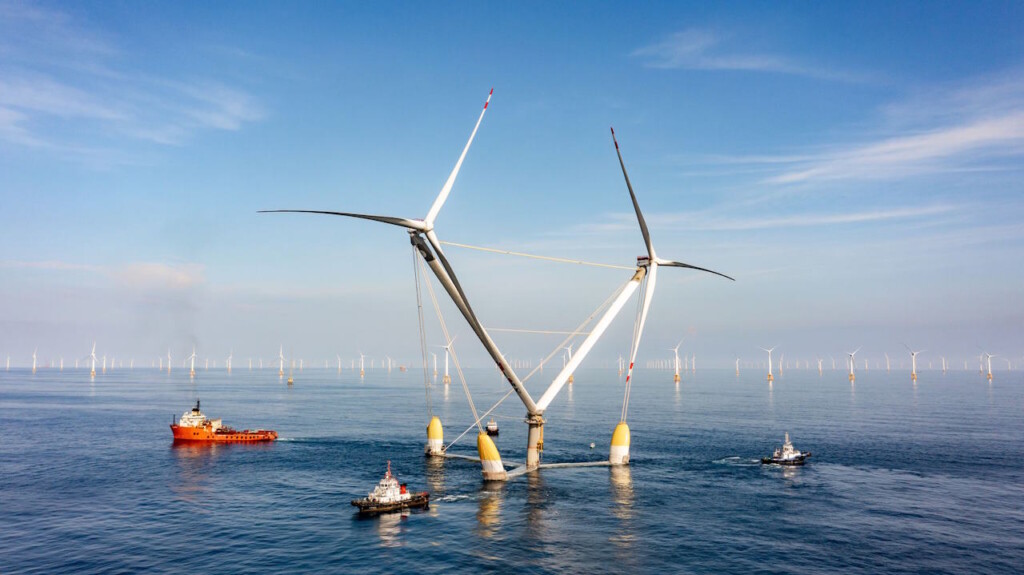
Two-Headed Wind Turbine Could Solve Every Challenge in the Offshore Industry

Ming Yang OceanX in operation – credit, Ming Yang Smart Energy

As the global leader in offshore wind development, a Chinese turbine manufacturer has designed a two-headed behemoth that will generate 50 megawatts on its own.

Blazing past renewable energy targets, the wind lobby in Beijing are serious players, unlike in Europe and North America where investment and R&D has lagged behind solar power.

Ming Yang Smart Energy already makes one of these two-headed turbines, but is planning to debut one that’s double the size of its existing model in 2026.

This Fortune 500 China-edition company is the undisputed world leader in wind turbines, particularly offshore ones, but not exclusively. It lays claim to both the most powerful land and offshore wind turbines in service today.

It developed the first typhoon-resistant floating turbine mooring, which was tested in September when Super Typhoon Ragasa passed over the entire 1,345-unit offshore fleet, and not one was upended. Every single one remained operational.

In 2024, the company debuted the previously mentioned double-rotor turbine—called the OceanX—consisting of two 8.3 MW turbines installed on 219-meter towers at an angle atop a floating platform. For comparison, the top-end turbines in the Moresea 1 wind farm in Great Britain generate 9 megawatts.

Just one OceanX in ideal conditions is boasted as having the capacity to power 30,000 homes annually. The counter rotating blades increase each turbine’s output beyond what the wind can do alone, but during testing the blades broke off from the force.

Nevertheless, the company managed to find buyers, and the OceanX was soon installed at the Yangjiang Qingzhou IV offshore wind farm, off the southeast China coast.

Marketing for the 50MW leviathan has already begun, with production slated for next year according to company boss Zhang Qiying who spoke at a Beijing conference recently. Such a turbine would drop the cost-per-kilowatt for wind energy in the Guangzhou area to around one-fifth of the current price for offshore wind energy in Europe.

Offshore wind power comes in for more criticism from environmentalists than land-based turbines, and so has been subjected to more research into its effects. However, with most of the world’s largest offshore wind farms coming online within the last decade, the body of evidence is limited.

Regarding collisions with birds, one 2022 study found that it was “unlikely that small-scale displacement by single wind farms would have an impact at the population level,” of migratory seabirds, which the study team found were at a 75-92% lower abundance inside the boundaries of the wind farm than out of it.

Concerns over disturbances among whales and the seabed sediment have also been raised, as well as offshore farms’ impact on coastal tourism, and their susceptibility to sabotage.

One surefire way to reduce these eco-impacts would be to reduce the number of turbine units in a given wind farm, and the best way to do that would be find a way for turbines to generate more electricity. 50 MW would be a truly astonishing operational achievement, and represent as much as a 15-fold increase in per-unit power generation compared to some turbines deployed in the North Atlantic.With such an abundance of energy, farms in sensitive environmental areas like whale or migratory seabird routes could substantially reduce their turbine counts if the Ocean’XL’ was part of the farm’s fleet. Two-Headed Wind Turbine Could Solve Every Challenge in the Offshore Industry

Friday, 31 October 2025

HSBC launches Innovation Banking in India, allocates $1 billion to support startups

IANS Photo

New Delhi, (IANS): HSBC India on Thursday announced the launch of its 'Innovation Banking' in India, which offers banking and financing solutions to support entrepreneurial businesses throughout their lifecycle, from seed to IPO, as well as their investors.

The bank plans to allocate $1 billion in non-dilutive debt capital to support Indian startups. The funding targets growth companies in early- to late-stage growth companies to scale their operations without diluting equity, helping founders and investors to retain greater control over their businesses, a release from the bank said.

HSBC India said that it already has a substantial balance sheet allocation for fund financing across venture capital and domestic private equity funds. With the launch of Innovation Banking, the bank aims to expand this offering, encompassing a broader range of funds and propositions, the release said.

The bank announced that its launch in India expands its global Innovation Banking platform, providing tailored financing and connectivity through over 900 experts worldwide.

David Sabow, Global Head of HSBC Innovation Banking, said that the $1 billion allocation signals a long-term commitment to India's innovation economy, job creation, and skills development.

“With the launch of HSBC Innovation Banking in India, we are deepening our support for the vibrant startup ecosystem, where we have a proven track record of partnering with clients on their growth journeys,” said Ajay Sharma, Head of Banking, HSBC India.

Through the combined strength of our global connectivity and significant venture network, HSBC Innovation Banking is well placed to support Indian startups to scale internationally and access new markets, he added.As India is the fastest-growing major economy and a tech and talent hub, Indian start-ups are expected to contribute $1 trillion to the domestic economy and generate 50 million new jobs by 2030, HSBC India said. HSBC launches Innovation Banking in India, allocates $1 billion to support startups | MorungExpress | morungexpress.com

Thursday, 30 October 2025

India’s electronics production reaches $133 billion in a decade, exports surge

IANS Photo

New Delhi, (IANS: In a major fillip to the 'Make in India’ initiative, India’s electronics production has surged from $31 billion to $133 billion in a decade beginning 2014-15, Commerce Minister Piyush Goyal has said.

The electronics exports have also seen a surge of over 47 per cent in Q1 of 2025-26 over the same quarter in 2024-25, the minister informed via an X post.

“Our government has created several enablers for making India Aatmanirbhar in manufacturing. As a result, we have moved from having 2 mobile manufacturing units in 2014 to over 300 today,” he added.

One of the greatest journeys has been the transformation from a mobile importer to becoming the world's second-largest mobile phone manufacturer.

“The electronics sector has also generated large-scale employment opportunities with solar modules, networking devices, charger adapters, and electronic parts, also playing a key role in strengthening our exports,” said Goyal.

According to latest data compiled by the India Cellular and Electronics Association (ICEA), electronics exports reached $12.4 billion in Q1 FY26, up from $8.43 billion in the same period last year. With this momentum, the industry body projects that electronics exports are expected to touch $46–50 billion by the end of the fiscal year.

The standout performer was the mobile phone segment, which grew by 55 per cent, from $4.9 billion in Q1 FY25 to estimated $7.6 billion in Q1 FY26.

Non-mobile electronics exports also posted solid growth, rising from $3.53 billion to estimated $4.8 billion, an increase of 36 per cent. These include key product segments such as solar modules, switching and routing apparatus, charger adapters and parts, and components.The electronics manufacturing sector has undergone a historic transformation over the past decade. This growth was enabled by well-calibrated policy interventions such as the Phased Manufacturing Programme (PMP), Production Linked Incentive (PLI) schemes, and strong state-industry collaboration. India’s electronics production reaches $133 billion in a decade, exports surge | MorungExpress | morungexpress.com

Monday, 6 October 2025

Hyundai India slashes car prices by up to Rs 2.4 lakh after GST cut, effective Sep 22


New Delhi: Hyundai Motor unveils the Creta Electric at the Bharat Mobility Global Expo 2025 in New Delhi on Friday, January 17, 2025. (Photo: IANS/Wasim Sarvar)

New Delhi, (IANS) Hyundai Motor India on Sunday announced that it will pass on the full benefit of the recent GST reforms to its customers, offering significant price cuts across its passenger vehicle range.

The new prices will come into effect from September 22, just ahead of the festive season.

With the revised pricing, Hyundai cars and SUVs will become cheaper by up to Rs 2.4 lakh.

The biggest reduction will be on the Hyundai Tucson, which will see a price cut of Rs 2,40,303.

Other popular models such as the Grand i10 Nios, Aura, Exter, i20, Venue, Verna, Creta, and Alcazar will also see substantial reductions ranging from around Rs 60,000 to over Rs 1.2 lakh.

Unsoo Kim, Managing Director of Hyundai Motor India Limited, said the company welcomes the government’s move to reduce GST on passenger vehicles.

“We sincerely appreciate the progressive and far-sighted move by the Government of India to reduce GST on passenger vehicles,” Kim added.

He described the reform as a boost for the auto industry and a step that makes personal mobility more affordable and accessible for millions of Indians.

He added that Hyundai is committed to supporting India’s growth journey by offering cars and SUVs that deliver value, innovation, and the joy of driving.

As part of the GST changes announced during the 56th GST Council meeting, small cars -- defined as vehicles under four metres in length with petrol engines up to 1,200cc or diesel engines up to 1,500cc -- will now attract 18 per cent GST, down from 28 per cent earlier.

Larger cars with bigger engines will face a higher GST of 40 per cent but without the additional cess that existed earlier.

Hyundai said that these reforms, described as GST 2.0, will not only reduce the cost of owning a car but also boost demand in the auto sector.The company expects the new pricing to strengthen customer sentiment and accelerate sales during the festive season. Hyundai India slashes car prices by up to Rs 2.4 lakh after GST cut, effective Sep 22 | MorungExpress | morungexpress.com

Thursday, 25 September 2025

India’s smartphone market grows 2 pc in 1H25: Report


IANS Photo

New Delhi, (IANS): India’s smartphone market grew by 2 per cent year-on-year (YoY) in the first half of 2025, with 60 million units shipped, a new report said on Friday.

Apple emerged as the fastest-growing brand with a strong 35 per cent jump in shipments, according to data compiled by International Data Corporation (IDC).

The report said that premium smartphones priced above Rs 50,000 played a big role in driving growth, while the mid-range segment of Rs 10,000–20,000 remained the largest in terms of overall volumes.

“Regionally, the northern states led the market with 33 per cent share, while the southern region grew the fastest,” the report said.

Smaller Tier-4 cities, including Mysore and Shimla, also recorded strong double-digit growth, showing rising demand beyond metros and big towns.

Meanwhile, another report by CyberMedia Research (CMR) said India’s premium smartphone market is set to grow by 18 per cent in sales and 24 per cent in value during the upcoming festive season.

Within this, super-premium devices in the Rs 50,000–1,00,000 category are expected to grow 15 per cent, while the uber-premium segment priced above Rs 1,00,000 could see a massive 167 per cent surge.

According to Prabhu Ram, VP–Industry Research Group at CMR, aspirational buyers, especially Gen Z and millennials, are driving the premium segment as they seek powerful devices that match their digital lifestyles.

“With increasing accessibility and affordability initiatives, more consumers are now looking to buy the latest premium devices,” he said.

Samsung, Apple and OPPO led the premium smartphone market in July with 28 per cent, 23 per cent and 11 per cent share, respectively.

Apple, backed by its latest iPhone 17 series and steady demand for older iPhones, is well placed for a strong festive season, the report added.

Consumers are also giving more importance to chipsets that power smartphones. Features such as seamless multitasking, high-end gaming, advanced cameras and AI-driven experiences are becoming top priorities for buyers.Analysts said that while overall smartphone market growth remains modest, strong demand in the premium segment and intensifying competition among brands will give Indian buyers more options this festive season. India’s smartphone market grows 2 pc in 1H25: Report | MorungExpress | morungexpress.com

Friday, 19 September 2025

India’s fruit and vegetable exports surge 47.3 pc in last 5 years


IANS Photo

New Delhi, (IANS): The financial assistance schemes of Agricultural and Processed Food Products Export Development Authority (APEDA) have helped India’s fruit and vegetable exports surge by 47.3 per cent in the last five years, according to the government.

According to the Ministry of Commerce and Industry, the exports of fresh fruits and vegetables reached 123 countries in FY2023-24.

In the last three years, Indian fresh produce entered 17 new markets, some of which are Brazil, Georgia, Uganda, Papua New Guinea, Czech Republic, Uganda and Ghana, etc.

This has been achieved through a host of measures such as participation in international trade fairs, actively pursuing market access negotiations and organising buyer seller meets, etc, according to the ministry.

The Department of Commerce, through APEDA, provides financial assistance to its member exporters of APEDA from across the country, for export promotion of its Scheduled products, including for fruits and vegetables, under Agriculture and Processed Foods Export Promotion Scheme of APEDA for the 15th Finance Commission Cycle (2021-22 to 2025-26).

“As a result of these initiatives, there has been a growth of 47.3 per cent in the volume of exports of fruits and vegetables between the period 2019-20 to 2023-24,” the ministry informed.

The growth in terms of value in the last five years stands at 41.50 per cent.

The major states producing fruits and vegetables are Uttar Pradesh, Madhya Pradesh, West Bengal, Maharashtra, Andhra Pradesh, Gujarat, Bihar, Tamil Nadu, Odisha and Karnataka.

The Department of Commerce is working in close coordination with the Ministry of Agriculture and Farmers' Welfare in prioritising agriculture products for market access negotiations to reach new markets. As a result, India has achieved new market access in several commodities in the last three years.There are Indian potatoes and onions in Serbia; baby corn and fresh banana in Canada; pomegranate arils in Australia, USA, Serbia and New Zealand; and whole pomegranates in Australia via irradiation treatment. India’s fruit and vegetable exports surge 47.3 pc in last 5 years | MorungExpress | morungexpress.com

Tuesday, 9 September 2025

E.l.f. Beauty Secures Rhode Brand in Historic $1B Acquisition


By Aamna Aamna, E.l.f. Beauty made headlines on Wednesday with news of its $1 billion deal for Rhode, a new purchase and the biggest in their company’s history. The new deal adds one of Gen Z’s most beloved beauty brands to the budget-focused cosmetics company. Rhode has quickly become a preferred brand for young people mostly because of Bieber’s influence and how the company promotes itself. Oakland-based e.l.f. is strengthening its premium line with the acquisition and reaching a loyal group of Rhode’s customers.

Bieber will hold both the posts of Chief Creative Officer and Head of Innovation with the new structure, so the brand will not change its essence. The model and entrepreneur will supervise making the products, setting their style and creating marketing plans for e.l.f., in addition to giving advice about the company’s broader strategies. The deal is higher than e.l.f.’s last important purchase of Naturium which was for $355 million, proving the company’s determined effort to expand. As a result of the deal, e.l.f. can profit from the rising popularity of celebrity cosmetics among these age groups.These experts feel that the deal allows e.l.f. to sell Rhode’s products while benefiting from Rhode’s famous name and big social media following. E.l.f. Beauty Secures Rhode Brand in Historic $1B Acquisition

Thursday, 14 August 2025

Global 5G Modem Market is projected to grow at a CAGR of 12.45% from 2024 to 2032, reaching a value of USD 5.6 billion by the end of the forecast period


Posted by Harry Baldock, Press Release: The 5G modem is vital in the changing telecom landscape. It connects devices to ultra-fast, low-latency 5G networks.

Devices such as 𝐬𝐦𝐚𝐫𝐭𝐩𝐡𝐨𝐧𝐞𝐬, 𝐚𝐮𝐭𝐨𝐧𝐨𝐦𝐨𝐮𝐬 𝐜𝐚𝐫𝐬, 𝐬𝐦𝐚𝐫𝐭 𝐟𝐚𝐜𝐭𝐨𝐫𝐢𝐞𝐬, 𝐚𝐧𝐝 𝐈𝐨𝐓 𝐬𝐲𝐬𝐭𝐞𝐦𝐬 benefit from high-speed data, quick communication, and smooth connections due to 5G modems. This is why the 5G modem market is expanding rapidly.

𝐆𝐞𝐭 𝐭𝐡𝐞 𝐟𝐮𝐥𝐥 𝐫𝐞𝐩𝐨𝐫𝐭 @ https://tinyurl.com/2muufj72

Tech companies are putting significant money into 𝐀𝐈, 𝐜𝐥𝐨𝐮𝐝, 𝐚𝐧𝐝 𝐞𝐝𝐠𝐞 𝐜𝐨𝐦𝐩𝐮𝐭𝐢𝐧𝐠 to improve 𝟓𝐆 𝐦𝐨𝐝𝐞𝐦𝐬. Features like 𝐦𝐮𝐥𝐭𝐢-𝐠𝐢𝐠𝐚𝐛𝐢𝐭 𝐬𝐩𝐞𝐞𝐝𝐬, 𝐛𝐞𝐭𝐭𝐞𝐫 𝐞𝐧𝐞𝐫𝐠𝐲 𝐞𝐟𝐟𝐢𝐜𝐢𝐞𝐧𝐜𝐲, 𝐚𝐧𝐝 𝐧𝐞𝐭𝐰𝐨𝐫𝐤 𝐬𝐥𝐢𝐜𝐢𝐧𝐠 are becoming common.

The demand for 𝐬𝐦𝐚𝐫𝐭 𝐜𝐢𝐭𝐢𝐞𝐬 and 𝐜𝐨𝐧𝐧𝐞𝐜𝐭𝐞𝐝 𝐯𝐞𝐡𝐢𝐜𝐥𝐞𝐬, along with government backing for standalone 5G networks, is leading to the creation of new compact, multi-band, and mmWave-compatible modems. This greatly enhances the user experience.

𝐃𝐨𝐰𝐧𝐥𝐨𝐚𝐝 𝐬𝐚𝐦𝐩𝐥𝐞 𝐫𝐞𝐩𝐨𝐫𝐭 @ https://tinyurl.com/8nxym5my

𝐊𝐞𝐲 𝐆𝐫𝐨𝐰𝐭𝐡 𝐃𝐫𝐢𝐯𝐞𝐫𝐬:

🔸 𝐑𝐚𝐩𝐢𝐝 𝟓𝐆 𝐀𝐝𝐨𝐩𝐭𝐢𝐨𝐧: Telecom providers worldwide are launching 5G, increasing the need for high-speed modems for consumers and industries.

🔸 𝐆𝐫𝐨𝐰𝐢𝐧𝐠 𝐒𝐦𝐚𝐫𝐭𝐩𝐡𝐨𝐧𝐞 & 𝐃𝐞𝐯𝐢𝐜𝐞 𝐌𝐚𝐫𝐤𝐞𝐭: As major smartphone brands introduce 5G models, the demand for both integrated and standalone 5G modems is increasing.

🔸 𝐂𝐨𝐧𝐧𝐞𝐜𝐭𝐞𝐝 𝐕𝐞𝐡𝐢𝐜𝐥𝐞𝐬: 5G modems are essential for V2X (vehicle-to-everything) communication, offering fast and reliable connections for autonomous vehicles.

🔸 𝐈𝐨𝐓 & 𝐒𝐦𝐚𝐫𝐭 𝐂𝐢𝐭𝐲 𝐄𝐱𝐩𝐚𝐧𝐬𝐢𝐨𝐧: Billions of IoT devices, from smart meters to sensors, depend on strong 5G connections supported by efficient modems.

🔸 𝐀𝐈 & 𝐄𝐝𝐠𝐞 𝐂𝐨𝐦𝐩𝐮𝐭𝐢𝐧𝐠 𝐈𝐧𝐭𝐞𝐠𝐫𝐚𝐭𝐢𝐨𝐧: 5G modems work with edge computing to provide real-time data processing. This drives innovation in AR/VR, healthcare, and manufacturing.

𝐅𝐨𝐫 𝐦𝐞𝐝𝐢𝐚 𝐢𝐧𝐪𝐮𝐢𝐫𝐢𝐞𝐬, 𝐢𝐧𝐭𝐞𝐫𝐯𝐢𝐞𝐰𝐬, 𝐨𝐫 𝐚𝐜𝐜𝐞𝐬𝐬 𝐭𝐨 𝐭𝐡𝐞 𝐟𝐮𝐥𝐥 𝐦𝐚𝐫𝐤𝐞𝐭 𝐫𝐞𝐩𝐨𝐫𝐭, 𝐩𝐥𝐞𝐚𝐬𝐞 𝐜𝐨𝐧𝐭𝐚𝐜𝐭:

Ushmani

MarketIntel Reports


Wednesday, 30 July 2025

India moves from mobile phone assembler to global manufacturing hub: Industry

New Delhi, (IANS) Indian mobile exports beat domestic demand to become the primary driver of production, as the country moved from an import-reliant mobile market in 2014-15 to a global production and export hub in 2024-25, a study showed on Wednesday.Military tourism packages Since 2018-19, mobile phone net exports have been strong, as exports rising from $0.2 billion in 2017-18 to $24.1 billion in 2024-25. India is moving beyond just assembling imported parts to a deeper industrial base where complex components are manufactured locally. "India's mobile phone production saw a significant rise in Domestic Value Addition (DVA), both directly and through supporting industries. This suggests a maturing ecosystem with stronger domestic participation," said the study by the Centre for Development Studies (CDS), a social science research centre. The total DVA (direct + indirect) increased to 23 per cent, amounting to more than $10 billion in 2022-23. The country is now the world’s 3rd-largest exporter of mobile phones clocking $20.5 billion (CY2024) worth of exports. Government support since 2017 and strategic integration into global value chains (GVCs) after the launch of the Production Linked Incentive (PLI) scheme drive Indian success, the findings showed.Military tourism packages Mobile phone production industry employs 17 lakh workers in 2022-23. Jobs linked to exporting of mobile phones surged by over 33 times, the study found. “India’s success mirrors the path taken by other Asian economies — achieving scale first and deepening value addition over time. Continued government support in this space will remain critical over the next decade,” said Professor C. Veeramani, CDS Director and RBI Chair Professor. “With mobile phone manufacturing providing a blueprint for growth, India can replicate similar strategies across the electronics sector to position the country as a global manufacturing leader,” he added. On the findings of the study, Pankaj Mohindroo, Chairman, India Cellular and Electronics Association (ICEA), said, “This study reaffirms what ICEA has consistently advocated that strategic integration into global value chains is critical for scaling exports, enhancing domestic value addition, and creating jobs”. “The evidence clearly validates our position that India’s participation in backward-linked GVCs has delivered substantial gains to the country,” he added. India moves from mobile phone assembler to global manufacturing hub: Industry | MorungExpress | morungexpress.com

Thursday, 15 May 2025

UK, India strike trade deal amid US tariff blitz


LONDON - The UK on Tuesday agreed a free trade agreement with India, its biggest such deal since leaving the European Union, after negotiations relaunched in February following US tariff threats.

Britain has sought to bolster trade ties across the world since it left the EU at the start of the decade, a need that strengthened after the United States unleashed tariffs that risk weaker economic growth.

"Today we have agreed a landmark deal with India -- one of the fastest growing economies in the world, which will grow the economy and deliver for British people and business," UK Prime Minister Keir Starmer said in a statement.

His Labour government added it is "the biggest and most economically significant bilateral trade deal the UK has done since leaving the EU".

India's Prime Minister Narendra Modi described the deal as "ambitious and mutually" beneficial.

The pact will help "catalyse trade, investment, growth, job creation, and innovation in both our economies", Modi said in a post on social media platform X.

His office said in a statement the deal will "unlock new potential for the two nations to jointly develop products and services for global markets".

It added that Modi had invited Starmer to visit India at an unspecified date.

- Whisky and shoes -

The accord will slash tariffs on imports of UK goods into India, including whisky, cosmetics and medical devices.

Whisky and gin tariffs will be halved to 75 percent, while automotive tariffs will be slashed from more than 100 percent to 10 percent.

In exchange, the UK will cut tariffs on imports of clothes, footwear and food products, including frozen prawns, from India.

It comes after US President Donald Trump hiked tariffs on trading partners and launched sector-specific levies on steel, aluminium and cars.

The UK and India are the sixth and fifth largest global economies respectively, with a trade relationship worth around £41 billion ($54.8 billion) and investment supporting more than 600,000 jobs across both countries.

The free trade agreement is expected to increase trade between the two countries by £25.5 billion, as well as boost the British economy and wages.

The UK called it "the best deal India has ever agreed".

Talks were relaunched between the two countries in February after stalling under Britain's previous Conservative administrations.

In previous negotiations, India had pushed for more UK work and study visas for its citizens in exchange for lowering tariffs.By Alexandra Bacon UK, India strike trade deal amid US tariff blitz

Tuesday, 6 May 2025

India’s mineral production surges to all-time high in 2024-25


New Delhi, (IANS): The production of key minerals such as iron ore, manganese ore, bauxite and lead in the country have recorded a robust growth in financial year 2024-25 after reaching record production levels in FY 2023-24, according to a statement issued by the Ministry of Mines on Monday.

The output of iron ore, which accounts for 70 per cent of the total mineral production by value, increased to 289 million metric tonnes (MMT) in FY 2024-25, breaking the earlier production record of 277 MMT achieved in FY 2023-24, registering a 4.3 per cent growth.

Similarly, the production of manganese ore has also surpassed the production record of 3.4 MMT achieved in FY 2023-24, with an 11.8 per cent jump to 3.8 MMT in FY 2024-25.

The production of bauxite has risen by 2.9 per cent to 24.7 MMT in FY 2024-25 from 24 MMT in FY 2023-24. During the same period, lead concentrate production rose from 381 thousand tonnes (THT) to 393 THT, with a 3.1 per cent growth.

In the non-ferrous metal sector, primary aluminum production in FY 2024-25 has also broken the production record of FY 2023-24. Primary aluminium production increased from 41.6 lakh ton (LT) in FY 2023-24 to 42 LT during FY 2024-25. Besides, refined copper production saw a robust growth of 12.6 per cent, increasing from 5.09 LT in FY 2023-24 to 5.73 LT in FY 2024-25.

India is the second largest Aluminium producer in the world, among the top-10 producers of refined copper and the fourth largest iron ore producer in the world. Continued growth in production of iron ore in the current financial year reflects the robust demand conditions in steel which is the user industry for these metals.Coupled with growth in aluminium and copper, these growth trends point towards continued strong economic activity in user sectors such as energy, infrastructure, construction, automotive and machinery, the statement added. India’s mineral production surges to all-time high in 2024-25 | MorungExpress | morungexpress.com