bloggggg

Home  |  Live  |  Science  |  Lifestyle  |  Entertainment  |  Broadcast  |  Games  |  eBooks  |  Astounds  |  Adbite  |  Cricbell  |  Cyber  |  Idea  |  Digital  |  Privacy  |  Publish  |  ePaper  |  Contact  .Subscribe.Subscribe.Subscribe.Subscribe.Subscribe.Subscribe.Subscribe.Subscribe.Subscribe
Subscribe

Thursday, 20 November 2025

Giant 7’9” Canadian is Tallest Player in College Basketball History, Dunking Without Jumping (WATCH)


He was the same height as his kindergarten teacher and had eclipsed seven-feet-tall by the time he entered seventh grade.

And now—standing at 7’9”—Olivier Rioux from Quebec has ascended into sports history by becoming the tallest person to ever play in a college basketball game.

As the minutes ticked away in the second half of the University of Florida’s trouncing of North Florida on November 6th, the audience began chanting for Olivier.

Moments later, Florida coach Todd Golden turned toward the Canadian and granted the crowd’s wish.

More cheers rang out. And soon, history was made. (See the moment below…)


Olivier only played for two minutes late in the game for the team, which has an already stacked roster. He scored no points or rebounds, but was happy to be on the court—hearing the fans cheer for him.

“It felt great. The support from everybody was amazing,” Rioux told USA Today after the game. “Even on the bench and even with the fans. Everybody supported me. I’m very grateful.”

Prior to this month, Manute Bol had been the tallest college player—yet he measured a full two inches shorter than Olivier.

The young man’s journey into basketball accelerated rapidly after he played in an international tournament in Spain at the age of 12, and videos from his game went viral, reaching more than a million people.

In 2021, the youth with a size 20 shoe began attending IMG Academy in Florida, one of the country’s preeminent prep schools for standout athletes, and has been working to refine his talents ever since.

“He’s put in a lot of great work and to his credit, he’s kept a great attitude without getting a lot of reward in terms of playing time and opportunity,” Golden told USA Today.

“I thought (the North Florida game) would be a good opportunity to get him out there and get his first college experience, and I think he was pretty excited. It was pretty neat for him to finally see the floor.”

But will his 8-foot wingspan be enough to turn him into an NBA player?

Other incredibly tall players such as Bol, Yao Ming (7’6”), and current superstar Victor Wembanyama (7’4”) have proven that there is plenty of room in the NBA for big men.“The sky is the limit for him,”Rioux’s coach at IMG, Jeremy Schiller told Canada’s W5. “We haven’t even scratched the surface of what he can be.” Giant 7’9” Canadian is Tallest Player in College Basketball History, Dunking Without Jumping (WATCH)

Friday, 5 September 2025

Nuclear at heart of Ontario's integrated energy strategy

Minister Lecce (front row, third from left) was joined by many generations at the launch of the new plan (Image: Stephen Lecce/X)

The government's newly released energy roadmap brings together electricity, natural gas, hydrogen and other energy sources under a single coordinated strategy to ensure the province which already gets more than half of its electricity from nuclear plants has the affordable, secure, reliable and clean energy it needs.

Energy for Generations, which was launched on 12 June by Minister of Energy and Mines Stephen Lecce, builds on a 2024 vision paper setting out a comprehensive assessment of the challenges facing the province's energy system, including the need to meet rapidly growing demand, electrify key sectors, and maintain reliability, all while keeping energy rates down. A public consultation on that paper, Ontario's Affordable Energy Future: The Pressing Case for More Power, attracted responses from Indigenous communities, municipalities, utilities, stakeholders and the public.

With the subtitle Ontario's Integrated Plan to Power the Strongest Economy in the G7, the government says this is Ontario's first integrated energy plan. It establishes a planning horizon to 2050. Four principles of affordability, security, reliability, and clean energy are embedded throughout the plan, which the government says "enables smarter decision-making, better system coordination, and more cost-effective investments that will benefit families, workers, and businesses across the province."

With nuclear currently responsible for 50% of Ontario's total generation and hydro contributing 24%, Ontario already has one of the cleanest grids in the world, the plan notes. Under Energy for Generations, "nuclear power will continue to serve as the backbone of the province's electricity system providing the 24/7 baseload power the province's economy requires" as demand continues to rise.

Ongoing refurbishments of Ontario's existing nuclear power plants "are anchoring a domestic nuclear supply chain that supports long-term energy security, economic resilience, and innovation," the plan notes, and the province is building on the experience from these major projects as it supports the development and deployment of small modular reactor (SMR) units at Darlington. The construction, operation and maintenance of the four units will add CAD38.5 billion (USD28.4 billion) to Canada's GDP over the next 65 years, with 80% of spending going to Ontario companies and with construction and operations sustaining an estimated 3,700 highly skilled, good-paying jobs for the next 65 years.

Bruce units 1 and 2 are not part of the current round of refurbishments: those two units were fully refurbished and returned to service more than a decade ago. But a second refurbishment of those units "remains an available option that can be explored under the existing contract between Bruce Power and the IESO", the plan said. The IESO is Ontario's Independent Electricity System Operator.

The province is also looking to new large-scale nuclear generation, which the plan notes will be needed in the long-term to meet future electricity demand. Pre-development work has already begun to site the first large-scale nuclear build in Ontario since 1993 at the existing Bruce nuclear site; Ontario Power Generation (OPG) is advancing early-stage planning for new large scale nuclear generation at Wesleyville, Port Hope.

"As Ontario plans for the next generation of nuclear energy, the government is ensuring OPG and Bruce Power take a deliberate, coordinated approach to evaluating future large-scale nuclear technologies at their sites. This approach recognises the long lead times, complexity, and lasting impacts of new nuclear projects and would draw on the expertise of the IESO to support informed, long-term decision-making on the role of nuclear energy in Ontario's future electricity system," the plan notes.

Lecce described the plan as Ontario's most ambitious energy plan in a generation. "At the turn of the century, our great grandparents had the vision to build Ontario's hydroelectric dams, later our grandparents started the build-out of Ontario's nuclear fleet, and today, that responsibility falls on us to build for the future," he said. "While every jurisdiction around us scrambles for affordable power, our government is thinking ahead, building for our children and grandchildren. Energy for Generation represents the ambition and long-term thinking necessary to deliver critical nation-building priorities that solidify Canada's self-reliance."

"With this blueprint, Ontario has the opportunity to lead the world in both small and large nuclear development," OPG President and CEO Nicolle Butcher said. "Coupled with our expanding hydroelectric portfolio and other low-carbon technologies, the growth of a reliable provincial grid will also boost economies and strengthen our energy security."Bruce Power President and CEO Eric Chassard said the company was "proud" of its central role in building a "clean, reliable, and affordable energy future" for Ontario. "As a company that's Canadian at our core, we're committed to powering the growth of our economy and communities with made-in-Ontario nuclear innovation. Our investments in life-extension and pre-development work for Bruce C support the province's growing economy and population while ensuring we remain a global leader in emissions-free electricity." Nuclear at heart of Ontario's integrated energy strategy

Tuesday, 29 July 2025

59-year-old Breaks Women’s World Record for the Longest Time in an Abdominal Plank Position

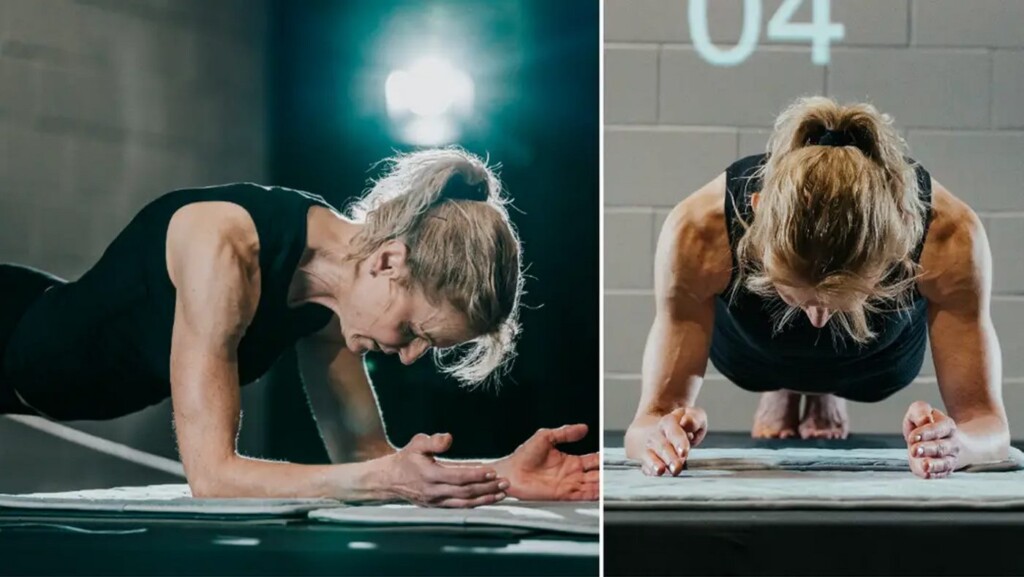
DonnaJean Wilde setting the plank record – Guinness World Records

A woman in Alberta just set a new world record for the longest time spent in an abdominal plank position, managing 4 hours, 30 minutes, and 11 seconds.

DonnaJean Wilde realized that a plank was an excellent exercise to do in a cast after she broke her wrist 10 or so years ago and needed something to do to get her heart rate up.

Strangely enough, the previous record was also held by a Canadian who was also from Alberta and also named Dana, who managed 4 hours, 19 minutes, and 55 seconds.


“Growing up, whenever we woke up, our mom had already run 4 miles. And that just progressed,” said Ray Wilde, DonnaJean’s son.

“If I’m going to watch a movie and she wants to watch a movie with me, she’ll watch it in the plank position,” said her husband, Randy Wilde.

“She did her entire master’s degree planking,” said daughter Laura Stevenson.

When the mother of 5 with 12 grandchildren went to university about 20 years ago for the masters, she contracted something called transverse myelitis, which manifests in pain and numbness.


Where? You guessed in—the arms, hands, and shoulders. Husband Randy says dealing with that pain every day actually what allows her to deal with the pain of sitting in an abdominal plank for so long.She said it feels like a dream come true: we can only imagine.59-year-old Breaks Women’s World Record for the Longest Time in an Abdominal Plank Position

Friday, 13 June 2025

Canada's McIntosh breaks 400m medley world record


VICTORIA - Summer McIntosh bagged her third world record in days on Wednesday, clocking 4min 23.65sec to better her own 400 medley record at the Canadian Swimming Trials in Victoria.

The 18-year-old Canadian prodigy, a three-time Olympic gold medallist, laid down another impressive marker ahead of next month's World Championships in Singapore with a dominant performance.

McIntosh's blistering time beat her old mark of 4:24.38 set in Toronto in May last year at the Canadian Olympic trials.

McIntosh's assault on her own world record got off to a smooth start, with the teenager completing the opening butterfly leg in world record pace.

She was more than a second ahead of the world record at the halfway stage, and although that margin dropped to one-tenth of a second after the breaststroke, she produced an electrifying freestyle down the stretch to complete a scintillating performance.


"Going into tonight, I knew I could do something really special because this has probably been the best meet of my career," McIntosh said afterwards in a pool deck interview.

"World records are made to be broken. So by the time I leave this sport, I want to make sure that that record is as fast as possible.

"That really keeps me going, because I know there's always going to be the next generation of kids growing up, and they're going to be chasing the record. So I've gotta give them my best effort to see how long it can stand."

Wednesday's record-breaking display was the latest entry to an impressive catalogue of performances she has produced this week in British Columbia.

On Saturday, she smashed the women's 400m freestyle record, slicing more than a second off Australian star Ariarne Titmus's world best from 2023.

She then clocked the third fastest 800m freestyle in history on Sunday, before diving back into the pool on Monday to obliterate Hungarian great Katinka Hosszu's decade-old 200m medley world record.McIntosh, who gold medals in the 200m butterfly, 200m medley and 400m medley at last year's Paris Olympics, will now head to next month's worlds aiming to add to her collection of four world championship gold medals. Canada's McIntosh breaks 400m medley world record

Friday, 30 August 2024

Second-Largest Diamond Ever Found is Unearthed in Botswana: A ‘Remarkable find’


The second-largest diamond ever unearthed was found in Botswana last week.
Lucara Diamond, a Canadian company, found the huge 2,492 carat stone in the Karowe mine where they had deployed X-ray technology in their search.

The diamond is the biggest reported in over a century, since the ‘Cullinan Diamond’ was discovered in South Africa in 1905, measuring 3,106 carats. That one was cut into gems, some of which form part of the British Crown Jewels.

Weighing about a pound, the massive rock (still unnamed) will go on display in Botswana this week—and its discovery will help fund critical education and healthcare programs in the African county.

A Lucara news release said the “remarkable find” was detected and recovered by the Company’s Mega Diamond Recovery X-ray Transmission technology, installed in 2017 to identify and preserve large, high-value diamonds.

The latest “historic discovery” joins an impressive roster of other significant finds from the mine, including one at 1,758 carats and another at 1,109 carats.

“We are ecstatic about the recovery of this extraordinary 2,492 carat diamond,” said William Lamb, President of Lucara.

“It represents not only the unparalleled wealth found in Botswana’s soil, but also the remarkable progress the nation has made in developing its diamond industry for the benefit of its citizens.”

The country is the world’s largest diamond producer, with the gems accounting for 80% of Botswana exports and a third of its revenues by value. In recent years, the nation has partnered with the industry to implement rigorous environmental standards and maximize its positive impact on local communities.

Wednesday, 14 August 2024

Canada to turn radioactive sources from Thailand into cancer treatments

The benefits of the scheme are called 'monumental' (Image: Archara Phattanasub/TINT/IAEA)

Canadian Nuclear Laboratories (CNL) has received shipments of disused radium-226 sources from the Thailand Institute of Nuclear Technology, which will be recycled to produce actinium-225 to be used in targeted radiotherapy.

The arrangement is part of the International Atomic Energy Agency's (IAEA's) Global Radium-226 Management Initiative, which aims to connect countries who have old radiotherapy sources with other countries interested in recycling or reusing them.

According to the IAEA: "Radium-226, discovered in 1898 by Marie Sklodowska-Curie and Pierre Curie, was formerly used in radiotherapy but has since been replaced by other sources. Today, it serves as a feedstock for the production of the radioisotope actinium-225, which is so rare that annual global production is less than a grain of sand. Actinium-225 is an alpha-emitting source known to be effective in destroying malignant cells in targeted cancer treatments. It allows for targeted radiotherapy as it can be placed close to the tumour and will kill cancerous cells without damaging nearby healthy tissue."

Thailand Institute of Nuclear Technology and CNL have been in contact via the scheme since 2022 and over the past year 70 packages of disused radium-226 have been sent to Canada. The institute's Archara Phattanasub, Head of the Radioactive Waste Technology and Development Section, said: "Recycling these sources has multiple benefits for Thailand and is in line with circular economy objectives. This initiative has helped up significantly reduce the risk for any type of incident associated with these disused sources and freed up a lot of space in our national storage facility."

Jack Craig, President and CEO of CNL, said: "The IAEA has long championed the safe storage and disposal of disused sealed radioactive sources, which has always been appreciated and supported by Canada. However, their initiatives to assist donor nations in removing long-term liabilities while enabling a new radiotherapeutics industry is monumental."

Olena Mykolaichuk, the Director of the IAEA’s Division of Nuclear Fuel Cycle and Waste Technology, said the collaboration "serves as a great example of how to effectively conduct complex source transportation operations with many moving parts ... fostering sustainable practices is a key element of the IAEA’s mandate, and we look forward to delivering on this initiative for many years to come."

The transport of radioactive material is closely regulated and overseen by national bodies and port authorities, with IAEA support prior to shipment. More transfers are planned for this year, including from El Salvador, Fiji and Slovenia.Researched and written by World Nuclear News Canada to turn radioactive sources from Thailand into cancer treatments : Waste & Recycling - World Nuclear News

Monday, 19 February 2024

Urban Island Experiences unlock North American luxury traveller market with strategic offer designed for Canada

Canadian High Commissioner Eric Walsh, AOD /Urban Island Chairperson Linda Speldewinde and the first group of Urban Island Experiences North American tourists
From left: Hemas Holdings Plc Director Abbas Esufally, AOD /Urban Island Chairperson Linda Speldewinde and Canadian High Commissioner Eric Walsh
Travellers at the Colombo Innovation Tower, meeting AOD designers and alumniinaugural group completes two weeks of inspiringly curated and designed deeply experiential trip hailed by travellers as ‘a journey of a lifetime’ Well-thought-out entry point using Sri Lanka’s creative resources and agricultural and craft heritage to interest the Canadian travel market

When the Urban Island boutique was launched in the Canadian capital Toronto in the exclusive neighbourhood of Rosedale just over a year ago, it became the only dedicated ambassador of Sri Lankan design, creativity and craft in the city.

As customers flocked to purchase all-natural products handcrafted and designed in Sri Lanka, Linda Speldewinde—the entrepreneur behind Urban Island—saw an opportunity to offer something even more unique; to share our island in a refreshing manner and do something meaningful for its customers. She envisioned something that would be a trip for the travellers’ soul, uniquely designed through the Urban Island lens, and give back to Sri Lanka a manifold in the process. The product would strictly target the high-end luxury traveller with a focus on the North American market, which Linda had identified for Sri Lanka. A clear win-win.

As a materialisation of this thought process, in January 2024, Sri Lanka welcomed a group of Canadian travellers on an islandwide journey to make a first-hand connection with the source of their favourite handmade pieces purchased back in Toronto. Between visiting the emerald hills of Sri Lanka’s sprawling tea country, climbing the legendary wonder of Sigiriya, beach, jungle safaris and all the other delights that make visitors fall in love with Sri Lanka, the group was also able to experience the Mandaramnuwara village where they were welcomed into the lives of artisans and farmers who make and grow their products from using natural processes and materials. This unusual experience, which every single visitor highlighted as transformative or a ‘magic moment’, was what made their visit to Sri Lanka deeply meaningful.

“It was a journey of a lifetime,” said Diana Soloway, a businesswoman and Torontonian thoroughly moved by the experience.

Now, this group is returning to Canada, determined to tell more people why they should visit this remarkable little island rich with culture, nature, opportunities for a real human-to-human connection and witnessing a way of life that is slower and closer to nature.

Although this unusual travel offer evolved just within a year since Urban Island opened up in Toronto, it was long in the making. It stems from Urban Island Founder Linda Speldewinde’s 2021 post-COVID strategy for the group to switch up Sri Lanka’s travel narrative and be part of it . The strategy revolved around highlighting the island’s most authentic facets combining craft heritage and traditional agriculture that draws parallels to popular travel pursuits such as nature immersion and sustainable tourism. It is this vision that comes into fruition now, with a strategic focus on the North American travel market, especially the Canadian.

Sharing her views at the closing cocktails hosted at the Colombo Innovation Tower (CIT)—home to AOD and the design ecosystem that Urban Island is part of—Linda stated that the idea was to create a real connection between the travellers and what they experience, from the people they encounter to the places they visit.

“When they saw the products seen at the stores in Canada here in Sri Lanka, with the artisans who made them, in their village, within their homes…and to the artisans to realise that these are their customers was really something…the connection was obvious and everybody was deeply moved. Today at the CIT, they met the young AOD designers who designed those products and who are behind taking design to the village; again, the human-to-human connection here was very meaningful to all these travellers who are all entrepreneurs, professionals and business owners themselves. Our vision is not just to bring more travellers, but to bring in meaningful travel that helps people see the wealth of resources that Sri Lanka has while bringing them into first-hand contact with Sri Lankans who are building and evolving our heritage like the artisans in the village and triggering new cultural movements like the AOD students in Colombo. This is the first time we did it, and this is something really special that we want to share with the world. This is not regular travel; this is a trip for your soul.”

At this event bidding farewell to the group of Canadian visitors who travelled through Sri Lanka with Urban Island, the Canadian High Commissioner to Sri Lanka and the Maldives Eric Walsh, was optimistic.

He commented on the significance of building person-to-person connections and Urban Island’s offer as an example of building Sri Lanka as a meaningful destination in the eyes of the Canadian travel market. “For people in Canada who purchase Urban Island products to not just see where the products are from, but even meet the people who designed and wove their products…isn’t that an amazing experience, in this globalised world, to have those personal connections? This to me is a wonderful example.”

Speaking at the gathering, special invitee, Hemas Holdings Plc Director Abbas Esufally commented recognising the potential of this market and its high-spending consumers. “It’s not a volume market, but a high-yielding one. They’re the kind of travellers we want to bring here,” he said.

Being a travel industry veteran, Esufally is also familiar with what Sri Lanka needs to address to attract the North American travel market. “Yes, the distance is a bit of a setback when it comes to this market, but it’s not a hurdle if it is done like what Urban Island has done by strategically combining with neighbouring destinations, like the Maldives for example, for this trip. We have to offer them more attractive combinations of experiences and place ourselves as part of bigger world tours, that make it worthwhile.”

Urban Island Experiences aims to present a fresh, and unique reflection of Sri Lanka through a ‘design thinking’ lens that successfully combines its traditional lifestyles, values and ingenuity reflected in heritage crafts and small-scale farming practices that accurately capture the lives lived by most Sri Lankans as much as those portrayed by more popular narratives involving ayurveda, historical locations, jungles and beaches.

By the reactions of the first group of travellers from this initiative, Urban Island Experiences got it absolutely right and is on its way to planning the next groups of travellers to the island.

Dana Zosky, businesswoman, Toronto: “It is the most magical and the most beautiful country in the world. When I thought about the journey to get here, it didn’t intimidate me because, you know, a lot of people from Canada travel to Australia or New Zealand or Africa or Asia, and it’s a little different. It’s an easy place to get to from Canada, so that should not be a deterrent. And it’s a beautiful little island that offers so much.”

Beth Bynoe, entrepreneur, British Columbia: “It was a special experience; we went into multiple villages where local artisans produce beautiful handcrafted items at the cottage industry level. Seeing women working from their homes, women being able to help families and work in their own time where they have available help… I’ll probably come back and see what the northern half of the island has to offer.”

Natalie Witkin, businesswoman, Toronto: “The beauty of Sri Lanka is the variety of experiences that I’ve had here. The animals, safari…the beautiful countryside, the vibrant city. The beautiful people—you are so kind and always smiling, and teach us so much. We were blessed when we got to meet local people and have that experience seeing how they work and live, feeling life, appreciating life, and the beauty that they’re surrounding.” Urban Island Experiences unlock North American luxury traveller market with strategic offer designed for Canada | Daily FT

Monday, 6 November 2023

Reliance to invest $122 million in Brookfield JV for data center projects in India

FILE PHOTO: Labourers rest in front of an advertisement for Reliance Industries at a construction site in Mumbai, India, March 2, 2016. REUTERS/Shailesh Andrade/File Photo
BENGALURU -India’s Reliance Industries said on Monday it would invest up to 10 billion Indian rupees ($122.24 million) in building data centers in the country along with Canada-based Brookfield Infrastructure. The announcement comes at a time when data center capacity in India is expected to rise exponentially as more people go online. Reliance will initially invest about 3.78 billion rupees in units of Mercury Holdings SG Pte, which is a joint venture (JV) between Brookfield Infrastructure and U.S.-based real estate investment trust Digital Realty. The JV is currently building data centers in Chennai and Mumbai. The Mukesh Ambani-owned company has committed to invest the remaining 6.22 billion rupees in equity and debt securities of the JV’s units, when needed. Reliance will hold a 33.33% stake in each of the Indian units of the JV and become an equal partner, it said, adding that the venture will be branded as Digital Connexion. India’s data centers market is expected to grow 40% a year and draw $5 billion in investments by 2025 according to a report from investment bank Avendus Capital. Indian data center space is also heating up with Reliance’s entry as Adani Enterprises’ JV had already raised $213 million to fund under-construction data centers.($1 = 81.8060 Indian rupees)Reliance to invest $122 million in Brookfield JV for data center projects in India

Friday, 20 October 2023

Dabur India’s units face lawsuits in US, Canada alleging products caused cancer

  • Dabur India said on Wednesday, October 18, 2023, its subsidiaries were among companies sued in the U.S. and Canada by customers alleging that the use of hair relaxer products had caused ovarian cancer, uterine cancer and other health issues. 
  • “Currently, the cases are in the pleadings and early discovery phases of litigation,” it said in an exchange filing, adding the allegations are based on “unsubstantiated and incomplete” study.
  • The consumer goods firm said about 5,400 cases against several companies including its subsidiaries, Namaste Laboratories, Dermoviva Skin Essentials and Dabur International, have been consolidated as a multi-district litigation before a U.S. District Court in Illinois.
  • The units have denied liability and have retained counsel to defend them, the company said.
  • Dabur India, which sells Vatika Shampoo and Honitus cough syrup brands, said it could not determine the financial implication due to settlement or verdict outcome at this stage but expected the defense costs to breach the materiality threshold in the near future.
  • The company did not immediately respond to a request for additional details outside of normal business hours. Dabur India’s units face lawsuits in US, Canada alleging products caused cancer

Wednesday, 20 September 2023

Amid the Hollywood strikes, Tom Cruise’s latest ‘Mission: Impossible’ reveals what’s at stake with AI in movies

The Writers Guild of America (WGA) strike has been going for over 130 days. Joined by the Screen Actors Guild-American Federation of Television and Radio Artists (SAG-AFTRA), Hollywood writers are protesting several issues.

Among other demands, the WGA is calling for explicit regulations on the use of AI in media production, in what Time Magazine called “a pivotal moment” in film history.

Enter Tom Cruise and cue the Mission: Impossible theme music.

Although Barbie and Oppenheimer received most attention this summer, Tom Cruise’s latest instalment in the Mission: Impossible series (Dead Reckoning Part One), reveals more about the future of movies.

Highlights threat from AI

Eerily prescient to the Hollywood strikes, yet begun well before the strike in 2020, this blockbuster explores AI threats to human society and our political order.

Cruise’s nemesis is an AI program called the Entity. Created as a cyberweapon, the Entity achieves sentience to become both agent and object in the ensuing global competition for power.

With computational omniscience in a digitally networked and reliant world, the Entity can manipulate digital and physical infrastructure, such as mobile phones and transit systems, and thus also control the humans who rely on digital interfaces.

Recognizing the Entity as a fundamental threat to humanity, Ethan Hunt (Cruise) of the Impossible Missions Force goes rogue (again) to acquire and destroy the AI.

Immersive experience

The film’s plot is a vivid reminder of how little agency humans have in digital environments, even as the cinematic environment relies on contemporary technologies to immerse its audience.

Like Cruise’s previous summer 2022 blockbuster, Top Gun: Maverick, Mission: Impossible — Dead Reckoning is designed to be cinema as experience more than story, using drone cinematography and sophisticated sound editing.

Director Christopher McQuarrie explained his approach as dedicated to “a fully immersive big screen experience,” including high-definition video and sound technologies that allow editors to create the sensation of sound in the audience’s physical environment.

Human acting, star power

As a Hollywood movie star, Cruise is similarly devoted to creating visceral audience experiences.

Even as computer-generated imagery (CGI) and digital effects have overtaken big-budget films, Cruise insists on doing all of his own stunts. He explicitly compared his approach to classic film performances, saying: “No one asked Gene Kelly, ‘Why do you dance? Why do you do your own dancing?”

Clips of his riding a motorcycle off a cliff circulated online six months before the film released.

When Mission: Impossible was released in July 2023 Cruise surprised fans at global premieres, spending time on the red carpet meeting and talking with them.

His dedication to in-person presence recalls an earlier era of Hollywood, when movie stars could not rely on social media to connect with their fans. Despite his public support for the strike, he also advocated for exemptions to allow actors to promote their films.

No digital de-aging

Unsurprisingly, McQuarrie decided against using a digitally de-aged Cruise, instead focusing attention on the physical fitness of a movie star who appears far younger than his 61 years.

All of Mission: Impossible – Dead Reckoning recalls earlier eras of cinema. The film’s title is taken, at least in part, from the 1947 film with Humphrey Bogart.

References to the six previous Mission: Impossible films abound, including the return of Canadian actor, Henry Czerny as Kittridge, Hunt’s adversary from the franchise’s first film in 1996.

The early desert sequence recalls big-screen desert epics like Lawrence of Arabia (1962), while the submarine introduction to the Entity’s power echoes The Hunt for Red October (1990), among others.

Classic car, train chases

A 20-minute car chase through the streets of Rome features an imperilled baby carriage on steps, a reference to the same scenario in director Sergei Eisenstein’s influential Battleship Potemkin from 1925.

Cruise is handcuffed to costar Hayley Atwell, a trick used in various films, including the James Bond film Tomorrow Never Dies (1997), while driving a small yellow Fiat, reminiscent of both The Italian Job (1965) and The Bourne Identity (2002).

There’s even an extended sequence where Hunt battles enemies on top of and throughout the Orient Express train, evoking everything from the films based on Agatha Christie’s novel, to Buster Keaton’s The General (1926), to yet another James Bond film, From Russia with Love (1963), whose plot hinged on the threat of misused cybertechnology.

The numerous cinematic references are to films that predate the era of streaming and social media.

Physical presence: a luxury?

Writers and actors are right to be worried. With so many processes in commercial media already routinized, the industry appears particularly vulnerable to generative AI.

The current circumstances recall earlier transitions such as the effect when films introduced sound technologies, a threat to silent-film actors dramatized in the Gene Kelly film, Singin’ in the Rain. More recently, movie theatres moved from celluloid to digital projection, largely eliminating projectionists.

Overt resistance to new technologies is rarely successful in the long term. Business professor and pundit Scott Galloway has compared the writers’ strike to the 1980s National Union of Mineworkers strike in Northern England.

With so much digital content available, physical presence and proximity becomes rarer and therefore more of a luxury item.

Return to live experiences

Certainly, audiences have returned robustly to live music concerts. (Just try getting a Taylor Swift ticket in Toronto.)

For now, we will all have to wait and see how it ends for cinema and those who make it. Part two of Mission: Impossible — Dead Reckoning isn’t due out until next summer.

Hopefully, it will be a Hollywood ending for all of us.The Conversation

Sarah Bay-Cheng, Dean of the School of the Arts, Media, Performance & Design and Professor of Theatre and Performance Studies, York University, Canada

This article is republished from The Conversation under a Creative Commons license. Read the original article.

Monday, 11 September 2023

Past Lives: a luxurious and lingering portrayal of lost love and identity in the Korean diaspora


Past Lives is Celine Song’s debut film about Nora and Hae Sung who were deeply connected in childhood. The film focuses on them reuniting as adults after a long separation.

The film introduces global audiences to the Korean Buddhist concept of In-Yun – the connection, fate or destiny of two people. Past Lives takes this millennia-old philosophical idea of human relationships and transposes it into the digital age through the young Korean diaspora.

Audiences meet Nora and Hae Sung when they are 12-year-olds in Korea. They are sweetly obsessed with each other in the way children of that age can be. Just as their young love is blossoming, however, Nora emigrates with her family to Canada. They reunite 22 years later when Hae Sung visits Nora in New York, where she now lives with her American husband.

The film asks what would you do if someone from your past, especially your first love, reappeared later in your life. Would your perception of this person change? Would they still be a lover or could you be friends? What impact would it have on your current relationship? Would you always be wondering what life could have been like?

These questions take on double meanings when considered from a diaspora perspective. Nora’s first love, Hae Sung, is Korean but by the time the pair meet she has lost some of her connection to that side of herself. She has let her Korean name, Na-Young, totally go, she only speaks Korean with her mother and she talks about Korean culture from a distanced perspective. She is Korean but Hae Sung is Korean, Nora explains to her American husband in one particularly funny scene.

Their In-Yun (reunion) and the questions it brings up are as much about love as they are about identity and Nora’s connection, or disconnection, to parts of herself and her past.

Past Lives, then, is not about Korean culture in its entirety but about the Korean diaspora, here represented by an author and playwright who may well see herself as an American woman. In this way, it is a staunchly Korean-American film.
Korean masculinity through a woman’s eyes

Korean film is becoming increasingly transnational today and there is a growing body of work by the Korean diaspora. Past Lives joins films such as the award-winning Minari, which is about a Korean-American family that moves to a farm in search of its American dream.

Past Lives is notable, however, as a Korean diaspora film made by a woman. One of the most fascinating aspects of the film is its female perspective.

Like Minari, Past Lives allows viewers an insight into Korea and Korean-ness from the diaspora perspective. This is all tied up in the very Korean character of Hae Sung. Here, Celine Song has employed the rare female gaze to portray her leading man.

The camera sees him the way Nora (played by Greta Lee) does: as a small-minded Korean man of middle or lower middle-class who does not even dare to fight for her. The camera looks upon him not sexually but lovingly as it lingers over him in a sort of appreciation, highlighting his sensitivity through close ups, like how he readjusts his hair or backpack. It tends to highlight the boyish qualities he maintains because, in my eyes, Nora loved little 12-year-old Hae Sung, but adult Hae Sung is too Korean.

Hae Sung is explosively portrayed by the actor Teo Yoo, a member of the diaspora himself as German-Korean. When Nora and Hae Sung meet in New York, he speaks only the broken English of a typical young middle-class Korean engineer. Yoo does a wonderful job of communicating Hae Sung’s complex feelings through a very physical performance. His nervousness and hopefulness can be read on his face and the way he holds his whole body.
Showing emotion rather than telling

Past Lives is full of extremely long lingering shots and close-ups that highlight the emotions of its characters. Song is invested in showing how characters feel rather than telling. This is heightened by the minimal use of music, acoustics and carefully chosen dialogue by a small number of actors.

The same can be said for her establishment of place as audiences are shown long shots of the landscapes and streets of Seoul. This sort of camera work is steeped in a sense of remembrance of past lives and evokes a lost time and space in a cool, emotionally charged, nostalgic way. Again, Past Lives deftly translates emotions through visuals for audiences who might not fully understand the diaspora experience in words but might through feeling.

Such stylistic choices, in my opinion, recall slow cinema – an atmospheric form of filmmaking steeped in long takes which favours silence over long dialogue.

Past Lives is a romantic tribute to the longing of the Korean diaspora for a lost past and homeland, a captivating and sensitively constructed film that will be enjoyed by many. 

Looking for something good? Cut through the noise with a carefully curated selection of the latest releases, live events and exhibitions, straight to your inbox every fortnight, on Fridays. Sign up here.

Hyunseon Lee, Senior Teaching Fellow in Centre for Korean Studies, SOAS, University of London

This article is republished from The Conversation under a Creative Commons license. Read the original article.

Monday, 2 January 2023

Canada, Australia impose COVID rules on travellers from China

JAN 02, 2023 Australia and Canada have joined a growing list of countries requiring travellers from China to take a COVID-19 test prior to boarding their flight, as China battles a nationwide outbreak of the coronavirus after abruptly easing restrictions that were in place for much of the pandemic. Australian health authorities said Sunday that from January 5 all air travellers from mainland China, Hong Kong or Macao will need to show a negative COVID-19 test taken within two days of their departure. Canadian authorities announced similar measures that will also come into effect January 5 in a statement dated Saturday a move experts say isn't very effective. Kerry Bowman, assistant professor at the University of Toronto's Temerty Faculty of Medicine, said the requirement is "not based on science at this point." "This isn't the early days of the pandemic," he said. "It's pretty clear that point-of-entry screening is not very effective at all. Often people can test positive days and weeks later." Dr. Isaac Bogoch, associate professor at University of Toronto's Temerty Faculty of Medicine, said it's not entirely clear what the policy's goals are, but such measures have not helped. "We know from the past that very focused and targeted travel measures such as this don't do much to prevent the spread of COVID, either by importing COVID to Canada, or by the threat of variants of concern in Canada," he said. Australia and Canada join other countries including the US, UK, India, Japan and several European nations in imposing tougher COVID-19 measures on Chinese travellers amid concerns over a lack of data on infections in China and fears of the possibility that new variants may spread. Research has shown how the virus spreads through human mobility, which means that the next variant of the virus may not even emerge from China, and even if it did, it could land in Canada from other indirect routes, Bowman said, adding that a more effective measure would be testing wastewater from airplanes and airports to check for the viral load and mutations. Vancouver International Airport said Saturday it would expand its wastewater testing pilot programme. China, which for most of the pandemic adopted a "zero-COVID" strategy that imposed harsh restrictions aimed at stamping out the virus, abruptly eased those measures in December. Chinese authorities previously said that from January 8, overseas travellers would no longer need to quarantine upon arriving in China, paving the way for Chinese residents to travel. Hong Kong is also preparing for quarantine-free travel to China, with plans to resume operations of more border checkpoints as early as January 8, according to a Facebook post by Hong Kong Chief Secretary Eric Chan. However, a quota will remain in place limiting the number of travellers between the two places. "Depending on the first phase of the situation, we will gradually expand the scale for a complete reopening of the border," Chan said. In China, eased restrictions meant that residents could celebrate New Year's in large-scale gatherings that were prohibited for much of the pandemic, even though the country is experiencing a massive outbreak of cases. "There are still some worries, more or less," said Wu Yanxia, a 51-year-old Beijing resident who works at a logistic company. "I hope that next year everything will be normal, such as domestic travel." Others hope that 2023 will bring better things after a difficult past year. "We have experienced a very uneven year, particularly unforgettable, with many things out of our imagination," said Li Feng, a teacher in Beijing, adding that 2022 was a difficult year for both the people and the government. "But I think we have come through and everything will be fine," Li said. "All of us will be better, and better in both work and life." (AP) Copyright © Jammu Links News Source: Jammu Links News

Monday, 24 October 2022

Indo-Canadians concerned as municipal polls coincide with Diwali

Toronto, Oct 23 (IANS): With the Canadian Municipal elections falling on October 24 -- the same day as Diwali -- Indian-origin community, including councillor candidates, are raising concerns over the two events overlapping.

There is no nationwide public holiday on Diwali in Canada but it is one of the most-awaited festivals celebrated by the large swathe of Indian diaspora present in the North American country.

About 500,000 people celebrate the festival of lights in Canada, mostly Hindus, Sikhs and Jains.

"A lot of people who would typically vote after work also would be participating in Diwali celebrations, which tend to be in the evening," Ryan Singh, chair of the Indo-Caribbean Canadian Association, told CTV News Toronto.

"So people will probably prioritize being with their families and loved ones, especially after the Covid-19 pandemic rather than voting," Singh added.

Elections for municipal government are held every four years on the fourth Monday of October, which falls on October 24 this time. These polls usually elect a mayor and city council and sometimes also a school board.

"Brampton city must take a step to consider the main festivals and events of its diverse population," Vijay Mair, a candidate from Brampton, told Omni TV.

"It is very problematic that the elections are taking place on the Diwali day, especially the municipal election that has always seen a low voter turnout," Gurpratap Singh Toor, councillor candidate from Brampton, said.

This is not the first time that an election day has coincided with a festival. In 2019, the federal election fell on October 21, during the Jewish holiday, Shemini Atzeret.

Mair, however, told people to vote in huge numbers as "Diwali comes every year but elections happen once in four years".

"Since most of the Diwali celebrations happen in the evening into the night, I don't think it will be as disruptive as to cause low voter turnout," Param Singh, an Ottawa mayoral candidate, told Capital Current.

Diwali celebrations kicked off in Canada with the revealing of a Diwali-themed stamp earlier this month. The stamp design highlighted two traditions central to the celebration of Diwali: fireworks displays and the lighting of diyas.

Earlier this week, Prime Minister Justin Trudeau celebrated Diwali with elementary school students by making small clay diyas.Apart from a Diwali party cruise, the Indo-Canada Arts Council is hosting musical symphony fireworks at Harbourfront in Toronto, which began on October 22. Source: https://www.daijiworld.com/

Thursday, 24 December 2020

Prominent Pakistani rights activist found dead in Canada


Pakistani human rights activist Karima Mehrab Baloch has been found dead in the Canadian city of Toronto, where she had been living for five years in exile. 

Police say they have found the body of 37-year-old Karima Baloch on Monday evening. No immediate cause of death was given by law enforcement. 

“It is currently being investigated as a non-criminal death and there are not believed to be any suspicious circumstances,” said Caroline de Kloet, a police media relations officer. 

Lateef Johar Baloch, her close friend and fellow activist who also lives in Toronto, told the BBC that Karima had recently received anonymous threats warning someone would send her a "Christmas gift" and "teach her a lesson". 

Meanwhile, Lateef Baloch told Al Jazeera by telephone, “I am with her family [and] I was there when police came to us and confirmed that they found her body.”

“It is confirmed that she is dead, and her body was found from water near Toronto.”

Karima had earlier been reported missing by Toronto police, having last been seen at about 3:00 pm local time (20:00 GMT) on Sunday in the Bay Street and Queens Quay West area, according to a police statement.

Rights groups and Pakistani rights activists, particularly those living on asylum status in foreign countries, have called for a thorough investigation into her death, alleging it may have been carried out by state actors. 

Karima was a prominent ethnic Baloch rights activist, having led the Baloch Student Organisation’s Azad faction (BSO-A), an organisation at the forefront of the political movement calling for the independence of Pakistan’s ethnic Baloch areas and documenting alleged human rights violations there.

Baloch activists, particularly those calling for independence, have been subject for years to a sustained and documented campaign of enforced disappearances and extrajudicial killings, local and international rights groups say. 

Balochistan, located in Pakistan’s southwest, is the country’s largest but least populated province and is rich in minerals and other resources. 

Baloch rights groups have long decried what they term Pakistan’s extractive policy towards the region, mining it for resources but leaving it languishing at the bottom of most socioeconomic indicators in the South Asian country. 

For more than a decade, armed ethnic Baloch groups have also been fighting a separatist war against Pakistani security forces, killing many Pakistani security forces and civilians in attacks they say are aimed at achieving independence. 

Pakistan’s military routinely denies allegations of rights abuses, saying most of the region’s “missing people” are members of armed groups who fled their homes voluntarily. 

Karima was one of the most prominent voices calling for justice for political activists who were allegedly abducted or killed by Pakistan’s intelligence services. She took over the leadership of the BSO-A after the disappearance of its previous head, Zahid Baloch, in 2014. 

In 2016, the BBC named her as one of its 100 “inspirational and influential women” for that year, citing her activism.Facing threats to her life, she fled to Canada and was granted permanent political asylum in 2017. - BBC, Aljazeera Source: https://www.daily-bangladesh.com

Saturday, 12 December 2020

Freedom of expression also has its limitations: Trudeau

  • Canada’s Prime Minister Justin Trudeau said that we will always defend the freedom of expression. However, there are limitations to freedom of expression. In this case, the limit should not be violated.
  • He made the remarks when asked about the recent insult to the Prophet Muhammad (PBUH) in France.
  • Trudeau said certain communities should not be hurt indiscriminately and unnecessarily. There must be boundaries in the expression of opinion and it should not be violated. We need to show respect to others. Those with whom we share everything in society and in the world should not be hurt indiscriminately and unnecessarily.
  • “We do not have the right for example to shout fire in a movie theatre crowded with people, there are always limits,” he said. 
  • “We are responsible for the impact of what we say, how we treat others, especially those communities and people who have experienced horrific discrimination,” Trudeau said.Condemning the terrorist attack in France, Trudeau said it was unreasonable and Canada strongly condemned the act, standing by our French friends who are going through a very difficult time. Source: https://www.daily-bangladesh.com

Wednesday, 19 August 2020

Canada`s first female finance minister Chrystia Freeland


A woman has been appointed as the finance minister in Canada for the first time in Canadian history. 

Following a Cabinet shuffle, the country's deputy prime minister Chrystia Freeland, 52, has been named finance minister. Her appointment comes after Bill Morneau suddenly quit the job amid pressure from opposition parties. 

BBC reported that Freeland was officially sworn in at Rideau Hall Tuesday afternoon. 

Freeland, one of Prime Minister Justin Trudeau's most trusted ministers, has previously held several high-level cabinet positions, including the international trade portfolio. 

Earlier on Monday, Bill Morneau said he was resigning from his position in the Liberal party cabinet and his role as MP for his Ontario riding, Toronto Centre. 

He is facing conflict-of-interest allegations amid a charity ethics scandal, and there were reports of a rift between him and the prime minister over how to handle the economic recovery. 

Morneau said the WE Charity affair did not prompt his decision to resign, adding he will seek to be the next secretary-general for the Organisation for Economic Co-operation and Development (OECD). He said his successor should have a "longer term perspective" as Canada navigates the struggling economy. Source: https://www.daily-bangladesh.com/

Tuesday, 28 July 2020

Canada, USA build critical minerals cooperation : Uranium & Fuel

Canada and the USA last week reaffirmed their commitment to strengthening supply chains for critical minerals including uranium in their first working group meetings since finalising a bilateral collaboration agreement earlier this year. (Image: Tanya Rozhnovskaya/Adobe Stock)

Shawn Tupper, associate deputy minister for Natural Resources Canada, and Cynthia Kierscht, US deputy assistant Secretary of State for Western Hemisphere Affairs reaffirmed their commitment to strengthening the supply chain for materials deemed essential to both countries' security and economic growth at the Second Bi-lateral Critical Minerals Working Group meeting, which was held by videoconference.

The two countries discussed the effects of the COVID-19 global pandemic on the mining sector and explored opportunities to collaborate on securing access to the critical minerals needed for key manufacturing sectors such as communication technology, aerospace, defence and clean technology, Canadian Minister of Natural Resources Seamus O'Regan said after the meeting.

"Both of our economies are better off when we work together. By advancing this Joint Action Plan, we are joining forces to secure access to the critical minerals - including uranium, rare earth elements and those needed for next generation batteries - that can play a key role in our economic recovery post COVID-19," O'Regan said. "These efforts will not only boost our competiveness in global markets and create jobs for Canadians; they will also help to develop cleaner technologies to reach our net-zero targets."

The bilateral efforts build on an agreement made in June 2019 by the countries' leaders to develop reliable, integrated North American supply chains for critical minerals. The first meeting of the working group was held in Washington DC in October, and the Canada-US Joint Action Plan on Critical Minerals Collaboration was finalised in January of this year. Source: https://www.world-nuclear-news.org:

Monday, 19 August 2019

Alberta allows Sikhs to drive motorcycles without helmets


  • Toronto: Canada’s Alberta province, which has the third largest population of Sikhs after British Columbia and Onatrio, will allow turban-wearing Sikhs to drive motorcycles without a helmet from April 12.
  • British Columbia and Manitoba already allow Sikhs to drive motorcycles without helmets.
  • Alberta’s Transportation Minister Brian Mason said on Thursday that the exemption was granted at the request of the Sikh community as recognition of their civil rights and religious expression. The exemption applies to drivers and passengers over the age of 18 who are members of the Sikh religion.
  • “Our government is committed to these principles,” Mason said.
  • According to an Alberta government spokesperson, a rider wearing a turban, but not a helmet, would have to self-identify to be considered a Sikh. At that point, it would be up to the discretion of the officer. If the officer doesn’t believe the rider, a ticket may still be issued. The rider would then have to challenge it in court.
  • As per the 2011 census, there are 52,335 Sikhs in Alberta.
  • Baltej Singh Dhillon, who became the first Royal Canadian Mounted Police (RCMP) officer with a turban, welcomed Alberta’s decision.
  • In a statement, he said: “The decision by the government of Alberta to allow Sikhs to be able to ride their motorcycles without having to remove their turbans, which is an integral part of the Sikh identity, demonstrates a deep respect for the traditions and customs of the Sikh community.
  • “This exemption is a testament to the government of Alberta’s continued commitment to respecting diversity and religious rights of all Albertans.”
  • Gurpeet Pandher from the Sikh Motorcycle Club of Edmonton called the announcement a “milestone and memorable day” in Alberta’s history. Source: http://www.navhindtimes.in/

Sunday, 19 April 2015

Canadians to supply India with uranium

PM Modi signs a visitors’ book at Parliament Hill as Canadian PM(second from left) looks on during welcome ceremony.(Photo: AFP)
Canada on Wednesday agreed to supply 3,000 metric tonnes of uranium to energy-hungry India from this year under a $254 million five-year deal to power Indian reactors as the two countries decided to set in motion a new strategic partnership. The agreement for uranium supply, which came two years after protracted negotiations following the 2013 civil nuclear deal between India and Canada, was signed after comprehensive talks Prime Minister Narendra Modi had with his Canadian counterpart Stephen Harper. Cameco Corporation will supply 3,000 metric tonnes of uranium over five years to India at an estimated cost of $254 million and the supply will start from this year, a top official said. Canada is the third country to supply uranium to India after Russia and Kazakhstan. The supplies will be under the International Atomic Energy Agency (IAEA) safeguards. At a joint press conference with Mr Harper, Mr Modi said, “The agreement on procurement of uranium from Canada for our civilian nuclear power plants launches a new era of bilateral cooperation and a new level of mutual trust and confidence.” “The supply of uranium is important as India is keen to have clean energy. The world is worried about global warming and climate change. We want to give something to humanity through clean energy. It is costly but we are doing this for humanity. For us, uranium is not just a mineral but an article of faith and an effort to save the world from climate change,” he said in response to a question. Mr Harper said, “There have been unnecessary frosty relations for too long (between the two countries) and it is time to move ahead.” Mr Harper said, “The deal will enable India to power its growth using clean energy.” Canada had banned exports of uranium and nuclear hardware to India in the 1970s. However, the two countries turned the page in 2013 with the signing of the Canada-India Nuclear Cooperation Agreement, paving the way for the uranium deal. Mr Modi, the first Indian Prime Minister to visit Canada in 42 years, said the resource-rich country has the potential to be a key partner in India’s national development priority. “This is a growing relationship. Trade potential between our countries is enormous. Prime Minister Harper and I are committed to establish a new framework for economic partnership,” the Prime Minister said, adding, “Ours is a natural partnership of shared values.” “Our relationship had drifted in the past. In recent years, Prime Minister Harper’s vision and leadership changed the course of our relations. I am conscious of the significance of this visit in the history of our relations,” Mr Modi said. The Prime Minister, who is on a three-day visit to Canada, held wide-ranging discussions with Mr Harper on a host of issues covering threats posed by terrorism besides exploring the huge potential for cooperation in energy, infrastructure, manufacturing and skills, smart cities, agro industries, research and education. On threats posed by terrorism, he said, “We in India felt Canada’s pain when this city was struck by a senseless act of terrorism” in October last year when a gunman attacked the Canadian Parliament, leaving one dead. “The threat of terrorism is growing; its shadow extends over cities and lives across the world. We will deepen our cooperation to combat terrorism and extremism. We will also promote a comprehensive global strategy, and consistent policy and action against all sources of terrorism and its support,” Mr Modi said. “The Parliament is a temple of democracy and any attack on the Parliament is not just an attack on a building but on democracy. All those who believe in humanism should unite to fight against terrorism. There is a need for a UN resolution to fight terrorism,” he said. “Terrorism has transcended borders. We have to unite to fight terrorism. Terrorism has no race or colour,” he added. Source: The Asian Age

Monday, 28 April 2014

Avril Lavigne Baffled After Her 'Hello Kitty' Video Is Labeled Racist


.Subscribe
There's no such thing as bad publicity, and Avril Lavigne is back in the spotlight again after some fans complained that her new music video "Hello Kitty" is racist. In the promo, Lavigne prances around on a rooftop, in a candy store, and in a sushi bar as four expressionless Asian girls pose as her backup dancers, exaggerating Japan's kawaii (cute) culture. Some critics accused the pop star of perpetuating racial sterotypes, and the hashtag #avrilracist became a trending topic on Twitter. One user wrote: "Not sure if this Avril Lavigne video is terrible, racist, or terribly racist", while another tweeted, "Oh Avril, this is literally the worst music I have ever heard. And then you had to go and make it kinda racist. Why." Stunned by the backlash, Lavigne explained her decision to focus on Japanese culture in her video, writing: "Racist??? LOLOLOL!!! I love Japanese culture and I spend half of my time in Japan. "I flew to Tokyo to shoot this video specifically for my Japanese fans, WITH my Japanese label, Japanese choreographers AND a Japanese director IN Japan." Other fans have jumped to her defense. Another user wrote: "The background dancers with their serious faces seemed to be just like robert palmer's background band in addicted to love music video putting focus or attention on the main entertainer. This was a new style and a surprising style coming from avril lavigne which was truly enjoyable. Very Kawaii! Source: Starpulse.com