bloggggg

Home  |  Live  |  Science  |  Lifestyle  |  Entertainment  |  Broadcast  |  Games  |  eBooks  |  Astounds  |  Adbite  |  Cricbell  |  Cyber  |  Idea  |  Digital  |  Privacy  |  Publish  |  ePaper  |  Contact  .Subscribe.Subscribe.Subscribe.Subscribe.Subscribe.Subscribe.Subscribe.Subscribe.Subscribe
Subscribe

Sunday, 14 December 2025

Millions of hectares are still being cut down every year. How can we protect global forests?

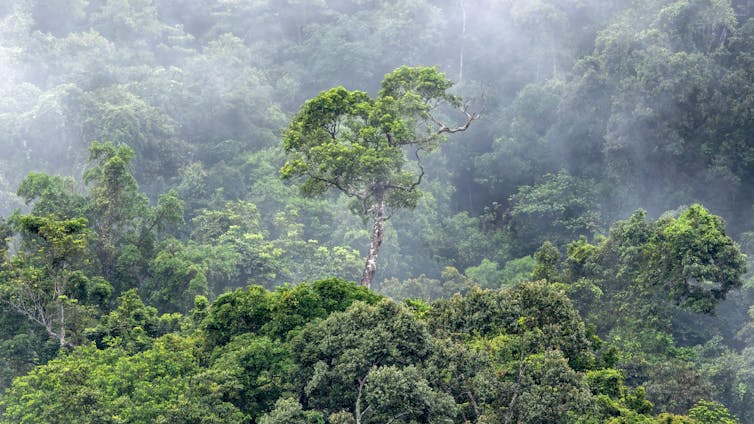
David Clode/Unsplash, CC BY Kate Dooley, The University of Melbourne

Ahead of the United Nations climate summit in Belém last month, Brazil’s President Lula da Silva urged world leaders to agree to roadmaps away from fossil fuels and deforestation and pledge the resources to meet these goals.

After failing to secure consensus, COP president Andre Corrêa do Lago announced these roadmaps as a voluntary initiative. Brazil will report back on progress at next year’s UN climate summit, COP31, when it hands the presidency to Turkey and Australia chairs the negotiations.

Why now?

These goals originate in the outcomes of the first global stocktake of the world’s progress towards the Paris Agreement goals, undertaken in 2023.

At the COP28 talks in Dubai in that year, there was an agreement to transition away from fossil fuels and to halt and reverse deforestation and forest degradation by 2030.

Yet achieving these goals relies on a “just transition”, where no country is left behind in the transition to a low-carbon future, including a “core package” of public finance to address climate adaptation, and loss and damage. The Belém outcome fell short.

Forests need urgent protection

Forest loss and degradation is continuing, at an average rate of 25 million hectares a year over the last decade, according to the Global Forest Watch. This is 63% higher than the rate needed to meet existing targets to halt and reverse forest loss by 2030. Yet the climate pledges submitted for the Belém COP remain far off track from this goal.

In the 2025 Land Gap Report, my colleagues and I calculated the scale of this “forest gap” – the gap between 2030 targets and the plans countries are putting forward in their climate pledges.

We show the pledges submitted up until this year’s climate summit would cut deforestation by less than 50% by 2030, meaning forests spanning almost 4 million hectares would still be cut down. The pledges would lead to forest degradation – where the ecological integrity of a forest area is diminished – of almost 16 million hectares. This is only a 10% reduction on current rates.

Together, this equates to an anticipated “forest gap” of around 20 million hectares expected to be lost or degraded each year by 2030. That’s about twice the size of South Korea.

While this underscores the inadequacy of commitments, the analysis is based on pledges submitted up to the start of November 2025, at which point only 40% of countries had submitted an updated plan. Major pledges submitted during COP31, such as from the European Union and China, don’t change this analysis.

This graph shows that deforestation will only slightly decline to 2030. The Land Gap Report, author supplied., CC BY-ND

Forest wins in Belém

A new fund for forest conservation called the Tropical Forests Forever Facility was launched in Brazil, attracting $US6.7 billion in pledges ($A9.9 billion).

The forest fund focuses on tropical deforestation, the leading cause of emissions from forest loss. But it has a key weakness: the limited monitoring of forest degradation, which could allow countries to receive payments while still logging primary forests.

The fund will establish a science committee and plans to revise monitoring indicators over the next three years, creating an opportunity to strengthen its ability to protect tropical forests.

The COP30 leaders’ summit also saw the launch of a historic pledge of $US1.8 billion ($A2.7 billion) to support conservation and recognition of 160 million hectares of Indigenous Peoples’ and local communities’ territories in tropical forest countries.

But global action on forests needs to extend beyond the tropics. Across both deforestation and forest degradation, countries in the global north are responsible for over half of global tree cover loss over the past decade.

Beyond tropical forests

A global accountability framework on forests is needed to increase ambition on climate action, including in countries and regions with extensive forests outside of the tropics, such as Australia, Canada and Europe.

In these regions, industrial logging is a major driver of tree-cover loss but receives far less political attention than tropical deforestation. Wide gaps in reporting – between deforestation and degradation – mean logging-related degradation often goes unreported.

In a recent report, only 59 countries said they monitor forest degradation. Of these, almost three-quarters are tropical forest countries.

The IUCN World Conservation Congress which convened in Abu Dhabi this year prior to the climate talks, passed a motion on delivering equitable accountability and means of implementation for international forest protection goals. This arose from a recognised need to promote greater equity between forest protection standards across countries.

All of this points to an urgent need to tackle accountability in global forest governance. The forest roadmap to be developed for COP31 in Turkey could help drive stronger alignment and transparency across UN processes – from the UN Forum on Forests’ 2017–2030 plan to the Kunming–Montreal Global Biodiversity Framework’s 2030 target to halt and reverse biodiversity loss.

Australia could lead on forests

Australia could help shape global forest ambition in the year ahead. It is currently the only country whose emissions pledge promises to halt and reverse deforestation and degradation by 2030 – a clear signal that developed countries must lead.

As President of Negotiations at COP31, Australia can also work to bring Brazil’s fossil-fuel and forest roadmaps into formal negotiations. But this depends on two things: credible leadership from developed countries and long-overdue climate finance. As a deforestation hotspot with ongoing native forest logging, Australia has considerable work to do to meet this responsibility.The Conversation

Kate Dooley, Senior Research Fellow, School of Geography, Earth and Atmospheric Sciences, The University of Melbourne

This article is republished from The Conversation under a Creative Commons license. Read the original article.

Saturday, 29 November 2025

Land, air and sea — India works closely with Sri Lanka as 'Operation Sagar Bandhu' goes full throttle

(Image courtesy: X/@IndiainSL)

Colombo, (IANS) Two MI-17V5 helicopters of the Indian Air Force (IAF) touched down in Sri Lanka Saturday evening to bolster ongoing Search and Rescue (SAR) efforts as the island nation continues to face extensive flooding, landslides, and severe disruption to essential services across multiple districts.

The two IAF helicopters brought essential Humanitarian Assistance and Disaster Relief (HADR) supplies and personnel to support relief operations in Sri Lanka as India's 'Operation Sagar Bandhu' gathered full steam, responding swiftly to the emerging humanitarian needs in the neighbouring country.

The helicopters will work closely with the Lankan authorities in search and rescue missions, the Indian High Commission in Colombo stated.

Two Chetak helicopters also joined INS Vikrant - currently in Colombo for the International Fleet Review 2025 (IFR) - with Lankan Air Force members for search and rescue operations as India continues to work closely with Sri Lanka to support relief and assistance efforts amidst extensive damage throughout the island nation.

Heron UAVs from the INS Vikrant are also being used in rescue and search operations.

Sri Lankan President Anura Kumara Dissanayake on Saturday declared a State of Public Emergency effective immediately, under the Public Security Ordinance.

The local media quoted Minister Wasantha Samarasinghe as saying that the Extraordinary Gazette aims at protecting public safety and ensuring rapid disaster response as the island nation faces one of its worst weather-related crisis with widespread floods, landslides and infrastructure damage impacting thousands of people across the country.

Samarasinghe maintained that almost all areas of the country have been affected by the adverse weather conditions.

As Sri Lanka continues to struggle with the severe aftermath of Cyclone Ditwah, the Disaster Management Centre (DMC) confirmed that the death toll has climbed to 123 over the past few days, according to local media reports on Saturday.

Meanwhile, the High Commission of India in Sri Lanka has set up an 'Emergency Help Desk' at the Bandaranaike International Airport in Colombo to provide all required assistance, including food and water, to passengers in need.

"Any Indian passenger in need of assistance may reach out to the emergency number," the High Commission stated in a post on X with further contact details.

Sri Lankan Foreign Minister Vijitha Herath on Saturday expressed gratitude to India for the humanitarian assistance sent to the island nation under 'Operation Sagar Bandhu' following Cyclone Ditwah.

"Thank you, my friend, S. Jaishankar, for the assistance at this hard time," Herath posted on X.

Former Sri Lankan Foreign Minister Mohamed Uvais Mohamed Ali Sabry also thanked India for the immediate cyclone relief.

"Thank you, India, for the urgent cyclone relief sent under Operation Sagar Bandhu. Sri Lanka remembers with gratitude the crucial support you extended during the 2022 economic crisis. Your friendship continues to make a meaningful difference," Sabry posted on X.

Continuing India's humanitarian assistance to Sri Lanka under Operation Sagar Bandhu, an Indian Air Force plane carrying around 12 tonnes of humanitarian aid, including tents, tarpaulins, blankets, hygiene kits, and ready-to-eat food items, landed in Colombo on Saturday in the aftermath of Cyclone Ditwah, which claimed several lives and left thousands affected.

The Indian Air Force had promptly deployed one C-130 and one IL-76 from Hindon Air Base in the early hours of Saturday, airlifting 21 tonnes of relief material along with over 80 NDRF personnel and eight tonnes of equipment to Colombo. Essential rations and critical supplies have been delivered to support affected communities.

"In this challenging moment, India stands in solidarity with the people of Sri Lanka. Guided by its steadfast commitment to the 'Neighbourhood First' policy, India remains fully committed to supporting Sri Lanka during this difficult time. Further assistance will continue to be coordinated in consultation with the authorities of the Government of Sri Lanka as the situation evolves," read a statement issued by the Indian High Commission in Colombo.

Friday, 28 November 2025

Delhi’s air quality deteriorates again, AQI climbs to 385 as cold wave deepens pollution crisis

Noida: Commuters wear face masks to protect themselves amid smog and pollution on Bhangel Road, in Noida on Thursday, November 20, 2025. (Photo: IANS)

New Delhi, (IANS) Delhi woke up to yet another day of toxic air on Friday, recording an Air Quality Index (AQI) of 385, firmly in the “very poor” category. Air pollution across Delhi-NCR continues to remain hazardous, offering little respite to residents already struggling with a cold wave.

The spike in pollution comes barely a day after authorities lifted the Graded Response Action Plan (GRAP) Stage-III restrictions, which are enforced to curb severe pollution levels. However, the relief was short-lived, as air quality deteriorated rapidly once again. On Thursday, the city’s overall AQI rose sharply to 377, up from 327 the previous day, marking a significant decline in air quality within 24 hours.

Despite the worsening conditions, the Commission for Air Quality Management (CAQM) has clarified that Stage-III curbs will only be reinstated if the AQI crosses 400, which falls under the “severe” category. Until then, authorities plan to continue monitoring the situation without reimposing stricter curbs.

According to the Central Pollution Control Board (CPCB), pollution levels surged steadily throughout the day on Thursday due to persistently low wind speeds. The AQI, recorded at 351 at 8 am, escalated to 381 by 7 pm, indicating continuous accumulation of pollutants over the region.

Meteorologists suggest that the winds remained almost stagnant for most of the day, with only brief movements at 4–5 kmph, insufficient to disperse particulate matter. Forecasts suggest the national Capital is likely to stay in the “very poor” category over the next few days.

Meanwhile, the ongoing cold wave gripping Delhi and nearby cities is compounding the crisis. The combination of low temperatures, fog, and high pollution levels is worsening public health conditions.

In Delhi-NCR and several cities across North India, temperatures have dropped to minimum levels of 8 to 12 degrees Celsius.

A thick layer of haze blanketed the city from morning hours and returned in the evening, significantly reducing visibility on roads and contributing to slower traffic movement.Health experts warn that breathing in such polluted air can have severe consequences, especially for children, the elderly, and individuals with respiratory or cardiac conditions. They advise residents to stay indoors as much as possible, avoid strenuous outdoor activities, and step out only when necessary.Delhi’s air quality deteriorates again, AQI climbs to 385 as cold wave deepens pollution crisis | MorungExpress | morungexpress.com

Thursday, 9 October 2025

The Ganges River is drying faster than ever – here’s what it means for the region and the world

Mehebub Sahana, University of Manchester

The Ganges, a lifeline for hundreds of millions across South Asia, is drying at a rate scientists say is unprecedented in recorded history. Climate change, shifting monsoons, relentless extraction and damming are pushing the mighty river towards collapse, with consequences for food, water and livelihoods across the region.

For centuries, the Ganges and its tributaries have sustained one of the world’s most densely populated regions. Stretching from the Himalayas to the Bay of Bengal, the whole river basin supports over 650 million people, a quarter of India’s freshwater, and much of its food and economic value. Yet new research reveals the river’s decline is accelerating beyond anything seen in recorded history.

In recent decades, scientists have documented alarming transformations across many of the world’s big rivers, but the Ganges stands apart for its speed and scale.

In a new study, scientists reconstructed streamflow records going back 1,300 years to show that the basin has faced its worst droughts over the period in just the last few decades. And those droughts are well outside the range of natural climate variability.

Stretches of river that once supported year-round navigation are now impassable in summer. Large boats that once travelled the Ganges from Bengal and Bihar through Varanasi and Allahabad now run aground where water once flowed freely. Canals that used to irrigate fields for weeks longer a generation ago now dry up early. Even some wells that protected families for decades are yielding little more than a trickle.

Global climate models have failed to predict the severity of this drying, pointing to something deeply unsettling: human and environmental pressures are combining in ways we don’t yet understand.

Water has been diverted into irrigation canals, groundwater has been pumped for agriculture, and industries have proliferated along the river’s banks. More than a thousand dams and barrages have radically altered the river itself. And as the world warms, the monsoon which feeds the Ganges has grown increasingly erratic. The result is a river system increasingly unable to replenish itself.

Melting glaciers, vanishing rivers

At the river’s source high in the Himalayas, the Gangotri glacier has retreated nearly a kilometre in just two decades. The pattern is repeating across the world’s largest mountain range, as rising temperatures are melting glaciers faster than ever.

Initially, this brings sudden floods from glacial lakes. In the long-run, it means far less water flowing downstream during the dry season.

These glaciers are often termed the “water towers of Asia”. But as those towers shrink, the summer flow of water in the Ganges and its tributaries is dwindling too.

Humans are making things worse

The reckless extraction of groundwater is aggravating the situation. The Ganges-Brahmaputra basin is one of the most rapidly depleting aquifers in the world, with water levels falling by 15–20 millimeters each year. Much of this groundwater is already contaminated with arsenic and fluoride, threatening both human health and agriculture.

The role of human engineering cannot be ignored either. Projects like the Farakka Barrage in India have reduced dry-season flows into Bangladesh, making the land saltier and threatening the Sundarbans, the world’s largest mangrove forest. Decisions to prioritise short-term economic gains have undermined the river’s ecological health.

Across northern Bangladesh and West Bengal, smaller rivers are already drying up in the summer, leaving communities without water for crops or livestock. The disappearance of these smaller tributaries is a harbinger of what may happen on a larger scale if the Ganges itself continues its downward spiral. If nothing changes, experts warn that millions of people across the basin could face severe food shortages within the next few decades.

Saving the Ganges

The need for urgent, coordinated action cannot be overstated. Piecemeal solutions will not be enough. It’s time for a comprehensive rethinking of how the river is managed.

That will mean reducing unsustainable extraction of groundwater so supplies can recharge. It will mean environmental flow requirements to keep enough water in the river for people and ecosystems. And it will require improved climate models that integrate human pressures (irrigation and damming, for example) with monsoon variability to guide water policy.

Transboundary cooperation is also a must. India, Bangladesh and Nepal must do better at sharing data, managing dams, and planning for climate change. International funding and political agreements must treat rivers like the Ganges as global priorities. Above all, governance must be inclusive, so local voices shape river restoration efforts alongside scientists and policymakers.

The Ganges is more than a river. It is a lifeline, a sacred symbol, and a cornerstone of South Asian civilisation. But it is drying faster than ever before, and the consequences of inaction are unthinkable. The time for warnings has passed. We must act now to ensure the Ganges continues to flow – not just for us, but for generations to come.The Conversation

Mehebub Sahana, Leverhulme Early Career Fellow, Geography, University of Manchester

This article is republished from The Conversation under a Creative Commons license. Read the original article.

Friday, 12 September 2025

TinyML: The Small Technology Tackling the Biggest Climate Challenge

Image by Gerd Altmann from Pixabay | For Representational Purpose Only

Tanveer Singh : As the planet struggles under the weight of 40+ billion metric tons of CO₂ emissions in 2024 alone, and an ever-rising energy demand, the search for smarter, leaner solutions has never been more urgent. There enters the TinyML, where the power of AI meets ultra-low energy computing to drive sustainability at scale.

It may be shocking, but as you are reading this, billions of sensors are tracking the planet’s health – from the air we breathe to the energy we consume. Already, more than 14 billion IoT devices are being used to monitor climate change and are projected to reach a whopping 30 billion by the end of 2030. But the concerning part is that the energy consumed by these devices is around 200 terawatt-hours of electricity annually, which is roughly equivalent to the entire energy consumption of countries like Thailand. To meet this demand, energy is produced through the traditional method of burning fuel, which further emits millions of Carbon footprints annually, that is even more than the lifetime emissions of 4 cars, just to monitor climate change. And therein lies the irony.

Furthermore, the constant transmission of data through these sensors requires millions of dollars for their deployment and maintenance. Like a large-scale smart city as big as New York, IoT networks can cost over $10–15 million per year to operate. This is exactly where TinyML comes as the solution, offering a path that enables IoT devices to process data locally, reducing energy consumption by up to 90% and significantly lowering costs.

Tiny ML bridges the gap between artificial intelligence and embedded systems, allowing machine learning activities even in sensors as small as a grain of sand. It is based on the idea of machine learning that is focused on building machine learning models on low-power devices like microcontrollers, enabling the device to process data instantly and anywhere, without depending on external internet storage to compute it. One clear example is Alexa, which uses TinyML models to send instant responses to the device for processing instead of sending through the cloud (external storage ), which will take a longer time.

Additionally, TinyML improves privacy and data security by running locally and reduces overall operational cost by 50-60% as compared to large ML models working on external storage. Take the example of Google's TinyML image classification that runs directly on devices, keeping images private while cutting storage and cloud costs by over 50%. TinyML can be best understood as having a mini robot in your pocket that can solve problems instantly, instead of always asking a big computer far away for help. It is faster, saves energy, and keeps your information private. When this field is applied to the climate, its efficiency becomes a distinguished factor.

Besides being cost-effective and having higher efficiency, it also helps in tracking air quality to predict natural disasters and, hence, supports the fight against climate change. Tiny ML sensors enable the quick detection of forest fires through heat or smoke detection, and aid in local air and water quality checks, eliminating the need for cloud computing dependency. For instance, Arduino-based air quality sensors are used to measure air quality and provide data on the temperature and humidity of an area. These models can also be used in solar or wind farms to check the performance of the solar cells and windmills through the consumption of energy, which can further help in increasing the efficiency of the farms. For example, Google’s DeepMind AI was successfully used with wind farms in the U.S. to predict wind power output 36 hours in advance, boosting the value of wind energy by around 20%. Interestingly, these sensors can also aid in monitoring birds' and whales' calls or other animals to track migration patterns and population health, as well as because of their small size and working on low power, and hence, they can help researchers to get valuable data on ecosystems without disturbing the wildlife. Moreover, TinyML sensors used in smart grids help in improving energy utilization by constantly monitoring and managing the transport of electricity so that energy is not wasted. Besides this, these devices can help in measuring the water pressure, tidal patterns, and ground movement of an area, and the data from this can be used to detect disasters earlier. For instance, in Japan, Tiny ML sensors placed along coastlines measure tidal waves and ground vibration in real time, which helps authorities to issue faster tsunami and earthquake warnings.

However, while these applications highlight the transformative impact of Tiny ML in tackling climate related problems, the integration also brings forth several challenges that need to be addressed to ensure reliability and scalability. First and foremost is the limitation of hardware, which is that there is limited storage, approximately in kilobytes or 1 to 5 megabytes, to store data compared to traditional models that have memory in gigabytes and terabytes. As a result, small models in TinyML will be less precise than the traditional models, which can be a huge challenge in models that work on reliability, for example, disaster management models. Furthermore, the harsh conditions like weather or wildlife can damage these devices, leading to malfunctioning and increasing the cost of maintenance.
Additionally, even though these devices are cost-effective, deploying billions of devices will still require huge funding, which can limit their production and scalability.

Despite these challenges, the future of TinyML is being shaped by the integration of emerging technologies, large-scale adoption, and the expanding market of AI. The combination of TinyML with the 5 G network, which provides 100 times faster speed than 4 G and the ability to connect over one million devices per square kilometer, can enable the creation of massive, interconnected sensors all over the cities that can provide faster and reliable data. Additionally, integrating it with federated learning- an ML technique that enables multiple devices to train a model together without sharing the raw data - can help in ensuring data privacy and increasing the accuracy of the models. Furthermore, Government and Research institutes are likely to adopt TinyML models in various tasks as they provide a scalable and cost-effective solution, especially in environments with limited resources. For instance, the U.S. National Aeronautics and Space Administration (NASA) has explored TinyML to process sensor data directly on satellites, reducing the need for constant communication with Earth.

It won’t be an exaggeration to say that the Tiny ML models have the potential to shape the future of the world. By offering scalable as well as energy-efficient solutions, Tiny ML stands out as the best alternative to tackle the climate change problems. From reducing the CO2 emissions to providing faster processing of data and strengthening the privacy and accuracy of the data, the Tiny ML model can be a changemaker catalyst not only in the world of climate change but in other fields, too. Undoubtedly, Tiny ML paves the way for a future where artificial intelligence works in harmony with the planet.Tanveer Singh, a first-year student at Plaksha University, has been passionate about writing articles and poems since high school. From raising public awareness of new technologies to highlighting environmental and societal issues, he has explored a wide range of themes through his work and aspires to continue making an impact in this space for the long run. TinyML: The Small Technology Tackling the Biggest Climate Challenge | MorungExpress | morungexpress.com

Wednesday, 10 September 2025

What will happen to the legal status of ‘sinking’ nations when their land is gone?

Losing land means losing a way of life.

Avidan Kent, University of East Anglia and Zana Syla, University of East Anglia

Small island nations such as Tuvalu, Kiribati, the Maldives and Marshall Islands are particularly vulnerable to climate change. Rising seas, stronger storms, freshwater shortages and damaged infrastructure all threaten their ability to support life.

Some islands even face the grim possibility of being abandoned or sinking beneath the ocean. This raises an unprecedented legal question: can these small island nations still be considered states if their land disappears?

The future status of these nations as “states” matters immensely. Should the worst happen, their populations will lose their homes and sources of income. They will also lose their way of life, identity, culture, heritage and communities.

At the same time, the loss of statehood could strip these nations of control over valuable natural resources and even cost them their place in international organisations such as the UN. Understandably, they are working hard to make sure this outcome is avoided.

Tuvalu, for example, has signed a treaty with Australia to ensure it will be recognised as a state, regardless of the impact climate change has on the islands.

Beyond affirming that “the statehood and sovereignty of Tuvalu will continue … notwithstanding the impact of climate change-related sea-level rise”, Australia has committed to accepting Tuvaluan citizens who seek to emigrate and start their lives afresh on safer ground.

Facing the threat of physical disappearance, Tuvalu has also begun digitising itself. This has involved moving its government services online, as well as recreating its land and archiving its culture virtually.

The aim is for Tuvalu to continue existing as a state even when climate change has forced its population into exile and rising seas have done away with its land. It says it will be the world’s first digital nation.

Elsewhere, in the Maldives, engineering solutions are being tested. These include raising island heights artificially to withstand the disappearance of territory. Other initiatives, such as the Rising Nations Initiative, are seeking to safeguard the sovereignty of Pacific island nations in the face of climate threats.

But how will the future statehood of small island nations be determined legally?

International law’s position

Traditionally, international law requires four elements for a state to exist. These are the existence of population, territory, an effective and independent government and the capacity to engage in international relations.

With climate change threatening to render the land of small island nations unliveable or rising seas covering them entirely, both population and territory will be lost. Effective and independent government will also become inoperative. On the face of it, all the elements required for statehood would cease to exist.

But international law does recognise that once a state is established it continues to exist even if some of the elements of statehood are compromised. For instance, so-called failed states such as Somalia or Yemen are still regarded as states despite lacking an effective government – one of the core elements required under international law.

However, the threats posed to the statehood of small island nations by climate change are unprecedented and severe. They are also very likely to be permanent. This makes it unclear whether international law can extend this flexibility to sinking island nations.

The International Court of Justice (ICJ) recently issued its advisory opinion on the obligations of states in respect of climate change. The ICJ addressed a wide range of issues concerning the legal obligations of states in the context of climate change. This included the future statehood of small island nations.

In this regard, the ICJ acknowledged that climate change could threaten the existence of small islands and low-lying coastal states. But it concluded its discussion with a single, rather cryptic sentence: “once a state is established, the disappearance of one of its constituent elements would not necessarily entail the loss of its statehood.”

What exactly did the court mean by this remark? Unfortunately, the answer is not entirely clear. On the one hand, the decision seems to confirm the traditional flexible approach of international law to statehood.

In their separate opinions, some of the court’s judges interpreted this sentence as extending the flexibility previously applied in other contexts – such as failed states – also to the situation of sinking island nations. In other words, a state could retain its legal existence even if it disappears beneath rising seas.

At the same time, a closer reading of the decision suggests that the court stopped short of explicitly confirming that the flexibility of the term “statehood” could be stretched so far as to mean a state could exist even if completely submerged under the seas.

The court noted only that the disappearance of “one element … would not necessarily” result in the loss of statehood. But in the case of sinking island nations it is likely that all key elements – population, territory, government and ability to enter into international relations – would disappear.

For now, the ICJ has left the matter open. The decision points to flexibility, but it avoids the definitive statement that many vulnerable nations had hoped for. The legal future of sinking islands remains uncertain.The Conversation

Avidan Kent, Professor of Law, University of East Anglia and Zana Syla, PhD Candidate in the School of Law, University of East Anglia

This article is republished from The Conversation under a Creative Commons license. Read the original article.

Tuesday, 26 August 2025

Wildfires in Spain signal growing climate risks for Europe, expert warns


IANS File Photo

Madrid, (IANS): The devastating wildfires sweeping across Spain this summer should serve as a warning to the rest of Europe about the rising dangers of climate change, a Barcelona-based climatologist said.

"This is a warning to countries that have traditionally enjoyed temperate, cool summers... because these conditions of intense heat will increase in latitude and will reach these countries," Javier Martin-Vide, climatologist and professor of physical geography at the University of Barcelona, told Xinhua.

According to Thursday's update from the European Forest Fire Information System, wildfires have scorched 403,171 hectares of land in Spain so far this year. Around 350,000 hectares were destroyed in just the past two weeks, coinciding with a severe heat wave that began in early August, Xinhua news agency reported.

Martin-Vide emphasised that climate models point to worsening conditions in the coming decades. "Adaptation is key to reducing the risk," he said, noting that temperatures exceeding 40 degrees Celsius in central and northern Europe will pose serious challenges to societies less accustomed to extreme heat.

He called for stronger prevention measures and better landscape management, highlighting the effects of rural depopulation. "The woods are not as clean as in the past, when there were cattle, sheep, goats grazing and eating the vegetation that now acts as the fuel that starts a forest fire," he explained.

The climatologist urged innovative strategies, including the creation of "mosaic landscapes with forest areas interspersed with cultivated fields," to make land more defensible against blazes.

He also pointed to adaptation already underway in agriculture, as olive and wine producers move production to higher altitudes, in search of more favorable climatic conditions to maintain both quality and output.

Martin-Vide welcomed the Spanish government's plan to establish a nationwide pact on fire prevention, calling it "very necessary."Spain is enduring its worst summer for wildfires this century, with more than 20 major blazes still burning, mainly in the northwestern provinces of Orense, Zamora and Leon. The interior ministry said over 33,000 people have been evacuated, while four people, including three firefighters, have died. Wildfires in Spain signal growing climate risks for Europe, expert warns | MorungExpress | morungexpress.com

Wednesday, 2 July 2025

Extreme heat, storms take toll at Club World Cup


MIAMI - Furnace-like heat and the threat of thunder and lightning are wreaking havoc at the Club World Cup -- and more of the same is likely at the 2026 World Cup.

With a brutal heatwave blanketing swathes of the eastern United States, adapting to the weather has become a key focus for coaches and players.

Borussia Dortmund took the unusual step of leaving their substitutes in the dressing room for the first half of their game against Mamelodi Sundowns in Cincinnati, rather than have them sitting on the bench in blazing sunshine.

Chelsea coach Enzo Maresca, meanwhile, cut short his team's training session in Philadelphia on Monday as the City of Brotherly Love baked in temperatures of 99 degrees Fahrenheit (37.2 degrees Celsisu).

Dortmund coach Niko Kovac, meanwhile, said the weather could ultimately shape the destiny of the tournament.

"I think that this tournament will be decided not by the best team, but the team that can adapt to these weather conditions the best. They will probably win this tournament," Kovac said.

While cooling breaks midway through each half have become standard during the tournament, Dortmund, like other teams, are taking extra steps to mitigate the brutal heat and humidity.

"Our boys are very well taken care of by our doctors and the medical staff," Kovac said.

"We have very cold towels. We put them in ice baths. The boys also need to cool down their legs and their feet in cold water and ice baths."

The experience of the Club World Cup is likely a preview of what can be expected at next year's men's World Cup in the United States, Canada and Mexico.

A recent study published by the International Journal of Biometeorology warned of the risk posed by extreme heat at the tournament for players and spectators, citing climate change as a cause of "extreme heat" events that were "more frequent and intense".

- Storm disruptions -

AFP | Federico PARRA

The study concluded that 14 of the 16 host cities being used for the 2026 World Cup experienced temperatures that frequently exceeded the commonly accepted safe thresholds for wet bulb globe temperature (WBGT) -- a widely used measure for heat stress.

The study argued for games to be scheduled outside of the afternoon windows when conditions were typically at their most fierce.

In addition to the brutal heat and humidity, teams at the Club World Cup have also had to deal with matches being halted due to the threat of lightning.

On Tuesday, Boca Juniors' game against Auckland City became the fifth match of the tournament to experience a lengthy delay due to public safety regulations used in the United States that mandate play is halted whenever lightning is within 10 miles (16.1 kilometres) of a stadium.

A weather delay in Benfica's game against Auckland led to an interruption in play of nearly two hours.

National Weather Service official Ben Schott, who advises FIFA and the US World Cup taskforce for 2026, says the kind of weather affecting the ongoing competition is not out of the ordinary, and said teams and fans next year should plan accordingly.

"Nothing that we're seeing right now is unusual even though we are breaking records," Schott told AFP.

"Most of the eastern United States is breaking records, and then that happens almost every summer. To expect something similar next year as a possibility is something that people should prepare for if you're going to come and enjoy the games."

While roasting heat was an issue when the United States last hosted the World Cup finals in 1994, no games at that tournament were halted by storm warnings.

That is due to increasingly sophisticated forecasting technology, Schott said.

"We're at a point now where we can start to see things almost a week in advance and predict them pretty accurately, as compared to 15-20 years ago," Schott said. "The advances in meteorology since we last had the World Cup here in 1994 have been substantial."

Schott said thunder and lightning were "par for the course" in several regions of North America.

"This is pretty typical for United States weather for this time of the year," Schott said.

"We get a lot of moisture that pumps in from the Gulf of Mexico, and they get the afternoon thunderstorms pop up.

"So as we move towards World Cup 2026, things that we're seeing right now would be quite typical to be seen again."

FIFA did not immediately respond to a request for comment when contacted by AFP.

Tuesday, 24 June 2025

China Achieves ‘Excellent’ Water Quality in 90% of Rivers and Lakes, Now Looks to Improve Whole Ecosystems

The Yulong River – credit, Qeqertaq, CC 3.0. BY-SA

Having achieved incredible results in improving water quality across the nation, China is embarking on a ten-year project to ensure the ecosystem beyond the shoreline meets similar standards.

The plan, unveiled recently by China’s Ministry of Ecology and Environment aims to match improvements in water quality seen in 2,573 rivers and lakes across the country with improvements to the overall ecosystem in which the fresh water is found, including those which humans rely on, and the cultural artifacts located there as well.

It could be said that the protagonist of China’s 4,000 year history isn’t the Chinese people themselves, but fresh water.

From the moment that humans began cultivating rice in the central and northern Chinese plains, control and manipulation of water became the unifying feature of Chinese society, transcending social status, and imbedding itself into the lore of the first emperor who supposedly tamed the Yellow River floods in 2,700 BCE.

As centuries passed, traveler after traveler remarked upon the inexhaustible supply of fresh water for irrigation, and of a network of irrigation canals that spread like a spider’s web as far as the eye could see. The Qin Dynasty completed the ancient world’s largest landscape engineering project when it constructed the Grand Canal, while 2,000 years later, the vast breadth of the Yangtze and Pearl rivers, following industrialization, allowed the Chinese manufacturing market to provide for every corner of the Earth.

Beyond economization and production, the lake and river were the subjects of countless poems and songs across the ages, and the constructions of bridges, pagodas, temples, palaces, and scenic villages where canals replace streets, on and around China’s vast freshwater resources, flourished whenever money was available.

In 2015, China completed an action plan for the prevention and control of water pollution, and in 2024, the proportion of surface-water sections nationwide classified as having excellent water quality reached 90.4%.

In this new action plan, the whole ecology of the riverine ecosystems is being addressed, and will include in its scope projects for restoring spawning grounds, ensuring migratory birds have access to food resources in areas where they alight, enhancing habitat connectivity and fish passage where obstructions are found, strengthening flood control and drainage systems where present, and measuring eutrophication in lakes and reservoirs.

“The document marks another comprehensive initiative to protect China’s water ecosystems following the action plan for prevention and control of water pollutions in 2015,” said Liu Jing, deputy director of the environment ministry’s Department of Water Ecology and Environment.

“A beautiful river or lake is one where the ecological flow is maintained so that it never runs dry. Besides, the ecological functions of the water bodies and their surrounding buffer zones are preserved or restored, and biodiversity is effectively protected,” said Liu.

“Moreover, pollutant emissions within the watershed are well-managed, and the water quality has fundamentally improved or maintained excellent levels. And the public’s needs for scenic views and recreational activities by the water are met,” she added.“Significant progress” is expected by 2030, by which time it’s hoped the project will have also begun to reverse the current declining trend in aquatic wildlife in the Yellow River, and to accelerate the current improving trends for wildlife in the Yangtze. China Achieves ‘Excellent’ Water Quality in 90% of Rivers and Lakes, Now Looks to Improve Whole Ecosystems

Tuesday, 17 June 2025

12-Year-old Girl Plants 150,000 Trees in India, Becoming a Reforestation Leader

Youngest Indian environmental leader Prasiddhi Singh – submitted by Jacob Weissman YPL Prasiddhi Forest Foundation

Youngest Indian environmental leader Prasiddhi Singh – submitted by Jacob Weissman YPL Prasiddhi Forest Foundation
Called the Indian Greta Thunberg, this 12-year-old is on a mission to green India’s skies and minds.

Armed with determination, a charming personality, and a great marketing concept, she’s planting a grassroots movement towards environmentalism that’s staggering to see in one so young.

Prasiddhi presenting her vision – submitted by Jacob Weissman YPL Prasiddhi Forest Foundation
At age 8, she won the Dal Puraskar, an Indian order of merit, and told the Times of India she had already planted 14 “fruit forests” in government schools, offices, and community areas with the help of thousands of volunteers.

At just 12, she’s planted over 150,000 trees, founded the Prasiddhi Forest Foundation, undertook the restoration of mangroves and lakes, ran a TEDx, spoke at the UN Climate Change summit COP 28 and 29, and is presumably now doing something else equally amazing that’s not yet been reported.

The Foundation organizes classes, workshops, and events under the principle of a “3G Network” which stands for ‘Generate’ one’s own oxygen, ‘Grow’ one’s own food, and ‘Gift’ one’s effort to their community.

According to Young Planet Leaders, Prasiddhi started her tree growing efforts at age 7 as a personal response to a devastating cyclone. However, her concept of fruit forests goes far beyond sheltering from storms.

These biodiverse, edible landscapes are both ecological solutions and social infrastructure, and they’re drawing volunteers from around the country, but particularly in her home state of Tamil Nadu, 12-Year-old Girl Plants 150,000 Trees in India, Becoming a Reforestation Leader

Saturday, 14 June 2025

Above-average monsoon drives rural demand for Indian automobile sector: HSBC


New Delhi : The above-average monsoon is driving rural demand for the Indian automobile sector, and tractor demand maintains momentum following the good rabi harvest, a report showed on Tuesday.

Channel partner commentary signals the higher number of auspicious days for marriage and a good rabi harvest sustained two-wheeler (2W) growth momentum in May, reports HSBC Global Research in a note.

Electric four-wheeler (e4W) penetration increased to 3.4 per cent in May. Tata's market share remained at 35 per cent, with MG at 31 per cent and M&M at 20 per cent. Hyundai with its 'e Creta’ model was at 5 per cent.

“Meanwhile, e2W sales penetration increased to 6.1 per cent with 100,000 units in retail sales. TVS's retail in May totalled 25,000 units, while Bajaj's sales were at 22,000 units. Ola is in the third spot,” according to the note.

Passenger vehicle (PV) demand was largely muted and there are no signs of recovery any time soon. Positively, original equipment manufacturers (OEMs) maintained inventory discipline.

“We expect the PV discount to stay elevated around the current level amid a weak demand outlook,” said the report.

In four-wheelers, Maruti’s volumes were up 3 per cent on-yar in May, as a 6 per cent decline in domestic sales was offset by 80 per cent growth in exports.

“M&M's SUV wholesale was 52.4k units, up 21 per cent YoY. Tata's PV volumes were down 11 per cent YoY, with EVs up 2 per cent. Hyundai domestic sales were down 11 per cent, mainly from routine plant shutdowns,” the note mentioned.

In the 2W segment, Bajaj's domestic 2W volume was up 2 per cent, while exports were up 20 per cent. TVS's 2W volumes were up 16 per cent YoY, with domestic growing 14 per cent and exports at 21 per cent.

In the tractor segment, M&M's domestic volume grew by 10 per cent, while Escorts' declined by 2 per cent. M&M's exports declined by 8 per cent, while Escorts' grew by 71 per cent.

"Early advancement of monsoons and above-average reservoir levels are positives going forward,” said the report.In the commercial vehicle (CV) vertical, volumes for key OEMs were down 3 per cent on-year and the subsegments' LCVs were down by 6 per cent, while MHCV and buses each grew by 2 per cent, said the report.Above-average monsoon drives rural demand for Indian automobile sector: HSBC | MorungExpress | morungexpress.com

Tuesday, 13 May 2025

Australia and North America have long fought fires together – but new research reveals that has to change

Climate change is lengthening fire seasons across much of the world. This means the potential for wildfires at any time of the year, in both hemispheres, is increasing.

That poses a problem. Australia regularly shares firefighting resources with the United States and Canada. But these agreements rest on the principle that when North America needs these personnel and aircraft, Australia doesn’t, and vice versa. Climate change means this assumption no longer holds.

The devastating Los Angeles wildfires in January, the United States winter, show how this principle is being tested. The US reportedly declined Australia’s public offer of assistance because Australia was in the midst of its traditional summer fire season. Instead, the US sought help from Canada and Mexico.

But to what extent do fire seasons in Australia and North America actually overlap? Our new research examined this question. We found an alarming increase in the overlap of the fire seasons, suggesting both regions must invest far more in their own permanent firefighting capacity.

What we did

We investigated fire weather seasons – that is, the times of the year when atmospheric conditions such as temperature, humidity, rainfall and wind speed are conducive to fire.

The central question we asked was: how many days each year do fire weather seasons in Australia and North America overlap?

To determine this, we calculated the length of the fire weather seasons in the two regions in each year, and the number of days when the seasons occur at the same time. We then analysed reconstructed historical weather data to assess fire-season overlap for the past 45 years. We also analysed climate model data to assess changes out to the end of this century.

And the result? On average, fire weather occurs in both regions simultaneously for about seven weeks each year. The greatest risk of overlap occurs in the Australian spring – when Australia’s season is beginning and North America’s is ending.

The overlap has increased by an average of about one day per year since 1979. This might not sound like much. But it translates to nearly a month of extra overlap compared to the 1980s and 1990s.

The increase is driven by eastern Australia, where the fire weather season has lengthened at nearly twice the rate of western North America. More research is needed to determine why this is happening.

Longer, hotter, drier

Alarmingly, as climate change worsens and the atmosphere dries and heats, the overlap is projected to increase.

The extent of the overlap varied depending on which of the four climate models we used. Assuming an emissions scenario where global greenhouse gas emissions begin to stabilise, the models projected an increase in the overlap of between four and 29 days a year.

What’s behind these differences? We think it’s rainfall. The models project quite different rainfall trends over Australia. Those projecting a dry future also project large increases in overlapping fire weather. What happens to ours and North America’s rainfall in the future will have a large bearing on how fire seasons might change.

While climate change will dominate the trend towards longer overlapping fire seasons, El Niño and La Niña may also play a role.

These climate drivers involve fluctuations every few years in sea surface temperature and air pressure in part of the Pacific Ocean. An El Niño event is associated with a higher risk of fire in Australia. A La Niña makes longer fire weather seasons more likely in North America.

There’s another complication. When an El Niño occurs in the Central Pacific region, this increases the chance of overlap in fire seasons of North America and Australia. We think that’s because this type of El Niño is especially associated with dry conditions in Australia’s southeast, which can fuel fires.

But how El Niño and La Niña will affect fire weather in future is unclear. What’s abundantly clear is that global warming will lead to more overlap in fire seasons between Australia and North America – and changes in Australia’s climate are largely driving this trend.

Looking ahead

Firefighters and their aircraft are likely to keep crossing the Pacific during fire emergencies.

But it’s not difficult to imagine, for example, simultaneous fires occurring in multiple Australian states during spring, before any scheduled arrival of aircraft from the US or Canada. If North America is experiencing late fires that year and cannot spare resources, Australia’s capabilities may be exceeded.

Likewise, even though California has the largest civil aerial firefighting fleet in the world, the recent Los Angeles fires highlighted its reliance on leased equipment.

Fire agencies are becoming increasingly aware of this clash. And a royal commission after the 2019–20 Black Summer fires recommended Australia develop its own fleet of firefighting aircraft.

Long, severe fire seasons such as Black Summer prompted an expansion of Australia’s permanent aerial firefighting fleet, but more is needed.

As climate change accelerates, proactive fire management, such as prescribed burning, is also important to reduce the risk of uncontrolled fire outbreaks.The Conversation

Doug Richardson, Research Associate in Climate Science, UNSW Sydney and Andreia Filipa Silva Ribeiro, Climate Researcher, Helmholtz Centre for Environmental Research-UFZ

This article is republished from The Conversation under a Creative Commons license. Read the original article.

Tuesday, 29 April 2025

Tempted to turn on the aircon? Science says use fans until it’s 27°C

Many Australians struggle to keep themselves cool affordably and effectively, particularly with rising electricity prices. This is becoming a major health concern, especially for our most vulnerable people such as the elderly, pregnant women and people with cardiovascular diseases.

Air conditioning is often seen as the only solution to this problem. But relying too heavily on aircon has major downsides. These include hefty electricity bills, increased greenhouse gas emissions, strain on an already weak electricity grid, and dumping heat from buildings to the outside – further heating the outdoor air.

Our latest research, published in the Medical Journal of Australia, highlights a simple yet effective solution: a “fan-first” cooling approach.

The approach is simple: use electric fans as your first cooling strategy, and only turn on air conditioning when the indoor temperature exceeds 27°C.

Fan-First Cooling: The Smart Way to Beat Australia’s Heat Crisis (Federico Tartarini)

The solution: ‘fan-first’ cooling

Electric fans can make you feel more comfortable on a hot day simply by moving the air around you. This helps our body release heat in two ways: improving the transfer heat from your body into the air, and increasing the evaporation of sweat from your skin.

A gentle breeze can make you feel up to 4°C cooler, even when the weather is very hot and humid.

This allows you to increase the aircon set-point (the temperature at which cooling turns on) from 23-24°C to 27-28°C. This simple change can significantly reduce the amount of time your aircon is running, leading to substantial energy savings.

For example, in our previous research we showed raising the office air conditioning set-point from 24 to 26.5°C, with supplementary air movement from desk and ceiling fans, reduced energy consumption by 32%, without compromising thermal comfort.

Don’t fans still use electricity to run?

Yes fans still use electricity, but it’s as little as 3% of the electricity used to run air conditioning. That means you can run more than 30 fans with the same amount of energy it takes to run a single aircon unit.

A basic pedestal fan is cheap to buy (A$20 to $150), requires no installation and minimal maintenance, and can be easily moved around to keep you cool in any part of your house. Simply turn on the fan as soon as you start feeling slightly warm.

Fans cool you, whereas aircon cools the whole space, which is less efficient.

We also previously showed that using fans rather than airconditioning is a more effective emissions reduction strategy than switching from old-fashioned incandescent light bulbs to LED lighting.

The problem with over-reliance on aircon

Globally, the use of air conditioning is rapidly increasing. Aircon units sales have tripled since 1990 and are projected to triple again in 2050. It is becoming the go-to solution to heat management.

Aircon is effective but is expensive to buy, run and maintain.

A recent survey showed while most people have aircon, two thirds did not use it due to cost concerns.

Beyond the financial burden, the environmental impact of aircon is substantial. In Australia, electricity mainly comes from burning fossil fuels, creating greenhouse gas emissions. Even with the growth of renewable energy, the sheer demand for aircon cooling could strain the transition and the grid.

Furthermore, the refrigerants used in most aircon units are potent greenhouse gases. It will also take time to replace older and less efficient aircon units.

Aircon units also release heat into the outdoor environment, worsening the urban heat island effect – the phenomenon where cities are significantly warmer than surrounding rural areas.

Finally, over-reliance on aircon might reduce our ability to cope with heat. If we constantly keep our indoor temperatures very low, our bodies may not acclimatise to warmer summer conditions, making us more vulnerable during power outages.

Using fans safely and effectively

While fans offer numerous benefits, it’s important to use them correctly, especially in very hot indoor conditions.

There’s a common misconception that fans should be turned off above 35°C because they might blow hot air onto the skin. This ignores the crucial role fans play in evaporating sweat.

We have established safer and more accurate temperature thresholds for fan use by conducting laboratory studies. Just remember to check the temperature indoors, not outdoors.

Electric fans can be safely used in indoor temperatures up to:

  • 39°C for young, healthy adults.
  • 38°C for older adults.
  • 37°C for older adults taking anticholinergic medications (which can impair sweating).

Above these indoor temperatures, fans could worsen heat strain by increasing cardiovascular strain and core body temperature. In such situations, alternative cooling strategies such as wetting the skin, moving to a cooler place, or turning the aircon on are essential.

Below these thresholds, we have proven, in laboratory studies, that there’s no reason to switch fans off, because they provide further thermal comfort and reduce heat stress.

Take action now

Based on our field and lab research, we suggest five simple steps to using fans for managing heat at home:

  1. consider buying pedestal or ceiling fans

  2. point the fan at your body and adjust the speed to your liking

  3. wear light clothing and stay hydrated

  4. if you have aircon, increase the set-point to 27-28°C

  5. enjoy a reduced energy bill and increased comfort.

You may also want to ask your employer to install fans at your workplace and share this “fan-first” cooling strategy with family and friends.

Let’s work together towards a more sustainable future by reducing our reliance on energy-intensive air conditioning. This will lead to lower electricity costs, reduced greenhouse gas emissions, and increased resilience to heat.The Conversation

Federico Tartarini, Senior Lecturer, School of Architecture Design and Planning, University of Sydney; Angie Bone, Associate Professor of Practice in Planetary Health, Monash Sustainable Development Institute, Monash University, and Ollie Jay, Professor of Heat & Health; Director of Heat & Health Research Incubator; Director of Thermal Ergonomics Laboratory, University of Sydney

This article is republished from The Conversation under a Creative Commons license. Read the original article.

Sunday, 20 April 2025

Earth’s oceans once turned green – and they could change again

Nearly three fourths of Earth is covered by oceans, making the planet look like a pale blue dot from space. But Japanese researchers have made a compelling case that Earth’s oceans were once green, in a study published in Nature.

The reason Earth’s oceans may have looked different in the ancient past is to do with their chemistry and the evolution of photosynthesis. As a geology undergraduate student, I was taught about the importance of a type of rock deposit known as the banded iron formation in recording the planet’s history.

Banded iron formations were deposited in the Archean and Paleoproterozoic eons, roughly between 3.8 and 1.8 billion years ago. Life back then was confined to one cell organisms in the oceans. The continents were a barren landscape of grey, brown and black rocks and sediments.

Rain falling on continental rocks dissolved iron which was then carried to the oceans by rivers. Other sources of iron were volcanoes on the ocean floor. This iron will become important later.

The Archaean eon was a time when Earth’s atmosphere and ocean were devoid of gaseous oxygen, but also when the first organisms to generate energy from sunlight evolved. These organisms used anaerobic photosynthesis, meaning they can do photosynthesis in the absence of oxygen.

It triggered important changes as a byproduct of anaerobic photosynthesis is oxygen gas. Oxygen gas bound to iron in seawater. Oxygen only existed as a gas in the atmosphere once the seawater iron could neutralise no more oxygen.

Eventually, early photosynthesis led to the “great oxidation event”, a major ecological turning point that made complex life on Earth possible. It marked the transition from a largely oxygen free Earth to one with large amounts of oxygen in the ocean and atmosphere.

The “bands” of different colours in banded iron formations record this shift with an alternation between deposits of iron deposited in the absence of oxygen and red oxidised iron.

The case for green oceans

The recent paper’s case for green oceans in the Archaean eon starts with an observation: waters around the Japanese volcanic island of Iwo Jima have a greenish hue linked to a form of oxidised iron - Fe(III). Blue-green algae thrive in the green waters surrounding the island.

Despite their name, blue-green algae are primitive bacteria and not true algae. In the Archaean eon, the ancestors of modern blue-green algae evolved alongside other bacteria that use ferrous iron instead of water as the source of electrons for photosynthesis. This points to high levels of iron in the ocean.

Photosynthetic organisms use pigments (mostly chlorophyll) in their cells to transform CO₂ into sugars using the energy of the sun. Chlorophyll gives plants their green colour. Blue-green algae are peculiar because they carry the common chlorophyll pigment, but also a second pigment called phycoerythrobilin (PEB).

In their paper, the researchers found that genetically engineered modern blue-green algae with PEB grow better in green waters. Although chlorophyll is great for photosynthesis in the spectra of light visible to us, PEB seems to be superior in green-light conditions.

Before the rise of photosynthesis and oxygen, Earth’s oceans contained dissolved reduced iron (iron deposited in the absence of oxygen). Oxygen released by the rise of photosynthesis in the Archean eon then led to oxidised iron in seawater. The paper’s computer simulations also found oxygen released by early photosynthesis led to a high enough concentration of oxidised iron particles to turn the surface water green.

Once all iron in the ocean was oxidised, free oxygen (0₂) existed in Earth’s oceans and atmosphere. So a major implication of the study is that pale-green dot worlds viewed from space are good candidates planets to harbour early photosynthetic life.

The changes in ocean chemistry were gradual. The Archaean period lasted 1.5 billion years. This is more than half of Earth’s history. By comparison, the entire history of the rise and evolution of complex life represents about an eighth of Earth’s history.

Almost certainly, the colour of the oceans changed gradually during this period and potentially oscillated. This could explain why blue-green algae evolved both forms of photosynthetic pigments. Chlorophyll is best for white light which is the type of sunlight we have today. Taking advantage of green and white light would have been an evolutionary advantage.

Could oceans change colour again?

The lesson from the recent Japanese paper is that the colour of our oceans are linked to water chemistry and the influence of life. We can imagine different ocean colours without borrowing too much from science fiction.

Purple oceans would be possible on Earth if the levels of sulphur were high. This could be linked to intense volcanic activity and low oxygen content in the atmosphere, which would lead to the dominance of purple sulphur bacteria.

Red oceans are also theoretically possible under intense tropical climates when red oxidised iron forms from the decay of rocks on the land and is carried to the oceans by rivers or winds. Or if a type of algae linked to “red tides” came to dominate the surface oceans.

These red algae are common in areas with intense concentration of fertiliser such as nitrogen. In the modern oceans, this tends to happen in coastline close to sewers.

As our sun ages, it will first become brighter leading to increased surface evaporation and intense UV light. This may favour purple sulphur bacteria living in deep waters without oxygen.

It will lead to more purple, brown, or green hues in coastal or stratified areas, with less deep blue colour in water as phytoplankton decline. Eventually, oceans will evaporate completely as the sun expands to encompass the orbit of Earth.

At geological timescales nothing is permanent and changes in the colour of our oceans are therefore inevitable.The Conversation

Cédric M. John, Professor and Head of Data Science for the Environment and Sustainability, Queen Mary University of London

This article is republished from The Conversation under a Creative Commons license. Read the original article.