bloggggg

Home  |  Live  |  Science  |  Lifestyle  |  Entertainment  |  Broadcast  |  Games  |  eBooks  |  Astounds  |  Adbite  |  Cricbell  |  Cyber  |  Idea  |  Digital  |  Privacy  |  Publish  |  ePaper  |  Contact  .Subscribe.Subscribe.Subscribe.Subscribe.Subscribe.Subscribe.Subscribe.Subscribe.Subscribe
Subscribe

Sunday, 2 November 2025

Two-Headed Wind Turbine Could Solve Every Challenge in the Offshore Industry

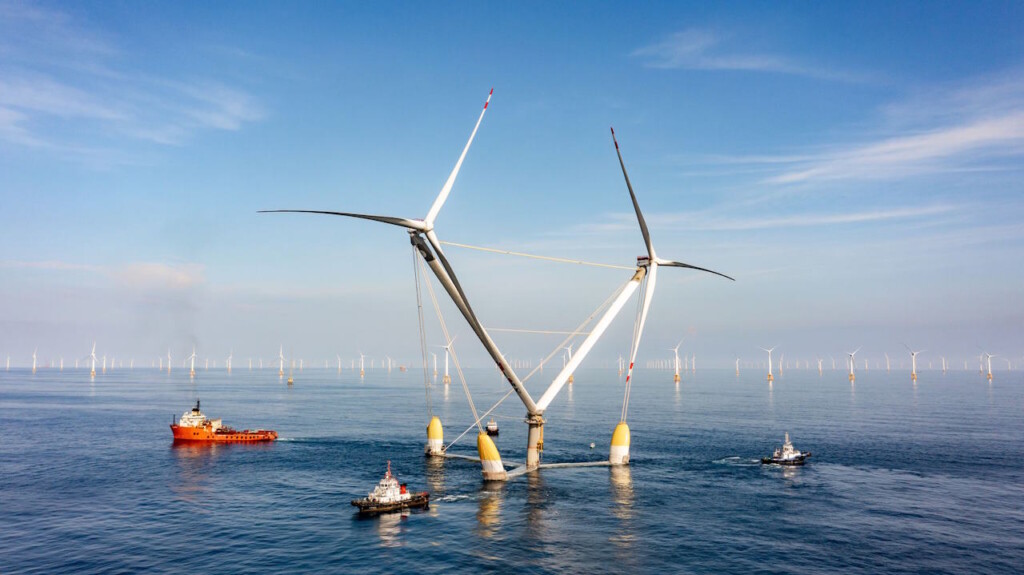
Ming Yang OceanX in operation – credit, Ming Yang Smart Energy

As the global leader in offshore wind development, a Chinese turbine manufacturer has designed a two-headed behemoth that will generate 50 megawatts on its own.

Blazing past renewable energy targets, the wind lobby in Beijing are serious players, unlike in Europe and North America where investment and R&D has lagged behind solar power.

Ming Yang Smart Energy already makes one of these two-headed turbines, but is planning to debut one that’s double the size of its existing model in 2026.

This Fortune 500 China-edition company is the undisputed world leader in wind turbines, particularly offshore ones, but not exclusively. It lays claim to both the most powerful land and offshore wind turbines in service today.

It developed the first typhoon-resistant floating turbine mooring, which was tested in September when Super Typhoon Ragasa passed over the entire 1,345-unit offshore fleet, and not one was upended. Every single one remained operational.

In 2024, the company debuted the previously mentioned double-rotor turbine—called the OceanX—consisting of two 8.3 MW turbines installed on 219-meter towers at an angle atop a floating platform. For comparison, the top-end turbines in the Moresea 1 wind farm in Great Britain generate 9 megawatts.

Just one OceanX in ideal conditions is boasted as having the capacity to power 30,000 homes annually. The counter rotating blades increase each turbine’s output beyond what the wind can do alone, but during testing the blades broke off from the force.

Nevertheless, the company managed to find buyers, and the OceanX was soon installed at the Yangjiang Qingzhou IV offshore wind farm, off the southeast China coast.

Marketing for the 50MW leviathan has already begun, with production slated for next year according to company boss Zhang Qiying who spoke at a Beijing conference recently. Such a turbine would drop the cost-per-kilowatt for wind energy in the Guangzhou area to around one-fifth of the current price for offshore wind energy in Europe.

Offshore wind power comes in for more criticism from environmentalists than land-based turbines, and so has been subjected to more research into its effects. However, with most of the world’s largest offshore wind farms coming online within the last decade, the body of evidence is limited.

Regarding collisions with birds, one 2022 study found that it was “unlikely that small-scale displacement by single wind farms would have an impact at the population level,” of migratory seabirds, which the study team found were at a 75-92% lower abundance inside the boundaries of the wind farm than out of it.

Concerns over disturbances among whales and the seabed sediment have also been raised, as well as offshore farms’ impact on coastal tourism, and their susceptibility to sabotage.

One surefire way to reduce these eco-impacts would be to reduce the number of turbine units in a given wind farm, and the best way to do that would be find a way for turbines to generate more electricity. 50 MW would be a truly astonishing operational achievement, and represent as much as a 15-fold increase in per-unit power generation compared to some turbines deployed in the North Atlantic.With such an abundance of energy, farms in sensitive environmental areas like whale or migratory seabird routes could substantially reduce their turbine counts if the Ocean’XL’ was part of the farm’s fleet. Two-Headed Wind Turbine Could Solve Every Challenge in the Offshore Industry

Friday, 29 March 2024

What is the worth of one human being?

By Surya Vishwa: What is the worth of one single human being? Can it be measured in gold or any other monetary assessment? In short, what is the price of life? We see around us how some people who spend their whole life being preoccupied by accumulating riches alone, at the cost of conscience, knowledge, love, freedom or happiness, spending it all in a day, especially at the mid or last stage of their life on a hospital bill; and that too one that would not change the health situation.

So, what is the price of one single human life? Answer could be that it is priceless. This answer is realised by most when it is too late.

A single human life, if appreciated, loved, respected and is in supreme bliss, can create the same situation and this feeling will be multiplied.

It is unfortunately not realised when all wrong policies are made and deathly results are realised, it is not realised when religion without its wisdom essence is pursued and the spirit (prana) within its core philosophy is not absorbed by the mind, it is not realised when information is mistaken for knowledge and it is not realised when one has lived an entire life merely implementing what others tells one to, whether it is appropriate to the self or not.

Each individual, like each country (a unique geographical location or earth with its own plant, animal and human species) and where this uniqueness created differently prioritised cities and knowledge structures. It is this difference that we have to thank for when we study how ancient Greek civilisation was different to ancient Egypt and how ancient Egypt was different to the Germanic or to the Indus people and the systems of knowledge they created.

One of the key drawbacks of modernity is that we have allowed globalisation to create a one-size-fits-all thinking that permeates all branches of life beginning with education. *Or else countries which never have apples growing in their soil, will not be teaching children that A is for apples!

The worth of one human life is linked to the worth of each and every resource which is in the land upon which that human life is birthed upon. When that land resource is not valued, or belittled or abandoned, the human life upon which it was birthed becomes equally abandoned.

However, some geographical locations (countries) which have learnt (often the hard way and after many atrocious mistakes) the value of maximising each life potential, making each human being feel loved, respected, cared for and appreciated, may benefit greatly by creating an opportunity or an atmosphere for any life to reach its full potential in a host soil (a foreign country).

Sometimes with well-meaning intention, these others, as neighbours sometimes do, for many diverse reasons, prescribe to other neighbour’s formulas and methodologies on how to care for the lives that are lived in, in other lands.

This is a most prevalent outcome of modern policy creation, where if a set of people disintegrate, feeling unhappy or sad about something in their own home or family where they feel their life potential is not maximised, they may ask the neighbours to tell their family members what they should do, or the neighbours will do in on their own, as they see fit. This may lead to new problems and most likely not be the solution.

A country is nothing but a large collective of individuals living in a setting of valuable resources and great potential.

We sometimes see a set of people pulling together to make countries which have very little naturally given resources, for example, like Singapore.

The value of one single human being cannot be priced because for better or worse, they can bring absolute prosperity or absolute disaster upon themselves or their surroundings. They do it by thinking uniquely, by thinking wisely and realising the importance of the mammoth and fragile task of preventing a feeling or hurt or resentment in a human being.

For example, one single human being such as Lee Kuan Yew, sat and thought deeply, and realised that whatever that is available (port resource) or the territory he and other people of that land lives, should be maximised and made successful enough to fill the gap of not having much other resources.

He did not get depressed that Sri Lanka was far more richer in natural resources and infrastructure at that time that Singapore, but carefully and methodically analysed the shortfalls that may occur if even a single person was hurt when setting forth the rules upon which to live each life in the particular land (policies of a nation).

Hence, we can say that Lee Kuan Yew and his life cannot ever be measured in monetary value because then it would have to be priced far more than what the country he created is worth because he maximised the potential of his mind to create this country upon which people are happy, healthy, thinking for itself and working hard. Of course, sometimes some may grumble as there will be critics of anything, this being earth of humans and not heaven of angels.

Why is this above reflection important today for Sri Lanka and Sri Lankans?

It is important because we have to start asking ourselves whether we are thinking or whether we are ‘thought for’ by our neighbours, irrespective of whether such a stance is taken in the best of intentions which is often the case. What good intentions is a family member who must put the house right. A solution given by an outsider often aggravates the situation.

Each individual will fail in the overall task of living a fulfilling life if they merely follow the framework a neighbour gives them. Likewise, a country will fail if they follow a framework that is merely given by others.

A country that is to maximise its potential is hinged on the thinking power of its people; beginning with each and every single human being. The power of one, is the power (or detriment) of all, as the lived in life of this world and its experiences show us.

We are now beginning to be caught in a storm brewing around the 13th Amendment to the Sri Lankan Constitution as introduced with Indian intervention in 1987.

Today there are different people holding different views on what a full implementation of such a policy would mean.

Leaving these debates aside, is it not useful to think anew at how all rural areas in all of the country could reach its fullest heights in wellbeing, education, creativity, innovation, invention, self-sufficiency, happiness and monetary as well as spiritual realisation and thus achieve true sustainable development as villages of this nation always had traditionally achieved?

Today all children learn about Colebrook and Cameron commissions which were initiatives of Colonial rule. The tradition of villages governing itself dates back to the earliest heritage accounts of Sri Lanka but today as with all knowledge of the policies of our ancient kings this knowledge is lost. We look to others before learning from our own monarchs.

The wisdom of our monarchs, of our physicians and the incredulous feats they achieved for our nation remains in the tombs of our minds. The village administrative models around the concept of village councils are very old in this civilisation. From the time of Kuweni, it is known for those who relentlessly search for this knowledge, that villages in all of the island were administered as suited to its particular human and land resource.

The greatest model of pluralism of the Buddhist philosophy as preached by the Enlightened Human Being the Buddha, remains unexplored by our minds.

Great sages such as the Buddha, Jesus, Mahavira, Mohammed and multitude of other saints of a Hindu and Sufi and other traditions spent their entire lives improving the value of their heart and mind, the two conjoined machines that power each single human life, by creating the attitudes and actions.

These were single human beings who thought for themselves and beyond the existing normality. They were social leaders while being spiritual masters. This country has much to learn from the individual actions of great Sinhala kings who created an incredulous hydraulic civilisation and stamped upon our consciousness the importance of sustainable policies.

Yet, today, unlike the gurukulam system of yesteryear, we are unaware of these great individuals. Likewise, the greater picture of why we are learning anything is lost upon us. In the same way, the fact that each of us can be a great vessel of unique productivity for our nation is not impressed upon us.

Thus, most of us and our countries in this modern world, copy and become photocopy versions of others, whether these versions are suited to us or not. Our education system gives us information but very little space to think, reflect and be wise in order to create the best version for each of our lives so that we do not create unhappy, frustrated, unkind, unempathetic lives for either ourselves, others or the land upon which our sustenance depends. Yet we are all books of knowledge. Each day of our lives such knowledge is written for us and this is called life experience. The challenges our country has faced is part of this experience we have lived through. As we see new challenges emerge, let us think for ourselves anew, how we can create solutions and those that last so that we are truly independent individuals and living is a country that creates its own solutions. Each thinking human being is a priceless treasure for this nation and as such able to move ahead of herd based thinking or emotion.

NOTE: This article is the first of a series of creating a possible platform to start a discourse on ancient village administrative systems of Sri Lanka, to glean what is useful for today’s context. What is the worth of one human being? | Daily FT

Monday, 6 November 2023

A 4-day week might not work in health care. But adapting this model could reduce burnout among staff

Nataliya Ilyushina, RMIT University

The COVID pandemic saw a mass exodus of health-care workers across developed countries, exacerbating an existing health-care staffing crisis.

In Australia, turnover rates among hospital staff reached nearly 20% in 2022. Hospital waiting lists in Victoria alone ballooned to 80,000 in 2023.

The United States and the United Kingdom have faced similar staffing issues.

Efforts are underway globally to educate new health professionals and boost the skilled migration of doctors.

However, retaining existing staff is a paramount strategy.

The pandemic accelerated the exploration of more flexible work arrangements, while the idea of a four-day work week is continually gaining traction. Could this be a solution to improve the retention of burnt out staff in the health-care sector?

Burnout

Health-care professionals have historically experienced high levels of burnout.

The strain of balancing demanding work schedules, including long hours and shift work, with family responsibilities, can lead to work-family conflicts. Also, the nature of the profession means staff are often exposed to traumatic situations such as patient deaths, further elevating stress levels. COVID has intensified the issue of burnout in health care.

Burnout commonly leads health-care workers to resign, and also contributes to early retirement.

For those who remain in the profession, burnout negatively affects productivity, including increasing the likelihood of perceived medical errors.

Rise of the four-day week

A four-day work week is based on the so-called 100-80-100 arrangement, where 100% of productivity is achieved in 80% of the time with 100% of pay. So that might mean working Monday to Thursday, but getting paid a full wage, and with an expectation that you’ll produce as much in four days as you did in five.

In a pilot study by Cambridge University and 4 Day Week Global, 71% of participants reported feeling less burnt out, while there was a 57% fall in staff resignations. These outcomes are similar to results from trials in Belgium, Spain, Japan, Australia, and New Zealand.

But the execution of a four-day work week in health care comes with unique challenges. The model has primarily been trialled in office and corporate environments, where a five-day work week, totalling 35-40 hours, is conventional.

For many health-care workers, especially nurses, longer hours and shift work are the norm. Nurses are often expected to work on public holidays, and may have to work for six or seven consecutive days before having a few days off, instead of the standard five days on, two days off.

Also, many health-care services, such as hospitals and aged care facilities, require staffing seven days a week. It’s imperative any restructured work arrangements are designed to ensure continuous, adequate staffing.

Consequently, a direct transition from a five-day to a four-day work week might not be immediately logical or applicable.

Instead, this model should be conceptualised more broadly for health care, focusing on reducing and optimising working hours, and addressing the specifics of rostering and workforce planning in the industry.

Applying this model to health care

The focus should be on achieving greater productivity through reducing stress and burnout. Although shifting to a four-day work week won’t necessarily be practical, there should be an emphasis on shorter hours, guided by the 100-80-100 model.

The application of this model within health care would vary. For example, specialist physicians work 50 hours a week on average, so applying the model would reduce their work week to 40 hours.

Shift design, particularly for nurses, should focus on ways to reduce fatigue and in turn burnout. This might include scheduling shifts at a consistent time of day for individual staff members, implementing shorter shifts, and rostering reasonable consecutive working days (instead of seven or more days in a row before getting a day off).

Trials of a four-day work week have shown positive results in corporate settings. Jacob Lund/Shutterstock

The benefits

Reducing the hours worked and optimising shift rostering could help to alleviate stress, burnout and work-family conflict for health-care workers. All this is likely to improve staff retention.

Any reduction in staff turnaround would save on direct costs associated with hiring new staff. The cost to replace a highly specialised health-care professional can reach up to 200% of their annual salary.

Also, implementing shorter shifts – for example shifts lasting four or eight hours instead of 12 – may increase the uptake of shift times that are usually hard to fill. Measures like shorter shifts could also appeal to part-time workers or those who have retired.

Finally, reducing burnout and absenteeism will improve productivity among staff. This will indirectly lower costs and benefit public health.

Some challenges

As it can take a few months to a few years to recover from burnout, once any changes are implemented, the benefits would take time to be seen.

And reducing working hours as well as other changes to rostering will initially be difficult given current staff shortages in the sector.

Hopefully, measures such as migration incentives and subsidised training for health-care professionals will bolster the workforce and make bridging this gap a little easier.

Although the implementation is not straightforward, changes to working arrangements in the health-care sector could have an even greater positive impact than in other industries.The Conversation

Nataliya Ilyushina, Research Fellow, Blockchain Innovation Hub, RMIT University

This article is republished from The Conversation under a Creative Commons license. Read the original article.

Wednesday, 1 November 2023

Is freelancing the future of employment?

Is freelancing the future of employment? Pixabay, CC BY-SA
Anthony Hussenot, Université Côte d’AzurToday, freelancers represent 35% of the United States workforce. In the European Union, the rate is 16.1%. Both figures demonstrate the same global trend: from creative entrepreneurs to those paid by the task, freelancing is on the rise worldwide.

So, too, are analyses of this phenomenon, as journalists, sociologists, human resources specialists, life coaches, even freelancers themselves try to uncover “the truth” about freelancing.

That’s because of the “gig economy”, as it is sometimes called, is a Janus-faced – and relentlessly evolving – phenomenon. Freelancing is often portrayed as liberating, empowering, and even glamorous, but the reality is far more complex.

In OECD countries, studies show that these individuals work chiefly in the service sector (50% of men and 70% of women). The remainder are everything from online assistants to architects, designers and photographers.

From the creative class to the precariat

A 2017 study found that the majority of freelancers in OECD countries are “slashers”, meaning that their contract work supplements another part-time or full-time position.

Car-share services like Lyft and Uber have allowed people to turn personal vehicles into money makers. Raido/flickr, CC BY

These additional earnings can vary considerably. Those who spend a few hours a month editing instruction manuals from home may earn a few hundred euros a month. Freelance occupational therapists may pull in ten times that working full-time in this growing industry.

Perhaps the most glamorous face of freelancing is the so-called creative class, an agile, connected, highly educated and globalised category of workers that specialise in communications, media, design, art and tech, among others sectors.

They are architects, web designers, bloggers, consultants and the like, whose job it is to stay on top of trends. The most cutting-edge among them end up playing the role of social “influencers”.

In London, this group has been partially responsible for what the economist Douglas McWilliams has dubbed the “flat-white economy”, a flourishing, coffee-fuelled market based on creativity, which combines innovative approaches to business and lifestyle.

Such hipsters, who are also referred to as “proficians”, may be relatively successful in their self-employment, with numerous gigs and a wide portfolio of clients. For McWilliams, they just might represent the future of British prosperity.

Also working hard, though in a much less exalted fashion, are the “precarians”. These task-tacklers work long hours carrying our repetitive tasks, often for a single online platform like Amazon’s Mechanical Turk. Most of their gigs do not require a high level of expertise and creativity, and are thus easily interchangeable.

Job security is not assured for these online helpers, and though they likely work for a single company, as employees do, benefits are almost certainly nonexistent.

Between the creative class and those struggling to juggle enough gigs to get by, there are plenty of in-betweeners: bloggers driven by their passion to write but struggling to earn a decent living; online assistants satisfied with their jobs who had previously faced unemployment; students earning a few extra euros by working a handful of hours a week as graphic designers.

Freelancers constitute a diverse population of workers – their educational backgrounds, motivations, ambitions, needs, and willingness to work differ from one worker to the next, and it is accordingly difficult for commentators to accurately represent their diversity without resorting to caricature.

The search for freedom…and an income

Freelancing is increasingly a choice that people make in order to escape the 9-to-5 workday.

Many freelancers, whatever their job, may have originally opted for this employment model because it offers (or seemed to offer) freedom – the freedom to work anytime and, in some cases, anywhere. Only 37% of current US freelancers say they resort to gig work out of necessity; in 2014, that figure was higher, at 47%.

Of course, this is not the end of the salariat. Full-time, company-based work is still the standard for employment in most Western countries, as it is in Russia.

Nevertheless, with the rise of telecommuting and automation and the unlimited potential of crowdsourcing, it stands to reason that more and more firms will begin running, and even growing, their businesses with considerably fewer employees.

This does not necessarily mean an increase in unemployment. Instead, it likely means more freelancers, who will form and reform around various projects in constant and evolving networks.

The rise of freelancing may be a key visible indicator of the future of work, notably in terms of collaboration practices. Freelancers are already facilitating the co-management of projects. Soon enough, they will also be producing, communicating, and collaborating with firms, customers, and with society at large.

Given that they are not a homogeneous class of workers, managing these new managers will not be simple. Currently, there is not a single social protection system that cleanly corresponds to all freelancers, from house cleaners and taxi drivers to architects and news editors.

How can these individuals group and work together to promote and defend their diverse employment interests? Surely, some ambitious freelancer is on the case right now.The Conversation

Anthony Hussenot, Professor in Organization Studies, Université Côte d’Azur

This article is republished from The Conversation under a Creative Commons license. Read the original article.

Friday, 6 October 2023

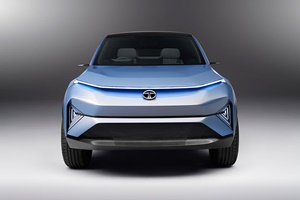
Tata Motors showcases new electric SUV concept Curvv

  • Tata Motors on Wednesday (6 April) showcased its electric SUV concept – Curvv that will feature a more dynamic design and offer an extended range. The electric motor propelling Tata Curvv will have a higher power rating as well, in comparison to Nexon EV.
  • As per speculations, Curvv will have a larger 40 kWh battery option (long-range version), along with a few additional features, while the existing 30.2 kWh battery option will remain on sale.
  • Tata Curvv will get two IC engine options as well, expected to be a 1.5-litre diesel engine and a 1.5-litre petrol engine. The petrol mill will be a four-cylinder version of the brand’s three-cylinder turbo-petrol engine, which is available on Nexon and Altroz. This new powerplant is expected to generate around 160 PS of peak power. The diesel engine of Curvv will likely be an updated version of the carmaker’s existing 1.5L oil-burner, which also does duty on Altroz and Nexon. Tata Motors will offer both manual and automatic gearbox options here. However, it should be noted that the EV version will go on sale first, and the IC engine version will launch later.
  • Conceptualised to offer practicality and elegance, all whilst exuding dynamism and unmatched road presence, the Curvv is expected to storm the market within the next two years. This concept will introduce India to a unique, edgy and sporty coupe body style, which in the past has only been prevalent in the high end luxury segment.
  • The concept Curvv in its production ready avatar will first enter the market as an extension of the company’s ever evolving electric vehicle (EV) portfolio, which will subsequently be followed by its Internal Combustion Engine (ICE) counterpart.
  • “Our ongoing business turnaround is history in the making. From record sales to upping our market share game, the last fiscal has been nothing but magical for us. We not only emerged as the No 1 SUV player with an array of products in our portfolio, we also continued to supercharge our growth in the EV space with our highest ever annual EV sales - going up by 353 per cent vs FY21,” Shailesh Chandra, managing director, Tata Motors Passenger Vehicles Ltd and Tata Passenger Electric Mobility Ltd, said while speaking at the event.
  • “With a robust SUV DNA at its core, and a plethora of new age materials, features and interfaces, we are confident that this coupe concept will redefine mainstream SUV design. Furthermore, with the concept Curvv, we now enter the Generation 2 EV architecture, which will further enhance the adoption of EVs in India by overcoming the current barriers. With this new architecture, we will strengthen the key pillars of Range, Performance and Technology, while retaining Safety and Reliability as hygiene offerings,” he added.
  • Tata Motors claims that the Generation 2 EV architecture will be advanced, flexible and capable of offering multi-powertrain options. Products on this architecture will be crafted to deliver a higher range while retaining the credibility and reliability standards set by the Generation 1 products powered by Ziptron.“The concept Curvv in its production version will provide customers with unprecedented versatility of use while giving rise to a new breed of vehicles in India that provides its users with a true lifestyle mobility solution to enjoy – a vehicle that combines functional attributes without compromising its premium aesthetic,” says the company.Tata Motors showcases new electric SUV concept Curvv

Sunday, 29 January 2023

Samsung completes design of CMSR Power Barge : New Nuclear

The Power Barges are modular and can produce from 200-800 MW of electricity (Image: SHI/Seaborg)

South Korean shipbuilder Samsung Heavy Industries (SHI) has completed the conceptual design for the CMSR Power Barge - a floating nuclear power plant based on compact molten salt reactors - and obtained the basic certification of the design from the American Bureau of Shipping (ABS).

In December 2020, ABS said it had completed a new technology qualification of a compact molten salt reactor (CMSR) developed by Danish company Seaborg Technologies. The concept was found to satisfy the Feasibility Stage, the first milestone in the ABS New Technology Qualification process.

In April last year, SHI and Seaborg signed a Memorandum of Understanding to manufacture and sell turnkey power plants combining SHI's ship-building expertise and Seaborg's CMSR. It also covered the development of hydrogen production plants and ammonia plants.

Seaborg's design is for modular CMSR power barges that can produce between 200 MW and 800 MW of electricity, with an operational life of 24 years. Instead of having solid fuel rods that need constant cooling, the CMSR's fuel is mixed in a liquid salt that acts as a coolant, which means that it will simply shut down and solidify in case of emergency.

ABS has now issued an Approval In Principle (AIP) to SHI for using the CMSR design in the CMSR Power Barge.

As part of the Novel Concept Class Approval process, ABS grants an AIP at an early conceptual design phase to assist the client in demonstrating project feasibility to its project partners and regulatory bodies. AIP confirms that the proposed novel concept that includes the new technology complies with the intent of the most applicable ABS Rules and Guides as well as required appropriate industry codes and standards, subject to a list of conditions.

SHI said the CMSR Power Barge can be equipped with two to eight 100 MW CMSRs in accordance with demand for power production. It describes the CMSR Power Barge as "a fusion of nuclear power and shipbuilding technology", adding that it is "a 'nuclear power plant on the sea' with steam turbine generators and transmission/distribution facilities in the floating body". The company says that compared with conventional land-based nuclear power plants, "the site selection and facility constraints are relatively less demanding, the construction period is as short as about two years, and the cost is low".

SHI plans to commercialise the CMSR Power Barge by 2028 once the detailed design of all of the plant's power generation facilities has been completed.

It noted Seaborg is actively conducting sales activities targeting developing countries that lack permanent electricity.

SHI said it expects the CMSR Power Barge to "expand demand not only as an alternative demand for existing fossil fuel power generation facilities, but also as an electricity and thermal energy source for industrial heating systems, hydrogen production, and seawater desalination facilities".

"We will complete the product that will lead the future new market through continuous technology development and commercialisation efforts for floating nuclear power plants," said Yeo Dong-il, head of offshore design at SHI.Researched and written by World Nuclear News Source: World Nuclear News

Sunday, 9 August 2020

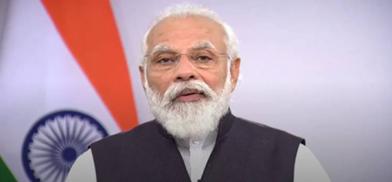
Self-reliance is not being closed to the world: PM Modi

a

Inviting global companies and investors to India amid his government's push for import substitution and a self-reliant India, Prime Minister Narendra Modi on Thursday said that the call for an 'Aatmanirbhar Bharat' is not about being self-contained or being closed to the world.

Delivering the inaugural speech at the India Global Week 2020, he said that the concept of Aatmanirbahar Bharat merges domestic production and consumption with global supply chains.

Inviting global investments in agriculture, logistics, defence and space, the Prime Minister said: "We are laying a red carpet to come and establish presence in India."

"Aatmanirbhar Bharat is not about being self-contained or being closed to the world, it is about being self-sustaining and self-generating. We will pursue policies that promote efficiency, equity and resilience," he said.

The Prime Minister first used the term Aatmanirbhar Bharat, or self-reliant India, during an address to the nation in May, wherein he had asked citizens to purchase Indian and India-made goods and called upon India Inc to produce all the products imported by the country and become self-sufficient. Since then, it has become a catchphrase among industry participants and traders along with government representatives.

Talking of market liberalising reforms, he said that India is one of the most open economies in the world.

He also outlined several "reform" measures taken by the government in the past six years including "total financial inclusion", "record" housing and infrastructure projects, tax reforms including the Goods and Services Tax among others.

Further as the world goes through a recession amid the pandemic, Modi said that India will play a leading role in the global economic revival.

He also said that India has already started seeing "green shoots of recovery".

Noting that Indian technology industry and tech professionals along with contributions in other sectors by Indians, including healthcare, banking and scientific research, have always played a major role globally, he said: "There is faith that the story of global revival will have India playing a leading role."

Modi also said the ability of Indians to reform and rejuvenate would be significant in this regard

As on one hand, India is fighting the pandemic with stress on healthcare, it has also given equal importance on economic revival and reform, he added. (IANS) 

Wednesday, 24 June 2020

New concept for offshore nuclear plant

How the platform could look, inside and out (Click to enlarge) (Image: Jake Jurewicz / MIT-NSE)
  • offshore platform similar to those used by the oil industry. The only floating nuclear power plant today is the Akademik Lomonosov, under construction in Russia, where two 35 MWe reactors similar to those used to propel ships are being mounted on a barge to be moored at a harbour. The concept from Massachusetts Institute of Technology (MIT) differs in that researchers propose a reactor of 200 MWe or more mounted in the centre of a floating cylindrical platform positioned around ten kilometres out to sea.
  • Floating plants offer various advantages: construction in a factory or shipyard should bring efficiencies; siting is simplified; environmental impact is extremely low; and decommissioning can take place at a specialised facility. However, the offshore environment brings important considerations, such as access for personnel and equipment and the need for strong assurance that uncontrolled contamination of the sea would be impossible.
  • Surrounded by relatively deep water, the floating power plant would have constant close access to the sea for cooling and a large lower section of the structure would be permanently flooded to provide passive cooling to the reactor containment vessel. MIT's Jacopo Buongiorno said, "It's possible to do cooling passively, with no intervention. The reactor containment itself is essentially underwater."
  • In water 100 metres deep, MIT said their concept would be immune to the effects of earthquakes, while it would easily ride out the swell that a tsunami represents ten kilometres offshore. It could be sited close to centres of electricity demand without using up valuable land, as long as the area is clear of shipping lanes and not often subject to severe storms.
  • The concept was presented at the Small Modular Reactors Symposium, organised in Washington DC by the American Society of Mechanical Engineers. It was developed by Buongiorno with Michael Golay and Neil Todreas, the Kepco professor of nuclear science and engineering. Also involved were staff from the University of Wisconsin and from engineering firm CB&I.
  • Researched and written by World Nuclear News Source: https://www.world-nuclear-news.org/

Wednesday, 13 January 2016

10 fresh restaurant marketing ideas for 2016

QsrwebBy Evan Hayes, vice president of finance, Belly, When you own or manage a restaurant, you likely wear multiple hats. Your primary concern is ensuring your customers enjoy a high quality meal and leave to share their experience with their family and friends. You manage your employees, prepare the food, keep the books, handle supply, and interact with customers. When each day is over, the last thing you have time to do is develop and actively maintain an effective marketing strategy. Perhaps your social media presence has been nonexistent, or your once loyal customers are not returning as often as you would like.

This may sound like a lot to balance, and it is, but today there are marketing techniques that won't break the bank and will help you save time. Use these restaurant marketing ideas to take your business to the next level in 2016.
  • Take loyalty seriously — Did you know it costs a business 5-7 times more to acquire a new customer than it does to sell to an existing one? Not only that, but on average loyal customers spend 10 times more over their lifetime. By taking customer loyalty seriously and offering customers the ability to earn rewards for visiting your business, you'll be able to retain your most profitable customers and allocate resources you might have wasted on customer acquisition, to more value-add activities.
  • Build a simple, elegant website — Almost 50 percent of restaurant website traffic takes place on mobile devices, according to a Gourmet Marketing.com article. Restaurants that offer responsive mobile websites convert up to 64 percent of searchers. There are many high quality DIY websites that enable restaurants to build their own mobile friendly websites like Squarespace and Wix. Website content about you, your restaurant and your multitude of seasonal menus should be limited to only a few, clearly defined options (e.g. menu, order, contact, locations). Mixed Greens, a local business in Chicago, gets an A+ for website functionality and design.
  • Grow your customer review bank — Your reputation can make or break your business. The sheer volume of reviews doesn't really matter. Instead, the number of positive reviews becomes your restaurant's lifeblood. Sites such as Yelp, Urbanspoon and Zagat provide a medium for customers to express their likes and dislikes about your food, ambience and customer service. According to a survey conducted by Dimensional Research, people who had a poor interaction were 50 percent more likely to share it on social media than those who had a good experience, and 52 percent were more likely to share it on an online review site such as Yelp. Be sure to stay on top of your business's reputation by responding publicly to all reviews. You should also give your most loyal customers the ability to review your business on Yelp — increasing the likelihood that they'll leave a positive review!
  • Become a social media medium — The number of social media outlets customers' have available rivals the number of Crest toothpaste options found at your local grocery store (last count was 38 at my local store). It's important not to get lost in the myriad of options but instead, remain focused on nurturing the ones that matter the most. Once you've created a Facebook page and Twitter handle for your restaurant, focus on gathering more "Likes” and "Tweets" by driving customers to talk about their visit online. There are also quite a few social media management tools available to help you manage your social media presence, including Sprout Social, Hootsuite and Buffer.
  • Gather data on your customers — It is not 1995, yet some restaurants continue to have customers drop their business cards in a fishbowl or hand write their email addresses on a piece of paper at the register. Or better yet, some restaurants collect absolutely no information about their customers. Gathering data about your customers is no longer optional in today's highly competitive, online world. Offering a digital loyalty program brings traditional offline data-gathering methods online by allowing your restaurant to collect actionable data on your customers and make decisions that positively impact your business.
  • Participate in the on-demand economy — According to Mike Jaconi, contributor for Business Insider, the on-demand economy is defined as "the economic activity created by technology companies that fulfill consumer demand via the immediate provisioning of goods and services." Companies such as Postmates, GrubHub and Caviar are worth considering because of their ability to extend the existing reach of local restaurants and to have a positive impact on labor allocation toward food delivery and on-demand ordering.
  • Use mobile to gamify customer experience — It's no secret that we all love our smartphones. As customers, we live in a much more mobile world compared to a decade ago. By embracing the mobile trend, restaurants that partner with loyalty apps or offer their own app are seeing an increase in engagement and activity that can lead to stickiness, deeper connections and greater loyalty. For example, Tropical Smoothie was able to decrease time between customer visits by 50 percent by surprising and delighting their customers. Using their loyalty program, they emailed their customers to visit for a chance to win a free smoothie.
  • The farm-to-table and local fresh wave is here to stay — By not offering your customers locally sourced food products, you're missing out on a two-sided advantage on which other restaurants that do offer local are capitalizing. From a food perspective, providing locally sourced ingredients means you're offering customers fresh, high quality ingredients that generally command higher prices and better margins. From a marketability perspective, offering farm-to-table ingredients means the perception of your food quality is much higher than it otherwise would be. Additionally, you create the perception that you're building goodwill within the local community by supporting small local farmers. Restaurants that offer farm-to-table options and that source many menu items locally include Farmhouse in Chicago and Redbird in Montana.
  • Offer online reservations — If you currently don't offer a way for customers to book reservations online, you should consider signing up for an online reservation like OpenTable. Online reservation tools provide new and existing customers with a fast and easy way to book new reservations, change reservations and share their experiences.
  • Allergen friendly and gluten-free — The point here is to expand your audience — continue to cater to the majority of us without food allergies — but now find select partners to source allergen-friendly options that make it possible for the family of four who has a child with celiac disease to enjoy food at your restaurant. You offer whole-wheat pasta on your menu, so why not also offer brown rice pasta? Offering allergen-friendly and gluten-free options doesn't have to be a yes or no, black or white decision. It is possible to safely provide alternatives either made in-house or sourced from certified allergen or gluten-free partners such as Sweet Ali's Gluten Free Bakery or Defloured. Source: http://www.qsrweb.com/

Tuesday, 1 September 2015

Vietnam's one-man army fights China's economic invasion: report

Vietnam, which ended a long drawn battle with America's armed forces four decades ago, is now fending a different kind of invasion - Communist China's economic aggression. Leading the fight is Nguyen Huu Duong, a soldier-turned real estate tycoon. Nguyen Huu Duong, a construction mogul, is leading a lone fight to save Vietnam's frail economy from the flood of cheap Chinese goods, say reports. The flood of cheap Chinese goods is pushing Vietnam's small businesses to the brink as China's products are cheaper than cheap Vietnamese products! Duong has created a war chest of tens of millions of dollars to help liberate Vietnam from the clutches of Chinese imports. Despite a faster pace of growth of Vietnam's economy, its manufacturing industries, especially units operating in the small-scale sector, are increasingly running out of business due to the onslaught of cheap, mass-produces Chinese products. Duong is trying to revive those small units by providing them with free and easy marketing assistance to home-made products pushed out of stores by even cheaper Chinese goods. Duong, 61, who became a rickshaw driver after his army stint, now owns the Hoa Binh brewery, which makes the `Duong Beer'. He also owns a well-established construction business. He claims to have spent $27 million on the V+ mall, which opened in February. This is being opened to local manufacturers as exclusive outlets to sells everything from handbags and shoes to nuts and ornaments. Its supermarket undercuts foreign rivals like Big C and the first V+ shop has just opened on a Hanoi street selling `all-local' products. ''Prices are good, quality is good. This must be one of the cheapest places in Southeast Asia,'' said Duong. Duong hopes to rescue domestically produced goods priced out by Chinese exporters by nurturing local startups with free 50-year leases in his Hanoi mall ''V+'' – if they sell only Vietnamese-made products. He now wants the government to support the creation of a nationwide network of exclusive stores to help consumers source locally and avert the closure of tens of thousands of small businesses. Just as the Chinese government helps its industry to sell cheap overseas by a variety of policy measures – both non-tariff and tariff - each country needs to supports its industry, he says. China's mass exports of cheap products exerts a huge pressure on the Vietnamese economy and production, according to Duong. Vietnam is now ruing its overdependence on the giant neighbour and biggest trade partner China, which has now turned the biggest bully in the region with territorial incursions. More than 75 per cent of Vietnam's annual $60-billion trade is made up imports from China. This, however, forms only 0.65 per cent of China's $2.3 trillion exports in 2014. The yuan devaluation could trigger a fresh wave of imports from China and may drive up imports from China to near 100-per cent of Vietnam's total trade. Source: domain-b.com

Thursday, 2 July 2015

Have a look at some of the newest ideas from Siberian inventors

Yakov Migas, a student at the Siberian Federal University has designed a house covered in grass. Picture: Yakov Migas
By Olga Gertcyk: From levitating grass houses to kindergartens made of cheese and containers that heat themselves via text message. When it comes to innovation, Russia has a long and proud history at developing some of the most important inventions in history. From the helicopter to the radio, and from yoghurt to the solar panel, our people have contributed greatly to the development of global science. Creating new ideas, and experimenting with clever designs, is something entrained deep in our psyche and amateur engineers in Siberia continue to come up with new ideas today. Some are truly innovative. Others may well require more work. Here, the Siberian Times looks at some of the inventions developed across the region recently that could soon be heading our way. THE 'LEVITATING' GRASS HOUSE: Resembling the home of the children's television characters, the Teletubbies, one Siberian student has designed a house covered in grass. Combining two traditional Siberian buildings – a log house and a dug out – it sits above the ground and comes in an easy-to-fit kit that can be put up anywhere. The brainchild of Yakov Migas, a student at the Siberian Federal University, its basement flooring is made of larch logs while the roof is made completely of grass. The living area is suspended from the roofing, allowing it to levitate above the lawn. A prototype is now being devised. CARS RUNNING ON PINE CONES: Enterprising Siberians Kirill Busenius and Dmitry Vlasov have adapted a car to run on logs, cones, animal waste and even old socks instead of petrol. Inspired by car owners in the Second World War – who used such means to power their trucks – they fixed a special generator to the back of an old Moskvich to turn solid and liquid fuel materials into gas for running the engine. 
Enterprising Siberians Kirill Busenius and Dmitry Vlasov have adapted a car to run on logs, cones, animal waste and even old socks instead of petrol. Pictures: Ivan Reizvich/NGS.ru
And driving at a maximum speed of 90km per hour, a 15kg bag of logs is enough to go for about 120km making it more efficient than normal petrol. Some dubbed it Siberia's 'Back to the Future' car because it bears a crude resemblance to the time-travelling vehicle powered by recycled garbage materials in the Hollywood movie. MOSS DIAPERS: How about some baby nappies made of moss? Scientists in Tomsk have created quite a stir with their plans for special diapers using materials straight out of Siberian swamps. Yakov Chirikov, who is in charge of the Innovata research and development company, noted that moss had particularly good qualities for healing wounds and was a great absorber. So what better way to use it than for babies, especially since it works out as a cheaper alternative to the absorbent material currently used for nappies? It took three years for scientists to create a prototype, and now they are working on improving the absorbing capacity of the moss.
Scientists in Tomsk have created quite a stir with their plans for special diapers using materials straight out of Siberian swamps. Pictures: Rosred.ru
KINDERGARTEN MADE OF CHEESE: Delicious, and educational. That’s the hope for a new children’s day care centre being planned in the Altai region. For designers at Barnaulgrazhdan proekt have come up with a scheme to decorate the outside of kindergartens with local food brands, and cheese in particular. Plans have been drawn for several types of nurseries, such as the Mouse House made of cheese, which will be able to host 225 children in Novoaltaysk. And while it may sound crazy, it even has the backing of health experts. 'The health of the growing generation is directly related to eating habits. Our goal is to show kids that they live in a unique region that produces the most delicious and healthy food,' said Tatyana Zelenina, the head of the department for food, proceeding and pharmaceutical industries and biotechnologies of the Altai region. According to her, it is also possible to develop the idea further and build nurseries shaped like a beehive, sunflower or buckthorn. That would help to teach youngsters about the local food and fauna. 'I believe that a child attending such a 'delicious' day-care will later become a cheesemaker, beekeeper or a baker,' added Zelenina. 
Plans have been drawn for several types of nurseries, such as the Mouse House made of cheese, which will be able to host 225 children in Novoaltaysk. Pictures: Barnaulgrazhdan proekt
THE CAR MOTORTRIKE: Vitaly Gayvorosnky, a biker from Byisk, has created an unusual trike married together from a series of motorbikes and a Toyota car. He used the front part of Toyota Gaia, and added it to the back of his bike to give added seats. The front wheel was taken off a Kawasaki Vulkan, the front breaks and shock-absorber came from a Kawasaki ZRX, and the headlight once belonged to a Yamaha YZF-R6. The two-litre gasoline engine from Toyota Gaia became the 'heart' of the bike. Mr Gayvoronsky did not disclose how much it cost him to create his new vehicle but would only say it was 'quite reasonable'. However, registering the trike with the State Inspection for Traffic Safety was a hassle - it took almost a year.
Vitaly Gayvorosnky, a biker from Byisk, has created an unusual trike married together from a series of motorbikes and a Toyota car. Picture: Vitaly Gayvorosnky
MOBILE PHONE TEXT WARMING CONTAINER: Students at Tomsk Polytechnic University designed a smart container for heating their food - using their own mobile phones. The special feature of the tub is a pre-installed GSM module that is able to receive commands via a text message, turning mobile phones into remote controls for turning the heat on and off, and varying the temperature. Incorporating a microwave oven container, the little box runs on a battery and will begin heating food on receipt of a SMS text. It automatically switches off at 93 Celsius. Its designers say the container could have a number of potential uses.Co-inventor Elena Sakharova said: 'Our product can be attractive not only for students that haven’t got enough time to have a proper lunch, but also for the military and care centres or nursing homes for the elderly.
Incorporating a microwave oven container, the little box runs on a battery and will begin heating food on receipt of a SMS text. It automatically switches off at 93 Celsius. Pictures: Elena Sakharova, Zhivoe TV
'We want to produce a batch of containers as we actually have orders - there are people who want to buy them.' The students are planning to use the technology in different areas in the future, and are already working on the design of a smart greenhouse. It would allow you to control the temperature, humidity and other characteristics remotely. Source: hsiberiantimes.com/

Sunday, 19 April 2015

World's first robotic kitchen to debut in 2017

The world's first automated kitchen system was unveiled this week at Hanover Messe in Germany – the premier industrial robotics show. Developed by tech firmMoley Robotics, it features a dexterous robot integrated into a kitchen that cooks with the skill and flair of a master chef. The company's goal is to produce a consumer version within two years, supported by an iTunes-style library of recipes that can be downloaded and created by the kitchen. The prototype at the exhibition is the result of two years development and the collaboration of an international team including Sebastian Conran who designed the cooking utensils and Mauro Izzo, DYSEGNO and the Yachtline company, who created the futuristic kitchen furniture. Two complex, fully articulated hands, made by the Shadow Robot Company, comprise the kitchen's key enabling technology. The product of 18 years' research and development, Shadow's products are used in the nuclear industry and by NASA. Able to reproduce the movements of a human hand with astonishing accuracy, their utility underpins the unique capability
of the automated kitchen. The Moley Robotics system works by capturing human skills in motion. Tim Anderson – culinary innovator and winner of the BBC Master Chef competition – played an integral role in the kitchen's development. He first developed a dish that would test the system's capabilities – a crab bisque – and was then 3D recorded at a special studio cooking it. Every motion and nuance was captured, from the way Tim stirred the liquids to the way he controlled the temperature of the hob. His actions were then translated into elegant digital movement, using bespoke algorithms. The robot doesn't just cook like Tim – in terms of skill, technique and execution it is Tim producing the dish. The kitchen even 'signs off' its work with an 'OK' gesture – just as the chef does. "To be honest, I didn't think this was possible," he said. "I chose crab bisque as a dish because it's a real challenge for a human chef to make well – never mind a machine. Having seen – and tasted – the results for myself, I am stunned. This is the beginning of something really significant: a whole new opportunity for producing good food and for people to explore the world's cuisines. It's very exciting." Moley Robotics, headquartered in the UK, is now working to scale the technology ready for mass production and installation in regular-sized
kitchens. Future iterations will be more compact, with smaller control arms but with added functionality in the form of a built-in refrigerator and dishwasher tocomplement a professional-grade hob and oven. The company is working with designers, homebuilders, kitchen installers and food suppliers to promote the system. The mass-market product will be supported by a digital library of over 2,000 dishes when it launches in 2017 and it is envisaged that celebrity chefs will embrace 3D cooking downloads as an appealing addition to the cook book market. Home chefs will be able to upload their favourite recipes too, and so help create the 'iTunes' for food. Moley Robotics was founded by London-based computer scientist, robotics and healthcare innovator Mark Oleynik. The company's aim is to produce technologies that address basic human needs and improve day-to-day quality of life. "Whether you love food and want to explore different cuisines, or fancy saving a favourite family recipe for everyone to enjoy for years to come, the Automated Kitchen can do this," says Oleynik. "It is not just a labour saving device – it is a platform for our creativity. It can even teach us how to become better cooks!" The robotic hands demonstrated this week offer a glimpse of the not-too-distant future, when even greater advances in movement, flexibility, touch and object recognition will have been achieved. Experts believe that near-perfect recreations of human hands, operating in a wide variety of environments, will be possible in just 10 years' time.World's first robotic kitchen to debut in 2017

Thursday, 21 August 2014

Windowless jet designed to look transparent from inside

The IXION windowless jet
Design company creates the 'ultimate window seat' for all passengers using high-res displays
A Paris-based design team has created an innovative concept for a private jet that gives passengers the impression that the aircraft in which they're flying has entirely transparent walls. High-resolution cameras mounted on the jet's fuselage and wings capture real-time video footage of the world outside and beam it onto flexible display panels on the cabin walls and ceiling.
"Every seat on this private jet is the ultimate window seat, but there's just one catch – there are no windows," says the Daily Mail
Instead, passengers can see the panoramic view from outside streamed onto the walls. Alternatively the displays could be used for in-flight video conferencing or for other pre-programmed images, such as these space or mountain scenes, or even to mimic a more traditional aircraft interior.
Gareth Davies, design director at the Technicon Design's Paris studio, said: "The brief of the project is simple, to challenge current thinking, and propose something a little different but not just a fantasy. It has to be credible and relevant, yet provoke discussion."
A jet without windows also allows for a "svelte and elegant" exterior, says Davies.
The IXION windowless jet was designed for a National Business Aviation Association show last year and earned the team an award at the International Yacht & Aviation Awards in May.
Omar Kardoudi at Gizmodo says it "might look like an impossible sci-fi concept" but he believes we are "not very far" from seeing something similar in real life. "Perhaps flying inside a giant semi-cylindrical display would get tiring at one point," he adds, "but I would like to see it built and try it." For further concise, balanced comment and analysis on the week's news, try The Week magazine. Subscribe today and get 6 issues completely free. Source: The Week UK

Saturday, 26 April 2014

Samsung Gear Fit review: A good thing for your wrist

This device is useless for people who don't own a new Galaxy device. It might be a lure for some of them to move to Samsung. The Samsung Gear Fit is priced at Rs 15,900
The future could be all about wearables. So much so that they could end up eating into the smartphone segment. So those launching smartphones and fitness bands are just testing the waters for what could be the next big disruptor. Samsung launched its first Gear smartwatches last year. This year, it has upgraded the watches and launched the new Gear Fit, meant to be used as a smart fitness band that keeps a tab on your health. Here is what we thought of the Samsung Gear Fit.’ Design: The Gear Fit is not much larger than a ladies watch. In fact, it looks like one too. It is sleek, light weight and sturdy with a plastic strap that makes it good for use in sweaty conditions. My problem with the Fit was the orientation of the screen. With a strip-like LCD, I did not know whether to wear it facing me or with the text facing out. This was when I realised the brilliance of the traditional watch face. But the 1.84” Curved Super AMOLED touchscreen display is great too and adds to the functionality of this device. The Fit has just one button for power. Behind the device is a sensor that acts like the heart rate monitor.

  • Set-up: The set-up is amazingly simple and you just need the Gear Fit app to run on your Samsung Galaxy device. We tested the Fit with the new Samsung Galaxy S5 and the instructions popping up on the display were good enough for the entire set up to be completed in a couple of minutes. However, you need to add the apps on the phone and not the Fit. But the apps appear instantaneously on the band and don’t need to pushed there like in the Pebble. Performance: Let’s get one thing clear. This is not a smartwatch. But it has a watch with weather alerts and you don’t need to wear another timepiece with this one on. It also shows notifications from your Galaxy device like in smart watches and it is very easy to read stuff on this OLED screen despite it being quite small. But what this is is a fitness band to the core. So it knows what you are up to, at least when it is told so. Yes, the Fit starts keeping an eye on you after you ask it to. So there are all activity trackers you will need on the band. It can measure your heart rate, quantify your workouts whatever you might be doing — walking, running on cycling. But it doesn’t do anything on the fly. You can tell the pedometer to keep a tab on what you are up to and the reading is quite accurate. The touchscreen is extremely good and works even when you have sweaty hands. The navigation is also swipe based and not complicated. So you wouldn’t have to get off the treadmill to do anything. 
  • Apps: The Gear Fit Manager is the hub for controlling and customising the Fit. The app lets you change wall papers, watch styles and layout. It also conencts you to other fitness apps like the S-Health or Lark that use data from the Fit to coach you into a better lifestyle. However, this one does not let you use smartwatch apps likes Evernote. 
  • Should you buy it? Yes, if you have a new Samsung Galaxy device and you are serious about keeping fit. However, this device is useless for people who don’t own a new Galaxy device. It might be a lure for some of them to actually move to the Samsung ecosystem and that is exactly what the Korean giant wants. Source: The Indian Express

Thursday, 21 November 2013

Honda Teases New Urban SUV Concept Ahead of Detroit Auto Show Debut

A single teaser image along with a very short statement is all we get about Honda's new Urban SUV Concept study that will receive its world premiere in January at the 2013 North American International Auto Show (NAIAS) in Detroit. Here's what the Japanese automaker told us in the press blurb: "The Urban SUV Concept, teased in a sketch released today, is a global concept model combining a sporty and dynamic SUV profile with a spacious, functional interior." While the automaker may not be willing to divulge specific information about the prototype at this time, we remember that during a press event at the company's headquarters in Japan this September, Honda president Takanobu Ito said that the carmaker will launch a small SUV based on the next Fit/Jazz subcompact. We believe that the Urban SUV Concept previews this model, which Honda has said will enter the market within two years after the launch of the new Fit/Jazz in 2013. Source: Carscoop

Tuesday, 12 March 2013

U Design: The New Alfa Romeo 4C Spider

If anything else, the community here at CarScoop seems hyped about Alfa's return to its roots with the upcoming 4C series. After one of our readers who attended an Alfa Romeo dealer meeting in Europe shared detailed information about the 4C, including preliminary pricing, production numbers and even the company's plans to expand the range with Racing, Spider and Stradale versions, another reader, Anton Gjorsev, sent us this rendering of the convertible model. Gjorsev's Alfa Romeo 4C Spider proposal keeps the same lines as the coupe dropping the center section of the roof and the rear windshield, under which, you will find a 1.75-liter turbocharged four rated for 240PS (equal to 237hp), that's connected to a dual-clutch automatic transmission feeding the rear wheels. We will remind you that the coupe iteration of the 4C is rumored to debut in production-ready form at next month's Geneva Motor Show. Kudos to Anton Gjorsev for the design! Source: Carscoop

Thursday, 24 January 2013

First Photos of the Updated Acura NSX Concept II?

A Chinese  website  has  dropped  a  pair of  pictures of  what is claimed  to be the latest Acura NSX Concept, which the Japanese carmaker has already confirmed for the Detroit Auto Show. Acura itself has described the car as "the next evolution of the NSX Concept". While we can't see any differences on the outside compared to the original study displayed at the 2011 North American International Auto Show in Detroit, there's a picture of the interior, which was not shown previously. The new NSX will enter production under the Acura nameplate in North America and as a Honda for the rest of the world within the next two years. It will be manufactured for the first time in model's history in the U.S. and will sport a mid-mounted naturally aspirated V6 engine aided by the firm's new Sport Hybrid SH-AWD (Super Handling All Wheel Drive) hybrid system that incorporates three electric motors. Story References: Xgo via Source: Carscoop

Sunday, 13 January 2013

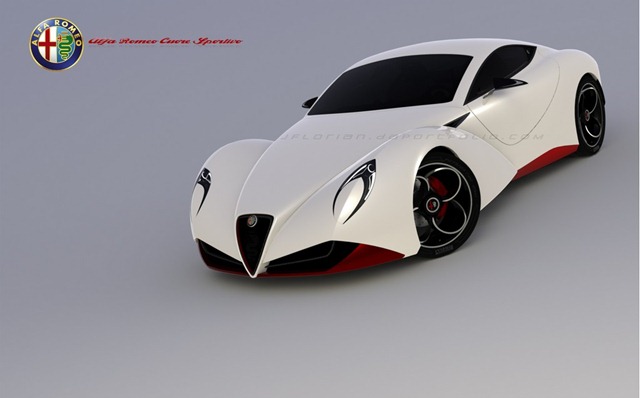
New Alfa Romeo 6C Cuore Sportivo Design Concept

The last great sports car to be produced by Alfa Romeo was the 8C Competizione offered in limited numbers between 2007 and 2010, which shared its platform and V8 engine with the Maserati GranTurismo. For the near future, the Italians have promised us at least two new sports models, the 4C mid-engine coupe and the next Mazda MX-5-based Spider, both of which are expected to be less spectacular than the 8C, but also much more affordable. Whether Alfa Romeo will venture again into the upper echelons of the sports car segment remains a mystery for now, but two fans of the
Italian brand, George M. and Florian J, who both work in the automotive industry, have come up with a fresh conceptual idea for a striking GT named the 6C Cuore Sportivo. Florian told CarScoop that the concept pays homage to Alfa Romeo's past coupes while also looking into the future of the brand. We'll let Florian do the rest of the talking about the study from here in the email he sent to us: "Designed in tribute to the great Alfa Romeo GT coaches, the 6C Cuore Sportivo consequently takes the features of different past models from the company, through a modern approach, and in the continuity of the 8C Competizione. This project, evoking different periods standing for the peak of the Milanese firm was born from a discussion Alfa-Romeo-6C-2
between two Alfisti passionate professionals working in the automotive industry, George M. and Florian J. From the front inspired by the 30s through the 6C 2500 Sport Touring Berlinetta, to the back oriented like the 8C Competizione as the 60s proudly represented by 33 Stradale, the car clearly adopts the genes of Biscione, acquired through its glorious history. Mingling classic curves and sharp lines, 6C fully assumes its neo retro look. If the front, dissociated, differs from the more unified rear, the global style of the car is guided by the V-shape or boomerang, which is mainly represented by the grille. This geometry is particularly found in lights, lateral outlets and exhaust. Addition to door handles dissimulated in the same way as on the 156, there is also the Quadrifoglio Verde which enables door opening." Designers: Source: Carscoop

Wednesday, 9 January 2013

Growth won't just happen: so when will George Osborne get a grip?


By: RICHARD EHRMAN, IT IS NOT surprising George Osborne looked so nervous when he got up to deliver his Autumn Statement in the Commons yesterday. On virtually every measure, things have turned out worse than he expected even nine months ago, at the time of his "omnishambles" Budget, and they were hardly looking rosy then. To be fair to the Chancellor, he is right when he claims that many of his problems are not of his own making. Whatever his shadow Ed Balls may say (and his performance yesterday was far from impressive), Labour left the public finances in a truly shocking mess. Even if everything else was going swimmingly, recovering from the Gordon Brown years would have been long and arduous. And, of course, everything else is not going swimmingly – far from it. No one dreamt when the coalition took over, that the eurozone would get itself into such an intractable tangle. The inexorable upward pressure on energy and commodity prices, caused by demand from China et al, is another factor that cannot be laid at Osborne's door. But it is not just excuses that have characterised his tenure at the Treasury. He has also been relentlessly over-optimistic. Again, he can argue in his defence that he has not been alone. Back in 2010 he set up the independent Office for Budget Responsibility and gave it the task of preparing the official forecasts. Its forecast at the time was that the economy would now be growing by 2.8 per cent, a figure it has been downgrading ever since. In March the OBR prediction was that this year growth would be just 0.8 per cent. Now it is minus 0.1 per cent. You might think once bitten twice shy. Yesterday, however, the Chancellor assured us, on the authority of the OBR, that growth will indeed return to 2.8 per cent. It's just that we will now have to wait until 2017 for it to happen. In the meantime, he intends to trundle along much as at present. A little more spending on some things will be paid for by smallish cuts elsewhere, and while some taxes will go up a bit, others will go down a little. And so it will go on, apparently, until the economy somehow sparks back into life. The question Osborne and the OBR never seem to ask themselves is - what if it doesn't? What if today's stagnant conditions are the new normal? The danger in the coalition's approach is that, if ministers think that growth will resume largely of its own accord, the temptation to fudge difficult but necessary decisions can easily become overwhelming. We can see this with the banks, which still won't lend despite the Treasury's threats and the Bank of England's blandishments. We can see it with public expenditure, and the way current spending continues to rise despite the rhetoric about cuts, while capital spending is down despite the grandiose talk of investment. And we can see it in the absence of supply side reform, on matters like planning and employment law, which has been endlessly promised but never seems to happen. The longer the recession drags on, the clearer it becomes that until someone can really get a grip on issues like these the economy will struggle to regain its mojo. The problem, of course, is that along the way a lot of powerful interests would be upset, ranging from the City to the National Trust. With the government in low water, perhaps it is understandable that embattled ministers think they have got enough on their plates to be going on with. It is plain, however, that we can't rely on help from elsewhere. Even the OBR can't be so optimistic as to think that the eurozone is going to sort itself out any time soon, or, for that matter, that the Chinese are suddenly going to moderate their demand for oil. Contrary to what the OBR and the Chancellor still appear to believe, growth is not just going to happen. It is going to have to be down to our own efforts, and especially the government's. At the moment, unfortunately, there is little sign the government gets this. Looking beyond the heated but rather esoteric debate about debt and borrowing targets, the economy, like the Chancellor, is stuck in a rut. On yesterday's showing it is hard to see how either is going to get out of it.  Source: The Week UK