bloggggg

Home  |  Live  |  Science  |  Lifestyle  |  Entertainment  |  Broadcast  |  Games  |  eBooks  |  Astounds  |  Adbite  |  Cricbell  |  Cyber  |  Idea  |  Digital  |  Privacy  |  Publish  |  ePaper  |  Contact  .Subscribe.Subscribe.Subscribe.Subscribe.Subscribe.Subscribe.Subscribe.Subscribe.Subscribe
Subscribe

Tuesday, 3 February 2026

Amentum to be delivery partner for Rolls-Royce SMR

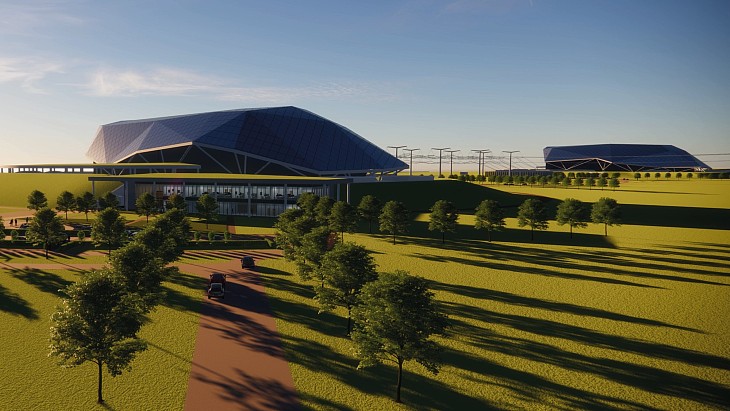
How a Rolls-Royce SMR might look (Image: Rolls-Royce SMR)

Amentum has been appointed as programme delivery partner for Rolls-Royce SMR small modular reactor projects, beginning with those in the UK and the Czech Republic.

The companies said Amentum, which is US-headquartered but with more than 6,000 employees in the UK, "will enable programme delivery, provide integration, oversight and governance, and deliver the construction management programme for the deployment of Europe's first SMRs".

Rolls-Royce SMR has been selected as the preferred bidder by Great British Energy - Nuclear to build three units in the UK, and by Czech Republic nuclear operator ČEZ to build up to 3 GW of new capacity.

Amentum said the UK Rolls-Royce SMR project would create "more than 8,000 quality long-term British jobs".

Chris Cholerton, Rolls-Royce SMR CEO, said the combination of the businesses would "enable successful delivery on our order commitments in multiple markets", adding: "This partnership plays directly to our strengths - ours in advanced manufacturing and engineering, and theirs in programme and construction excellence."

John Heller, Amentum CEO, said: "The Amentum Rolls-Royce SMR collaboration advances the deployment of this transformational technology, a critical enabler in strengthening energy security in the UK and continental Europe."

Loren Jones, Senior Vice President and head of Amentum Energy and Environment-International business, said: "Amentum's deep nuclear expertise and robust supplier network are ideal to support the growing energy requirements and drive long-term industrial growth."

Ruth Todd, Rolls-Royce SMR's Operations and Supply Chain Director, said: "This partnership supplements our existing capabilities with specialist expertise, geographical reach and provides access to the breadth of Amentum's wider supply chain. It ensures we are equipped to deliver our programmes in the UK and Czech Republic with confidence, scale and robust delivery assurance."

Amentum has been part of a consortium of supply chain companies that began working with Rolls-Royce in 2016 on the SMR development.

The Rolls-Royce SMR is a 470 MWe design based on a small pressurised water reactor. It will provide consistent baseload generation for at least 60 years. Ninety percent of the SMR - measuring about 16 metres by 4 metres - will be built in factory conditions, limiting activity on-site primarily to assembly of pre-fabricated, pre-tested, modules which significantly reduces project risk and has the potential to drastically shorten build schedules.

In June 2025 Rolls-Royce SMR was selected as the UK government's preferred technology for the country's first SMR project. A final investment decision is expected to be taken in 2029. In November the UK government announced that Wylfa on the island of Anglesey, North Wales, would be the site to host the three Rolls-Royce SMR units. It said the site - where a Magnox plant is being decommissioned - could potentially host up to eight SMRs.In October 2024, Rolls-Royce SMR was selected by CEZ to deploy up to 3 GW of electricity in the Czech Republic, and CEZ took at 20% stake in Rolls-Royce SMR. Amentum to be delivery partner for Rolls-Royce SMR

Tuesday, 20 January 2026

Renewables Overtake Coal as World’s Biggest Source of Electricity

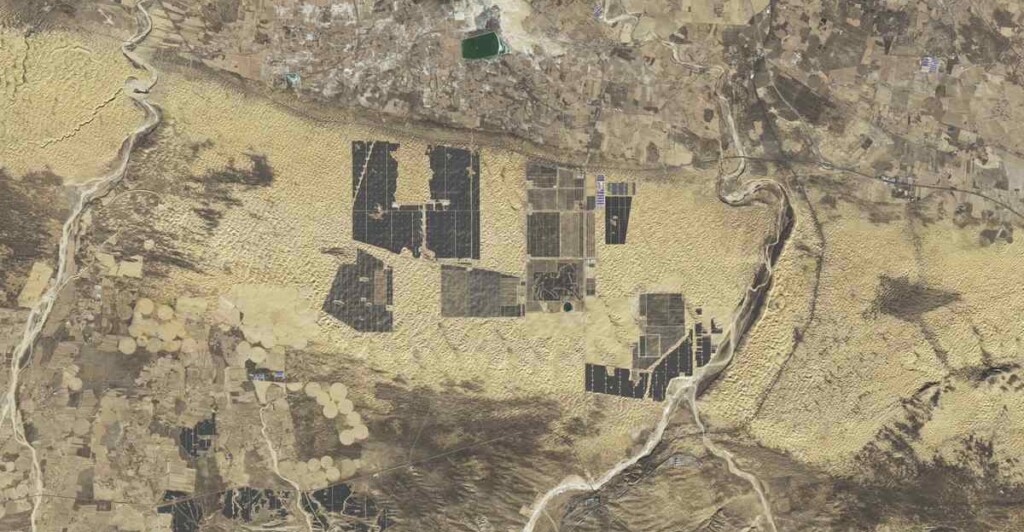
The solar arrays at the Kubuqi Desert, 2024 – credit: NASA’s Earth Observatory.

Renewable energy sources like solar and wind produced more electricity during the first half of the year than any other energy resource, including coal.

To bullet another massive accomplishment in the clean energy transition, of the cumulative demand for new power worldwide, renewables met 100% of it.

Coal has been the world’s most-consumed energy resource for the last 50-and-a-bit years. It held that position up until last year. But with costs in the solar energy market falling 99.9% since 1975, it’s becoming so much more feasible to use as an energy source for low and middle-income countries.

China continued its full-throttle deployment of renewable energy resources, adding more clean energy than the whole world combined last year, reducing its fossil fuel consumption by 2% even as it adds to its fleet of coal power plants.

This data comes from the energy think tank Ember, whose senior analyst Malgorzata Wiatros-Motyka said 2025 marked “the beginning of a shift where clean power is keeping pace with demand growth.”


Most solar generation (58%) is now in lower-income countries. Now that solar power in particular is cheaper, it’s much faster to install new grid capacity at scale rather than investing in the 10, 20, 30-year time horizons that the financing and construction of thermal power plants require.

Most countries don’t produce fossil fuels, but all have access to the Sun and winds, and so by relying on renewable energy they’re also not required to enter foreign currency markets to then be able to import coal, oil, or natural gas.

“Pakistan, for example, imported solar panels capable of generating 17 gigawatts (GW) of solar power in 2024,” writes the BBC on that notion, “double the previous year and the equivalent of roughly a third of the country’s current electricity generation capacity.”

South Africa, Algeria, and Botswana have all taken advantage of the solar boom as well.Wind turbines and associated infrastructure have not come down in price anywhere near as much as solar, which likely presents headwinds to so-called “Wind Belt” nations like the UK and Norway. Renewables Overtake Coal as World’s Biggest Source of Electricity

Saturday, 8 November 2025

India and Nepal power regional energy integration in South Asia

IANS Photo

Kathmandu, (IANS): Officials of Nepal and India have agreed to enhance cross-border electricity exchange and strengthen transmission infrastructure by expediting work on several existing and planned transmission line projects.

During the 17th meeting of the Joint Technical Team (JTT) under the energy (power) ministries of both countries, held in the western tourist city of Pokhara on Monday and Tuesday, the two sides discussed electricity trade, construction of new cross-border transmission lines, and strengthening of the transmission system, reaching several key understandings.

According to a press statement issued by Nepal's Ministry of Energy, Water Resources and Irrigation on Wednesday, both countries agreed to prepare a joint Detailed Project Report (DPR) for the proposed Chameliya–Jauljibi 220 kV double-circuit cross-border transmission line by November 2025, with the project expected to be completed by December 2027. The proposed line will connect Nepal's far-western region with India's Uttarakhand state.

Similarly, the two countries agreed to operate the under-construction New Butwal–Gorakhpur 400 kV cross-border transmission line at 220 kV initially once it is completed. To finalise the import and export capacity of this line, a meeting will be held with the Uttar Pradesh Transmission Company within 15 days. Nepali officials said construction work on both sides of the border has accelerated in recent months. The project was jointly inaugurated during Nepal’s former Prime Minister Pushpa Kamal Dahal a.k.a. Prachanda's visit to India in May-June 2023, as the head of the Nepali government.

The two sides also reassessed the power exchange capacity of the Dhalkebar–Muzaffarpur and under-construction Dhalkebar–Sitamarhi cross-border transmission lines, confirming that Nepal can export up to 1500 MW and import up to 1400 MW of electricity through each of them. Both projects were initially designed to handle 1000 MW. Currently, the Dhalkebar–Muzaffarpur line is the only operational 400 kV cross-border transmission line between Nepal and India, though there are about a dozen smaller cross-border power links.

Construction of the Dhalkebar–Sitamarhi line is nearing completion. The project is being developed by SJVN Arun-3 Power Development Company, a subsidiary of India’s SJVN Limited, which is also developing the 900 MW Arun-3 Hydropower Project in eastern Nepal.

As per the latest understanding, Nepal will provide the necessary technical details within a month for preparing the DPR of the proposed Nijgadh–Motihari 400 kV cross-border transmission line, which will be prepared jointly by a technical team from both countries. Similarly, a Joint Study Team will determine the final termination point of the proposed Lamahi–Lucknow 400 kV line on the Nepali side — either Lamahi or Kohalpur, two towns in Dang and Banke districts respectively — and prepare the DPR.

Both sides also agreed to adopt High-Temperature Low-Sag (HTLS) technology for reconductoring the Dhalkebar–Muzaffarpur line and to jointly study replacing existing conductors with HTLS conductors in the Raxaul–Parwanipur and Ramnagar–Gandak 132 kV lines to enhance capacity.

The latest agreements mark another step toward regional energy integration in South Asia, as Nepal seeks to expand the export of its clean energy to India and Bangladesh. Nepal is currently exporting around 1,000 MW of electricity to India, and the southern neighbour has agreed to buy up to 10,000 MW within 10 years under a bilateral agreement. To achieve this target, both countries are focusing on developing cross-border transmission infrastructure alongside the construction of major hydropower projects in Nepal.The meeting was co-chaired by Sandeep Kumar Dev, Joint Secretary at Nepal’s Energy Ministry and Bhagwan Sahay Bhairwa, Chief Engineer at India’s Central Electricity Authority (CEA), according to Nepal’s energy ministry. India and Nepal power regional energy integration in South Asia | MorungExpress | morungexpress.com

Sunday, 2 November 2025

Two-Headed Wind Turbine Could Solve Every Challenge in the Offshore Industry

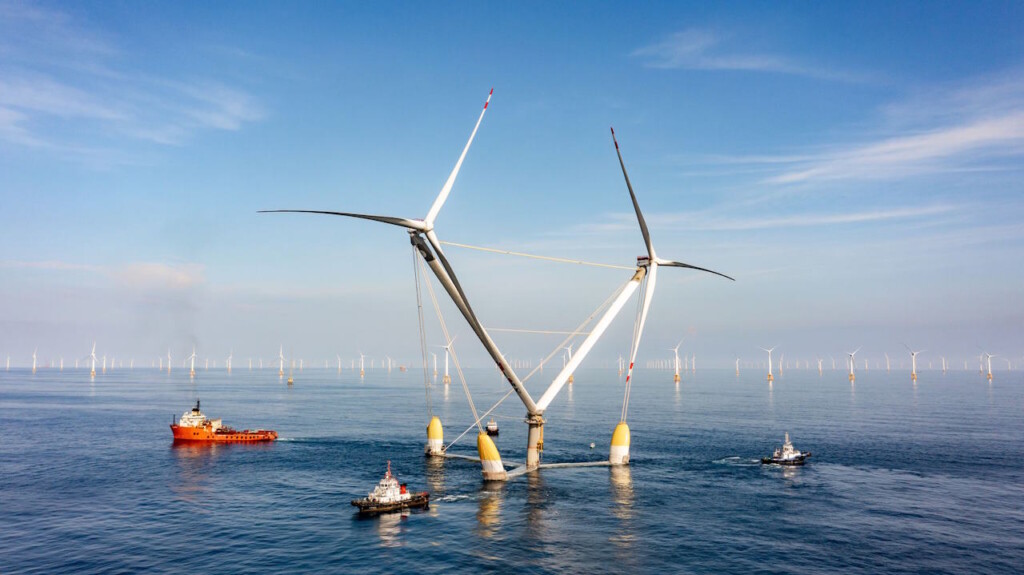
Ming Yang OceanX in operation – credit, Ming Yang Smart Energy

As the global leader in offshore wind development, a Chinese turbine manufacturer has designed a two-headed behemoth that will generate 50 megawatts on its own.

Blazing past renewable energy targets, the wind lobby in Beijing are serious players, unlike in Europe and North America where investment and R&D has lagged behind solar power.

Ming Yang Smart Energy already makes one of these two-headed turbines, but is planning to debut one that’s double the size of its existing model in 2026.

This Fortune 500 China-edition company is the undisputed world leader in wind turbines, particularly offshore ones, but not exclusively. It lays claim to both the most powerful land and offshore wind turbines in service today.

It developed the first typhoon-resistant floating turbine mooring, which was tested in September when Super Typhoon Ragasa passed over the entire 1,345-unit offshore fleet, and not one was upended. Every single one remained operational.

In 2024, the company debuted the previously mentioned double-rotor turbine—called the OceanX—consisting of two 8.3 MW turbines installed on 219-meter towers at an angle atop a floating platform. For comparison, the top-end turbines in the Moresea 1 wind farm in Great Britain generate 9 megawatts.

Just one OceanX in ideal conditions is boasted as having the capacity to power 30,000 homes annually. The counter rotating blades increase each turbine’s output beyond what the wind can do alone, but during testing the blades broke off from the force.

Nevertheless, the company managed to find buyers, and the OceanX was soon installed at the Yangjiang Qingzhou IV offshore wind farm, off the southeast China coast.

Marketing for the 50MW leviathan has already begun, with production slated for next year according to company boss Zhang Qiying who spoke at a Beijing conference recently. Such a turbine would drop the cost-per-kilowatt for wind energy in the Guangzhou area to around one-fifth of the current price for offshore wind energy in Europe.

Offshore wind power comes in for more criticism from environmentalists than land-based turbines, and so has been subjected to more research into its effects. However, with most of the world’s largest offshore wind farms coming online within the last decade, the body of evidence is limited.

Regarding collisions with birds, one 2022 study found that it was “unlikely that small-scale displacement by single wind farms would have an impact at the population level,” of migratory seabirds, which the study team found were at a 75-92% lower abundance inside the boundaries of the wind farm than out of it.

Concerns over disturbances among whales and the seabed sediment have also been raised, as well as offshore farms’ impact on coastal tourism, and their susceptibility to sabotage.

One surefire way to reduce these eco-impacts would be to reduce the number of turbine units in a given wind farm, and the best way to do that would be find a way for turbines to generate more electricity. 50 MW would be a truly astonishing operational achievement, and represent as much as a 15-fold increase in per-unit power generation compared to some turbines deployed in the North Atlantic.With such an abundance of energy, farms in sensitive environmental areas like whale or migratory seabird routes could substantially reduce their turbine counts if the Ocean’XL’ was part of the farm’s fleet. Two-Headed Wind Turbine Could Solve Every Challenge in the Offshore Industry

Tuesday, 7 October 2025

'Innovation in existing plants can help meet growth targets'

L-R: Svenningsson, Martinez Sancho, Ponchon, Edwards and Singh (Image: World Nuclear Association)

Extending operating lifetimes, improving efficiency, and restarting shut-down plants - not just building new capacity - will be needed to meet that tripling target - and innovation will have a big part to play, moderator Johan Svenningsson, who is chairman and CEO of Uniper Sweden, as well as being World Nuclear Association's vice chairman, said in a panel discussion on Maximising Value from Existing Nuclear Power Plants.

France's Grand Carénage investment programme to extend the operating lifetimes of its reactors has involved many activities, including the replacement of critical components and the renewal of instrumentation and control systems. Framatome CEO Gregoire Ponchon said close collaboration with French reactor operator EDF, and a focus on mitigating problems, had allowed the time taken for major activities such as the replacement of steam generators to be shortened. Using artificial intelligence (AI) tools to help with time management will also mean such tasks can be completed in a shorter time.

Lou Martinez Sancho is Chief Technology Officer at Westinghouse and acting president of the company's eVinci microreactor. As well as investing in maintaining the generating fleet, she said, continued investment and innovation in the entire fuel cycle will also be critical to achieve continued operation.

A major disruptor in the nuclear materials sector is the availability of new materials and techniques that could in future become widely used in nuclear fuel production, Martinez Sancho said, noting that Westinghouse began producing fuel containing some 3D printed components as long ago as 2020. And AI is also likely to play a key role in nuclear fuel innovation too, helping to shorten development timescales.

The timescales involved in fuel innovations have in the past been long - often longer than the time taken to design a reactor, she said: "But what we are seeing is that [in] nuclear, we have over 75 years of operations, of data - and data is what makes your AI actually develop … and allows you to understand better how closely those developments are going to happen."

Westinghouse's nuclear-specific generative AI system is called Hive. It was launched at the 2024 Symposium - and it "allows us to move that much faster", she said. As well as supporting design innovation, AI is also able to leverage that data to help improve efficiency, both in operations and in products like configuration management systems, optimising processes and supporting power uprates.

Asked if AI was just a "buzzword", Martinez Sancho was emphatic that it is not: Westinghouse is already using both "traditional" AI tools such as machine learning, and more modern tools such as generative AI, daily. But managing AI to unlock its true value is more complex than many realise, she added, needing a secure infrastructure - and full traceability of data is paramount. It needs engineers, data scientists, mathematicians, legal teams and regulators to work closely together. Access to the wealth of data from an AI, coupled with engineering knowledge, can be used to improve and speed up some process - including licensing - but "the final responsibility is always that of the engineer, not the AI", she said.

AI is also useful for knowledge management, to capture the experience of employees of many years and transfer it across generations, she said. "They need to have access to that information much faster," she said.

Never-ending story

AtkinsRéalis CEO Ian Edwards, emphasised the benefits from digitalisation in the execution of work on existing nuclear assets, allowing tasks including maintenance, life extension and even decommissioning to be performed more efficiently.

"We can digitally plan an activity in a nuclear zone to the nth degree virtually, and train our people virtually, so that the actual exposed time and the actual time, from an efficiency perspective, is reduced really consistently. And we are doing this on existing assets all the time and using technology to improve."

Maximising the use of existing nuclear assets is not just about preserving megawatts on the grid: it is also important as a foundation for future developments, Ponchon said, and nuclear companies have benefitted from the experiences of their predecessors. "Innovation is a never ending story," he added.

Operating life extensions and capacity uprates of existing nuclear plants are without doubt critically important for the industry going forward, said Kris Singh, President and CEO of Holtec International, but the challenge is how to make them affordable and also how to design plants and carry out the work in such a way as to ensure they continue to perform well and even to improve: for example, introducing features to make plants more easily inspectable.

"The owner user community and the designers, developers, consultants, they need to get together on this," he said. "There's an opportunity to make every plant last longer, be more resilient, be more reliable, be more maintainable while you are doing the life extension, while you are doing power upgrade."World Nuclear Symposium took place in London from 3-5 September. 'Innovation in existing plants can help meet growth targets'

Friday, 5 September 2025

Nuclear at heart of Ontario's integrated energy strategy

Minister Lecce (front row, third from left) was joined by many generations at the launch of the new plan (Image: Stephen Lecce/X)

The government's newly released energy roadmap brings together electricity, natural gas, hydrogen and other energy sources under a single coordinated strategy to ensure the province which already gets more than half of its electricity from nuclear plants has the affordable, secure, reliable and clean energy it needs.

Energy for Generations, which was launched on 12 June by Minister of Energy and Mines Stephen Lecce, builds on a 2024 vision paper setting out a comprehensive assessment of the challenges facing the province's energy system, including the need to meet rapidly growing demand, electrify key sectors, and maintain reliability, all while keeping energy rates down. A public consultation on that paper, Ontario's Affordable Energy Future: The Pressing Case for More Power, attracted responses from Indigenous communities, municipalities, utilities, stakeholders and the public.

With the subtitle Ontario's Integrated Plan to Power the Strongest Economy in the G7, the government says this is Ontario's first integrated energy plan. It establishes a planning horizon to 2050. Four principles of affordability, security, reliability, and clean energy are embedded throughout the plan, which the government says "enables smarter decision-making, better system coordination, and more cost-effective investments that will benefit families, workers, and businesses across the province."

With nuclear currently responsible for 50% of Ontario's total generation and hydro contributing 24%, Ontario already has one of the cleanest grids in the world, the plan notes. Under Energy for Generations, "nuclear power will continue to serve as the backbone of the province's electricity system providing the 24/7 baseload power the province's economy requires" as demand continues to rise.

Ongoing refurbishments of Ontario's existing nuclear power plants "are anchoring a domestic nuclear supply chain that supports long-term energy security, economic resilience, and innovation," the plan notes, and the province is building on the experience from these major projects as it supports the development and deployment of small modular reactor (SMR) units at Darlington. The construction, operation and maintenance of the four units will add CAD38.5 billion (USD28.4 billion) to Canada's GDP over the next 65 years, with 80% of spending going to Ontario companies and with construction and operations sustaining an estimated 3,700 highly skilled, good-paying jobs for the next 65 years.

Bruce units 1 and 2 are not part of the current round of refurbishments: those two units were fully refurbished and returned to service more than a decade ago. But a second refurbishment of those units "remains an available option that can be explored under the existing contract between Bruce Power and the IESO", the plan said. The IESO is Ontario's Independent Electricity System Operator.

The province is also looking to new large-scale nuclear generation, which the plan notes will be needed in the long-term to meet future electricity demand. Pre-development work has already begun to site the first large-scale nuclear build in Ontario since 1993 at the existing Bruce nuclear site; Ontario Power Generation (OPG) is advancing early-stage planning for new large scale nuclear generation at Wesleyville, Port Hope.

"As Ontario plans for the next generation of nuclear energy, the government is ensuring OPG and Bruce Power take a deliberate, coordinated approach to evaluating future large-scale nuclear technologies at their sites. This approach recognises the long lead times, complexity, and lasting impacts of new nuclear projects and would draw on the expertise of the IESO to support informed, long-term decision-making on the role of nuclear energy in Ontario's future electricity system," the plan notes.

Lecce described the plan as Ontario's most ambitious energy plan in a generation. "At the turn of the century, our great grandparents had the vision to build Ontario's hydroelectric dams, later our grandparents started the build-out of Ontario's nuclear fleet, and today, that responsibility falls on us to build for the future," he said. "While every jurisdiction around us scrambles for affordable power, our government is thinking ahead, building for our children and grandchildren. Energy for Generation represents the ambition and long-term thinking necessary to deliver critical nation-building priorities that solidify Canada's self-reliance."

"With this blueprint, Ontario has the opportunity to lead the world in both small and large nuclear development," OPG President and CEO Nicolle Butcher said. "Coupled with our expanding hydroelectric portfolio and other low-carbon technologies, the growth of a reliable provincial grid will also boost economies and strengthen our energy security."Bruce Power President and CEO Eric Chassard said the company was "proud" of its central role in building a "clean, reliable, and affordable energy future" for Ontario. "As a company that's Canadian at our core, we're committed to powering the growth of our economy and communities with made-in-Ontario nuclear innovation. Our investments in life-extension and pre-development work for Bruce C support the province's growing economy and population while ensuring we remain a global leader in emissions-free electricity." Nuclear at heart of Ontario's integrated energy strategy

Tuesday, 26 August 2025

Nuclear plants could safely operate for 100 years, suggests Grossi

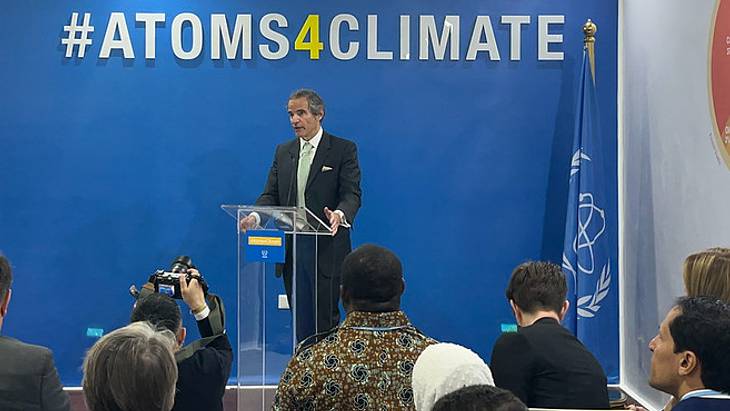
The IAEA director general spoke at the opening of the #Atoms4Climate programme of events

As the nuclear sector takes its place at the COP27 gathering, the International Atomic Energy Agency’s director general says that Long Term Operation (extending the lifetime of existing nuclear plants) is the "unsung hero of the fight against global warming". 

Rafael Mariano Grossi was speaking at the first full day of events at the #Atoms4Climate stage at the 27th UN Climate Change Conference of the Parties (COP27) in Sharm el-Sheikh in Egypt.

Grossi and a host of other industry figures stressed the important role nuclear must play in efforts to cut carbon emissions and to tackle climate change. He said that the fact there was a pavilion at COP27 for nuclear was "a first and a reflection of how things are changing".

In a question and answer session with Bloomberg’s William Kennedy, Grossi was asked about the fact that the many reactors built in the 1970s were now approaching their 50th year, with some having had operational permissions extended to 60 or 70 years and was asked whether that would be safe.

Grossi replied: "The unsung hero of the fight against global warming is Long Term Operation, which is basically having, with half or even less the initial investment, a new reactor that is going to be there - you say to 70 years, I say 100, you know, it's going to be closer. We see reactors now that are closer to 80 years and are perfectly safe, having undergone very thorough refurbishing operations."

He said that the involvement of the IAEA was crucial "because what we do is work with national regulators through very intensive peer reviews to make sure that Long Term Operation is giving you a new nuclear reactor, not simply an old one which is more or less muddling through".

Asked if he thought that from a climate change point of view, countries shutting reactors were making a mistake, he said: "Well in my personal opinion, yes. This is a matter that requires a technical, scientifically-sound discussion. I think from the vantage point of the nuclear sector, we must also recognise political realities, because in politics 2 plus 2 is not 4. Sometimes, from a scientific or technical point of view, it is very difficult to accept that people are taking decisions that do not seem to square, but it happens and the challenge for us is to prove, and to show, that keeping nuclear in the equation is going to give you the energy, is going to give you the solution to your climate problem, is going to give you jobs, is going to give you opportunities - it is going to give you things that are very important for political people to get the votes they need."

During the session Grossi also restated the need for a protection zone around the nuclear power plant at Zaporizhzhia in Ukraine which, as he pointed out, is on the frontline of the war. The six reactor plant, occupied by Russian forces, currently has IAEA staff stationed there, but Grossi said there was an emerging question about future safeguard inspections, because the IAEA had different mechanisms for inspecting nuclear facilities in countries without nuclear weapons - such as Ukraine - and those with nuclear weapons - such as Russia. Efforts continue to try to establish the protection zone "in the near future", for what, he noted, was a very large site with a variety of different facilities.

Other speakers on the first full day of events at the #Atoms4Climate stage included World Association of Nuclear Operators President Mohamed Al Hammadi who said that the “new momentum” seen in the civil nuclear industry sector was being driven by the world’s need for large scale decarbonisation and energy security and the industry "must get ahead of the curve when it comes to ensuing that we have the resources and the capacity to deliver" safe, reliable and timely new capacity.

World Nuclear Association Director General Sama Bilbao y León, in a video message, said the association had represented nuclear at COP meetings for more than 20 years, and said there had been a change of attitude - a positive change - towards nuclear last year at COP26. She added: "This is now the moment for the nuclear industry to really step up - it is essential for the nuclear industry to demonstrate it has the capacity and the ambition to deliver the massive contribution to climate change mitigation that is needed if the global community is to succeed in reaching net-zero with the urgency needed."Here is the full list of events on the #Atoms4Climate stage. They are being live streamed, via the links provided. Nuclear plants could safely operate for 100 years, suggests Grossi

Sunday, 6 July 2025

World Bank and IAEA backing new nuclear for development

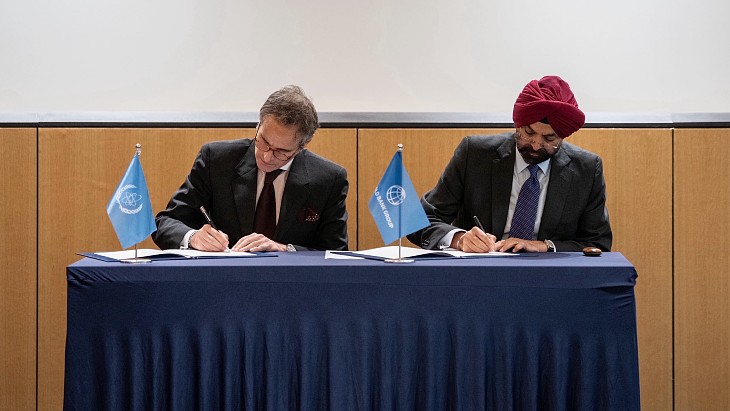
(Image: @rafaelmgrossi/X)

The World Bank has taken its first step since ending its ban on funding nuclear energy projects by partnering with the International Atomic Energy Agency to support countries that choose to include nuclear energy in their development strategies.

Under the partnership agreement the two institutions will build capacity, strengthen safeguards and share technical expertise and help the World Bank "deepen its internal knowledge across areas such as energy planning, regulatory frameworks, refurbishment of existing reactors, and the deployment of new technologies like small modular reactors".

Nuclear power was approved by the World Bank Board two weeks ago "as part of a broader approach to electrification - one that prioritises accessibility, affordability, and reliability, delivered in a way that manages emissions responsibly. The goal is to help countries deliver the energy their people need, while giving them the flexibility to choose the path that best fits their development ambitions, national context, and nationally determined contributions."

World Bank President Ajay Banga and International Atomic Energy Agency Director General Rafael Mariano Grossi, signed the agreement at an event in Paris.

Banga highlighted that the average person in high-income countries was using about 50 MWh of electricity per year, while in Africa the figure was 4 MWh. He said the gap had widened in recent years making it "far more challenging for the growth and development of our world in a fair way", with electricity demand in developing countries projected to more than double by 2035.

"Meeting that demand will require annual investment in generation, in grids, in storage to rise from USD280 billion today anually to roughly USD630 billion. That scale is what drives our effort to connect 300 million people in Africa to electricity by 2030 with the African Development Bank. It's why we developed a very clear path forward on delivering electricity as a driver of development."

Banga added that its approach "prioritises accessibility, affordability and reliability delivered in a way that manages emissions in a responsible way - and the goal is to help countries deliver the energy their people need while giving them the flexibility to choose the path that best fits their development ambitions, their national context ... we believe access to electricity is a fundamental human right and the foundation of development - jobs require electricity, as do health systems, education, clean water, public safety and so much more".

Dependable long-term baseload is required for development, he said, and "what is new is that for the first time in decades, the World Bank Group will begin to re-enter the nuclear energy space ... it's a significant step and one that we take with care, but importantly with partnership and with purpose",

The three areas prioritised are firstly, to build capacity and strengthen the World Bank's ability to advise on non-proliferation safeguards, on safety, on security and on regulatory frameworks. The second area is to look at extending the life of existing reactors, "one of the most cost-efficient ways" to produce electricity, and thirdly to see if "we do something together to accelerate the potential of small modular reactors so over a period of time they can become a more viable option for more countries".

Banga said: "The World Bank Group cannot do this alone, and that is why the partnership with the IAEA is critical to us. It marks a very tangible first step in our return to nuclear energy. The IAEA will help us build internal capacity across a wide range of topics, energy planning, project life cycle, fuel management, waste disposal and the technical infrastructure required for success. That coordinated approach will deepen our understanding of where nuclear energy can play a responsible role and give our clients access to the guidance and the support they need to pursue that path if they choose to take it."

IAEA Director General Grossi referred to the current global events and said that this agreement showed that "when we work together, when we have a good idea, when we have a determination to do something and to change things, this is possible".

He praised the work of the World Bank president, saying that "for many, many years a narrative was saying that this was not possible and for many, many years, and ... the nuclear industry, the guys really doing this stuff, were hitting a wall that was saying that investing in nuclear was not something for international finance institutions".

Grossi said that nothing could change without the World Bank. "It's as simple as that. In my endless rounds of conversations in many parts of the world when I was approaching banks and regional banks and financing people" they would refer to the World Bank position. Grossi said that the policy change followed a year of working together, and he also said he wanted to "say thanks to the industry" saying that they had worked closely with the IAEA.

He concluded by saying the "one big problem we had was the lack of finance - the fact that many, many clients in the Global South in developing countries, even in industrialised economies, need some financing support. And now they know they can come to the World Bank, they can talk to the World Bank. They can explain what they want to do in different areas, starting with life extensions, but also doing feasibility studies ... look at concrete projects, see the feasibility of them and work together".

"I think this is a very important day," added Grossi, who said that he had already had calls from some regional development banks looking to find out more about the agreement with the World Bank.

The agreement was welcomed by Sama Bilbao y León, Director General of World Nuclear Association. Speaking at the association's first Financing Nuclear Briefing taking place in London she said it was "a momentous shift for the World Bank’s lending policy, that comes after years of engagement on the sustainability of nuclear energy. We know access to finance is essential for many newcomer countries and this broad coalition is crucial to expanding nuclear capacity for all. It is also crucial to continue to engage with the nuclear industry who will be responsible for delivering the projects with speed and scale." She added that the association, on behalf of the global nuclear industry, had worked with the World Bank for some time "and is ready for further partnership to help build their knowledge of the industry".

Background

The World Bank Group, whose largest shareholder is the USA at 17%, is a multilateral lending organisation whose mission "is to end extreme poverty and boost shared prosperity on a livable planet. This is threatened by multiple, intertwined crises. Time is of the essence". In 2024 the World Bank Group says it facilitated USD117.5 billion "in loans, grants, equity investments and guarantees to partner countries and private businesses".

Although some multinational development banks have provided lending for decommissioning or upgrades to existing nuclear plants, they do not contribute to the financing of new-build projects - the World Bank's only loan for new nuclear capacity was USD40 million in 1959 for Italy's first nuclear power plant.

The pledge to aim for a tripling of nuclear energy capacity, originally unveiled at COP28 and backed by more than 30 countries, included inviting "shareholders of the World Bank, international financial institutions, and regional development banks to encourage the inclusion of nuclear energy in their organisations’ energy lending policies as needed, and to actively support nuclear power when they have such a mandate, and encourage regional bodies that have the mandate to do so to consider providing financial support to nuclear energy".At the moment there are about 440 nuclear power reactors operating in 31 countries with at least 70 power reactors under construction. The IAEA says there are about 30 countries considering, or embarking on, nuclear power, with about two-thirds of them in the developing world and financing remains a major hurdle for many. World Bank and IAEA backing new nuclear for development

Tuesday, 24 June 2025

India's Gorakhpur slated for 2031 operation

The minister reviewed progress at the Gorakhpur site (Image: Office of Manohar Lal/X)
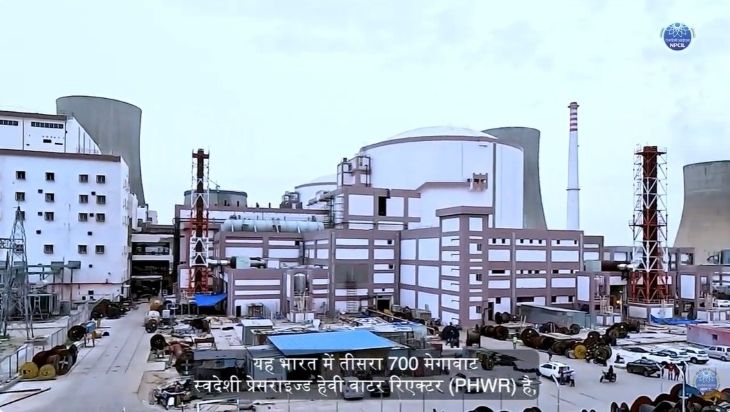
The first concrete for unit 1 at Nuclear Power Corporation of India's four-unit Gorakhpur Haryana Anu Vidyut Pariyojana plant is to be poured in October, Minister of Power Manohar Lal Khattar has said.

Gorakhpur, in the Fatehabad district of Haryana, is earmarked for the construction of four Indian-designed 700 MWe pressurised heavy water reactors (PHWRs) to be built in two phases. India's Atomic Energy Regulatory Board (AERB) granted a siting licence in 2015, and approved the start of excavation work for the construction of the first two units as long ago as 2018 - several years after an official groundbreaking ceremony had been held.

At that time, first concrete had been expected to be poured for unit 1 in 2019, with construction expected to take five and a half years. Consent for the pouring of first concrete was given by the AERB in 2020.

According to the Press Trust of India, the minister visited the site on 14 July "to review the progress of the nuclear power project being implemented by the Nuclear Power Corporation of India Limited (NPCIL) under the Department of Atomic Energy" and confirmed that the first pour of concrete for unit 1 is targeted "by October 2025". First criticality is targeted by June 2030 and commercial operation by March 2031. Unit 2 is expected to follow "with a 6-month gap from Unit 1".

The Indian government already classes Gorakhpur 1 and 2 as "under construction", although the International Atomic Energy Agency's PRIS database does not consider a reactor to be under construction until the first major placing of concrete for the base mat of the reactor building is made.

The second phase at Gorakhpur - units 3 and 4 - are amongst ten units that the Indian government has sanctioned to be built under a "fleet" approach: the others are Mahi Banswara units 1-4 (in Rajasthan), Kaiga units 5 and 6 (in Karnataka), Gorakhpur units 3 and 4 (Haryana), and Chutka units 1 and 2 (Madhyar Pradesh).India currently has 24 operable nuclear energy reactors with a total installed capacity of 8.88 GW, with six units - totalling 4,768 MWe - under construction. The country is targeting an aiming to increase its nuclear energy capacity to 100 GW by 2047. India's Gorakhpur slated for 2031 operation

Wednesday, 11 June 2025

Renewable energy: rural areas can be the EU’s green powerhouse

Lewis Dijkstra, Joint Research Centre (JRC)

The European Union aims to cut greenhouse gas emissions by at least 55% in 2030 compared to 1990 levels, and to become the first carbon-neutral economy by 2050. This ambitious goal requires a radical increase in the production of green energy within a relatively short timeframe. The untapped potential of rural areas in the union offers a way forward.

Rural areas could produce more energy than we need

Rural areas cover more than 80% of the EU’s territory and are host to around 30% of its population. Our work at the European Commission’s Joint Research Centre (JRC) shows that rural territories already generate the largest share of green electricity (72%) from the three most prominent renewable technologies: solar photovoltaic, onshore wind and hydropower. The remaining share of renewable energy is produced in towns and suburbs (22%) and cities (6%). Germany, Spain, France, Italy and Sweden are the top five renewable energy producers in the union, accounting for 68% of its total production from solar, onshore wind and hydropower installations.

But there is more. According to our analyses, rural areas also possess the highest untapped potential of renewable energy production–nearly 80%. Theoretically, they could produce enough to meet the total energy demand of the EU. We estimate that the total potential of solar, onshore wind and hydropower energy production in rural areas nears 12,500 terawatt hours per year. That’s more than five times the amount of electricity the union consumed in 2023, and it surpasses total energy consumption (which includes sources such as gas, oil and coal) for that year, too.

Technologies that suit the land

All this energy could be produced in rural areas without disrupting existing agricultural systems, landscapes and natural resources. Rural areas could produce up to 60 times more solar energy than what they currently deliver, quadruple their output from wind, and boost hydropower production by 25%. Spain, Romania, France, Portugal and Italy are the five EU countries with the highest combined (solar, wind and hydropower) untapped potential: together, they account for 67% of the EU’s potential, with contributions from rural areas ranging from 92% in France to 49% in Italy.

Overall, solar panels installed on the ground can make the biggest contribution to green energy production in the EU. However, rural areas across the union are highly diverse, so choosing the right technology would depend on local characteristics. Mountainous areas with abundant water resources are a good fit for hydropower production, while rural municipalities with large areas of suitable land lend themselves to solar or wind energy, depending on sun irradiation and wind speed. In rural areas where wind and land are insufficient, rooftop photovoltaic systems are a good option.

Boosting clean energy production can be a win-win

Rural areas are key to producing more renewable energy, as almost 80% of suitable, available land is located there. In addition, some of these areas are facing demographic and economic decline and are already the target of measures aimed at making them stronger, resilient and prosperous–as part of the EU’s long-term vision for rural areas. In this context, ensuring that these areas benefit economically from hosting more renewable energy projects makes them even more enticing. It also aligns with political considerations, as energy independence is a key part of the EU’s goal of strategic autonomy.

Addressing local concerns and fostering acceptance

While the potential offered by renewables is unquestionable, their production sites can face resistance from communities concerned about impacts on the local economy and quality of life. Seeing land used to produce energy with little local employment and seemingly for the benefit of large companies can also lead to resistance. Other concerns include competition for land use in areas where income is tied to other industries (such as agriculture or tourism), and the potential environmental impact of solar panels and wind or hydropower plants on rustic landscapes. With these concerns in mind, we identified portions of land suitable to host renewable energy plants that comprise roughly 3.4% of the EU’s surface. We excluded protected nature sites and biodiversity areas, forests and water bodies. We used strict limits on the use of agricultural land for energy production by only considering land that has been abandoned or has a very low productivity. Finally, we created buffer zones around infrastructure and settlements to minimise disturbance and safeguard natural beauty and cultural heritage.

Engaging local communities to find solutions

In our report, several case studies show the successful implementation of renewable energy projects in rural areas, driven by community engagement, collaboration and innovative financing models. From the first community-owned turbine in southern Europe in Catalonia, Spain, to a commercial energy company giving part of its profits to a local cause chosen with an energy community in the northern Netherlands, these cases highlight the potential for such projects to contribute to energy security, produce economic and social benefits and promote environmental sustainability.

These case studies show that active involvement of local communities from the early stages of renewable energy projects can foster acceptance. Citizens who are actively engaged or even share ownership in small- or medium-scale projects become more supportive. Beyond seeing profits stay local, engaged communities can mitigate negative effects of production by, for instance, choosing where to locate new energy plants.

Our report also offers an overview of renewable energy communities’ role in ensuring a sustainable energy transition in which rural areas are not left behind. The number of renewable energy communities in the EU is rising and, although an exact count is unavailable, it is estimated that there were over 4,000 of them, with some 900,000 members, in 2023. These communities are mainly concentrated in northwest Europe, and a high proportion are rural. Beyond energy communities, place-based approaches, where local populations and administrations are engaged from the early stages and see clear benefits, can make an important contribution to our sustainable transition.The Conversation

Lewis Dijkstra, Team Leader Urban and Territorial Analysis, Joint Research Centre (JRC)

This article is republished from The Conversation under a Creative Commons license. Read the original article.

Friday, 28 March 2025

India welcomes newest Rajasthan unit to the grid

The site is home to two 700 MWe PHWRs (Image: screengrab from NPCIL video)

Unit 7 at the Rajasthan Atomic Power Project is the third 700 MWe indigenous pressurised heavy water reactor to be connected to the Indian grid.

The unit - which is also known as RAPP-7 - reached first criticality in September and was connected to the northern grid early on Monday.

"With the clearance from the Atomic Energy Regulatory Board AERB and passing all tests with flying colours, unit 7 is now synchronised with the National Grid," Nuclear Power Corporation of India Ltd (NPCIL) said in a video released to mark the achievement.

Once a new unit has been connected to the grid, it undergoes a process known as power ascension testing when its power levels are gradually raised - under approval from the regulator - until it reaches full capacity. It will then enter commercial operation.

RAPP-7 follows Kakrapar 3 and 4 in a planned fleet of 700 MWe pressurised heavy water reactors (PHWRs): unit 3 achieved first criticality in July 2020, was connected to the grid in January 2021 and was declared to be in commercial operation in July 2023. Unit 4, which reached first criticality in December 2023, was connected to the grid in February and entered commercial operation in March 2024.

"NPCIL has mastered the art of building and operating these reactors," the company said.

A second 700 MWe unit, RAPP-8, is also under construction at the site at Rawatbhata, which is already home to six operating PHWRs with a total capacity of 1180 MW. NPCIL said it expects RAPP-8 to be operational "in 2025-26".

The government has sanctioned the "fleet mode" construction of further 700 MWe units at Kaiga in Karnataka; Gorakhpur in Haryana; Chutka in Madhya Pradesh; and Mahi Banswara in Rajasthan.Earlier this year, Minister of Finance Nirmala Sitharaman outlined ambitions for the development of at least 100 GW of nuclear energy by 2047 to support India's energy transition efforts. This new capacity would include the development of Indian-designed small modular reactors to be operational by 2033, with amendments to Indian legislation to encourage private sector participation in nuclear projects.India welcomes newest Rajasthan unit to the grid

Tuesday, 18 March 2025

EU funding for French enrichment plant expansion

The Georges Besse II plant (Image: Orano)

The European Investment Bank and Orano have signed a loan agreement for EUR400 million (USD434 million) to partly fund the project to extend the Georges Besse II uranium enrichment plant in Tricastin in southern France. The project will increase the plant's capacity by more than 30%.

The Georges Besse II centrifuge enrichment plant - which superseded the Georges Besse I gaseous diffusion enrichment plant that ended production in June 2012 - was officially opened in December 2010 and reached its full production capacity of 7.5 million Separative Work Unit (SWU) in 2016.

In October 2023, the board of directors of Orano approved an investment of about EUR1.7 billion to raise the production capacity of the plant. The decision followed requests from some US and European customers who are seeking alternatives to Russian sources of supply.

The project consists of building a further four modules identical to the fourteen existing modules that use "the same recognised and proven technology, offering the best guarantees in terms of safety, competitiveness and energy savings, while having a reduced environmental footprint", the company said. The additional cascades will increase the plant's capacity by 2.5 million SWU.

This project was the subject of a notification under Article 41 of the Euratom Treaty on 7 September 2023. The European Commission issued a positive opinion on 9 October 2024, underlining the project's compliance with the Euratom treaty and its contribution to the security of supply in Europe.

The European Investment Bank (EIB) - the long-term lending institution of the European Union, owned by its Member States - has now agreed to lend Orano EUR400 million towards the Georges Besse II expansion project.

EIB Vice-President Ambroise Fayolle said: "This significant EIB financing contributes to European energy independence. Decarbonised energies are essential to enable the European Union to meet the ambitious climate neutrality objectives it has set itself."

"We are very proud of this cooperation, which represents further recognition of the strategic value of our investment plan for the climate and for the production of sustainable and decarbonised energy," said Orano CEO Nicolas Maes. "The financing granted by the EIB for the capacity extension at our Georges Besse II enrichment plant is perfectly in line with this objective, as the project will make it possible to take the number of households supplied with low-carbon energy up to a total 120 million. Not least, in the current geopolitical context, this support for our activities from the EIB will help to strengthen security of supply in the European Union."Orano held a ceremony in October last year to mark the laying of the foundation stone of the Georges Besse II plant extension. The new modules are expected to begin operating in 2028, with complete commissioning of the extension in 2030. EU funding for French enrichment plant expansion

Tuesday, 11 February 2025

Japanese reactor cleared for use beyond 50 years

The four-unit Takahama plant (Image: Kansai)

Kansai Electric Power Company has received approval from Japan's Nuclear Regulation Authority to operate unit 1 at its Takahama nuclear power plant - the country's oldest operating reactor - beyond 50 years.

The utility applied to the NRA in November last year to operate the 780 MWe (net) pressurised water reactor (PWR), which entered commercial operation on 14 November 1974, for a further ten years after conducting an ageing technical evaluation and formulating a long-term facility management policy.

At that time, Kansai said: "As a result of the ageing technical evaluation conducted this time, we have confirmed that the plant can be maintained in a sound manner even 50 years after the start of operation by implementing additional maintenance measures for some equipment and structures as a long-term facility management policy, in addition to the current maintenance activities for equipment and structures that are important for safety."

At a 16 October meeting, the NRA approved Kansai's plan for ageing countermeasures at the unit over the next ten years.

"We will continue to actively incorporate the latest knowledge from Japan and abroad and reflect it in plant design and equipment maintenance, thereby striving to improve the safety and reliability of nuclear power plants," Kansai said.

Under regulations which came into force in July 2013, Japanese reactors had a nominal operating period of 40 years. One extension to this - limited to a maximum of 20 years - could be granted, requiring among other things, a special inspection to verify the integrity of reactor pressure vessels and containment vessels after 35 years of operation.

However, in December 2022, the NRA approved a draft of a new rule that would allow reactors to be operated for more than the current limit of 60 years. Under the amendment, the operators of reactors in use for 30 years or longer must formulate a long-term reactor management plan and gain approval from the regulator at least once every 10 years if they are to continue to operate. The new policy effectively extends the period reactors can remain in operation beyond 60 years by excluding the time they spent offline for inspections from the total service life.

The legislation was approved by Japan's Cabinet in February last year and enacted in May 2023. It comes into full effect in June next year.Takahama 1 - which was restarted in July 2023 after being offline since January 2011 - becomes the first Japanese unit to be approved for operation beyond 50 years. Japanese reactor cleared for use beyond 50 years

Thursday, 30 January 2025

Brazil's Angra 1 approved for 20-year life extension

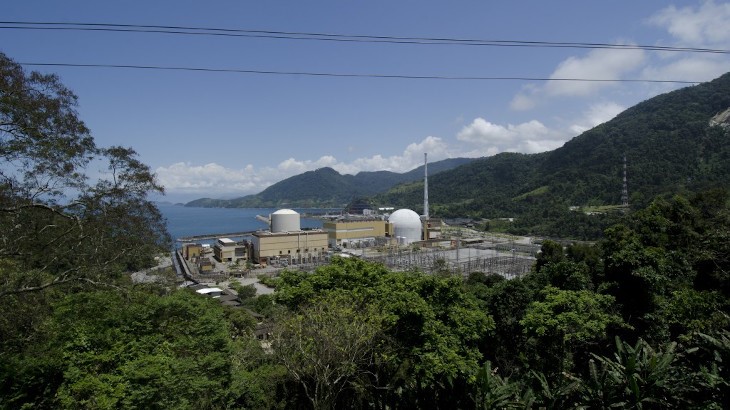
Angra 1 and 2 (Image: Eletronuclear)

Eletronuclear's Angra 1 nuclear power unit has been authorised by Brazil's National Nuclear Energy Commission to operate to 2044 - extending its life to 60 years.\

Angra 1 reached criticality in 1982 and entered commercial operation in 1985. The Westinghouse pressurised water reactor has a design capacity of 640 MWe. Eletrobras Eletronuclear also operates Angra 2, a 1275 MWe PWR which began commercial operation in 2001.

The request for the life extension was submitted in 2019. Since then there has been a "meticulous technical evaluation" of the request, a series of studies, four missions undertaken by International Atomic Energy Agency experts and an Integrated Implementation Plan for Safety Improvements.

As part of this plan there will be upgrades to control systems, physical protection structures and radioactive waste management protocols, the National Nuclear Energy Commission (CNEN) said. They will be implemented during maintenance and refuelling shutdowns.

CNEN’s Director of Radiation Protection and Safety Alessandro Facure said: "Each aspect of this process was analysed with technical rigour and responsibility. Our mission is to ensure that the Angra 1 operation remains safe for workers, the environment and society."

Eletronuclear said it will be investing BRL3.2 billion (USD550 million) between 2023 and 2027 and noted that similar plants in the USA had been going on to receive approval for further extensions to 80 years.

In May the company said that it also uses the US Nuclear Regulatory Commission's License Renewal Application process and said that measures already taken to extend the service life include new steam generators, changing the reactor pressure vessel cover and replacing the main transformers, as well as implementing ageing/obsolescence management systems. It said it would get short-term financing from its main shareholders, ENBPar and Eletrobras, while negotiations were completed with the US Export-Import Bank for the full modernisation programme.

President of Eletronuclear Raul Lycurgo said: "The renewal of Angra 1 should be celebrated and praised as it is the culmination of the great work carried out by our technical team. Everyone has dedicated themselves to the maximum over the last five years and have proven that Angra 1 continues to be completely safe and able to deliver steady, clean energy for the development of Brazil."

Angra 1 generated 4.78 million MWh in 2023 and has had a load factor of 88.24% for the past five years. It delivers enough energy to supply a city of two million people.

CNEN said that an important part of the authorisation process had been the Local Emergency Plan and the Fukushima Response Plan, implemented after 2011 - "CNEN teams will continue to monitor the implementation of these measures, including technical improvements and emergency response protocols, which are fundamental to the safety and protection of the plant and surrounding areas".The decision was a "milestone" not just in terms of energy production but also in showing the maturity of the regulatory system in Brazil. It said Eletronuclear will also be required to carry out a Periodic Safety Reassessment in 2033 "where compliance with the highest international safety standards will be verified". Brazil's Angra 1 approved for 20-year life extension

Wednesday, 25 December 2024

Argentina aims to be nuclear pioneer, President Milei says

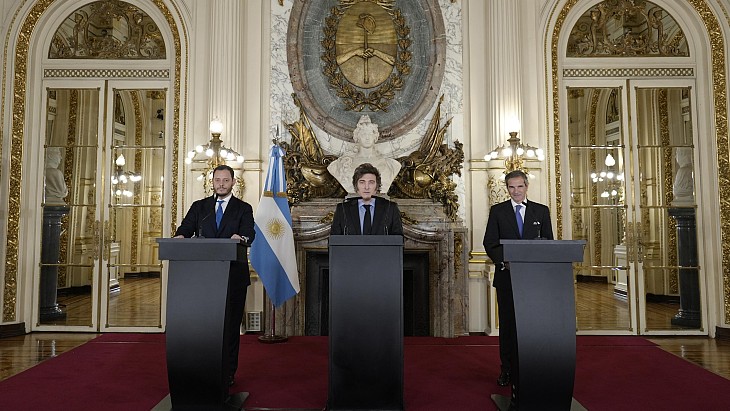
The president, centre, IAEA director general, right and Demian Reidel, left (Image: Argentina's presidential office)

Argentina's President Javier Milei has said "nuclear energy will make its triumphant return and we will not only not be left behind, but we intend to be pioneers".

The president, standing between his chief adviser Demian Reidel, who will oversee a new nuclear programme, and International Atomic Energy Agency Director General Rafael Mariano Grossi, said "we are contemporaries of a true technological revolution ... the development of artificial intelligence opens a new frontier for this manifest destiny that we share as a species" but "many of the free nations that have always been at the forefront of technological development are now afraid of innovation and punish the technological sector with taxes and regulations". Argentina by contrast was "removing the regulations that have tied the hands of our people for decades and inviting the world's big capitals to cooperate with Argentina".

He added: "The potential for development in artificial intelligence is so immense that conventional energy will not be enough to supply this new demand, which is why we are convinced that a resurgence of nuclear energy will occur throughout the world, because despite the countless campaigns of discredit that some international foundations have mounted, nuclear energy is the only source that is sufficiently efficient, abundant and rapidly scalable to cope with the development of our civilisation.

"So, after decades of decline, nuclear energy will make its triumphant return and we will not only not be left behind, but we intend to be pioneers."

The outline of the plan announced, according to various reports, is initially for the construction of a small modular reactor on the Atucha site. According to the Financial Times, Reidel said the plan was to use Argentine technology, developed by its nuclear engineers, but with funding from a US investor joining a joint venture with Invap, with the goal of having a first plant online by 2030. No mention was made during the announcement about the existing Argentine SMR project, the CAREM-25.

The second stage of the government's nuclear plan is reported to be to develop uranium reserves to cover domestic demand and position the country as an exporter of high-value-added fuel elements.

Grossi said that the IAEA had signed a memorandum of understanding agreement with Argentina following the announcement, which aimed to expand their collaboration on small modular reactors "to meet the energy demands of data centres and AI applications".
The background

Argentina currently has three operable nuclear power units - Atucha 1, connected in 1974, Atucha 2, which was connected in 2014 and Embalse which was connected to the grid in 1983. Between them they generate about 5% of the country's electricity. There have been plans for a fourth unit, as Atucha III, with an EPC contract signed with China's CNNC in February 2022. It is unclear what the current status is of this project and whether it will be part of the nuclear programme.The CAREM SMR - the name comes from Central Argentina de Elementos Modulares - is a 32 MWe prototype and is Argentina's first domestically designed and developed nuclear power unit. First concrete was poured in 2014, but construction has since been suspended a number of times. It is currently estimated to be about two thirds complete, and a Critical Design Review was ordered for it in May this year with reported uncertainty over funding. Argentina aims to be nuclear pioneer, President Milei says

Thursday, 28 November 2024

International banks express support for nuclear expansion

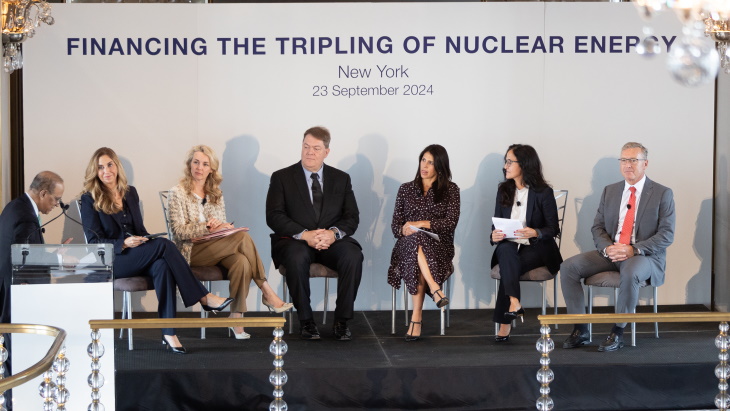
The Financing the Tripling of Nuclear Energy event (Image: Hechler Photographers)

A group of 14 global financial institutions have expressed their support for the call to action to triple nuclear energy capacity by 2050.

Last December, the United Nations Climate Change Conference (COP28) in Dubai saw the 198 signatory countries to the UN Framework Convention on Climate Change call for accelerating the deployment of low-emission energy technologies including nuclear power for deep and rapid decarbonisation, particularly in hard-to-abate sectors such as industry. In addition, 25 countries at COP28 pledged to work towards tripling global nuclear power capacity to reach net-zero by 2050.

At New York Climate Week, a group of 14 financial institutions on Monday stated their recognition that global civil nuclear energy projects have an important role to play in the transition to a low-carbon economy. They further expressed support for long-term objectives of growing nuclear power generation and expanding the broader nuclear industry to accelerate the generation of clean electrons to support the energy transition.

The institutions include: Abu Dhabi Commercial Bank, Ares Management, Bank of America, Barclays, BNP Paribas, Brookfield, Citi, Credit Agricole CIB, Goldman Sachs, Guggenheim Securities LLC, Morgan Stanley, Rothschild & Co, Segra Capital Management, and Societe Generale.

"Capital markets and financing can play a critical role in developing and growing nuclear energy projects worldwide. Financial institutions can provide experience, global presence, services and solutions to support the industry," according to World Nuclear Association.

Opening the event, John Podesta, Senior Advisor for International Climate Policy to President Biden, said: "Our collective mission is clear - nuclear energy is clean energy, and if we are to ensure a liveable planet, build secure, sustainable supply chains for clean energy and bolster prosperity around the world, we need to make sure that nuclear energy does its part. I know we can make it happen - as long as we work together."

Slovenian Prime Minister Robert Golob added, "The only riddle left to solve is the financial side, the financial costs. Financial markets need to adapt and develop new financial instruments in order for nuclear energy to become competitive with other CO2-free energy sources."

"It is time to take concrete action towards necessary expansion of nuclear energy," said Sweden's Minister for Energy, Business and Industry and Deputy Prime Minister Ebba Busch. "The Swedish government is exploring a proposed financing model which includes government-backed loans, contracts-for-difference (CfDs) and risk-sharing mechanisms. The aim of the proposal is to significantly improve the conditions for nuclear new build in Sweden and with it, a more sustainable future."

Last month, a Swedish government study proposed that state aid be given to companies for investments in new nuclear power following an application procedure. It said a new legislative act should regulate conditions for receiving the support, the support measures, and what an application must contain.

James Schaefer, senior managing director of Guggenheim Securities, said: "New nuclear power is both clean and safe, and more importantly proven, with a number of nations now operating highly advanced and commercially viable third and fourth-generation fission technologies. It is essential that we accelerate the progression of planned projects into plants on the ground given the huge demand coming down the line for data centres and AI technologies. This will require nuclear companies, plant owners, data centre and technology companies, together with banks and financial institutions to collaborate closely."

"Including nuclear energy as a zero-carbon technology alongside renewables is essential to meeting the world's carbon reduction goals and ensuring that heavy industrial manufacturers like Nucor have a reliable and clean electricity supply to continue growing, prospering, and providing high-paying jobs," said Benjamin Pickett, vice president and general manager of public affairs and government relations at Nucor Corporation.

"Since COP28 in Dubai last year, we have witnessed a step change in momentum across the nuclear sector, buoyed by a significant increase in demand for clean electrons for data centres and AI, with global power demand for this sector alone set to double by 2026," said Mohamed Al Hammadi, Managing Director and CEO of the Emirates Nuclear Energy Corporation and chairman of World Nuclear Association.

"With the support of 14 global banks and financial institutions witnessed this morning on the sidelines of New York Climate Week, it is clear that not only is nuclear energy viewed as a crucial enabler to decarbonise the power sector, but it also fits the profile for sustainable and transition financing, especially as we now see multiple nuclear plants being delivered efficiently, providing confidence to the market and a clear market signal that nuclear is a proven, bankable route to energy security and net zero in parallel."

Last week, ten industry associations issued a communiqué during the second Roadmaps to New Nuclear conference in Paris, organised by the OECD Nuclear Energy Agency. They called on all OECD member states to set out clear plans for nuclear energy deployment. Among the eight key areas highlighted by the associations were: ensuring ready access to national and international climate finance mechanisms for nuclear development; ensuring that multilateral financial institutions include nuclear energy in their investment portfolios; and providing clarity to investors on the funding and investment recovery mechanisms available for nuclear projects and including nuclear energy in clean energy financing mechanisms.

Sama Bilbao y León, Director General of World Nuclear Association, welcomed Monday's announcement from leaders in the global finance community. "Now we need to see today's commitment translate to changes in lending policies and greater access for nuclear to sustainable finance mechanisms. Nuclear offers investors long-term returns and a means of tackling the world's urgent and growing need for abundant, affordable, 24/7 clean energy."Today was a major step forward. Meeting the goal of tripling nuclear output will require the commitment and ingenuity of policy makers, financial leaders, the nuclear industry, and many others in a coalition of the ambitious." International banks express support for nuclear expansion

Monday, 11 November 2024

Amazon invests in X-energy, unveils SMR project plans

Amazon has announced it has taken a stake in advanced nuclear reactor developer X-energy, with the goal of deploying up to 5 GW of its small modular reactors in the USA by 2039.

Online shopping and web services giant Amazon's Climate Change Pledge Fund was described as the anchor investor in a USD500 million financing round for X-energy, alongside Ken Griffin, founder and CEO of Citadel, Ares Management Corporation, private equity firm NGP and University of Michigan.

The funding is designed to pave the way to completion of the reactor design and licensing, and the first phase of its TRISO-X fuel fabrication facility at Oak Ridge, Tennessee.

The first project

The first project looks set to be in Washington State, with Amazon announcing it had signed an agreement with Energy Northwest, a consortium of state public utilities, for an initial four advanced small modular reactors (SMRs) generating about 320 MWe, with an option to treble that number to 960 MWe, which would be the amount needed to power about 770,000 homes.

Amazon will fund the initial feasibility phase for the SMR project which is planned for a site near the energy company's Columbia Generating Station nuclear energy facility in Richland. Under the agreement Amazon would have the right to purchase electricity from the first phase, while Energy Northwest will have the option to build the eight extra modules, with the additional power being available to Amazon and utilities in the area.

Matt Garman, CEO of Amazon Web Services, said: "One of the fastest ways to address climate change is by transitioning our society to carbon-free energy sources, and nuclear energy is both carbon-free and able to scale - which is why it’s an important area of investment for Amazon. Our agreements will encourage the construction of new nuclear technologies that will generate energy for decades to come."

Greg Cullen, Vice President for Energy Services & Development at Energy Northwest, said: "We've been working for years to develop this project at the urging of our members, and have found that taking this first, bold step is difficult for utilities, especially those that provide electricity to ratepayers at the cost of production. We applaud Amazon for being willing to use their financial strength, need for power and know-how to lead the way to a reliable, carbon-free power future for the region."

The advanced reactors

The Xe-100 is a Generation IV advanced reactor design which X-energy says is based on decades of high temperature gas-cooled reactor operation, research, and development. Designed to operate as a standard 320 MWe four-pack power plant or scaled in units of 80 MWe. At 200 MWt of 565°C steam, the Xe-100 is also suitable for other power applications including mining and heavy industry. The Xe-100 uses tri-structural isotropic (TRISO) particle fuel, which has additional safety benefits because it can withstand very high temperatures without melting,

X-energy says its design makes it road-shippable with accelerated construction timelines and more predictable and manageable construction costs, and is well suited to meet the requirements of energy-intensive data centres.

Clay Sell, X-energy CEO, said: "Amazon and X-energy are poised to define the future of advanced nuclear energy in the commercial marketplace. To fully realise the opportunities available through artificial intelligence, we must bring clean, safe, and reliable electrons onto the grid with proven technologies that can scale and grow with demand. We deeply appreciate our earliest funders and collaborators, notably the US Department of Energy and Dow Inc. With Amazon, Ken Griffin, and our other strategic investors, we are now uniquely suited to deliver on this transformative vision for the future of energy and tech."

The initial Xe-100 plant is being developed at Dow Inc's UCC Seadrift Operations site on the Texas Gulf Coast, which would be the first nuclear reactor deployed to serve an industrial site in the USA.

What else has been announced?

A memorandum of understanding has also been signed with utility company Dominion Energy to look into the development of an SMR project near the company's existing North Anna nuclear power station. It is not the first move into nuclear energy from Amazon, which is co-locating a data centre facility next to Talen Energy's nuclear power plant in Pennsylvania.

Robert Blue, Chairman and CEO of Dominion Energy, said: "This agreement builds on our longstanding partnership with Amazon and other leading tech companies to accelerate the development of carbon-free power generation in Virginia. It's an important step forward in serving our customers' growing needs with reliable, affordable and increasingly clean energy. This collaboration gives us a potential path to advance SMRs with minimal rate impacts for our residential customers and substantially reduced development risk."

In July, Dominion Energy announced a Request for Proposals from leading SMR nuclear technology companies to evaluate the feasibility of developing an SMR at the company's North Anna plant - while it is not a commitment to build an SMR, it is an important first step in evaluating the technology and the feasibility of developing it at North Anna the company says.

Data centres and nuclear

Amazon's series of announcements confirms a recent trend of data centre operators looking at nuclear energy as a way to get reliable energy that is carbon free. Amazon noted that it is not just their data centres and web services which are going to see increasing electricity demand, but also wider developments such as electrifying its vehicle fleet.

On Tuesday, a fellow online giant, Google, signed a Master Plant Development Agreement with Kairos Power for the development and construction of a series of advanced reactor plants.And last month Microsoft announced it had signed a 20-year power purchase agreement with Constellation which would see Three Mile Island unit 1 restarted, five years after it was shut down. Amazon invests in X-energy, unveils SMR project plans

Friday, 1 November 2024

Our expertise can help India achieve 500 GW renewable energy goal by 2030: Pedro Sanchez

Mumbai, (IANS) Spain is a world leader in clean energy and our expertise can help India reach its goal of 500 gigawatts of renewable energy by 2030, Spanish President Pedro Sanchez said on Tuesday.

Addressing the 'CII Spain India Business Summit' in the financial capital, Sanchez said the potential for a stronger relationship between India and the European Union (including Spain) is enormous.

"One of the largest economies in the world, Spain has invested $4.2 billion in India this century. We look forward to advancing negotiations on a European Union-India free trade agreement. This will help our markets grow in size and diversity," he told the gathering, adding that "our expertise can help India reach its goal of 500 gigawatts of renewable energy by 2030".

Stressing that the country is committed to partnering with India to boost its energy security and green transition, Sanchez said by combining Spanish innovation with India's potential, “we can make a big impact on the global economy and the environment”.

Spain's advanced railway systems, subway networks, and transport solutions can greatly benefit India's infrastructure projects, he added.

On Monday, both countries signed a Memorandum of Understanding (MoU) on cooperation in the field of rail transport that is expected to boost collaboration in the planning, deployment, operation and maintenance of high-speed and conventional railways.

Praising the huge strides made by India in the infrastructure sector, the Spanish President said their advanced railway systems, subway networks, and transport solutions can greatly benefit India's infrastructure projects.

Union Minister of Road Transport and Highways Nitin Gadkari said that Prime Minister Narendra Modi's dream is to make India carbon neutral by 2070.

"Whether it's fossil fuel or energy, green energy and green mobility are now priorities. There is great potential for wind and solar power. I am pleased that many technologies are available in Spain that have great potential in India. Joint ventures can reduce costs and increase competitiveness in the global market," the minister told the gathering at the event.

Sanchez is the first Spanish President to undertake an official trip to India in the last 18 years.

Chandrajit Banerjee, Director General, CII said Spain is very experienced in urban infrastructure, high-speed rail networks, transport systems, and smart mobility.

"We look forward to new partnerships with Spain to boost our infrastructure development. We've also discussed collaboration opportunities in artificial intelligence, defence, and green technologies. Both countries are committed to joint ventures and co-development in defence to enhance capabilities and strategic autonomy," he mentioned.

In renewable energy, India is embracing cleaner fuels like wind and solar power. Spain's expertise in this area could help us in our energy transition, said Banerjee. Source: https://www.morungexpress.com/our-expertise-can-help-india-achieve-500-gw-renewable-energy-goal-by-2030-pedro-sanchez