Mumbai (IANS) Actress Dia Mirza has strongly praised filmmaker Anubhav Sinha for his recently released film ‘Assi’, and called it a powerful and significant cinematic effort.
Dia shared a video clip from the film on her social media account and expressed admiration for the director and the entire team behind the project.
Sharing the video clip from the movie, the actress wrote, “Thank you Anubhav Sinha. For going where no one else goes. For saying what no one else dare say. But most importantly, for listening to the voice in your heart.”
She added, “ASSI is one of the most important films of our times. Each word, each pause, each beat, creates a compelling feeling. Every single performance is pure TRUTH. So much gratitude to Team ASSI. @anubhavsinhaa Zindabad!”
Talking about the film ‘Assi’, it has been directed by Anubhav Sinha and features an ensemble cast including Taapsee Pannu, Manoj Pahwa, Kumud Mishra, Naseeruddin Shah and Supriya Pathak, among others.
The project also stars actors such as Mohd Zeeshan Ayyub and Revathy. The movie explores complex societal realities through powerful storytelling and performances.
Despite the the string storyline, the movie did not perform well at the box office.
Talking about the poor performance of the movie, trade analyst Girish Wankhede shared his views, stating that the film failed to connect with audiences despite its concept.
Speaking about the film’s underwhelming numbers, Girish Wankhede, in an exclusive conversation with IANS, said, “It’s a simple reason. When a film doesn’t do well, it means the audience didn’t like it. They didn’t understand what kind of film it was. If the marketing had been stronger, more people might have come to the cinemas, but the audience wasn’t fully aware.”
Los Angeles, (IANS) Actress Priyanka Chopra took to the stage along with actor Javier Bardem to present the International Feature Film Oscar at the 98th edition of the Academy Awards on Monday.
The duo presented the award to Norway's ‘Sentimental Value’, directed by Joachim Trier. The film explores the strained relationship between a father and his two daughters as they confront unresolved family history and artistic legacy. The film is set in Norway, and follows a once-acclaimed filmmaker attempting to reconnect with his family while preparing a new film project.
As Priyanka and the ‘No Country for Old Men’ made an appearance on the stage, Javier Bardem roared on the mic, “Free Palestine”.
For the occasion, Priyanka opted for a custom gown by Dior. The outfit followed a classic Hollywood aesthetic with modern detailing. The gown was strapless and white, designed with a structured corset-style bodice that shaped the upper silhouette and highlighted the waist. From the midsection, the dress flowed into a long skirt featuring a dramatic thigh-high slit, which created movement and added a contemporary edge to the otherwise bridal-style design. Along the slit and lower portion of the gown, black-and-white feathered or tulle detailing added texture and visual contrast to the monochrome look.
She paired the dress with diamond and emerald jewellery including a statement necklace and matching earrings. Her styling leaned toward Old Hollywood glamour, finger-wave style curls, luminous makeup, and subtle smoky eye accents.
The actress attended the ceremony with her husband Nick Jonas, who wore a classic black tuxedo that complemented her monochrome ensemble.
For a supposedly obsolete music format, audio cassette sales seem to be set on fast forward at the moment.
Cassettes are fragile, inconvenient and relatively low-quality in the sound they produce – yet we’re increasingly seeing them issued by major artists.
Is it simply a case of nostalgia?
Press play
The cassette format had its heyday during the mid-1980s, when tens of millions were sold each year.
However, the arrival of the compact disc (CDs) in the 1990s, and digital formats and streaming in the 2000s, consigned cassettes to museums, second-hand shops and landfill. The format was well and truly dead until the past decade, when it started to reenter the mainstream.
According to the British Phonographic Industry, in 2022 cassette sales in the United Kingdom reached their highest level since 2003. We’re seeing a similar trend in the United States, where cassette sales were up 204.7% in the first quarter of this year (a total of 63,288 units).
A number of major artists, including Taylor Swift, Billie Eilish, Lady Gaga, Charli XCX, the Weeknd and Royel Otis have all released material on cassette. Taylor Swift’s latest album, The Life of a Showgirl, is available in 18 versions across CDs, vinyl and cassettes.
The physical product offerings for Taylor Swift’s latest album, The Life of a Showgirl. Taylor Swift
Many news article will tell you a “cassette revival” is well underway. But is it?
I would argue what we’re seeing now is not a full-blown revival. After all, the unit sales still pale in comparison to the peak in the late 1990s, when some 83 million were reportedly sold in one year in the UK alone.
Instead, I see this as a form of rediscovery – or for young listeners, discovery.
Meanwhile, cassettes break and jam quite easily. Choosing a particular song might involve several minutes of fast forwarding, or rewinding, which clogs the playback head and weakens the tape over time. The audio quality is low, and comes with a background hiss.
Why resurrect this clunky old technology when everything you could want is a languid tap away on your phone?
Analogue formats such as cassettes and vinyl are not prized for their sound, but for the tactility and sense of connection they provide. For some listeners, cassettes and LPs allow for a tangible connection with their favourite artist.
There’s an old joke about vinyl records that people get into them for the expense and the inconvenience. The same could be said for cassette tapes: our renewed interest in them could be read as a questioning (if not rejection) of the blandly smooth, ubiquitous and inescapable digital world.
The joy of the cassette is its “thingness”, its “hereness” – as opposed to an intangible string of electrical impulses on a far-flung corporate-owned server.
The inconvenience and effort of using cassettes may even make for more focused listening – something the invisible, ethereal and “instantly there” flow of streaming doesn’t demand of us.
People may also choose to buy cassettes for the nostalgia, for their “retro” cool aesthetic, to be able to own music (instead of streaming it), and to make cheap and quick recordings.
Mix tape mania
Cassettes did (and still do) have the whiff of the rebel about them. As researcher Mike Glennon explains, they give consumers the power to customise and “reconfigure recorded sound, thus inserting themselves into the production process”.
From the 1970s, blank cassettes were a cheap way for anyone to record anything. They offered limitless combinations and juxtapositions of music and sounds.
The mix tape became an art form, with carefully selected track sequences and handmade covers. Albums could even be chopped up and rearranged according to preference.
Consumers could also happily copy commercial vinyl and cassettes, as well as music from radio, TV and live gigs. In fact, the first single ever released on cassette, Bow Wow Wow’s C30,C60,C90,Go! (1980), extolled the joys and righteousness of home taping as a way of sticking it to the man – or in this case the music industry.
Unsuprisingly, the recording industry saw cassettes and home taping as a threat to its copyright-based income and struck back.
In 1981, the British Phonographic Industry launched its infamous “home taping is killing music” campaign. But the campaign’s somewhat pompous tone led to it being mercilessly mocked and largely ignored by the public.
A chance to rewind
The idea of the blank cassette as both a symbol of self-expression and freedom from corporate control continues to persist. And today, it’s not only corporate control consumers have to dodge, but also the dominance of digital streaming platforms.
Far from being just a pleasant yearning sensation, nostalgia for older technology is layered, complex and often political.
Cassettes are cheap and easy to make, so many artists past and present have used them as merchandise to sell or give away at gigs and fan events. For hardcore fans, they are solid tokens of their dedication – and many fans will buy multiple formats as a form of collecting.
Cassettes won’t replace streaming services anytime soon, but that’s not the point. What they offer is a way of listening that goes against the grain of the digital hegemony we find ourselves in. That is, until the tape snaps.
Mumbai, (IANS) Veteran actress and politician Hema Malini has been using social media to relive some cherished memories with her late husband and legendary actor Dharmendra.
In her latest post, Hema posted a still from the "Ek Hi Khawab" track from their 1977 outing "Kirana". She revealed that this is her and Dharam Ji's most beloved memory from the romantic entertainer.
The "Ek Hi Khawab" song enjoys the melodious voice of Bhupinder Singh with tunes scored by legendary R. D. Burman.
"One of the most beautiful memories of me and Dharamji from the movie Kinara. It was directed by Gulzar saab and the song sung by Bhupinderji and music by R . D. Burman. #memories #memoriesforlife #kinara (sic)," Hema captioned the post.
Apart from "Kinara", one of the most adored Bollywood duos, Dharmendra and Hema Malini have shared the screen in several hits such as "Sharafat" (1970), "Tum Haseen Main Jawaan" (1970), "Naya Zamana" (1971), "Raja Jani" (1972), "Seeta Aur Geeta" (1972), "Jugnu" (1973), "Pratiggya" (1975), "Sholay" (1975), "Dream Girl" (1977), "Chacha Bhatija" (1977), "Azaad" (1978), "Dillagi" (1978), "Aas Paas" (1981) "Razia Sultan" (1983), and "The Burning Train" (1980), to name just a few.
Earlier today, Hema treated her Insta Fam with another set of rare photographs with late Dharmendra, which she termed as the “treasured” moments from their family archives.
She revealed that revisiting these pictures brought back a wave of emotions for her.
Taking to her IG, Hema dropped a string of photographs posing with Dharmendra. A couple of these photographs also included their daughters Ahana and Esha, flaunting their beautiful smiles as they faced the camera with their father.
“Some lovely family moments… simply treasured photos. I know it is a surfeit of photos but these have not been published and my emotions are unfolding as I see these. #memories #family #moments,” Hema wrote in the caption.Bollywood legend Dharmendra passed away on November 24. He had been hospitalised at Mumbai's Breach Candy Hospital after reportedly complaining of breathlessness. Once he received the necessary treatment, he was discharged on November 12 and continued his recovery at home. Hema Malini reveals one of her most beautiful memories with Dharmendra | MorungExpress | morungexpress.com
Los Angeles, (IANS) Singer-actress Selena Gomez has talked about her desire to “one day” have children.
The actress had posted an Instagram Story celebrating her role on the Wizards of Waverly Place sequel series, Wizards Beyond Waverly Place.
“Alex Russo is a mommy,” she wrote, referring to her character.
“Hopefully one day that’ll be me.” She included a clip from her final episode on the series, reports people.com.
In the series’ two-part finale, it was revealed that Alex is the mother of Billie Russo played by Janice LeAnn Brown.
After the episode aired, Gomez and Brown spoke about their on and off-screen bond.
“It was very emotional, especially for me and her after the table read,” Brown, 15, said in an interview on Disney Channel’s YouTube page.
“We were just puddles,” Gomez said.
Before the show’s release, Gomez opened up about her connection to Alex Russo on the August 7 episode of Jake Shane’s Therapuss podcast, calling the reboot a "new, refreshing take" on the series. She reflected on what it's been like returning to "an older version of Alex."
The character "ultimately shaped who I am, because I feel like I am Alex," Gomez said.
In a March episode of the Jay Shetty Podcast, Gomez and her now-husband Benny Blanco said that they can't wait to start a family together. The couple tied the knot on September 27 in California.
"I don’t know what will happen, obviously, but I love children," Gomez said in March.
"I love making (children) laugh; they're just so sweet. So absolutely, when that day comes, I’m so excited for it.”
Blanco at that time chimed in to add that when Gomez sees children, she will “immediately go to the kids and have these conversations for hours with the kids.”"When you started doing this you were a kid and that was your way to connect to people and I feel like you still feel like you have that obligation to connect with young kids," he pointed out. You shaped so many young people’s lives, whether it was Barney, Wizards (of Waverly Place)... you’re still finding your way to do that." Selena Gomez talks about her hope to have children 'one day' | MorungExpress | morungexpress.com
Los Angeles, (IANS): Actress Lily Collins "loves" being compared to Sarah Jessica Parker on the Netflix show, 'Emily in Paris'.
The 33-year-old actress takes on the title role of Emily in the Netflix hit about an ambitious marketing executive who relocates from Chicago to the French capital and said that her role is like that of stylish New York columnist Carrie Bradshaw, who was played by Sarah Jessica Parker, 57, in the cult 1990s series 'Sex and the City' as well as its spin-off 'And Just Like That', reports femalefirst.co.uk.
Lily told E! News: "That is one that I will always take with utter love. I just love Carrie Bradshaw. I love Sarah Jessica. We both are very much fashion shows and they celebrate the cities in which they film, Paris and New York. They're characters unto themselves, the fashion and the city."
Meanwhile, the 'Les Miserables' actress recently revealed she was determined to develop her understanding of "French culture" with her starring role in the series.
Asked what she most enjoyed about her character's journey during season three of the show, Lily explained: "For me, I was excited to ground myself more in the French culture, whether that be the language, the fashion, or just feeling a deeper sense of home within the city. And I was excited that the show, itself, leans more into the comedy among the characters, as opposed to all being about Emily's fish-out-of-water experience.
Mumbai, (IANS) Bollywood actor Arjun Rampal has expressed immense pride and joy as his partner Gabriella Demetriades achieves a long-held dream that she had manifested with determination.
Celebrating this special moment, Arjun penned a heartfelt note for his ‘love’, highlighting the inspiring journey behind Gabriella’s success. Sharing a heartfelt video on Instagram, Arjun wrote, “Dreams do come true. You always wanted this and it’s manifested today. @deme_love_ by @gabriellademetriades is @theofficialselfridges. What an achievement my love. We all super proud. Congratulations,” Arjun wrote, tagging Gabriella and her brand. He concluded the post with hashtags like #deme, #gabriellademetriades, #selfridgeslondon, #london, and #dreamer.”
The video features Gabriella posing as her fashion label is officially launched at the Selfridges store in London. The clip also captures candid moments of Arjun and Gabriella with their kids, offering a heartwarming glimpse into their family bond amidst the celebration. The ‘Dhaakad’ actor often cheers for his partner Gabriella and regularly shares supportive posts about her achievements on social media, showcasing their strong bond and mutual admiration.
For the unversed, Arjun Rampal and Gabriella Demetriades have been in a committed relationship since 2019 and share two sons Arik and Arav. Although the couple hasn’t tied the knot legally, Arjun has mentioned that, for them, their bond goes beyond formalities. During his appearance on YouTuber Ranveer Allahbadia’s podcast, the actor opened up about why he and Gabriella have chosen not to get married. He explained that neither of them feels the need for it, questioning the significance of marriage as just a piece of paper.
Arjun had mentioned, “It’s not me, it’s not her. What is marriage? A piece of paper after all. I think we are already married and there is not doubt in my mind about that. But, sometimes what that piece of paper can also do is change you. Because its like you think it’s permanent, its a false notion in fact but you are just legally bound.”
Mumbai, (IANS) It has already been two years since "Satyaprem Ki Katha" starring Kiara Advani and Kartik Aaryan released in the cinema halls.
Commemorating the milestone, let us revisit some of Kiara's most iconic scenes from the romantic entertainer. Ditching the dramatic outbursts, Kiara relied on the quiet scenes in "Satyaprem Ki Katha" to leave a mark on the audience.
Taking the example of the confrontation scene, we could see some powerful indicators in her body language which made her performance more impactful.
The way Kiara curled in her shoulders, the slight shake in her breath, along with eyes filled with water perfectly portrayed her emotional condition.
With her eyes hiding massive pain behind them, we could also feel the weight of what’s been left unsaid.
Now, shifting our focus to some lighter moments in the movie, while her character does not speak much, a lot is expressed through her silence.
The way she glances when someone is about to touch her expressing her hesitation, makes the viewers understand what the character is feeling in that moment. A lot of the times, her eyes goes on to express what words can't.
Made under the direction of Sameer Vidwans, "Satyaprem Ki Katha" has been backed by Nadiadwala Grandson Entertainment in collaboration with Namah Pictures.
The film revolves around a middle-class boy from Ahmedabad, Satyaprem (Kartik) who falls in one-sided love with Katha (Kiara), unaware that she is coping with the breakup with her ex-boyfriend Tapan, who failed to understand the concept of consent.
After Katha unwillingly marries Satyaprem, they get to know each other and eventually help each other accomplish their unfinished businesses.
What do you get when a group of podiatrists (and shoe lovers) team up with a Barbie doll collector? A huge opportunity to explore how Barbie reflects changes in the types of shoes women wear.
It all started with the blockbuster Barbie movie in 2023. In particular, we discussed a scene when Barbie was distressed to find she didn’t have to walk on tip-toes. She could walk on flat feet.
Soon, we had designed a research project to study the feet of Barbie dolls on the market from her launch in 1959 to June 2024. That’s 2,750 Barbies in all.
How this scene from the Barbie movie inspired our research project.
In our study published today, we found a general shift away from Barbie’s iconic feet – on tip-toes, ready to slip on high-heeled shoes – to flat feet for flat shoes.
We found, like many women today, Barbie “chooses” her footwear depending on what she has to do – flats for skateboarding or working as an astronaut but heels when dressing up for a night out.
We also question whether high heels that Barbie and some women choose to wear are really as bad for your health as we’ve been led to believe.
The movie that sparked the #barbiefootchallenge
Barbie’s feet – in particular her tip-toe posture – triggered TikTok’s #barbiefoottrend and #barbiefootchallenge. When the movie was released, fans made videos to re-create how Barbie stepped out of her high-heeled shoes, yet stayed on tip-toes. Margot Robbie, the Australian actor who played Barbie in the movie, was even interviewed about it.
Despite the obvious interest in Barbie’s iconic foot stance, there had been no specific research on her feet or choice of footwear.
So our research team decided to look at how Barbie’s feet had changed over the years to reflect the kinds of shoes she’s worn, and how that ties in with her different jobs and growing diversity.
What we did
One of our research team has an extensive Barbie doll collection. This guided our search through online catalogues to examine the foot positions of 2,750 Barbie dolls.
Our custom-made audit tool allowed us to classify Barbie’s foot posture as tip-toe (known as equinus) or flat.
We also looked at when the dolls were made, whether they were diverse or inclusive (for instance, represented people with disabilities), and whether Barbie was employed.
What we found
We were surprised that Barbie’s high-heel wearing foot posture was no longer the norm. Barbie does, however, still wear high heels when dressed for fun.
We found, just like Barbie in the movie, she’s made a transition from high heels (equinus foot posture) to flat shoes (flat foot posture), especially when employed.
We suggest this mirrors broader societal changes. This includes how women choose footwear according to how much they have to move in the day, and away from only wearing high heels in some workplaces.
Barbie ditched her high-heel wearing foot posture as she climbed the career ladder. In the 1960s, all Barbies tip-toed around, but by the 2020s, only 40% did.
Meanwhile, her resume expanded, going from not being represented as having a job to 33% representing real-world jobs.
She was an astronaut in 1965, before the Moon landing, and a surgeon when the vast majority of doctors in the United States were men.
US laws changed in the late 80s, supporting women to own businesses without a man’s permission. And Barbie mirrored this.
She started trading stilettos for flats and strutting into male-dominated fields. Barbie didn’t just break the mould, she kicked it off with low-heeled shoes.
Barbie also evolved to better reflect the population. We found a moderate link between her having flat feet and representing diversity or disability.
For example, she chooses a stable flat shoe when using a prosthetic limb. But it was also great to see her break footwear stereotypes by wearing high heels when using a wheelchair.
Are high heels so bad?
Some celebrities, the media and public health advice warn against wearing high heels. But we know women (and Barbie) choose to wear them from time to time. In fact it’s discussions about women’s shoe choices that also gave us the idea for this fun research.
But high heels have different features, such as heel height or shape. So different types of high heels probably present a different risk. That risk also probably differs from person to person, including how often they walk in heels.
Lessons for all shoe lovers
But back to Barbie and lessons we learned. We know Barbie is a social construct that reflects some aspects of the real world. She chooses heels when fashion is the goal and flat shoes when needing speed and stability.
Rather than demonise high heels, messages about footwear need to evolve to acknowledge choice, and trust women can balance their own priorities and needs.
As Barbie’s journey shows, women already make thoughtful shoe choices based on comfort, function and identity.
NEW YORK - When "The Last of Us" the smash hit series about a post-apocalyptic society ravaged by a mass fungal infection - arrived on our screens in 2023, the real world was emerging from a pandemic.
Its timely premise evidently struck a chord, as the video game adaptation's debut season drew a record-breaking 32 million US viewers per episode, according to HBO.
Now season two, which premieres April 13 and hinges on themes of conflict and vengeance, will be equally relevant and prescient, promises returning star Pedro Pascal.
Part of the show's strength is its ability "to see human relationships under crisis and in pain, and intelligently draw political allegory, societal allegory, and base it off the world we're living in," said the actor, who plays lead character Joel.
Bella Ramsey plays Ellie, seemingly the one human immune to the deadly cordyceps fungus
AFP/File | Chris DELMAS
"Storytelling is cathartic in so many ways... I think there's a very healthy and sometimes sick pleasure in that kind of catharsis -- in a safe space," he told a recent press conference.
In the first season, smuggler Joel is forced to take teenage Ellie (Bella Ramsey) -- seemingly the one human immune to the deadly cordyceps fungus -- with him as he crosses the United States seeking his brother.
'Conflicts'
Kaitlyn Dever was originally in talks to play Ellie when a film adaptation of 'The Last of Us' was in development in the mid-2010s
AFP/File | Chris DELMAS
Although fans of the original video games will know what to expect from season two, HBO is trying to keep plot details of the dark and gritty second installment under wraps.
A recent trailer makes clear that Joel and Ellie have come into conflict with each other, and a new character Abby (Kaitlyn Dever) is a soldier on a murderous rampage.
In a quirk of fortune, rising star Dever ("Booksmart," "Dopesick") was originally in talks to play Ellie when a film adaptation of "The Last of Us" was in development in the mid-2010s.
Though the film collapsed, she became a fan of the games, and said getting cast as Abby -- a main, playable character in video game "The Last of Us Part II" -- for the TV series years later was "surreal."
"I was a fan of the game. It was a real bonding moment for me and my dad playing it together," she reflected.
"And to have it come back around, what, 10-plus years later?... It just felt right. Abby felt right."
'The Last of Us' co-star Gabriel Luna said there is 'a huge catharsis element' to watching the second season at a time when, in the real world, conflicts are raging and alliances are fracturing
AFP/File | Chris DELMAS
Gabriel Luna, who returns as Joel's brother Tommy, agreed with Pascal that "there's a huge catharsis element" to watching the second season at a time when, in the real world, conflicts are raging and alliances are fracturing.
"The first season, we made a story about a pandemic, fearing that maybe there was a fatigue. But I think the experience that everyone had just gave them an entry point to what we were doing," he said.
He continued: "I think the second game... and the second season is about conflicts. Where do they start? And who started it?
"Right now, all over the world, we're dealing with these conflicts... People are stuck in the wheel of vengeance. Can it be broken? Will it be broken? And that's where we are."
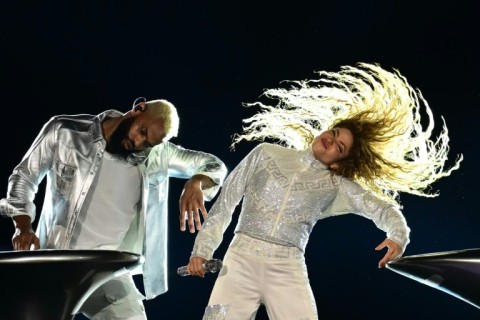
RIO DE JANEIRO - Shakira launched her first worldwide tour in seven years from Rio de Janeiro this week for her latest Grammy-winning album "Las mujeres ya no lloran" (Women Don't Cry Anymore).
The Colombian singer-songwriter treated fans at the 46,000-capacity Nilton Santos Olympic Stadium to the top hits from her 12th album on Tuesday.
"Music heals," Shakira told the audience. "Loving somebody else is a very good thing, but it's better to love oneself."
She notably performed "Shakira: Bzrp Music Sessions, Vol. 53," a track that alludes to her highly publicized separation from former Spanish footballer Gerard Pique in June 2022.
"She has been through a very difficult time in her personal life," said Juliana Modenesi, a fan who traveled 600 kilometers (370 miles) to see her perform for the first time.
"She has reinvented herself and today, she is stronger than ever."
AFP | Pablo PORCIUNCULA
It is the first tour since 2018 for Shakira, who shot to fame with her 2001 hit song "Whenever, whenever."
She entertained the crowd with a blend of styles from pop and reggaeton to salsa and Dominican bachata during her two-and-a-half-hour performance.
The show came just a few days after she received a Grammy for best Latin pop album, which she dedicated to migrants in the United States who are facing deportation under President Donald Trump.
She also performed some of her classic hits including "Hips Don't Lie," "Chantaje" and "Waka Waka," the official song of the 2010 football world cup in South Africa.
With more than 90 million records sold worldwide and four Grammy Awards under her belt, among many other prizes, Shakira is one of the most popular Latin artists of all time.
On Halloween, the cinemas and TV channels are filled with horror movies. But what should you do if you have a young child who wants to watch too?
Many of us have a childhood memory of a movie that gave us nightmares and took us to a new level of fear. Maybe this happened by accident. Or maybe it happened because an adult guardian didn’t choose the right movie for your age.
For me it was The Exorcist. It was also the movie that frightened my mum when she was a youngster. She had warned me not to watch it. But I did. I then slept outside my parents’ room for months for fear of demonic possession.
Parents often ask about the right age for “scary” movies. A useful resource is The Australian Council of Children and the Media, which provides colour-coded age guides for movies rated by child development professionals.
Let’s suppose, though, that you have made the decision to view a scary movie with your child. What are some good rules of thumb in managing this milestone in your child’s life?
Watch with a parent or a friend
Research into indirect experiences can help us understand what happens when a child watches a scary movie. Indirect fear experiences can involve watching someone else look afraid or hurt in a situation or verbal threats (such as “the bogeyman with sharp teeth will come at midnight for children and eat them”).
Children depend very much on indirect experiences for information about danger in the world. Scary movies are the perfect example of these experiences. Fortunately, research also shows that indirectly acquired fears can be reduced by two very powerful sources of information: parents and peers.
In one of our recent studies, we showed that when we paired happy adult faces with a scary situation, children showed greater fear reduction than if they experienced that situation on their own. This suggests that by modelling calm and unfazed behaviour, or potentially even expressing enjoyment about being scared during a movie (notice how people burst into laughter after a jump scare at theatres?), parents may help children be less fearful.
How a parent discusses the movie with their child is also important. Children do not have enough experience to understand the statistical probability of dangerous events occurring in the world depicted on screen. For example, after watching Jaws, a child might assume that shark attacks are frequent and occur on every beach.
Children need help to contextualise the things they see in movies. One way of discussing shark fears after viewing Jaws might be to help your child investigate the statistics around shark attacks (the risk of being attacked is around 1 in 3.7 million) and to acquire facts about shark behaviours (such as that they generally do not hunt humans).
These techniques are the basis of cognitive restructuring, which encourages fact-finding rather than catastrophic thoughts to inform our fears. It is also an evidence-based technique for managing excessive anxiety in children and adults.
Exposure therapy
If your child is distressed by a movie, a natural reaction is to prevent them watching it again. I had this unfortunate experience when my seven-year-old daughter accidentally viewed Miss Peregrine’s Home for Peculiar Children, which featured a monster with knives for limbs who ate children’s eyeballs for recreation.
My first instinct was to prevent my daughter watching the movie again. However, one of the most effective ways of reducing excessive and unrealistic fear is to confront it again and again until that fear diminishes into boredom. This is called exposure therapy.
To that end, we subjected her and ourselves to the same movie repeatedly while modelling calm and some hilarity - until she was bored. We muted the sound and did silly voice-overs and fart noises for the monster. We drew pictures of him with a moustache and in a pair of undies. Thankfully, she no longer identifies this movie as one that traumatised her.
However, when done well and with adequate support (you may need an experienced psychologist if you are not confident), it is one of the most effective techniques for reducing fear following a scary event like an accidental horror movie.
Fear is normal
Did I ever overcome my fear of The Exorcist? It took my mother checking my bed, laughing with me about the movie, and re-affirming that being scared is okay and normal for me to do so (well done mum!)
In December 1916, as war raged in Europe, an entrepreneurial pearl diver took a chance on some bleeding-edge technology and installed an outdoor cinema in one of the country’s most isolated towns – Broome, Western Australia.
Ted Hunter didn’t know much about cinemas. Not many people did at the turn of the 20th century. But that didn’t stop him beginning what has become a long history of outdoor cinema exhibition in Australia.
Sun Pictures in Broome opened with Jack Hulcup’s 1913 silent film Kissing Cup, in which a “squire’s jockey” escapes kidnappers and gallops across the Isle of Wight in time to win the race. Huzzah.
More than a century later, Sun Pictures still stands – the world’s oldest operating open-air cinema.
While the Guinness World Record is a nice-to-have, Sun Pictures’ survival has been ensured not by the latest Hollywood blockbuster, but by what the cinema offers locals and visitors each night: a moviegoing experience that is at once unique and familiar.
Segregation at the movies
Before opening Sun Pictures, Hunter made his money as a master pearler. Pearl shells, which were turned into mother-of-pearl buttons, transformed the economic life of Broome in the late 1800s. Despite being so isolated, the pearling industry brought great riches to the town, while also entrenching workers along racial lines.
Racial segregation was firmly present in Broome’s “picture garden” for the first half of the 20th century. White Australians and their kids were seated in the middle, with Chinese and Japanese patrons behind them. Malays, Filipinos and First Nations people entered separately and were seated at the sides, or remained standing.
Aboriginal rights activist Charles Perkins would later directly challenge the segregation of Australian cinemas in his 1965 “Freedom Ride” throughout rural New South Wales.
Outdoors, from the comfort of your car
My colleague Tess Van Hemert and I have spent the past three years researching the cultures and practices of cinemagoing and how cinema sites shape this experience.
Outdoor cinemas – whether they be the picture gardens of Broome or the Yatala Drive-In – function as special sites of culture, connection and community.
During COVID lockdowns, social distancing measures particularly invigorated drive-in cinema attendance. But even after lockdowns ended, David Kilderry, the long-time operator of Melbourne’s Lunar Drive-in, remains clear on the appeal:
You could open up the car or even sit outside it and if cool, hop back inside and snuggle up in private. […] You can talk about the film as it runs. Kids can ask questions and parents can explain. Patrons can use phones during the film without interrupting others, and babies and infants won’t annoy other customers […] The drive-in has always been more than just a movie experience. It’s where the two icons of the 20th century come together: the motion picture and the automobile.
While the Lunar was shuttered in 2023, Kilderry said this decision was less about the 400,000 annual patrons and more about the land tax implications of keeping a site of that size viable.
But it’s not all doom and gloom for drive-ins. Kilderry notes many operators now own their land, rather than trying to constantly negotiate leases.
There are currently about 12 drive-ins running regularly across Australia, with a few more opening for the occasional screening. New drive-in developments are also planned for Perth, pending local consultations.
Connecting with others and the environement
Beyond drive-ins, Sun Pictures is in good company with a range of locations around the world that actively celebrate outdoor cinema.
During the European summer, open-air cinemas are popular in countries such as Germany and Italy. In Bologna, three large piazzas – Piazza Maggiore, Arena Puccini and Piazzetta Pasolini – are set up as cinemas for the annual Cinema Ritrovato festival.
Closer to home, the University of Western Australia’s Somerville Auditorium, framed by a “tree cathedral” of mature Norfolk pines, has long been a place of unique outdoor cinema experiences.
Perth Festival film programmer Tom Vincent understands the distinct pleasures of outdoor cinemagoing:
The m ost memorable cinemagoing anywhere will always engage the audience’s sense of place, usually through architecture and experience design. […] It includes a natural sensory mix that includes river breezes, ambient sounds and wildlife, alongside a sense of grandeur and good programming. Good outdoor cinema says ‘look, we are here, engage all your senses’.
But while seasonal outdoor cinemas such as the Moonlight Cinemas continue to operate around Australia – alongside local council park screenings – openings of new permanent outdoor cinemas are rare.
Phoebe Condon, manager of the new permanent Dendy Powerhouse Outdoor Cinema in Brisbane, explained how the site positions itself as a high-value leisure experience:
It’s more than just a night at the movies – it’s a destination […] What truly sets us apart from other outdoor cinemas is our focus on creating an elevated, year-round experience.
This framing of outdoor cinema as an “elevated experience” is vital. While the cost of cinemagoing has come up as a key consideration in our research (especially in the current economic context) the industry is quick to remind consumers it remains affordable compared with other out-of-home arts and leisure experiences such as live sports, music, comedy and theatre.
Despite legitimate cost-of-living concerns, census data continues to show cinemagoing as the nation’s most popular cultural activity.
Why Neflix can’t replace cinemas
Our research on Australian cinemagoing supports broader arguments for a more holistic understanding of cinema’s value in society. Cinemagoing shouldn’t be compared to your Netflix subscription, but to other leisure activities people get up and leave the house for.
As the International Union of Cinemas notes, “films reflect national culture or subcultures and the wider world to the audience; they frame moral and political discussions; and they entertain and educate”.
We also know cinemagoing has never stood still. Ever since Hunter took a chance on outdoor cinema in 1916, these spaces have evolved constantly to respond to new challenges and shifting appetites.
But one aspect remains the same: whether sat under the stars, or parked in a lot, Australians continue to see the value in leaving their homes to connect and share in new stories on the big screen.
Mumbai, (IANS) Actress Rakul Preet Singh, who is currently gearing up for the release of her upcoming Tamil vigilante action film ' Indian 2', on Tuesday conducted an 'Ask Me Anything' (AMA) session with her fans on social media, and revealed about her mantra of energy, good looks, her favourite holiday spot in India, and her favourite cricket players.
Taking to Instagram Stories, Rakul answered the fun questions of the fans. She wore an off-shoulder blue jumpsuit, while she was promoting 'Indian 2'.
During the AMA session, a fan asked the diva about her mantra of energy and good looks. Replying to the same, Rakul said: "The mantra of my energy is to keep myself away from all the negativity. I just focus on my job, my people, my life, and I am really not worried about who is thinking what, and I try to keep my karma clean."
"And I think that what keeps me positive and kind of reflects on your skin. So, I think for each one of us, if we have a clear conscience, if we are happy from within, I think that' what is going to reflect on your face," she shared.
Speaking about her favourite cricket players, Rakul said: "It has to be Virat Kohli. I think he is amazing. And also Rohit Sharma."
Rakul also revealed her favourite holiday spot in India, saying, "Goa. I just love Goa." Rakul married actor-filmmaker Jackky Bhagnani on February 21, 2024, in Goa.
On how much time she spends in the gym, the 'Doctor G' actress added: "I spend about one hour and 15 minutes maximum, which also includes my mobility, and stretching in the end."
'Indian 2' is directed by S Shankar, and is jointly produced by Lyca Productions and Red Giant Movies. The movie is a sequel to the 1996 film 'Indian', and Kamal Haasan reprises his role as Senapathy.
This is the question I kept coming back to while watching Andrew Upton’s adaptation of Anton Chekhov’s The Seagull, which opened to warm applause – and a touch of controversy – at the Sydney Theatre Company on Saturday.
Theatre scholar Eric Weitz notes that comedy is a genre “with characteristic features”.
Laughter, humour, distraction. These are some of the terms associated with comedy.
Comedy is also restless. As Weitz acknowledges, comedy “embraces a range of subgenres” and often “cross-pollinates with other genres to form the likes of tragicomedy”.
These cross-pollinations can often confuse.
Consider the very first performance of The Seagull, subtitled “a comedy in four acts”.
The notorious performance at the Alexandrinsky Theatre in Saint Petersburg on October 17 1896 was an unmitigated failure. The audience jeered; the reviews were scathing.
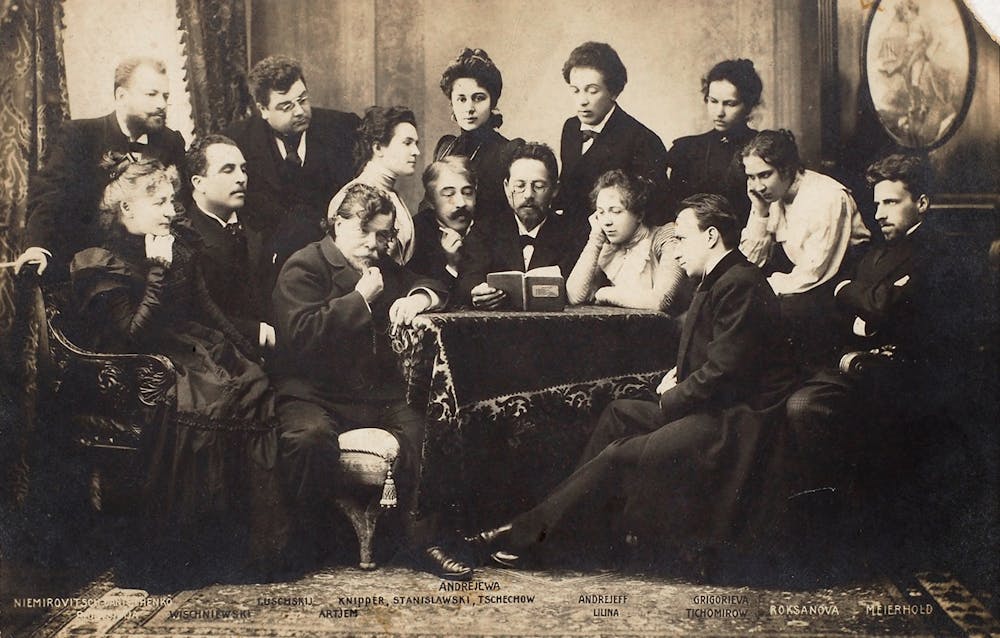
Chekhov reads The Seagull with the Moscow Art Theatre company, 1898. Wikimedia Commons
In a letter sent to the publisher Aleksey Suvorin the very next day, a wounded Chekhov declared he would never again “write plays or have them acted”.
The reason why the premiere went so badly has to do with audience expectations. As essayist Janet Malcolm explains, there were special circumstances on the night in question.
The performance was part of a benefit event for E. I. Levkeeva, a popular Russian comic actress, “and so the audience was largely made up of Levkeeva fans, who expected hilarity and, to their disbelief and growing outrage, got Symbolism.”
Primed for broad comedy, the audience didn’t know what to do with Chehkov’s groundbreaking spin on the genre, which broke with established realist modes and placed emphasis on metaphorical imagery and allegorical tropes.
While the play, which speaks to the themes of art and desire, has many funny moments, it simultaneously foregrounds discussions of mortality and depictions of madness. And it ends with a suicide.
the old win out over the young, where hope and the impulse for change are crushed, in part through their own fragility and lack of conviction, but in part by the proficient ruthlessness of the seasoned old campaigners, their elders.
I mention this because the serious and subtle aspects of The Seagull – many of which continue to resonate today – can get lost in modern takes on Chekhov’s play.
This is true of the Sydney Theatre Company’s production. Adapted by Upton and directed by Imara Savage, this version showcases the sound work of Max Lyandvert and features a meta-theatrical set designed by David Fleischer.
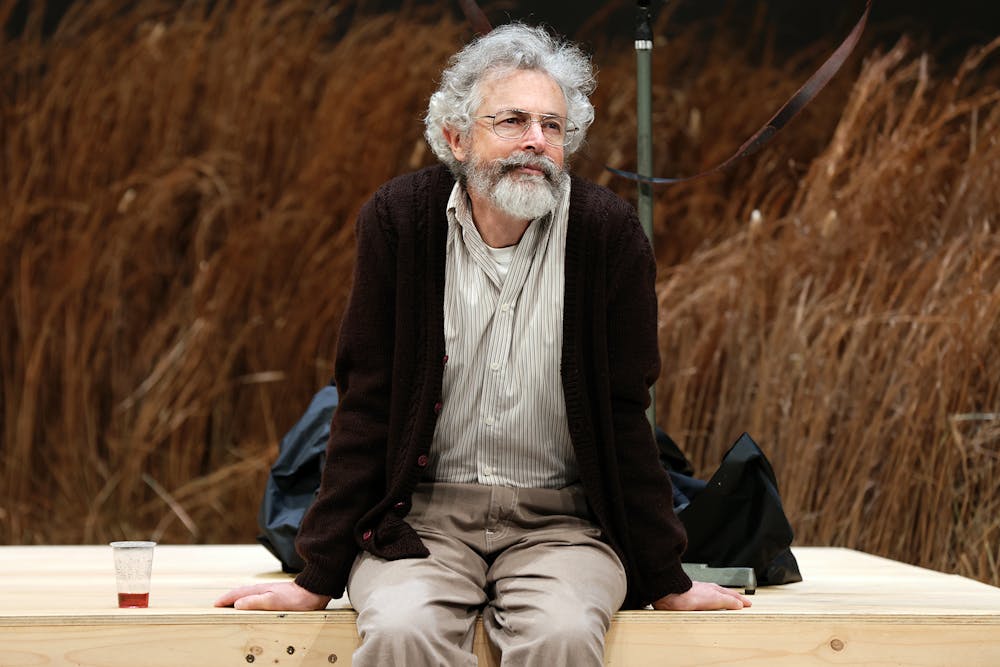
This version is set in contemporary rural Australia. Prudence Upton/Sydney Theatre Company
The adaptation is set in contemporary rural Australia and uses anglicised character names. Upton and Savage stick with Chekhov’s formal structure, but privilege the comedic at the expense of pretty much everything else when it comes to delivery.
This has ramifications for how the adaptation pans out.
Success beckons, tragedy befalls
The play comprises four acts and centres on four characters who mirror each other.
Constantine (Harry Greenwood) and Boris (Toby Schmitz) are writers. Boris is famous. Constantine – a college dropout who fancies his chances as an avant-gardist – is most definitely not.
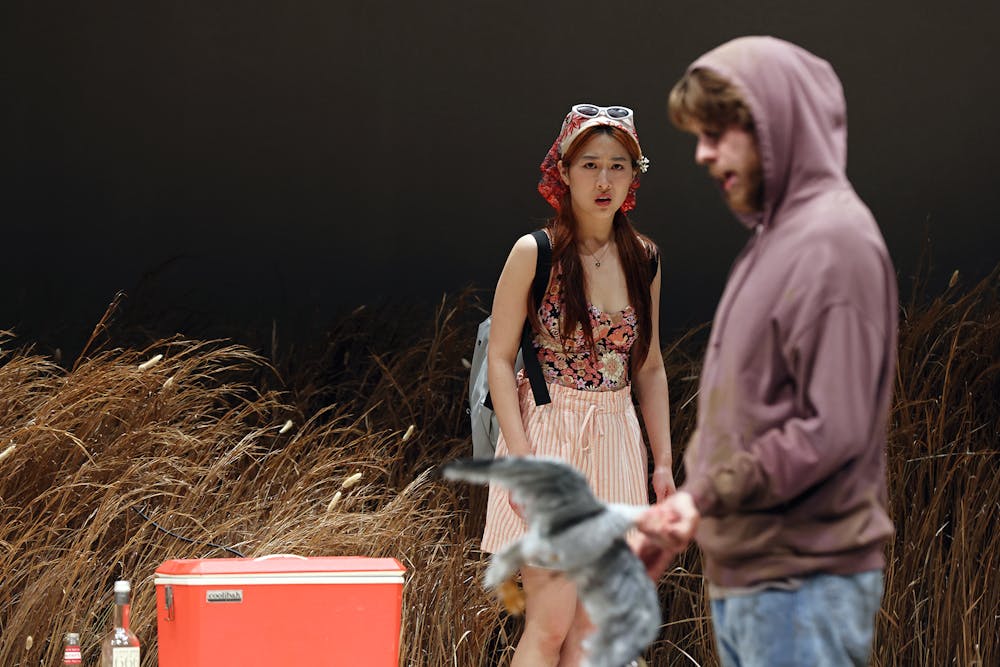
Irina (Sigrid Thornton) and Nina (Mabel Li) are actors. Irina, who is Constantine’s mother and Boris’s lover, is a renowned stage star. The ingénue Nina, who is dating Constantine, desperately wants to make it.
Success beckons, but tragedy eventually befalls Nina – who leaves Constantine for Boris – in the two year gap between the play’s third and fourth acts.
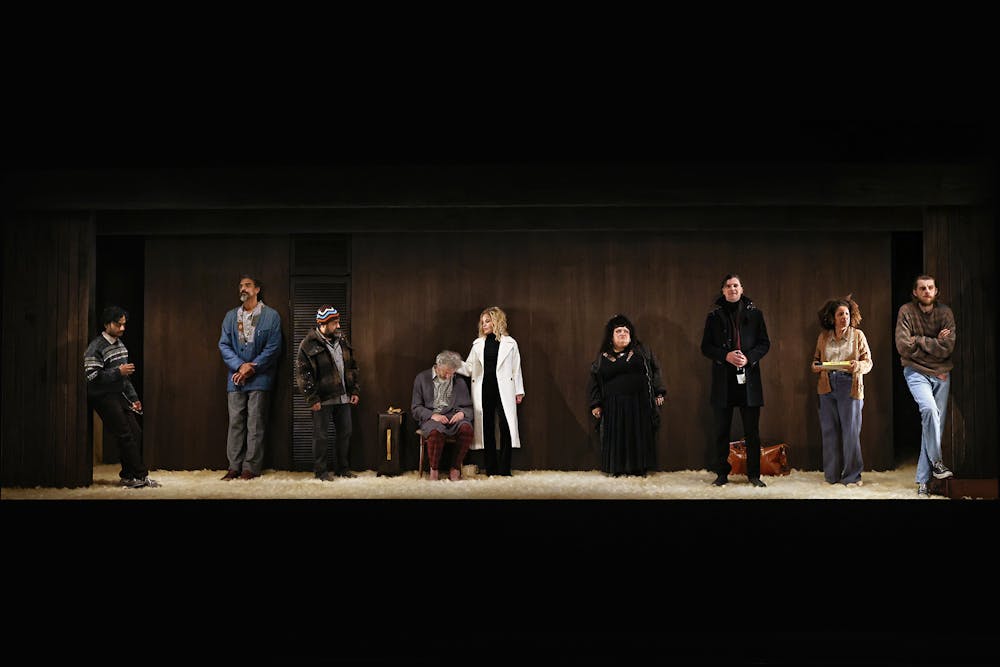
These characters are joined by several others, including Irina’s ailing landowner brother Peter (Sean O'Shea), and a depressive young goth, Masha (Megan Wilding). With the exception of one, every character in the play is morose.
With the exception of one, every character in the play is morose. Prudence Upton/Sydney Theatre Company
The first act is structured around an abortive performance of an experimental theatre piece Constantine has worked up. Nina and Boris grow close in the second, while Irina holds court. At the start of the third act, it is revealed Constantine has tried to take his own life. Boris threatens to leave Irina for Nina. Hilarity ensues as Irina tries to win him back.
The atmosphere that the Sydney Theatre Company creative team establishes in each of these acts is lighthearted and largely humorous. Indeed, there are some moments, as when a gravely ill Peter convulses on the ground in the third act, when the onstage action almost tips over into outright farce.
As Chekhov himself insisted, different types of comedy – including farce – had roles to play in The Seagull. However, the overarching tonal emphasis in this adaptation causes problems in the play’s last act, which is set indoors during the Australian winter.
Peter, not long for the world, spends his time talking about how he regrets his entire life. The other characters fob him off. Constantine has made headway as a writer, but is deeply unhappy. He pines after Nina, who dropped off the radar somewhere between acts.
Mabel Li gives one of the standout performances. Prudence Upton/Sydney Theatre Company
Time passes, and trivialities exchanged. A bedraggled Nina reappears. The story she tells is one of sorrow and woe. A genuinely moving moment, the speech is delivered with real affective intensity – undoubtedly the high point of the production.
However, the tonal chasm between the final act and the preceding three is simply too great.
In keeping with Chehkov’s original, comedy ultimately gives way to tragedy, but something seems to have been lost along the way.
The Seagull is at the Sydney Theatre Company until December 16.
If this article has raised issues for you, or if you’re concerned about someone you know, call Lifeline on 13 11 14.
Past Lives is Celine Song’s debut film about Nora and Hae Sung who were deeply connected in childhood. The film focuses on them reuniting as adults after a long separation.
The film introduces global audiences to the Korean Buddhist concept of In-Yun – the connection, fate or destiny of two people. Past Lives takes this millennia-old philosophical idea of human relationships and transposes it into the digital age through the young Korean diaspora.
Audiences meet Nora and Hae Sung when they are 12-year-olds in Korea. They are sweetly obsessed with each other in the way children of that age can be. Just as their young love is blossoming, however, Nora emigrates with her family to Canada. They reunite 22 years later when Hae Sung visits Nora in New York, where she now lives with her American husband.
The film asks what would you do if someone from your past, especially your first love, reappeared later in your life. Would your perception of this person change? Would they still be a lover or could you be friends? What impact would it have on your current relationship? Would you always be wondering what life could have been like?
These questions take on double meanings when considered from a diaspora perspective. Nora’s first love, Hae Sung, is Korean but by the time the pair meet she has lost some of her connection to that side of herself. She has let her Korean name, Na-Young, totally go, she only speaks Korean with her mother and she talks about Korean culture from a distanced perspective. She is Korean but Hae Sung is Korean, Nora explains to her American husband in one particularly funny scene.
Their In-Yun (reunion) and the questions it brings up are as much about love as they are about identity and Nora’s connection, or disconnection, to parts of herself and her past.
Past Lives, then, is not about Korean culture in its entirety but about the Korean diaspora, here represented by an author and playwright who may well see herself as an American woman. In this way, it is a staunchly Korean-American film.
Korean masculinity through a woman’s eyes
Korean film is becoming increasingly transnational today and there is a growing body of work by the Korean diaspora. Past Lives joins films such as the award-winning Minari, which is about a Korean-American family that moves to a farm in search of its American dream.
Past Lives is notable, however, as a Korean diaspora film made by a woman. One of the most fascinating aspects of the film is its female perspective.
Like Minari, Past Lives allows viewers an insight into Korea and Korean-ness from the diaspora perspective. This is all tied up in the very Korean character of Hae Sung. Here, Celine Song has employed the rare female gaze to portray her leading man.
The camera sees him the way Nora (played by Greta Lee) does: as a small-minded Korean man of middle or lower middle-class who does not even dare to fight for her. The camera looks upon him not sexually but lovingly as it lingers over him in a sort of appreciation, highlighting his sensitivity through close ups, like how he readjusts his hair or backpack. It tends to highlight the boyish qualities he maintains because, in my eyes, Nora loved little 12-year-old Hae Sung, but adult Hae Sung is too Korean.
Hae Sung is explosively portrayed by the actor Teo Yoo, a member of the diaspora himself as German-Korean. When Nora and Hae Sung meet in New York, he speaks only the broken English of a typical young middle-class Korean engineer. Yoo does a wonderful job of communicating Hae Sung’s complex feelings through a very physical performance. His nervousness and hopefulness can be read on his face and the way he holds his whole body.
Showing emotion rather than telling
Past Lives is full of extremely long lingering shots and close-ups that highlight the emotions of its characters. Song is invested in showing how characters feel rather than telling. This is heightened by the minimal use of music, acoustics and carefully chosen dialogue by a small number of actors.
The same can be said for her establishment of place as audiences are shown long shots of the landscapes and streets of Seoul. This sort of camera work is steeped in a sense of remembrance of past lives and evokes a lost time and space in a cool, emotionally charged, nostalgic way. Again, Past Lives deftly translates emotions through visuals for audiences who might not fully understand the diaspora experience in words but might through feeling.
Such stylistic choices, in my opinion, recall slow cinema – an atmospheric form of filmmaking steeped in long takes which favours silence over long dialogue.
Past Lives is a romantic tribute to the longing of the Korean diaspora for a lost past and homeland, a captivating and sensitively constructed film that will be enjoyed by many.
Looking for something good? Cut through the noise with a carefully curated selection of the latest releases, live events and exhibitions, straight to your inbox every fortnight, on Fridays. Sign up here.
Five Senses Theater leading the Best Acting Classes in Andheri, Acting School in Mumbai, conduct acting courses and short term workshops. The primary thrust of the acting classes is to create an atmosphere in which the actor can build upon their own processes to get into the skin of their characters. The acting classes dives into advanced techniques like method acting, stella Adler acting techniques, Meisner acting techniques that entail in-depth script analysis, characterization process, scene design and construction, and much more. The Five Senses acting school run by NSD & FTII professionals. Five Senses Theater constantly evolving plays which are then staged at around the India and abroad, theatre festivals etc.
A still from the movie The Hitchhiker's Guide To The Galaxy in which two prominent characters (right) of the novel can be seen carrying a towel — the most massively useful thing an interstellar hitchhiker can have.
When the Galactic Hyperspace Planning Council was all set to demolish Earth to build a hyperspatial express, Arthur Dent was busy hyperventilating. Just earlier in the day, he was lying in front of a big yellow bulldozer in a vain bid to protect his house from being demolished to build a bypass. It was the town council’s idea to come up with the said structure. Ford Prefect, on the other hand, was succeeding in maintaining a semblance of calm as all this was transpiring.
Prefect was from Betelgeuse. And he had his towel with him. “The towel”,) The Hitchhiker’s Guide to the Galaxy, says, “is about the most massively useful thing an interstellar hitchhiker can have.” It goes on to expound that other than wrapping it around yourself for warmth, you can use the towel to wave as a distress signal when, for instance, you are trying to escape from the Earth in a hurry.
May 25 is celebrated the world over as Towel Day. This is the day when froods carry with them their towel for all the universe to see, and proclaim categorically what amazingly put together people they are. These are fans of Douglas Adams and his enormously intelligent and supremely witty oeuvre. Ask them what is the secret of life, the universe and everything, and they’ll unabashedly answer: 42. I know, because I do the same.
Douglas Noel Adams was born on March 11, 1952, in Cambridge, UK. He famously joked that he was the first DNA to come out of Cambridge, referring to Watson and Crick’s discovery, and subsequent anno-uncement of the structure of deoxyribonucleic acid (DNA) in 1953.
Douglas Adams was tall. Even as a young boy atte-nding Brentwood School in Essex, he was nearly six feet tall. He often remarked that on class trips, his tea-chers wouldn’t say, “Meet under the clock tower,” or “Meet under the war mem-orial,” but, “Meet under Adams.”
In 1971, an 18-year-old Douglas Adams was lying drunk in the fields of Innsbruck, Austria. He was travelling through Europe with a stolen copy of The Hitchhikers Guide to Europe. “I hadn’t read Europe in Five Dollars a Day,” he confessed years later, “I wasn’t in that financial league.” Enervated, looking up at the night sky, he thought someone ought to write The Hitchhiker’s Guide to the Galaxy and then promptly forgot about it.
Until six years later. He was then at Cambridge, ostensibly studying for a degree in English, but mainly trying rather unsuccessfully to get a foot into Footlights. He missed a lot of deadlines on assignments, a trait which would be his for the rest of his life. “I love deadlines. I love the whooshing noise they make as they go by,” he once remarked.
Slowly and unsteadily, after a string of unsuccessful jobs (chicken shed cleaner, lift operator to a wealthy Saudi businessman), his writing career took off in the same fashion: slowly and unsteadily. The drunken thought that he first had while lying stargazing in Innsbruck revisited him, and he wrote The Hitchhiker’s Guide to the Galaxy as a BBC Radio Series. People loved it, and gradually enough it was adapted into various formats, including stage shows, novels, TV series, a computer game, and a feature film.
Not just a brilliant mind, Douglas Adams had a compassionate heart as well. He was a gallant crusader for Save The Rhino International, and once climbed Mt. Kilimanjaro in a rhino suit (while missing some deadlines) to raise awareness for the cause. The aye-aye lemur, the Chinese dolphin baiji, and the kakapo from New Zealand are the other animals that Douglas Adams travelled far to see and wrote about in The Last Chance to See.
A larger-than-life man, Douglas Adams died of a heart attack in 2001. He was 49. Two weeks after his death, on May 25, 2001, Towel Day was organised for the first time. Descri-bing the choice of the day to pay tribute to the much-loved writer, towelday.org states: As the universe that Douglas Adams created was full of absurdity and randomness, it may be a fitting choice after all. Every year since then, Douglas Adams-o-philes openly carry their towels with them to work, to libraries, and just about anywhere. Notably, last year, astronaut Samantha Cristoforetti read aloud a section from The Hitchhik-er’s Guide to the Galaxy from the International Sp-ace Station, and tweeted an image of her carrying her towel and wearing a T-shi-rt with the slogan, “Don’t Panic and carry a towel.”
Towels are a good thing. Roosta knows. He’s accompanying Zaphod Beeblebrox to Frogstar — the most totally evil place in the Universe. The yellow stripes on his towel are rich in protein, the green ones have Vitamins B and C, and the pink flowers in it have wheat germ extracts. The brown stains are Bar-B-Q sauce. And the other end of the towel has antidepressants. Needless to say, he spends quite some time in routine towel maintenance.
So there you have it. The nitty-gritty of Towel Day. Bring out yours, and wave it around. Who knows, you might just hitch a hike on a passing flying saucer. Or at the very least you’ll let the world know what a hoopy person you are. Which in hitchhiking slang translates to: There’s a frood who really knows where his towel is.


 Unsplash,





 Prudence Upton/Sydney Theatre Company