Los Angeles, (IANS) Actress Priyanka Chopra took to the stage along with actor Javier Bardem to present the International Feature Film Oscar at the 98th edition of the Academy Awards on Monday.
The duo presented the award to Norway's ‘Sentimental Value’, directed by Joachim Trier. The film explores the strained relationship between a father and his two daughters as they confront unresolved family history and artistic legacy. The film is set in Norway, and follows a once-acclaimed filmmaker attempting to reconnect with his family while preparing a new film project.
As Priyanka and the ‘No Country for Old Men’ made an appearance on the stage, Javier Bardem roared on the mic, “Free Palestine”.
For the occasion, Priyanka opted for a custom gown by Dior. The outfit followed a classic Hollywood aesthetic with modern detailing. The gown was strapless and white, designed with a structured corset-style bodice that shaped the upper silhouette and highlighted the waist. From the midsection, the dress flowed into a long skirt featuring a dramatic thigh-high slit, which created movement and added a contemporary edge to the otherwise bridal-style design. Along the slit and lower portion of the gown, black-and-white feathered or tulle detailing added texture and visual contrast to the monochrome look.
She paired the dress with diamond and emerald jewellery including a statement necklace and matching earrings. Her styling leaned toward Old Hollywood glamour, finger-wave style curls, luminous makeup, and subtle smoky eye accents.
The actress attended the ceremony with her husband Nick Jonas, who wore a classic black tuxedo that complemented her monochrome ensemble.
The 2025 FIDE World Rapid Chess Championship concluded in Doha, Qatar, on Sunday.
The Open section featured 247 players from 64 countries, including 126 grandmasters.
GM Magnus Carlsen became world champion, scoring 10.5 points out of 13, the Armenian Chess Federation reported.
Among the players representing Armenia, the best results were achieved by GM Shant Sargsyan and GM Haik Martirosyan, who scored 8 points, finishing 38th and 51st, respectively.
American-Armenian GM Samuel Sevian scored 9 points and tied for 6th place, finishing 11th on tie-breaks.
The Women's Championship featured 141 players from 42 countries, including 23 grandmasters and 32 international masters.
GM Aleksandra Goryachkina became Women's World Champion, scoring 8.5 points out of 11. GM Zhu Jiner and GM Koneru Humpy also scored 8.5 points. The champion was decided in a play-off.
Among Armenian women players, the best result was achieved by IM Lilit Mkrtchian, who scored 7 points, tying for 15th place and finishing 29th on tie-breaks.The Blitz Championship is scheduled for December 29-30. Souurce: https://www.panorama.am/
New Delhi, (IANSlife) It's that time of year when many people try to make New Year's resolutions, from going to the gym every day to eating healthier. Some swear to go to the gym five times a week, while others want to shed a considerable amount of weight by experimenting with a new diet. While these objectives are wonderful and have no flaws, we all know that these resolutions rarely persist. We all start the year with lofty goals that are difficult to achieve.
As we all know, our habits dictate our behaviors, which makes it even more important to develop positive habits that will benefit us over time. How does one reach their objectives? Before embarking on a tight diet plan, it is critical to begin cautiously and with attention. Small modifications in your everyday life connected to healthy eating habits can help you achieve your goals significantly.
So, here are some new year tips from Shilpa Khanna Thakkar, CEO of Chicnutrix, to keep you motivated:
. Choose general healthy eating habits over specific diets. Taking this up as practice makes it easily attainable and better for your overall well-being.
. Plan your meals! Think again if you are at work and go out for lunch and then get a snack or some coffee later. Making a conscious effort to pack a lunch and snack makes it easier to control your eating habits and is even more inexpensive in the long run.
. Every weekend, go grocery shopping and purchase snacks and food items for the next five days. This could include yogurt, nuts, fruits, veggies, etc. While cooking dinner, make a few extra servings for the next few days. Try to save and repurpose leftovers for days when you are too busy to cook. . Track your progress and milestones with non-food rewards such as reading a new book or watching a new movie. Celebrating your wins is essential, as that shows us what we are accomplishing and motivates us to accomplish more.
. Share your goal with others. This not only helps you get useful tips but also shows you that you are not alone in your journey towards good health and allows you to share your progress with others.
"In addition to healthy eating habits, another popular resolution during the new year is to exercise more. However, coming up with the goal of "going to the gym every day of the week" is quite unrealistic, especially for someone who does not exercise regularly. So, it is easier to devise a smaller goal, like taking daily walks, and then gradually build on this. The same needs to be applied to your resolution of eating better," said Shilpa Khanna Thakkar.Let's not forget the true essence of New Year's resolutions - making a positive change to your health and quality of life. They don't have to be extreme life changes, but rather just reasonable health goals to have a positive impact that becomes a part of your lifestyle. The cycle of unhealthy eating habits and unrealistic diets needs to be broken! When made, these conscious habits should not only enhance the quality of life you lead but also keep you healthy yet happy. Eating right: Just a New Year's resolution or a conscious habit? | MorungExpress | morungexpress.com
New Delhi (IANS): Between 2010 and 2024, India achieved 48.7 per cent decline in annual new HIV infections, 81.4 per cent reduction in AIDS-related deaths and 74.6 per cent decline in mother-to-child HIV transmission, the government said on Sunday, ahead of the 'World AIDS Day 2025'.
India continues to demonstrate substantial progress under the current phase of the National AIDS Control Programme.
“HIV testing increased from 4.13 crore (2020–21) to 6.62 crore (2024–25); access to antiretroviral treatment rose from 14.94 lakh to 18.60 lakh PLHIV; and viral load testing nearly doubled from 8.90 lakh to 15.98 lakh in the same period,” said the Health Ministry.
These outcomes surpass global averages and reflect India’s leadership, sustained domestic investment, evidence-based strategies, and robust community engagement.
Health Minister Jagat Prakash Nadda will lead the national-level observance of ‘World AIDS Day’ at Vigyan Bhawan here on Monday, in the presence of senior officials — reaffirming the government’s unwavering commitment to advancing the national response to HIV prevention, treatment, care, and stigma elimination.
The event, organised by the National AIDS Control Organisation (NACO), will bring together government leaders, development partners, youth representatives, community advocates, people living with HIV (PLHIV), and frontline health workers, reflecting a united approach to accelerating India’s journey towards ending AIDS as a public health threat.
According to the ministry, a youth-led flash performance will underscore the importance of awareness and responsible behaviour.
This will be followed by the inauguration of a thematic exhibition, showcasing digital innovations, programme achievements, and community-led models implemented under the National AIDS and STD Control Programme.
Beneficiary experience stories and an audio-visual presentation will highlight India’s progress under NACP-V, along with upcoming priorities, said the ministry.A major highlight of the observance will be the launch of a new campaign video series under NACO’s national multimedia initiative, centred around three core pillars — Youth and Awareness, Elimination of Vertical Transmission, and Stigma and Discrimination. World AIDS Day: HIV infections down 49 pc, deaths reduced by over 81 pc in India | MorungExpress | morungexpress.com
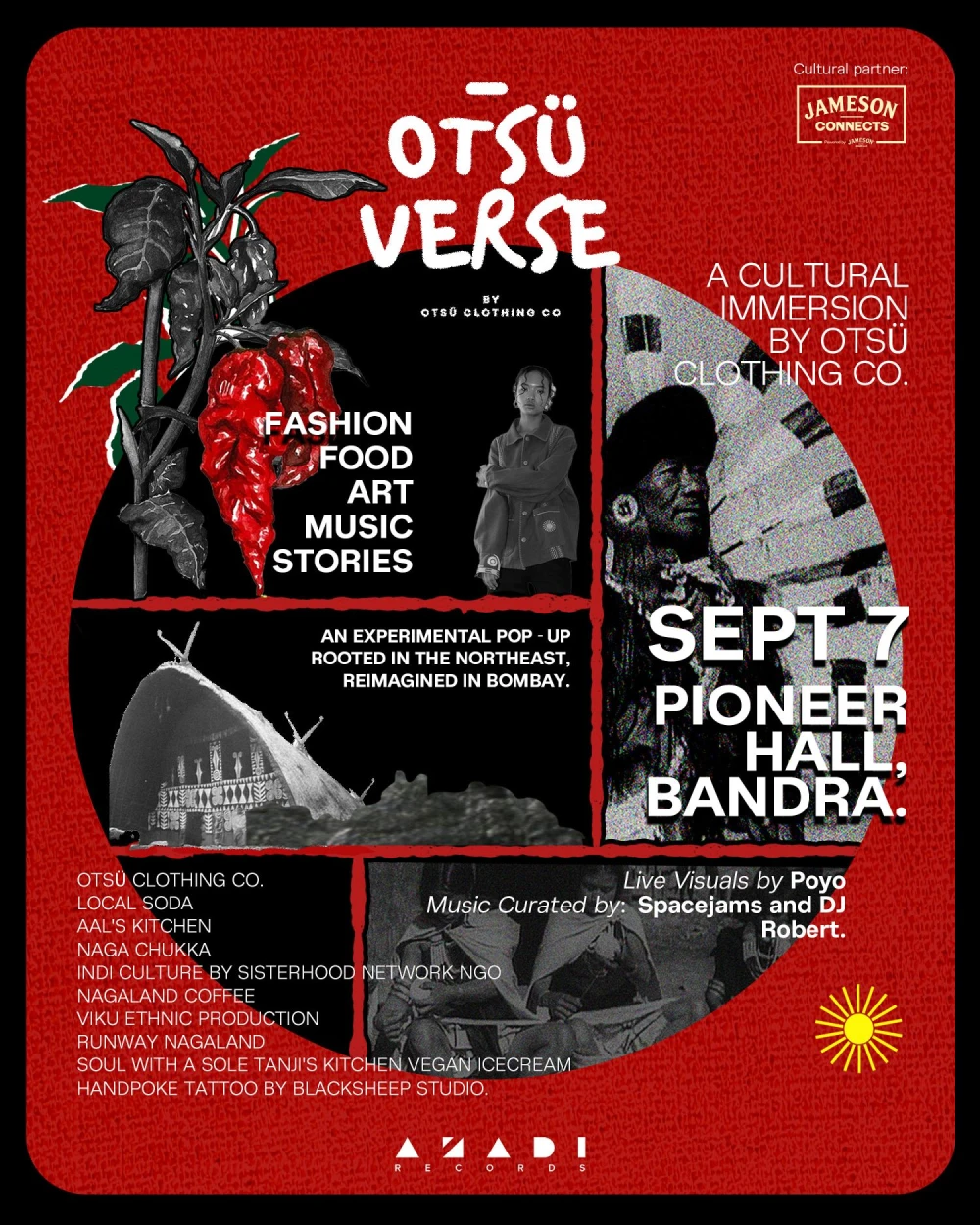
When Asenla Jamir left Nagaland with a dream of telling stories through fabric, she did not imagine that her clothing label would one day expand into an immersive cultural experience. But on September 7, that dream will take shape in Mumbai at Otsüverse – Northeast Re-imagined, a one-day pop-up showcasing the region’s heritage through fashion, food, art and music.
Jamir, the founder of Otsü Clothing Co., describes her brand as a “love for storytelling through fabric, culture, and community.” What began as a small collection of one-of-a-kind pieces has now become the platform for the launch of her first ready-to-wear line, alongside a larger cultural initiative.
“Otsüverse isn’t just an event — it’s a piece of home I’ve carried with me for years,” Jamir said. “Growing up in the Northeast, I’ve always dreamed of creating a space where our food, stories, sounds, and craft could come alive — not just for us, but for anyone curious enough to experience it.”
The pop-up, scheduled for Pioneer Hall in Bandra from 3:00 p.m. to midnight, brings together handwoven textiles, curated food experiences, visual art and live DJ sets. Organizers describe it as a bridge between tradition and contemporary culture. “From handwoven textiles and ready-to-wear collections that honour traditional craftsmanship, to flavours that tell stories of our homeland, to DJs and artists creating a new soundscape — Otsüverse is a bridge between heritage and now,” Jamir said.
The project is supported by Jameson, a brand Jamir calls “a champion of community, creativity, and shared moments,” and produced in collaboration with Azadi Records, one of India’s leading independent music collectives. Azadi has built a reputation for pushing cultural boundaries, and its presence signals that Otsüverse is as much about contemporary experimentation as it is about heritage.
For Jamir, who identifies foremost as a storyteller, the event is both professional milestone and personal journey. “I’m a storyteller at heart from Nagaland, I’ve spent the last few years building Otsü as a way to keep our roots alive while inviting everyone to experience them in a fresh, modern light,” she said.
Otsü Clothing Co. began as an exploration of textiles, upcycled garments and memory-driven design. Over the years, it has grown into a brand that seeks to embody cultural identity in wearable form. The Mumbai pop-up reflects that evolution. “We’re not only launching our first ready-to-wear collection after our collections of our one-of-a-kind upcycled pieces, but also creating a platform that celebrates incredible creators, homegrown brands, and the cultural stories we’re proud to share — all made possible with the support of Jameson and Azadi Records,” Jamir said.
Beyond the launch of a clothing line, the event promises a sensory experience: live art installations, textile-based exhibits, experimental soundscapes and food rooted in the flavours of the Northeast. “This one-day pop-up is a meeting point of flavours, textures, music, and conversations — a living snapshot of the Northeast in the heart of Mumbai,” Jamir said.
The founder is clear that this is not meant to be a fleeting showcase but a step toward deeper cultural connections. “If you join us, you’re not just attending an event — you’re becoming part of a moment that’s been built with countless hours, heartfelt collaboration, and a vision to make Northeast feel a little closer to home for everyone,” she said.For Jamir and her team, Otsüverse is both celebration and invitation — an effort to place the Northeast at the center of India’s cultural conversation, interpreted through fashion, sound and shared experiences. Naga Designer Asenla Jamir to launch ‘Otsüverse’ cultural showcase in Mumbai | MorungExpress | morungexpress.com
The Armenian National Philharmonic Orchestra (ANPO) is launching its 100th anniversary concert season with the 17th Yerevan International Music Festival, running from September 19 to November 2. The festival is the highlight of the orchestra’s centennial celebrations.
The opening concert on September 19 at the Aram Khachaturian Concert Hall will feature world-renowned violinist Sergey Khachatryan under the baton of acclaimed Finnish conductor Pietari Inkinen. The program includes Sibelius' Violin Concerto Finlandia and Mahler’s Symphony No. 1 Titan.
Visiting Armenia for the first time, Inkinen said his main reason for coming was Khachatryan, a fellow musician with whom he once competed at the Sibelius Violin Competition. “We often talked about visiting his beautiful homeland and today it became reality,” he told reporters on Thursday, praising the orchestra’s rehearsals.
For his part, Khachatryan described the ANPO as his “cultural home”. “It's a true pleasure for me to collaborate with the National Philharmonic Orchestra and conductor Eduard Topchyan,” he added.
The festival’s rich program includes:A concert on September 20 dedicated to Armenia’s Independence Day, featuring soprano Juliana Grigoryan and pianist Armen Babakhanian.
A gala with star tenor Vittorio Grigolo at the Karen Demirchyan Sports and Concert Complex.
Appearances by leading violinists Vilde Frang and Baiba Skride, and the Borodin Quartet marking its 80th anniversary.
A tribute concert for composer Arvo Pärt’s 90th birthday with violinist Anush Nikoghosyan, pianist Hayk Melikyan and conductor Andrey Boreyko.
The world premiere of Yervand Yerkanian’s symphony “Dedication” written for the orchestra’s centenary.
A closing concert with Armenian pianist Eva Gevorgyan, led by ANPO artistic director and principal conductor Eduard Topchjan.The festival will present works by Mahler, Rimsky-Korsakov, Rachmaninoff, Shostakovich, Prokofiev, Khachaturian, Babajanyan, Bartók, Britten, Pärt and others.Source Article
Olivier Poivre D'Arvor, Special Envoy of the French Republic for UN Ocean Conference at UNOC3 press briefing on June 13, 2025.
NICE, France — The largest-ever United Nations summit dedicated to the oceans concluded on Friday in the southern French city of Nice, with world leaders pledging a strong commitment to step up marine protection and prepare for contentious negotiations over deep-sea mining next month.
The five-day gathering brought together over 60 heads of state and government, alongside thousands of scientists, business leaders, and activists. The urgency of the situation was a recurring theme, with the UN calling the state of the world's oceans an "emergency."
Treaty Momentum Builds
A key achievement was the momentum behind the High Seas Treaty, which aims to protect 60% of the oceans lying beyond national jurisdictions. Nineteen additional countries ratified the treaty during the summit. This brings the total number of signatory nations to 50, placing the treaty just 10 short of the 60 required for it to officially enter into force.
Olivier Poivre d’Arvor, France’s oceans envoy, expressed optimism that this crucial threshold would be met by September 2025, well in advance of its proposed effective date of January 2026. Environmental campaigners, including Rebecca Hubbard of the High Seas Alliance, lauded the substantial progress, calling it a pivotal moment for ocean conservation. However, she simultaneously urged all remaining countries to ratify the agreement "without delay," emphasising the urgent need for its full implementation to protect vulnerable marine ecosystems.
Deep-Sea Mining in the Crosshairs
As the global spotlight now shifts to the contentious July negotiations concerning the future of deep-sea mining, significant tensions flared at the Summit. France and its allies expressed their opposition to any hasty exploitation of the ocean floor's mineral resources, issuing stark warnings of irreversible damage to what remains one of Earth's last untouched frontiers.
"Nobody knows what is there in the deep sea... you cannot launch recklessly down this path," cautioned Olivier Poivre d’Arvor. He’s underscored the profound lack of scientific understanding of these delicate ecosystems. UN Secretary-General Antonio Guterres echoed this sentiment, urging extreme caution and warning against transforming the ocean's depths into a lawless "wild west.
Although 37 nations are now part of a global alliance against deep-sea mining — four more than before the summit — the number fell short of expectations, suggesting difficult debates ahead.
Conservation Gains – and Gaps
Several countries, including Greece, Samoa, and Colombia, announced expansive new marine protected areas. This helped push global conservation coverage to just over 10% of the world's oceans. While a positive step, this still leaves a considerable gap in reaching the target of protecting 30% of marine and coastal areas by 2030, as set out in the Global Biodiversity Framework.
Furthermore, new pledges were made to curb underwater trawling, a highly destructive fishing method. However, activists had advocated for an outright ban on the practice, highlighting that those commitments fall short of the comprehensive action needed for true marine recovery.
Disappointment Over Fossil Fuels and Financing
Despite ambitious rhetoric, many observers left the summit disappointed about two glaring omissions: fossil fuels and funding. The final political declaration — negotiated for months and adopted unanimously — made no mention of coal, oil, or gas, despite their central role in ocean warming and acidification.
“Ignoring the imperative of phasing out offshore oil and gas is not just an injustice: it is inadmissible,” said Bruna Campos from the Centre for International Environmental Law. Former US climate envoy John Kerry echoed that view, stating: “You cannot protect the ocean without confronting the biggest root cause bringing it to the breaking point.”
Financial commitments also fell short. Private donors pledged €8.7 billion ($10 billion) over five years, but the UN estimates that $175 billion annually is needed for sustainable ocean development. Small island nations, particularly vulnerable to rising sea levels and illegal fishing, voiced frustration at the lack of support. As a symbolic cacophony of ship foghorns rang out to close the summit, many participants agreed: important steps were taken, but the fight to save the oceans is far from over.By Zinhle Dlamini World Oceans Summit Ends with Deep-Sea Mining Clash, But Gaps Remain in Funding and Fossil Fuel Action
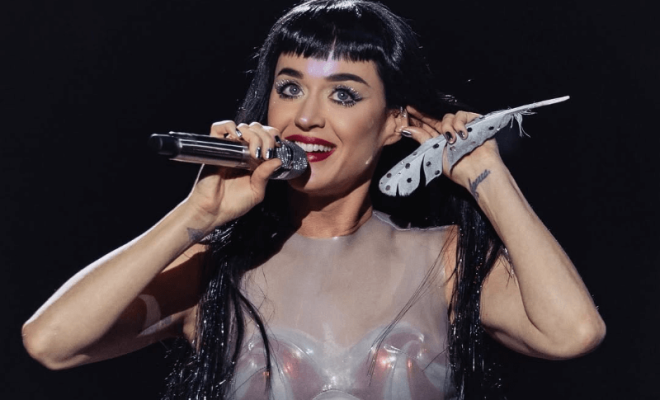
By Dr Neha Mathur: Pop superstar Katy Perry is taking fans on a futuristic, neon-lit journey with her The Lifetimes Tour. It’s part pop concert, part sci-fi adventure, built around her album 143 and a story where Katy battles an AI villain named Mainframe.
Setlist: Hits like Firework, Roar, Teenage Dream, plus new tracks from 143
Storyline: A pop star vs. AI showdown — complete with a digital villain and interactive visuals
Why Fans Are Calling It a “Must-See
”This isn’t just a concert — it’s a pop universe built for maximum fun. Think glitter, drama, dance, and pure Katy Perry magic. Whether you’re a lifelong fan or just love big stadium shows, this tour will leave you smiling for days. Katy Perry’s The Lifetimes Tour 2025 – Everything You Need to Know
New Delhi, (IANS): India is set to host the AI Impact Summit in February 2026, reinforcing its commitment to democratising Artificial Intelligence (AI) for the public good, the Parliament was informed on Wednesday.
This landmark event aligns with Prime Minister Narendra Modi’s vision of making technology accessible to all and leveraging AI to tackle real-world challenges across healthcare, education, agriculture, climate, and governance, Union Electronics and Information Technology Minister Ashwini Vaishnav told the Lok Sabha.
The IndiaAI mission, which prioritises accountability, safety, equity, and the defence of privacy and human rights, is at the core of India's AI strategy.
According to the statement, one of the main highlights is the creation of native Large and Small Language Models using Indian datasets.
Currently, startups such as Sarvam AI, Soket AI, Gnani AI, and Gan AI are developing foundational models that are suited to the linguistic and cultural diversity of India.
According to the statement, these models will be open-source, allowing other startups to create locally tailored applications.
According to Minister Vaishnaw, to support scalable innovation, the government is also enhancing AI compute capacity by ensuring GPU infrastructure access and expanding the AIKosh Datasets Platform, which currently hosts over 1,000 datasets and 208 AI models, including Text-to-Speech tools in Indian languages.
Additionally, the mission is funding 30 AI-based applications addressing public interest areas like health, climate, and governance.
Through its IndiaAI Startups Global Programme, 10 startups are being mentored at Station F and HEC Paris, including PrivaSapien Technologies (privacy-enhancing AI) and Secure Blink (AI cybersecurity).
Ensuring safe and trusted AI, India has established the IndiaAI Safety Institute to coordinate efforts on responsible AI.
Projects under this initiative include AI bias mitigation, machine unlearning, and watermarking, as per the statement A strong legal framework that addresses AI-related risks like disinformation, deepfakes, and data misuse, such as the Digital Personal Data Protection Act (2023), IT Act (2000), and IT Rules (2021), supports the tech initiatives.A techno-legal approach underpins India’s regulation, combining legislation with government-funded R&D on deepfake detection, privacy, and cybersecurity tools, according to the written reply. India's hosting of the 2026 summit further solidifies its position as a global leader in the development of AI that is inclusive, moral, and driven by innovation. India to host AI impact summit 2026, leading global dialogue on democratising AI | MorungExpress | morungexpress.com
A farmer in Kansas had an idea for an anniversary gift, but it was going to take eight months, one mile of land, and 65 million wheat seeds.
Jesse Blasi and his wife Sarah were set to celebrate their 20th wedding anniversary this year. And he was inspired by another Kansas farmer who had planted a field of sunflowers for his wife—a story and video that GNN shared in 2023.
What if Blasi created a message in a wheat field?
He began plotting his surprise back in October. He used some modern farming methods, a John Deere Air Seeder, and two varieties of wheat to outline the message “Jesse + Sarah, 20 Years”.
He nurtured the two colors of wheat and waited for it to grow. It was a labor of love, but just like the old ‘Hall and Oates’ song, he knew it would make Sarah Smile.
“I knew it would make her smile,” Jesse told KAKE in Kansas. “That was kind-of the whole goal, to get the little grin out of her that I like.”
Jesse and Sarah met at a bar while attending Kansas State, and fate led them to the same stoplight on the way home. Their love has been going strong ever since, with a farm that’s been running for two decades and a family that includes two daughters, Reagan and Avery.
Jesse was determined to deliver his ‘golden wheat anniversary’ surprise, but had to work hard to keep it a secret when other farmers saw the message early.
Then, in early June, the couple went up over the fields in an airplane—and when she looked out the window, she saw it.
Jesse + Sarah. 20 Years.
The words were laid out in a red chaff wheat, with a lighter variety serving as the background. In all, the message is about one mile long and a half-mile wide. (Watch the video below…)
The anniversary love note should be visible over Kansas for the rest of the summer growing season—and it could linger all the way into October.
The SKIMS founder and reality star — who has worn several iconic (and controversial) looks over the years, including wearing Marilyn Monroe's dress and a full-body black Balenciaga dress (that even covered her face) — turned heads in another eye-catching look.
Kardashian wore a crocodile leather off-the-shoulder two-piece set by Chrome Hearts with an open back and long train. She accessorized the look with strings of pearls hanging by her waistband, a multi-strand diamond necklace and a large leather hat.
The new exhibit “presents a cultural and historical examination of Black style from the 18th century to the present through an exploration of the concept of dandyism,” according to a post on the museum’s Instagram.In February, the dress code for the Met Gala was revealed to be “Tailored for You.” Fittingly, it is a nod to the exhibition’s focus on menswear and suiting. Source Article
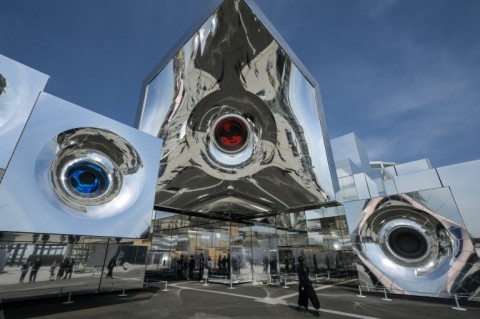
OSAKA - World Expo opened on Sunday with 160 countries and regions showcasing their technology, culture and food, with host Japan hoping to provide the world with some much-needed hope.
Highlights at the show in Osaka until mid-October include a Mars meteorite, a beating artificial heart grown from stem cells and Hello Kitty figures in algae form.
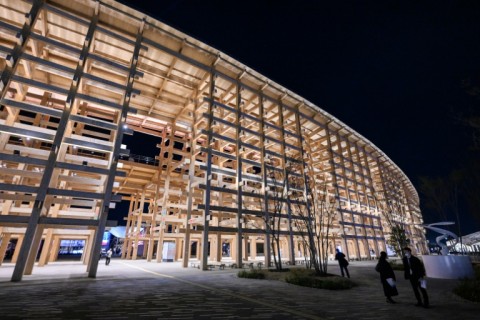
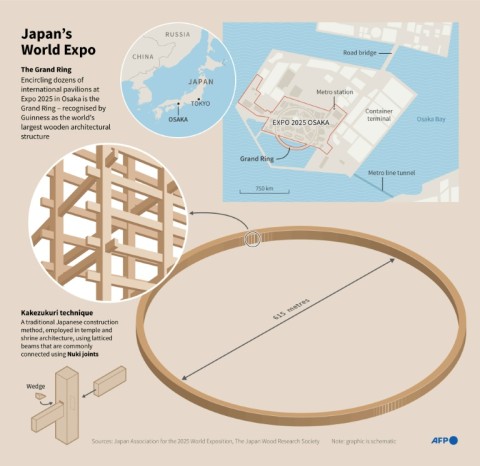
Surrounding most of the pavilions -- a chance for architects' fancies to run wild -- is the world's largest wooden structure, the "Grand Ring".
Its creator Sou Fujimoto told AFP that Expo is a "precious opportunity where so many different cultures... and countries come together in one place to create diversity and unity".
AFP | Richard A. Brooks
Prime Minister Shigeru Ishiba also said the event would help bring a sense of unity in a "divided society."
"Through Expo, we would like to restore a sense of unity in the world once again," Ishiba told reporters.
But with conflicts raging and US President Donald Trump's tariffs causing economic turmoil, that may be optimistic.
"Not for sale" states a yellow and blue sign over Ukraine's booth -- echoing defiant comments from leader Volodymyr Zelensky about the war with Russia, which is absent at Expo 2025.
"We want the world to know more about our resilience. We are the ones who create, not the ones who destroys," Tatiana Berezhna, deputy minister of economy of Ukraine, told AFP.
Yahel Vilan, head of Israel's equally compact pavilion -- there is also a Palestinian one -- featuring a stone from Jerusalem's Western Wall, told AFP that "we came with a message of peace".
AFP | Richard A. Brooks
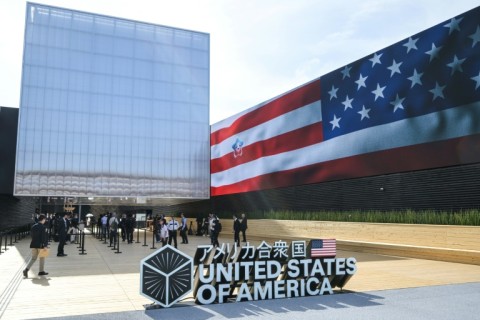
The US building has the theme "America the Beautiful", but with no mention of Trump's trade policies.
Instead it focuses on the country's landscapes, AI tech and space, including a simulated rocket launch where dry-ice blasters appear to ignite above visitors' heads.
The nearby Chinese pavilion, evoking a calligraphy scroll, focuses on green technology and lunar samples brought by the Chang'e-5 and Chang'e-6 probes.
Human washing machine
AFP | Richard A. Brooks
After enjoying the view and sea breeze atop the Grand Ring's "skywalk", hungry visitors can stop by the world's longest sushi conveyor belt or meet many-eyed Expo 2025 mascot Myaku-Myaku.
Among the more bizarre displays are 32 sculptures of Hello Kitty dressed as different types of algae -- to symbolise the plant's many uses -- and a "human washing machine" that shows imagery based on the bather's heart rate.
Elsewhere are demonstrations of drone-like flying vehicles, and the tiny artificial heart made from induced pluripotent stem cells (iPS) shown in public for the first time.
AFP | Nicholas SHEARMAN
"It has an actual pulse," Byron Russel of Pasona Group, which runs the exhibit, told AFP.
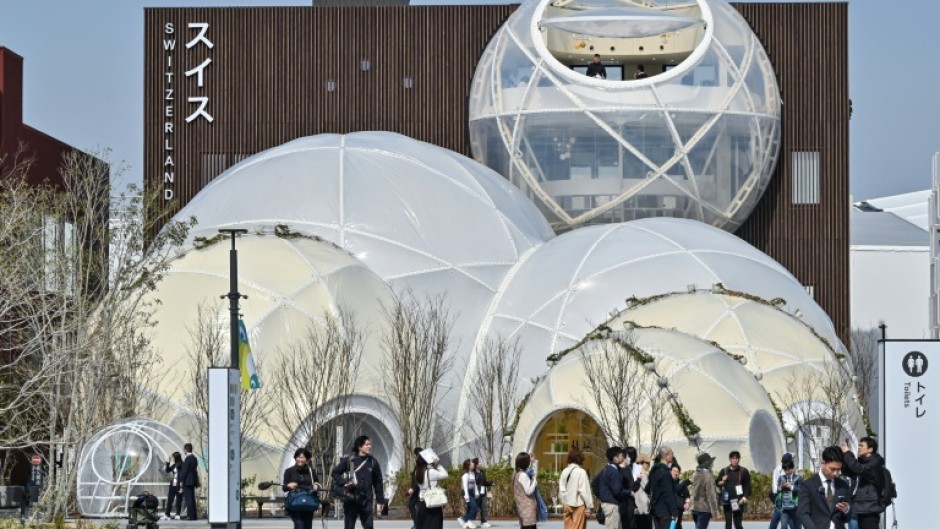
Themes of sustainability run through the Expo, including at the bauble-like Swiss pavilion, which aims to have the smallest ecological footprint.
But Expos have been criticised for their temporary nature, and after October Osaka's man-made island will be cleared to make way for a casino resort.
According to Japanese media, only 12.5 percent of the Grand Ring will be reused.
Slow ticket sales
Expo is also known as a World's Fair, and the phenomenon, which brought the Eiffel Tower to Paris, began with London's 1851 Crystal Palace exhibition and is held every five years.
AFP | Richard A. Brooks
The 2020 edition in Dubai was postponed by the Covid-19 pandemic, so Osaka Expo organisers say it will "restore much-needed connections" and "provide the opportunity to create a better tomorrow".
Osaka last hosted the Expo in 1970 when Japan was booming and its technology the envy of the world. It attracted 64 million people, a record until Shanghai in 2010.
But 55 years on, Japan is less of a trendsetter and opinion polls show low levels of enthusiasm among the public for the Expo, particularly after it went 27 percent over budget.
AFP | Richard A. Brooks
So far 8.7 million advance tickets have been shifted, below the pre-sales target of 14 million.
Japan is also experiencing a record tourism boom, meaning accommodation in Osaka -- near hotspot Kyoto -- is often fully booked with prices sky-high.
But early visitors at the venue voiced their excitement. Local resident Emiko Sakamoto, who also visited the region's last Expo more than five decades ago, was determined to return to the site repeatedly to see all the pavilions.
"I think the Expo is meaningful" in this chaotic time, she said. "People will think about peace after visiting the venue."By Natsuko Fukue And Caroline Gardin World Expo opens in Japan in rocky times
The Orchid Show India Blooms at Chicago Botanic Garden. PHOTO: CBG
The Chicago Botanic Garden is showcasing the beauty of India through “The Orchid Show: India Blooms” which starts February 8 and runs till March 23.
During those days, the Garden’s indoor galleries will be filled with more than 10,000 fresh, colorful blooms featured in displays that echo India’s diverse regions, landscapes, people, and cultures, a press release from the Chicago Botanic Garden says.
“We are honored to provide visitors with a glimpse into life and cultures in India, both past and present, as we celebrate orchids,” Jodi Zombolo, associate vice president, Visitor Events and Programs, is quoted saying. “The vibrancy and rich variety of orchid species found in India will be highlighted throughout the Show.”
In its eleventh year, the Show will include blooming displays inspired by national symbols and celebrations of India such as a floor-to-ceiling peacock, a towering banyan tree with cascading roots, and the vivid hues of Holi in bursts of colorful powders.
On Valentine’s Day, Fridays, and select Thursday evenings, Orchids After Hours is an additional way to experience a the Show at nighttime.
The Orchid Show India Blooms floor-to-ceiling peacock at Chicago Botanic Garden. PHOTO: CBG
The following events will take place during the Show:
Library Exhibition – Eye of the Artist: Rare Book Illustrations of India’s Flora – Saturday, February 8, through Sunday, March 23 (Wednesday – Sunday from noon to 4 p.m.)
This rare book exhibition in the Lenhardt Library features lovely botanical illustrations of India’s flora with works by both European and Indian botanical artists that showcases their distinctive artistic styles. Free library talks will be held on Friday, February 21 and Sunday, March 8 at 1 p.m.
Illinois Orchid Society Spring Show & Sale – Saturday, March 8, and Sunday, March 9 (10 a.m. to 4 p.m.)
Displays of orchids from the rarest of species to cultivated hybrids will be artistically arranged. Families can take part in orchid-based activities for children. Vendors will also be on-site to sell orchid plants and related products and Illinois Orchid Society members will offer repotting services.
Indian Community Marketplace – Saturday, March 22 and Sunday, March 23 (10 a.m. to 4 p.m.)
Meet and shop local small businesses selling Indian products, including spices, snacks, clothing, art, and home goods.
Post-Orchid Show Sale – Thursday, March 27 (9 a.m. to 4 p.m.)
This sale is an opportunity to take home favorite orchids from the Show. Early access from 9 a.m. to 2 p.m. is based on member level. All members and the public are welcome from 2 to 4 p.m., while supplies last. Please check our website and social media for updates; this event sells out quickly.
The Chicago Botanic Garden is renowned as a ‘living museum’ which aims to inspire Chicagoland and all people to connect with plants. For more information, visit chicagobotanic.org
Imagine a gathering so large it dwarfs any concert, festival, or sporting event you’ve ever seen. In the Kumbh Mela, a religious festival held in India, millions of Hindu pilgrims come together to bathe in rivers considered sacred.
This year more than 400 million people are expected to attend the Kumbh Mela in the city of Prayagraj across 48 days.
How do you manage a crowd of this magnitude, in which the challenges are as colossal as the event itself?
The Kumbh Mela’s significance
The 2025 Kumbh Mela officially kicked off yesterday. Already, millions of people have taken a bath at the Triveni Sangam, the confluence of India’s most sacred river, the Ganges, with the Yamuna River and the Saraswati River.
The Kumbh Mela is one of the most important religious festivals in Hinduism and the largest human gathering on Earth. It is held periodically at one of four sacred locations – Prayagraj (formerly Allahabad), Haridwar, Nashik, and Ujjain – on a rotational basis, depending on specific astrological alignments.
There are four types of Kumbh Melas. The festival that’s currently on, the Maha (great) Kumbh Mela, takes place every 12 years at Prayagraj, in the state of Uttar Pradesh. It holds the highest significance due to its rarity, scale and profound spiritual importance.
The event draws millions of devotees, ascetics and spiritual leaders who come to bathe in sacred rivers, a ritual believed to cleanse sins and grant liberation from the cycle of life and death.
The festivals’ origins are rooted in Hindu mythology, and specifically in the story of the Samudra Manthan, or the churning of the ocean of milk. According to this legend, gods and demons churned the ocean in search of the nectar of immortality (amrita). During this struggle, drops of the nectar fell at the four sites where Kumbh Mela events are now held.
A great pilgrimage brings great risks
Mass gatherings, regardless of their purpose, carry inherent health and safety risks. The sheer scale of these events makes overcrowding and crowd crushes a constant threat, even without other risk factors.
However, religious gatherings add yet another dimension of risk. The heightened emotions and urgency associated with such events can escalate the potential for disaster.
India, with its tradition of large-scale religious festivals, has tragically become a hotspot for crowd-related catastrophes. Nearly 70% of India’s deadly crowd disasters have happened during religious mass gatherings.
Reports of crowd disasters during the event date back as far as 1820, showing this challenge is far from new.
How has India prepared in 2025?
Indian authorities have implemented a range of measures to manage this year’s event in Prayagraj, using modern solutions and technology to tackle an age-old safety challenge.
A temporary tent city has been erected on the riverbanks in Prayagraj, with some 160,000 tents, 150,000 toilets and temporary hospitals.
Infrastructure upgrades include 98 “special trains” introduced to ensure smooth transport, along with centralised “war rooms” to monitor the operations.
Authorities have also installed 2,700 CCTV cameras across the grounds, all of which are integrated into an AI-powered surveillance system.
This setup enables the real-time monitoring of crowds, with AI used to analyse live feeds from thousands of fixed and drone cameras positioned across key festival zones, including entry points, bathing areas and congregation spaces.
Algorithms are used to measure the number of people in specific areas and provide information on crowd density. If density thresholds are exceeded, authorities are alerted and can respond on the ground, mitigating the risk of overcrowding and potential crushes.
For the first time, underwater drones are also being used to monitor the riverbeds of the Ganges and Yamuna.
Smaller gatherings remain a concern
The combination of massive, dense crowds, coupled with the deep devotion and excitement inherent in religious mass gathering, creates dynamics that are prone to safety risks.
These factors introduce a level of unpredictability to crowd behaviour, which can make said crowds difficult to manage.
While it’s reassuring Indian authorities have taken proactive measures to mitigate risks associated with the Kumbh Mela, risks persist in smaller religious gatherings across the country.
Smaller events, while they often lack media attention and resources, have proven just as prone to catastrophe as major ones.
The safety measures rolled out at this year’s Maha Kumbh Mela should serve as a blueprint for managing religious and cultural gatherings across India.
President of AAPI Dr. Satheesh Kathula, speaking at the Indian Consulate in NY, Sept. 29, 2024, curtain raiser and press meet to announce the Global Health Summit in India, and action plans of AAPI in US and India. PHOTO: Kripa Prasad, ITV Gold
The American Association of Physicians from India held a preparatory meeting Monday, September 29, 2024 at the Indian Consulate in New York to discuss the upcoming AAPI Global Healthcare Summit to be held in New Delhi October 19 and 20, 2024, and to discuss AAPI’s vision and action plan in the US and in India.
The press conference-cum-curtain raiser was led by Dr. Satheesh Kathula, president of AAPI, as well as Dr. Hetal Gor, trustee, and attended by other physician leaders including, and Padma Shri recipient Dr. Sudhir Parikh, a veteran AAPI senior advisor, and chairman of Parikh Worldwide Media/ITV Gold.
Dr. Satheesh Kathula, president of AAPI, and Dr. Hetal Gor, member, Board of Trustees of AAPI, provide details about the upcoming Global Health Summit in India, and AAPI’s action plan for initiatives in India and US, September 29, 2024, at the Indian Consulate in New York. PHOTO: ITV Gold
Dr. Kathula and Dr. Hetal Gor, briefed the media on AAPI’s ongoing activities in the United States and India, and noted that the upcoming summit aims to bring together healthcare professionals, policymakers, and industry leaders to address the prevention of cancer and heart attacks in the Indian population with lifestyle modification and technology.
Dr. Kathula gave details about AAPI’s 3 main initiatives in the US this year – 1. Stem Cell or Bone Marrow Drive; 2. Raising awareness about increased physical activity and honoring veterans simultaneously through the ‘Million Miles of Gratitude’ initiative; 3. Preventing heart attacks in the Indian American community.
Dr. Kathula thanked the media for attending and for providing support for several decades to AAPI, urging them “to help to get the message out, in reaching out to the general public here, the Indian diaspora and in India, especially for providing health education on preventive measures.”
Padma Shri recipient Dr. Sudhir Parikh gesturing as he speaks at the AAPI press meet, September 29, 2024, at the Indian Consulate in New York, as President of AAPI Dr. Satheesh Kathula looks on. PHOTO: Kripa Prasad, ITV Gold
Dr. Parikh offered the help of his media outlet, and gave additional recommendations for AAPI to initiate, maintaining that India’s needs in healthcare had changed over the decades.
Two or three decades ago, AAPI used to send Xray Machines and MRI Machines to India, but “Now India needs more than that. India needs an exchange program for the medical students,” Dr. Parikh said, as well as observers for the medical students. “AAPI can have some structured body that can provide observership to those students,” he recommended. Additionally, AAPI could organize exchange of the faculty from India and grow it into a global force. The Global Association of Physicians of Indian Origin, GAPIO, was trying something similar with faculty exchange which will provide the younger generation state of art education from the Western countries. Dr. Parikh assured AAPI of his full support as a doctor and as a media person.
AAPI has invited Prime Minister Narendra Modi and the President of India Droupadi Murmu as Guests of Honor at GHS 2024, as well as Health Minister J.P. Nadda.
AAPI leaders, President of AAPI Dr. Satheesh Kathula, and Padma Shri recipient Dr. Sudhir Parikh, with India’s Consul General in New York Binaya S. Pradhan, Sept. 29, 2024, during the curtain raiser for the Global Health Summit, and Leadership conference. PHOTO: ITV Gold
Earlier during the day, AAPI conducted an AAPI Leadership Retreat at the Indian Consulate in New York City, attended by Consul General Binaya S. Pradhan. The panel included several distinguished figures from various fields, including Dr. Sanjeev Kaul, Chief of Trauma; Sudeep Kapur, a magistrate; Manee Kamboji, owner of a highly successful IT company; Natalie McKenzie, a health and fitness coach and podcaster; Jyoti Soni, a catering and wedding planner with over three decades of experience in the culinary industry; and AAPI leaders.
AAPI leaders Dr. Satheesh Kathula, 3rd from left, and Dr. Hetal Gor, 3rd from right, and other attendees with India’s Consul General in New York Binaya S. Pradhan, 4th from left. PHOTO: ITV Gold
Consul General Pradhan, in his address highlighted his long association with AAPI since 2005. Highlighting the recent meetings India’s Prime Minister Narendra Modi had with top CEOs from the United States during his recent visit, Pradhan emphasized that India’s potential is “not only appreciated by the ordinary people of the United States, but even by the industry, and that’s probably the reason why all these industry entities are now present in India in a much bigger way. So it’s going to be leading to bigger investment back within India.”
Pradhan lauded the contributions of “a strong Indian association of Doctors, AAPI. We feel so lucky that we have their strong presence, of this fraternity in this country. And I’m sure, going forward, you are going to be an anchor. You will be bringing the relationship between India and the United States much closer, especially in the healthcare sector.”
AAPI leaders meet the press at the Indian Consulate in New York Sept. 29, 2024. PHOTO: Collage provided by AAPI
Pradhan told AAPI that “My expectation, my request has been that, this is the time for you to rethink about how you contribute back home in India. I know all of you, individually and collectively, do a lot of good work back home in India.”
A section of the audience at the Sept. 29, 2024, AAPI curtain raiser at the Indian Consulate to announce Global Health Summit in India, and action plans of the organization. PHOTO: Kripa Prasad, ITV GoldNoting that India’s economy is undergoing a massive transformation today. “The Indian people are not looking for help in meeting their basic needs, but would expect a strong association like yours to help them to touch their aspirations. You have access to the best of the medical technologies in this country. You can think about what you can do to touch the aspirations of the people, by using the technology, and reach a much larger number of people in India.” Indian American physicians announce Global Health Summit details, discuss action plan in US, India
When a three-day music festival was called off and the organizers declined to offer a refund to pass holders, a totally different festival decided to welcome them all for free.
Now in its 12th year, the Lucidity Festival was set to kick off in Santa Barbara, California this September. But citing “unforeseen last-minute changes in requirements” imposed by Santa Barbara County, the festival had to be canceled.
To make matters worse, the circumstances lead “to a postponement that we can not financially recover from,” and so organizers announced there would be no refunds for the passes.
To be fair, Lucidity Festival’s official policy is that passes can only be transferred from one holder to another, but refunds are never offered. While hundreds of derelict pass-holders are incensed and considering a class-action lawsuit, Lucidity has warned that if they can’t find a solution for a place to host the event by April next year, they will declare bankruptcy and end the festival for good.
The end of that saga, no one can yet predict, but a totally unaffiliated festival called Same Same But Different (SSBD) heard what was happening and decided to welcome all Lucidity pass holders free of charge as a gesture of goodwill.
“We know how challenging these times can be, especially when the festival experiences we all cherish don’t go as planned,” reads a statement released by SSBD. “It’s never easy when something you’ve been looking forward to doesn’t work out, and we understand how much time, energy, and anticipation went into planning for Lucidity.”
“Featuring a big lineup of electronic music artists the likes of Big Gigantic, Ganja White Night, and LSDREAM, SSBD is making it known that they are well-positioned to welcome thousands of Lucidity ticket-holders from September 27-29,” writes EDM.com.
“The enchanting festival will also feature sunrise-to-sunset DJ sets, a Vegas-inspired casino pop-up experience, yoga sessions, mindfulness workshops, and much more.”
At last weekend’s Malvern Autumn Festival in the UK, growers from across the Isles showed off the truly frightening proportions that vegetables can grow to, headlined by massive pumpkins brought in on a forklift.
4th place winner Tim Saint transported his whopping 667 lbs. pumpkin in a trailer to display at the event held over the weekend in England’s Worcestershire.
Even though he needed a pallet, trailer, and industrial strapping to move the thing, his was a small fry compared to Curtis Leach’s 1st prize-winning pumpkin that arrived at weights usually reserved for cars.
At 638 kilograms, or 1,373 lbs, the gargantuan gourd was 40 kilograms more than the second-place entry, but half as heavy as the current Guinness World Record for heaviest pumpkin, which was 2,700 pounds.
“I grew a 667 lbs. pumpkin this year which I’m delighted at,” said Mr. Saint. “I’ve been growing pumpkins for 20 years and that’s the biggest I’ve ever done It’s got to be over 3ft tall at least, I’m 6ft tall myself and it’s big.”
“The secret is just plenty of water and manure, plenty of cow manure especially,” added Mr. Saint, who did take 1st prize for largest beetroot. “It takes a lot of water, I normally give it five watering cans of water a day.”
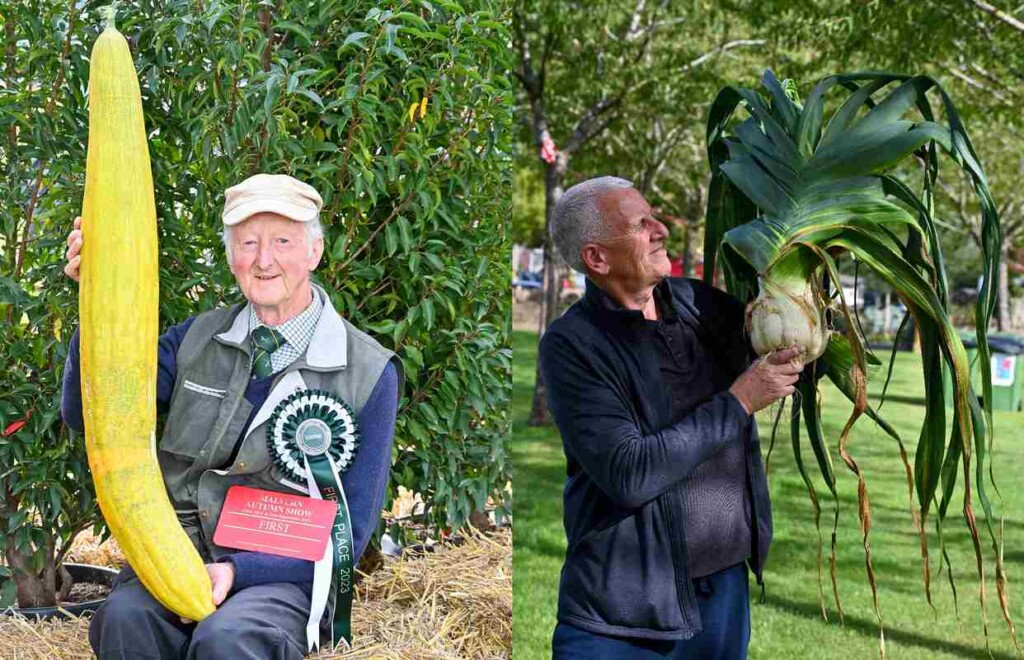
Peter Glazebrook with his 1st prize for the longest cucumber and David Robson with his 4th placed leak – via SWNS
Ian Stott with his cabbage – via SWNS
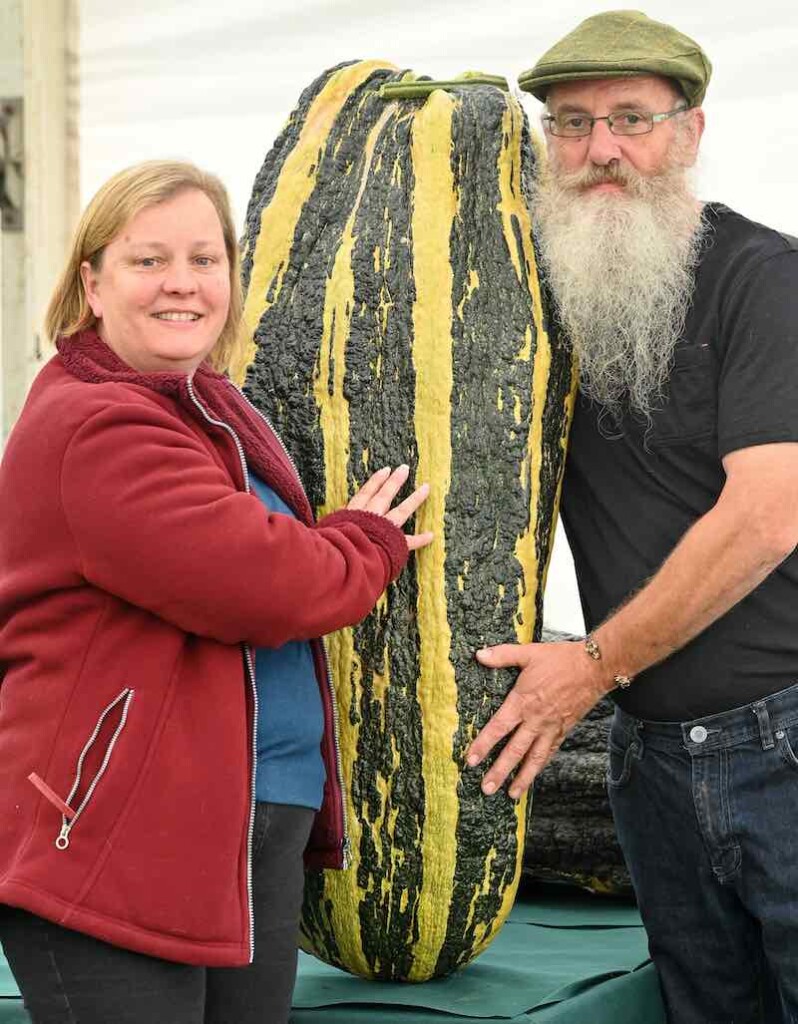
Lesley and Wayne Price from Hereford with their giant zucchini-like fruit known as a marrow – SWNS
One of the largest harvest festivals in the UK, there are 35 categories for giant or long vegetables, and this year 8 new world records were set, including for Largest Runner Bean Leaf, Heaviest Runner Bean, Tallest Tomatillo Plant, Longest Luffa, Heaviest Bell Pepper, Heaviest Cucumber, Heaviest Broad Bean, and Longest Broad Bean.
Ian Stott brought along a 49-pound cabbage which secured him second spot on the winner’s podium this year.
“It’s 22kg and about four-and-a-half feet wide,” he said proudly, adding that “it’s not been a good year for cabbages, it was so hot at the beginning of the season.”
“You’ve got to have the right seed and Mother Nature needs to be on your side… They weren’t that big this year. I’ve had them 6ft across and it’s a bit hard to not break leaves off him,” said Mr. Stott, who lost out on 1st prize to Annette Stone, who managed to break 54 pounds with her cabbage.
The Donalsonville/Seminole County Chamber of Commerce is pleased to announce that this year’s 2024 Harvest Festival featured entertainment is country artist Jason Michael Carroll. So, mark your calendar for Saturday, October 19th and make plans to tap your toes to the music and more in downtown Donalsonville.
Born in Houston, Texas and raised in Youngsville, North Carolina, Carroll has been adapting to the changing landscape in country music for almost two decades with no signs of slowing down.
Breaking out with success in 2006 thanks to the heart-wrenching ballad “Alyssa Lies”, Carroll followed that first chart-topping hit quickly with a flurry of hit songs that cemented his voice and his name among the elite performers from Nashville. Hits such as “Livin’ Our Love Song,” “I Can Sleep When I’m Dead,” “Where I’m From” and many others helped fuel a string of albums and sold out live shows. Couple that with an intense connection with his fans and you can see why Nashville calls Jason a triple-threat artist to be reckoned with: Singer. Songwriter. Entertainer.
Proud of his past success but always focused firmly on his next move, the country music star launched his first major independent release since 2016 with the new song “Pass It On Around” (Jan. 27, 2023). Delivered with powerful vocals accented at times by his signature growling lyrics and laser precision, “Pass It On Around” made Nashville once again turn and take notice of Carroll. Indeed, his best days still lie firmly ahead of him. He is so excited to bring his talent to Donalsonville!
In addition to the festival’s featured entertainment, the day’s festivities will kick off with the Rejoice Run & Mom’s Mile, the annual Harvest Festival parade, a performance from local Persnickety Studios, a fine arts show, a large variety of arts and crafts vendors, children’s activities, and local shopping with numerous downtown shops.
Paris (France), June 24 (IANS) An exhibition that celebrates the life and legacy of Pierre de Coubertin, the Founder of the Olympic Movement, and also commemorates 100 years of India’s presence at the Games, organised by the JSW Group to mark Olympic Day, was inaugurated on Sunday in Paris, the host city of 2024 Olympics.
The International Olympic Committee (IOC) President Thomas Bach and Ambassador of India, Jawed Ashraf were present at the event that celebrates the Olympic Movement and India’s Journey at the Games.
Chairperson of the JSW Foundation, Sangita Jindal, and founder of Inspire Institute of Sport, Parth Jindal were joined by Bach, Minister of Culture, Govt of France, Madame Rachida Dati, Ambassador of India to the Republic of France, Jawed Ashraf and the President of the Pierre de Coubertin Family Association, Alexandra de Navacelle to open the exhibition that is being hosted at the Town Hall of the 7th Arrondissement, Paris, and will go on till the end of the Paris 2024 Summer Paralympic Games in September.
Speaking on the occasion, Sangita Jindal, Chairperson of the JSW Foundation said, “JSW Group is pleased to support the curation of ‘100 Years of India at Olympics’ at the Genius of Sport exhibition in Paris. Through this unique exhibition, we celebrate the life and legacy of Pierre De Coubertin and 100 years of India’s remarkable Olympic journey and success.
"We share Pierre De Coubertin’s vision and belief that sport has the ability to change the world differently by transcending borders and bringing people together in the spirit of peace and friendship. The 2024 Olympics is an important milestone for JSW Group. We are proud to support this exhibition as well as Team India in Paris. Through these efforts we reiterate our commitment to foster and nurture the sporting culture and talent in India,” she said.
The exhibition, in association with the Pierre de Coubertin Family Association, comprises a detailed walkthrough of India’s Olympic journey over the last century, the success the country has enjoyed in the past, and its recent resurgence with an eye on the future.
Parth Jindal, Founder of the Inspire Institute of Sport said, “We are honoured to partner with the Pierre de Coubertin family for what we believe is a special showcase of the Olympic movement and the part India has played in it. We are on the cusp of the greatest sporting event in the world, and it was our desire at JSW Group to do something more in the city of Paris. As a country, we want to take forward the ideals of Pierre de Coubertin. We want the world to be a peaceful place, and the role that sport could play in that regard is enormous.
"It is our mission at JSW Sports to further the Olympic movement, not just in India, but in the world. The Inspire Institute of Sport will be represented by close to 30 athletes as part of Team India at the Games next month, and our effort is to keep increasing that number with every passing Olympic cycle. India’s rise as an economic power is evident. But it is through sport that a country’s soft power is truly showcased, and we will play our part in making this happen," he added.
IOC President, Thomas Bach said, “Thanks to this magnificent exhibition, the public will be able to discover and rediscover an astonishing and multi-faceted man and measure the extent of his work. France and the French people should be proud to have a compatriot like Pierre de Coubertin. A visionary whose message of a world united in peaceful competition through sport resonates even more strongly today.”Jawed Ashraf, Ambassador of India to the Republic of France, thanked the JSW Group for putting together the exhibition that will be on until September 10 and will be open to the public. Exhibition to commemorate India's 100 years at Olympic Games opens in Paris | MorungExpress | morungexpress.com
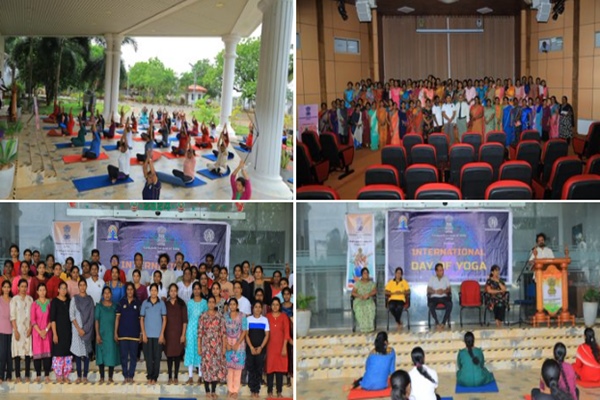
The Consulate General of India at Jaffna in Sri Lanka organised on Thursday a special workshop on Therapeutic Yoga for healthy life. The workshop was held at the Chief Secretary Auditorium in Jaffna. The event saw the participation of several dignitaries including Consul General of India, Sai Murali, as well as Chief Secretary, Northern Province, L. Ilaangovan among others.


.jpg)






.jpg)