Friday, 26 December 2025
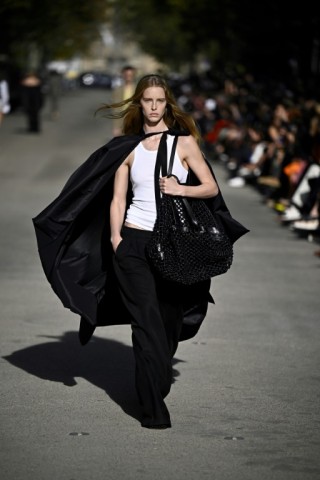
Gender-neutral clothing challenging societal norms
Tuesday, 18 November 2025
Ananya Panday tells why her ‘fashion dream' was 'filled with emotion’
Wednesday, 2 July 2025
Kim Kardashian stuns at 2025 Met Gala
.jpg)
Wednesday, 19 February 2025
A brief look at the long history of First Nations fashion design in Australia
Treena Clark, University of Technology Sydney
Aboriginal and Torres Strait Islander readers are advised this article contains names and images of deceased people, and links to old newspaper stories and research papers using outdated and potentially offensive terminology.
The ABC’s series The Way We Wore takes a look at stories of Australian fashion design and style.
First Nations people participated in the series and spoke about various periods and tales, looking at forced clothing policies during the Stolen Generation period, the contribution of Flinders Ranges/Adnyamathanha knowledge to the creation of the RM Williams iconic boot, and the emergence of First Nations fashion design from the 1970s and at Parisian fashion shows in the 1980s.
Yet, left out from the show was the rich backstory of our First Nations fashion design industry.
Prior to Parisian fashion shows, First Nations people showcased handmade clothing and accessories at 1800s international and national exhibitions, often as unpaid labour.
Earlier still, the making and crafting of animal and plant cloaks, skirts, belts, shoes and accessories were the original fashion designs.
Traditional clothing and adornment
Climates, materials and stories guided traditional fashion design.
Items were crafted from natural materials that eventually returned to the environment.
Footwear was made from animal skins, furs, and feathers, human hair and bark.
Cloaks were made from animal skin and plants, often inscribed with designs that reflected a person’s identity.
Intricate jewellery and accessories included head ornaments, necklaces, mourning caps, belts and bags, some made from highly traded pearl shells and rare seashells.
Today, we are seeing a resurgence around the country of these adornments and the role they play in healing, wellbeing and cultural practice.
Showcasing at trades and exhibitions
First Nations women and girls who lived on reserves, missions and schools were forced to learn sewing and many produced goods including hats, bags, baskets, jewellery and rugs.
These items were crafted from cultural or Western methods, using both traditional or introduced materials.
From the mid-1800s, their work was often produced for various tourist trades and national and international exhibitions.
One Melbourne CBD shop stocked woven baskets and bags from Victoria’s Coranderrk Reserve.
Sydney’s La Perouse Mission sold shell baskets in the city and later exhibited them at the Sydney Royal Easter Show and in London.
At the 1888 Melbourne Exhibition, the Queensland section presented pearl jewellery from Thursday Island and the Torres Strait.
While some of the women and girls from these institutions received pay for their work, many did not.
Emergence of fashion within the craft industry
From the 1930s, non-Indigenous textile artists and fashion designers started producing First Nations-inspired designs using motifs such as boomerangs, shields and “hunting stick figures”, without the permission or input from First Nations artists.
Partly in response to this popularity, craft centres within the missions and reserves established their own industry and several hired First Nations people to design cultural textiles and fashions.
Some of this early work in the 1940s included bags with traditional weaving styles, practical linens with cultural designs and unique Ernabella scarves.
As the newspaper The Sun reported from the Mount Margaret Mission in 1941:
One of the most interesting exhibits in the exhibition of Aboriginal handicrafts and school children’s work at the Y.W.C.A. to-day is a bag woven from wool in a native stitch. It has been adapted from old aboriginal work which is usually seen only in tribal grass weaving.
Children’s work from these institutions were often exhibited in Australia and internationally. There was particular overseas interest in turning art from the Carrolup Native settlement onto textiles for fashion garments.
The business of First Nations textiles and fashion
Economic and cultural autonomy became more attainable for First Nations people from the 1950s.
Bill Onus produced cultural furnishing fabrics with non-Indigenous artist Paula Kerry for his Melbourne Aboriginal Enterprises store.
First Nations women from the Coffs Harbour area started mass-producing fashions for the tourist trade using non-Indigenous designs in the mid-1960s.
By the late 1960s, First Nations designed textiles became a fully-fledged fashion industry.
In 1969, Tiwi Island clothing production and textiles had launched through Bima Wear and Tiwi Designs.
A few years later, other arts centres started crafting textiles for fashion designs.
Throughout the 1970s, fashion shows paraded these textiles and some First Nations people wore the designs at formal events.
Bronwyn Bancroft, the owner of the Sydney store Designer Aboriginals, and Euphemia Bostock and Mini Heath presented their garments at the Parisian Au Printemps Department Store in 1987.
The 21st Century and beyond
By the start of the new millennium, Robyn Caughlan, in collaboration with Benjamin Mach, was the first Indigenous designer to contribute to a fashion collection at Australian Fashion Week.
Two decades later at Australian Fashion Week 2023, Denni Francisco’s brand Ngali was the first Indigenous label to present a standalone collection.
Today, many First Nations labels promote their designs internationally in Paris, Milan, London, and New York. There are now several First Nations fashion bodies to support them in the industry.
These bodies connect with national and international fashion weeks and art fairs, and have insight into cultural appropriation and Intellectual Property Rights.
For First Nations people, fashion and style are significant channels through which culture, identity, healing and social change can be communicated and practised.
Learning about the foundation of First Nations fashion design is vital to understanding Australian history and advocating connection, wellbeing, expression and sustainability.![]()
Treena Clark, Chancellor’s Postdoctoral Indigenous Research Fellow, Faculty of Design, Architecture and Building, University of Technology Sydney
This article is republished from The Conversation under a Creative Commons license. Read the original article.
Friday, 14 February 2025
New Prada-designed spacesuit is a small step for astronaut style, but could be a giant leap for sustainable fashion
For its recent Spring/Summer 2025 show, fashion brand Diesel filled a runway with mounds of denim offcuts, making a spectacle of its efforts to reduce waste.
Haunting yet poetic, the “forgotten” byproducts of fashion production were reclaimed and repurposed into something artful. But the irony isn’t lost, given fashion shows like this one demand significant resources.
Diesel’s event is an example of a growing trend towards the “spectacle of sustainability”, wherein performative displays are prioritised over the deeper, structural changes needed to address environmental issues.
Can the fashion industry reconcile its tendency towards spectacle with its environmental responsibilities? The recent spacesuit collaboration between Prada and Axiom Space is one refreshing example of how it can, by leaning into innovation that seeks to advance fashion technology and rewrite fashion norms.
Performance art instead of substantive change
The fashion industry has always relied on some form of spectacle to continue the fashion cycle. Fashion shows mix art, performance and design to create powerful experiences that will grab people’s attention and set the tone for what’s “in”. Promotional material from these shows is shared widely, helping cement new trends.
However, the spectacle of fashion isn’t helpful for communicating the complexity of sustainability. Fashion events tend to focus on surface-level ideas, while ignoring deeper systemic problems such as the popularity of fast fashion, people’s buying habits, and working conditions in garment factories. These problems are connected, so addressing one requires addressing the others.
It’s much easier to host a flashy event that inevitably feeds the problem it purports to fix. International fashion events have a large carbon footprint. This is partly due to how many people they move around the world, as well as their promotion of consumption (whereas sustainability requires buying less).
The pandemic helped deliver some solutions to this problem by forcing fashion shows to go digital. Brands such as Balenciaga, the Congolese brand Hanifa and many more took part in virtual fashion shows with animated avatars – and many pointed to this as a possible solution to the industry’s sustainability issue.
But the industry has now largely returned to live fashion shows. Virtual presentations have been relegated to their own sectors within fashion communication, while live events take centre stage.Many brands, including Prada, held fashion shows without guests during lockdowns in 2021.
Towards a sustainable fashion future
Technology and innovation clearly have a role to play in helping make fashion more sustainable. The recent Prada-Axiom spacesuit collaboration brings this into focus in a new way.
The AxEMU (Axiom Extravehicular Mobility Unit) suits will be worn by Artemis III crew members during NASA’s planned 2026 mission to the Moon. The suits have been made using long-lasting and high-performance materials that are designed to withstand the extreme conditions of space.
By joining this collaboration, Prada, known for its high fashion, is shifting into a highly symbolic arena of technological advancement. This will likely help position it at the forefront of sustainability and technology discussions – at least in the minds of consumers.
Prada itself has varying levels of compliance when it comes to meeting sustainability goals. The Standard Ethics Ratings has listed it as “sustainable”, while sustainability scoring site Good on You rated it as “not good enough” – citing a need for improved transparency and better hazardous chemical use.
Recently, the brand has been working on making recycled textiles such as nylon fabrics (nylon is a part of the brand DNA) from fishing nets and plastic bottles. It also launched a high-fashion jewellery line made of recycled gold.
Innovating for a changing world
Prada’s partnership with Axiom signifies a milestone in fashion’s ability to impact on high-tech industries. Beyond boosting Prada’s image, such innovations can also lead to more sustainable fashions.
For instance, advanced materials created for spacesuits could eventually be adapted into everyday heat-resistant clothing. This will become increasingly important in the context of climate change, especially in regions already struggling with drought and heatwaves. The IPCC warns that if global temperatures rise by 1.5°C above pre-industrial levels, twice as many mega-cities are likely to become heat-stressed.
New innovations are trying to help consumers stay cool despite rising temperatures. Nike’s Aerogami is a performance apparel technology that supposedly increases breathability. Researchers from MIT have also designed garment vents that open and close when they sense sweat to create airflow.
Similarly, researchers from Zhengzhou University and the University of South Australia have created a fabric that reflects sunlight and releases heat to help reduce body temperatures. These kinds of cooling textiles (which could also be used in architecture) could help reduce the need for air conditioning.
One future challenge lies in driving demand for these innovations by making them seem fashionable and “cool”. Collaborations like the one between Prada and Axiom are helpful on this front. A space suit – an item typically seen as a functional, long-lasting piece of engineering – becomes something more with Prada’s name on it.
The collaboration also points to a broader potential for brands to use large attention-grabbing projects to convey their sustainability credentials. In this way they can combine spectacle with sustainability. The key will be in making sure one doesn’t come at the expense of the other.![]()
Alyssa Choat, Lecturer in Fashion and Textiles Design, University of Technology Sydney
This article is republished from The Conversation under a Creative Commons license. Read the original article.
Wednesday, 27 November 2024
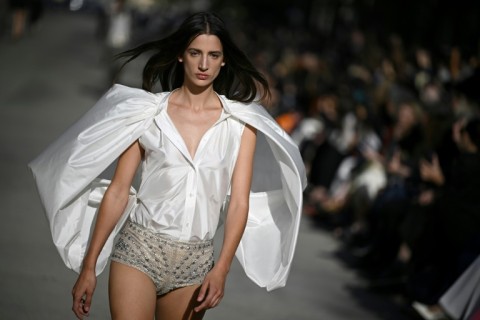
Stella McCartney turns fashion show into green tech marketplace


Friday, 16 August 2024
Global beauty trends: Understanding consumer choices
Thursday, 16 May 2024
'Miss India' Sini Shetty turns showstopper for Mayana Rajani's 'Etoile'
Thursday, 21 September 2023
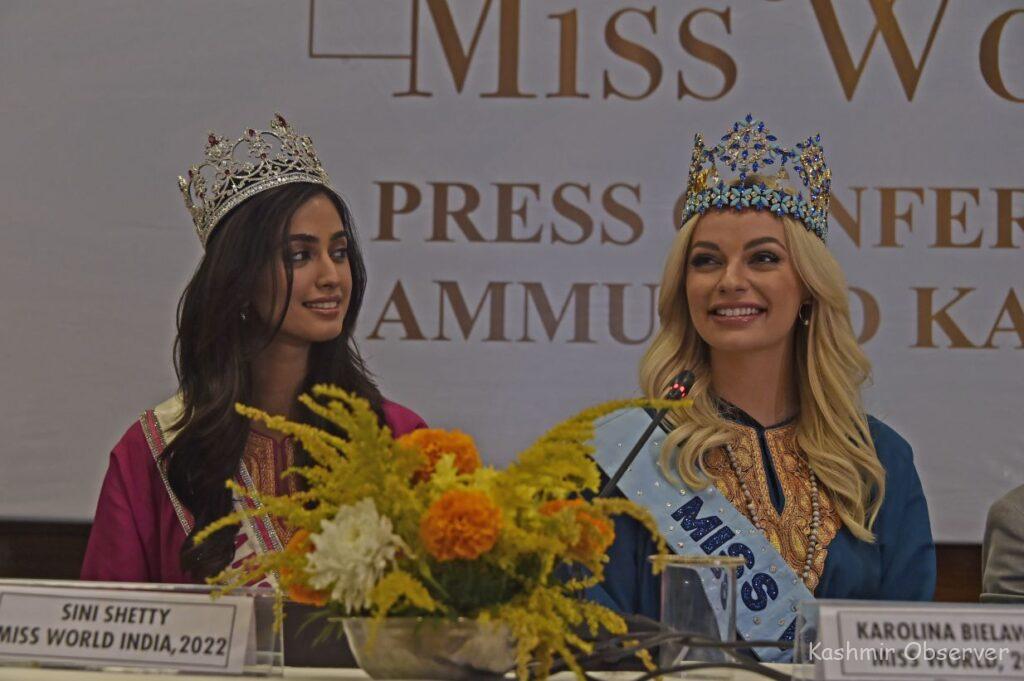
Miss World 2023 to be held in Kashmir

Sunday, 3 September 2023
In a Barbie world … after the movie frenzy fades, how do we avoid tonnes of Barbie dolls going to landfill?
Alan Pears, Senior Industry Fellow, RMIT University This article is republished from The Conversation under a Creative Commons license. Read the original article.Sunday, 26 July 2020
Khadi denim the new style from KVIC
Friday, 29 April 2016
The changing wardrobe of Indian brides

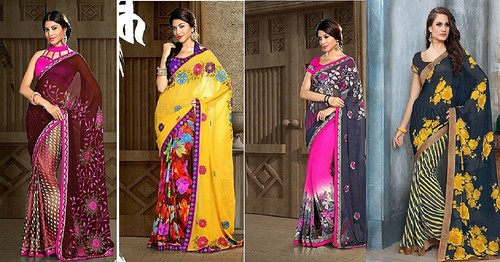
By Gautam Gupta: Wedding season is almost around the corner and the couples to be are already on the prowl for their perfect attires. And it may not be strictly a lehenga, Manish Malhotra notwithstanding. Lately, brides to be are showing a growing penchant for gowns. Sure, the status of a lehenga or a sari is unbeatable, but brides are trying out new variations in their dressing, not just focusing on their mother-in-laws and embellished attires. This has opened the floor for international designers and their floor sweeping dressing and ball gowns, made to size. So, either you’re a no fuss bride or a destination bride, remember there’s not only one way to the altar these days. Let’s look at a few possible scenarios... The setting is a resplendent garden and a free spirited bride is all set to entertain a classy evening party where the candles are lit and the air smells just as pretty as her fragrance. The bride dons a sculptural ballgown, but as the evening passes by, she is seen walking barefoot on grass, letting her hair down with a glass of wine in her hand. Yes, you can find such a bride in India too. You may spot an understated bride at the wedding brunch at her simple best. Her sartorial picks are tinged with playfulness: say a monochromatic palette with gushing ruffles and glints of silver, to play just right. With themed based cocktail parties being the rage, quite naturally neo-Gatsby brides have become the order of the day: wearing a black dress — yes, a black — with layered sheer sleeves and glittery gold paillettes. And guess what, an Indian bride these days does not hesitate to forego jewellery on that memorable evening. Scenario number two: the wanna be Bollywood siren who makes heads turn as she sashays into the hall with utter sophistication and grace. The romantic bride might go for a corset and a chic gown with elongated ruffles. Providing brownie points are those lustrous waves and wine-hued lips. At her elegant dinner do, she displays her fabulous taste and choices. Embracing the dark side of the moon in colours of navy, indigo or even cobalt, she focuses more on sobre tone jazzing it up with sequins and embroidery. Everybody wants a destination wedding now and it might include even a party by the pool. Be it when the moon rises or till the moon rises, a great party to remember with her friends is a must. A 90’s slip dress silhouette, dazzling gold hue makes making it an icing on the cake. The brides to be are now fierce and becoming more daring. Four decades ago, the society hardly thought about the extravagant wedding events that has now become a trend, even a compulsion for some. No one is complaining, especially not the business players or retailers. No, not even the lehenga peddlers. For they know that the traditional Indian market will never disappoint them. As far as bridal wear is concerned, the more the merrier. (The writer is a Delhi-based fashion designer) Source: mydigitalfc.com, Image: flickr.com
Friday, 20 November 2015
Sushmita Sen, a 'Sen-sation' at 40
Sunday, 23 August 2015
Siberian beauty Elmira Abdrazakova, 18, is crowned Miss Russia
Wednesday, 22 April 2015
K-Beauty Goes Global
Backed by the strong Korean Wave fever, Korea’s cosmetics brands are actively expanding their presence in overseas markets. Korea’s cosmetics outlets expand from Chinese countries toward North America, Europe, the Middle East, and Central Asia. In addition to major brands such as AmorePacific and LG Life Sciences, mid-sized local brands, including Missha and TonyMoly, are riding high on the K-Beauty fever. After years of suffering deficits, the nation’s cosmetics trade turned profitable last year, first in history. Korea’s cosmetics exports amounted to US$1.92 billion last year, up more than 50 percent from a year ago, exceeding the amount of imports ($1.69 billion). The upturn in Korea’s cosmetics trade was driven not only by major brands but by smaller brands, including Able C&C’s Missha. Missha launched its cosmetics product lines, including the First Treatment Essence, into 29 countries. In recent days, Missha is expanding its presence in East Europe where it achieved sales of $4.55 million last year, up 38.5 percent from a year ago. Source: The Korea Economic Daily. Source: Article
Tuesday, 31 March 2015
Lack of quality spaces, high rental deter luxe labels’ India plans
Friday, 5 December 2014
30th IAF Convention focuses on challenges of the fashion system

Tuesday, 2 December 2014
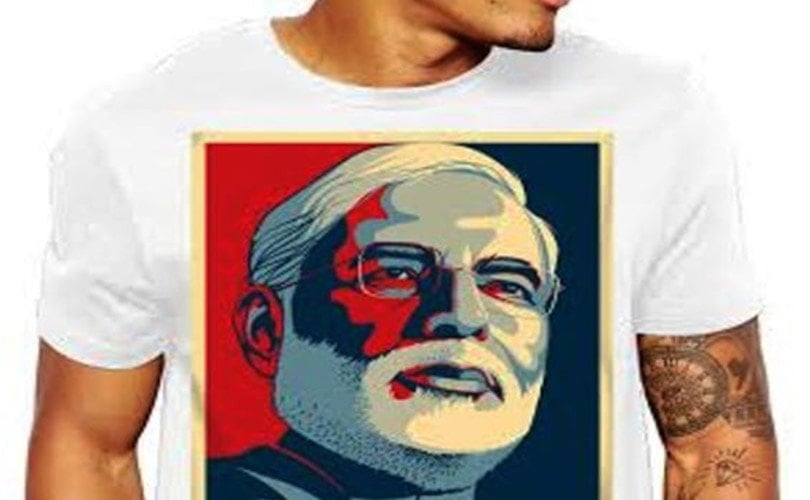
Tantra introduces 'Modi' series T-shirts