Just when we thought it was safe to return to the supermarket aisle, it seems inflation has come back to bite us again. Worse, the Reserve Bank of Australia (RBA) predicts it will linger for longer than previously expected, adding to cost-of-living concerns.
So, what is inflation, and what causes it? Do we have to worry about inflation? And if so, what are the options for getting it back under control?
What is inflation and how is it measured?
Inflation is a sustained rise in the general level of prices for goods and services purchased by households.
The CPI consists of a basket of goods and services consumed by the typical household. Each month, the Bureau of Statistics calculates the price changes of items in the CPI basket from the previous month, and combines them to work out the inflation rate for the entire basket.
For example, if milk increased during the month by 2% and haircuts by 5%, then the overall inflation rate would include those two price rises based on the item’s weight in the CPI basket.
Each item’s weight in the CPI basket reflects the proportion of a household’s total spending on that item. For example, housing (21%) is the largest category, followed by food and non-alcoholic beverages (17%), recreation and culture (13%, including holiday travel) and transport (11%, including petrol). Communications (2%) is the smallest category.
What causes inflation?
Inflation results mainly from the interplay between demand and supply of goods and services in the economy. Other influences include the level of the Australian dollar, and household and business beliefs about the future path of inflation.
If demand outpaces supply, this excess demand puts upward pressure on prices. This is known as “demand-pull” inflation and is the cause of Australia’s current inflation problem. Inflationary pressures ease when the opposite occurs, which is why inflation falls during recessions.
In contrast, “cost-push” inflation happens when it becomes harder or more expensive to produce goods and services, so supply falls relative to demand. This happened during and after the COVID pandemic, when shipping and other bottlenecks delayed the arrival of goods, causing inflation to spike.
Why worry about inflation?
Inflation is a concern because it erodes living standards. If your wages don’t keep up with inflation, your purchasing power will be diminished. It’s worse for people on low or fixed incomes such as pensioners.
This causes people to devote time and resources to coping with rising prices rather than developing new products or services that create real value.
Inflation also penalises savers by reducing the value of their savings, while benefiting borrowers who repay debts with money worth less than when they borrowed it.
If left unchecked, inflation can be very costly to get back under control, as Turkey’s experience with inflation above 30% shows.
If inflation causes problems, why not aim for zero inflation? While it would be nice for prices to stay constant, achieving zero inflation is not ideal either.
For starters, the CPI as a measure of inflation is imprecise. It has some biases, meaning a small positive number is probably close to zero anyway. Some modest inflation is needed and is a sign of a growing economy.
What is the best way to manage inflation?
The RBA is responsible for dealing with inflation. It does so by raising or lowering the official cash rate, which changes the interest rates we all pay. That flows through to borrowing costs across the economy for households and businesses, and thus influences demand.
But interest rates are a blunt instrument for managing inflation because they affect the whole economy and not just the source of inflation. And interest rates can’t deal with cost-push inflation either.
As a result, some commentators question the effectiveness of using interest rates as a tool for tackling inflation in Australia.
changing the rate of the Goods and Services Tax (GST)
changing the rate of compulsory superannuation contributions.
Both suggestions might be effective in controlling total demand through changing the spending decisions of households. They would have little impact on businesses.
However, since both options would require changes to legislation, the process would require political agreement and could take years to pass. In contrast, changes in interest rates start flowing through to the economy in a matter of days.
More importantly, these alternative options only affect demand and consequently inflation via household spending or the “cash-flow” channel.
In comparison, interest rates affect demand through two other channels, which research by the RBA suggests are more important. These include the wealth channel (mainly house prices) and the exchange rate. Both channels would be lost under the alternative options.
Is there anything the government can do?
Unfortunately, there is no easy fix for Australia’s current inflation problem. The federal government does have a role to play though. In the short term, it could implement policies such as tax hikes or curbing government spending, which seem to be on the agenda for the federal budget in May.
Longer-term, the key to fixing Australia’s inflation problem is by boosting productivity, which has stalled in recent years.
Here the government could implement policies to bolster the supply-side of the economy via deregulation, invest in education and infrastructure, and encourage business growth to boost production capacity.
This would lift the economy’s “speed limit” so it can grow faster without stoking inflation. But this will take time.
Central Bank Governor Larry Howai (second from right) attends the G-24 meeting in Washington DC, on October 14. Photo courtesy Central Bank. -
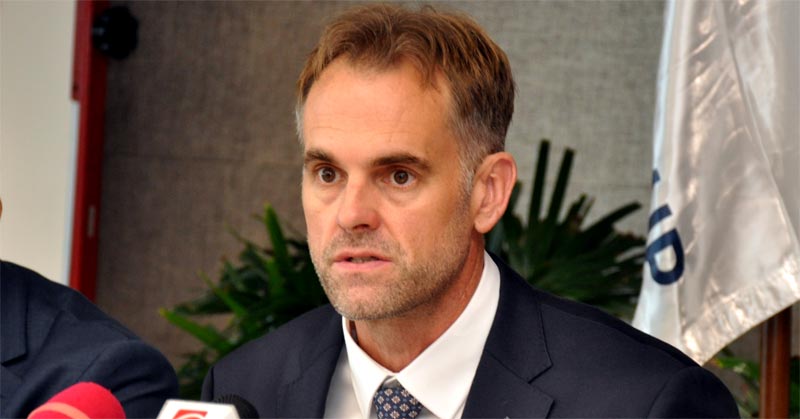
Central Bank Governor Larry Howai is in Washington, DC, to attend the 2025 annual meetings of the World Bank Group, International Monetary Fund (IMF) and Inter-Governmental Group of Twenty Four on International Monetary Affairs and Development (G-24).
The meetings are taking place from October 13 to 18.
Howai is leading the TT delegation, which includes Delvin Cox, advisor to executive director, World Bank Group; Kimberly Roberts, TT's IMF representative; Zarah Mohammed, manager, debt management; and Stephanie Toolsie, assistant manager, debt management, Ministry of Finance.
In his address to the G-24 group on October 14, Howai called for concerted international action to roll back tariff and non-tariff barriers that distort trade and disproportionately affect developing economies."Restoring confidence in a fair and transparent multilateral trading system is essential to revitalising global demand, encouraging investment, and supporting diversification in all regions," Howai added. Howai heads delegation at World Bank, IMF meeting - Trinidad and Tobago Newsday
Financing comes from repurposing existing projects funded by World Bank
The World Bank Group yesterday said that it was making up to $ 120 million in emergency support available by repurposing funds from ongoing projects by request of the Sri Lankan Government to deal with the aftermath of Ditwah.
It said that this will support recovery and help restore essential services and infrastructure, including healthcare, water, education, agriculture, and connectivity, in the areas hit hardest by the cyclone.
The International Finance Corporation (IFC), the private sector arm of the World Bank Group, will continue to strengthen the private sector by providing advisory support and strategic investments in key sectors such as agriculture and manufacturing and logistics, including support to micro, small and medium enterprises (MSMEs) to create jobs and drive economic recovery.
Issuing a statement, the World Bank Group said it was deeply saddened by the devastation caused by Cyclone Ditwah in Sri Lanka. “Our thoughts are with the people who have lost loved ones, homes, and livelihoods, and with the communities now facing immense hardship. We commend the remarkable resilience shown by Sri Lankans in the face of this disaster and the Government’s swift action to save lives and launch recovery efforts.”
To guide recovery efforts, a Global Rapid Post-Disaster Damage Estimation (GRADE) assessment is already underway in partnership with the Global Facility for Disaster Risk Reduction (GFDRR). This rapid assessment will provide credible estimates of disaster impacts to inform early decisions and help target response and recovery efforts.
The World Bank is also working closely with the Government as it plans the broader recovery, including the creation of the new ‘Rebuilding Sri Lanka’ Fund and the next phase of post-disaster needs assessments.
World Bank Group Country Manager for Sri Lanka and Maldives Gevorg Sargsyan said: “Our hearts go out to every Sri Lankan affected by Cyclone Ditwah. We are inspired by how communities across the country have come together to support each other during this difficult time. The World Bank Group is committed to helping Sri Lanka restore livelihoods, accelerate economic recovery, and rebuild stronger, safer, and more resilient communities.”
Looking ahead, the World Bank Group said it stands ready to work with the Government to mobilise additional resources based on the findings of the GRADE assessment and the financing requirements for recovery and resilient reconstruction. It said adjustments would also be made to future programs to accommodate the impacts of the crisis.
The World Bank Group reiterated its commitment to ensuring that assistance reaches those most in need in a timely, transparent, and effective manner. It said robust oversight mechanisms are being put in place in collaboration with implementing agencies and local authorities, while coordination with development partners will continue to maximise the impact of collective efforts and support Sri Lanka’s long-term recovery and rebuilding. World Bank to provide $ 120 m for emergency post-Ditwah spending | Daily FT
New Delhi, (IANS): HSBC India on Thursday announced the launch of its 'Innovation Banking' in India, which offers banking and financing solutions to support entrepreneurial businesses throughout their lifecycle, from seed to IPO, as well as their investors.
The bank plans to allocate $1 billion in non-dilutive debt capital to support Indian startups. The funding targets growth companies in early- to late-stage growth companies to scale their operations without diluting equity, helping founders and investors to retain greater control over their businesses, a release from the bank said.
HSBC India said that it already has a substantial balance sheet allocation for fund financing across venture capital and domestic private equity funds. With the launch of Innovation Banking, the bank aims to expand this offering, encompassing a broader range of funds and propositions, the release said.
The bank announced that its launch in India expands its global Innovation Banking platform, providing tailored financing and connectivity through over 900 experts worldwide.
David Sabow, Global Head of HSBC Innovation Banking, said that the $1 billion allocation signals a long-term commitment to India's innovation economy, job creation, and skills development.
“With the launch of HSBC Innovation Banking in India, we are deepening our support for the vibrant startup ecosystem, where we have a proven track record of partnering with clients on their growth journeys,” said Ajay Sharma, Head of Banking, HSBC India.
Through the combined strength of our global connectivity and significant venture network, HSBC Innovation Banking is well placed to support Indian startups to scale internationally and access new markets, he added.As India is the fastest-growing major economy and a tech and talent hub, Indian start-ups are expected to contribute $1 trillion to the domestic economy and generate 50 million new jobs by 2030, HSBC India said. HSBC launches Innovation Banking in India, allocates $1 billion to support startups | MorungExpress | morungexpress.com
This is the second in a two-part series. Read part one here.
Globalisation has always had its critics – but until recently, they have come mainly from the left rather than the right.
In the wake of the second world war, as the world economy grew rapidly under US dominance, many on the left argued that the gains of globalisation were unequally distributed, increasing inequality in rich countries while forcing poorer countries to implement free-market policies such as opening up their financial markets, privatising their state industries and rejecting expansionary fiscal policies in favour of debt repayment – all of which mainly benefited US corporations and banks.
This was not a new concern. Back in 1841, German economist Friedrich List had argued that free trade was designed to keep Britain’s global dominance from being challenged, suggesting:
When anyone has obtained the summit of greatness, he kicks away the ladder by which he climbs up, in order to deprive others of the means of climbing up after him.
By the 1990s, critics of the US vision of a global world order such as the Nobel-winning economist Joseph Stiglitz argued that globalisation in its current form benefited the US at the expense of developing countries and workers – while author and activist Naomi Klein focused on the negative environmental and cultural consequences of the global expansion of multinational companies.
Mass left-led demonstrations broke out, disrupting global economic meetings including, most famously, the World Trade Organization (WTO) in 1999. During this “battle of Seattle”, violent exchanges between protesters and police prevented the launch of a new world trade round that had been backed by then US president, Bill Clinton. For a while, the mass mobilisation of a coalition of trade unionists, environmentalists and anti-capitalist protesters seemed set to challenge the path towards further globalisation – with anti-capitalism “Occupy” protests spreading around the world in the wake of the 2008 financial crash.
A documentary about the 1999 ‘batte of Seattle’, directed by Jill Friedberg and Rick Rowley.
In the US, a further critique of globalisation centred on its domestic consequences for American workers – namely, job losses and lower pay – and led to calls for greater protectionism. Although initially led by trade unions and some Democratic politicians, this critique gradually gained purchase in radical right circles who opposed giving any role to international organisations like the WTO, on the grounds that they impinged on American sovereignty. According to this view, only by stopping foreign competition whose low wages undercut American workers could prosperity be restored. Immigration was another target.
Under Donald Trump’s second term as US president, these criticisms have been transformed into radical, deeply disruptive economic and social policies – with tariffs and protectionism at their heart. In so doing, Trump – despite all his grandstanding on the world stage – has confirmed what has long been clear to close observers of US politics and business: that the American century of global dominance, with the dollar as unrivalled no.1 currency, is drawing rapidly to a close.
Even before Trump first took office in 2017, the US had begun to withdraw from its leadership role in international economic institutions such as the WTO. Now, the strongest part of its economy, the hi-tech sector, is under intense pressure from China, whose economy is already bigger than the US’s by one key measure of GDP. Meanwhile, the majority of US citizens are facing stagnant incomes, higher prices and more insecure jobs.
In previous centuries, when first France and then Great Britain reached the end of their eras of world domination, these transitions had painful impacts beyond their borders. This time, with the global economy more closely integrated than ever before and no single dominant power waiting in the wings to take over, the impacts could be felt even more widely – with very damaging, if not catastrophic, results.
Why no one is ready to take the US’s place
When it comes to taking over from the US as the world’s leading hegemonic power, the only viable candidates with big enough economies are the European Union and China. But there are strong reasons to doubt that either could take on this role – notwithstanding the fact that in 2022, then US president Joe Biden’s National Security Strategy called China: “The only competitor with both the intent to reshape the international order and, increasingly, the economic, diplomatic, military and technological power to do so.”
At times Biden’s successor, President Trump, has sounded almost jealous of the control China’s leaders exert over their national economy, and the fact they do not face elections and limits on their terms in office. But a one-party, authoritarian political system which lacks legal checks and balances is a key reason China will find it hard to gain the cultural and political dominance among democratic nations that is part of achieving world no.1 status – despite the influence it already wields in large parts of Asia and Africa.
China still faces big economic challenges too. While it is already the global leader in manufactured goods (rapidly moving into hi-tech products) and the world’s largest exporter, its economy is still very unbalanced – with a much smaller consumer sector, a weak property market, many inefficient state industries that are highly indebted, and a relatively small financial sector restricted by state ownership. Nor does China possess a global currency, despite its (limited) attempts to make the renminbi a truly international currency.
The Insights section is committed to high-quality longform journalism. Our editors work with academics from many different backgrounds who are tackling a wide range of societal and scientific challenges.
As I found on a reporting trip to Shanghai in 2007 to investigate the effects of globalisation, there are also enormous differences between China’s prosperous coastal megacities – whose main thoroughfares rival New York and Paris – and the relative poverty in the interior, especially in rural areas. But nearly two decades on from that visit, with the country’s growth rate slowing, many university-educated young people are also finding it hard to find well-paid jobs now.
Meanwhile Europe – the only other contender to take the US’s place as global no.1 – is deeply politically divided, with smaller, weaker economies to the east and south far more sceptical about the benefits of globalisation, and increasingly divided on issues such as migration and the Ukraine war. The challenges of achieving broad policy agreement among all member states, and the problem of who can speak for Europe, make it unlikely that the EU as currently constituted could initiate and enforce a new global world order on its own.
The EU’s financial system also lacks the heft of the US’s. Although it has a common currency (the euro) managed by the European Central Bank, its financial system is far more fragmented. Banks are regulated nationally, and each country issues its own government bonds (although a few eurobonds now exist). This makes it hard for the euro to replace the dollar as a store of value, and reduces the incentive for foreigners to hold euros as an alternative reserve currency.
Meanwhile, any future prospects of a renewal of US global leadership look similarly unpromising. Trump’s policy of cutting taxes while increasing the size of the US government debt – which now stands at US$38 trillion, or 120% of GDP – threatens both the stability of the world economy and the ability of the US to finance this mind-boggling deficit.US national debt hits record high. Video: The Economic Times.
Tellingly, the Trump administration shows no interest in reviving, or even engaging with, many of the international financial institutions which America once dominated, and which helped shape the world economic order – as US trade representative Jamieson Greer expressed disdainfully in the New York Times recently:
Our current, nameless global order, which is dominated by the WTO and is notionally designed to pursue economic efficiency and regulate the trade policies of its 166 member countries, is untenable and unsustainable. The US has paid for this system with the loss of industrial jobs and economic security, and the biggest winner has been China.
While the US is not, so far, withdrawing from the IMF, the Trump administration has urged it to call out China for running such a large trade surplus, while abandoning its concern about climate change. Greer concluded that the US has “subordinated our country’s economic and national security imperatives to a lowest common denominator of global consensus”.
World without a global no.1
To understand the potential dangers ahead, we must go back more than a century to the last time there was no global hegemon. By the time the first world war officially ended with the signing of the Treaty of Versailles on June 28 1919, the international economic order had collapsed. Britain, world leader over the previous century, no longer possessed the economic, political or military clout to enforce its version of globalisation.
The UK government, burdened by the huge debts it had taken out to finance the war effort, was forced to make major cuts in public spending. In 1931, it faced a sterling crisis: the pound had to be devalued as the UK exited from the gold standard for good, despite having yielded to the demands of international bankers to cut payments to the unemployed. This was a final sign that Britain had lost its dominant place in the world economic order.
The 1930s were a time of deep political unease and unrest in Britain and many other countries. In 1936, unemployed workers from Jarrow, a town in north-east England with 70% unemployment after its shipyards closed, organised a non-political “hunger march” to London which became known as the Jarrow crusade. More than 200 men, dressed in their Sunday best, marched peacefully in step for over 200 miles, gaining great support along the way. Yet when they reached London, prime minister Stanley Baldwin ignored their petition – and the men were informed their dole money would be docked because they had been unavailable for work over the past fortnight.
Europe was also facing a severe economic crisis. After Germany’s government refused to pay the reparations agreed in the 1919 Versailles treaty, saying they would bankrupt its economy, the French army occupied the German industrial heartland of the Ruhr and German workers went on strike, supported by their government. The ensuing struggle fuelled hyperinflation in Germany. By November 1923, it took 200,000 million marks to buy a loaf of bread, and the savings and pensions of the German middle class were wiped out. That month, Adolf Hitler made his first attempt to seize power in the failed “Beer hall putsch” in Munich.
In contrast, across the Atlantic, the US was enjoying a period of postwar prosperity, with a booming stock market and explosive growth of new industries such as car manufacturing. But despite emerging as the world’s strongest economic power, having financed much of the Allied war effort, it was unwilling to grasp the reins of global economic leadership.
The Republican US Congress, having blocked President Woodrow Wilson’s plan for a League of Nations, instead embraced isolationism and washed its hands of Europe’s problems. The US refused to cancel or even reduce the war debts owed it by the Allied nations, who eventually repudiated their debts. In retaliation, the US Congress banned all American banks from lending money to these so-called allies.
Then, in 1929, the affluent American “jazz age” came to an abrupt halt with a stock market crash that wiped off half its value. The country’s largest manufacturer, Ford, closed its doors for a year and laid off all its workers. With a quarter of the nation unemployed, long lines for soup kitchens were seen in every city, while those who had been evicted camped out wherever they could – including in New York’s Central Park, renamed “Hooverville” after the hapless US president of that time, Herbert Hoover.
In rural areas where the collapse in agricultural prices meant farmers could no longer make a living, armed farmers stopped food and milk trucks and destroyed their contents in a vain attempt to limit supply and raise prices. By March 1933, as President Franklin D. Roosevelt took office, the entire US banking system had ground to a standstill, with no one able to withdraw money from their bank account.
With its focus on this devastating Great Depression, the US refused to get involved in attempts at international economic cooperation. With no notice, Roosevelt withdrew from the 1933 London Conference which had been called to stabilise the world’s currencies – sending a message denouncing “the old fetishes of the so-called international bankers”.
With the US following the UK off the gold standard, the resulting currency wars exacerbated the crisis and further weakened European economies. As countries reverted to mercantilist policies of protectionism and trade wars, world trade shrank dramatically.
The situation became even worse in central Europe, where the collapse of the huge Credit-Anstalt bank in Austria in 1931 reverberated around the region. In Germany, as mass unemployment soared, centrist parties were squeezed and armed riots broke out between communist and fascist supporters. When the Nazis came to power, they introduced a policy of autarky, cutting economic ties with the west to build up their military machine.
The economic rivalries and antagonisms which weakened western economies paved the way for the rise of fascism in Germany. In some sense, Hitler – an admirer of the British empire – aspired to be the next hegemonic economic as well as military power, creating his own empire by conquering and ruthlessly exploiting the resources of the rest of Europe.
Troubled by rampant hyperinflation, Germans queue up with large bags to withdraw money from Berlin’s Reichsbank in 1923. Bundesarchiv/Wikimedia, CC BY-NC-SA
Nearly a century later, there are some disturbing parallels with that interwar period. Like America after the first world war, Trump insists that countries the US has supported militarily now owe it money for this protection. He wants to encourage currency wars by devaluing the dollar, and raise protectionist barriers to protect domestic industry. The 1920s was also a time when the US sharply limited immigration on eugenic grounds, only allowing it from northern European countries which (the eugenicists argued) would not “pollute the white race”.
Clearly, Trump does not view the lack of international cooperation that could amplify the damaging economic effects of a stock or bond market crash as a problem that should concern him. And in today’s unstable world, for all the US’s past failings as a global leader, that is a very worrying proposition.
How the US responded to the last financial crisis
Once again, the rules of the international order are breaking down. While it is possible that Trump’s approach will not be fully adopted by his successor in the White House, the direction of travel in the US will almost certainly remain sceptical about the benefits of globalisation, with limited support for any worldwide economic rules or initiatives.
We see similar scepticism about the benefits of globalisation emerging in other countries, amid the rise of rightwing populist parties in much of Europe and South America – many backed by Trump. Fuelling these parties’ support are growing concerns about income inequality, slow growth and immigration which are not being addressed by the current political system – and all of which would be exacerbated by the onset of a new global economic crisis.
With the global economy and financial system far bigger than ever before, a new crisis could be even more severe than the one that occurred in 2008, when the failure of the banking system left the world teetering on the brink of collapse.
The scale of this crisis was unprecedented, but key US and UK government officials moved boldly and swiftly. As a BBC reporter in Washington, I attended the House of Representatives’ Financial Services Committee hearing three days after Lehman Brothers went bankrupt, paralysing the global financial system, to find out the administration’s response. I remember the stunned look on the face of the committee’s chairman, Barney Frank, when he asked US Treasury secretary Hank Paulson and US Federal Reserve chairman Ben Bernanke how much money they might need to stabilise the situation:
“Let’s start with US$1 trillion,” Bernanke replied coolly. “But we have another US$2 trillion on our balance sheet if we need it.”
Documentary on the collapse of Lehman Brothers bank in September 2008.
Shortly afterwards, the US Congress approved a US$700 billion rescue package. While the global economy has still not fully recovered from this crisis, it could have been far worse – possibly as bad as the 1930s – without such intervention.
Around the world, governments ended up pledging US$11 trillion to guarantee the solvency of their banking systems, with the UK government putting up a sum equivalent to the country’s entire yearly GDP. But it was not just governments. At the G20 summit in London in April 2009, a new US$1.1 trillion fund was set up by the International Monetary Fund (IMF) to advance money to countries that were getting into financial difficulty.
The G20 also agreed to impose tougher regulatory standards for banks and other financial institutions that would apply globally, to replace the weak regulation of banks that had been one of the main causes of the crisis. As a reporter at this summit, I recall widespread excitement and optimism that the world was finally working together to tackle its global problems, with the host prime minister, Gordon Brown, briefly glowing in the limelight as organiser of that summit.
Behind the scenes, the US Federal Reserve had also been working to contain the crisis by quietly passing on to the world’s other leading central banks nearly US$600 billion in “currency swaps” to ensure they had the dollars they needed to bail out their own banking systems. The Bank of England secretly lent UK banks £100 billion to ensure they didn’t collapse, although two of the four major banks, Royal Bank of Scotland (now NatWest) and Lloyds, ultimately had to be nationalised (to different extents) to keep the financial system stable.
However, these rescue packages for banks, while much needed to stabilise the global economy, did not extend to many of the victims of the crash – such as the 12 million US households whose homes were now worth less than the mortgage they had taken out to pay for them, or the 40% of households who experienced financial distress during the 18 months after the crash. And the ramifications of the crisis were even greater for those living in developing countries.
A few months after the 2008 financial crisis began, I travelled to Zambia, an African country totally dependent on copper exports for its foreign exchange. I visited the Luanshya copper mine near Ndola in the country’s copper belt. With demand for copper (used mainly in construction and car manufacturing) collapsing, all the copper mines had closed. Their workers, in one of the few well-paid jobs in Zambia, were forced to leave their comfortable company homes and return to sharing with their relatives in Lusaka without pay.
Zambia’s government was forced to shut down its planned poverty reduction plan, which was to be funded by mining profits. The collapse in exports also damaged the Zambian currency, which dropped sharply. This hit the country’s poorest people hard as it raised the price of food, most of which was imported.
The ripple effects of the 2008 global financial crisis soon hit Luanshya copper mine in Zambia. Nerin Engineering Co., CC BY-SA
I also visited a flower farm near Lusaka, where Dutch expats Angelique and Watze Elsinga had been growing roses for export for over a decade – employing more than 200 workers who were given housing and education. As the market for Valentine’s Day roses collapsed, their bankers, Barclays South Africa, suddenly ordered them to immediately repay all their loans, forcing them to sell their farm and dismiss their workers. Ultimately, it took a US$3.9 billion loan from the IMF and World Bank to stabilise Zambia’s economy.
Should another global financial crisis hit, it is hard to see the Trump administration (and others that follow) being as sympathetic to the plight of developing countries, or allowing the Federal Reserve to lend major sums to foreign central banks – unless it is a country politically aligned with Trump, such as Argentina. Least likely of all is the idea of Trump working with other countries to develop a global trillion-dollar rescue package to help save the world economy.
Rather, there is a real worry that reckless actions by the Trump administration – and weak global regulation of financial markets – could trigger the next global financial crisis.
What happens if the US bond market collapses?
Economic historians agree that financial crises are endemic in the history of global capitalism, and they have been increasing in frequency since the “hyper-globalisation” of the 1970s. From Latin America’s debt crisis in the 1980s to the Asia currency crisis in the late 1990s and the US dotcom stock market collapse in the early 2000s, crises have regularly devastated economies and regions around the world.
Today, the greatest risk is the collapse of the US Treasury bond market, which underpins the global financial system and is involved in 70% of global financial transactions by banks and other financial institutions. Around the world, these institutions have long regarded the US bond market, worth over $30 trillion, as a safe haven, because these “debt securities” are backed by the US central bank, the Federal Reserve.
Increasingly, the unregulated “shadow banking system” – a sector now larger than regulated global banks – is deeply involved in the bond market. Non-bank financial institutions such as private equity, hedge funds, venture capital and pension funds are largely unregulated and, unlike banks, are not required to hold reserves.
Bond market jitters are already unnerving global financial markets, which fear its unravelling could precipitate a banking crisis on the scale of 2008 – with highly leveraged transactions by these non-bank financial institutions leaving them exposed.US bonds play a key role in maintaining the stability of the global economy. Video: Wall Street Journal.
Buyers of US bonds are also troubled by the Trump administration’s plan to raise the US deficit even higher to pay for tax cuts – with the national debt now forecast to rise to 134% of US GDP by 2035, up from 120% in 2025. Should this lead to a widespread refusal to buy more US bonds among jittery investors, their value would collapse and interest rates – both in the US and globally – would soar.
The governor of the Bank of England, Andrew Bailey, recently warned that the situation has “worrying echoes of the 2008 financial crisis”, while the head of the IMF, Kristalina Georgieva, said her worries about the collapse of private credit markets sometimes keep her awake at night.
A bad situation would grow even worse if problems in the bond market precipitate a sharp decline in the value of the dollar. The world’s “anchor currency” would no longer be seen as a safe store of value – leading to more withdrawals of funds from the US Treasury bond market, where many foreign governments hold their reserves.
A weaker dollar would also hit US exporters and multinational companies by making their goods more expensive. Yet extraordinarily, this is precisely the course advocated by Stephen Miran, chair of the US president’s Council of Economic Advisors – who Trump appears to want to be the next head of the Federal Reserve.
One example of what could happen if bond markets become destabilised occurred when the shortest-lived prime minister in UK history, Liz Truss, announced huge unfunded tax cuts in her 2022 budget, causing the value of UK gilts (the equivalent of US Treasury bonds) to plummet as interest rates spiked. Within days, the Bank of England was forced to put up an emergency £60 billion rescue fund to avoid major UK pension funds collapsing.
In the case of a US bond market crash, however, there are growing fears that the US government would be unable – and unwilling – to step in to mitigate such damage.
A new era of financial chaos
Just as worrying would be a crash of the US stock market – which, by historic standards, is currently vastly overvalued.
Huge recent increases in the US stock market’s overall value have been driven almost entirely by the “magnificent seven” hi-tech companies, which alone make up a third of its total value. If their big bet on artificial intelligence is not as lucrative as they claim, or is overshadowed by the success of China’s AI systems, a sharp downturn, similar to the dotcom crash of 2000-02, could well occur.
Jamie Dimon, head of the US’s biggest bank JPMorgan Chase, has said he is “far more worried than other [experts]” about a serious market correction, which he warned could come in the next six months to two years.
Big tech executives have been overoptimistic before. Reporting from Silicon Valley in 2001 as the dotcom bubble was bursting, I was struck by the unshakeable belief of internet startup CEOs that their share prices could only go up.
Furthermore, their companies’ high stock valuations had allowed them to take over their competitors, thus limiting competition – just as companies such as Google and Meta (Facebook) have since used their highly valued shares to purchase key assets and potential rivals including YouTube, WhatsApp, Instagram and DeepMind. History suggests this is always bad for the economy in the long run.
With the business and financial worlds now ever more closely linked, not only has the frequency of financial crises increased in the last half-century, each crisis has become more interconnected. The 2008 global financial crisis showed how dangerous this can be: a global banking crisis triggered stock market falls, collapses in the value of weak currencies, a debt crisis in developing countries – and ultimately, a global recession that has taken years to recover from.
The IMF’s latest financial stability report summarised the situation in worrying terms, highlighting “elevated” stability risks as a result of “stretched asset valuations, growing pressure in sovereign bond markets, and the increasing role of non-bank financial institutions. Despite its deep liquidity, the global foreign exchange market remains vulnerable to macrofinancial uncertainty.”The IMF has warned about instability in the global financial system. Video: CGTN America.
I believe we may be entering a new era of sustained financial chaos during which the seeds sown by the death of globalisation – and Trump’s response to it – finally shatter the world economic and political order established after the second world war.
Trump’s high and erratically applied tariffs – aimed most strongly at China – have already made it difficult to reconfigure global supply chains. Even more worrying could be the struggle over the control of key strategic raw materials like the rare earth minerals needed for hi-tech industries, with China banning their export and the US threatening 100% tariffs in return (as well as hoping to take over Greenland, with its as-yet-untapped supply of some of these minerals).
This conflict over rare earths, vital for the computer chips needed for AI, could also threaten the market value of high-flying tech stocks such as Nvidia, the first company to exceed US$4 trillion in value.
The battle for control of critical raw materials could escalate. There is a danger that in some cases, trade wars might become real wars – just as they did in the former era of mercantilism. Many recent and current regional conflicts, from the first Iraq war aimed at the conquest of the oilfields of Kuwait, to the civil war in Sudan over control of the country’s goldmines, are rooted in economic conflicts.
The history of globalisation over the past four centuries suggests that the presence of a global superpower – for all its negative sides – has brought a degree of economic stability in an uncertain world.
In contrast, a key lesson of history is that a return to policies of mercantilism – with countries struggling to seize key natural resources for themselves and deny them to their rivals – is most likely a recipe for perpetual conflict. But this time around, in a world full of 10,000 nuclear weapons, miscalculations could be fatal if trust and certainty are undermined.
The challenges ahead are immense – and the weakness of international institutions, the limited visions of most governments and the alienation of many of their citizens are not optimistic signs.
This is the second in a two-part series. In case you missed it, read part one here.
To hear about new Insights articles, join the hundreds of thousands of people who value The Conversation’s evidence-based news. Subscribe to our newsletter.
The Texas Comptroller’s office has officially commenced the application process for more than $3.8 billion in funding to advance broadband infrastructure across the state. This substantial investment, administered by the Broadband Development Office (BDO), combines federal dollars from the Broadband Equity, Access, and Deployment (BEAD) Program with state contributions from the Texas Match Assistance Program (TMAP). The initiative aims to extend reliable high-speed internet service to over 245,000 unserved and underserved locations, encompassing homes, businesses, and schools.
Acting Comptroller Kelly Hancock described access to high-speed internet as a necessity in the modern era, critical not only for education and business but also for healthcare and daily life. He underscored that expanding broadband connections, especially in rural and underserved communities, is a transformative step that supports job creation, stimulates local economic development, and equips Texans across all ZIP codes with essential tools to thrive in a connected economy.
The official Notice of Funding Availability (NOFA), published on the Texas SmartBuy website on June 26, provides detailed guidelines for prospective applicants. Eligible projects must focus on deploying broadband with minimum speeds of 100 Mbps download and 20 Mbps upload, with latency at or below 100 milliseconds, to meet the program’s benchmarks for service quality. Applications are being accepted through August 1, 2025, via the state’s BEAD Application Portal, where applicants can also find application guidance and register for program updates.
The BEAD funding of $3.3 billion from the Infrastructure Investment and Jobs Act (IIJA) is supplemented by an additional $500 million from the state’s TMAP, designed to assist applicants in meeting matching fund requirements. Eligible applicants include cooperatives, nonprofits, public-private partnerships, private companies, and local governments, reflecting a broad eligibility to attract diverse entities capable of accelerating broadband deployment.
This effort marks part of Texas’s ongoing commitment to close the digital divide, which saw the establishment of the BDO within the Comptroller’s office in 2021. The BDO is charged with overseeing broadband expansion activities and additional programs such as the Broadband Infrastructure Fund and the Pole Replacement Program, ensuring a comprehensive suite of funding opportunities beyond BEAD and TMAP.
However, in a related development earlier this year, the BDO paused all grants and contracts associated with the federal State Digital Equity Capacity Grant Program in March 2025 due to federal government realignment and the need to ensure compliance with evolving program guidelines. This pause highlights the complexities of coordinating broadband initiatives amid shifting federal priorities, though the pause has not directly affected the newly opened BEAD and TMAP grant application window.
Prospective applicants had the opportunity to ask questions about the NOFA during a formal public inquiry period in May, with responses made publicly available by mid-June, reflecting transparency efforts by the BDO to assist applicants in navigating the funding process effectively.
As Texas moves forward to deploy this transformative broadband infrastructure funding, the successful expansion of high-speed internet access remains a crucial priority for enabling equitable economic and social participation across the state’s diverse regions.
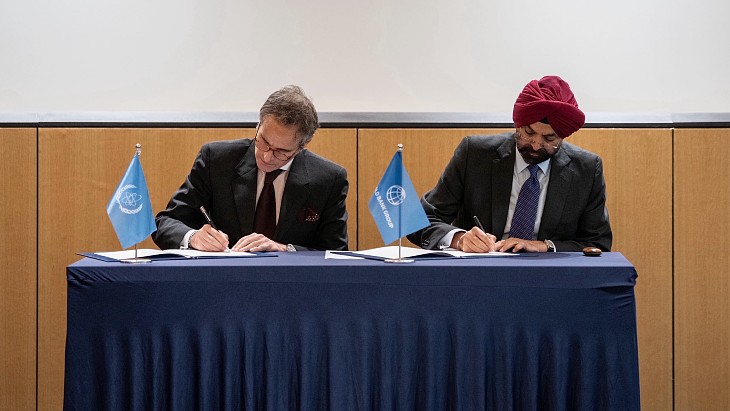
The World Bank has taken its first step since ending its ban on funding nuclear energy projects by partnering with the International Atomic Energy Agency to support countries that choose to include nuclear energy in their development strategies.
Under the partnership agreement the two institutions will build capacity, strengthen safeguards and share technical expertise and help the World Bank "deepen its internal knowledge across areas such as energy planning, regulatory frameworks, refurbishment of existing reactors, and the deployment of new technologies like small modular reactors".
Nuclear power was approved by the World Bank Board two weeks ago "as part of a broader approach to electrification - one that prioritises accessibility, affordability, and reliability, delivered in a way that manages emissions responsibly. The goal is to help countries deliver the energy their people need, while giving them the flexibility to choose the path that best fits their development ambitions, national context, and nationally determined contributions."
World Bank President Ajay Banga and International Atomic Energy Agency Director General Rafael Mariano Grossi, signed the agreement at an event in Paris.
Banga highlighted that the average person in high-income countries was using about 50 MWh of electricity per year, while in Africa the figure was 4 MWh. He said the gap had widened in recent years making it "far more challenging for the growth and development of our world in a fair way", with electricity demand in developing countries projected to more than double by 2035.
"Meeting that demand will require annual investment in generation, in grids, in storage to rise from USD280 billion today anually to roughly USD630 billion. That scale is what drives our effort to connect 300 million people in Africa to electricity by 2030 with the African Development Bank. It's why we developed a very clear path forward on delivering electricity as a driver of development."
Banga added that its approach "prioritises accessibility, affordability and reliability delivered in a way that manages emissions in a responsible way - and the goal is to help countries deliver the energy their people need while giving them the flexibility to choose the path that best fits their development ambitions, their national context ... we believe access to electricity is a fundamental human right and the foundation of development - jobs require electricity, as do health systems, education, clean water, public safety and so much more".
Dependable long-term baseload is required for development, he said, and "what is new is that for the first time in decades, the World Bank Group will begin to re-enter the nuclear energy space ... it's a significant step and one that we take with care, but importantly with partnership and with purpose",
The three areas prioritised are firstly, to build capacity and strengthen the World Bank's ability to advise on non-proliferation safeguards, on safety, on security and on regulatory frameworks. The second area is to look at extending the life of existing reactors, "one of the most cost-efficient ways" to produce electricity, and thirdly to see if "we do something together to accelerate the potential of small modular reactors so over a period of time they can become a more viable option for more countries".
Banga said: "The World Bank Group cannot do this alone, and that is why the partnership with the IAEA is critical to us. It marks a very tangible first step in our return to nuclear energy. The IAEA will help us build internal capacity across a wide range of topics, energy planning, project life cycle, fuel management, waste disposal and the technical infrastructure required for success. That coordinated approach will deepen our understanding of where nuclear energy can play a responsible role and give our clients access to the guidance and the support they need to pursue that path if they choose to take it."
IAEA Director General Grossi referred to the current global events and said that this agreement showed that "when we work together, when we have a good idea, when we have a determination to do something and to change things, this is possible".
He praised the work of the World Bank president, saying that "for many, many years a narrative was saying that this was not possible and for many, many years, and ... the nuclear industry, the guys really doing this stuff, were hitting a wall that was saying that investing in nuclear was not something for international finance institutions".
Grossi said that nothing could change without the World Bank. "It's as simple as that. In my endless rounds of conversations in many parts of the world when I was approaching banks and regional banks and financing people" they would refer to the World Bank position. Grossi said that the policy change followed a year of working together, and he also said he wanted to "say thanks to the industry" saying that they had worked closely with the IAEA.
He concluded by saying the "one big problem we had was the lack of finance - the fact that many, many clients in the Global South in developing countries, even in industrialised economies, need some financing support. And now they know they can come to the World Bank, they can talk to the World Bank. They can explain what they want to do in different areas, starting with life extensions, but also doing feasibility studies ... look at concrete projects, see the feasibility of them and work together".
"I think this is a very important day," added Grossi, who said that he had already had calls from some regional development banks looking to find out more about the agreement with the World Bank.
The agreement was welcomed by Sama Bilbao y León, Director General of World Nuclear Association. Speaking at the association's first Financing Nuclear Briefing taking place in London she said it was "a momentous shift for the World Bank’s lending policy, that comes after years of engagement on the sustainability of nuclear energy. We know access to finance is essential for many newcomer countries and this broad coalition is crucial to expanding nuclear capacity for all. It is also crucial to continue to engage with the nuclear industry who will be responsible for delivering the projects with speed and scale." She added that the association, on behalf of the global nuclear industry, had worked with the World Bank for some time "and is ready for further partnership to help build their knowledge of the industry".
Background
The World Bank Group, whose largest shareholder is the USA at 17%, is a multilateral lending organisation whose mission "is to end extreme poverty and boost shared prosperity on a livable planet. This is threatened by multiple, intertwined crises. Time is of the essence". In 2024 the World Bank Group says it facilitated USD117.5 billion "in loans, grants, equity investments and guarantees to partner countries and private businesses".
Although some multinational development banks have provided lending for decommissioning or upgrades to existing nuclear plants, they do not contribute to the financing of new-build projects - the World Bank's only loan for new nuclear capacity was USD40 million in 1959 for Italy's first nuclear power plant.
The pledge to aim for a tripling of nuclear energy capacity, originally unveiled at COP28 and backed by more than 30 countries, included inviting "shareholders of the World Bank, international financial institutions, and regional development banks to encourage the inclusion of nuclear energy in their organisations’ energy lending policies as needed, and to actively support nuclear power when they have such a mandate, and encourage regional bodies that have the mandate to do so to consider providing financial support to nuclear energy".At the moment there are about 440 nuclear power reactors operating in 31 countries with at least 70 power reactors under construction. The IAEA says there are about 30 countries considering, or embarking on, nuclear power, with about two-thirds of them in the developing world and financing remains a major hurdle for many. World Bank and IAEA backing new nuclear for development
The IMFq has praised India’s digital payment systems including UPI, CBDC, IMPS as well as its highest growth rate among all the major economies in the world.
The IMF praised India’s progress on digital payment systems including the Central Bank Digital Currency (CBDC) and Unified Payments Interface (UPI), saying other countries can learn from it.
Kristalina Georgieva, the MD of the IMF, issued a warning, noting that “every new financial technology generally comes with risks.”
The majority of IMF member nations are currently actively assessing CBDCs that potentially offer significant benefits, she continued.
According to International Monetary Fund (IMF) Managing Director Kristalina Georgieva, India will alone account for 15% of the global growth in 2023, maintaining its status as a relative “bright spot” in the global economy.
The fifth-largest economy in the world, which was saved from pandemic lows by digitization, will now be able to maintain its economic momentum thanks to cautious fiscal policy and sufficient finance for capital investments allocated in the budget for the following year.
“The performance by India has been very amazing. For the year that ends in March, we anticipate India to maintain a strong growth rate of 6.8%.
We forecast 6.1% for FY 2023/24 (April 2023 to March 2024), which is significantly higher than the worldwide average but a little slower than the rest of the world’s economies.
In this sense, India would contribute 15% or so to global growth in 2023” in an interview with PTI, Ms. Georgieva stated.
The growth rate is the highest one seen among major economies.
At a time when the IMF predicts that 2023 will be challenging due to a slowdown in global growth from 3.4% last year to 2.9% in 2023, she noted that India continues to be a shining example.
“Why is India a great example? Because India has done a great job of using the already-progressing digitalization as a significant engine for mitigating the effects of the pandemic and fostering chances for growth and employment,” mentioning, the managing director.
As compared to markets like those in the US, the UK, Canada, and Australia, the Indian real-time payments sector is highly developed, according to a report by ACI Worldwide.
India’s real-time payment methods including the Immediate Payment Service (IMPS) and the Unified Payments Interface (UPI), which both have gained worldwide popularity in recent years, according to the report titled “Perfect Time For Real Time 2022.”
“India accounted for the most real-time transactions in 2021,” ” (48.6 billion). This amount was nearly seven times greater than that of the world’s major economies—the United States, Canada, the United Kingdom, France, and Germany—and was roughly three times greater than that of the closest rival, China (18 billion transactions in 2021) “based on a report by Outlook. World Should Learn From India’s Digital Payment Systems: IMF
New Delhi : The above-average monsoon is driving rural demand for the Indian automobile sector, and tractor demand maintains momentum following the good rabi harvest, a report showed on Tuesday.
Channel partner commentary signals the higher number of auspicious days for marriage and a good rabi harvest sustained two-wheeler (2W) growth momentum in May, reports HSBC Global Research in a note.
Electric four-wheeler (e4W) penetration increased to 3.4 per cent in May. Tata's market share remained at 35 per cent, with MG at 31 per cent and M&M at 20 per cent. Hyundai with its 'e Creta’ model was at 5 per cent.
“Meanwhile, e2W sales penetration increased to 6.1 per cent with 100,000 units in retail sales. TVS's retail in May totalled 25,000 units, while Bajaj's sales were at 22,000 units. Ola is in the third spot,” according to the note.
Passenger vehicle (PV) demand was largely muted and there are no signs of recovery any time soon. Positively, original equipment manufacturers (OEMs) maintained inventory discipline.
“We expect the PV discount to stay elevated around the current level amid a weak demand outlook,” said the report.
In four-wheelers, Maruti’s volumes were up 3 per cent on-yar in May, as a 6 per cent decline in domestic sales was offset by 80 per cent growth in exports.
“M&M's SUV wholesale was 52.4k units, up 21 per cent YoY. Tata's PV volumes were down 11 per cent YoY, with EVs up 2 per cent. Hyundai domestic sales were down 11 per cent, mainly from routine plant shutdowns,” the note mentioned.
In the 2W segment, Bajaj's domestic 2W volume was up 2 per cent, while exports were up 20 per cent. TVS's 2W volumes were up 16 per cent YoY, with domestic growing 14 per cent and exports at 21 per cent.
In the tractor segment, M&M's domestic volume grew by 10 per cent, while Escorts' declined by 2 per cent. M&M's exports declined by 8 per cent, while Escorts' grew by 71 per cent.
MEXICO CITY - Shakira fans flocking to see the Colombian star in concert are generating tens of millions of dollars for Mexico, according to the local chamber of commerce, underscoring the economic signicifance of major musical events.
Home to around nine million people, Mexico City is a magnet for Latin and other international musicians who attract fans from across the country and abroad.
Maria (32) flew from Honduras to see Shakira perform during her "Women Don't Cry Anymore" world tour at Mexico City's 65,000-capacity GNP Stadium.
The online marketing expert spent nearly $1,000 on the flight, hotel and concert ticket.
"Direct flights to Mexico City were full so I had several layovers," she told AFP.
Devanhi, from Chihuahua in northern Mexico, spent more than $1,000 for five days in the capital, including $400 for the concert and $200 for the plane ticket.
"Whenever we can, we make the trip," since global stars skip Chihuahua on their tours, she added.
According to the local branch of the National Chamber of Commerce, Shakira's seven concerts in Mexico City this month are expected to generate economic benefits of more than 3.2 billion pesos ($160-million).
Nearly half of that will come from the sale of around 455,000 tickets, it is estimated.
Hotels and other types of accommodation are expected to make $43.9-million, while restaurants and drink vendors will take in around $27-million, Canaco said.The boost is set to eclipse the $50-million estimated to have been generated by US superstar Taylor Swift's four concerts in Mexico City in 2023, according to the organization. Shakira concerts give multimillion-dollar boost to Mexico
Warns global economy set for weakest run since 2008 outside of recessions
Heightened trade tensions and policy uncertainty are expected to drive global growth down this year to its slowest pace since 2008 outside of outright global recessions, according to the World Bank’s latest Global Economic Prospects report. The turmoil has resulted in growth forecasts being cut in nearly 70% of all economies—across all regions and income groups.
Global growth is projected to slow to 2.3% in 2025, nearly 0.5% lower than the rate that had been expected at the start of the year. A global recession is not expected. Nevertheless, if forecasts for the next two years materialise, average global growth in the first seven years of the 2020s will be the slowest of any decade since the 1960s.
World Bank Group Chief Economist and Senior Vice President – Development Economics Indermit Gill said: “Outside of Asia, the developing world is becoming a development-free zone.
It has been advertising itself for more than a decade. Growth in developing economies has ratcheted down for three decades—from 6% annually in the 2000s to 5% in the 2010s—to less than 4% in the 2020s. That tracks the trajectory of growth in global trade, which has fallen from an average of 5% in the 2000s to about 4.5% in the 2010s—to less than 3% in the 2020s. Investment growth has also slowed, but debt has climbed to record levels.”
Growth is expected to slow in nearly 60% of all developing economies this year, averaging 3.8% in 2025 before edging up to an average of 3.9% over 2026 and 2027. That is more than 1% lower than the average of the 2010s. Low-income countries are expected to grow 5.3% this year—a downgrade of 0.4% from the forecast at the start of 2025. Tariff increases and tight labour markets are also exerting upward pressure on global inflation, which, at a projected average of 2.9% in 2025, remains above pre-pandemic levels.
Slowing growth will impede developing economies in their efforts to spur job creation, reduce extreme poverty, and close per capita income gaps with advanced economies. Per capita income growth in developing economies is projected to be 2.9% in 2025—1.1% below the average between 2000 and 2019. Assuming developing economies other than China are able to sustain an overall GDP growth of 4%—the rate forecast for 2027—it would take them about two decades to return to their pre-pandemic trajectory with respect to economic output.
Global growth could rebound faster than expected if major economies are able to mitigate trade tensions—which would reduce overall policy uncertainty and financial volatility. The analysis finds that if today’s trade disputes were resolved with agreements that halve tariffs relative to their levels in late May, global growth would be 0.2% stronger on average over the course of 2025 and 2026.
World Bank Deputy Chief Economist and Prospects Group Director M. Ayhan Kose said: “Emerging-market and developing economies reaped the rewards of trade integration but now find themselves on the frontlines of a global trade conflict. The smartest way to respond is to redouble efforts on integration with new partners, advance pro-growth reforms, and shore up fiscal resilience to weather the storm. With trade barriers rising and uncertainty mounting, renewed global dialogue and cooperation can chart a more stable and prosperous path forward.”
The report argues that in the face of rising trade barriers, developing economies should seek to liberalise more broadly by pursuing strategic trade and investment partnerships with other economies and diversifying trade—including through regional agreements. Given limited government resources and rising development needs, policymakers should focus on mobilising domestic revenues, prioritising fiscal spending for the most vulnerable households, and strengthening fiscal frameworks.
Finally, to accelerate economic growth, countries will need to improve business climates and promote productive employment by equipping workers with the necessary skills and creating the conditions for labour markets to efficiently match workers and firms. Global collaboration will be crucial in supporting the most vulnerable developing economies, including through multilateral interventions, concessional financing, and, for countries embroiled in active conflicts, emergency relief and support. World Bank cuts 2025 growth forecasts for 70% of economies | Daily FT
World Bank Senior Country Economist for Sri Lanka and Maldives Richard Walker
Top multilateral donor agency starts talks with new Govt. to spur economy
By Charumini de Silva: The World Bank last week confirmed that there is no new financial support pending for Sri Lanka, but discussions with the new Government have commenced to outline future plans for collaboration.
World Bank Senior Country Economist for Sri Lanka and Maldives Richard Walker affirmed that no new budgetary or program-related assistance is currently in the pipeline.
“There is no budget support or other pending programs at the moment. Of course, we need to have a conversation with the new Government, understand their plans and thinking. Then, on our side, we can also formulate the type of support that we can offer – whether it is budgetary assistance or other forms of operations. This is a discussion that needs to take place and it is just beginning now,” he said in response to a query posed by journalists at the Sri Lanka Development Update report launch last Thursday.
The beginning of discussions between the multilateral donor agency and the Government signals a potential fresh start, as Sri Lanka seeks to stabilise its economy amid ongoing recovery efforts.
The new Government led by President Anura Kumara Dissanayake, is expected to focus on securing international support and building stronger ties with multilateral institutions like World Bank to drive economic recovery post-crisis.
He noted that a recently signed $ 200 million loan agreement has been completed and further steps will depend on the outcome of the ongoing no talks between the World Bank and the Government.
On 8 October, the World Bank and the Government of Sri Lanka signed the Second Resilience, Stability, and Economic Turnaround (RESET) Development Policy Operation (DPO) for $ 200 million.
This is the second operation in a two-part series that began in 2022. The first operation, totalling $500 million, was disbursed in June and December 2023.
The Second RESET DPO aims to support reforms that improve economic governance, enhance growth and competitiveness, and protect the poor and vulnerable, helping to build Sri Lanka’s resilience and fostering an equitable economy.
When asked about the impact of elections on the economic outlook, Walker acknowledged that credit growth has been slow, whilst expressing confidence that it will gain momentum post-elections, provided there is policy consistency.
“While there may be some uncertainty during election times, business sentiment seems optimistic. Credit growth has been slow but is expected to pick up after the election with policy consistency moving forward,” he added.
The World Bank in its latest projections announced that the country’s economy has shown signs of stabilisation, whilst doubling its earlier estimate to reach 4.4% in 2024.
This positive outlook follows four consecutive quarters of growth, primarily driven by the industrial and tourism sectors. Despite expected gradual improvements, poverty levels are predicted to remain above 20% till 2026, while inflation is anticipated to stay below Central Bank’s target of 5% in 2024, before gradually increasing as demand picks up. Tourism and remittances are expected to keep the Current Account surplus through 2024.


 (Image: @rafaelmgrossi/X)


.jpg)

