Mumbai (IANS) Actress Genelia D'Souza is setting major fitness and festive fashion goals this week. The actress, who has been attending several Diwali bashes, was recently seen hitting the gym early in the morning, balancing her festive indulgence and dedication to her health.
Saturday, 18 October 2025
Genelia D'souza sets fitness goals post attending multiple Diwali parties
Mumbai (IANS) Actress Genelia D'Souza is setting major fitness and festive fashion goals this week. The actress, who has been attending several Diwali bashes, was recently seen hitting the gym early in the morning, balancing her festive indulgence and dedication to her health.
Friday, 24 January 2025
What is PNF stretching, and will it improve my flexibility?
Whether improving your flexibility was one of your new year’s resolutions, or you’ve been inspired watching certain tennis stars warming up at the Australian Open, maybe 2025 has you keen to focus on regular stretching.
However, a quick Google search might leave you overwhelmed by all the different stretching techniques. There’s static stretching and dynamic stretching, which can be regarded as the main types of stretching.
But there are also some other potentially lesser known types of stretching, such as PNF stretching. So if you’ve come across PNF stretching and it piques your interest, what do you need to know?
What is PNF stretching?
PNF stretching stands for proprioceptive neuromuscular facilitation. It was developed in the 1940s in the United States by neurologist Herman Kabat and physical therapists Margaret Knott and Dorothy Voss.
PNF stretching was initially designed to help patients with neurological conditions that affect the movement of muscles, such as polio and multiple sclerosis.
By the 1970s, its popularity had seen PNF stretching expand beyond the clinic and into the sporting arena where it was used by athletes and fitness enthusiasts during their warm-up and to improve their flexibility.
Although the specifics have evolved over time, PNF essentially combines static stretching (where a muscle is held in a lengthened position for a short period of time) with isometric muscle contractions (where the muscle produces force without changing length).
PNF stretching is typically performed with the help of a partner.
There are 2 main types
The two most common types of PNF stretching are the “contract-relax” and “contract-relax-agonist-contract” methods.
The contract-relax method involves putting a muscle into a stretched position, followed immediately by an isometric contraction of the same muscle. When the person stops contracting, the muscle is then moved into a deeper stretch before the process is repeated.
For example, to improve your hamstring flexibility, you could lie down and get a partner to lift your leg up just to the point where you begin to feel a stretch in the back of your thigh.
Once this sensation eases, attempt to push your leg back towards the ground as your partner resists the movement. After this, your partner should now be able to lift your leg up slightly higher than before until you feel the same stretching sensation.
This technique was based on the premise that the contracted muscle would fall “electrically silent” following the isometric contraction and therefore not offer its usual level of resistance to further stretching (called “autogenic inhibition”). The contract-relax method attempts to exploit this brief window to create a deeper stretch than would otherwise be possible without the prior muscle contraction.
The contract-relax-agonist-contract method is similar. But after the isometric contraction of the stretched muscle, you perform an additional contraction of the muscle group opposing the muscle being stretched (referred to as the “agonist” muscle), before the muscle is moved into a static stretch once more.
Again, if you’re trying to improve hamstring flexibility, immediately after trying to push your leg towards the ground you would attempt to lift it back towards the ceiling (this bit without partner resistance). You would do this by contracting the muscles on the front of the thigh (the quadriceps, the agonist muscle in this case).
Likewise, after this, your partner should be able to lift your leg up slightly higher than before.
The contract-relax-agonist-contract method is said to take advantage of a phenomenon known as “reciprocal inhibition.” This is where contracting the muscle group opposite that of the muscle being stretched leads to a short period of reduced activation of the stretched muscle, allowing the muscle to stretch further than normal.
What does the evidence say?
Research has shown PNF stretching is associated with improved flexibility.
While it has been suggested that both PNF methods improve flexibility via changes in nervous system function, research suggests they may simply improve our ability to tolerate stretching.
It’s worth noting most of the research on PNF stretching and flexibility has focused on healthy populations. This makes it difficult to provide evidence-based recommendations for people with clinical conditions.
And it may not be the most effective method if you’re looking to improve your flexibility in the long term. A 2018 review found static stretching was better for improving flexibility compared to PNF stretching. But other research has found it could offer greater immediate benefits for flexibility than static stretching.
At present, similar to other types of stretching, research linking PNF stretching to injury prevention and improved athletic performance is relatively inconclusive.
PNF stretching may actually lead to small temporary deficits in performance of strength, power, and speed-based activities if performed immediately beforehand. So it’s probably best done after exercise or as a part of a standalone flexibility session.
How much should you do?
It appears that a single contract-relax or contract-relax-agonist-contract repetition per muscle, performed twice per week, is enough to improve flexibility.
The contraction itself doesn’t need to be hard and forceful – only about 20% of your maximal effort should suffice. The contraction should be held for at least three seconds, while the static stretching component should be maintained until the stretching sensation eases.
So PNF stretching is potentially a more time-efficient way to improve flexibility, compared to, for example, static stretching. In a recent study we found four minutes of static stretching per muscle during a single session is optimal for an immediate improvement in flexibility.
Is PNF stretching the right choice for me?
Providing you have a partner who can help you, PNF stretching could be a good option. It might also provide a faster way to become more flexible for those who are time poor.
However, if you’re about to perform any activities that require strength, power, or speed, it may be wise to limit PNF stretching to afterwards to avoid any potential deficits in performance.![]()
Lewis Ingram, Lecturer in Physiotherapy, University of South Australia and Hunter Bennett, Lecturer in Exercise Science, University of South Australia
This article is republished from The Conversation under a Creative Commons license. Read the original article.
Wednesday, 15 January 2025
Most adults will gain half a kilo this year – and every year. Here’s how to stop ‘weight creep’
As we enter a new year armed with resolutions to improve our lives, there’s a good chance we’ll also be carrying something less helpful: extra kilos. At least half a kilogram, to be precise.
“Weight creep” doesn’t have to be inevitable. Here’s what’s behind this sneaky annual occurrence and some practical steps to prevent it.
Small gains add up
Adults tend to gain weight progressively as they age and typically gain an average of 0.5 to 1kg every year.
While this doesn’t seem like much each year, it amounts to 5kg over a decade. The slow-but-steady nature of weight creep is why many of us won’t notice the extra weight gained until we’re in our fifties.
Why do we gain weight?
Subtle, gradual lifestyle shifts as we progress through life and age-related biological changes cause us to gain weight. Our:
activity levels decline. Longer work hours and family commitments can see us become more sedentary and have less time for exercise, which means we burn fewer calories
diets worsen. With frenetic work and family schedules, we sometimes turn to pre-packaged and fast foods. These processed and discretionary foods are loaded with hidden sugars, salts and unhealthy fats. A better financial position later in life can also result in more dining out, which is associated with a higher total energy intake
sleep decreases. Busy lives and screen use can mean we don’t get enough sleep. This disturbs our body’s energy balance, increasing our feelings of hunger, triggering cravings and decreasing our energy
stress increases. Financial, relationship and work-related stress increases our body’s production of cortisol, triggering food cravings and promoting fat storage
metabolism slows. Around the age of 40, our muscle mass naturally declines, and our body fat starts increasing. Muscle mass helps determine our metabolic rate, so when our muscle mass decreases, our bodies start to burn fewer calories at rest.
We also tend to gain a small amount of weight during festive periods – times filled with calorie-rich foods and drinks, when exercise and sleep are often overlooked. One study of Australian adults found participants gained 0.5 kilograms on average over the Christmas/New Year period and an average of 0.25 kilograms around Easter.
Why we need to prevent weight creep
It’s important to prevent weight creep for two key reasons:
1. Weight creep resets our body’s set point
Set-point theory suggests we each have a predetermined weight or set point. Our body works to keep our weight around this set point, adjusting our biological systems to regulate how much we eat, how we store fat and expend energy.
When we gain weight, our set point resets to the new, higher weight. Our body adapts to protect this new weight, making it challenging to lose the weight we’ve gained.
But it’s also possible to lower your set point if you lose weight gradually and with an interval weight loss approach. Specifically, losing weight in small manageable chunks you can sustain – periods of weight loss, followed by periods of weight maintenance, and so on, until you achieve your goal weight.
2. Weight creep can lead to obesity and health issues
Undetected and unmanaged weight creep can result in obesity which can increase our risk of heart disease, strokes, type 2 diabetes, osteoporosis and several types of cancers (including breast, colorectal, oesophageal, kidney, gallbladder, uterine, pancreatic and liver).
A large study examined the link between weight gain from early to middle adulthood and health outcomes later in life, following people for around 15 years. It found those who gained 2.5 to 10kg over this period had an increased incidence of type 2 diabetes, heart disease, strokes, obesity-related cancer and death compared to participants who had maintained a stable weight.
Fortunately, there are steps we can take to build lasting habits that will make weight creep a thing of the past.
7 practical steps to prevent weight creep
1. Eat from big to small
Aim to consume most of your food earlier in the day and taper your meal sizes to ensure dinner is the smallest meal you eat.
A low-calorie or small breakfast leads to increased feelings of hunger, specifically appetite for sweets, across the course of the day.
We burn the calories from a meal 2.5 times more efficiently in the morning than in the evening. So emphasising breakfast over dinner is also good for weight management.
2. Use chopsticks, a teaspoon or an oyster fork
Sit at the table for dinner and use different utensils to encourage eating more slowly.
This gives your brain time to recognise and adapt to signals from your stomach telling you you’re full.
3. Eat the full rainbow
Fill your plate with vegetables and fruits of different colours first to support eating a high-fibre, nutrient-dense diet that will keep you feeling full and satisfied.
Meals also need to be balanced and include a source of protein, wholegrain carbohydrates and healthy fat to meet our dietary needs – for example, eggs on wholegrain toast with avocado.
4. Reach for nature first
Retrain your brain to rely on nature’s treats – fresh vegetables, fruit, honey, nuts and seeds. In their natural state, these foods release the same pleasure response in the brain as ultra-processed and fast foods, helping you avoid unnecessary calories, sugar, salt and unhealthy fats.
5. Choose to move
Look for ways to incorporate incidental activity into your daily routine – such as taking the stairs instead of the lift – and boost your exercise by challenging yourself to try a new activity.
Just be sure to include variety, as doing the same activities every day often results in boredom and avoidance.
6. Prioritise sleep
Set yourself a goal of getting a minimum of seven hours of uninterrupted sleep each night, and help yourself achieve it by avoiding screens for an hour or two before bed.
7. Weigh yourself regularly
Getting into the habit of weighing yourself weekly is a guaranteed way to help avoid the kilos creeping up on us. Aim to weigh yourself on the same day, at the same time and in the same environment each week and use the best quality scales you can afford.
At the Boden Group, Charles Perkins Centre, we are studying the science of obesity and running clinical trials for weight loss. You can register here to express your interest.![]()
Nick Fuller, Clinical Trials Director, Department of Endocrinology, RPA Hospital, University of Sydney
This article is republished from The Conversation under a Creative Commons license. Read the original article.
Tuesday, 17 December 2024
New research shows how long, hard and often you need to stretch to improve your flexibility
Can you reach down and touch your toes without bending your knees? Can you reach both arms overhead? If these sound like a struggle, you may be lacking flexibility.
Flexibility is the ability to move a joint to through its full range of motion. It helps you perform most sporting activities and may prevent muscle injuries. And because most daily activities require a certain amount of flexibility (like bending down or twisting), it will help you maintain functional independence as you age.
Although there are many types of stretching, static stretching is the most common. It involves positioning a joint to lengthen the muscles and holding still for a set period – usually between 15 and 60 seconds. An example would be to stand in front of a chair, placing one foot on the chair and straightening your knee to stretch your hamstrings.
Static stretching is widely used to improve flexibility. But there are no clear recommendations on the optimal amount required. Our new research examined how long, how hard and how often you need to stretch to improve your flexibility – it’s probably less than you expect.
Assessing the data
Our research team spent the past year gathering data from hundreds of studies on thousands of adults from around the world. We looked at 189 studies of more than 6,500 adults.
The studies compared the effects of a single session or multiple sessions of static stretching on one or more flexibility outcomes, compared to those who didn’t stretch.
How long?
We found holding a stretch for around four minutes (cumulatively) in a single session is optimal for an immediate improvement in flexibility. Any longer and you don’t appear to get any more improvement.
For permanent improvements in flexibility, it looks like you need to stretch a muscle for longer – around ten minutes per week for the biggest improvement. But this doesn’t need to occur all at once.
How hard?
You can think of stretching as being hard, when you stretch into pain, or easy, when the stretch you feel isn’t uncomfortable.
The good news is how hard you stretch doesn’t seem to matter – both hard (stretching to the point of discomfort or pain) and easy stretching (stretching below the point of discomfort) equally improve flexibility.
How often?
If you are looking to improve your flexibility, it doesn’t matter how often you stretch each week. What is important is that you aim for up to ten minutes per week for each muscle that you stretch.
So, for example, you could stretch each muscle for a little more than one minute a day, or five minutes twice a week.
The amount of time you should spend stretching will ultimately depend on how many muscles you need to stretch. If you are less flexible, you will likely need to dedicate more time, given you’ll have more “tight” muscles to stretch compared to someone more flexible.
Can everyone improve their flexibility?
Encouragingly, it doesn’t matter what muscle you stretch, how old you are, your sex, or whether you are a couch potato or an elite athlete – everyone can improve their flexibility.
Static stretching can be done anywhere and at any time. And you don’t need any equipment. You can stretch while watching your favourite TV show, when in the office, or after walking the dog to help you relax. It’s a great way to start and end your day.
Although the exact stretches needed will depend on which muscles are “tight”, examples of some very common stretches include:
- placing one foot upon on bench and leaning forward at the waist while keeping your knee straight to stretch your hamstrings
- bending your knee and holding your ankle against your buttock to stretch your quadriceps muscles
- reaching one arm while bending your elbow to stretch your triceps muscles.
However, the best advice is to visit a qualified health professional, such as a physiotherapist or exercise physiologist, who can perform an assessment and prescribe you a list of stretches specific to your individual needs.
As you can see, it really isn’t too much of a stretch to become more flexible.![]()
Lewis Ingram, Lecturer in Physiotherapy, University of South Australia; Grant R. Tomkinson, Professor of Exercise and Sport Science, University of South Australia, and Hunter Bennett, Lecturer in Exercise Science, University of South Australia
This article is republished from The Conversation under a Creative Commons license. Read the original article.
Sunday, 21 July 2024
Surya Namaskar serves as coping mechanism for Shambhavi Singh, helps her 'stay energised'
Thursday, 6 June 2024
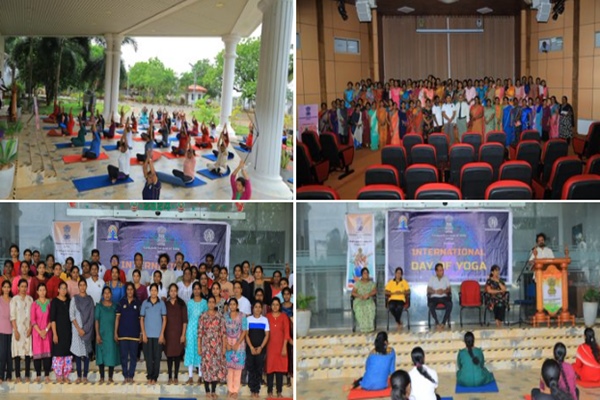
Consulate General of India in Sri Lanka organised special workshop on Therapeutic Yoga for healthy life
Saturday, 25 May 2024
Run streaks: is it safe to run every day?
Running is a great form of exercise that has numerous benefits for our health. For instance, people who consistently run at least an hour a week throughout their lives tend to live three years longer and have fewer chronic illnesses, compared with people who don’t do any exercise.
But some people are taking their love of running up a notch – running every day for as many days in a row as possible. This trend is being referred to online as a “run streak”. The rules of the run streak trend are simple: runners must complete a minimum of one mile (1.6km) every day, either on road, trail or the treadmill.
There are some remarkable streaks currently ongoing. Jim Taylor is said to have the longest streak among runners in Britain, having completed at least a mile a day for over 30 years. Globally, the longest streak is held by Jon Sutherland, a US runner who has reportedly run at least mile a day for over 50 years.
These are certainly incredible feats – but what are the effects on the body of running every day? Is it actually safe?
Whether you’re an amateur or professional runner, in order to get fitter you need to follow a training regime that places just the right amount of stress on the body so it can adapt. This is usually done through low-intensity runs and interval training, followed by periods of rest.
When this cycle is consistently repeated over months, runners will notice many changes in their fitness. These include a 5%-10% improvement in maximal oxygen consumption (the maximum amount of oxygen the body can use and transport to its working muscles), reduced heart rate during low-intensity runs, and improved ability to use fat for energy. All of these improvements help runners get faster or run further with less fatigue.
But a key element to becoming a better runner is taking rest periods. This allows the joints and ligaments to recover from the stress that running places on them. Rest also permits the body to replenish carbohydrate stores in the muscles, ensuring the body has energy for subsequent training days. Rest days can also help improve a runner’s recovery time between workouts.
But the nature of the run streak trend means there are no days off. This could have many potential pitfalls that runners should know about.
Continual training without adequate rest can cause many harms to the body. In extreme cases – such as ultra-endurance running – mild scarring of the heart can occur.
It can also weaken the immune system by reducing the function of immune cells. This can increase risk of respiratory infections and cause drastic changes in hormones, such as an up-to-40% reduction in adrenaline and testosterone. This may lead to poor recovery between runs and symptoms of overtraining – including changes in mood or muscle damage.
Runners must also be mindful of potential overuse injuries. These affect up to 70% of elite and recreational runners and could derail a run streak. One of the leading causes of overuse injuries is poor hip-muscle stabilisation in runners. This type of injury is more likely to happen as the training volume increases.
Is there a safe way to run every day?
To complete a run streak safely, pay attention to your training load – a combination of the volume, frequency and intensity of your workouts. It’s pivotal to manage this – taking particular care with the intensity of your runs, since the frequency of training is daily and the duration of runs is at least one mile.
High-intensity runs – such as intense sprint intervals – place more stress on the body and take longer to recover from, compared with low-intensity runs.
There’s also a window when the immune system is suppressed after high-intensity running of up to two hours. Keeping most of the runs easy will not only help you stay consistent, it will also reduce the chances of illness and injuries.
When starting a run streak, consider simply completing the minimum distance required (one mile per day) before gradually increasing the amount of running you do.
If you’re worried about taking days off, active recovery may be useful. This involves doing light exercise on your easier run streak days – such as a very light jog. Or, if you’re willing to break your streak but don’t want to take time off from exercise, you could always go for a brisk walk instead. This allows muscles to recover from the stress of running and can reduce muscle soreness.
Rest days are still strongly recommended, however. Even elite runners have periods away from running or incorporate rest blocks during a week of training. In fact, passive recovery) – which involves doing no exercise at all – is generally considered better than active recovery for helping the body to repair itself and adapt to the stress of training.
Not taking any rest and attempting run to every day could also result in obsessive behaviour towards exercise – and in turn, have negative effects on your body. Before starting a run streak, evaluate whether it’s really in line with your fitness goals.
Running is a great way to improve your health, both physically and mentally. But runners should proceed with caution if they’re thinking of going for a run streak, to prevent overtraining and other risks to their health. Keep in mind things such as intensity and be sure to properly fuel after each run. This will reduce the likelihood of injury and health complications, and should ensure a more enjoyable run streak experience.![]()
Jonathan Melville, PhD Candidate, Sport and Exercise Science, Anglia Ruskin University and Matthew Slater, PhD Candidate, Exercise Physiology, Anglia Ruskin University
This article is republished from The Conversation under a Creative Commons license. Read the original article.
Sunday, 5 May 2024
Healthy eating & exercise can reverse ageing marker in obese kids: Study
Tuesday, 2 April 2024
Wellness in the work place encourage movement
- Encourage Movement: Sitting or long periods of inactivity is extremely detrimental to our health. Inactivity has been linked to cancer, heart disease, and obesity. Conversely, exercise improves mental health and gets you in shape. This doesn’t mean you need to get employees doing laps around the building, but perhaps consider encouraging standing desks, walking meetings, or use the stairs instead of the lifts. If your employees work from home, offer them time during the day to go out and walk. You could also encourage employees who live near one another to arrange walks together during office hours.
- Step Counting: One way to get the ball rolling is to start a step count competition. You don’t need any fancy equipment; most smartphones have built-in features to track step count.
- Add a Gym: If your company has the financial resources, consider adding a gym or workout space to your office. You don’t even need lots of expensive equipment. A few sets of dumbells, jump ropes, a few pull-up bars, boxes for box jumps, and perhaps some exercise bikes, and you have a functional fitness room. This facility may even save employees time as they won’t have to make an extra stop at the gym. Less time commuting is definitely better for mental health! If you can’t afford a gym or most of your people work remotely, consider subsidising a gym membership for employees.
- Encourage Meditation: Encouraging mindfulness and meditation can be incredibly beneficial for wellness in the workplace. Mindfulness practice doesn’t have to be complicated. To get started, encourage employees to close their eyes and focus on their breathing for several minutes. Simple. You could also create silent rooms with comfortable lounge chairs or bean bags where employees can sit in silence while they meditate. A simple solution could be to offer employees a paid meditation app subscription or mindfulness packs to get them started.
- Gratefulness Workshops & Book Clubs: Part of being mindful is being grateful for life, what you have and where you are. Hosting gratitude or gratefulness workshops allow employees to share ideas, books or experiences that have helped them. A book club is another way for employees to exercise the mind and interact with each other. You could encourage books about productivity, business topics, and self-help, which might uncover new strategies and ideas for the company.
- Encourage Better Eating Has your office got a vending machine or snack tray filled with biscuits, chocolates, crisps, and other sugary or salty snacks? According to the UK-based Mental Health Foundation, what we eat may affect both mental and physical health. “One 2014 study found high levels of wellbeing were reported by individuals who ate more fruit and vegetables.” With that in mind, why not ditch the unhealthy snacks and offer your employees healthier options. You don’t want to be a complete killjoy, so perhaps have Friday as a cheat day ;). If your company has a wellness budget, consider subsidising your employees’ groceries for items like fresh fruit, vegetables, nuts, and other organic produce.
- Afterhours Cooking Classes: Another way to build morale and get people eating better is to arrange a cooking class. These classes are a great way to have fun while learning to cook simple, nutritious meals, which benefit employees and their families.
- Remind People to Drink Water: In addition to better eating, you should encourage employees to drink more water during the day. Dehydration causes unclear thinking and mood changes, things you want to avoid in a productive workplace! According to the NHS, we should be drinking between 6-8 glasses of water per day.
- A Pet-Friendly Office: The benefits of interacting with animals are proven to reduce stress and anxiety. A study by the University of Southern California found that “pets in the workplace reduce stress and nurture productivity.” Designing a pet-friendly office can be challenging, especially for employees who either don’t like animals or are allergic. For this reason, you might want to consider designated office space for employees who wish to bring their pets. The added benefit of bringing a dog is that dogs need to be walked. Regular dog walks will encourage exercise, which goes back to our first recommendation: getting employees to move more during work hours. If you can’t have animals in the office, consider a volunteer program at your local pet shelter as part of your company’s corporate social responsibility. Employees will get the mental health benefits of interacting with animals and physical exercise.
- Add Plants to the Office: Nature has a profound effect on mental health. Adding plants to the office could be another way to improve wellness in the workplace. Plants or a live wall are also great ways to break up an office to create different spaces or departments without separating people with glass or walls.
- Add a Yoga Studio: Like a gym, a yoga studio would be a fantastic way to incorporate exercise and wellness in your workplace. A yoga studio could double as your meditation room. The beauty of yoga is that employees can do it anywhere, even from home. If most employees work-from-home, you could host daily or weekly virtual yoga classes.
- Join a Corporate Sports League: Another way to encourage exercise is to join a corporate sports league. These leagues are in most major cities worldwide and include sports like cricket, indoor football, five-a-side football, softball, netball, volleyball, and more. If you can’t find a corporate league in your area, invite clients, competitors, and suppliers to start your own. Corporate sports leagues allow employees and management to interact in a “relaxed” environment outside of work, ultimately building camaraderie within the office.
- Make the Office Fun: Sterile office environments kill creativity and can be depressing places to work. Some offices have foosball, mini basketball hoops, table tennis, a pool table, hula hoops and other activities to keep employees entertained. These sorts of activities also encourage mingling between departments which could help share ideas and boost overall morale.
- Conclusion: Many of these suggestions might seem like distractions from work, but humans must be healthy and happy to be productive. We spend so much of our waking hours at work; making it a place people want to be is essential not only for wellness but for attracting and retaining the best people for your organisation.We have to consider a holistic approach to wellness in the workplace—mind, body, and soul. Wellness in the work place encourage movement
Friday, 22 March 2024
How To Identify & Utilize Your Talent
Tuesday, 21 April 2015
Love At First Fight
Wednesday, 22 October 2014
Chocolate milk claimed as the best drink to recover from workouts
Monday, 5 May 2014
Billy Slater challenges Aussies to get fit
- Visit: facebook.com/australianbananas to enter the ‘Get Fit With Billy’ competition and download the videos.
- Fleur Maxwell-Garrett
- Crossman Communications
- Tel: +61 02 9361 6099
- Email: fleur@crossmancommunications.com.au
Saturday, 11 May 2013
Hrithik Roshan's body in 'Krrish 3' will wow audience, says trainer Kris
Mumbai Superstar Hrithik Roshan has left no stone unturned to get into shape for his upcoming superhero film Krrish 3 and his trainers vouch for his dedication towards fitness. There were reports that Hrithik was in a bad shape both physically and mentally, with injuries and issues in his personal life. But he has managed to bounce back in a short time with an excellent physique for Krrish 3with the help of famous American trainers Kris Gethin and his wife Maraica Johnsoone. "He (Hrithik) is good as a student and I appreciate his hard work. It made my job easy. And no wonder why he is at the top as an actor as he is very dedicated towards his work," Kris told PTI. Krrish 3 is an superhero science fiction, produced and directed by Rakesh Roshan. Kris had seen the previous version of the films before working with the 39-year-old actor on Krrish 3. "I had seen his film and him and the images as to how it (character) looked like. When he came to me...he was am I able to attain that again, can I look like that again. He attained the results in short time and then progressed upon," he said. "Its (body) 110 per cent better than what he has done in the past. I am sure people will be blown away seeing him on screen. His physique is better.. he is more muscular and athletic in Krrish 3," the trainer added. Source: Express India
Monday, 25 February 2013
Fauja Singh shines at last race
Sunday, 2 September 2012
Attention! Meet the newest Men’s Health cover star army boy Captain Charles Powell (and his winning six-pack)


++2.jpg)
Wednesday, 27 June 2012
'Size-zero' Bebo calls Vidya, Sonakshi fat?
Thursday, 21 June 2012
3Diet benefits of coconut water
Many of us are unaware that the control of one’s own diet can do wonders.Health and fitness with natural food is good practice of balancing one’s own diet.what I am talking about is knowing which food to take when can save us from falling into illeness. Nutritional deficiency can lead into variety of problems. Coconut is not new to anybody. This tree grows everywhere. Almost everyone uses coconut in one way or the other.Dry coconut (kernal) is used to extract edible oil andvarious preparations.dry or the raw coconut also used in preparation of delicious sambar chicken or mutton curry etc. Now my topic is not on this but on Delicious Teder coconut water.How many of us think about having a glass of tender coconut water when we feel thirsty? I think very a few of us do that instead we have beverages like coke,pepsi etc.How many of us think about having coconut water is so benificial to health. I feel a very countable people do that. Some people also claim that it helps in reducing weight quickly.This water has a property of antiaging too.It also gives good calories when taken during fatigue.One more interesting thing of this water is that it has no fat and consists of natural sugars and minerals. It is also rich in fibremagnesium and potassium content So why wait if this is available in your area let have it Source: Health Topic