bloggggg

Home  |  Live  |  Science  |  Lifestyle  |  Entertainment  |  Broadcast  |  Games  |  eBooks  |  Astounds  |  Adbite  |  Cricbell  |  Cyber  |  Idea  |  Digital  |  Privacy  |  Publish  |  ePaper  |  Contact  .Subscribe.Subscribe.Subscribe.Subscribe.Subscribe.Subscribe.Subscribe.Subscribe.Subscribe
Subscribe

Friday, 20 November 2020

77% Indians optimistic about economic recovery: Report


About 77 per cent of Indians are optimistic of an economic recovery and business revival, and 27 per cent believe the turnaround could happen in the next three months, said a new survey on Thursday.

While 22 per cent of those surveyed said they expect a revival in the next three to six months, 28 per cent felt it could take anywhere between six months to a year, said the survey by digital lending platform IndiaLends.

"The economy is slowly but steadily recovering from the coronavirus pandemic and is getting back on the growth trajectory. There are clear signs of a business revival and consumer confidence," IndiaLends Founder and CEO Gaurav Chopra said in a statement.

The nationwide survey of nearly 1,700 respondents comprising both the salaried and self-employed, conducted in November, also said that 71 per cent of the respondents said they planned to take a personal loan in the next three to six months.

They cited two- and four-wheelers, business startups, household durables, electronic gadgets and home renovation as the main reasons for personal loans.

At least seven per cent of the respondents said they would opt for a loan to pay for upskilling courses, which points to the impact of Covid-19 on jobs and the need to utilise free time to acquire new skills, while 31 per cent of those surveyed said they would use the loan to start their own business.

Among other findings, nearly 46 per cent of the respondents said they expected an increase in household expenses towards consumer durables such as washing machines and dishwashers, and 11 per cent said they would opt for a personal loan to buy these appliances.

With people spending more time at home, almost 38 per cent of the respondents said they would consider getting their home renovated in the coming months, and 15 per cent said they would take a loan for the same.

About 70 per cent of the respondents said they were now spending more on electronic gadgets for their children, namely smartphones, tablets and laptops. Source: https://southasiamonitor.org/

Saturday, 4 July 2020

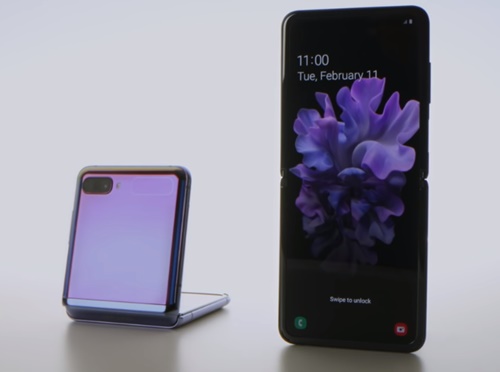
Samsung launches world's first foldable glass phone, Galaxy Z Flip


Samsung on Wednesday launched its second foldable phone and the world's first foldable glass phone, the Galaxy Z Flip, which redefines smart phone with a pioneering a new mobile category.
  • The Galaxy Z Flip, the company’s latest futuristic flagship, features a first-of-its-kind foldable glass display that allows the user to capture, share and experience content. 
  • “When folded, the Galaxy Z Flip is a stylish and compact palm-sized device. When unfolded, it’s a full-sized phone whose stunning, 6.7-inch Infinity Flex Display –Samsung’s first to feature a 21.9:9 aspect ratio – offers users truly seamless multitasking, a company website release stated.
  • The key highlight of Galaxy Z Flip is its bendable glass as it is for the first time that a brand has used thin bendable glass in a phone. The Galaxy is also the first foldable phone from Samsung to feature a clamshell design. 
  • The device takes on the new Moto Razr foldable phone and will bring back memories of style associated with flip phones. For the first time in mobile phones, Samsung has used thin glass over a flexible display.
  • The Galaxy Z Flip features Samsung’s proprietary bendable Ultra Thin Glass (UTG). This glass layer makes the device look sturdy and the screen less delicate. Also, repairing the display becomes easier as for deep scratches, just changing the glass layer instead of the entire display will do.
  • The thin glass layer in Galaxy Z Flip prevents the crease from appearing more prominent. Like in the Galaxy Fold, the plastic screen tends to develop a crease at the place where it folds giving an ugly look. Having a glass layer on the screen prevents this crease (due to the fold) from appearing more prominent.
  • Samsung Galaxy Z Flip comes with a 6.7-inch screen which folds in almost half. It also features a 6.7-inch FHD+ Dynamic AMOLED Infinity Flex Display with an aspect ratio of 21.9:9 and pixel density of 425 ppi.
  • There is a small cover display with which you can change music, click selfies when the Galaxy Z Flip is folded
  • There is a small cover display on the outside which measures 1.06-inch. You can use that small touch display to change music, click selfies when the Galaxy Z Flip is folded. You can get notifications as well on the cover display when the device is folded.
  • Samsung Galaxy Z Flip can stay open at different angles like a laptop screen. 
  • The Galaxy Z Flip can stay open at a range of angles, like a laptop screen using the Hideaway Hinge system. There’s a new sweeper technology, which uses nylon fibers crafted by micro-height-cutting technology to repel dirt and dust.
  • Samsung has worked with Google to design a new Flex mode for the phone. When the device is free-standing, the display automatically splits into two 4-inch screens so you can easily view images, content or videos on the top half of the display, and control them on the bottom half. For example, you can watch and navigate YouTube – stream on the top while searching for other videos, reading descriptions and writing comments on the bottom.
  • Samsung Galaxy Z Flip is powered by a Qualcomm Snapdragon 855+ processor with 8GB of RAM and 256GB of internal storage and runs Android 10-based OneUI interface with backing from a 3,300mAh battery.
  • Samsung Galaxy Z Flip comes with a total of three cameras
  • The main display comes with a punch hole notch which hides the 10MP selfie camera. On the outside, there is a dual camera setup with a 12MP ultra wide sensor with F2.2 aperture and a 12MP wide-angle primary camera with F1.8 aperture, OIS, up to 8X digital zoom. 
  • The device can also be folded to 90-degrees and placed on a table to shoot videos or photos.
  • The device comes with a capacitive fingerprint sensor on the side. There is no headphone jack and Samsung is providing USB Type-C earphones inside the box.
  • Galaxy Z Flip is likely to be priced lower than Samsung’s first folding phone Galaxy Fold in India, although there is no official launch date yet. The device is priced at $1,380 in the US and is expected to cost less than Rs1,00,000 in India at that rate.Source: https://www.domain-b.com/

Sunday, 22 November 2015

The next phone Apple iPhone 7 He will know greater intensity pressing

The next iPhone will get a numerical designation 7 and its display is truly recognizes the power of touch. The ninth generation comes in the double sized, with four-inch iPhone continues to count. These are predictions analyst Ming-Chi Kuo of KGI company. With the new speculation about the iPhone in recent weeks have proliferated. In recent days, the subject has expressed an analyst Ming-Chi Kuo, who is the backstage events in Recuperation often very familiar, and his predictions have been confirmed many times. In the latest Kuo expects that Apple will present its new generation of the same composition as in September last year. Basic iPhone 4,7 display and complemented by a second generation alphabet diagonal 5.5 inches.
  • Four inch model? At first yes, then no, then yes. Now,  Interesting is the assumption that the new series was getting marking 7, due to the large jump in the equipment. Most speculation had not previously been assumed that Apple stays true to the philosophy of marking successive generations, and this fall will be introduced iPhone 6s and 6s Plus, iPhone 7. Putting a smaller and cheaper model, which would be equipped with Apple A8 chipset and four-inch display, expected. Initial speculation had earlier refused server information Wall Street Journal. What is the contrary assumptions agree, is deploying Force Touch. It is for users of the products with the logo of apples unknown concept, the manufacturer used it not only to the latest MacBook, but also watches Watch. Initially it was assumed that the next iPhone screen with the conveniences you recognize the power of touch and accordingly instruct the user to respond. Kuo says that the display of the phone will work differently than the new MacBook touchpad, which is able to detect the intensity of being pressed. He's talking about a kind of indirect detection, pressure contact of location and size of land that the finger touches the panel. This could mean that the UI system could work necessary with different sized icons, maybe there will be widgets. According to Taiwan's Economic Daily News server by sensor panels for the new iPhone TPK provided by the company that supplies them for display expected watches equipped with the same technology. 
  • ForceTouch only for the larger of the next iPhone? Although earlier ForceTouch inflected with both the next iPhone is currently only associated with model 6s Plus (Plus 7), the basic model could thus be deprived of this news. Such a move would be too incompatible with the philosophy of Apple. Model 6 Plus is compared to the "top six" in addition to a larger display with higher resolution optical actually only stabilize the camera. Therefore useful but not essential thing. ForceTouch technology, which would bring a new dimension of control, on the contrary, an important element of the outfit was admittedly a smaller basic model would be instantly perceived as worse. The difference between the two devices would be more open. Version 6s (7) would suddenly not only the most compact but also the most difficult equipment. Sami is therefore rather tend to variant that ForceTouch get both the size of the next version of the iPhone. Appointed Taiwanese newspaper also mentions price range sensor ForceTouch. In the case of the watch Watch Apple said the company pays for TPK sensor for single panel about four to five US dollars (100-125 dollars). iPhone 6s Plus (Plus 7), however, will have a considerably larger screen than a watch (5.5 vs. 1.5 and 1.65 inches), which has also correspond to the price between 13-14 US dollars. The current generation iPhone (6/6 Plus) was introduced last September 19 and in the very next last quarter of record producer sold more than 74 million iPhones ( more in an earlier article ). Interest in news is so despite the high price of standard enormous. The basic version with 16 gigabytes in the Czech Republic began to sell for 18,390 thousand, in early March but Apple reacted to the weakening of the dollar against the local currency and prices jumped by about 15 percent. Source: Article

Thursday, 19 November 2015

Movado partners with HP for new connected watch

Movado partners with HP for new connected watch
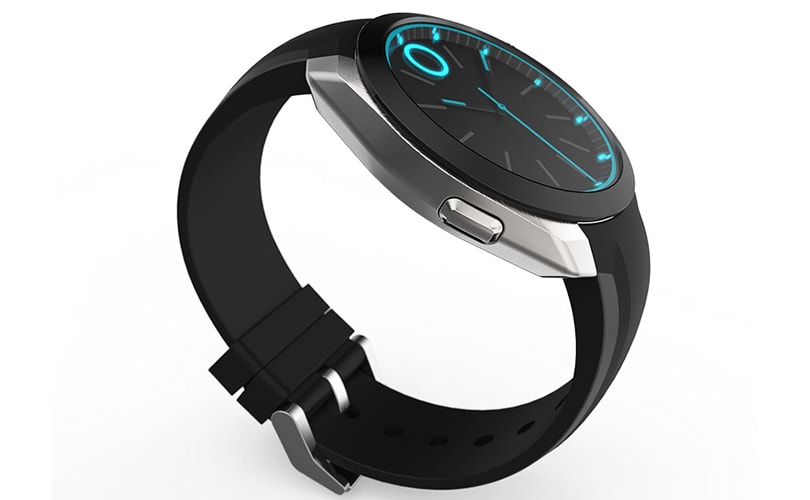
Kristopher Fraser: New York - First, Fossil buys Misfit, and now this. Movado has announced that they will be partnering with HP for a new connected watch. The 134-year-old Swiss company, known for the solitary dot at the 12 hour marker, decided that it was time that they became technologically savvy. Their first technology enabled product is called the Movado Bold Motion. The price point for the watch is 695 dollars, and it comes in two styles, a stainless steel with a black PVD finish, or all black stainless steel. The 44-mm case has a matte, ceramic finish and black dial with the option of a teal blue or white LED dot, hands, and hour markers. Despite the introduction of technology, Movado didn't want to stray too far away from their signature aesthetic. The watch is meant to be an extension of the Movado Bold collection that was introduced in 2010. The design for the watch was a long time coming. Movado unveils connected watch in collaboration with HP: The design process took over a year, and Movado wanted to make sure that while it was up to date with the times, it wouldn't be an overly tech heavy watch. They did their best to keep the technology subtle, because they weren't taking the computer-on-the-wrist approach Apple takes. “We’re not attempting to make smart objects, it’s about making existing objects smarter, and that means we have taken a watch and unobtrusively added technology,” Sridhar Solur, general manager, wearables, HP said to WWD. The tech functions of the watch include simple things, like giving time cues that are indicated with the LED display lighting up and haptic vibrations. All watch technology is powered by HP. As of this morning, the Movado Bold Motion is available for pre-order at movado.com and engineeredbyhp.com. Third party retailers will begin carrying the watch in December. Specifications for the watch also include monitoring features, like tracking how many unread e-mails you have. The charge for the watch can also last for about a week on average. The intertwining of fashion and technology continues, and Movado was the next domino in the domino effect.photo:hp.com, Source: Article

Thursday, 17 September 2015

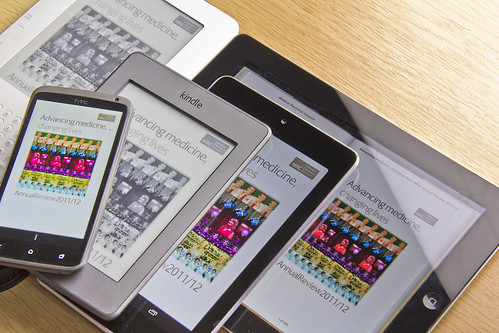
Tablets, phones increasingly popular for TV viewing

Tablets and phones
Data from Hub Entertainment Research’s annual Finding Input One study shows dramatic growth in the use of tablets and smartphones for TV viewing. Among consumers 16-64 who watch some TV shows online:
  • Half use a tablet to view TV shows (51 per cent), a 15-point jump from just last year (36 per cent).
  • More than a third use a smartphone for TV viewing (37 per cent), up 7 points from 2014 (30 per cent).
  • More online content is being watched on TV sets. 71 per cent say they watch shows from online sources on a TV connected to the Internet, 9 points higher than last year.
  • Smart TVs in particular have made major strides. In 2015, 39 per cent of those who watch online shows on a TV set use a Smart TV, vs. 42 per cent who connect through a game console, the most popular connection device. That gap has closed rapidly since 2013, when consumers were twice as likely to use game consoles than Smart TVs (52 per cent to 25 per cent).
However, the popularity of mobile devices for TV viewing has NOT created a demand for streaming live TV to tablets and smartphones.
  • For example, only 8 per cent of consumers say it’s essential to be able to watch episodes of scripted shows on a phone or tablet live, at the same time they air, and just an additional 20 per cent consider it very important.
  • Even live sports is not considered a must-have on mobile devices. A mere 10 per cent of consumers consider it essential to be able to watch live sports events on tablets and phones, and only 16 per cent say it’s very important.
  • But tech-loving Millennials must attach more importance to live TV on mobile? Not really: only 11 per cent of 18-34 year olds call live sports on mobile essential, with 20 per cent calling it very important.
Other key findings from the study:
  • 53 per cent of 16-34 year olds use a device other than a traditional pay-TV set-top box as their default for TV viewing—the first device they turn on to watch TV programming.
  • Consumers are increasingly taking TV capabilities into account when purchasing multifunctional devices. For example, over 6 in 10 who use a game console to watch online say that TV viewing was a reason for buying the console they chose—and 33 per cent say it was a major reason.
The Implications: “More TV is watched live than any other way, and at the same time we’ve seen a major jump in the use of mobile devices for TV viewing,” said Peter Fondulas, one of the study authors. “One might think that would create a strong market for live TV on tablets and phones, but that hasn’t been the case. Mobile viewing is still highly situational, and the scenarios that make mobile viewing convenient don’t necessarily align with linear TV schedules.” “One of the most important trends we’re seeing is the growth of TV sets connected to the Internet,” said Jon Giegengack, co-author of the study. “For most TV consumers, the big screen is still the main, if not the only, way to watch. Inexpensive and easy-to to use peripherals, and especially Smart TVs with a built in connection, remove one of the last logistical barriers between mainstream consumers and online TV sources.”Source: ArticleImage: Flickr.com

Monday, 27 July 2015

8 New Tech Gadgets For the Gizmo Addicts

By Thegadgetflow: Wondering how to add some technological fun to your everyday life? How about something super cool like an electric apparel or a golf tracking system! Given the rate at which new technology gadgets are on the rise, such concepts are not sci-fi anymore. Here's a look at 8 such high tech gadgets you'd love to experiment with sometime in your life for sure.
  • LUNATIVE Electric Apparel: Imagine you could enlighten your jacket whenever you want! Become visible in a magical, appealing and connective way. LUNATIVE – the world's first real ELECTRIC APPAREL. LUNATIVE Quality is based on GERMAN TECHNOLOGY and permanent innovation. Become visible in a magical, appealing and connective way. SHINE ON. BE MOON. BE LUNATIVE. Limited early bird specials now on KICKSTARTER.
  • TRIVOLTY Crystal: The 1-st LED-lights crystal with your own photo engraved inside. TRIVOLTY — is the first unique crystal with a laser engraved photo inside from your iPad, iPhone, camera, laptop or any other device.We can't stop time, but we can memorialize pleasant moments by photo.
  • Tranquil Moments Bedside Speaker & Sleep Sounds: Get maximum sleep relaxation and renewal with the Tranquil Moments Bedside Speaker &Sleep Sounds. It has been based on the DELTA, ALPHA and THETA brainwave system which gives you those deep states of sleep relaxation and enables a perfect rest at the end of the day. The brain will try to match the rhythms of the sound you hear on this speaker and coax you into an ideal sleep you desire.
  • Musio: Your Curious New Friend: The world's first artificially intelligent robot, designed to engage and grow with you. Musio is an artificially intelligent (A.I.) robot designed to learn, adapt and grow with you. Great to simply hang out with or to assist with basic tasks, Musio can be also be used as a learning tool forchildren. The more you use Musio, the smarter it becomes. We will be embarking on this adventure together.
  • Arccos – Golf Stat Tracking System: Trying to master your skills on golf? Why not make use of the Arccos Golf Stat Tracking System. It's the first, fully automatic, real-time GPS and shot-tracking system. This system will record all aspects of the game and give you a proper analysis based with the help of the Tour Analytics platform. So you get to explore your strength, weakness as well as trends and make better decisions in your game thereafter.
  • Mr. Everything: All in one charging station that charges your smartphone, tablets, laptops, and even your car! You can charge your devices wireless, through four 2.1Amp USB ports, and built in AC outlet. Includes cinema quality Bluetooth speaker that connects to your device with a single touch through NFC, built in storage, LED light and so much more. Combining multiple technology gadgets into one!
  • Lumos – A Next Generation Bicycle Helmet: Lumos is a new and innovative bicycle helmet designed to improve your visibility and ability to communicate your intentions to motorists around you when riding in traffic. Featuring turn signals and automatic brake lights that are built into the helmet, Lumos is for bikers everywhere.
  • Nixplay: The next evolution in Digital Photo Frames, the Nixplay Edge is the perfect showcase for all your photos. With Wi-Fi connectivity and True HD IPS display, connect to Facebook, Picasa and more to manage all your photos from one account *and* create memorable playlists. You can also email photos directly to your frame. It's the perfect gift for family and friends!
Those were some of the coolest new tech gadgets, don't you think? Super easy to use with designs you would want to flaunt and not hide underneath your drawer.Source: articlebase.com

Friday, 3 April 2015

Google turns any TV into computer for under $100

Google has unveiled a tiny HDMI dongle that can turn any TV into a full-fledged computer. Called the Chromebit, it uses Google's Chrome OS. It contains a fully featured, which uses the TV (or a standard monitor) as its display, and wirelessly connects to a keyboard and mouse using bluetooth. ''Smaller than a candy bar, the Chromebit is a full computer that will be available for less than $100,'' Google said. ''By simply plugging this device into any display, you can turn it into a computer. ''It's the perfect upgrade for an existing desktop and will be really useful for schools and businesses.'' Google also said it is releasing its cheapest Chromebook laptops yet, two versions priced at $149 aimed at undercutting Microsoft's Windows franchise and gaining ground in even more classrooms. Various PC manufacturers have been working with Google to design lightweight laptops running on the Chrome operating system since 2011. The newest versions are made by
Hisense and Haier. Hisense's Chromebook can be ordered beginning Tuesday at Walmart.com and Haier's version can be bought at Amazon.com. Their arrival coincides with Microsoft's rollout of a lower-priced Surface tablet in an effort to reach students and budget-conscious families. Pre-orders for that device began Tuesday, too. The success of the Chromebook line is intensifying the PC pricing pressure. The cheaper version of the Surface Pro 3 sells for $499, compared with $799 to $1,949 for the higher-end models.  The discounted version has a slightly smaller screen - 10.8 inches rather than 12 - a slower processor, and less flexible kickstand - just three angles rather than unlimited positions. The Chromebook has served a dual purpose for Google. Like the company's Android software for mobile devices, the Chrome system is set up so users will automatically begin using Google's search engine and other services, such as Gmail and YouTube. Google has used the Chromebooks as a prod to bring down the prices of all PCs, something the company wanted to do because it has more opportunities to show the digital ads that bring in most of its revenue when more people can afford to buy an internet-connected device. Source: Article

Thursday, 2 April 2015

Rhema coaches public speakers in real-time


Despite the Google Glass prototype being put on ice, developers have continued making apps for the wearable technology such as the Rhema app from the University of Rochester in the US. It aims to help people in public speaking by providing real-time feedback so the speaker can adjust their volume and pace of speech accordingly.
Rhema (meaning utterance or things said in Greek) consists of two main pieces of software: the server and the client. When the user speaks, the microphone in their glasses records and transits their voice to a server via WiFi. The speech is then analysed to detect the volume and speed at which the person is talking, and if these are out of the optimal range a notification is transmitted back from the server to the glasses. Experiments with various feedback schemes show that sparse recommendation is more effective to minimise distraction than continuous stream of information,  so only simple notifications appear on the speaker’s visual display. Researchers have experimented with different types of notifications including graphs, text messages and traffic light-like colours. They also looked at using both a continuously-updating display that was up all the time, and individual messages that only appeared sporadically. According to test subjects who used the system, the best type of notification took the form of a simple two-word message (such as louder/slower) that came up for a few seconds, once every 20 seconds. The app is available for free on the University of Rochester’s website. Contact Details and Archive...University of RochesterIource: InAVate

Saturday, 27 September 2014

iPhone 6: Huge demanded phone; pre-order hits 4 million


Apple started taking the pre-order through its website and now in just 24 hours Apple received 4 million order for the iPhone. This shows the popularity of the new iPhone 6 and iPhone 6 plus. The order received is almost twice of the order received at the time of release of iPhone 5 series two years back. The huge demand of the iPhone will delay the deliver of the phone till October. Although many customers will receive the hand set in the month of September. On September 19, company will start selling the iPhone in the stores and through the authorized resellers. In the first phase company will start selling the products in the U.S., Australia, Canada, France, Germany, Hong Kong, Japan, Puerto Rico, Singapore and the UK. In the second phase company will start selling the iPhone in Austria, Belgium, Denmark, Finland, Ireland, Isle of Man, Italy, Liechtenstein, Luxembourg, Netherlands, New Zealand, Norway, Portugal, Qatar, Russia, Saudi Arabia, Spain, Sweden, Switzerland, Taiwan, Turkey and the United Arab Emirates by September 26. iPhone 6 and iPhone 6 plus is with Far Better Display Quality. iPhone 6 display is just not bigger but better in every aspect. Be it true to life color or be it stunning contrast in any angle, it is arguably the most advanced device in respect of display quality. The desktop class architecture along with other advanced level display efficient tech specs made this phone the brightest one as compared to other smartphones.
  • Respectively the resolution of iPhone 6 and iPhone 6 plus versions are 1334x750 and 1920x1080.
  • The display is more power packed with A8 chip.
  • M8 motion coprocessor is more efficient in gathering inputs from advanced level sensors and barometer.
Check more details about iPhone: iPhone 6 - All You Want to KnowSource: Article

Thursday, 11 September 2014

India moves into the wearable tech game with shoes that show you the way

"Wizard of Oz" heroine Dorothy only had to click her ruby red slippers together and they would spirit her home to Kansas. Now, an Indian high-tech start-up is promising to do the same in real life with a new, GPS-enabled smart sports shoe that vibrates to give the wearer directions. The fiery red sneakers, which will also count the number of steps taken, distance travelled and calories burned, will go on sale in September under the name LeChal, which means "take me along" in Hindi. The shoes come with a detachable Bluetooth transceiver that links to a smartphone app to direct the wearer using Google maps, sending a vibrating signal to indicate a left or right turn. They are the brainchild of 30-year-old Krispian Lawrence and Anirudh Sharma, 28, two engineering graduates who founded their tech start-up Ducere in a small apartment in 2011 with backing from angel investors and now employ 50 people. "We got this idea and realised that it would really help visually challenged people, it would work without any audio or physical distractions," said Lawrence in an interview with AFP. "But then we were trying it out on ourselves and suddenly we were like, 'wait a minute, even I would want this,' because it felt so liberating not having to look down at your phone or being tied to anything." "The footwear works instinctively. Imagine if someone taps your right shoulder, your body naturally reacts to turn right, and that's how LeChal works." Growing sector: Smart shoes aimed at specific demographic markets -- such as dementia sufferers and children whose parents want to keep track of their movements -- are already commercially available. But Lawrence and Sharma believe theirs will be the first to target mass-market consumers, and have focused on creating stylish rather than purely functional footwear. As well as the red sneaker, they are marketing an insole to allow users to slip the technology into their own shoes. "Earlier, wearable technology was always seen as machine-like, nerdy glasses or watches, but now that is changing," said Lawrence. They say they have 25,000 advance orders for the shoes, which will retail at between 100 dollars and 150 dollars. Demand has so far mostly been through word of mouth and through the lechal.com website. But the company is in talks with retailers to stock the shoes ahead of the holiday season in India and the United States. It forecasts it will sell more than 100,000 pairs of the shoes, which are manufactured in China, by next April. Wearable technology is a growing global sector. Market tracker IDC forecast in April that sales would triple this year to 19 million units worldwide, growing to 111.9 million by 2018. The industry's rapid growth has given rise to fears about privacy, although Ducere says it will record no data on users and maintains robust security. The company still hopes its product will be useful for visually impaired people, and experts at the L.V. Prasad Eye Institute in the southern city of Hyderabad are testing its suitability. "It's a perfect intuitive wearable item. You may forget to wear a belt or a helmet, but shoes you can never leave the house without," said Anthony Vipin Das, a doctor at the institute. "LeChal solves orientation and direction problems, it's a good assistant to the cane." Possible problems include battery failure or loss of Bluetooth connectivity, which Das says could be fixed by providing a live feed of a user's position to a friend or relative, with their consent. The company says it could use a portion of any future profits to subsidise the shoes for disabled users. For all the shoes' high-tech features, Lawrence's favourite thing is that he no longer loses his phone -- if the wearer moves too far from his or her phone, the shoes buzz to warn them. "I'm a very forgetful person and the best part is that the shoes don't let you forget your phone," he said. (Annie Banerji, AFP) Photos: From lechal.com, Source: Fashion United