bloggggg

Home  |  Live  |  Science  |  Lifestyle  |  Entertainment  |  Broadcast  |  Games  |  eBooks  |  Astounds  |  Adbite  |  Cricbell  |  Cyber  |  Idea  |  Digital  |  Privacy  |  Publish  |  ePaper  |  Contact  .Subscribe.Subscribe.Subscribe.Subscribe.Subscribe.Subscribe.Subscribe.Subscribe.Subscribe
Subscribe

Tuesday, 11 November 2025

New discovery reveals chimpanzees in Uganda use flying insects to tend their wounds

Kayla Kolff, Osnabrück University

Animals respond to injury in many ways. So far, evidence for animals tending wounds with biologically active materials is rare. Yet, a recent study of an orangutan treating a wound with a medicinal plant provides a promising lead.

Chimpanzees, for example, are known to lick their wounds and sometimes press leaves onto them, but these behaviours are still only partly understood. We still do not know how often these actions occur, whether they are deliberate, or how inventive chimpanzees can be when responding to wounds.

Recent field observations in Uganda, east Africa, are now revealing intriguing insights into how these animals cope with wounds.

As a primatologist, I am fascinated by the cognitive and social lives of chimpanzees, and by what sickness-related behaviours can reveal about the evolutionary origins of care and empathy in people. Chimpanzees are among our closest living relatives, and we can learn so much about ourselves through understanding them.

In our research based in Kibale National Park, Uganda, chimpanzees have been seen applying insects to their own open wounds on five occasions, and in one case to another individual.

Behaviours like insect application show that chimpanzees are not passive when wounded. They experiment with their environment, sometimes alone and occasionally with others. While we should not jump too quickly to call this “medicine”, it does show that they are capable of responding to wounds in inventive and sometimes cooperative ways.

Each new insight adds reveals more about chimpanzees, offering glimpses into the shared evolutionary roots of our own responses to injury and caregiving instincts.

First catch your insect

We saw the insect applications by chance while observing and recording their behaviour in the forest, but paid special attention to chimpanzees with open wounds.Insect application by subadult Damien.

In all observed cases, the sequence of actions seemed deliberate. A chimpanzee caught an unidentified flying insect, immobilised it between lips or fingers, and pressed it directly onto an open wound. The same insect was sometimes reapplied several times, occasionally after being held briefly in the mouth, before being discarded. Other chimpanzees occasionally watched the process closely, seemingly with curiosity.

Most often the behaviour was directed at the chimpanzee’s own open wound. However, in one rare instance, an adolescent female applied an insect to her brother’s wound. A study on the same community has shown that chimpanzees also dab the wounds of unrelated members with leaves, prompting the question of whether insect application of these chimpanzees, too, might extend beyond family members. Acts of care, whether directed towards family or others, can reveal the early foundations of empathy and cooperation.

The observed sequence closely resembles the insect applications seen in Central chimpanzees in Gabon, Africa. The similarity suggests that insect application may represent a more widespread behaviour performed by chimpanzee than previously recognised.

The finding from Kibale National Park broadens our view of how chimpanzees respond to wounds. Rather than leaving wounds unattended, they sometimes act in ways that appear deliberate and targeted.

Chimpanzee first aid?

The obvious question is what function this behaviour might serve. We know that chimpanzees deliberately use plants in ways that can improve their health: swallowing rough leaves that help expel intestinal parasites or chewing bitter shoots with possible anti-parasitic effects.

Insects, however, are a different matter. Pressing insects onto wounds has not yet been shown to speed up healing or reduce infection. Many insects do produce antimicrobial or anti-inflammatory substances, so the possibility is there, but scientific testing is still needed.

For now, what we can say is that the behaviour appears to be targeted, patterned and deliberate. The single case of an insect being applied to another individual is especially intriguing. Chimpanzees are highly social animals, but active helping is relatively rare. Alongside well-known behaviours such as grooming, food sharing, and support in fights, applying an insect to a sibling’s wound hints at another form of care, one that goes beyond maintaining relationships to possibly improving the other’s physical condition.

Big questions

This behaviour leaves us with some big questions. If insect application proves medicative, it could explain why chimpanzees do it. This in turn raises the question of how the behaviour arises in the first place: do chimpanzees learn it by observing others, or does it emerge more spontaneously? From there arises the question of selectivity – are they choosing particular flying insects, and if so, do others in the group learn to select the same ones?

In human traditional medicine (entomotherapy), flying insects such as honeybees and blowflies are valued for their antimicrobial or anti-inflammatory effects. Whether the insects applied by chimpanzees provide similar benefits is still to be investigated.

Finally, if chimpanzees are indeed applying insects with medicinal value and sometimes placing them on the wounds of others, this could represent active helping and even prosocial behaviour. (The term is used to describe behaviours that benefit others rather than the individual performing them.)

Watching chimpanzees in Kibale National Park immobilise a flying insect and gently press it onto an open wound reminds us how much there is still to learn about their abilities. It also adds to the growing evidence that the roots of care and healing behaviours extend much further back in evolutionary time.

If insect applications prove to be medicinal, this adds to the importance of safeguarding chimpanzees and their habitats. In turn, these habitats protect the insects that can contribute to chimpanzee well-being.The Conversation

Kayla Kolff, Postdoctoral researcher, Osnabrück University

This article is republished from The Conversation under a Creative Commons license. Read the original article.

Wednesday, 23 July 2025

German Wellbrock wins world 10km swim after water quality delay


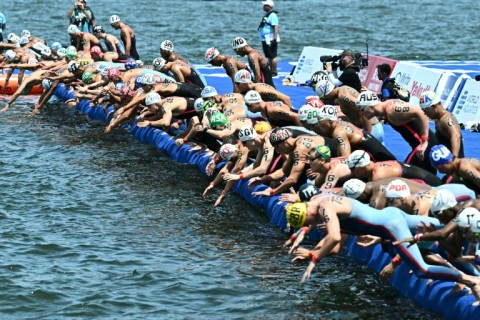
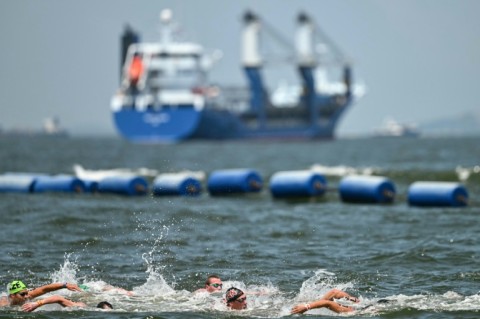
Germany's Florian Wellbrock won the men's open water 10km at the World Aquatics Championships in Singapore on Wednesday, after the race had been postponed for several hours because of poor water quality.

Wellbrock, the gold medallist at the Tokyo Olympics in 2021, won his third open water world title in a time of 1hr 59min 55.50sec at the Sentosa Island course when the race eventually began at 1:00 pm.

Italy's Gregorio Paltrinieri took silver 3.70sec adrift, followed by Australia's Kyle Lee in bronze.

"It was really tough today. I think it was the warmest waters that we've had to race in," said Wellbrock of the sea temperature, which was around 30 degrees Celsius.

"I had one year to prepare for this. We did a lot of heat training and I think that was the key today to me taking the gold."

AFP/File | Manan VATSYAYANA

Governing body World Aquatics delayed the race because water quality was "exceeding acceptable thresholds".

The women's 10km race had already been postponed on Tuesday and moved to Wednesday.

When it did finally get under way at 4:00 pm, Moesha Johnson added world championship gold to the silver medal she won at the Paris Olympics last year.

The Australian came home first in 2hr 7min 51.30sec, finishing ahead again of Paris Olympics bronze medallist Ginevra Taddeucci of Italy (2:07:59.70).

Lisa Pou of Monaco (2:07:57.50), who was 18th in the Paris Olympics last summer, came in third for a surprise bronze medal.

World Aquatics said early Wednesday morning that the new afternoon time slots for the races were "subject to acceptable test results".

But soon after, they confirmed both races would proceed in the afternoon as further analysis had found "significant improvement" in bacterial content and water temperature.

"Regular water quality monitoring and testing continues throughout the competition period to ensure athlete safety," World Aquatics said in a statement.

AFP | Manan VATSYAYANA

"The health and safety of all participants continues to guide all competition-related decisions."

The governing body said levels of E. coli bacteria had dropped to between the ranges of "good" and "excellent", according to World Aquatics and World Health Organization regulations.

Water quality was a big problem for events held in the River Seine at last year's Paris Olympics.

Of the 11 days of events and training scheduled in its murky waters, only five got the green light.The river remained dogged by pollution problems despite a 1.4 billion euros ($1.5 billion) upgrade to improve the Paris sewerage and water treatment system. German Wellbrock wins world 10km swim after water quality delay

Thursday, 4 April 2024

Germany aims to build fusion power plant

Bettina Stark-Watzinger announcing the new fusion research funding programme (Image: BMBF)

A new funding programme for nuclear fusion research has been announced by Germany's Federal Research Minister Bettina Stark-Watzinger aimed at paving the way for the first fusion power plant to be constructed in Germany by 2040.

The Federal Ministry of Education and Research (BMBF) has long supported fusion research at the Max Planck Institute for Plasma Physics (IPP) in Garching and Greifswald, at the Karlsruhe Institute of Technology (KIT) and at the Research Center Jülich (FZJ).

"This institutional funding is supplemented by a second pillar with the new project funding programme," the ministry said. "The aim of the project funding is to advance the technologies, components and materials needed for a fusion power plant in a first phase by the early 2030s. In the second phase, the focus is on integration into a power plant design. The funding programme is open to technology and addresses both the technology of so-called magnetic confinement and laser fusion."

In order to achieve the construction of a fusion power plant as quickly as possible, the programme is essentially based on application-oriented collaborative research as a form of public-private partnership. Projects on specific sub-technologies are to be carried out jointly by research institutions, universities and industry. The ministry said this allows new findings from research to be taken up at an early stage and know-how to be transferred to the domestic industry for further use.

"The energy crisis has shown us how important a clean, reliable and affordable energy supply is," Stark-Watzinger said. "And fusion is a huge opportunity to solve all of our energy problems. Thanks to its excellent research landscape and strong industry, Germany offers excellent conditions for the construction of fusion power plants.

"This is where we come in with our new funding programme - named Fusion 2040 - Research on the way to a fusion power plant - and we want to pave the way to the first fusion power plant in Germany. We want to build a fusion ecosystem made up of industry, start-ups and science so that a fusion power plant in Germany becomes a reality as quickly as possible."

She said the government wants to "bundle Germany's existing strengths and create synergies between the different players".

"The global race is on. I would like us in Germany to be among the first to build a fusion power plant. We must not miss this huge opportunity, especially with a view to growth and prosperity," the minister said.

In September last year, Stark-Watzinger announced that Germany would significantly increase research funding for fusion with an additional EUR370 million (USD403 million) over the next five years. Together with funds already earmarked for research institutions, the ministry will provide more than EUR1 billion for fusion research by 2028.

In August 2011, the 13th amendment of the Nuclear Power Act came into effect, which underlined the political will to phase out fission nuclear power in Germany. As a result, eight units were closed down immediately: Biblis A and B, Brunsbüttel, Isar 1, Krümmel, Neckarwestheim 1, Phillipsburg 1 and Unterweser. The Brokdorf, Grohnde and Gundremmingen C plants were permanently shut down at the end of December 2021. The country's final three units - Emsland, Isar 2 and Neckarwestheim 2 - shut down in April last year.Researched and written by World Nuclear News Germany aims to build fusion power plant : Nuclear Policies - World Nuclear News:

Thursday, 29 February 2024

India slowly taking export market share from China, study shows

Smartphone with Chinese applications is seen in front of a displayed Indian flag and a “Banned app” sign in this illustration picture taken July 2, 2020. REUTERS/Dado Ruvic/Illustration/File Photo
  • 28 February 2024, (Bloomberg) — India is chipping away at China’s dominance in electronics exports in some key markets as manufacturers diversify supply chains away from the world’s factory to other parts of Asia, a new study shows.
  • The impact is most pronounced in the UK and US, where geopolitical tensions with China have increased in recent years.
  • India’s electronics exports to the US as a ratio of China’s increased to 7.65% in November last year from 2.51% in November 2021, according to London-based Fathom Financial Consulting. In the UK, the share rose to 10% from 4.79%.
  • India’s government is luring electronics manufacturers to the country with heavy incentives, such as tax cuts, rebates, easier land acquisition and capital support. The aim is to expand the domestic manufacturing industry in order to export more, and help businesses grow to global scale through partnerships.
  • India houses Samsung Electronics Co.’s biggest mobile phone factory, while Apple Inc. makes at least 7% of all its iPhones in India through its contract manufacturer Foxconn Technology Group and Pegatron Corp.
  • The rise in electronic exports is “likely the result of Foxconn’s increasing investment in India,” Andrew Harris, an economist at Fathom Financial Consulting, wrote in a note last week.
  • India’s progress in gaining market share has been more limited in Europe and Japan, “suggesting a move towards dual supply chains (China plus one) rather than a complete abandonment of China-based production, at least for now,” Harris said. The report shows that India’s electronics exports as a ratio of China’s was 3.38% in Germany and 3.52% globally.
  • Indian companies have been touting their role in multinationals’ ‘China plus one’ strategy, which sees manufacturers developing back-up capacity in other countries.India’s rising market share is a boost for Prime Minister Narendra Modi, who has touted his ‘Make in India’ plan as a way of creating jobs, expanding exports and making the economy more self reliant by reducing the need for imports. He’s widely expected to win a third term in office in elections due within a few months. India slowly taking export market share from China, study shows

Thursday, 7 December 2023

Volkswagen to reduce workforce as it chases profits

BERLIN - Volkswagen said Wednesday it would cut its workforce over the coming years as the German auto giant seeks to boost its profitability and reboot a faltering shift to electric cars.

"Over the coming years, we will need to reduce our workforce in a socially responsible way," the group's human resources chief Gunnar Kilian said.

The focus would be on "partial retirement and early retirement schemes to the maximum extent possible," he added, in a statement issued after a meeting with employees in Wolfsburg, where the firm is headquartered.

He did not indicate how many roles would be affected at the 10-brand group, whose marques include Audi, Skoda and Seat.

But he said the aim was to reduce staff costs in areas outside production by about 20 percent.

He stressed this did not mean having 20 percent fewer people, and most savings would "come from process improvements and structural adjustments".

Volkswagen has some 675,800 employees worldwide.

The group announced in June a 10-billion-euro ($10.8 billion) savings programme to help increase profitability -- its profit margins are currently languishing behind its long-term target of between nine and 11 percent.

The group is pouring tens of billions of euros into its pivot to electric vehicles, but the sector has been blighted by a weak global economy and low levels of demand.

In addition, it is facing a serious challenge from homegrown rivals in China, one of its most important markets.

Like other manufacturers in Europe's biggest economy, it is also battling rising costs due to high inflation and elevated energy prices since the outbreak of the Ukraine war.

On Wednesday, Thomas Schaefer, head of the Volkswagen brand, outlined measures that had already been decided upon to reduce costs.

These range from dropping a plan to build a new research and development centre, to speeding up product development. In September, VW said it was cutting 269 temporary jobs at its flagship electric car plant in Zwickau. Volkswagen to reduce workforce as it chases profits

Wednesday, 6 September 2023

From the Easel: Artist Tara Sabharwal’s journey from inner focus to worldly reality

Tara Sabharwal’s etching ink watercolor and pastel on monoprinted paper. 2022. PHOTO: courtesy Tara Sabharwal, via Sandy Levine

In this edition of “From the Easel” we spoke with artist Ela Shah’s colleague Tara Sabharwal. Sabharwal’s early work reflected an inner focus on her dreams, and memories. For the past six years, she’s turned outwards, working with other artists to address the migration crisis and the rise of populism and xenophobia. Below are excerpts from her interview with writer Sandy Levine.

Sandy Levine: Could you tell us your backstory?

Tara Sabharwal: “I was born in New Delhi in 1957. I have a clear memory of drawing a glass of water one afternoon, when I was thirteen years old, and being transported into myself in an eternal moment of beauty. It was like waking up from a deep sleep. I knew instantly that painting was my path, and I have been on it since.”

SL: Did you study art academically?

TS: “My formal art education started in 1975 at MS University Baroda, an art institute that shaped the course of Indian art history, both modern and contemporary. While the curriculum was grounded in Indian art and philosophy, the teachers exposed us to international contemporary art practices.”

SL: Who and what were your major influences and why?

TS: “Nasreen Mohammedi, an influential teacher seeped in minimalism, Zen, and Sufi, became a close mentor and ally, and taught me at an impressionable age to look within myself. She insisted that I was already grounded in who I really am, it is just a matter of removing veils of illusion and ignorance. During these six years at Baroda, I battled blinding fogs of confusion. Drawing from life and nature, while digging into the dense psycho-spiritual forest within, I gradually built the foundation of my art practice…

“In 1982, I won a British Council grant to do my master’s degree in Painting at the Royal College of Art in London. I expanded in new directions… It was stimulating being out of India suddenly and to be looking at a range of original Western art for the first time…Using the language of Indian miniatures, I wove European influences into my work. I did not want to fuse the two, but rather, let them coexist to form a distinct identity.”

SL: Tell us about your early career—the difficulties, hurdles, and triumphs.

TS: “I returned to India in 1985 for three productive years…I made small watercolors on wasli (Indian miniature paper) with watercolor and pigment. Using emotive color and simple figures in an intimate space, I sought to explore regions of enchantment, reverie, alienation, and uncertainty…

“In 1990, I visited New York City. Several exciting opportunities opened, and I have been here since. I started working at the Robert Blackburn Printmaking Workshop where Bob became a friend and mentor. I continue to work there and have served on its board. Chester Herwitz, a collector of contemporary Indian art, purchased paintings, and financed my stay…These were vibrant years, enjoying the city’s rich cultural diversity and artist communities…The lithographs and paintings of this period, developed a raw spontaneity, embodying the fleeting emotions of uprootedness and transition in a charged city.”

SL: What have been the major influences or motivators in your work. How do you express those influences in your work?

TS: “I have an abiding interest in the unconscious, and in evoking a specific mood related to a place or event…In the 2000s I imagined a world under my skin: in a landscape of organs, cells, blood vessels, activity, and order. From these images of the body emerged an awareness of myself as a freer being yet trapped within the body. It led to a series about enclosures (home, body, vessel, bottle, womb) exploring our concurrent drive to be contained and to be free. I also made two portfolios, ‘Life Journeys’ and ‘Homes and Paths’ exploring homes left, lost, remembered, revisited, and continually reinvented. They narrate the story of my migration and a search for myself through it.

“From 2013 to 2017, my paintings began to move away from figuration, becoming larger, freer, and more painterly. I began them in the print shop, developing marks and movements on large paper and complete them in my home studio, gently layering collage, acrylic and watercolor washes. In a residency in Kassel, Germany, I printed some on canvas and experimented with developing them as oil paintings and I began working on large oil paintings.

“My work took a big turn in 2017 while I was in NY…What started as a meditation on my own displacement, morphed into a plea for the refugees fleeing war and poverty. In their journey, while so much harder and complex, I saw my triangulation between homes and cultures, and our essential human condition.”

SL: What has been your greatest career achievement…and your life’s greatest satisfaction?

TS: “Since 2017, my paintings, drawings and prints have been addressing the migration crisis and the rise of populism and xenophobia around me. Alongside, I have been curating shows with artists that I met in national and international residencies. With these diverse and inspiring artists, I was able to form ‘inBEtween,’ an ever-expanding group of 30-plus artists from the United States, South America, Germany and India, whose work addresses intersectionality, displacement, and immigration/migration. All the artists in the group create work about the ‘other’…

“In January 2020, I curated ‘YOU WILL KNOW ME, Migration Stories,’ at Art Alive gallery, New Delhi. The large multimedia show was accompanied by a seminar featuring Ashis Nandy, my collaborators at the Jawaharlal Nehru University, and prominent intellectuals, activists, and artists. At the time, India was ablaze with sectarian conflict…It was an inspiring moment of resistance and solidarity, and our show and seminar was timely.

“During the COVID years my work has taken on new directions. Eco feminism embraces this tyranny of patriarchy, capitalism, and colonialism and its exploitation of women, poor and marginalized communities, animals and the Earth and its resources. I am looking forward to my solo show in Dec. 2023 with Art Alive gallery at Bikaner house, New Delhi. This will be the biggest show of my life to date and will include work in a variety of media and styles from the last decade.”

SL: What advice would you give to young artists who want to pursue art—in all its iterations—as a career?TS: “Carry on. Follow only yourself and your true nature. Only you know where you are going and what choices you need to make. Live life to the fullest, be kind to yourself and others around you.” Source: https://www.newsindiatimes.com/

Sunday, 20 August 2023

M&M aims to double exports in 3 years with new OJA platform


  • By Aniket Gupta:  Mahindra & Mahindra (M&M), the leader among India’s tractor industry companies, has set its sights on a remarkable goal. It aims to double its exports from India within the next three years.
  • This ambitious plan will gain momentum from the introduction of its innovative platform, OJA, which was recently unveiled in Cape Town, South Africa.
  • Mahindra Tractors is a part of the group’s farm equipment division of the $19.4-billion Mahindra Group, and the flagship unit of the division.
  • During the year ended 31 March 2023, the Mahindra Group exported 18,104 tractors. Hemant Sikka, president of the farm equipment segment, aims for a substantial leap, aspiring to raise this figure to 36,000 tractors by fiscal 2025-26.
  • With the introduction of the OJA lineup, M&M is embarking on an expansion into a dozen new markets. This initiative includes the establishment of a new office in Thailand, which will serve as a strategic base for accessing the ASEAN markets.
  • The company's sights are set on European markets as well, with special focus on countries renowned for vine cultivation, such as Germany, Italy, and Spain. Sikka emphasized that M&M currently lacks a footprint in both regions, ASEAN and Europe.
  • What about the American market? Growth there has been slow, but Sikka anticipates this is a temporary situation.
  • In Brazil, M&M has already achieved a remarkable feat by increasing its market share from 3.5 per cent to an impressive 7.2 per cent in the past two years.
  • Distinct sub-platforms
  • Comprising four distinct sub-platforms — sub-compact, compact, small utility, and large utility — the OJA platform is a comprehensive family. At present, the sub-compact tractor range is earmarked exclusively for international markets and will not be offered in India. Special attention will be paid to the American market, according to Sikka.
  • However, Sikka has noted that if there is a demand for the sub-compact category within India, its introduction in India too would be considered.
  • Beginning in January 2024, M&M is set to initiate the export of the sub-compact series within the OJA tractor range. On the other hand, the introduction of the expansive utility platform is reserved for a later timeframe, anticipated around the fiscal year 2025-26. This forthcoming platform is created to serve both the domestic Indian market and international export markets. 
  • What about pricing? The Mahindra OJA 27 HP tractor will be priced at Rs 5.64 lakh, and the OJA 40 HP tractor at Rs 7.35 lakh.
  • Production of the OJA range will happen at M&M's Zaheerabad facility in Telangana, which has a total annual manufacturing capacity of 100,000 tractors.
  • Sikka notes that the tractor industry has maintained a consistent compound annual growth rate (CAGR) of approximately 7 percent over several years. In contrast, in the horticulture segment, tractors are experiencing a faster, double-digit growth rate.
  • The OJA series is a dedicated range of tractors tailored for specific uses, finding utility in both horticulture and paddy cultivation. Sikka explains that paddy farming need to be lighter as the presence of water makes heavier tractors vulnerable to sinking in the fields.In an unveiling event on Tuesday, 15 August 2023, M&M introduced three distinct OJA offerings spanning a weight range of 700 kg to 2000 kg and containing power capacities ranging from 20 horsepower to 40 horsepower. Source: https://www.domain-b.com/

Wednesday, 17 February 2016

German fusion reactor achieves first plasma

The Wendelstein 7-X stellarator (Image: Thorsten Brauer/IPP)
After more than a year of technical preparations and tests, the Wendelstein 7-X stellarator has produced its first helium plasma. Assembly of the Wendelstein 7-X - the world's largest stellarator-type fusion device - at the Max Planck Institute for Plasma Physics (IPP) in Greifswald, Germany, began in April 2005 and was completed in April 2014. The operational preparations have been under way ever since. Each technical system - the vacuum in the vessels, the cooling system, the superconducting coils and the magnetic field they produce, the control system, as well as the heating devices and measuring systems - has been tested in turn. On 10 December, the operating team in the control room started up the magnetic field and initiated the computer-operated experiment control system. It fed around one milligram of helium gas into the evacuated plasma vessel and switched on the microwave heating for a short 1.3 MW pulse. The first plasma could be observed by the installed cameras and measuring devices. The first plasma in the machine had a duration of one-tenth of a second and achieved a temperature of around one million degrees Celsius. The next task will be to extend the duration of the plasma discharges and to investigate the best method of producing and heating helium plasmas using microwaves. Project leader Thomas Klinger said, "We're starting with a plasma produced from the noble gas helium. We're not changing over to the actual investigation object, a hydrogen plasma, until next year." He added, "This is because it's easier to achieve the plasma state with helium. In addition, we can clean the surface of the plasma vessel with helium plasmas." Wendelstein 7-X will allow IPP researchers to study high energy plasma under stable conditions. Wendelstein is a stellarator fusion reactor - different to a tokamak fusion reactor such as the Joint European Torus in the UK or the Iter device under construction in France. A tokamak is based on a uniform toroid shape, whereas a stellarator twists that shape in a figure-8. This gets around the problems tokamaks face when magnetic coils confining the plasma are necessarily less dense on the outside of the toroidal ring. Wendelstein 7-X is to operate for two years without active cooling, during which time it will be able to operate for about 50 seconds at 1 MWt, or at 8-10 MW for 5-10 seconds. The machine will then undergo an 18-month shutdown when it will be fitted with an actively cooled divertor for heat fluxes of up to 10 MWt per meter squared. This will bring Wendelstein 7-X to its full steady state capacity. Some €370 million ($408 million) has been invested in the Wendelstein 7-X project, with funding from federal and state governments and the European Union. Researched and written by World Nuclear News. Source: http://www.world-nuclear-news.org/

Monday, 7 September 2015

Over 8,000 asylum-seekers reach Germany amid deepening crisis

A combination picture shows young migrants after arriving by train in Munich on Sunday. Reuters
Berlin, September 6: Europe's refugee crisis has taken a new dimension in Germany with the arrival of over 8,000 asylum-seekers in the southern state of Bavaria from Hungary in one single day. They are the largest group of refugees to land in this country in a single day since the current massive influx of migrants into Europe mainly from Syria, Iraq and Afghanistan that began nearly a month ago. Their entry into Germany yesterday was made possible by an agreement between the German and Austrian governments on Friday to let in thousands of refugees who have been stranded for several days in the Hungarian capital Budapest. Bavarian authorities said more than 6,000 refugees travelled to Munich between yesterday and another 2,000 people followed them late at night. The refugees, who looked cheerful and relieved about ending their ordeal, were given a warm welcome by city authorities and the public as they arrived in Munich. Most of them were later sent by special trains to preliminary reception centres and refugee shelters in different parts of the country. Bavarian officials said they expected the refugee influx to continue in the coming days as several trains carrying them from Hungary are reported to be heading to the Austrian border. Meanwhile, reports from Serbia said several thousand refugees are heading to the country in their desperate efforts to reach Hungary, the gateway to the European Union and to its Schengen passport-free travel area. — Reuters. 
Merkel’s take on migrants splits ruling conservatives
  • Chancellor Angela Merkel's decision to allow thousands of migrants stranded in Hungary to enter Germany caused a rift in her conservative bloc on Sunday when her Bavarian allies accused her of giving "a totally wrong signal" to Europe
  • The dispute broke out after Austria and Germany threw open their borders to thousands of exhausted migrants bussed to Hungary's border by a right-wing government overwhelmed by the sheer numbers and loath to take them in.
  • Germany expects a record influx of 800,000 migrants and refugees this year, by far the most in the European Union. More than 100,000 asylum seekers were registered in August alone.
  • Bavarian Interior Minister Joachim Herrmann, whose Christian Social Union is the regional sister party of Merkel's Christian Democrats in Berlin's ruling coalition, accused her of having pushed forward without asking Germany's federal states that had to deal with the migrant influx
  • Europe tracks army of 30,000 migrant smugglers
  • With the world still reeling from images of a drowned Syrian boy, European authorities say it is their top priority to fight an army of an estimated 30,000 people-smuggling suspects blamed for such tragedies
  • Officials say the deadly business that may be worth billions of dollars is preying on the sheer desperation of growing numbers of people fleeing war and poverty in places like Syria, Afgha-nistan, Eritrea and Somalia
  • Smugglers belonging to loose networks are increasingly using social media, well-organised routes and ruthless tactics to bring waves of refugees and migrantsto Europe

Saturday, 15 August 2015

A green professional life kicks off

Greeting the new trainees at headquarters Herongen
With the start of the new educational year the Landgard Gruppe is greeting 26 new apprentices nationwide. In the coming two to three years, the career starters will get to know the many different kinds of fields of activity at Germany’s leading marketer for flowers and plants, as well as fruit and vegetables. The new apprentices divide themselves among the training courses, businessman in wholesale- and international trade, businessman for shipping and logistic services, inventory logistics expert, professional driver and IT specialist in system integration. This educational spectrum records the manifold career possibilities within the Landgard Gruppe. Nine out of 26 junior employees have begun their training at the headquarters of the group of companies in Herongen. Together with six more trainees from other locations, they are greeted on their first day by the CEO of Landgard eG, Ronny Böhm, Business Partner Human Resources, and the training supervisor Johanna Vennekel. On this occasion, besides extensive information about the company group, they received an overview of their education program. The new apprentices expect diverse possibilities at Landgard, for they will run through many different departments during their studies, and thus gaining an impression of the very different fields of activity. Landgard wishes the new apprentices in the different locations a good start in their professional careers. The new application procedure for apprenticeships starts after the summer holidays. Source: Landgard, Publication date: 8/12/2015, Source: Article

Sunday, 19 April 2015

World's first robotic kitchen to debut in 2017

The world's first automated kitchen system was unveiled this week at Hanover Messe in Germany – the premier industrial robotics show. Developed by tech firmMoley Robotics, it features a dexterous robot integrated into a kitchen that cooks with the skill and flair of a master chef. The company's goal is to produce a consumer version within two years, supported by an iTunes-style library of recipes that can be downloaded and created by the kitchen. The prototype at the exhibition is the result of two years development and the collaboration of an international team including Sebastian Conran who designed the cooking utensils and Mauro Izzo, DYSEGNO and the Yachtline company, who created the futuristic kitchen furniture. Two complex, fully articulated hands, made by the Shadow Robot Company, comprise the kitchen's key enabling technology. The product of 18 years' research and development, Shadow's products are used in the nuclear industry and by NASA. Able to reproduce the movements of a human hand with astonishing accuracy, their utility underpins the unique capability
of the automated kitchen. The Moley Robotics system works by capturing human skills in motion. Tim Anderson – culinary innovator and winner of the BBC Master Chef competition – played an integral role in the kitchen's development. He first developed a dish that would test the system's capabilities – a crab bisque – and was then 3D recorded at a special studio cooking it. Every motion and nuance was captured, from the way Tim stirred the liquids to the way he controlled the temperature of the hob. His actions were then translated into elegant digital movement, using bespoke algorithms. The robot doesn't just cook like Tim – in terms of skill, technique and execution it is Tim producing the dish. The kitchen even 'signs off' its work with an 'OK' gesture – just as the chef does. "To be honest, I didn't think this was possible," he said. "I chose crab bisque as a dish because it's a real challenge for a human chef to make well – never mind a machine. Having seen – and tasted – the results for myself, I am stunned. This is the beginning of something really significant: a whole new opportunity for producing good food and for people to explore the world's cuisines. It's very exciting." Moley Robotics, headquartered in the UK, is now working to scale the technology ready for mass production and installation in regular-sized
kitchens. Future iterations will be more compact, with smaller control arms but with added functionality in the form of a built-in refrigerator and dishwasher tocomplement a professional-grade hob and oven. The company is working with designers, homebuilders, kitchen installers and food suppliers to promote the system. The mass-market product will be supported by a digital library of over 2,000 dishes when it launches in 2017 and it is envisaged that celebrity chefs will embrace 3D cooking downloads as an appealing addition to the cook book market. Home chefs will be able to upload their favourite recipes too, and so help create the 'iTunes' for food. Moley Robotics was founded by London-based computer scientist, robotics and healthcare innovator Mark Oleynik. The company's aim is to produce technologies that address basic human needs and improve day-to-day quality of life. "Whether you love food and want to explore different cuisines, or fancy saving a favourite family recipe for everyone to enjoy for years to come, the Automated Kitchen can do this," says Oleynik. "It is not just a labour saving device – it is a platform for our creativity. It can even teach us how to become better cooks!" The robotic hands demonstrated this week offer a glimpse of the not-too-distant future, when even greater advances in movement, flexibility, touch and object recognition will have been achieved. Experts believe that near-perfect recreations of human hands, operating in a wide variety of environments, will be possible in just 10 years' time.World's first robotic kitchen to debut in 2017

Saturday, 20 September 2014

Netflix to boost German video revenues to €7.4bn

Netflix on Apple TV
Total consumer spend on video entertainment in Germany will increase by 2 per cent in 2014 to over €6.9 billion after 5 per cent growth in 2013, and is on course to reach a total of €7.4 billion by 2018, according to findings from research and knowledge-based consulting company Futuresource Consulting. This growth is primarily being driven by the continued momentum in pay-TV spend, combined with the renewed activity in the digital video sector. Overall digital spend will see a marked increase in 2014, by almost 50 per cent driven by new services and increased investment in the sector. “The majority of the growth is attributable to subscription video on demand (SVoD), which is set to at least double in 2014, helped by the recent launch of Netflix and Amazon Prime Instant Video,” says David Sidebottom, Senior Market analyst at Futuresource Consulting. “These major services, together with the continued development of the Pay-TV sector, will drive the evolution of the video sector in Germany.” “The arrival of Netflix in Germany marks the beginning of an exciting new era for the German video market, and for German consumers. However, it won’t be without its challenges, given the German consumers affinity for packaged media and many being traditionally resistant to premium subscription services. Also, the strength of free-to-air television has also been an obstacle to both digital video and Pay-TV services historically,” he advises. According to Sidebottom, the much anticipated arrival of Netflix in additional European countries, including Germany and France, will provide a significant stimulus to the consumer transition to digital video in these countries. “However, it may encounter some cultural resistance, compared to its successful launches in other European countries,” he suggests. The drive in SVoD services will see SVoD spend surpass total transactional digital video spend in 2015, with hardware and service partnerships also helping improve consumer awareness and familiarity. Key to service uptake will be the ability to harness the installed base of connected TVs, which is set to reach 46 per cent of households by the end of 2014. The German pay-TV sector is continuing its impressive rate of growth into 2014, with analogue to digital conversion still a key driver of growth. Between 2010 and 2013, the pay-TV subscribers’ base grew by over 50 per cent, or 5.3 million, to reach over 15 million subscribers, with a further 10 per cent annual growth expected in the next three years. At almost €1.5 billion, packaged video is set to account for over 21 per cent of total video spend in 2014, the highest level of any country in the world. After bucking the global trend and showing growth in 2013, the packaged video market is set to decline by 11 per cent in total in 2014, but still remains in a better state of health when compared to other markets worldwide. Source: ArticleImage: flickr.com

Friday, 12 September 2014

Rocket confirms Frankfurt's 750 million euros IPO

Investment firm AB Kinnevik has confirmed what all in the trade have been waiting for over the past weeks: Rocket Internet AG intends to proceed with an initial public offering (IPO) on the Frankfurt Stock Exchange in 2014. Although the exact date of floating is still to be confirmed, the parent group to fashion e-commerce platforms Zalando, Lamoda, Dafiti and Zalora, is aiming to raise up to 750 million euros in proceeds. “The IPO is a natural next step in Rocket's development as it establishes an even stronger foundation to support the acceleration of its international growth strategy," said Lorenzo Grabau, chairman of the Supervisory Board of Rocket Internet and CEO of Kinnevik. The IPO is intended to take place later in 2014 and the offer is expected to consist solely of new shares from a capital increase, as the company explained Wednesday. The new shares will be of the same class and bearing the same rights as shares held by current Rocket shareholders. Besides, all existing shareholders of Rocket Internet will remain invested and will not sell any shares as part of the offering, meaning that Global Founders (the investment vehicle of Oliver Samwer, the founder and CEO of Rocket, and his brothers), Kinnevik, Access Industries, Philippine Long Distance Telephone Company, United Internet and HV Holtzbrinck Ventures and some of their affiliates will remain a decisive part of the Internet giant´s shareholding. Grabau pointed out that "Rocket Internet has shown tremendous growth over the past years and has proven that its operating platform is a unique basis to consistently create and scale market leading franchises across the five continents.” In this regard, Rocket´s founder and CEO, Oliver Samwer, explained that “Taking our company public is the next step in our journey to build the world's leading Internet platform outside of the United States and China." Rocket´s current shareholders to remain invested for the next stage Kinnevik also assured that all six shareholders will sign lock up commitments not to sell or otherwise dispose of their shares for at least twelve months, reaffirming their commitment with the company. Grabau sealed its company´s commitment in this new stage by saying that "Kinnevik is very supportive of Rocket Internet's intention to list. Our partnership with Rocket, which goes back to 2009, has created substantial value for our shareholders and has contributed to the transformation of our portfolio. We look forward to continuing to work with the Rocket team as the company pursues its exciting growth strategy to build the world's leading Internet platform outside of China and the United States." Rocket intends to use the proceeds from the IPO – expected to come in at 750 million euros gross - to finance its future growth through the launch of new businesses and providing further equity capital to its network of companies. Meanwhile, Samwer shared his excitement about the upcoming float, saying that "We believe the Internet will play a transformational role in people's lives everywhere, particularly in emerging markets.”Source: Fashion United

Sunday, 9 February 2014

China's LDK Solar to buy Germany's Sunways for €24.2 million

Domain-B: With China's LDK Solar Co making preparations to buy Germany's Sunways AG, China now has access to the second-largest solar-panel maker in the world, a new technology and a distribution network in the world's biggest photovoltaic market. Sunways shares were up the most in six months in Frankfurt yesterday following LDK offering to purchase the Constance-based solar-cell and module maker for around €24.2 million excluding contributions in kind. The acquisition, which would be the first by a Chinese solar-energy company
in Germany, a country that saw around 7,400 MW solar capacity installed in 2010. The contributions in kind include Sunways taking indirect ownership in a Chinese company, to give the German manufacturer access to module production in China as also sales outlets for inverters.Source: domain-b.com

Saturday, 29 December 2012

Miss Universe Germany 2012 crowned

Alicia Endemann, 23, a student of business management and also a professional actress from Hamburg, has been crowned Miss Universe
Germany 2012 and will represent Germany in the 2012 Miss Universe finals in Las Vegas, USA, December 19th. Source: Critical Beauty

Sunday, 9 December 2012

Germany: Increasing supply of European mandarins


An increasing amount of mandarin varieties hit German wholesale markets this week. Dwindling quality from oversees caused an increase of Primosole from Spain and Italy. Spanish Clementines also flooded the market. Other prominent varieties included Clemenrubi, Clemenules, Marisol, Clauselina's and Okitsu. Week 43 also saw the arrival of the first shipments from Turkey. Regular assortment was sold for 1 Euro per kilo and top branches even went for 24 Euro per 10 kilo. Source: Fresh-Plaza

Friday, 9 November 2012

Zhejiang University Week kicks off in Germany

Prestigious Zhejiang University of China launched week-long activities here on Wednesday to present its disciplinary advantages and latest achievements. "Zhejiang University Week" was jointly organized by Zhejiang University, Berlin Institute of Technology (TUB), Free University of Berlin (FUB) and Humboldt University of Berlin. The event, held during the 2012 EU-China Year of Intercultural Dialogue, aims to further promote China's education and culture in Europe and enhance substantive cooperation between Zhejiang University and its counterparts in Germany and Europe as a whole. "We hope this year's activities, with the participation of the younger generation of scholars and students, would contribute remarkably to the bilateral friendship and close ties between Chinese and German universities," said Yang Wei, president of the Zhejiang University. "Universities cannot solve the society's problems by themselves and within their own framework. They have to expand their cooperation," said TUB President Dr.-Ing. Joerg Steinbach in an interview with Xinhua. "So the need for internationalization is absolutely assisting. Therefore, it is helpful to work with the most distinguished and most famous universities worldwide," he said. "We have 30 years' experience in cooperating with Zhejiang University, and their projects always proceed very well. We are looking forward to pursuing this kind of cooperation with great expectation," he said. In Berlin, Zhejiang University formally launched a scholarship for foreign students which aims to attract more outstanding students from Europe and other parts of the world to study in Zhejiang University. Source: SAM Daily Times

Monday, 5 November 2012

German: 80 million cabbages harvested in Dithmarschen

The German district Dithmarschen is seen as the ultimate cabbage district of Germany. For every resident of Germany there supposedly grows 1 cabbage, white cabbage where traditionally the main cabbage species. The region celebrates the existence of healthy vegetables anytime during the traditional cabbage days. The two cabbage queens Rieke Sachau and Katharina Vollmer opened the 26th 'Dithmarscher Kohltage' last Tuesday in bright sunny weather. Also Robert Habeck, the Minister of Agriculture for Schleswig-Holstein, was present. Of the 600,000 tons of cabbage which is cultivated in Germany, nearly a third comes from Dithmarschen. The 220 cabbage growers from the region will grow on 2800 acres, Europe's largest contiguous cabbage cultivation, up to November around 80 million white cabbages, red cabbages and cauliflowers will be harvested. This would amount to an average harvest level. The prices are slightly higher than in 2011.Source: Fresh Plaza

Sunday, 14 October 2012

German Best Western hotels decided to reopen its MICE industry study

The German Best Western hotels decided to reopen its MICE industry study which is conducted to find out the current trends in meeting & conference bookings and etc. In addition to that, the MICE study also aims to learn the key indicators on how companies select hotel companies and how the trend has been for the past few years. The survey covered small, medium and large corporations who have experienced booking with Best Western. In total, 250 companies-participants were surveyed. Each company had a representative and presented the factors regarding business hotels called the MICE segment. Also acquired data were compared with the previous year research. Significant factors were evaluated in the study session that revolved around current market trends. Discussed were environmental aspects, social programs and booking channels among others. A demand for “green meetings” which are about ecological aspects were evaluated which resulted as higher than last year. About 20 percent companies pay particular attention to ecological aspects when booking an event. It is a vital part of the hotel selection criterion. After all, no matter what tourists’ aims are, they would want an ecologically stable environment to as a place for their stay. People who go for business trips or vacations want the same thing when it comes to hotels. Social programs accounted for 45 percent as compared to the last year’s 40 percent. Online booking portals were deemed as the most important channel. 70 percent uses the internet as a means of booking for an event. The remaining 30 percent rely on print media such as newspapers and magazines for booking purposes. However, it is important to know that actual booking requests fall under the online portal a total of 19 percent as compared to last years 36 percent. Organizers use the power of email and 37 percent utilizes the telephone to make direct bookings. Source: SAM Daily Times

Saturday, 23 June 2012

Germany crush Greece to reach Semi-Final

Germany produced a dominant display to beat Greece 4-2 and set up a Euro 2012 semi-final with either England or Italy. Germany wasted a host of early chances before captain Philipp Lahm fired them ahead in spectacular fashion. Greece threatened a scare when Celtic striker Georgios Samaras levelled on the counter-attack, but Sami Khedira and Miroslav Klose soon responded. Marco Reus thumped home a fourth before Dimitris Salpingidis netted a penalty. German coach Joachim Loew had decided to rest his first-choice strike trio of Mario Gomez, Thomas Mueller and Lukas Podolski. But his decision was vindicated as young replacements Reus and Andre Schurrle turned in energetic performances either side of the vastly experienced Klose, who saw an early strike ruled out for offside.Source: Sam Daily Times