bloggggg

Home  |  Live  |  Science  |  Lifestyle  |  Entertainment  |  Broadcast  |  Games  |  eBooks  |  Astounds  |  Adbite  |  Cricbell  |  Cyber  |  Idea  |  Digital  |  Privacy  |  Publish  |  ePaper  |  Contact  .Subscribe.Subscribe.Subscribe.Subscribe.Subscribe.Subscribe.Subscribe.Subscribe.Subscribe
Subscribe

Wednesday, 16 August 2023

Romance fiction rewrites the rulebook

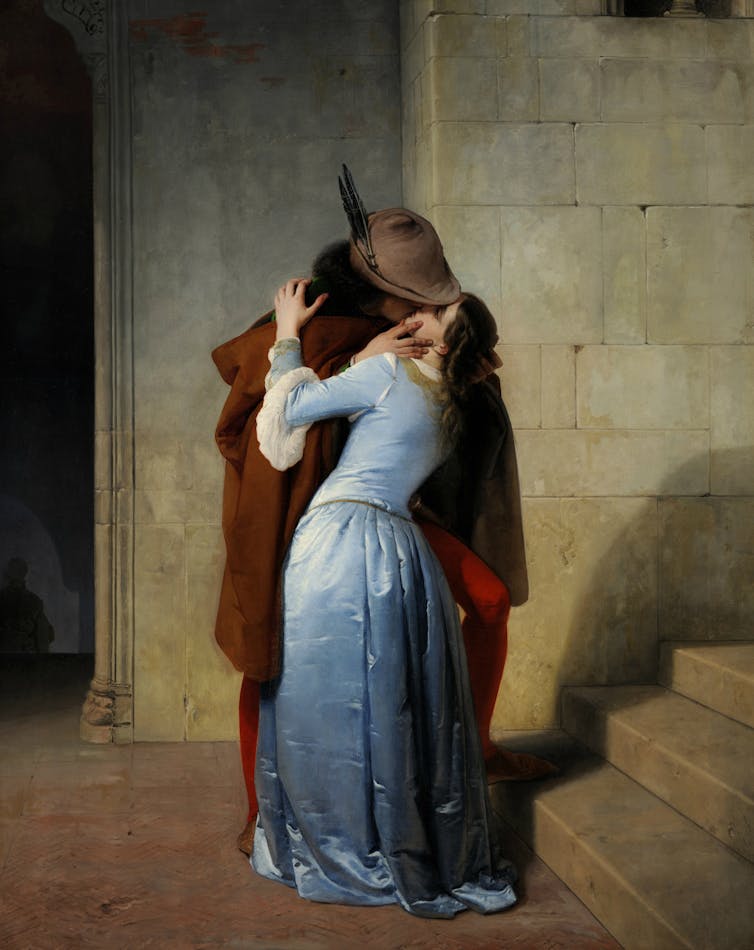
The Kiss - Francesco Hayez (1859). Wikimedia commons Beth Driscoll, The University of Melbourne and Kim Wilkins, The University of Queensland
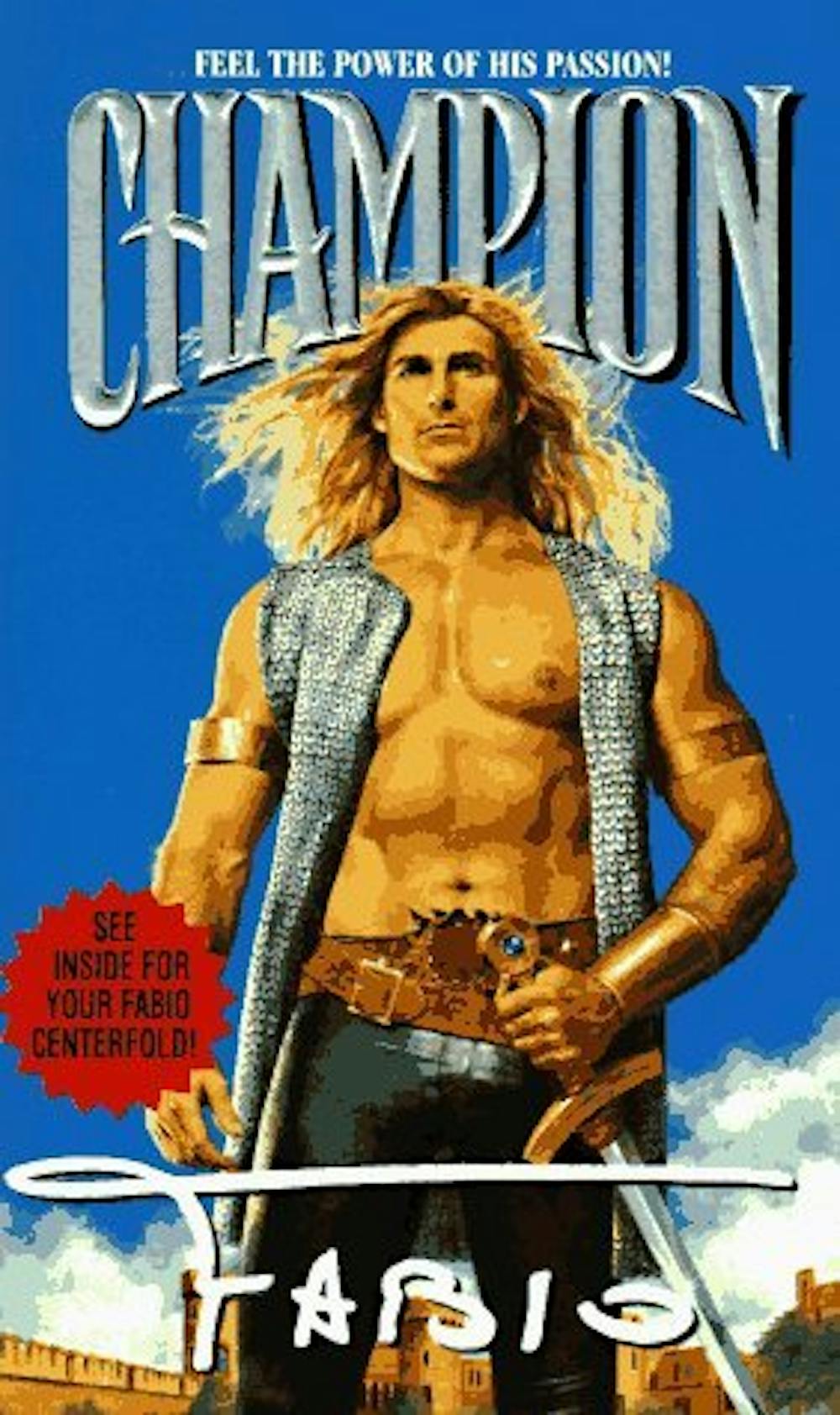
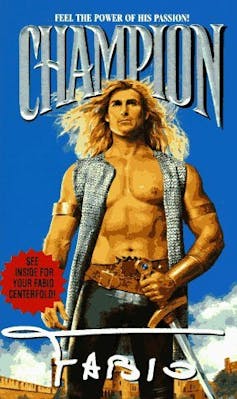
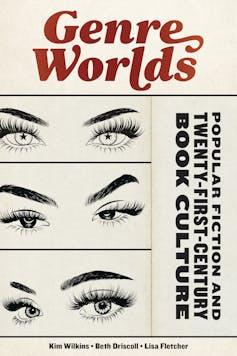
Romance fiction has one of the most recognisable brands in book culture. It is known for a handful of attributes: its happy-ever-after endings, the pocket Mills & Boon and Harlequin editions, the covers featuring Fabio (in the 1990s) or naked male torsos (the hot trend in the 21st century). It is known for being overwhelmingly written and read by women, and for being mass-produced. But romance fiction is also the most innovative and uncontrollable of all genres. It is the genre least able to be contained by established models of how the publishing industry works, or how readers and writers behave. Contemporary romance fiction is challenging the prevailing wisdom about how books come into being and find their readers. For our book Genre Worlds: Popular Fiction and Twenty-First Century Book Culture, coauthored with Lisa Fletcher, we conducted nearly 100 interviews with contemporary authors and publishing professionals. Our research shows that fiction genres are not static. They do not constrain artistic originality, but provide the kind of structure that sparks creativity and passion.
Genre fiction can be understood as having three dimensions. The textual dimension is what happens on the page. The industrial dimension is how the books are produced. And the social dimension is the people who write, read and talk about genre fiction. These three dimensions interact to create what we have called a “genre world”. Each distinct genre world (such as fantasy or crime) combines textual conventions, social communities and industry expectations in its own way. And romance is the most fast-paced, rapidly changing genre world of them all. When it comes to genres of articles, we have a soft spot for the listicle. So, here are five things you may not know about contemporary romance fiction – five things that show the dynamism at the heart of book culture. 1. Romance is at the forefront of digital innovation: Twenty-first century publishing has seen fundamental shifts in the way books are produced, distributed and consumed, largely thanks to digital technology. The romance genre is notable historically for its rapid production and consumption cycle. As a result, it has been well placed to adapt to the widespread uptake of digital publishing, which also moves rapidly. Romance writers and publishers are entrepreneurial and comfortable taking risks. The moment constraints are released, romance writers rush in. This is exactly what has happened with self-publishing. Since the advent of Kindle Direct Publishing in 2007, hundreds of thousands of romance books have been self-published there. Other opportunities have blossomed on sites such as Wattpad or through print-on-demand services such as IngramSpark. In Australia, for example, there was a 1,000% increase in the number of self-published romance novels between 2010 and 2016. 
Some self-published romance novels have achieved mind-boggling success. Anna Todd’s 2014 romance novel After, originally fan fiction based on the band One Direction, drew more than 1.5 billion reads on Wattpad. It was subsequently acquired by Simon & Schuster and has spawned a movie series. In other cases, romance authors have formed co-ops to publish work together. Tule Publishing is a small, largely digital publisher with a limited print-on-demand service that produces multi-author continuity series as part of its publishing model. The Tule authors we interviewed spoke of their strong community and creative connections. The self-publishing of genre fiction has blurred the lines between author, agent, editor, cover designer, typesetter, publisher and bookseller. Stephanie Laurens, one of the world’s most successful romance novelists, began writing with Mills & Boon before moving to HarperCollins. In 2012, she gave a keynote address to the Romance Writers of America convention. She used the opportunity to reflect on industry change. Soon after, she began reconfiguring her own publishing arrangements.

Now Harlequin publishes her print novels, while she self-publishes the e-book versions. She also self-publishes novellas that are prequels to, or that sit between, the novels in her traditionally published series. Laurens is a prolific author with loyal fans, an author who can afford to take risks. She realises that self-publishing potentially offers her a better deal and has been able to pursue that while retaining ties to a traditional publisher. Her career complicates any view of self-publishing as second best. Her example has been much emulated among romance writers. Such a career move challenges how we might typically theorise the power relations of literary culture. 2. Romance readers are active and engaged: The dynamism of romance fiction is intimately linked with its engaged readers. Unlike other kinds of publishing, where the fate of each book is relatively unpredictable, romance has historically had many loyal readers who subscribe through mail-order systems to receive books regularly – a model that has not worked successfully at scale for any other genre. In the 21st century, many of these loyal romance readers are online. They tweet about their favourite authors, write Goodreads reviews, and run blogs and podcasts. 
People read romance fiction for different reasons. They might be drawn to its focus on the emotional nuances of relationships, its escape into various times and places (romance subgenres really do cover the gamut), or its gold-plated promise of happy endings and pleasure. They might read casually or intensely, with curiosity, scepticism or devotion. All of these are active modes; they can’t be reduced to consumerism. There is an element of feeling to the involvement. The shared pleasure and sense of belonging that comes with being in the genre world came up regularly in our interviews. Author Rachael Johns, speaking of romance fiction, said “this is my passion, I fell in love with the romance genre”. Agent Amy Tannenbaum described the romance community as “tight-knit”. Harlequin marketing specialist Adam Van Roojen suggested the romance community’s supportive nature makes it “so distinctive I think from other genres”. People say the same thing about other genres, of course, but these claims show how people imagine genre worlds as a kind of community. Communities have boundaries and can be exclusionary. Kristina Busse has written about the impulse to police borders in fan-fiction communities, and of how ascribing positive values to some members of a community may exclude other people. 
This dynamic is at work in genre worlds, even if it is low-key or not openly acknowledged. What’s more, the inside world of romance fiction has an inside of its own. This is evident in the way readers relate to one another (there is an implicit hierarchy of fans) and in the industrial underpinnings of the genre. For example, there is a distinction between a writer’s core audience and fringe audience that affects sales formats and international editions. Core romance readers tend to read digitally, and therefore can often access US editions of a book. Casual romance readers are more likely to pick up a print book from a store like Big W or Target and are therefore more likely to be the target audience for local editions. In general, though, both core and fringe romance readers know how to read romance fiction. They are attuned to the codes that run through the novels. Back in 1992, Jayne Ann Krentz and Linda Barlow argued that certain words and phrases in romance fiction act as a hidden code “opaque to others”. Committed romance readers have a deep knowledge that makes them experts in their genre. When these readers express their views online, authors and publishers take note. One recent example involves a tweet from romance fiction author, podcaster and blogger Sarah McLean. She asked her nearly 40,000 Twitter followers to “Tell me the best romance you’ve read in the last week. Bonus points for it being 🔥🔥🔥.” The tweet was directed at the hardcore readers of the romance genre world. It assumed an audience that reads more than one romance novel per week. The 300 or so replies constitute a mega-thread of recommendations. Romance readers are generous to one another this way, as the sheer abundance of commercially and self-published romance fiction makes it hard to sort and choose. The replies also offer an up-to-the-minute map of the subgenres and tropes to which readers are responding. These include shape-shifters, second-chance love stories, queer romance, and dukes and duchesses (possibly a Bridgerton effect). 3. Romance fiction is global: Far from being circumscribed by small horizons, romance fiction is globally connected and inflected. This is amply demonstrated by the example of Australian romance fiction, which is formed and sustained across international literary markets and creative communities.Pascale Casanova’s theory of the world republic of letters notes the cultural force of London and New York as anglophone publishing centres. This mitigates against the inclusion of Australian content in popular fiction. Stories set in New York or London seem to have no limits in terms of international portability. But stories set in Australia, or another peripheral market, can be harder to pitch. Australian writers are conscious of this, as it directly affects the viability of their careers. But export success is possible for Australian work. The subgenre of Australian rural romance or “RuRo” is the best-known example. Authors like Rachel Johns are bestsellers in other territories. Romance novels set in Australia are popular in Germany – the Germans even have a name for them, the “Australien-Roman”. 
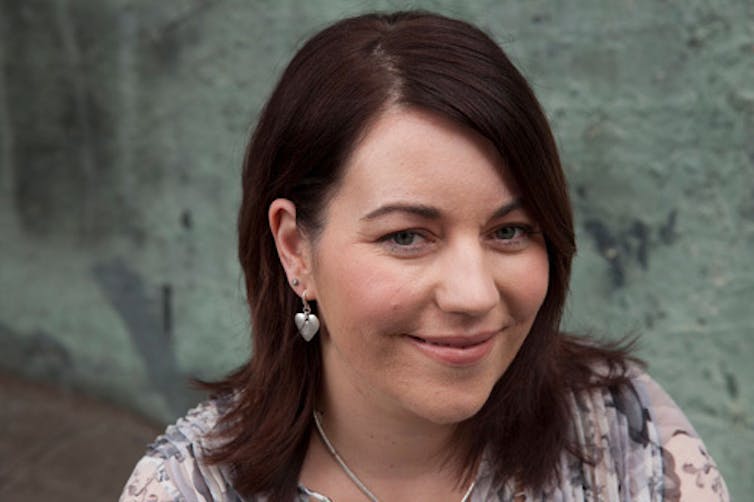
Popular Australian romance author Rachel Johns. Goodreads
Romance fiction is energised by transnational communities of readers and writers, often mediated online. Australian romance author Kylie Scott, for instance, credits American romance bloggers with driving the popularity of her books, and thanks book bloggers in the acknowledgements of her books.
These cultural mediators assist the transnational movement of books in genre worlds. The development of digital-first genre fiction publishers and imprints also supports such movement, not least through promoting global release dates and world rights, so that genre books can be simultaneously accessible to readers worldwide. But nothing comes close to the romance fiction convention, or “con”, in demonstrating the international cooperative links of the romance community. Cons, such as Romance Writers of America, support romance writers by providing professional development opportunities; they offer structure to participants’ professional lives. For example, Regency romance writer Anna Campbell has oriented her career towards the United States. Campbell began to professionalise by joining the Romance Writers of Australia, but then entered professional prizes run through US networks, and it was these that gained attention for her writing and enabled her to get an agent. American success followed: My agent ended up setting up an auction in New York, and three of the big houses wanted to buy it. The auction went for a week, and at the end of Good Friday 2006, I was a published author and they paid me enough money to become a full-time writer. Campbell went on to write five books with Avon, then moved to Hachette for a number of books. She has now moved to self-publishing. The majority of her readership remains in the US. Romance’s capacity to reflect the local concerns of writers and readers, coupled with its responsiveness to global industrial processes, makes it one of the most intriguing genres for considering what “Australian books” might look like in the 21st century. 4. Romance can be socially progressive 

It has been more than 50 years since Germaine Greer, in The Female Eunuch, dismissed romance fiction as women “cherishing the chains of their bondage”. The perception that the genre is conservative persists. But romance writers and readers are more and more concerned with inequality across gender, race and sexuality. They are pushing back against old conventions. In 2018, Kate Cuthbert, then managing editor of Harlequin’s Escape imprint, gave a speech that revealed romance’s internal debates. She addressed the responsibilities of romance fiction writers and publishers in the #MeToo era, arguing that if we want to call ourselves a feminist genre, if we want to hold ourselves up as an example of women being centred, of representing the female gaze, of creating women heroes who not only survive but thrive, then we have to lead. For Cuthbert, this means “breaking up” with some familiar romance fiction tropes, such as the coercion of women: many of the behaviors that are now being called out – sexual innuendo, workplace advances, stolen kisses because the kisser couldn’t resist – feel in many ways like an old friend. They exist in the romance bubble […] and they readily tap into that shared emotional history over and over again in a way that feels familiar and safe. Cuthbert’s compassionate acknowledgement of readers’ and writers’ attachment to established genre norms sits alongside her call for evolution, for renewed attention to “recognising the heroine’s bodily autonomy, her right to decide what happens to it at every point”. Structural hostility in the publishing industry towards people of colour has also become a cause romance writers and readers rally behind. In 2018, Cole McCade, a queer romance writer with a multiracial background, revealed that his editor at Riptide had written to him: We don’t mind POC But I will warn you – and you have NO idea how much I hate having to say this – we won’t put them on the cover, because we like the book to, you know, sell :-(.In the wake of this revelation, multiple authors pulled their books from Riptide, as a further series of revelations about the publisher’s bad behaviour emerged. The following year, the Romance Writers of America examined the past 18 years of its RITA Awards finalists and published the results: no black author had ever won a RITA, and the percentage of black authors represented on shortlists was less than half a per cent. In response, the board published a “Commitment to RITAs and Inclusivity”, in which it called the shocking results a “systemic issue” that “needs to be addressed”. In 2020, they announced they were employing diversity and inclusion experts to help diversify their board, train staff, and help “design and structure” more inclusive membership programs and events, including the annual conference. The Romance Writers of America’s intentions have not always been successful. The ongoing visibility of marginalised groups in the genre continues nonetheless, in part driven by romance’s rapid and robust uptake of digital publishing. Access to publishing platforms has allowed micro-niche genres to proliferate. LGBTQIA+ romance subgenres have become particularly visible: from lesbian military romance to gay alien romance to realist asexual love stories.
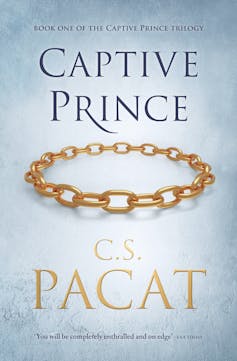
Sometimes these stories go spectacularly mainstream, as with C.S. Pacat’s The Captive Prince, a gay erotic fantasy about a prince who is given to the ruler of a neighbouring kingdom as a pleasure slave. Originally self-published, The Captive Prince started as a web serial that gathered 30,000 signed-up fans and spawned Tumblrs dedicated to fan fiction and speculation about where the series would go.The book was rejected by major publishers, so Pacat self-published to Amazon and within 24 hours it had reached number 1 in LGBTQIA+ fiction. A New York agent approached Pacat and secured her a seven-figure publication deal with Penguin. The queer fantasy or paranormal romance has continued to thrive in Pacat’s wake. In our interviews with romance authors, questions of diversity, inclusion, representation and inequity arose again and again. In representation and amplifying marginalised voices, romance has enormous potential to lead the way. 5. Romance has gates that are kept: Romance fiction is more progressive than some stereotypes might suggest, but it is not free from exclusion or discrimination. The genre is influenced by its gatekeepers – human and digital. One form of gatekeeping takes place through the same voluntary associations that nurture community. In late 2019, the board of the Romance Writers of America censured prominent writer of colour, Courtney Milan, suspending her from the organisation for a year and banning her from leadership positions for life. 
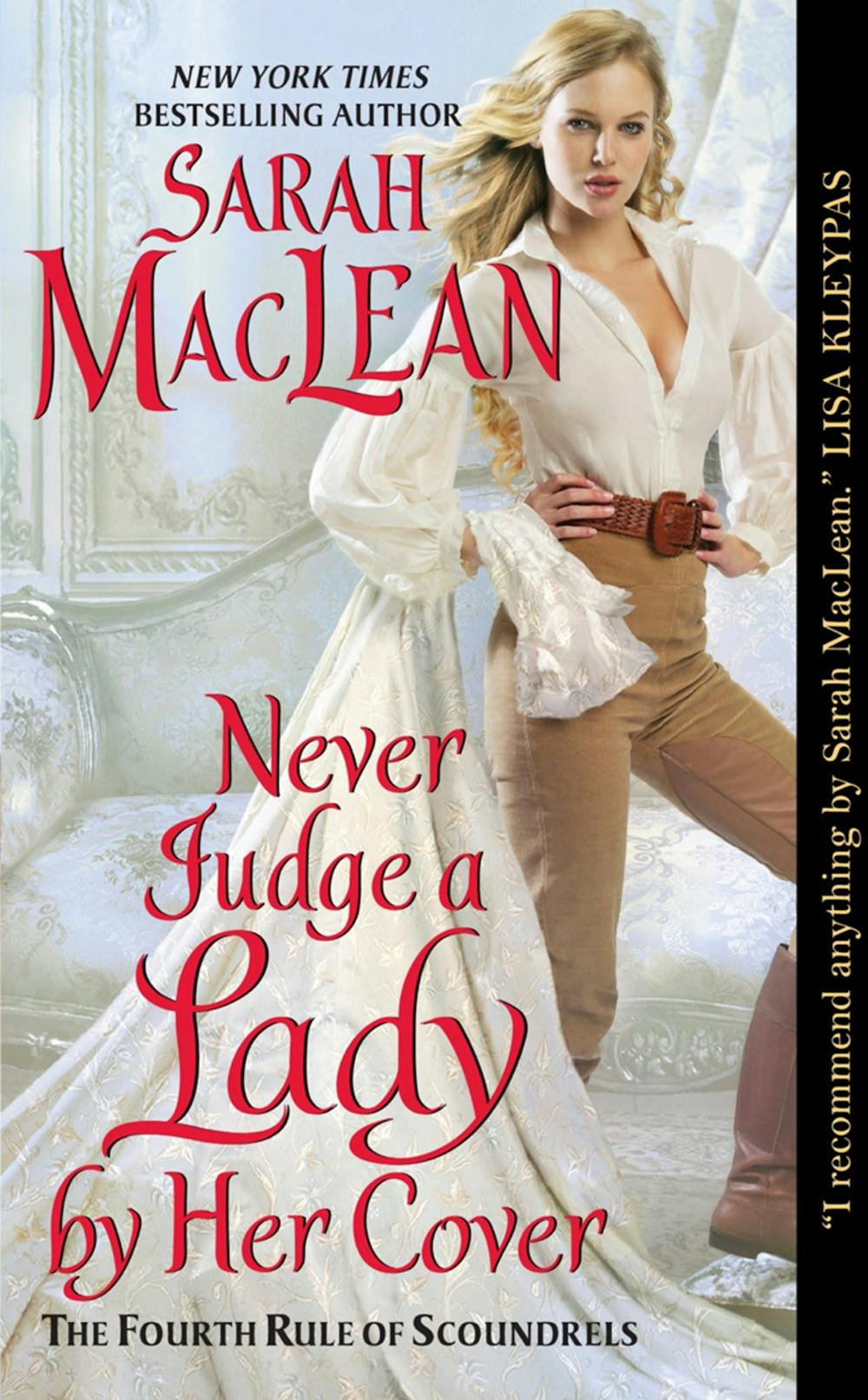
The decision was made following complaints by two white women, author Katherine Lynn Davis and publisher Suzan Tisdale, about statements Milan had made on Twitter, including calling a specific book a “fucking racist mess”. This use of the organisation’s formal mechanisms to condemn a woman of colour and support white women was controversial, provoking widespread debate across social media and email lists. Milan had long been an advocate for greater inclusion and diversity within Romance Writers of America and the romance genre. As the Guardian reported, the choice not to discipline anyone for “actually racist speech” made punishing someone for “calling something racist” seem like a particularly troubling double standard. “People saw it as an attempt to silence marginalised people,” observed Milan. The board retracted its decision about Milan. It is difficult, however, to calculate the damage that may have been done to readers and writers of colour in the romance genre world. Conversely, the use of Twitter to extend debate and eventually correct the Romance Writers of America shows change happening, in real time. 
Another form of gatekeeping in romance fiction happens through the same digital platforms that put the genre at the forefront of industry change. Safiya Umoja Noble’s book Algorithms of Oppression demonstrates how apparently neutral automated processes can work against women of colour — for example, the different results that come up from a Google search of “black girls” compared with “white girls.” In the world of romance fiction, Claire Parnell’s research has shown the multiple ways in which the algorithms, moderation processes and site designs of Amazon and Wattpad work against writers of colour. For example, they make use of image-recognition systems that flag romance covers with dark-skinned models as “adult content” and remove them from search results. They can also override the author’s chosen metadata to move books into niche categories where fewer readers will find them, such as “African American romance” rather than the general “romance fiction”. Concerted activism and attention is needed to work against this kind of digital discrimination, which risks replicating the discrimination in traditional publishing. There is no simple way to account for the dynamics of contemporary romance fiction. It is inclusive and policed; it is public and intimate. Its industrial, social and textual dimensions are not static, but interact dynamically, incorporating the possibility of change. Only by understanding these interactions can we gain a complete picture of the work of popular fiction. Contemporary romance fiction is formally tight, emotionally intense and digitally advanced. It’s where the heartbeat of change and action is in book culture. Beth Driscoll, Associate Professor in Publishing and Communications, The University of Melbourne and Kim Wilkins, Professor in Writing, Deputy Associate Dean (Research), Faculty of HASS, The University of Queensland, The University of Queensland This article is republished from The Conversation under a Creative Commons license. Read the original article.

Tuesday, 21 April 2015

Love At First Fight

Divya Unny at practice during a Kalaripayattu class at IIT Mumbai (Photo: RITESH UTTAMCHANDANI)
BY Divya Unny: Gyms were too cold. Yoga was too slow. Going for a jog required too much discipline, and a swim was too expensive in Mumbai. For years, I was ready with an excuse when it came to pushing my body—partly because I’m blessed with the metabolism of a new-born and partly because I never really craved a regular workout. With the lifestyle a city like Mumbai offers, you spend half your time swinging out of local trains, and the other half, working towards never having to take such trains again. As a result, your body is more or less warmed up most of the time. Plus, the secret motto of my subconscious was: ‘You are thin, why not wait until that extra layer of fat accumulates, if it does?’ All that changed towards the end of last September when I dunked myself into a 21-foot deep kuzhi kalari (underground mud pit) built on the edges of Adishakti Theatre camp near Auroville, about two hours from Chennai. To the smell of incense and the chill of wet earth, we, 20 young artists from various cities, attempted to accomplish the initial few moves of India’s oldest martial art form. We were being introduced to kalaripayattu as the first step of our actor’s training workshop. Most of us were from a space where martial arts were part of pop culture (read Jackie Chan, and in my case, Mammootty) than real life. As a Keralite, the state where kalaripayattuoriginated, for me it was about flying bodies, the clinking of metal arms and thoroughly choreographed combat moves that could only be mastered by training from a very young age. To pursue it in everyday life seemed far-fetched. That was among many other perceptions about to be shattered over the next 11 days. Our mornings would begin at 7 am in the kalari that was dotted with deities in each corner. If legend is to be believed, we were training in a 3,000-year-old spot that had hosted some of the greatest warriors of all time. The energy within the mud pit engulfed and cocooned us from the outside world for that one hour. “Kalaripayattu was always taught in isolation, away from the prying eyes of the enemy. It prepares you to combat the brutalities in the real world,” said our master Vinodji when we asked him about the significance of the closed space. With the flicker of the flame shining in front of the deities, we warmed up. We began learning the vadakkan (northern style ofkalaripayattu) by paying salutations to a seven-tier platform symbolising the seven stages of the art form. Some of us were classical dancers, others had dabbled in tai chi and taekwondo, and a few owed their flexiblity to gym equipment. But as we began with the kalari moves, our bodies surprised us. In a half sitting position for almost a minute, I was losing sense of my shin. My torso was parallel to the earth and arms extended straight following my eye line. Sweat that began accumulating on my forehead was now making the ground around me moist. “Focus on one point,” is what I thought I heard Vinodji say. As a Bharatanatyam dancer, my body was used to gravitating towards the ground, but kalaripayattu demands that you be as close to the earth as possible. It was challenging, and we had to find a motivation we did not know we had within us. The crouches, the leaps, the kicks, every thump of the leg, every cross-split, every scissor cut we attempted drew inspiration from the raw power and sinuous strength of animals; moves graciously borrowed from the lion, the tiger, the snake, the elephant, even the cock. The first few days were pain-ridden, but the key was to keep focus. What amazed me was that after an intense hour of class, I’d never feel out of energy. Instead, I felt a source of strength unleashing itself at the navel point. It empowered me like no other physical activity had. For the first time in 30 years, my body craved being wrung in ways it didn’t know it could be. “The form is so organic that it brings you closer to nature. You draw energy from the earth. It makes you agile, and once you really discover it, it’s a different kind of high,” says Nimmy Raphael, 32, the actor who coached us after our kalaripayattu sessions. Those 11 days had started something, and it was a fight I knew I couldn’t leave half way. Once I was back in Mumbai, I immediately enrolled myself for classes. The classes were conducted by Belraj Soni, kalaripayattu instructor at Mumbai’s Somaiya College and founder-director of Navaneetham Cultural Trust, Thrissur, Kerala. He had been teaching the art form for over 20 years. The sprawling sports ground at IIT Mumbai, where it was conducted, was however far removed from the quiet mud pit I had crawled out of in Auroville. There were students playing basketball on one side, hockey on the other, and right in the middle were 30 of us, kalari beginners, bare feet, with our bodies the only instrument to work with. Distractions were aplenty, and hence the challenge to combat them. Young and old, people from various walks of life diligently followed the Malayalam instructions the moves were coupled with. “Edathu neere, valathu neere, edathu neere, valathu neere,” Belraj Sir would say, instructing us to kick our legs one-by-one high up in the air and back. We trembled, limped, sometimes even cried our way through class, but did not give up. We performed in track pants instead of the traditional half dhoti, but the appeal of kalari went beyond its costumes. “Eight years ago, when I started practising it in Mumbai, barely two students were actively involved. Now, due to the overwhelming response, I am forced to limit the seats on a first- come-first-served basis,” says Belraj, who has trained over 600 students from Mumbai so far. Of late, the art form has found resonance with urban folk irrespective of age or gender. Like 17-year-old Poorvi Bellur and her mother, 45-year-old Sumana Srinivasan, who started learning it together a month ago. “I have a really stressful schedule because of my 12th grade boards. So there’s a different kind of satisfaction coming out here and letting yourself get physically beaten up. You feel like you have done some substantial work, which you don’t after six hours of studying,” says Poorvi, who has also been a classical dancer for 12 years. “The aggression of martial arts wasn’t something I really saw myself doing. As a dancer, my physical exercise has always been paired with some amount of aesthetic appeal. But that perception of kalari being aggressive has completely evaporated.” Sumana is a patient of rheumatoid arthritis. “I was always told by doctors to keep my body active. Yoga and a few other forms helped, but I was always curious about kalari,” she says, “I was most concerned about my knees and elbows, as they don’t have a complete range of motion. But with kalari, when I started doing the squats, my quads got very strong. My knee and shoulder pain has considerably reduced and I haven’t had the need to take painkillers ever since I started learning it.” I discovered that kalari in Mumbai was finding students in ad executives to housewives to PhD candidates. “I could barely climb two flights of stairs before I started practising kalaripayattu. It’s the kind of workout that works on your body and your mind. I feel way calmer and better equipped to deal with the kind of rushed lifestyle I lead,” says Priya Anchan, a 30-year-old brand manager at Lowe Lintas who has been training for over a year now. “My mother thinks I’ll build muscles and no one might marry me because of this,” she adds with a smile, “but that’s a misconception.” Purists may express dissent over the art form being perceived primarily as another method of exercise, but there is no dispute about its rising popularity. “It is good that awareness is increasing. Other forms of martial arts, gymming or aerobics concentrate on improvement and strengthening of one’s physique, but it doesn’t work your mind. Kalari aims at the balanced growth of both. The training is more acute and time consuming. It cannot be treated as a hobby,” says Belraj. As an actor, there are few tools that have helped me hold my own on stage as much as kalari. During performances, I am more aware of my body and consequently more in control of it. There is a sense of calm that has replaced the incessant nervous energy that would often rule me on stage. Kalari has always been used as a form of self-expression. But I am now able to identify the train of thought behind a series of contemporary works that have used the art form to communicate their stories. I am particularly intrigued by the Bengali play Tomar Dake, conceptualised by Theatre Shine, a group of under 25-year-olds from Kolkata. The play is a visually striking portrayal of social injustice and violence, where kalari motifs are glaringly used to symbolise growing anarchy. Says its director Suvojit Bhandopadhyay, “We specialise in psychophysics threatre, and the history of the art form worked for us. We trained in kalari for about four months before applying it to text. We used the kalari pranam to symbolise a new ruling power emerging within states. The attack and defence modes inkalari became a strong and aesthetic tool for us to portray social violence.” +++ For others, like the artists from the Adishakti Theatre group, founded by the late Veenapani Chawla, kalaripayattu is a way of life. So too for Nimmy Raphael, popular for reprising the mythological figures Laxmana and Kumbakarna in her play Nidrawathwam. “I’m a performer who doesn’t feel gender on stage,” she says, “I don’t have a very feminine body, neither do I feel very masculine. Kalari helped me with my journey in being able to transcend gender on stage. Whatever movement you do, it forces you to find something. It trains you psychologically as an actor, it lays down the basics of your movements.” Be it the Attakalari Centre for Movement Arts in Bangalore or National School of Drama (NSD) in Delhi, kalari is being used by institutions to add aesthetic and emotional appeal to works of art. This includes a recent play called Zubaan, where I perform a series of monologues to promote gender sensitisation. The play, which also has Tom Alter, requires me to act out an attack sequence as a rape victim, and to my surprise while choreographing my moves, I found myself using several kalari stances. The role, which began as a disturbing experience for me, has transformed into one where I feel better equipped to fight the perpetrator. That was perhaps also the reason for my response when my learning was recently put to test in real life. It happened one evening about five months into my kalari training. I was riding in an autorickshaw to the IIT ground. A minor dispute with the auto driver turned into a fight that had the burly man grab me by the collar, threatening to slap me right across the face. He was twice my size. But something within me nipped my fear. I did not attack him, but I found the strength to undo myself from his hold and turn him over to the police. I missed class by 45 minutes that day. “You should have done theashwa vadivu on him,” one of my kalari girlfriends told me. It was the day I realised I have a long way to go. The martial art form helps centre the mind, keep the body in shape, and for urban women living in an increasingly turbulent environment, it is an ideal tool for self-defence. “My confidence levels have increased a lot,” says Dilna Shreedhar, a 26-year-old PhD student, “The way I sit, carry myself, my personality, my walk, everything has changed. I am short and small of frame, and I often felt weak, but now I feel like I have the inner strength to deal with anything that comes my way.” We are currently learning attack and defence moves. “Look into the eyes of the person you are attacking,” Belraj Sir would reiterate. Each time he’d pick me as his opponent, I’d anticipate the pain and cringe. There are days when we students compare the blisters on our forearms, but this is only a minor price to pay. We’re gradually hoping to be introduced to sticks and daggers and swords. Full training demands a temple-like environment and a residential schedule with one’s guru. I hope to get back soon to my mud pit for a month-long workshop. But before that, I need to perfect my split. “Push, push yourself a little more,” the instructions go. Believe me, I’m trying. Source: OPEN Magazine
Sunday, 19 April 2015

An American cow’s Indian dream

Sarju Kaul: Living in India has made our encounters with cows and bulls rather commonplace. Almost everyone has a favourite story about their close brush with the sacred bovine while driving on roads, walking on footpaths, or just in the vicinity of the garbage dumps. Despite these close encounters, have any of us ever wondered how cows view us humans — engrossed in driving, honking, phones, and basically just ourselves. An unexpected comic take on a cow’s life, her view of humans and their obsessions and her ensuing adventures by Hollywood actor David Duchovny, famous for his role as FBI special agent Fox Mulder in television show The X-Files, is an amusing read. The coming of age book is written in a first-person narrative by Elsie Bovary, the happy milk cow with horns (at least on the book cover), who decides to flee to India from an upstate New York farm on discovering industrial meat farms. On her journey to safety in India, Elsie is accompanied by a pig called Shalom and Tom the turkey, who too are seeking safe havens in Israel and Turkey. Elsie, who has opinion on just about everything, from end-of-the-chapter cliff-hangers to writing in screenplay form to pop culture and pitching the “memoir” to Hollywood producers, is emphatic in her opinions. “Most people think cows can’t think. Hello. Let me rephrase that, most people think cows can’t think, and have no feelings. Hello, again. I’m a cow, my name is Elsie, yes, I know. And that’s no bull,” she writes in her introduction. ”See what I did there? I left you on a poetic cliffhanger. And a chapter title again. Gives you a chance to take a break, maybe dog-ear a page, get something to eat, and when you come back the chapter heading will refocus you on the story. Like a Jedi, I tell you, a Jedi.” The sheltered cow on the milk farm is happy providing milk for humans, but cannot get over the weirdness of humans having cow milk. “Humans love us. Or I thought so, we all thought so. They love our milk. Now personally, I think it’s a little weird to drink another animal’s milk. You don’t see me walking up to some human lady who just gave birth, saying, ‘Yo, can I get a taste?’ Weird, right? Not gonna happen. It’s kinda nasty. But that’s why you love us. The ol’ milk. Leche,” Smart Elsie does not wait for the reader to make an inevitable comparison with George Orwell’s Animal Farm and blockbuster Hollywood film Babe, but jumps right in with references to allegories and talking animals. Fifty-four-year-old Duchovny, who is launching his debut album Hell or High Water soon, first wrote his debut novel as a screenplay for an animated film. The English literature student from Princeton and Yale Universities revealed in a recent interview to The Guardian that he turned the screenplay into a novel when it was passed over by producers as it involved a Jewish pig in Israel. Elsie, who wants Jennifer Lawrence to play her in a film, writes that her editor, who pitched the “memoir” as a children’s book, told her, “Sugar, there’s no way Hollywood will make a movie about a Jewish pig in Israel being stoned by Muslims. Too many hot buttons. Too niche. Too indie. We have to think tent pole. Not Sony Classics. Can’t the pig go to New York, you know, and meet a girl? Kind of like Babe meets My Big Fat Greek Wedding?” An easy and quick read, the book subtly makes a statement about the treatment of farm animals and the voracious appetite of humans. “Humans will eat almost anything, if you put a little salt and butter on it. And butter is made from our milk, It makes me feel oddly complicit and guilty,” says Elsie. “Humans have to earn the right to be called animals again.” Source: Asian Age

Thursday, 2 April 2015

I’m a mother and I look like one: Olivia Wilde

Hollywood Olivia Wilde
After giving birth to son Otis Alexander 11 months ago, actress Olivia Wilde has embraced her post-baby body. “I am not in perfect shape. In fact, I’m softer than I’ve ever been, including that unfortunate semester in high school when I simultaneously discovered Krispy Kreme and pot,” she said. “The photos of me in this magazine have been generously constructed to show my best angles, and I assure you, good lighting has been warmly embraced. The truth is, I’m a mother, and I look like one,” she added. Wilde, 31, who is engaged to Jason Sudeikis, is unapologetic about the transformation her body has gone through and does not mind sharing very intimate details about the first few weeks after delivery. Source: The Asian AgeImage: flickr.com

Friday, 24 October 2014

Photos: Pregnant Kate Middleton steps out with tiny baby bump

Duchess of Cambridge Kate Middleton who is 13 weeks pregnant with her second child showed off her tiny baby bump as she stepped out at a Gala Evening dinner and reception at L’Anima Restaurant on behalf of the charity, Action on Addiction, yesterday evening. Photo credit: UK Daily Mail. Source: Article

Monday, 10 February 2014

Elvira Devinamira is crowned as Puteri Indonesia 2014

Elvira Devinamira (#21) is crowned as Puteri Indonesia 2014 by Puteri Indonesia 2013 Whulandary Herman during Puteri Indonesia 2014 Beauty Pageant at Jakarta Convention Centre, Jakarta, Indonesia, on Jan. 29, 2014. She will compete in Miss Universe 2014 pageant. The reigning Miss Universe Gabriela Isler assisted in the coronation. Elfin Pertiwi Rappa, (#7) representing South Sumatra, was crowned Miss International Indonesia 2014 (Puteri Indonesia 2014 Lingkungan) and will represent Indonesia in the Miss International 2014.Thirty eight beauty contestants entered the final. [Photo: Xinhua/Veri Sanovri]
Elvira Devinamira, newly-crowned Puteri Indonesia 2014, greets audience during Puteri Indonesia 2014 Beauty Pageant at Jakarta Convention Centre, Jakarta, Indonesia, on Jan. 29, 2014.

Saturday, 30 November 2013

I'm glowing due to spending time with my kids: Kajol

GaramGossips, By Gahoi Ad Online Media: Actress Kajol, last seen in "Toonpur Ka Superhero", tells she is tremendously happy with the way her life has shaped up and the doting mother of two can't stop gushing about her kids."I am having a blast; I am having a great time, a fabulous time with my life right now. I have two wonderful kids, I am enjoying myself
thoroughly. I am glowing because I am spending so much time with my kids," the 37-year-old told. The actress admits she is not considering any new projects for the time being, but hopes to be part of a good project in the near future. "I hope so (to do a film)... but only when the right time comes, when the right offer comes, not before that," told Kajol, who won the FilmfareKajol and Ajay
award for best actress for her movie "My Name Is Khan" in 2010. Kajol recently lent her voice for Karan Johar's "Koochie Koochie Hota Hai", an animated version of her 1998 movie "Kuch Kuch Hota Hai". She will also be seen in a guest appearance in Johar and Shah Rukh Khan's co-production "Student Of The Year". Source: GaramGossips

Wednesday, 7 August 2013

Aishwarya Rai Bachchan overwhelmed by French honor

aishwarya rai
.Subscribe
Bollywood actress Aishwarya Rai was conferred upon a civilian award by the French government for her contribution to the arts on the occasion of her birthday. Bollywood actress Aishwarya Rai was Thursday conferred upon a civilian award by the French government for her contribution to the arts on the occasion of her birthday. Francois Richier, ambassador of France to India, conferred the honour of prestigious 'Knight of the Order of Arts and Letters' on her at a hotel here. On receiving the award, Aishwarya said: "I want to thank the French government for honouring me with the award. It's truly overwhelming. I thank you in all humility." She thanked her family for their support and expressed her gratitude towards her colleagues. "I want to thank every professional who I have worked with and who made it possible for me to have such a glorious career," she said. The Knight of the Order of Arts and Letters honour is given to people who have shown exceptionable contribution to arts in France and the rest of the world. In the past, noted celebrities like Shah Rukh Khan and Nandita Das received the honour. The entire Bachchan family, except Jaya Bachchan, were present at the event. Aishwarya's daughter Aradhaya was also there. Besides her family, actress Nandita Das, Parmeshwar Godrej and filmmaker Pritish Nandy were also present on the occasion among others. Aishwarya turned 39 Thursday, so a cake cutting ceremony was also organised for her. Big B proud of
Aishwarya's French HonourMegastar Amitabh Bachchan says he is proud that his daughter-in-law, actress Aishwarya Rai, has been chosen to receive a civilian award by the French government for her contribution to the arts on her 39th birthday. Aishwarya received the honour of prestigious 'Knight of the Order of Arts and Letters' by Francois Richier, ambassador of France to India, here Thursday. "Aishwarya celebrates her birthday and also a recognition by the French government. They confer on her the medal of honor for arts and letters, their second biggest award," the 70-year-old posted on his blog srbachchan.tumblr.com. "Many years ago the French had decorated me with the Legion d'Honor their highest medal and now the family prides itself with having two of the family gaining recognition from the French," he further posted. In the past, noted celebrities like Shah Rukh Khan and Nandita Das have received the honour. , conferred the honour of prestigious 'Knight of the Order of Arts and Letters' on her at a hotel here. On receiving the award, Aishwarya said: "I want to thank the French government for honouring me with the award. It's truly overwhelming. I thank you in all humility." She thanked her family for their support and expressed her gratitude towards her colleagues. "I want to thank every professional who I have worked with and who made it possible for me to have such a glorious career," she said. The Knight of the Order of Arts and Letters honour is given to people who have shown exceptionable contribution to arts in France and the rest of the world. In the past, noted celebrities like Shah Rukh Khan and Nandita Das received the honour. The entire Bachchan family, except Jaya Bachchan, were present at the event. Aishwarya's daughter Aradhaya was also there. Besides her family, actress Nandita Das, Parmeshwar Godrej and filmmaker Pritish Nandy were also present on the occasion among others. Aishwarya turned 39 on that day, so a cake cutting ceremony was also organised for her. Big B proud of Aishwarya's French Honour Megastar Amitabh Bachchan says he is proud that his daughter-in-law, actress Aishwarya Rai, has been chosen to receive a civilian award by the French government for her contribution to the arts on her 39th birthday. Image: flickr.com

Friday, 21 June 2013

Samantha Latest Hot Photos

Friday, 8 March 2013

Johansson 'more tigress than kitty' in Cat on a Hot Tin Roof

Critics praise Scarlett Johansson's performance but complain that she is drowned out by the soundtrack
SCARLETT JOHANSSON has impressed critics with her first return to theatre since her Tony-winning performance three years ago as Catherine in A View From the Bridge. Johansson stars as Maggie the 'cat' in Tennessee Williams' Cat on a Hot Tin Roof, which examines the relationships within the family of a wealthy cotton tycoon in the Mississippi Delta. Johansson, who spends much of the first act of the play dressed in nothing but a slip, is expected to draw in the crowds to Richard Rodgers Theatre in New York – and they won't be disappointed, writes Mark Hughes in the Daily Telegraph. Like Elizabeth Taylor in the 1958 film version of the play, Johansson delivers "a charismatic, if at times slightly breathless, performance", says Hughes. "Affecting a very passable Southern accent, [Johansson's] Maggie flits between rage at the fact her husband no longer seems even to like her, and sorrow that she cannot force him to. In between, there are moments of genuine comedy that drew loud laughs and applause," he adds. The New York Times says Johansson "seems to possess a confidence that can turn raw nerves into raw power", while Bloomberg describes her Maggie as "more tigress than the kitty so often portrayed in this role". But critics have warned that the actors risk being drowned out by the play's soundtrack. The creative team has added a soundtrack of fireworks, cap guns, the sound of crickets, chiming clocks, thunder crashes and nine songs. A mention of glory days on the football field prompts the eerie echo of a cheering crowd, while talk of a fateful phone-call triggers a ghostly ringing. "Somebody spayed the cat," says David Rooney at the Hollywood Reporter. And it wasn't the "hard-working" main attraction Johansson. "The star and her similarly marooned fellow cast members are all at the mercy of Rob Ashford, a director out of his depth and reaching for any flotation device he can grab in this sinking Broadway revival, which manages to be both thunderously emphatic and curiously flat." The production's "cluttered audio" means the actors are forced to compete against busy sounds and music cues, says Rooney. "As a result, the humour often doesn't land and the dramatic peaks tend to fly by unnoticed." Johansson is "cerebral, angry and proud" says the Washington Post, but asks "who can hear any of the actors through this din?" ·Source: The Week UK

Thursday, 28 February 2013

Interview with Actress Deepika Padukone

The actress who pumped your Heartbeat always from Om Shanti Om till the latest Race 2. The Actress who also says she might be 'Sexy' but not a 'Seductress'. The actress who is a Star and she still remains Down-To-Earth, Speaking about her Journey, Lifestyle, Link-Up's, Controversies.. Actress Deepika Padukone goes one-on-one with Faisal Saif. But you were always related to the word 'Sexy'.. I don’t believe in being in-your-face sexy. It is more of an attitude and not about clothes. But the film took it a step further and called for the character to be a sexy seductress. The entire body language had to spell it out. And as I said earlier, it’s nothing like the real me. I may be sexy, but I’m no seductress. And your character's in Race 2, Raam Leela, Chennai Express can be considered as Glamorous ones? But all my roles are so different from each other that it’s really interesting to be busy with work. Do you enjoy being in the latest bandwagon of 100 Crore Club? More than the box-office records or business figures of the film, It is the experience of shooting that I cherish. You will be shooting your upcoming film 'Yeh Jawaani Hai Deewani' in Kashmir? I have never shot in Kashmir before. I have heard so much about the place and seen its beauty only through Bollywood films. I am really looking forward to filming in the Valley. It is my first visit. It’s great that our filmmakers are rediscovering Kashmir. You were from Anupam Kher acting school, What was your first reaction when you faced the camera for the first time? I have absolutely no film background. I don't come from a film family and I had never been on a film set until my first film. In a lot of ways, it gave me a little information about what to expect. But at the same time, I think the best education I've had is to actually be on a film set and learn from there. How do you remain so down to earth despite being on the position of a 'Star'? Thank you so much for your compliments, But this because my parents who gave me this up-bringing. I look forward to my father who after gaining so much in life is still very humble and down to earth. He is my inspiration. And how was your journey as of a Down-To-Earth star? The journey was fabulous. Everyone has their Up's and Down's and everyone has to work hard. But for me, It was always a learning lesson on every step of my life. In every film, I think i have learnt something new. And it'll continue to be like that. What is Race 2? Would you tell us something about it and your character? Everyone in Race 2 has a 'Grey Shade'. Everyone wants to win the Race in the film. There's a lot of manipulations involved in each character. I play a character of a seductress called Aleena, Who uses her Looks to achieve whatever she wants. This is something very new to me. I have never played such a character in my career so far. How do you manage to deal with Controversies and Link-Up's around you? I don't react to them at all. I think all these things are a part of my profession. If i am an actress and i am into Limelight, People will definitely talk such things. I don't Focus on these things. I want people to enjoy my work. Source: India-Education

Friday, 22 February 2013

Age no bar for Delhi divas


“40s is the new 30s,” agrees socialite Tanisha Mohan, and she supports Hollywood actress Cameron Diaz when she says that she feels better and content in her 40s than she did in her mid-20s. Irrespective of the Hollywood and India divide, what Diaz said holds true if we notice the pretty faces in Delhi circuit. Women, well above their 40s, dress up in expensive designer brands and look so comfortable in their skin that they seem to give a tough competition to the younger lot. A businesswoman, Ramola Bachchan, in her late 40s, does not mind experimenting with her style and is confident about trying out dresses of different lengths. “It is so because I am confident to wear what I want. I don’t need to dress up like a mother or a grandmother if I am in certain age. Everyone wants to look smart and stylish and wear what works for them,” says Ramola. A constant face in the party circuit, Tanisha Mohan is known for her labels and confidence with which she carries them. “20s is the time when you are struggling and trying to find your hood. In 30s, you are still settling down but by the time you reach 40s, you are comfortable in your skin, and know what you are and what you want in life. All this gives you the confidence to do things your way. Women are changing in the way they used to be earlier. They have time to pamper themselves, manage multiple things, work-out for the best body type and have the confidence and the guts to do stuff they want,” justifies Tanisha. Designer Rina Dhaka says changes come with time and age. “Experience and life gives you the confidence, which makes you look best in your 40s. Sometime back I dug out an image of myself shot by Prabuddha Dasgupta when I was 22 and tell you the least, I was shocked looking at the image. Though I had everything from success to money, family support and a man who loved me, but I looked miserable due to lack of confidence. Now that I have crossed all the barriers and everything in life is sorted, I feel as if I am in my 20s. 40s is the age when women have attitude, happiness, fitness and confidence, so they look the best,” says Rina. Make-up artist Meenakshi Dutt says there is no need to stop. “There is nothing called old age now. Why should we stop putting make-up, dressing up or going out? Life is all about us, our personality and the way we want to live,” says Meenakshi, who strongly advocates that age is just number. Tanisha adds, “I have seen many women in their 40s looking absolutely fabulous and girls in their 20s looking not too pleasant. Everything depends on your confidence”.Source: The Asian AgeImage: flickr.com

Monday, 14 January 2013

Triumph Inspiration Award ’12: Pooja Upadhyay the India winner

Fashion United: Triumph, one of the world’s premier lingerie brands, has announced Pooja Upadhyay, 20, TY design student of NIFT as the India winner of the Triumph Inspiration Award 2012. The national final judged by an esteemed panel that included fashionistas like Anna Singh, Anupama Verma, Vikram Bawa, Nisha Jamwal and Anchal Kumar saw some innovative and creative designs showcased by students from various fashion schools and institutes.  Commenting on the Triumph Inspiration Award 2012, Head of Sales & Marketing for India & Sri Lanka, Triumph, Shailendra Fernando said, “Once we pick the local winner, Triumph India will coach and prep her to compete in the global contest. The winner will then fly to Shanghai with her creation and take part in a runway show where representatives from each of the local contests will showcase their creations to a jury comprising of international fashion experts. The winner of the global contest will receive a cash prize and the opportunity to work with Triumph's global design team to commercialize his/her concept which then would be retailed across the world in select Triumph exclusive stores.”  The style showcased was Butterfly & Dragons – a very popular Chinese legend. The concept was based on it and every designer had gave their own interpretation of the theme. Upadhyay’s interpretation was duality – how the hard and soft elements combine together to form one beautiful story. Since the USP of India is surface development, her design had a lot of surface development too. She used fabrics that could complement her theme, like suede and chiffon and elements like the dragon wing. Her design was asymmetric. It had one shoulder and was a one-piece garment joined at the side seams. The colours were suede in deep maroon and chiffon in light purple to go with the strong and the soft elements. The purple had a colour gradation from maroon going to purple. She dyed the fabric herself and created a very minute detailing on chiffon so that it added a lot of depth. As the winner she will represent India at Triumph Inspiration Award 2012 International Final in Shanghai in the month of October. The winning international design will be manufactured and will be part of a limited edition that will be retailed through select Triumph outlets across the world. Fernando says each year the winning creation of the TIA contest is commercialized and added to Triumph’s commercial range as a special limited quantity novelty. “It will be retailed across the globe and the packaging material will contain description of the contest, design and designer.” Gaurang Dangwal, was the second runner-up. Gaurang’s concept was 117 scales which are on the body of a Chinese dragon and that protect the dragon. The event also saw Triumph presenting its much awaited animal print collection ‘Wild & Sexy’ for the first time in India. The eclectic collection which is with colors and smooth fit is playful, sexy and is every woman’s delight. One of the highlights of the collection is the T-shirt bra range made with a special and sensitive fabric whereby Triumph is committed to saving one square meter of rainforest for every one meter of fabric used. Triumph International is one of the world's largest underwear manufacturers. The company enjoys a presence in over 120 countries with its core brands Triumph, sloggi, Valisère and HOM. Source: Fashion United

Friday, 21 September 2012

Digital superwomen! Graphic artist transforms photos of women using Photoshop in these beautiful illusions

Extreme Photo Manipulations by Michael Oswald
By Alex Ward, Chiseled features: The posed photo of Maria Gruner from California has been manipulated to create this beautiful illusion, right, while Ranie Egusquiza from California had her muscles 'enhanced', left, by the digital artist whose work is created entirely on a computer using his digital skills and traditional art knowledge
Photoshop can be a great tool to airbrush away a blemish or dark circles in photos, but in these images it has been used to add tree branches for arms and steel panels for a body. Digital artist Michael Oswald describes his art as ‘photo manipulation on steroids’ and quite rightly as he transforms posed photographs into beautiful illusions. The amazing before and after images include a bikini-clad woman posing with a chisel and hammer a and the result - a figure, chiselling herself out of stone.
'Just tools': Mr Oswald said 'paintbrushes and computers are just tools' in his artworks including an image featuring model Anastasia King
Mr Oswald, 30, who also calls himself Michael O, said on his website: ‘With the exception of the original digital photograph, my work is created entirely on a computer utilising my knowledge of digital techniques and the traditional art skills I learned in my younger days. ‘I consider the 'concept' to be the best part of my work so I put a lot of thought into it and I try not to hold back from expressing myself. When it comes to using the computer rather than paint and brushes, Mr Oswald said in aninterview with Empty Kingdom: ‘I don’t really see a difference in the requirements for a traditional or digital artist.
 
Robotic: Natasha Lazareva from New York City is transformed into a robotic woman complete with a plug for an electric cord
'I believe that 50 per cent of skill in art is a natural born gift. Another 50 per cent is developed with practice. 
‘Paintbrushes and computers are just tools. The standard rules of art, like composition, alwaysapply and the medium is just a personal choice so, everything I learned in basic art classes still applies today.
Skill and practice: Mr Oswald does not see a difference in requirements between a traditional or digital artist because both come down to natural born skill and practice he said
Set in stone: Using the reference photo, bottom left, Mr Oswald created this digital artwork from a photo of model Sara Duncan from California, Source: Travelfwd+

Tuesday, 24 July 2012

Katrina Kaif is yet again voted as the world’s sexiest woman


Katrina Kaif is yet again voted as the world’s sexiest woman, by a popular magazine. Not once, not twice, this is the fourth time that the actress has been voted with the same title by the same magazine. She beat the likes of Freida Pinto, Priyanka Chopra and Deepika Padukone. Fascinatingly, the actress doesn’t consider herself sexy. Well, Katrina, you not knowing how sexy you are, makes you even sexier. The 27-year-old actress is presently busy shooting for the Yash Chopra film with Shahrukh Khan in London. This time, she will be seen acting oopisite all the three Khan. Source: GaramGossips

Wednesday, 27 June 2012

'Size-zero' Bebo calls Vidya, Sonakshi fat?

Agencies, New Delhi, Kareena Kapoor who has lost oodles of weight for Halkat Jawani, her Heroine song, says she's back to her size zero look. The actor also slammed 'fat' actresses like Vidya Balan and Sonakshi Sinha who love their curves. Wonder if she has forgotten her 'plump' days! The actress tells TOI: "I have gone back to the size-zero look I had in Tashan, but this time it is curvier. I wanted this body for my item song in the film. Since it is a rigorous and raunchy number, I decided to go for a slim and sexy look. But I still have curves in the right places. It may be a trend now with some actors, but I definitely don't want to look plump or fat!"  When mentioned that Vidya and Sonakshi aren't just comfortable with their curves, they're calling it sexy, Bebo told the daily, "Being fat is not sexy! Anyone who says that is talking crap. Voluptuous is sexy, but fat is out. Any woman who says she doesn't want to be thin is talking nonsense. It's every girl's dream." Kareena goes on to give tips for sexy body: "The key to a sexy figure is a great diet, combined with the right exercise. Rujuta combines fat and protein, and tells me to eat everything in moderation, and every two hours. She keeps changing my diet so that my body doesn't get bored. I recently went to Turkey for eight days and it was more like a health trip. I was training twice a day and was on a strict diet. I ate salads, hummus with pita bread, strawberries and olives. For dinner, I had an Indian cook make daal, rice and sabzi," the actress tells the newspaper. "I did my regular yoga exercises there too. I do 40 minutes of asanas and 50 surya namaskars," she added. Kareena her her plump avatar Earlier Kareena had defended her plump avatar: "I think size zero was at a time when my role and character needed it in a film. Everybody is relieved now and so am I. Yes, I am feeling good," she had said at EMAET promotional event in Dubai. "Saif likes me fit, but voluptuous. He doesn't like me too thin," Bebo had admitted. Source: Hindustan Times

Wednesday, 11 April 2012

Top 7 sexy Bond Girls

Previous   1   2   3   4   5   6   7   Next  
China7. Michelle Yeoh Michelle Yeoh Choo-Kheng, born in Ipoh on Aug. 6, 1963, is a Hong Kong-based Malaysian Chinese actress, well known for performing her own stunts in the action films that brought her to fame in the early 1990s. She is best known in the Western world for her roles in the 1997 James Bond film "Tomorrow Never Dies", playing Wai Lin. Yeoh was chosen by People magazine as one of the 50 Most Beautiful People in the World in 1997 and in 2009 she was listed by People magazine – as the only Asian actress – as one of the "35 All-Time Screen Beauties".Source: Top 7 sexy Bond Girls - China.org.cn

Monday, 2 April 2012

Megan Fox's 'Unattractive Girl' Comment Was Lost In Translation; 'I've Never Made Vapid Self-Serving Comments,' She Says

Megan Fox
StarpulseMegan Fox took to her Facebook page on Friday to address comments she made in France's April issue of Jalouse magazine. The sexy Transformers star told Jalouse, "I live well with my image. I cannot complain... I would not trade my place with an unattractive girl." But Megan says her words were lost in translation when the quote started showing up in articles on the web. "Before this starts to circulate and spin into something else I want to address a "quote" that has started to run from an interview I did with a French magazine called Jalouse," she said in a statement via Facebook. "The quote reads 'i wouldn't trade my place with an unattractive girl' "Sigh. The actual comment, the context and it's intention are grossly distorted and misrepresented here. I gave this interview in English obviously, it was then translated to French and now back into English. I've never made vapid self serving comments and in contradiction am uncontrollably self deprecating. While Megan has had a habit in the past of sticking her foot in her mouth; she does say in her interview (again, in English translated to French translated back to English) that she hates "taking pictures" and "never looks" at photos of herself from her shoots. The actress is rumored to be pregnant and expecting her first child with husband Brian Austin Green; however that story originated with Star magazine and has yet to be confirmed. © 2012 Starpulse.com, Source: Starpulse

Sunday, 26 February 2012

Aniston feels sexy in boyfriend's T-shirt

News Bullet, Indo-Asian News Service, London: Actress Jennifer Aniston says she feels sexy when she when she mixes and matches boyfriend Justin Theoux's clothes with her own. "I feel sexy in my jeans and wearing my boyfriend's T-shirt," she said. Aniston who is dating actor Theroux, 40, thinks her partner has a good dressing style but has not influenced her, reports femalefirst.co.uk. "First of all, he has great style -- it's very specific, and it has been his style forever. Has it influenced mine? No, but I know people say it has. 'Oh, look, you're dressing alike.' And I think, no I'm not. I've had this jacket for three years," Aniston, 43, told InStyle magazine.Aniston feels sexy in boyfriend's T-shirt

Sunday, 11 December 2011

Jennifer Aniston:Hottest woman of all time

aniston
Beating big names like screen legend Marilyn Monroe, pop icon Madonna and actress Angelina Jolie, Jennifer Aniston has been named the hottest woman of all time in a new poll by online portal menshealth.com. The 42-year-old was followed by American actress Raquel Welch at the second stop, Monroe at third and pop icons Britney Spears and Madonna at the fourth and fifth place respectively, reports contactmusic.com. ‘Baywatch’ beauty Pamela Anderson  was  at  the  eighth spot whereas Jane Fonda and Jolie took ninth and 10th place respectively. According to the site, Aniston was a hands down winner because she is funny. "Funny is sexy, and Jennifer Aniston is funny. Her down-to-earth persona makes her seem attainable. And her all-too-human love life off screen inspires sympathy that not even a string of bland romantic comedies can diminish," the site reported. Source: Deccan ChronicleImage: https://www.flickr.com