


- Indian giant ignites green revolution with 234 MW wind energy project
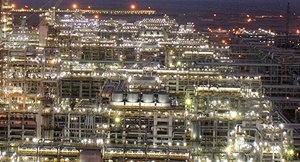
- In a groundbreaking stride towards a greener tomorrow, Sri Lanka Sustainable Energy Authority (SLSEA) has approved to grant the Energy Permit to Adani Green Energy (Sri Lanka) Ltd., for its monumental $ 355 million, 234MW Pooneryn Wind Energy Power Project, nestled in the picturesque Northern Province of Sri Lanka.
- This landmark endeavour not only marks Sri Lanka’s largest single location wind energy project, but also heralds a new era of renewable energy dominance, addressing critical issues like the energy crisis, economic recovery, and environmental sustainability.
- This $ 355 million, 234MW, Pooneryn Wind Energy Power Project stands tall as a testament to Adani Green Energy’s unwavering commitment to pioneering sustainable solutions. This colossal initiative not only cements its status as Sri Lanka’s largest wind energy project at a single location but also emerges as a beacon of hope, addressing critical concerns such as the energy security, economic revitalisation, and environmental stewardship.
- The Pooneryn Wind Energy Power Project is set to become a beacon of sustainable energy in the region. With a capacity of 234MW, it is poised to contribute substantially to Sri Lanka’s renewable energy capacity. The project aligns seamlessly with global efforts to combat climate change by reducing carbon emissions, as wind power is renowned for its clean and green attributes. Adani Green Energy’s commitment to environmental stewardship is evident in this endeavour, making strides towards a cleaner and more sustainable future.
- Sri Lanka has been grappling with an energy crisis, facing challenges of energy security and sustainability. The Pooneryn project emerges as a beacon of hope, offering a reliable and renewable solution to the nation’s energy woes. By harnessing the power of wind, this project promises to diversify Sri Lanka’s energy mix, reducing dependence on fossil fuels and mitigating the risks associated with fluctuating energy prices and supply shortages.
- Amid the economic turmoil wrought, the $ 355 million Pooneryn Wind Energy Power Project serves as a ray of economic optimism and a vote of confidence in Sri Lanka. Adani Green Energy’s bold investment in this transformative project not only injects vital Foreign Direct Investment (FDI) into Sri Lanka’s economy but also sends a resounding message of confidence to investors worldwide. This influx of capital is poised to catalyse economic growth, create jobs, and stimulate local businesses, laying the groundwork for a robust and resilient post economic pandemic recovery.
- The Pooneryn Wind Energy Power Project brings with it a boon of employment opportunities, particularly in the Northern Province. The construction, operation, and maintenance of the facility will create a multitude of jobs, contributing to the economic upliftment of the region. This strategic focus on the Northern Province underscores Adani Green Energy’s commitment to inclusive growth, fostering a sense of community and empowerment among the local population.
- At its core, the Pooneryn Wind Energy Power Project embodies Adani Green Energy’s unwavering commitment to environmental stewardship. By harnessing the limitless power of wind, the project is set to significantly reduce Sri Lanka’s carbon footprint, paving the way for a cleaner, greener future.
- With stringent environmental measures and best practices in place, Adani Green Energy is not only mitigating environmental impact but also setting a gold standard for responsible and sustainable development in the energy sector. The integration of sustainable practices in energy generation aligns with global efforts to preserve natural resources and protect the delicate balance of our ecosystems.
- The Pooneryn Wind Energy Power Project is much more than just a power plant; it’s a symbol of hope, progress, and possibility. As it takes shape against the backdrop of the Northern Province’s majestic landscapes, it stands as a beacon of Sri Lanka’s commitment to a brighter, more sustainable future. With Adani Green Energy leading the charge, the journey towards a greener tomorrow has never looked more promising. Sustainable Energy Authority approves permit for $ 355 m Adani Green Energy in Pooneryn | Daily FT

Wednesday, 28 February 2024
Sustainable Energy Authority approves permit for $ 355 m Adani Green Energy in Pooneryn

Wednesday, 22 November 2023
Sweden plans 'massive' expansion of nuclear energy : Nuclear Policies
.jpg?ext=.jpg)
The Swedish government unveils a roadmap which envisages the construction of new nuclear generating capacity equivalent to at least two large-scale reactors by 2035, with up to ten new large-scale reactors coming online by 2045.
The roadmap was presented by (from left) Finance Minister Elisabeth Svantesson, Labour Market and Integration Minister Johan Pehrson, Energy and Business Minister Ebba Busch and the chairman of the Business Committee Tobias Andersson (Image: regeringen.se)
In October last year, Sweden's incoming centre-right coalition government adopted a positive stance towards nuclear energy, with the Christian Democrats, the Liberals, the Moderates and the Sweden Democrats releasing their written agreement on policies - referred to as the Tidö Agreement. With regards to energy, the agreement said the energy policy goal is "changed from 100% renewable to 100% fossil-free". In the Tidö Agreement, it is assumed electricity demand of at least 300 TWh in 2045, double the current demand.
The agreement also said necessary regulations should be developed to create the conditions for the construction and operation of small modular reactors (SMRs) in Sweden. In addition, the permitting process for nuclear power plants must be shortened.
In January this year, a formal proposal to amend Sweden's legislation on nuclear power was presented by Prime Minister Ulf Kristersson and Climate and Environment Minister Romina Pourmokhtari. It aims to remove the current law limiting to 10 the number of reactors in operation, as well as allowing reactors to be built on new sites, rather than just existing ones. The proposed legislative amendments were open for consultation for three months. The government made a final decision on 28 September to introduce the bill to parliament. The changes to the law are proposed to enter into force on 1 January 2024.
The government has now presented a roadmap for new nuclear power in Sweden, which it says "clarifies the government's target and provides long-term conditions for new nuclear power".
The roadmap includes an in-depth agreement on four points.
Firstly, it calls for the government to appoint a nuclear power coordinator who will support the work of removing obstacles, facilitating and promoting new nuclear power. In addition, the coordinator will identify the need for additional measures. An important role for the coordinator will be to gather all relevant parties to get a clear direction for effective expansion.
Secondly, the state's financial responsibility needs to be clarified through a risk-sharing model. The government has previously proposed that government credit guarantees for SEK400 billion (USD38 billion) be introduced for nuclear power. However, the government has assessed that these credit guarantees alone will not be enough to stimulate new production. In order to strengthen the conditions and provide additional incentives to invest in nuclear power, an investigator must propose a risk-sharing and financing model where the state shares the risk.
The government has instructed the National Debt Office to take preparatory measures to be able to issue government credit guarantees for investments in new nuclear power. The National Debt Office must assist the Ministry of Climate and Business in the work of designing the detailed regulations for the credit guarantees. As part of the assignment, the National Debt Office must make an assessment of how credit guarantees for investments in new nuclear power affect the risk in the combined guarantee portfolio.
Thirdly, the new policy will make it possible for new nuclear power with a total output of at least 2500 MWe to be brought online by 2035 at the latest.
Fourthly, it paves the way for a "massive expansion of new nuclear power by 2045". "Given the long-term needs for fossil-free electricity until 2045, an expansion is needed that could, for example, correspond to ten new large-scale reactors," the government said. It noted that the exact amount and type of reactors needed "depends on several things, including the need and rate of expansion in the electricity system, technological development, and where in the country new consumption and production are located".
"We are now delivering a pearl string of decisions to pave the way for new nuclear power," said Deputy Prime Minister and Minister for Energy, Business and Industry Ebba Busch. "Sweden is laying the foundations to become a leading nuclear power nation again and a power factor for the green transition in the West."
Finance Minister Elisabeth Svantesson added: "New nuclear power is necessary for a stable and reliable energy system, for both consumers and businesses. It is therefore natural that the state will have to take a large financial role in terms of the expansion. The last few years have shown how expensive it is not to build nuclear power."Researched and written by World Nuclear News. Source: World Nuclear News
Thursday, 10 August 2023
The Rise and Rise of HDFC Bank

- HDFC, which surged ahead of global majors like HSBC Holdings Plc and Citigroup Inc and left Indian peers like State Bank of India and ICICI Bank in market capitalisation, now ranks fourth largest among the world’s most valuable banks, after JPMorgan Chase & Co, Industrial and Commercial Bank of China Ltd and Bank of America Corp
- The merger of HDFC Bank and its sister concern HDFC Ltd has created a new global leader with an asset base of around Rs18 lakh crore, which is in excess of $200 billion.
- The combined entity has a customer base of over 120 million, branch network of over 8,300, and total employees of more than 177,000.
- With a market capitalisation of about $172 billion, the merged HDFC Bank now ranks fourth largest among the world’s most valuable banks, after JPMorgan Chase & Co, Industrial and Commercial Bank of China Ltd and Bank of America Corp, according to data compiled by Bloomberg.
- JPMorgan Chase is the largest in the world at $417 billion. ICBC has a market cap of $229.10 billion while Bank of America is the third largest with a market capitalisation of $228 billion.
- HDFC has surged ahead of global majors like HSBC Holdings Plc and Citigroup Inc. It also has left its Indian peers like State Bank of India and ICICI Bank far behind. SBI has a market cap of $79 billion while ICICI Bank is currently valued at $62 billion.
- The new HDFC Bank will have a customer base of around 120 million, which is more than the population of Germany.
- HDFC Bank has been a consistent high performer in garnering deposits and in granting credit. The merger only widens its chances to grow deposits and loans.
- Not, just this, some 70 per cent of its customers do not have accounts with the bank.
- The lender will be able to offer inhouse home loan products to its clients as only 2 per cent of them had a mortgage product from HDFC Ltd, according to a pre-merger presentation.
- “The lifetime value of a customer’s relationship with that bank just enhances when you start to put a mortgage into his product offering,” said the bank’s chief executive, Sashi Jagdishan.
- Parekh Bids Adieu
- HDFC chairman Deepak Parekh has finally bid adieu to HDFC Ltd, following its merger with its twin HDFC Bank, forming a colossus in India’s banking sector. Parikh, who led the bank for three decades, taking it to the top of India’s banking industry, on Friday announced he would be hanging his boots after the merger.
- In a letter to shareholders of the corporation, ahead of his departure, Parekh said the optimism surrounding India's resilience and its broad-based recovery, promises immense potential for housing finance in India years to come.
- Both Parekh and HDFC Bank’s current CEO S Jagadishan were emphatic in their opinion that the country’s banking sector is set for exponential growth. Jadishan even said during interaction with employees that the sector is strong enough to witness the creation of a new HDFC Bank every four years.
- "It is my time to hang my boots with both anticipation and hope for the future. While this will be my last communication to shareholders of HDFC, rest assured we now stride tall into a very exciting future of growth and prosperity," Parekh wrote.
- "The HDFC experience is invaluable. Our history cannot be erased and our legacy will be taken forward," he added.
- He also assured the shareholders that the work culture of the merged entity would be a combination of the best practices from both the companies.
- "An oft-repeated question is what happens to the culture of HDFC? My answer to this is that mergers are inherently about change."
- "The work culture will be an amalgamation of the best of both organisations. Culture at the workplace is always a shared responsibility. It needs daily reinforcement through the demonstration effect with the tone set at the top," Parekh wrote, reiterating that, "what remains steadfast is the underlying ethics and value systems of both entities."
- “The confidence I derive is the agreed tenet of this integration -- preserving the fabric of the ‘HDFC way of working’. This has also been publicly articulated by the leadership at HDFC Bank,” he added.
- Parekh, who joined HDFC one year after it was set up, always believed that trust and customer service are the most important components in a financial business.
- HDFC had cumulatively financed 0.12 million housing units in 1991and in 2016, the number rose to 5.5 million.
- Although, Parekh is identified with HDFC, he has played a much wider role in India’s financial sector acting as a crisis consultant to the government on several occasions. Parekh has been the pointsman in issues ranging from the Unit Trust of India US-64 collapse in 2001 to the Satyam fraud.
- Parekh emphasised the importance of change and the power of adaptability and new aspirations for growth, adding that the merger aims to ensure an unconstrained future for HDFC.
- While the effective date of merger was 1 July, the allotment of shares will take place on 13 July, according to the boards of the two HDFCs.
- Once the merger takes effect, HDFC Bank will be 100 per cent owned by public shareholders, and existing shareholders of HDFC will own 41 per cent of the bank.Every HDFC shareholder will get 42 shares of HDFC Bank for every 25 shares they hold. Source: https://www.domain-b.com/
Thursday, 27 October 2022
RIL Q2 net almost static at Rs15,512 cr
Reliance Industries Ltd (RIL) has reported a net profit of Rs15,512 crore ($1.9 billion), for the fiscal second quarter which was slightly (0.2 per cent) higher compared to the comparable quarter of the previous year.
Gross revenue for the quarter was Rs253,497 crore ($31.2 billion), which was 32.4 per cent higher year-on-year. EBITDA (excluding impact of special additional excise duty (SAED) related costs of Rs4,039 crore) for the quarter was higher by 27.8 per cent at Rs38,702 crore ($4.8 billion).
EBITDA (including impact of SAED related costs of Rs4,039 crore) for the quarter was higher by 14.5 per cent at Rs34,663 crore ($4.3 billion).
Cash profit for the quarter was higher by 15.4 per cent at Rs27,614 crore ($3.4 billion). EPS for the quarter, however, was 3.3 per cent lower at Rs20.2 per share.
RIL reported standalone net profit of Rs6,915 crore ($850 million) for the quarter ended 30 September 2022, which was lower by 25.1 per cent compared to the corresponding quarter of the previous fiscal.
Cash profit for the quarter was lower by 8.9 per cent at Rs10,688 crore ($1.3 billion).
Gross revenue for the quarter was 34.5 per cent higher at Rs146,310 crore ($18.0 billion).
EBITDA (excluding impact of SAED related costs of Rs4,039 crore) for the quarter was 19.9 per cent higher at Rs19,361 crore ($2.4 billion).
EBITDA (including impact of SAED related costs of Rs4,039 crore) for the quarter was 5.1 per cent lower at Rs15,322 crore ($1.9 billion).
Exports for the quarter rose 57.5 per cent to Rs86,382 crore ($10.6 billion).
Reliance Jio Infocomm Limited, a subsidiary of the company, acquired spectrum in the 700MHz, 800MHz, 1800MHz, 3300MHz and 26GHz bands in the auctions conducted by the Department of Telecommunications. The acquisition of the right to use this spectrum will enable Jio to build the world’s most advanced 5G network and further strengthen India’s global leadership in wireless broadband connectivity, the company stated in a release.
Jio’s 5G network will enable the next generation of digital solutions that will accelerate India’s AI-driven march towards becoming a $5+ trillion economy, it added.
Jio has announced the beta trial of its 5G services, for Jio users in 4 cities – Mumbai, Delhi, Kolkata and Varanasi – after successful demonstration at the India Mobile Congress, 2022.
Jio said the roll-out of 5G services will speed up India’s transformation into a Digital Society. This connectivity and technology will help improve access to education, health care, agriculture, skill development, small, medium and large enterprises, IoT, smart homes and gaming, impacting 1.4 billion Indians.
Jio Platforms Limited, a subsidiary of the company, and Meta announced the launch of the first-ever end-to-end shopping experience on WhatsApp, where consumers can shop from JioMart right within their WhatsApp chat. A global first, JioMart on WhatsApp will enable users in India, including those who have never shopped online before, to seamlessly browse through JioMart’s entire grocery catalogue, add items to cart, and make the payment to complete the purchase – all without leaving the WhatsApp chat.
Reliance Strategic Business Ventures Limited (RSBVL), a wholly owned subsidiary of the company, and Sanmina Corporation (Sanmina), announced the completion of a previously announced joint venture transaction. The joint venture will create a world-class electronic manufacturing hub in India, in line with the Prime Minister's “Make in India” vision. The joint venture will prioritise high technology infrastructure hardware, for growth markets, and across industries such as communications networking (5G, cloud infrastructure, hyperscale data centers), medical and healthcare systems, industrial and cleantech, and defence and aerospace.
Reliance New Energy Limited (RNEL), a wholly owned subsidiary of the company, in vested inCaelux Corporation, a Pasadena, California, US based company engaged in the development of perovskite-based solar technology. RNEL has invested $12 million to acquire 20 per cent stake in Caelux. This investment will accelerate product and technology development for Caelux, including construction of its pilot line in the US, for expediting commercial development of its technology. RNEL and Caelux have also entered into a strategic partnership agreement for technical collaboration and commercialisation of Caelux’s technology.
The company also acquired majority stake in SenseHawk Inc for a total transaction value of $32 million, including funding for future growth, commercial rollout of products, and R&D.
SenseHawk is a California-based developer of software-based management tools for the solar energy generation industry and helps accelerate solar projects from planning to production by helping companies streamline processes and use automation.
Jio Platforms Ltd (JPL) reported consolidated net profit of Rs4,729 crore ($581 million) for the quarter, which was higher by 26.9 per cent. Cash profit for the quarter was 33.6 per cent higher at Rs10,966 crore ($1.3 billion).
Gross revenue for the quarter was 22.8 per cent higher at Rs28,506 crore ($3.5 billion). EBITDA was up 29.2 per cent at Rs12,011 crore ($1.5 billion).
Total customer base of the company as of 30 September 2022 stoo at 427.6 million while average revenue per user (ARPU) during the quarter stood at Rs177.2 per month.
Total data traffic increased by 22.7 per cent to 28.2 billion GB during the quarter.
Reliance Retail reported a 36 per cent jump in its net profit for the quarter at Rs2,305 crore ($ 283 million).
Gross revenue for the quarter was higher by 42.9 per cent at Rs64,920 crore ($8.0 billion). EBITDA for the quarter was up 51.2 per cent at Rs4,404 crore ($541 million). Cash profit for the quarter was higher by 45.0 per cent at Rs3,324 crore ($409 million).
During the quarter Reliance Retail opened 795 new stores, taking the total number of operational physical stores to 16,617 – with total area of 54.5 million sq feet, compared to 37.3 million sq feet in the corresponding quarter of the previous financial year.
“I am pleased with the record performance of our consumer businesses which continue to scale new milestones every quarter. We saw consistent net subscriber additions and higher engagement in digital services segment. Jio has announced beta trial for its standalone 5G services and is making rapid progress for an ambitious and the fastest ever roll out of True 5G on pan-India basis. Our Retail business delivered record performance with strong revival in footfalls, store additions and digital integration. Reliance Retail continues to provide a compelling proposition of great shopping experience and superior value across consumption baskets and price points,” Mukesh D Ambani, chairman and managing director of Reliance Industries Limited, said.
Ambani attributed the underperformance of RIL’s oil-to-chemicals (O2C) business to subdued demand and weak margin environment across downstream chemical products. Transportation fuel margins were, however, better than last year but significantly lower sequentially. Segment performance was also impacted by the introduction of special additional excise duties during the quarter to ensure stable supply and lower volatility in the domestic market, he added. Source: https://www.domain-b.com/
Monday, 16 November 2020
Ayurveda is gaining in importance globally, has provided immunity against Covid: Indian PM Modi

Prime Minister Narendra Modi on Friday said that during the Corona crisis, when there was no specific solution against the pandemic, Indian traditional medicinal therapy proved to be very effective in boosting immunity and is gaining in importance and recognition globally.
"In these difficult times, when there was no specific solution against the coronavirus, traditional Indian medicinal methods like turmeric, milk, kadha proved as immunity boosters. It is important that such rich traditional knowledge needs to be integrated into the modern healthcare system. Working on this approach, we have included Ayurveda as a prime portion of India's health policy. In this year's monsoon session of Parliament, two bills were passed to form the National Commission for Indian System of Medicine and the National Commission for Homeopathy. Even in our new education policy, in medical education, we have emphasised on an integrated approach, where a basic knowledge of Ayurveda in modern allopathic medicinal education and a basic knowledge of allopathy in ayurvedic medicinal education have been stressed," said the PM.
Modi was speaking during the virtual dedication programme of Jamnagar-based ITRA and Jaipur based National Institute of Ayurveda (NIA). ITRA was given recognition as an institute of national importance while NIA, Jaipur was given recognition as a deemed university.
"Today, the fifth Ayurveda Day, is a special both for Gujarat as well as Rajasthan. I wish that both these ayurvedic institutes will emerge as centres for getting Indian traditional medicine global recognition. Ayurveda is gaining more and more importance globally whether it is America or Germany. Today Brazil's policies have included Ayurved. Even the WHO has chosen India as the Global Centre for traditional medicine and I thank Doctor Tedros Adhanon Ghebreyesus for choosing India. I believe that India will emerge as a leader in global wellness," the PM added.
"In 21st century India, the challenges of health are being solved with holistic approach and wellness is focused more in preventive medicine. Our government is focused on these areas. On the one hand cleanliness, sanitisation, clear water, smoke-free cooking and on the other hand more than 1.5 lakh health and wellness centres are being set up across the nation where more than 12.5 thousand centres are solely based on Ayurveda," added Modi.
"In these times, when we need to focus on an integrated approach of combining Indian traditional medicine with modern medicine, I request the ministry of education and also the UGC to prepare and workout integrated doctoral and postdoctoral syllabus based on this integration," added Modi. Source: https://southasiamonitor.org/
Monday, 5 October 2020
Google launches `Google News Showcase'; to pay publishers for content

- Alphabet's Google on Thursday unveiled a new product called `Google News Showcase’, with an investment of $1 billion, under which it plans to pay publishers globally for their news over the next three years.
- Announcing this, Alphabet CEO Sundar Pichai said Google will pay “publishers to create and curate high-quality content” for “Google News Showcase.” This differentiated “online news experience” leverages swipeable cards called “story panels.”
- These panels give participating publishers the ability to package the stories that appear within Google’s news products, providing deeper storytelling and more context through features like timelines, bullets, and related articles. Other components like video, audio, and daily briefings will come next, Google stated in a release.
- CEO Sundar Pichai said the new product called Google News Showcase will launch first in Germany, where it has signed up German newspapers including Der Spiegel, Stern, Die Zeit, and in Brazil with Folha de S.Paulo, Band and Infobae.
- It will be rolled out in Belgium, India, the Netherlands and other countries.
- Reports said about 200 publishers in Argentina, Australia, Britain, Brazil, Canada and Germany have signed up to the product.
- "This financial commitment - our biggest to date - will pay publishers to create and curate high-quality content for a different kind of online news experience," Pichai said in a blog post.
- Google, facing resistance from media groups over blocking revenues due to them, had in June announced plans to pay for content. It is facing legal action in Australia, where the court had given publishers and Google time to settle mutually.
- Australia wants to force Google and Facebook to share advertising revenue with local media groups.
- However, Google on Sunday said Australia’s News Media Bargaining Code is highly unusual, largely untested and one-sided arbitration system, suggesting the setup won’t allow for fair negotiations.
- Last week, Google proposed changes to help resolve the challenges and on Sunday said the Australian code is “highly unusual, largely untested, one-sided arbitration system that would determine commercial arrangements between Google and news companies.”
- “We don’t oppose a code governing the relationship between news businesses and digital platforms — but right now the way the law is drafted isn’t fair or workable,” Mel Silva, vice president of Google Australia and New Zealand, wrote in a blog post.
- Google parent Alphabet reported a net profit of $34.3 billion on revenue of almost $162 billion last year.
- The product, which allows publishers to pick and present their stories, will launch on Google News on Android devices and eventually on Apple devices.
- "This approach is distinct from our other news products because it leans on the editorial choices individual publishers make about which stories to show readers and how to present them," Pichai said.
- German publisher the Spiegel Group has welcomed the project. "With News Showcase and the new integration of editorial content like from Spiegel, Google shows that they are serious about supporting quality journalism in Germany. We are happy to be part of it from the start," said Stefan Ottlitz, managing director of the Spiegel Group.
- The European Publishers Council (EPC), whose members include News UK, the Guardian, Pearson, the New York Times and Schibsted, however, said it is a ploy to skirt regulations.
- "By launching a product, they (Google) can dictate terms and conditions, undermine legislation designed to create conditions for a fair negotiation, while claiming they are helping to fund news production," said EPC executive director Angela Mills Wade.
- The product builds on a licensing deal with media groups in Australia, Brazil and Germany in June, which also drew a lukewarm response from the EPC.
- Google is negotiating with French publishers, among its most vocal critics, while Australia wants to force it and Facebook to share advertising revenue with local media groups Source: https://www.domain-b.com/:
Tuesday, 15 April 2014
LibreOffice upgrade targets Windows integration and power users


Document Foundation
LibreOffice 4.2 is now out, featuring improved integration with Windows and new features for power users and the enterprise. “LibreOffice 4.2 offers two Windows-specific improvements for business users: a simplified custom install dialog to avoid potential mistakes, and the ability to centrally manage and lock-down the configuration with Group Policy Objects via Active Directory,” the Document Foundation wrote in an announcement today. “All users benefit from better integration with Windows 7 and 8, with thumbnails of open documents now grouped by application and a list of recent documents, both showing on the task bar.” Windows users aren’t the only ones to benefit from the latest release of the open source office suite, which is also available on OS X and Linux. Courtesy: http://readrss.wordpress.com
Saturday, 5 April 2014
India launches second navigation satellite IRNSS 1B

India on Friday successfully launched its second navigational satellite IRNSS-1B onboard PSLV C-24, taking a step closer to realising its ambitious programme of establishing an independent regional space-based navigation system.
IRNSS-1B, the second of the seven satellites planned under the Indian Regional Navigation Satellite System (IRNSS), was placed in precise orbit by the workhorse Polar Satellite Launch Vehicle (PSLV) which completed its silver jubilee success mission. to help us personalise your reading experience. Drawing a golden brush in the clear blue sky, the 44.4 metre tall PSLV-C24 lifted off from the Satish Dhawan Space Centre, Sriharikota, about 100 km from Chennai, at 5.14 pm and soared to its destination. About 19 minutes after the lift-off, PSLV C24 successfully placed the 1,432 kg IRNSS 1B in the intended orbit above the Earth, much to the jubilation of the ISRO scientists in the mission control room. “The PSLV, in its 25th successive successful flight, precisely injected India’s second regional navigational satellite IRNSS-1B very precisely,” an elated ISRO chief K Radhakrishan said. At a total budget of around Rs 1,420 crore, ISRO is in the process of putting in place the IRNSS, comprising a space, ground and
user segments, which would provide accurate position information service to users in India as well as the region extending up to 1500 km from its boundary. IRNSS is equivalent to Global Positioning System of the United States. IRNSS-1A, the first satellite of the IRNSS constellation, has already started functioning, having been launched in July last year. Thanking the entire ISRO team for this “major milestone” for the country, Radhakrishnan said “For the farthest distance we targeted was 20,650 kms plus or minus 20,675 kms, and what we got is 20,630 kms, just 20 kms less. As far as the inclination of the orbit, we are on the dot.” Talking about the future projects, he said, during the current year the space agency would launch two more navigational satellites IRNSS 1C and 1D. While the US’ Global Positioning System (GPS) and Russia’s GLONASS are the effective navigation systems worldwide presently, India is hoping to put all the seven satellites in space by 2015. However, the IRNSS could start functioning even with a minimum of four navigation satellites in space. IRNSS would help in terrestrial, aerial and marine navigation, disaster management, vehicle tracking and fleet management, integration with mobile phones, mapping and geodetic data capture and others. Source: The Indian Express
user segments, which would provide accurate position information service to users in India as well as the region extending up to 1500 km from its boundary. IRNSS is equivalent to Global Positioning System of the United States. IRNSS-1A, the first satellite of the IRNSS constellation, has already started functioning, having been launched in July last year. Thanking the entire ISRO team for this “major milestone” for the country, Radhakrishnan said “For the farthest distance we targeted was 20,650 kms plus or minus 20,675 kms, and what we got is 20,630 kms, just 20 kms less. As far as the inclination of the orbit, we are on the dot.” Talking about the future projects, he said, during the current year the space agency would launch two more navigational satellites IRNSS 1C and 1D. While the US’ Global Positioning System (GPS) and Russia’s GLONASS are the effective navigation systems worldwide presently, India is hoping to put all the seven satellites in space by 2015. However, the IRNSS could start functioning even with a minimum of four navigation satellites in space. IRNSS would help in terrestrial, aerial and marine navigation, disaster management, vehicle tracking and fleet management, integration with mobile phones, mapping and geodetic data capture and others. Source: The Indian Express
Sunday, 14 July 2013
Now, a car that changes colour with your mood

Imagine your car changing its colour as per your mood. Well, your imagination is now a reality. All thanks to French car manufacturer Peugeot which has unveiled a new car, Peugeot RCZ, that uses an innovative reactive paint to change its body colour in order to reflect its owner's emotions, be it happy, sad or anything in between. In fact, engineers at Peugeot UK have developed this pioneering new technology by using a psychochromatic coating or mood paint, which alters the molecular structure of the paint to emit light at varying wavelengths. The driver's moods are detected via heat sensors integrated into the steering wheel, which read their body temperature and pulse rate to change the exterior colour of the car accordingly, say the engineers. "This really is a world first for motoring, to have developed a paint that accurately reflects the emotion of the driver, will no doubt have our competitors green with envy. "Particularly as our customers can experience this innovation behind the wheel of the RCZ -- a sports coupe that already inspires goose-bumps with its double-bubble roof line," Vince Clisham, the product manager at Peugeot, said in a media release. Source: Indian Express
Friday, 12 April 2013
"World's first" ocean energy engineering firm launched

Renewable Energy Magazine, By Toby Price: A consortium of leading energy and engineering firms have incorporated a new company in Scotland called Nautimus. Described as “the world’s first engineering services company dedicated to wave and tidal energy”, the firm will fulfil the engineering, procurement, integration and construction (EPC) needs of wave power and tidal stream projects on behalf of utility clients. Nautimus has been established by Vattenfall, with support from leading UK engineering support services firm Babcock and Abengoa, and welcomed by Scotland's Energy Minister, Fergus Ewing. The company will fulfil the engineering, procurement, integration and construction (EPC) needs of wave power and tidal stream projects on behalf of utility clients. As a technology neutral player, Nautimus will work with technology developers, such as Pelamis Wave Power (PWP), delivering schemes to the final owner, such as Vattenfall. The partnership has been established to address the absence of EPC services players in the ocean energy sector capable of handling the wide ranging challenges associated with constructing projects with new technology offshore. This gap, if unfilled, would pose a significant problem for the sector if, as expected, ocean energy schemes are deployed in increasing numbers before 2020. Nautimus’ first client is likely to be Aegir, Vattenfall’s 10 megawatt (MW) wave farm with PWP planned for construction from 2016 off Shetland, if the project secures the necessary consents. “We are very pleased to see experienced engineering specialists coming together in Nautimus to ensure the significant global ocean energy opportunity is realised. These projects are large and difficult. The participation of large industrial players with the strength and capability to deliver is critical to the ocean energy sector,” explains Veijo Huusko, Vattenfall’s Head of Low Emitting Energy R&D. Ian Lindsay, Director Technology for Babcock said the new company had been incorporated at a time when there is “significant potential opportunity in the installation of wave and tidal projects”, while Javier Camacho, General Manager of the business of Seapower in Abengoa said: “In our concentrating solar power business we went from prototypes to large commercial projects adding more than 1.5 gigawatts in less than a decade. We see that wave energy could be poised for the same transformation, which is why we have established the seapower division and we are working through Nautimus. There is no time to lose if ocean energy is to become a commercial reality.” In March, Vattenfall said it had reserved a berth at Orkney’s European Marine Energy Centre to test a single enhanced Pelamis Wave Power machine. Nautimus will work alongside Pelamis and Vattenfall in this project. If that testing is successful the single machine will be taken to the Shetland Islands and joined by eight or more other machines to make up the Aegir Wave Power scheme. “I welcome the news of the establishment of Nautimus, the first engineering, procurement and construction (EPC) services company dedicated to supporting the development and deployment of wave and tidal energy projects. This is further evidence of the momentum building behind the marine renewables industry as it makes strides towards commercialisation and the economic potential that this sector offers to supply chain companies,” commented Scottish Government’s Energy Minister, Fergus Ewing MSP, on receiving the news. Source: Renewable Energy Magazine
Friday, 1 March 2013
Sci-fi railgun takes step toward reality

A theoretical dream for decades, the futuristic railgun -- which uses magnets to shoot bullets for hundreds of miles at speeds of up to Mach 7 -- just took another step toward reality. Military supply company Raytheon announced Monday that it had been awarded a $10 million naval contract to develop a way to supply enough juice to power the whopping gun -- which could someday reshape naval warfare. "This new system will dramatically change how our Navy defends itself and engages enemies while at sea," said Joe Biondi, vice president of advanced technology for Raytheon's Integrated Defense Systems business. Rather than relying on a explosion to fire a projectile, the railgun uses an electomagnetic current to accelerate a non-explosive bullet at several times the speed of sound. The conductive projectile zips along a set of electrically charged parallel rails and out of the barrel at speeds up to Mach 7. Source: Voice of Russia
Saturday, 19 January 2013
Dassault Aviation seeks clarity on role of HAL in supply of Rafale fighters to Air Force

After bagging the multi-billion dollar deal for supplying 126 Rafale fighter aircraft to the IAF, French firm Dassault Aviation has asked the defence ministry to define the role of Hindustan Aeronautics Limited in the project. If the contract is finalised, the first 18 aircraft would be supplied by Dassault directly to the Indian Air Force and the remaining 108 would be licence-produced at HAL facilities in Bangalore. The French Dassault has asked the ministry to define the role of the premier Indian aerospacecompany in the final delivery of the 108 aircraft to be produced in India, industry sources told here. As per the IAF tender issue for the project, the primary role for integration and supply of these aircraft would be of the HAL, which is successfully working on several important fighter aircraft projects such as the Su-30MKI project. The French company has told the ministry that if it is given the overall responsibility for the project, it should be given the freedom to decide on the proportion of work to be done by the HAL and privatecompanies in the programme, they said. In that case, the firm would determine the role of the defence and security wing of a new Indian defence company in the project and a major share of work would be given to it, they said. Soon after Dassault was declared as the lowest bidder for the MMRCA (Medium Multi-Role Combat Aircraft) deal pipping EAD’s Eurofighter, it signed an MoU with a Reliance Industries Limited company for working together in the security sector. It is currently negotiating the deal with the defence ministry and the IAF. For completing the Indian project, Dassault has also opened an Indian subsidiary company here. The company named Dassault Aircraft Services India Private Limited (DASIPL) was set up recently and it is 100 per cent owned by its French parent company, they said. Source: Astrashastra
Friday, 28 December 2012
Engineers develop new energy-efficient computer memory using magnetic materials
By using electric voltage instead of a flowing electric current, researchers from UCLA's Henry Samueli School of Engineering and Applied Science have made major improvements to an ultra-fast, high-capacity class of computer memory known as magnetoresistive random access memory, or MRAM. The UCLA team's improved memory, which they call MeRAM for magnetoelectric random access memory, has great potential to be used in future memory chips for almost all electronic applications, including smart-phones, tablets, computers and microprocessors, as well as for data storage, like the solid-state disks used in computers and large data centers. MeRAM's key advantage over existing technologies is that it combines extraordinary low energy with very high density, high-speed reading and writing times, and non-volatility - the ability to retain data when no power is applied, similar to hard disk drives and flash memory sticks, but MeRAM is much faster. Currently, magnetic memory is based on a technology called spin-transfer torque (STT), which uses the magnetic property of electrons - referred to as spin - in addition to their charge. STT utilizes an electric current to move electrons to write data into the memory. Yet while STT is superior in many respects to competing memory technologies, its electric current–based write mechanism still requires a certain amount of power, which means that it generates heat when data is written into it. In addition, its memory capacity is limited by how close to each other bits of data can be physically placed, a process which itself is limited by the currents required to write information. The low bit capacity, in turn, translates into a relatively large cost per bit, limiting STT's range of applications. With MeRAM, the UCLA team has replaced STT's electric current with voltage to write data into the memory. This eliminates the need to move large numbers of electrons through wires and instead uses voltage - the difference in electrical potential - to switch the magnetic bits and write information into the memory. This has resulted in computer memory that generates much less heat, making it 10 to 1,000 times more energy-efficient. And the memory can be more than five-times as dense, with more bits of information stored in the same physical area, which also brings down the cost per bit. The research team was led by principal investigator Kang L. Wang, UCLA's Raytheon Professor of Electrical Engineering, and included lead author Juan G. Alzate, an electrical engineering graduate student, and Pedram Khalili, a research associate in electrical engineering and project manager for the UCLA - DARPA research programmes in non-volatile logic. "The ability to switch nanoscale magnets using voltages is an exciting and fast-growing area of research in magnetism," Khalili says. "This work presents new insights into questions such as how to control the switching direction using voltage pulses, how to ensure that devices will work without needing external magnetic fields, and how to integrate them into high-density memory arrays. "Once developed into a product," he adds, "MeRAM's advantage over competing technologies will not be limited to its lower power dissipation, but equally importantly, it may allow for extremely dense MRAM. This can open up new application areas where low cost and high capacity are the main constraints." Says Alzate, "The recent announcement of the first commercial chips for STT-RAM also opens the door for MeRAM, since our devices share a very similar set of materials and fabrication processes, maintaining compatibility with the current logic circuit technology of STT-RAM while alleviating the constrains on power and density." The research was presented 12 December in a paper called Voltage-Induced Switching of Nanoscale Magnetic Tunnel Junctions at the 2012 IEEE International Electron Devices Meeting in San Francisco, the semiconductor industry's "pre-eminent forum for reporting technological breakthroughs in the areas of semiconductor and electronic device technology." MeRAM uses nanoscale structures called voltage-controlled magnet-insulator junctions, which have several layers stacked on top of each other, including two composed of magnetic materials. However, while one layer's magnetic direction is fixed, the other can be manipulated via an electric field. The devices are specially designed to be sensitive to electric fields. When the electric field is applied, it results in voltage - a difference in electric potential between the two magnetic layers. This voltage accumulates or depletes the electrons at the surface of these layers, writing bits of information into the memory. "Ultra-low–power spintronic devices such as this one have potential implications beyond the memory industry," Wang says. They can enable new instant-on electronic systems, where memory is integrated with logic and computing, thereby completely eliminating standby power and greatly enhancing their functionality." The work was supported by the Defense Advanced Research Projects Agency (DARPA) NV Logic Program. Other authors included researchers from the UCLA Department of Electrical Engineering; UC Irvine's Department of Physics and Astronomy; Hitachi Global Storage Technologies (a Western Digital Company); and Singulus Technologies, of Germany. Wang is also director of the Western Institute of Nanoelectronics (WIN), director of the Center on Functional Engineered Nano Architectonics (FENA) and a member of the California NanoSystems Institute. Source: Domain-B
Thursday, 27 December 2012
Italy: Fruitylife promotes fruit and vegetables via internet and social media

All about EU seasonal fruit, plus info on production process phases, on certifications, on seasonal products and on healthy nutrition. All this and
 more, on the www.fruitylife.eu/en website, created for the European Fruitylife project, headed by Alimos and co-financed by the EU and the Italian Ministry of Agriculture and Forestry. The site has various different sections and uses a refreshingly lively design. By clicking on Fruitylife, visitors can access information on soil-to-table fruit and vegetable traceability, on geographical origin certificates, and on integrated and organic production methods. The subject of diet is treated from two viewpoints: on the one hand, visitors can find useful nutritional hints for keeping fit and healthy, and on the other, in the Calendar section, they can
navigate different months to see which are its natural seasonal products and, in the Recipes section, find original and appetizing ways to make the most of them in the kitchen. The site is completed by a section called FruiTV, dedicated to a series of videos containing interviews with sector specialists
and also flash-documentaries, made to express the project's message in amusing ways. The project headed by Alimos is also present on social media. On Facebook, the fanpage (www.facebook.com/FruitylifeEurope) accompanies information on the project with info on a wider range of related subjects, in order to stimulate and satisfy users' interest. For real-time
updates on the project and on news from the fruit&vegetable front, there's also the Twitter profile (twitter.com/Frulife), while the YouTube channel (www.youtube.com/fruitylifeeurope) offers interviews with, and videos by, the public. The aim of extending the project's user-pool is also furthered by an internet campaign across the three EU countries, aimed at increasing its visibility both for consumers and in trade circles. For more information: Francesco Reggiani / Luca Speroni, Fruitylife, Fruitecom , Tel: +39 059-7863894, Source: Fruitylife
Tuesday, 25 December 2012
Russia, India sign package of agreements

Photo: RIA Novosti
Russia and India have signed a package of cooperation agreements in the framework of Vladimir Putin’s visit to New Delhi, according to the Voice of Russia correspondent.
The two countries have specifically signed a memorandum of understanding between the Russian Direct Investment Fund and the State Bank of India. The two will invest in joint projects one billion dollars each. The Russian and Indian Ministries of Culture have signed a cultural exchange programme for 2013 through 2015, while the Ministry of Education and Science of the Russian Federation and the Ministry of Science and Technology of India have signed a memorandum of cooperation in the field of science, technology and innovations. An agreement was also concluded on the sidelines of the summit on setting up a joint venture by the Helicopters of Russia Company and India’s Elcom Systems Private Ltd. Moscow, Delhi in Syria dialogue call, President Vladimir Putin and Russia and India call on world powers to comply with the Syria resolutions of the UN Security Council and the decisions of the Geneva conference on Syria. They believe there is no way out of the Syrian crisis other than a national political dialogue. Prime Minister Manmohan Singh said this in a joint statement issued after their talks in New Delhi on Monday. According to the United Nations, the Syrian conflict has claimed 20,000 to 30,000 lives since first erupting 21 months ago. The Syrian government says foreign-backed terrorists are at work. Russia, India to foster military ties: “We have agreed to step up Indian-Russia and India have made a commitment to foster bilateral military and technical cooperation, Russian President Putin has said in the wake of his Monday meeting with PM Manmohan Singh. Russian cooperation in military and technical spheres, to work on new projects through joint ventures and know-hows exchange,” Mr. Putin said. He cited the fresh deal between a Russian state-run chopper maker and India on exports of helicopter units and equipment. India has agreed to purchase 71 MiG-17B-5 helicopters worth 1.3 billion dollars. Russia is also to deliver to India 1.6-billion-dollar plane units to organize the licensed assembly of Su-30MKI jet fighters. Putin stakes on India visit as relations catalyst: Russian President Vladimir Putin hopes his visit to India will serve to promote bilateral relations in all areas. He told the Indian Prime Minister Manmohan Singh during their talks in New Delhi earlier today that he is certain that both nations will stand to benefit by today’s summit-level meetings, according to the Voice of Russia correspondent. Putin pointed out that Russia and India have decided to reach a 10 billion-dollar trade turnover in the next few years. We take a special pride in the fact that this also applies to military-technological cooperation, where trading is in large amounts, but
what’s even more important is the fiduciary nature of cooperation, he said. Manmohan Singh confirmed for his part that India pays great attention to relations with Russia. “I’m sure today’s meetings will benefit the both nations and speed up our bilateral relations,” the Russian leader told India’s PM Manmohan Singh Monday. Mr. Putin reminded the Indian prime minister of their common goal of pushing bilateral goods turnover up to 10 billion dollars amid a more balanced trade relationship between the two countries. “We are particularly proud of our military and technical cooperation and ensuing high turnover in this sphere. But it’s that atmosphere of trust, and not just trade volumes, that really count,” Mr. Putin stressed. “It’s clear that our relations are gaining momentum in all spheres of cooperation,” he added. India’s PM Manmohan Singh said he believed this momentum will surge and called the tradition of official visits a key catalyst in the Russia-India relationship. “India is paying a lot of attention to its ties with Russia,” he confessed, praising Mr. Putin for his contribution into this cause. Russian atomic official pledges safety of India’s Kudankulam NPP : The chief of Russia’s atomic energy giant Rosatom, Sergei Kiriyenko, has assured journalists that the corporation had implement all of the post-Fukushima safety recommendations, when building the Kudankulam Nuclear Power Plant in southern India, Voice of Russia’s Anna Forostenko says. President Putin has called strengthening Russian-Indian ties a “privileged partnership,” Anna Forostenko has cited the Russian leader as saying during his meeting with India’s PM Manmohan. He added that Russia’s equipment exports to India had surged 40% over 2012. According to the Russian president, high-tech goods constituted some 40% of all bilateral turnover. The Russian Direct Investment Fund (RDIF) and the State Bank of India (SBI) today announced they were planning to set up a $2-billion investment consortium. RDIF’s CEO KIrill Dmitriyev vowed to boost bilateral trade between the nations to 20 from 10 billion dollar over the next three years. Putin starts talks with India PM: Russian President Vladimir Putin has started talks with India’s Prime Minister Manmohan Singh. Before the meeting, the two leaders greeted each other in the inner yard of the prime minister’s residence and posed for a brief photo session. Mr. Putin and Mr. Singh are to be joined later by delegations of the both nations. This get-together is the first meeting on Putin’s Indian agenda. On Monday, the Russian president will meet his Indian counterpart, Indian National Congress’s Sonia Gandhi and opposition leader Sushma Swaraj. Putin starts official visit to India: Russian President Vladimir Putin has begun his official visit to India.He is due to hold talks with President Pranab Mukherjee abd Prime Minister Manmohan Singh on cementing bilateral cooperation in New Delhi later today. The parties to the talks will focus on energy, investment, military- technological cooperation, as well as topical international problems. Russia and India are strategic partners: The two countries’ bilateral trade turnover has grown six - fold since the year 2000, and is expected to reach 10 billion dollars this year. A number of agreements are due to be signed in the wake of the New Delhi talks, including those in the field of military-technological and cultural cooperation. India and Russia: new prospects for strategic partnership in the 21st century : I am glad to have an opportunity to An article by the President of the Russian Federation Vladimir Putin published December 24 by India’s leading English-language newspaper The Hindu. address the readers of one of the most influential Indian newspapers – The Hindu. As my visit to New Delhi is beginning, I would like to outline approaches to further development of strategic partnership between India and Russia. This year marked the 65 th anniversary of diplomatic relations between our countries. During the past decades we have acquired a vast experience of joint work and achieved progress in a range of fields. Political epochs were changing but the principles of bilateral ties, such as mutual confidence and equality, remained the same. I would like to stress that deepening of friendship and cooperation with India is among the top priorities of our foreign policy. And now we have every reason to say that they have really unique special and privileged character. The Declaration on Strategic Partnership between India and Russia signed in October 2000 became a truly historic step. The developments in the first decade of the 21 st century confirmed that it was a particularly significant and timely step. In fact, today we, the whole civilization, face serious challenges. These are unbalanced global development, economic and social instability, lack of confidence and security. In that situation India and Russia show an example of responsible leadership and collective actions in the international arena. We have a common goal – to make the world we live in more just, democratic and secure and to facilitate resolving global and regional problems, including the situation in the Middle East and North Africa, and in Afghanistan. I would like to note that our joint work in the BRICS becomes
BRICS is an international political organisation of leading emerging economies, arising out of the inclusion of South Africa into the BRIC: Image Link Wikimedia
increasingly intensive. The authority of that association is growing every year, and that is quite natural. Our proposed initiatives are aimed at establishing new architecture of multipolar world order. The same constructive approach is also reflected in our interaction in the Shanghai Cooperation Organization and other multilateral formats. We expect a meaningful dialogue with Indian side within the framework of Russia’s presidency in the G20 that has begun. Joint steps in the international arena, participation in the development of rules of global trade and enhancing business, scientific and technological and humanitarian ties form the basis for achieving a new quality of partnership. We attach particular significance to bilateral trade and investment relations. The growing economic potential of India and Russia is mutually complementary in many respects. Our trade turnover has overcome the consequences of global crisis, and in 2012 we expect to reach record numbers, over 10 billion USD. Our next goal is to reach 20 billion USD already by 2015. To this end, we should engage all reserves and maintain direct contacts between business communities and promote establishing efficient investment, technological and industry alliances in the most dynamic and promising fields. For instance, in energy industry, primarily nuclear one. The construction of the Kudankulam Nuclear Power Plant with the use of the most reliable and up-to-date technologies and standards became a major breakthrough project in that field. The beginning of operation of the first power unit of that plant will allow to significantly reduce the energy deficiency in southern states of India, and eventually eliminate it completely, after the launch of the second and other power units. We expect that the implementation of our arrangements on the construction of new NPPs in India will begin in the nearest future. We hope for significant returns from long-term projects in steel industry, hydrocarbon production, car and aircraft manufacturing, chemical and pharmaceuticals industries, in the field of information and biotechnologies. Important benchmarks are set in the Integrated Long-Term Program of Cooperation in the sphere of science, technology and innovation until 2020. Its main task is to ensure that our scientists conduct fundamental and applied research in order to create new technologies, equipment and materials. The joint operation of Russian global navigation satellite system GLONASS opens up broad prospects. The package of respective bilateral agreements has already been signed. We intend to promote practical interaction in that important area. The strategic nature of partnership between India and Russia is witnessed by the unprecedented level of our military and technical cooperation. The licensed production and joint development of advanced armaments rather than just purchasing military products becomes a key area of activities. Serious attention is paid to developing a fifth generation multifunctional fighter plane and a multipurpose transport aircraft. The product of our designers, the "BrahMos" cruise missile, has successfully passed all tests. Today experts are thinking on its aircraft version. I am confident that such a multivector cooperation will allow our countries not only to reach leading positions as a range of hi-technology projects are concerned, but will help to successfully advance joint products to markets of third countries. Humanitarian cooperation has a particular significance for India and Russia, which are States with great cultural heritage and potential. The centuries-old history and culture of India, majestic architectural monuments and museums of Delhi, Agra and Mumbai have a unique attractive force. In its turn, Indian citizens with interest discover the wealth of Russian music, literature and art. The Festival of Russian Culture in India and All-Russian Festival of Modern Cinema and Culture of India which were successfully held this year have convincingly proved it once again. I am confident that awareness-raising and educational projects should be more actively promoted and tourism and youth exchanges developed. In fact, they enrich our citizens and add new contents to human dimension of bilateral relations which becomes all the more significant and relevant today. The India-Russia summit in New Delhi was preceded by painstaking and comprehensive preparations. We have a clear vision of major vectors of future-oriented joint work. I am confident that summit talks will be constructive, as they always were, and their outcome will give a powerful impetus to strategic partnership for the benefit of our two countries and peoples, in the interests of peace and stability in Eurasia and on our common planet. I will take the liberty to outline joint prospects for strategic partnership between India and Russia in the 21 st century. These are deepening of cooperation in knowledge-intensive fields based on strong historic traditions, advancement of joint products to international markets, further increasing of the share of high value added products in the trade turnover, enhancing the role and effectiveness of Indian-Russian interaction in international affairs, and the widest possible realization of the potential of cultural and humanitarian contacts. I sincerely wish to the people of friendly India peace, well-being and new impressive achievements. Source: Voice of Russia
The two countries have specifically signed a memorandum of understanding between the Russian Direct Investment Fund and the State Bank of India. The two will invest in joint projects one billion dollars each. The Russian and Indian Ministries of Culture have signed a cultural exchange programme for 2013 through 2015, while the Ministry of Education and Science of the Russian Federation and the Ministry of Science and Technology of India have signed a memorandum of cooperation in the field of science, technology and innovations. An agreement was also concluded on the sidelines of the summit on setting up a joint venture by the Helicopters of Russia Company and India’s Elcom Systems Private Ltd. Moscow, Delhi in Syria dialogue call, President Vladimir Putin and Russia and India call on world powers to comply with the Syria resolutions of the UN Security Council and the decisions of the Geneva conference on Syria. They believe there is no way out of the Syrian crisis other than a national political dialogue. Prime Minister Manmohan Singh said this in a joint statement issued after their talks in New Delhi on Monday. According to the United Nations, the Syrian conflict has claimed 20,000 to 30,000 lives since first erupting 21 months ago. The Syrian government says foreign-backed terrorists are at work. Russia, India to foster military ties: “We have agreed to step up Indian-Russia and India have made a commitment to foster bilateral military and technical cooperation, Russian President Putin has said in the wake of his Monday meeting with PM Manmohan Singh. Russian cooperation in military and technical spheres, to work on new projects through joint ventures and know-hows exchange,” Mr. Putin said. He cited the fresh deal between a Russian state-run chopper maker and India on exports of helicopter units and equipment. India has agreed to purchase 71 MiG-17B-5 helicopters worth 1.3 billion dollars. Russia is also to deliver to India 1.6-billion-dollar plane units to organize the licensed assembly of Su-30MKI jet fighters. Putin stakes on India visit as relations catalyst: Russian President Vladimir Putin hopes his visit to India will serve to promote bilateral relations in all areas. He told the Indian Prime Minister Manmohan Singh during their talks in New Delhi earlier today that he is certain that both nations will stand to benefit by today’s summit-level meetings, according to the Voice of Russia correspondent. Putin pointed out that Russia and India have decided to reach a 10 billion-dollar trade turnover in the next few years. We take a special pride in the fact that this also applies to military-technological cooperation, where trading is in large amounts, but
what’s even more important is the fiduciary nature of cooperation, he said. Manmohan Singh confirmed for his part that India pays great attention to relations with Russia. “I’m sure today’s meetings will benefit the both nations and speed up our bilateral relations,” the Russian leader told India’s PM Manmohan Singh Monday. Mr. Putin reminded the Indian prime minister of their common goal of pushing bilateral goods turnover up to 10 billion dollars amid a more balanced trade relationship between the two countries. “We are particularly proud of our military and technical cooperation and ensuing high turnover in this sphere. But it’s that atmosphere of trust, and not just trade volumes, that really count,” Mr. Putin stressed. “It’s clear that our relations are gaining momentum in all spheres of cooperation,” he added. India’s PM Manmohan Singh said he believed this momentum will surge and called the tradition of official visits a key catalyst in the Russia-India relationship. “India is paying a lot of attention to its ties with Russia,” he confessed, praising Mr. Putin for his contribution into this cause. Russian atomic official pledges safety of India’s Kudankulam NPP : The chief of Russia’s atomic energy giant Rosatom, Sergei Kiriyenko, has assured journalists that the corporation had implement all of the post-Fukushima safety recommendations, when building the Kudankulam Nuclear Power Plant in southern India, Voice of Russia’s Anna Forostenko says. President Putin has called strengthening Russian-Indian ties a “privileged partnership,” Anna Forostenko has cited the Russian leader as saying during his meeting with India’s PM Manmohan. He added that Russia’s equipment exports to India had surged 40% over 2012. According to the Russian president, high-tech goods constituted some 40% of all bilateral turnover. The Russian Direct Investment Fund (RDIF) and the State Bank of India (SBI) today announced they were planning to set up a $2-billion investment consortium. RDIF’s CEO KIrill Dmitriyev vowed to boost bilateral trade between the nations to 20 from 10 billion dollar over the next three years. Putin starts talks with India PM: Russian President Vladimir Putin has started talks with India’s Prime Minister Manmohan Singh. Before the meeting, the two leaders greeted each other in the inner yard of the prime minister’s residence and posed for a brief photo session. Mr. Putin and Mr. Singh are to be joined later by delegations of the both nations. This get-together is the first meeting on Putin’s Indian agenda. On Monday, the Russian president will meet his Indian counterpart, Indian National Congress’s Sonia Gandhi and opposition leader Sushma Swaraj. Putin starts official visit to India: Russian President Vladimir Putin has begun his official visit to India.He is due to hold talks with President Pranab Mukherjee abd Prime Minister Manmohan Singh on cementing bilateral cooperation in New Delhi later today. The parties to the talks will focus on energy, investment, military- technological cooperation, as well as topical international problems. Russia and India are strategic partners: The two countries’ bilateral trade turnover has grown six - fold since the year 2000, and is expected to reach 10 billion dollars this year. A number of agreements are due to be signed in the wake of the New Delhi talks, including those in the field of military-technological and cultural cooperation. India and Russia: new prospects for strategic partnership in the 21st century : I am glad to have an opportunity to An article by the President of the Russian Federation Vladimir Putin published December 24 by India’s leading English-language newspaper The Hindu. address the readers of one of the most influential Indian newspapers – The Hindu. As my visit to New Delhi is beginning, I would like to outline approaches to further development of strategic partnership between India and Russia. This year marked the 65 th anniversary of diplomatic relations between our countries. During the past decades we have acquired a vast experience of joint work and achieved progress in a range of fields. Political epochs were changing but the principles of bilateral ties, such as mutual confidence and equality, remained the same. I would like to stress that deepening of friendship and cooperation with India is among the top priorities of our foreign policy. And now we have every reason to say that they have really unique special and privileged character. The Declaration on Strategic Partnership between India and Russia signed in October 2000 became a truly historic step. The developments in the first decade of the 21 st century confirmed that it was a particularly significant and timely step. In fact, today we, the whole civilization, face serious challenges. These are unbalanced global development, economic and social instability, lack of confidence and security. In that situation India and Russia show an example of responsible leadership and collective actions in the international arena. We have a common goal – to make the world we live in more just, democratic and secure and to facilitate resolving global and regional problems, including the situation in the Middle East and North Africa, and in Afghanistan. I would like to note that our joint work in the BRICS becomes
BRICS is an international political organisation of leading emerging economies, arising out of the inclusion of South Africa into the BRIC: Image Link Wikimedia
increasingly intensive. The authority of that association is growing every year, and that is quite natural. Our proposed initiatives are aimed at establishing new architecture of multipolar world order. The same constructive approach is also reflected in our interaction in the Shanghai Cooperation Organization and other multilateral formats. We expect a meaningful dialogue with Indian side within the framework of Russia’s presidency in the G20 that has begun. Joint steps in the international arena, participation in the development of rules of global trade and enhancing business, scientific and technological and humanitarian ties form the basis for achieving a new quality of partnership. We attach particular significance to bilateral trade and investment relations. The growing economic potential of India and Russia is mutually complementary in many respects. Our trade turnover has overcome the consequences of global crisis, and in 2012 we expect to reach record numbers, over 10 billion USD. Our next goal is to reach 20 billion USD already by 2015. To this end, we should engage all reserves and maintain direct contacts between business communities and promote establishing efficient investment, technological and industry alliances in the most dynamic and promising fields. For instance, in energy industry, primarily nuclear one. The construction of the Kudankulam Nuclear Power Plant with the use of the most reliable and up-to-date technologies and standards became a major breakthrough project in that field. The beginning of operation of the first power unit of that plant will allow to significantly reduce the energy deficiency in southern states of India, and eventually eliminate it completely, after the launch of the second and other power units. We expect that the implementation of our arrangements on the construction of new NPPs in India will begin in the nearest future. We hope for significant returns from long-term projects in steel industry, hydrocarbon production, car and aircraft manufacturing, chemical and pharmaceuticals industries, in the field of information and biotechnologies. Important benchmarks are set in the Integrated Long-Term Program of Cooperation in the sphere of science, technology and innovation until 2020. Its main task is to ensure that our scientists conduct fundamental and applied research in order to create new technologies, equipment and materials. The joint operation of Russian global navigation satellite system GLONASS opens up broad prospects. The package of respective bilateral agreements has already been signed. We intend to promote practical interaction in that important area. The strategic nature of partnership between India and Russia is witnessed by the unprecedented level of our military and technical cooperation. The licensed production and joint development of advanced armaments rather than just purchasing military products becomes a key area of activities. Serious attention is paid to developing a fifth generation multifunctional fighter plane and a multipurpose transport aircraft. The product of our designers, the "BrahMos" cruise missile, has successfully passed all tests. Today experts are thinking on its aircraft version. I am confident that such a multivector cooperation will allow our countries not only to reach leading positions as a range of hi-technology projects are concerned, but will help to successfully advance joint products to markets of third countries. Humanitarian cooperation has a particular significance for India and Russia, which are States with great cultural heritage and potential. The centuries-old history and culture of India, majestic architectural monuments and museums of Delhi, Agra and Mumbai have a unique attractive force. In its turn, Indian citizens with interest discover the wealth of Russian music, literature and art. The Festival of Russian Culture in India and All-Russian Festival of Modern Cinema and Culture of India which were successfully held this year have convincingly proved it once again. I am confident that awareness-raising and educational projects should be more actively promoted and tourism and youth exchanges developed. In fact, they enrich our citizens and add new contents to human dimension of bilateral relations which becomes all the more significant and relevant today. The India-Russia summit in New Delhi was preceded by painstaking and comprehensive preparations. We have a clear vision of major vectors of future-oriented joint work. I am confident that summit talks will be constructive, as they always were, and their outcome will give a powerful impetus to strategic partnership for the benefit of our two countries and peoples, in the interests of peace and stability in Eurasia and on our common planet. I will take the liberty to outline joint prospects for strategic partnership between India and Russia in the 21 st century. These are deepening of cooperation in knowledge-intensive fields based on strong historic traditions, advancement of joint products to international markets, further increasing of the share of high value added products in the trade turnover, enhancing the role and effectiveness of Indian-Russian interaction in international affairs, and the widest possible realization of the potential of cultural and humanitarian contacts. I sincerely wish to the people of friendly India peace, well-being and new impressive achievements. Source: Voice of Russia
Sunday, 2 December 2012
CVL Srinivas to join GroupM as South Asia CEO
Mumbai: GroupM Asia Pacific today announced that CVL Srinivas (" Srini") will join GroupM early in 2013 to succeed Vikram Sakhuja as GroupM South Asia CEO with responsibility for all GroupM operations in India, Pakistan, Srl Lanka and Bangladesh. Srini will also join the GroupM Asia Pacific executive committee. Srini will report to Mark Patterson AP CEO GroupM. On the appointment, Mark Patterson commented: "Srini was our first choice by some stretch for this role. In his previous roles in GroupM he excelled and he rejoins us with more and different experiences under his belt which will serve our clients, our people and our ambitions well. We have a world class business in the South Asia region and Srini has the skills, personality, relationships and attitude to build the business on strategy and with his own style and ideas too. He will add huge value in South Asia, to our business in the wider AP region and no doubt WW too. I am personally very excited and delighted to work with Srini closely once again as I am sure are many of his colleagues and friends in GroupM." Srinivas commented, "I am really looking forward to taking up this role and going back to an organisation where I learnt the ropes and built a business . Vikram and his team have done a phenomenal job in growing the business and diversifying the service offerings to date. I am thrilled to be joining a talented team and working with such a portfolio of powerful media brands and fantastic clients. Mark has outlined a vision for the business regionally and globally that I am excited and challenged about and one I look forward to participating in fully." Vikram Sakhjua, former GroupM Asia CEO recently been announced as WW CEO for Maxus and will remain based in Mumbai commented "it has been a privilege and a joy over the past fifteen years to work with Srini as a client, a colleague and a competitor. Srini brings truly disruptive thinking to the party and to my mind is the best person I can think of to take GroupM South Asia to an increasingly integrated, digital, data driven and addressable age. Welcome back to the family Srini." Source: Media News Line
Friday, 30 November 2012
TVS appoints Dentsu Communications to handle Wego
 New Delhi : TVS Motor Company has announced that it has appointed Dentsu Communications to handle its Wego brand of scooters. Commenting on the development, H S Goindi, President Marketing, TVS Motor Company said, “I must thank the earlier agency BBH for the award winning creative work in creating a differentiated position for Wego. Equally, I eagerly look forward to a very fruitful and long term association with Dentsu Communication. We are confident that the teamat Dentsu Communication with its deep experience and understanding of automobile brands will make their presence felt on Wego future campaigns.” Commenting on the win Dentsu Communications CEO, Arijit Ray said. “TVS Wego is a great product and we are looking forward to working very closely with the brand team to carve out a distinctive communication position for the brand. Our team at Dentsu Communications Bangalore has the right mix of youth and experience, with significantexposure to the automotive category to help craft & build a robust integrated strategy, for Wego, going forward.” Dentsu will work on various campaigns for Wego and will be responsible for the account’s campaign planning and creative executions across Television and Print mediums. Wego is TVS Motor Company’s award winning 110 CC metal body scooter with unique Body Balance Technology. It is designed for the urban couple. Source: Media News Line, Image: photobucket.com
Tuesday, 9 October 2012
China to import foreign experts in 5 years
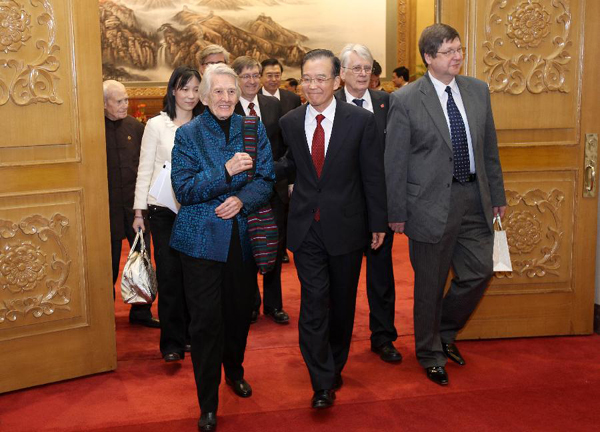 China: China will carry out programs to import foreign experts in four key industries during the next five years, according to the State Administration of Foreign Experts Affairs (SAFEA) on Thursday. The four fields include agriculture, manufacture, the service industry and software and integrated circuits, according to the SAFEA. The SAFEA said that China plans to attract 2,000 highly skilled foreign experts in manufacturing to boost newly emerged industries such as energy conservation, high-end equipment production, new energy and new
Chinese Premier Wen Jiabao (C front) helps 97-year-old Isabel Crook (L front) walk out of a hall after attending a meeting with a group of foreign experts who work in China at the Great Hall of the People in Beijing, capital of China, Jan. 12, 2012. [Xinhua File Photo]
material. Also, 1,000 experts with management experience will be hired in the service industry to train more people in finance, insurance, security and comprehensive transportation. In the field of software and integrated circuits, China will launch five international training bases to import high-caliber foreign experts and teams to further global cooperation. According to a statement released by the SAFEA earlier this month, China will recruit 500 to 1,000 high-caliber foreign experts over the next 10 years in bid to further economic and social development. Under the government-funded program, each of the selected overseas professionals will be offered a subsidy of one million yuan (158,373 U.S. dollars) to cover their living expenses, according to the statement. Source: China.org.cn
Friday, 21 September 2012
India’s First Indigenous AEW&C System Formally Recieved

Dr Vijay Kumar Saraswat, SA to RM, Secretary Defence R&D and DG DRDO, at a function organised to commemorate the formal receipt of the AEW&C India aircraft by Centre for Airborne System (CABS) the DRDO laboratory spear heading the AEW&C programme, congratulated the AEW&C team from DRDO, IAF, CEMILAC, DGAQA, and the EMBRAER team for this significant achievement, and said, “The programme involves installation of the systems on the aircraft, integration of these systems and & make the system perform to its fullest capability meeting the user aspirations” said Dr Saraswat. He further stated, “The ultimate milestone – the delivery of the fleet of AEW&C System to the Indian Air Force is not only our goal but also a dream for DRDO. The indigenous AEW&C System based on projections by the IAF and built on the EMB-145I by DRDO has incorporated more operational capabilities than contemporary systems of its class”. Air Chief Marshal NAK Browne PVSM AVSM VM ADC, Chief of Air Staff, Indian Air Force was the chief guest in the function in which the aircraft was formally received in CABS. Speaking on the occasion, he said he was personally very satisfied with this significant milestone in the programme which was not, and still is not, an easy programme. He said the AEW&C programme is the starting point for much larger, more complex projects such as AWACS India programme. Airborne Early Warning & Control (AEW&C) System the India’s Indigenous programme got a boost with one major milestone achievement when the first aircraft fully modified by M/s EMBRAER with more than 300 mission system items supplied by Centre for Airborne System [CABS], landed in Bangalore HAL Airport on 22 Aug 2012. The indigenous AEW&C System is a multi-sensor system providing for all aspects of Airborne early Warning & Control in today’s defence scenario.Earlier, while welcoming the gathering Dr S Christopher, Distinguished Scientist, Programme Director AEW&C System & Director CABS informed that after the operational requirements were firmed up between DRDO & IAF in 2007, the contract for three modified aircraft was finalized in August 2008 with M/s EMBRAER, Brazil. The present air craft is scheduled to go for 'shake down' trials in the coming week. It will take about a year for completing the integration and development flight trials. Shri G Elangovan, Distinguished Scientist and Chief Controller R&D (Avionics & Aeronautics), Air Marshal Rajendra Singh CinC HQ Training Command, AVM Nambiar Commandant ASTE, Directors of other DRDO Labs & DRDO HQ, Senior Officials of M/s EMBRAER Brazil, other dignitaries from DRDO, IAF & Former Directors of CABS were present on this occasion. Source:m Chindits
Tuesday, 18 September 2012
Integrating Social Media into Business Process a Challenge
Media News Line: Integrating social media into overall business processes is a challenge for many companies. Marketers, often having led the way in social media usage, must work with other teams and senior executives to bring about change within the company in order to integrate social throughout the organization. InSites Consulting surveyed senior marketing managers in the US and UK and found that only 14% of respondents said their companies had completely integrated social media into their business processes.
Meanwhile, 23% were working to integrate social media, 24% were in a pilot phase of social media, 26% were taking their first steps and 12% were doing nothing with social media. Marketers also cited the top barriers to integration of social media, with 48% saying their company did not believe there were financial benefits, 42% believing that their products and services were not suited for social media and 39% responding that their company lacked top management support. When it comes to integrating social media into the overall business, companies must evolve and change structurally, culturally and on a personal employee level to succeed. InSites Consulting asked marketers about these changes and many US respondents (69%) said they agreed that personally, employees were open towards new technologies and social media. Culturally, 57% of US marketers said their companies did not have a social media policy, but used a code of conduct. Structurally, 69% of US respondents said they agreed that their company was trying to incorporate social media into existing marketing plans and 64% said that both the company had a dedicated person or team working on social media and it was very clear who managed social media projects. As companies and marketers continue to make structural, cultural and personal changes in response to its growing importance, social media will become a greater part of the organization, encouraging integration among other aspects of the business process. Source: eMarketer, Source: Media News Line
Meanwhile, 23% were working to integrate social media, 24% were in a pilot phase of social media, 26% were taking their first steps and 12% were doing nothing with social media. Marketers also cited the top barriers to integration of social media, with 48% saying their company did not believe there were financial benefits, 42% believing that their products and services were not suited for social media and 39% responding that their company lacked top management support. When it comes to integrating social media into the overall business, companies must evolve and change structurally, culturally and on a personal employee level to succeed. InSites Consulting asked marketers about these changes and many US respondents (69%) said they agreed that personally, employees were open towards new technologies and social media. Culturally, 57% of US marketers said their companies did not have a social media policy, but used a code of conduct. Structurally, 69% of US respondents said they agreed that their company was trying to incorporate social media into existing marketing plans and 64% said that both the company had a dedicated person or team working on social media and it was very clear who managed social media projects. As companies and marketers continue to make structural, cultural and personal changes in response to its growing importance, social media will become a greater part of the organization, encouraging integration among other aspects of the business process. Source: eMarketer, Source: Media News Line