bloggggg

Home  |  Live  |  Science  |  Lifestyle  |  Entertainment  |  Broadcast  |  Games  |  eBooks  |  Astounds  |  Adbite  |  Cricbell  |  Cyber  |  Idea  |  Digital  |  Privacy  |  Publish  |  ePaper  |  Contact  .Subscribe.Subscribe.Subscribe.Subscribe.Subscribe.Subscribe.Subscribe.Subscribe.Subscribe
Subscribe

Saturday, 4 May 2024

Nestle baby food sugar study causes concern in India, Nestle India's shares fall

IANS: The baby-food brands sold by global giant Nestle in India contain high levels of added sugar, unlike the same products in the UK, Germany Switzerland, and other developed nations, revealed an investigation by Swiss organisation Public Eye and the International Baby Food Action Network (IBFAN), sparking concern in the country at the violation of health guidelines.

The Indian government is reportedly looking into the issue of sugar being added to baby food.

Meanwhile, the share price of Nestle India Ltd went down in the bourses on Thursday following the study.

At the BSE, on Thursday, Nestle India’s shares opened at Rs 2,539 (Wednesday closing price Rs 2,547.15) and went down to close at Rs.2,462.75.

Findings showed that in India, all Cerelac baby products contain an average of nearly 3 grams of sugar per serving. The same product is being sold with no added sugar in Germany and the UK, while in Ethiopia and Thailand, it contains nearly 6 grams, the study said.

The report said that Nestle adds sugar to infant milk and cereal products in several countries which is a violation of international guidelines aimed at preventing obesity and chronic diseases. Violations were found only in Asian, African, and Latin American countries.

However, a Nestle India Ltd spokesperson said the company has reduced the total amount of added sugars in its infant cereals portfolio by 30 per cent over the past five years and it continues to "review" and "reformulate" products to reduce them further. "We believe in the nutritional quality of our products for early childhood and prioritise using high-quality ingredients."

On Wednesday, the leading UK paper The Guardian reported that the Swiss food giant adds sugar and honey to infant milk and cereal products sold in "poorer countries". It cited data from Public Eye and IBFAN that examined Nestle baby food brands sold in these markets. Public Eye examined 115 products sold in Nestle’s main markets in Africa, Asia and Latin America across two key brands -- Cerelac and Nodi.

In India, all Cerelac baby cereal products examined by Public Eye contained added sugar -- on average nearly 3 gm per serving.
“Almost all the Cerelac infant cereals examined contain added sugar -- nearly 4 grams per serving on average, equal to roughly a sugar cube -- although they are targeted at babies from six months of age. The highest amount -- 7.3 grams per serving -- was detected in a product sold in the Philippines," the report said.WHO expert Nigel Rollins was cited in media reports as saying that “this is a double standard that cannot be justified.”Nestle baby food sugar study causes concern in India, Nestle India's shares fall | MorungExpress | morungexpress.com

Monday, 6 November 2023

Reliance to invest $122 million in Brookfield JV for data center projects in India

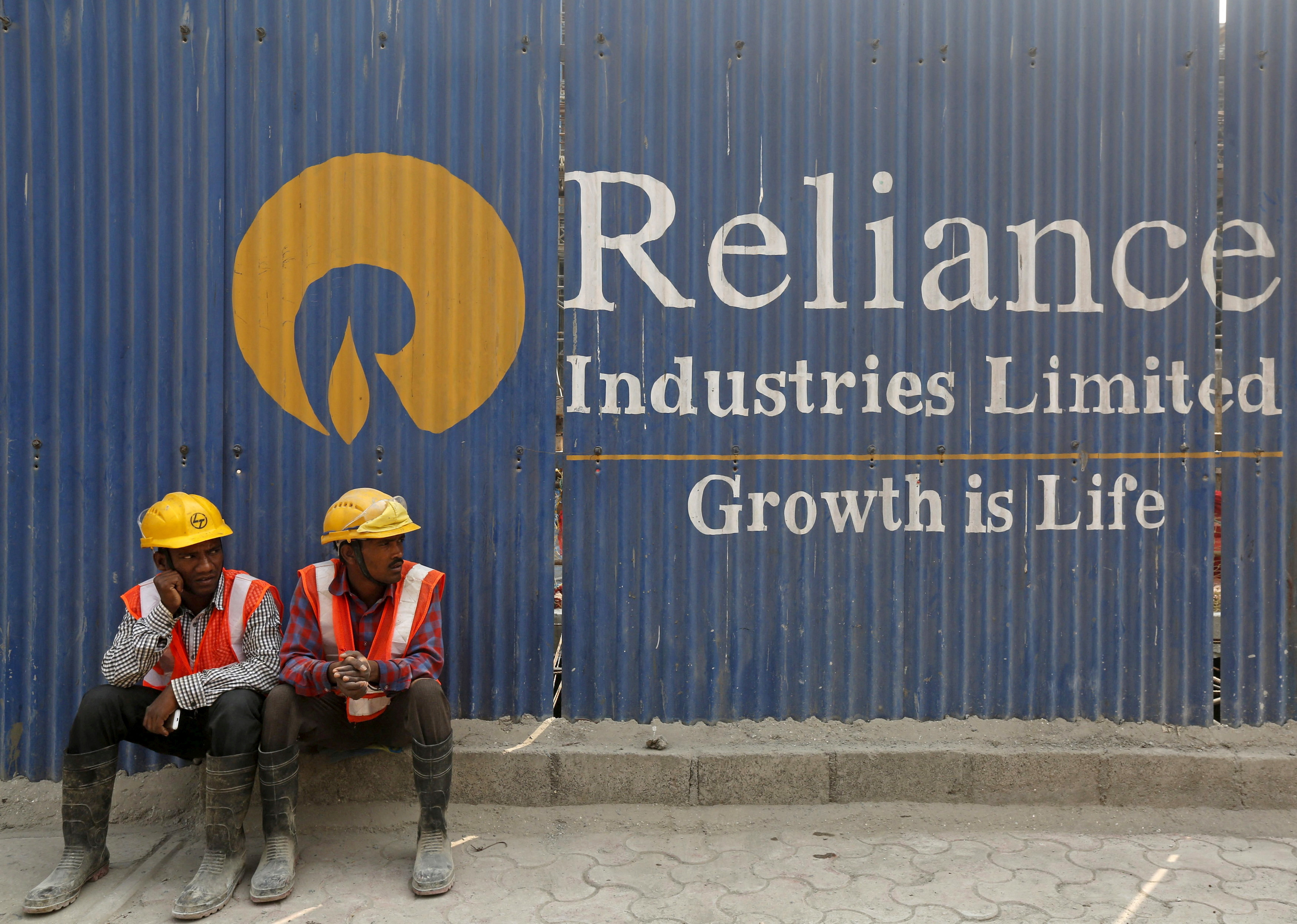
FILE PHOTO: Labourers rest in front of an advertisement for Reliance Industries at a construction site in Mumbai, India, March 2, 2016. REUTERS/Shailesh Andrade/File Photo
BENGALURU -India’s Reliance Industries said on Monday it would invest up to 10 billion Indian rupees ($122.24 million) in building data centers in the country along with Canada-based Brookfield Infrastructure. The announcement comes at a time when data center capacity in India is expected to rise exponentially as more people go online. Reliance will initially invest about 3.78 billion rupees in units of Mercury Holdings SG Pte, which is a joint venture (JV) between Brookfield Infrastructure and U.S.-based real estate investment trust Digital Realty. The JV is currently building data centers in Chennai and Mumbai. The Mukesh Ambani-owned company has committed to invest the remaining 6.22 billion rupees in equity and debt securities of the JV’s units, when needed. Reliance will hold a 33.33% stake in each of the Indian units of the JV and become an equal partner, it said, adding that the venture will be branded as Digital Connexion. India’s data centers market is expected to grow 40% a year and draw $5 billion in investments by 2025 according to a report from investment bank Avendus Capital. Indian data center space is also heating up with Reliance’s entry as Adani Enterprises’ JV had already raised $213 million to fund under-construction data centers.($1 = 81.8060 Indian rupees)Reliance to invest $122 million in Brookfield JV for data center projects in India

Tuesday, 3 October 2023

CRISIL predicts an 8-10% revenue growth for Indian pharma industry in current fiscal year

  • According to a report, the Indian pharmaceutical industry is expected to achieve 8 to 10 per cent revenue growth in the current fiscal year. This growth will be driven by expansion in the domestic market and increased exports to regulated markets. However, semi-regulated markets may encounter challenges, the report said.
  • A study conducted on 186 pharmaceutical companies, which collectively contributed to approximately half of the sector’s annual revenue of Rs.3.7 trillion in the last fiscal year, supports these findings, as reported by CRISIL on Monday, 11 September 2023.
  • CRISIL research director Aniket Dani noted that, similar to the previous fiscal year, domestic growth in fiscal year 2024 will primarily stem from a 5-6 per cent increase in realizations. This increase will be partially due to substantial price hikes allowed by the National Pharmaceutical Pricing Authority (NPPA) for drugs under price regulation. And sales of existing drugs and new product launches are expected to drive a 3-4 per cent growth in volume.
  • The industry’s operating profitability is also expected to improve by 50-100 basis points (bps) to reach 21 per cent this fiscal year. This improvement will be supported by reduced input and logistics costs, as well as a decrease in pricing pressure in the US generics market, compared to the challenging conditions experienced in the past two years.
  • CRISIL pointed out that the previous years saw margin contraction due to high pricing pressure in the US and a sharp increase in input costs caused by supply chain disruptions during the Covid pandemic.
  • The credit profiles of pharmaceutical companies are expected to remain stable, thanks to their low-leveraged balance sheets and moderate capital expenditure plans.
  • In the ongoing fiscal year, domestic sales are projected to grow by 8–10 per cent, with the chronic segment expected to be the primary contributor to revenues. This is attributed to the ongoing rise in lifestyle-related diseases and a continued focus on health awareness following the pandemic.
  • Formulation exports are anticipated to increase by 7-9 per cent in rupee terms in the current fiscal year, driven by higher volumes resulting from new product launches and a reduction in price pressure in the US generics market. However, increased claw-back of taxes in select European markets may lead to slower growth in exports to Europe.
  • CRISIL also said that exports to Asia are expected to improve this fiscal year, following modest growth in the previous year. Meanwhile, exports to Africa are likely to remain sluggish due to low foreign exchange reserves impacting purchasing power and high currency volatility.The industry is also expected to see reduced inventories and smaller incremental working capital debt this fiscal year, thanks to lower input prices and the normalization of supply chains compared to the pandemic-affected period.CRISIL predicts an 8-10% revenue growth for Indian pharma industry in current fiscal year

Tuesday, 26 September 2023

From stock markets to brain scans, new research harmonises hundreds of scientific methods to understand complex systems

University of SydneyComplexity is all around us, from the daily fluctuations of financial markets to the intricate web of neurons in our brains.

Understanding how the different components of these systems interact with each other is a fundamental challenge for scientists trying to predict their behaviour. Piecing together these interactions is like deciphering a code from an intricate set of clues.

Scientists have developed hundreds of different methods for doing this, from engineers studying noisy radio channels to neuroscientists studying firing patterns in networks of interacting neurons. Each method captures a unique aspect of the interactions within a complex system – but how do we know which method is right for any given system sitting right in front of us?

In new research published in Nature Computational Science, we have developed a unified way to look at hundreds of different methods for measuring interaction patterns in complex systems – and working out which ones are most useful for understanding a given system.

A scientific orchestra

The science of complex systems can be, well, complex. And the science of comparing and combining different ways of studying these systems even more so.

But one way to think about what we’ve done is to imagine each scientific method is a different musical instrument playing in a scientific orchestra. Different instruments are playing different melodies with different tones and in different styles.

We wanted to understand which of our scientific instruments are best suited to solving which types of problems. We also wanted to know whether we could conduct all of the instruments to form a harmonious whole.

By presenting these methods as a full orchestra for the first time, we hoped we would find new ways of deciphering patterns in the world around us.

Hundreds of methods, more than 1,000 datasets

To develop our orchestra, we undertook the mammoth task of analysing more than 200 methods for computing interactions from as many datasets as we could get our hands on. These covered a huge range of subjects, from stock markets and climate to brain activity and earthquakes to river flow and heart beats.

In total, we applied our 237 methods to more than 1,000 datasets. By analysing how these methods behave when applied to such diverse scientific systems, we found a way for them to “play in harmony” for the first time.

In the same way that instruments in an orchestra are usually organised as strings, brass, woodwind and percussion, scientific methods from areas like engineering, statistics and biophysics also have their traditional groupings.

Applying different methods to more than 1,000 datasets from a wide range of fields revealed surprising similarities and differences. Cliff et al. / Nature Computational Science, CC BY-SA

But when we organised our scientific orchestra, we found that the scientific instruments grouped together in a strikingly different way to this traditional organisation. Some very different methods behaved in surprisingly similar ways to one another.

This was a bit like discovering that the tuba player’s melody was surprisingly similar to that of the flute, but no one had noticed it before.

Our weird and wonderful new orchestral layout (which sometimes places cello and trumpet players next to the piccolo player), represents a more “natural” way of grouping methods from all across science. This opens exciting new avenues for cross-disciplinary research.

The orchestra in the real world

We also put our full scientific orchestra to work on some real-world problems to see how it would work. One of these problems was using motion data from a smartwatch to classify activities like “badminton playing” and “running”; another was distinguishing different activities from brain-scan data.

Properly orchestrated, the full ensemble of scientific methods demonstrated improved performance over any single method on its own.

To put it another way, virtuosic solos are not always the best approach! You can get better results when different scientific methods work cooperatively as an ensemble.

The scientific ensemble introduced in this work provides a deeper understanding of the interacting systems that shape our complex world. And its implications are widespread – from understanding how brain communication patterns break down in disease, to developing improved detection algorithms for smartwatch sensor data.

Time will tell what new music scientists will make as they step up to conduct our new scientific orchestra that simultaneously incorporates diverse ways of thinking about the world.The Conversation

Ben Fulcher, Senior Lecturer, School of Physics, University of Sydney

This article is republished from The Conversation under a Creative Commons license. Read the original article.

Friday, 15 September 2023

Tata Consumer Products engages in discussions to acquire majority 51% stake in Haldiram's

  • The consumer division of the Tata Group has begun negotiations to acquire a minimum of 51% ownership in the well-known Indian snack food manufacturer, Haldiram’s.
  • If the negotiations are successfully finalized, this agreement would position the Indian conglomerate in direct competition with Pepsi and billionaire Mukesh Ambani’s Reliance Retail.
  • Haldiram’s, a renowned name in Indian households, is reportedly in discussions with private equity firms, including Bain Capital, regarding the potential sale of a 10% stake, as per their statements.
  • Haldiram’s is an Indian multinational corporation specializing in sweets, snacks, and restaurants, with its headquarters situated in Noida. The company operates manufacturing facilities in diverse locations, including Nagpur, New Delhi, Gurgaon, Hooghly, Rudrapur, and Noida.
  • In addition to its manufacturing operations, Haldiram’s maintains an extensive network of retail stores and a variety of restaurants located in Pune, Nagpur, Raipur, Kolkata, Noida, and Delhi.
  • Haldiram’s, a family-run enterprise, can trace its roots to a small shop established in 1937 in Bikaner in what is today Rajasthan state1937. It The firm has gained widespread recognition for its crispy ‘bhujia’ snack, available for as low as Rs.10, rupees and widely distributed through local mom-and-pop stores as well as supermarkets.
  • Haldiram’s snacks are also available in international markets, including Singapore and the United States.
  • Additionally, tThe company operates approximately 150 restaurants, offering a diverse range of local cuisine, sweets, and Western dishes.
  • Tata Consumer Products is an Indian company specializing in fast-moving consumer goods and is a subsidiary of the Tata Group. While its registered office is situated in Kolkata, its corporate headquarters is based situated in Mumbai. The company holds the distinction of being is the world’s second-largest producer and distributor of tea, and it is also a significant player in the coffee industry.
  • Tata Consumer Products is the owner of the UK tea brand Tetley and a strategic partner of Starbucks in India.
  • According to some sources, Tata’s intention is to acquire more than 51%, but they have communicated to Haldiram’s that the latter’s ir proposed terms are considerably high.
  • Reports indicate that Haldiram’s is reported to have has set a valuation of $10 billion for the stake sought by Tata Consumer Products.
  • The prospective acquisition presents an enticing opportunity for Tata, as Tata Consumer is primarily known as a tea company, whereas Haldiram’s holds a significant presence in the consumer sector and commands a substantial market share.
  • Haldiram’s holds approximately a 13% share of India’s $6.2 billion savory snack market, as reported by Euromonitor International.
  • Whether this deal will happen or collapse will depend on the determination of both parties. Meanwhile, Haldiram’s CEO, Krishan Kumar Chutani, and Bain Capital declined to offer any comments.Haldiram’s has also officially denied any reports of negotiations with Tata Consumer Products. Tata Consumer Products engages in discussions to acquire majority 51% stake in Haldiram's

Thursday, 14 September 2023

Alibaba stock plummets as former CEO abruptly departs cloud unit just before IPO

  • Alibaba’s stock on the Hong Kong stock exchange dropped more than 4% on Monday, 11 September 2023, following the unexpected resignation of Daniel Zhang, the former CEO of the Alibaba Group, from his role in the company’s cloud computing division.
  • The abrupt resignation has left investors unsettled and raised concerns about its potential impact on the subsidiary’s plans for an initial public offering (IPO) in the coming year.
  • A mere two months after focusing solely on the cloud division, Zhang’s departure has paved the way for Eddie Wu, the newly appointed CEO of the Alibaba Group, to step in as the acting CEO and chairman of the cloud unit. This change comes at a challenging time for the Cloud Intelligence Group, which has been grappling with sluggish sales growth, which does not augur well for its planned IPO next year.
  • The Cloud Intelligence Group holds a significant position within Alibaba, being the second-largest revenue source after domestic e-commerce. It contains some crucial assets, such as the generative artificial intelligence model Tongyi Qianwen and the messaging app Dingtalk.
  • The unit experienced a 2% drop in revenue in the January–March period due to delayed projects and other factors. Analysts estimate it to be China’s largest cloud provider with a 34% market share.
  • Despite facing these challenges, the cloud unit is on track for a substantial IPO, with an estimated value ranging from $41 billion to $60 billion.
  • Meanwhile, concerns loom that the unit’s extensive data management responsibilities could draw regulatory scrutiny, especially in the light of growing concerns over data security and geopolitics.
  • Alibaba has stated its commitment to proceeding with the spinoff of the cloud unit under a yet-to-be-named management team. The process is expected to be completed by May 2024.
  • Citi analyst Alicia Yap noted that Zhang’s departure could have a temporary impact on Alibaba’s share price until a successor is appointed. She expressed concerns about the timing and process of AliCloud’s spinoff.
  • Zhang, who succeeded Alibaba co-founder Jack Ma as group CEO in 2015 and chairman in 2019, assumed leadership of the cloud unit in December following a significant service outage. However, his tenure as group head was marked by intense regulatory scrutiny. His departure is seen by some, including Vey-Sern Ling, managing director at Union Bancaire Privee, as an opportunity for the cloud business to reset and start anew.
  • Alibaba’s stock price fell by as much as 4.4% to HK$86.85, marking its lowest point since August 23. Ling has cautioned investors that the stock remains vulnerable to macroeconomic and geopolitical pressures.
  • Alibaba made the announcement of Zhang’s departure from the cloud unit in a letter to staff on Sunday without specifying the reasons behind his decision. It was on the same day that Zhang was scheduled to pass on the group CEO role to Wu and the chairmanship to co-founder Joseph Tsai.
  • Eddie Wu, one of Alibaba’s 18 co-founders, who began as a technology director in 1999 and now holds various key positions within the company, including CEO and chairman of Taobao and Tmall Group, as well as directorships in its Local Service Group and Alibaba International Digital Commerce Group, has been appointed to lead the cloud unit. Wu’s appointment is seen as a positive move for Alibaba, as he is closely aligned with Jack Ma and brings fresh energy to the business, according to Union Bancaire’s Ling.Alibaba stock plummets as former CEO abruptly departs cloud unit just before IPO

Wednesday, 9 August 2023

Prosus terminates PayU's $4.7 billion deal to acquire BillDesk

Prosus NV, the Netherlands-based parent company of PayU Payments, has terminated the deal to acquire Indian payment aggregator BillDesk. Prosus had, on 31 August 2021, announced the $4.7 billion acquisition, which was to be the country's second-largest deal in the e-commerce sector after Walmart’s $16 billion acquisition of Indian e-commerce major Flipkart in 2018. "PayU secured CCI approval on 5 September 2022. However, certain conditions precedent were not fulfilled by the 30 September 2022 long stop date, and the agreement has terminated automatically in accordance with its terms and, accordingly, the proposed transaction will not be implemented," Prosus said in a stock exchange filing. The company didn't elaborate on the conditions that were not met. Founded in 2000 by MN Srinivasu, Ajay Kaushal and Karthik Ganapathy, BillDesk focuses on making, accepting and collecting payments. Besides facilitating over 170 payment methods as a payment aggregator, it provides biller network solutions through the Bharat Bill Payment System (BBPS) and enables the collection of recurring payments. BillDesk enjoys a 25-30 per cent market share in the online payment aggregator space, followed by Razorpay at 15-20 per cent. PayU is the third largest player with a share of 10-15 per cent, according to estimates. Other players in the space include CCAvenues, Paytm, Pine Labs. Offline players like MSwipe and PhonePe, too, are planning to launch their own payment gateways. While BillDesk has a stronghold in government and Banking, Financial Services and Insurance (BFSI) segments, PayU is the go-to payment gateway for several online businesses. BillDesk's investors include Visa, General Atlantic, Temasek Holdings, among others. The Competition Commission of India (CCI) approved the deal on 5 September after weeks of delays and additional queries. The termination of the deal after a year presents a challenge for BillDesk to give an exit to its investors, while slows PayU's growth plans in the Indian payments space. According to PayU, the two entities combined were expected to process Total Payment Values (TPV) of $147 billion as per numbers for the financial year 2020-21. The gross revenues of both entities as per FY21 numbers stood at $752 billion.The deal, which would have raised the company's total investment in India to $10 billion, was seen as the beginning of consolidation in the growing and fragmented payments space, which is also seeing players shift from only online or offline offerings to providing omnichannel products to merchants. Source: https://www.domain-b.com/

Friday, 21 July 2023

Market predator Hindenburg preys on Adani stock

Almost a month after the damning report of short-seller Hindenburg Research on the Adani Group that claimed that the seven stocks within the group were about 85 per cent overvalued, one of the group's stocks, Adani Total Gas, closed at Rs835 on the BSE, down nearly 79 per cent from its 24 January level, almost close to reaching that valuation The American stock market manipulator Hindenburg Research LLC, an activist short seller that bets against companies that the firm finds overvalued, is now betting on Adani Group by engineering a sudden fall in its stock prices. A short seller uses a market strategy to sell shares that he/she or the firm does not actually own. A short-seller may borrow a company’s shares from a broker at the current market price but agreeing to buy it at a lower price by predicting a fall in the stock’s price. If the stock price falls, the seller can then buy the shares at a lower rate, thus making a huge profit. Founded by Nathan Anderson in 2017, the New York City based Hindenburg holds ‘short’ positions on Adani securities through derivatives and US-traded bonds and counts on this ‘buy low, sell high’ strategy to hammer Adani Group shares for future gains. At the current level, when the underlying Adani stocks undergo a fall in their market prices, the short position promises Hindenburg a huge profit. The larger the fall more will be Hindenburg’s gains. Hindenburg has been following the shorting strategy in the securities market for a long time. According to data compiled by Bloomberg, Hindenburg has targeted almost 30 companies since 2020. He has succeeded in pulling down these stocks by more than 15 per cent in a day in almost all cases once the accusations are made public. Last year, the short-seller made a successful deal out of Elon Musk’s move to take over Twitter. Once Hindenburg announced its short position on Twitter, the social media platform’s share plummeted from $49.80 to $37.39. Later on, the research firm even took a ‘long’ position on Twitter, making a profit on that trade as well. In this case, they followed a ‘buy low, sell high’ strategy.
Adani Group is larger than any of the companies that Hindenburg has targeted so far, and is its biggest bet yet. Hindenburg’s short position on Adani Group companies have lost around Rs4 lakh crore in the two trading days since the American firm publicised the report. The magnitude of Hindenburg’s short position is, however, not clear. Adani Group had accused Hindenburg of sabotaging its FPO prospects with ‘baseless and stale’ arguments. Even before any scrutiny of the research firm’s arguments, the report had badly affected the group’s financing plans by forcing Adani to abandon its Rs20,000 crore share sale. The company, whose share sale had a lower price band of Rs3,112, closed at an even lower rate of Rs2,762 on the BSE on 23 February, implying that retail investors can acquire the share from the primary market at a lower price. But, if the market sentiment over the past two trading sessions is anything to go by, Adani Group’s massive expansion plan has certainly taken a big hit. It is also clear that it will not be easy for Adani Group to reclaim the market cap it has lost. In its January 24 report on the Adani Group, Hindenburg Research had said that the seven stocks within the group were about 85 per cent overvalued. And, now, almost a month after the damning report, one of the group's stocks, Adani Total Gas, closed at Rs835 on the BSE, down nearly 79 per cent from its 24 January level, almost close to reaching that valuation, while two more - Adani Green Energy and Adani Transmission - are nearing the 85 per cent market loss. BSE data also showed that at Wednesday's close at Rs539, Adani Green Energy is now down 82 per cent from its 52-week high of Rs3,048 while from its pre-Hindenburg close it has lost 72 per cent. Along with it, Adani Transmission is down 81 per cent from its 52-week high and 71 per cent from its 24 January close. Gautam Adani has slipped four positions on the Forbes’ global real-time billionaires list since the Hindenburg attack started. He is now on the 7th position with a net worth of $96.6 billion. According to Forbes, Asia’s richest individual lost 19 per cent of his net worth in the last trading session alone. Combined result of this sustained loss in stock prices has also wiped off a little over 60 per cent of the group's market value in nearly a month. Other than market's negative perception about the group that is based on Hindenburg report, a serious fallout of the report was decision by the French energy major to put on hold all future investments in the Adani Group till an audit of the Indian conglomerate's affairs was complete, market players said. Hindenburg Research views itself as a savior of investors from man-made disasters in the financial markets. The objective, however, is wider than stated as Hindenburg has its skin in the game as well. While the Hindenburg report wiped out all of Gautam Adani's 2022 wealth gains, critics say the Hindenburg report as the best thing to happen to the Adani Group. It will slow the group’s speed of expansion and diversification, and force its financiers to be diligent and cautious about over leveraging in future. Source: https://www.domain-b.com/

Wednesday, 22 March 2023

Silicon Valley Bank, sixteenth-largest US bank, collapses

US banking regulator, the California Department of Financial Protection and Innovation, on Friday shuttered the SVB Financial Group, which operates the Silicon Valley Bank, and seized its assets after the bank closed Friday with a negative cash balance.
The failure of the sixteenth-largest bank in the United States followed a run on the bank with depositors pulling out $42 billion from Silicon Valley Bank on, according to a regulatory filing on Friday.
The run was reportedly sparked by a letter that Silicon Valley Bank chief executive officer Greg Becker sent to shareholders on Wednesday. The bank had suffered a $1.8 billion loss on the sale of US treasuries and mortgage-backed securities and outlined a plan to raise $2.25 billion of capital to shore up its finances.
Customers immediately tried to pull their money, including many of the venture-capital firms. Moreover, fund managers like Peter Thiel’s Founders Fund, Coatue Management, Union Square Ventures and Founder Collective advised their startups to pull their cash from the bank, according to reports.
At the close of business on 9 March, the bank had a negative cash balance of $958 million, according to an order taking possession of the bank filed by California banking regulator, the Department of Financial Protection and Innovation.
When the Federal Reserve sent its cash letter — a list of checks and other transactions for the bank to process - to SVB, it failed to pull together enough currency to meet it, according to the California regulator.
“Despite attempts from the bank, with the assistance of regulators, to transfer collateral from various sources, the bank did not meet its cash letter with the Federal Reserve,” the order from Commissioner Clothilde Hewlett said.
The order places the lender into receivership by the state regulator.
As of 31 December 2022, the Silicon Valley Bank had about $209 billion in total assets and about $175.4 billion in total deposits, as per the Federal Deposit Insurance Corporation (FDIC).
The FDIC said customers will have continued access to their insured funds beginning Monday. However, payments to uninsured depositors will hinge on the sale of bank assets.
According to SVB's own estimates in 2022, 96 per cent of its $173.1 billion in deposits exceeded or were not covered by FDIC insurance.
SVB, which primarily caters to Silicon Valley startups, saw its deposits more than triple from $60 billion in 2019 to over $190 billion by 2022.
This funds came as more venture funds flowed to startups. The start-ups parked their excess money with the bank. The bank in turn parked a major portion of the deposit money into fixed-return mortgage-backed securities as it could not use these funds in unbridled lending.
Since the bank's deposits almost cost nothing, the model was profitable. When government securities yielded 0.5 per cent, the Silicon Valley Bank managed to make 1.5 per cent.
SVB seems to have erred in selecting non-floating interest rate assets at a time when interest rates were poised to rise. The bank was locked into low yields when interest rates on government securities were much higher.
The bank also has unique vulnerabilities in a rising interest regime. The bank had to abandon a capital-raising programme through equity and debt, which wiped off nearly $80 billion worth of shareholder value.
The crisis that enveloped the bank also triggered a global sell-off in banking stocks after it launched a rescue share sale to plug a near-$2 billion gaping hole in its finances.The collapse of SVB is likely to spell trouble for Silicon Valley, as the bank is one of the biggest lenders to startups and V C funds in the US. Source: https://www.domain-b.com/

Thursday, 2 March 2023

Adobe to acquire Figma in $20bn cash-and-stock deal

Adobe Inc today announced it has entered into a definitive merger agreement to acquire Figma, a leading web-first collaborative design platform, for approximately $20 billion in cash and stock. 
Incorporated in Delaware and headquartered in San Jose, California, Adobe Inc, originally called Adobe Systems Incorporated, offers digital tools for imaging and creative expression with Photoshop while pioneering electronic documents through PDF and creating the digital marketing category with Adobe Experience Cloud.
Founded by Dylan Field and Evan Wallace in 2012, the company pioneered product design on the web. Figma helps teams collaborate visually and make design accessible to all.
It offers interactive mobile and web applications to collaborate through multi-player workflows, sophisticated design systems and a rich, extensible developer ecosystem.
“Together, Adobe and Figma will reimagine the future of creativity and productivity, accelerate creativity on the web, advance product design and inspire global communities of creators, designers and developers,” Adobe stated in a website release.
“Adobe’s greatness has been rooted in our ability to create new categories and deliver cutting-edge technologies through organic innovation and inorganic acquisitions,” said Shantanu Narayen, chairman and CEO, Adobe. “The combination of Adobe and Figma is transformational and will accelerate our vision for collaborative creativity.”
Figma’s web-based, multi-player capabilities will accelerate the delivery of Adobe’s Creative Cloud technologies on the web, making the creative process more productive and accessible to more people, says the release.
“Figma has built a phenomenal product design platform on the web,” said David Wadhwani, president of Adobe’s Digital Media business. “We look forward to partnering with their incredible team and vibrant community to accelerate our joint mission to reimagine the future of creativity and productivity.”
"With Adobe's amazing innovation and expertise, especially in 3D, video, vector, imaging and fonts, we can further reimagine end-to-end product design in the browser, while building new tools and spaces to empower customers to design products faster and more easily,” said Dylan Field, co-founder and CEO, Figma.
Figma expects to have a total addressable market of $16.5 billion by 2025. The company is expected to add approximately $200 million in net new ARR this year, surpassing $400 million in total ARR exiting 2022, with best-in-class net dollar retention of greater than 150 per cent. With gross margins of approximately 90 percent and positive operating cash flows, Figma has built an efficient, high-growth business, the release addes .
As per the agreement, Adobe will acquire Figma for approximately $20 billion, for approximately half in cash and half in stock, subject to customary adjustments.
Under the deal, approximately 6 million additional restricted stock units will be granted to Figma’s CEO and employees that will vest over four years subsequent to closing.
Adobe expects the cash consideration to be financed through cash on hand and, if necessary, a term loan. The transaction is expected to close in 2023, subject to the receipt of required regulatory clearances and approvals and the satisfaction of other closing conditions, including the approval of Figma’s stockholders.
Upon the closing of the transaction, Dylan Field, Figma’s co-founder and CEO, will continue to lead the Figma team, reporting to David Wadhwani, president of Adobe’s Digital Media business. Until the transaction closes, each company will continue to operate independently.Allen & Company LLC is serving as financial advisor to Adobe and Wachtell, Lipton, Rosen & Katz is serving as legal advisor in connection with the transaction. Source: https://www.domain-b.com/

Wednesday, 12 October 2022

Global recession risk up in 2023 amid parallel rate hikes: World Bank


The world may be edging toward a global recession in 2023 and a string of financial crises in emerging markets and developing economies that would do them lasting harm as central banks across the world simultaneously are hiking interest rates unusually fraught circumstances in response to inflation, according to a comprehensive study by the World Bank.

Central banks around the world have been raising interest rates this year with a degree of synchronicity not seen over the past five decades—a trend that is likely to continue well into next year, according to the study report.

Yet the currently expected trajectory of interest-rate increases and other policy actions may not be sufficient to bring global inflation back down to levels seen before the pandemic.

Investors expect central banks to raise global monetary-policy rates to almost 4 per cent till 2023—an increase of more than 2 percentage points over their 2021 average, the World Bank said in a release citing the report.

Unless supply disruptions and labor-market pressures subside, those interest-rate increases could leave the global core inflation rate (excluding energy) at about 5 per cent in 2023—nearly double the five-year average before the pandemic, the study found.

To cut global inflation to a rate consistent with their targets, central banks may need to raise interest rates by an additional 2 percentage points, according to the report’s model.

If this were accompanied by financial-market stress, global GDP growth would slow to 0.5 per cent in 2023—a 0.4 per cent contraction in per-capita terms that would meet the technical definition of a global recession.

The world’s three largest economies—the United States, China and the euro area—have been slowing sharply. Under the circumstances, even a moderate hit to the global economy over the next year could tip it into recession, the press release said.Central banks should persist in their efforts to control inflation—and it can be done without touching off a global recession, the study finds. But it will require concerted action by a variety of policymakers. Source: https://www.fibre2fashion.com/

Tuesday, 29 December 2020

Apple loses $81 billion of market value as 5G iPhone 12 launched


Apple shares tumble 4%, loses up to $81 billion in market value as it unveils the new 5G iPhone 12.

The loss followed the reveal of its first-ever 5G-enabled smartphone lineup by Apple. In addition to a total of four iPhone models namely iPhone 12, iPhone 12 Mini, iPhone 12 Pro and iPhone 12 Pro Max, the company also showcased a smaller version of its HomePod Mini home assistant.

The Apple iPhone 12 will be available in a size of 6.1 inches and as a 5.4-inch as the iPhone 12 mini. The premium iPhone 12 Pro is sold in sizes 6.1 inches and 6.7 inches. The new phone will also have longer-lasting screens, improved cameras and a faster processor, the company said.The drop was stark enough to judge the reaction of the market to the new range of iPhones. While it is expected that the new iPhone models will serve as a serious upgrade to the predecessors, both in terms of design and performance, it is true that people have been left wanting for more.  Source: https://www.daily-bangladesh.com/

Saturday, 26 December 2020

Sensex jumps over 200 pts after RBI policy outcome; financial stocks rise


OCT 09, 2020 MUMBAI: Equity benchmark Sensex jumped over 200 points in the morning session on Friday after the Reserve Bank of India (RBI) monetary policy announcement. RBI has decided to keep benchmark interest rate unchanged at 4 per cent but retained an accommodative stance, implying more rate cuts in the future if the need arises to support the economy hit by the COVID-19 crisis. After announcement of the monetary policy review, the 30-share BSE index was trading 235.28 points or 0.59 per cent higher at 40,417.95, and the NSE Nifty rose 57.15 points or 0.48 per cent to 11,891.75. HDFC was the top gainer in the Sensex pack, rising around 3 per cent, followed by ICICI Bank, L&T, Bajaj Finance, HDFC Bank, Bajaj Finserv, SBI and Axis Bank. On the other hand, Asian Paints, Tech Mahindra, HUL, Bajaj Auto and TCS were among the laggards. Rate-sensitive banking and financial stocks were trading on a positive note, with BSE bankex and finance rising up to 1.68 per cent. Realty index was also quoting gains, while auto was in the red. According to traders, RBI's decision was on expected lines. The benchmark repurchase (repo) rate has been left unchanged at 4 per cent, RBI Governor Shaktikanta Das said while announcing the decisions taken by the Monetary Policy Committee (MPC). Consequently, the reverse repo rate will also continue to earn 3.35 per cent for banks for their deposits kept with RBI. Das said the Indian economy is entering into a decisive phase in the fight against coronavirus. He also stated that the contraction in economic growth witnessed in the April-June quarter of the fiscal is "behind us" and that silver linings are visible. Copyright © Jammu Links News, Source: Jammu Links News

Thursday, 22 December 2016

How Education Influences Pune’s Property Market

By Kishor Pate, CMD – Amit Enterprises Housing Ltd, Accommodation Times News Services: Jawaharlal Nehru named Pune the Oxford of the East, and this title is more than well-deserved on account of the many schools, colleges and management institutes that the city boasts of. Each year, Pune attracts tens of thousands of students not only from India but all over the world.

A lesser-known fact is that Pune’s real estate market is a direct beneficiary of its highly developed educational environment. People in Pune are willing to invest considerably in their children’s education, and this includes a willingness to pay more for a home located close to a good school or college. In fact, if we study the check-lists of features that most homebuyers in Pune consider important, more than 35% list proximity to good schools and colleges non-negotiable.

Also most of the migrants from other states generally fall in love with Pune and settle here. This also leads to demand for more houses near the proximity of the schools as this is a most logical step for anyone to raise a family.

Not only that, but a significant number of homebuyers – predominantly young working couples – are willing to compromise on other aspects such as proximity to entertainment and even workplaces in order to secure a home close to a good school. For these people, the welfare of their children ranks higher than their own convenience. What is even more interesting is that not all of these homebuyers are married or have children. Why do such buyers consider proximity to good educational institutions important while selecting a property?

The answer is as simple as it is profound. On the one hand, married homebuyers with children are definitely interested in quality schools and colleges because of the educational opportunities they offer. Such homebuyers have either just starting a family or are planning to do so soon. Either way, they are considering the future of their children and are even ready to pay more for smaller homes in order to secure their chances of a good education. In the larger context, however, most property buyers and investors in Pune understand that the availability of good schools in a neighborhood contributes directly to the overall value of the locality’s real estate.

Obviously, Pune’s educational districts rank very high as property investment destinations. This is underscored by another very interesting fact – namely, the resilience of the property values in areas of Pune which are close to the good schools, colleges and management institutions. In the past, these areas did not see any drop in property prices even when other localities were seeing price corrections.

Historically, homebuyers focused on these areas of Pune were willing to make all kinds of compromises in order to secure the education advantage. They were ready to settle for smaller homes in projects without clubhouses and swimming pools, in congested areas without malls or any kind of organized shopping nearby. Over time, these constraints have given way to some extent. Developers who were able to secure redevelopment rights in some of the core areas of the city were able to build more modern residential complexes which have a decent share of lifestyle amenities. 

While examining the correlation of Pune’s educational institutions and the property pricing in the areas around them, some may argue that good schools and colleges have led to the higher appreciation of these areas. The rationale would appear sound – homebuyers in Pune will always prefer residential projects located near an educational district and are ready to pay higher rates for them. So have Pune’s good schools, in fact, helped drive up the property prices in these localities?

Maybe so, but this is an incomplete argument at best. The fact remains these areas are also defined by higher historic affluence and that this affluence has triggered the development of high-quality schools there. There is no doubt that in Pune, the best schools and colleges are in localities defined by a higher standard of living.

In the final analysis, what perhaps matters most from a property market perspective is not the nature of the relationship between education and property values in Pune, but the simple fact that the relationship definitely exists. Developers with projects in and around Pune’s educational institutions are able to ask for higher prices, and homebuyers are generally willing to pay them. Source: http://accommodationtimes.com/

Thursday, 13 October 2016

2016 to be record-breaker for Indian IPO collections: study

  • The Indian Initial Public Offerings (IPO) market is set to hit a six-year high with $2.93 billion already completed and another $2.90 billion in the pipeline. Financials, insurance, telecommunications, manufacturing, consumer products and services and healthcare are set to be the busiest sectors in the next 12 months.
  • The flurry of IPO activity is likely to continue well into 2017, driven by upbeat economic sentiment, improved business confidence, easing inflationary pressure and stable foreign direct investment inflows, according to a research by Baker & McKenzie.
  • This year (2016) is set to be a record-breaking year for the Indian IPO market, which is the highest since 2011, it added.
  • To date, 50 companies have raised $2.93 billion, while another 22 companies are lined up for about $5.8 billion, more than double last year's total deal value of $2.18 billion from 71 listings.
  • A further 16 companies are in the pipeline to be listed domestically in 2017, raising as much as $5.86 billion, including Vodafone's highly anticipated $3 billion IPO, which could potentially surpass state-run Coal India's IPO in 2010 to become India's biggest IPO.
  • Momentum in the India IPO market continues to build, boosted by Prime Minister Narendra Modi's drive to cut bureaucratic red tape to improve the ease of doing business in India. These efforts include a rationalisation of the country's current tax regime, where a good is often taxed multiple times at different rates, whether it be at the production and investment stage or during interstate trading.
  • The recently passed Goods & Services Tax (GST) Bill, which will take effect on 1 April 2017, will unite India as an efficient common tax market for the first time. This will also have a positive long-term impact on the Indian economy. The implementation of the GST Bill is expected to boost India's GDP growth by as much as two percentage points, according to finance minister Arun Jaitley.
  • Ashok Lalwani, head of Baker & McKenzie's India Practice, believes that India will significantly benefit from the GST Bill. "The GST Bill will not only bring about the immediate benefit of widening the country's tax base and improving the revenue productivity of domestic indirect taxes, but more importantly, it sends the message to the people of India and the rest of the world that the Indian government is committed to the country's economic reform, further bolstering India's attractiveness as an investment destination," said Lalwani.
  • Domestic vs Cross-border IPOs
  • Domestic listings continue to dominate India's IPO scene. Dual listing on both BSE and NSE accounted for 98.8 per cent of Indian companies' listings by value in 2016 to date, raising a total of $2.9 billion from 19 IPOs. These included ICICI Prudential Life Insurance's $909 million IPO, which is the country's biggest IPO this year. A total of 33 companies are expected to dual list on both the BSE and the NSE by the end of 2016, raising a total of $4.62 billion.
  • Improved business confidence is also driving Indian companies to look at growth and market expansion opportunities overseas by way of cross-border IPOs. This provides a means to access risk capital that is not available in India, and also to connect with investors who better understand and appreciate their businesses.
  • Among the 22 IPOs in the 2016 pipeline is Strand Life Sciences' listing on NASDAQ, which if it goes ahead, will be India's first cross-border IPO since early 2015 when Videocon d2h listed on NASDAQ.
  • A number of mega IPO such as Vodafone's $3 billion IPO and PNB Finance Housing Ltd's $388.45 million IPO are also expected to fructify.
  • The healthcare and consumer products and services sectors also have a healthy deal pipeline with a total of 22 deals expected to debut in 2016-2017. These deals include Aster DM Healthcare's $176 million IPO and Varsity Education Management's $296 million IPO, which in part reflect the growing middle class demand for higher-end consumer products and better healthcare services.
  • The flurry of IPO is likely to continue for the rest of 2016 and well into 2017, driven by upbeat economic sentiment, improved business confidence, easing inflationary pressure and stable foreign direct investment inflows.
  • Also both BSE and the NSE announced plans to list their own shares via IPO after the Union Cabinet raised the foreign shareholding limit in Indian stock exchanges to 15 per cent from 5 per cent. This will also help deepen Indian capital markets.
  • More listings in the insurance sector could be on the horizon, particularly after the Indian government passed a bill last year which increased the foreign ownership threshold in the nation's insurers to 49 per cent from 26 per cent.
  • Equally significant, the Insurance Regulatory and Development Authority of India released a discussion paper in August 2016, proposing to make IPOs mandatory for all general insurance companies that have been in operation for eight years or more as well as for all life insurers that have been operating for 10 years or more.
  • "The insurance sector is definitely one to watch out for, although IPO momentum will be heavily influenced by the post-listing performance of ICICI Prudential Life Insurance and the readiness of the insurance companies to hit the market," Lalwani added. Source: domain-b.com

Sunday, 28 August 2016

Fast-growing IoT sector turns imagination into reality

IoT / Alton Sports
  • BY KIM MI-RAE (INFO@KOREAITTIMES.COM) "All intelligent thoughts have already been thought; what is necessary is only to try to think them again," said Johann Wolfgang von Goethe, one of the greatest German writers. If he were alive today in this 21st century, he would recant what he had said. Even the insightful quote from one of the rare giants of world literature rings hollow in the 21st century.
  • At a time when autonomous cars and drone-based delivery services are nearing commercialization, our imagination is becoming a reality. The Internet of things (IoT) is evolving every day, so few could predict what kind of ‘intelligent thoughts’ will be thought tomorrow.
  • The IoT market is expanding day by day. As advances in IoT technology are being made, the term Internet of Everything (IoE) has been newly coined.
  • Though the IoT is most heavily exploited in seven industrial sectors -- automobile, mobile, robotics, security, medicine, the environment and ubiquitous sensor networks, it is fiar to say that the IoT has become relevant across all industries. In particular, sensor technology, the key to the IoT, is spearheading the convergence of heterogeneous industries by enabling smart cars, smart homes and wearable devices.
  • The IoT technology that is most relevant to our daily lives is smart home services. Last year, South Korea mobile operator LG U+ kicked off a home IoT service called ‘@Home,’ which lets users to turn off the gas valve, adjust indoor temperatures or control door locks via their smartphones. LG U+ is scheduled to launch ‘Door Cam,’ a CCTV camera service which detects people coming up to your front door, lets you check via your smartphone and stores the footage in the cloud to allow you to watch at any time.
  • Samsung Electronics has recently unveiled the Family Hub™ refrigerator with a Wifi enabled touchscreen that lets you manage your groceries, connect with your family and entertain like never before. The fridge comes equipped with Internet-connected cameras that can let you view what's inside without opening the doors. The Family Hub also comes with two apps that let you order food directly from the screen.
  • Bicycle manufacturer Alton Sports and software developer HandySoft are planning to launch a GPS-enabled bicycle with Bluetooth sensors attached.
  • The IoT project between Alton Sports and HandySoft has drawn great attention as it is carried out in a partnership between SMEs, not between a conglomerate and one of the nation’s three major telecom operators. The GPS-enabled bicycle will enable systemic management of production and sales records and allow the rider to find the nearest Alton Sports for a repair and find and recover your bike after it has been stolen or lost.
IoT / Lucky Chouette
  • The 4th Industrial revolution driven by smart home services, smart home appliances and wearables
  • At the “Lucky Chouette” outlet in COEX mall, southern Seoul, there’s a smart mirror that interacts with every smart hanger to provide a shopper with information on a piece of clothing, from the price and material to photos of a model wearing the clothing. The mirror also doubles as a video camera, capturing a 360 degree view of what an outfit looks like.
  • On the accommodation front, there is motel booking app Yanolja which is based on an IoT-based keyless check-in system. Customers of Kotels (Yanolja’s franchise motels) can bypass the front desk when they get to their motel, taking control of everything through the app. Customers will soon be able to do more through the app, such as booking a taxi, requesting free amenities, paying for overstaying check-out and controlling the TV, air conditioner and lights.
  • Also underway is an IoT-based urban project designed to address various urban problems. The South Korean government plans to build a test bed for IoT services in Bukchon Hanok Village, a popular tourist attraction where residents frequently file complaints about traffic congestions, garbage and noise problems. The government plans to exploit IoT technology in addressing illegal parking and garbage problems and to install fire detection sensors and public WiFi networks. On top of that, beacons (which detect the presence of smartphones within their range, and can deliver content to those devices, with the permission of the user) will be installed to offer tourist guides and useful traveler information via smartphone when tourists pass through certain sections. Source: http://www.koreaittimes.com

Monday, 22 August 2016

Fast-growing IoT Sector Turns Imagination into Reality

IoT / Alton Sports
  • BY KIM MI-RAE (INFO@KOREAITTIMES.COM) "All intelligent thoughts have already been thought; what is necessary is only to try to think them again," said Johann Wolfgang von Goethe, one of the greatest German writers. If he were alive today in this 21st century, he would recant what he had said. Even the insightful quote from one of the rare giants of world literature rings hollow in the 21st century.
  • At a time when autonomous cars and drone-based delivery services are nearing commercialization, our imagination is becoming a reality. The Internet of things (IoT) is evolving every day, so few could predict what kind of ‘intelligent thoughts’ will be thought tomorrow.
  • The IoT market is expanding day by day. As advances in IoT technology are being made, the term Internet of Everything (IoE) has been newly coined.
  • Though the IoT is most heavily exploited in seven industrial sectors -- automobile, mobile, robotics, security, medicine, the environment and ubiquitous sensor networks, it is fiar to say that the IoT has become relevant across all industries. In particular, sensor technology, the key to the IoT, is spearheading the convergence of heterogeneous industries by enabling smart cars, smart homes and wearable devices.
  • The IoT technology that is most relevant to our daily lives is smart home services. Last year, South Korea mobile operator LG U+ kicked off a home IoT service called ‘@Home,’ which lets users to turn off the gas valve, adjust indoor temperatures or control door locks via their smartphones. LG U+ is scheduled to launch ‘Door Cam,’ a CCTV camera service which detects people coming up to your front door, lets you check via your smartphone and stores the footage in the cloud to allow you to watch at any time.
  • Samsung Electronics has recently unveiled the Family Hub™ refrigerator with a Wifi enabled touchscreen that lets you manage your groceries, connect with your family and entertain like never before. The fridge comes equipped with Internet-connected cameras that can let you view what's inside without opening the doors. The Family Hub also comes with two apps that let you order food directly from the screen.
  • Bicycle manufacturer Alton Sports and software developer HandySoft are planning to launch a GPS-enabled bicycle with Bluetooth sensors attached.
  • The IoT project between Alton Sports and HandySoft has drawn great attention as it is carried out in a partnership between SMEs, not between a conglomerate and one of the nation’s three major telecom operators. The GPS-enabled bicycle will enable systemic management of production and sales records and allow the rider to find the nearest Alton Sports for a repair and find and recover your bike after it has been stolen or lost.
IoT / Lucky Chouette
  • The 4th Industrial revolution driven by smart home services, smart home appliances and wearables
  • At the “Lucky Chouette” outlet in COEX mall, southern Seoul, there’s a smart mirror that interacts with every smart hanger to provide a shopper with information on a piece of clothing, from the price and material to photos of a model wearing the clothing. The mirror also doubles as a video camera, capturing a 360 degree view of what an outfit looks like.
  • On the accommodation front, there is motel booking app Yanolja which is based on an IoT-based keyless check-in system. Customers of Kotels (Yanolja’s franchise motels) can bypass the front desk when they get to their motel, taking control of everything through the app. Customers will soon be able to do more through the app, such as booking a taxi, requesting free amenities, paying for overstaying check-out and controlling the TV, air conditioner and lights.
  • Also underway is an IoT-based urban project designed to address various urban problems. The South Korean government plans to build a test bed for IoT services in Bukchon Hanok Village, a popular tourist attraction where residents frequently file complaints about traffic congestions, garbage and noise problems. The government plans to exploit IoT technology in addressing illegal parking and garbage problems and to install fire detection sensors and public WiFi networks. On top of that, beacons (which detect the presence of smartphones within their range, and can deliver content to those devices, with the permission of the user) will be installed to offer tourist guides and useful traveler information via smartphone when tourists pass through certain sections. Source: http://www.koreaittimes.com

Thursday, 19 November 2015

Markets end mixed on US jobs report

3D Employment Graph
By Anjali Shukla Nov 09 2015 , London, Tolerance, or the lack thereof, 
is being hotly debated  across India. Opinions are severely divided as some sections of the world’s largest democracy cry foul over rising fundamentalism and perceived threat to the nation’s secular fabric and freedom to protest. Global markets, on the other hand, were united in their protest against the US Federal Reserve’s interest rate hike by the turn of the year. Investor sentiment across the globe slumped as the latest payroll data from the US confirmed a case for policy tightening. Most Asian markets closed in green on Friday ahead of the crucial US payrolls data. Indices saw a mixed performance amidst some more disappointing data from China and the fears of a nearly inevitable interest rate hike by the US Federal Reserve before the year end. The markets did see a turnaround midweek as the local media reported the Chinese president Xi Jinping saying the economy could maintain annual growth of about 7 per cent over the next five years. However, uncertainties remain, given the continued weakness in global trade and high domestic debt. The Shanghai Composite index regained some of its losses this week as sure sign the government crac­kdown on short selling and a return of margin debt are yielding results. The manufacturing data, albeit dismal, showed activity in the sector hasn’t bottomed out yet. The official purchasing managers’ index remained unchanged at 49.8 in October. This is being viewed as an impact of the monetary policy easing. However, the woes are far from over as other economic indicators, including housing sales and steel production continue to falter. In Japan, its central bank has said it is optimistic about the pace of economic recovery and insisted it will be sure to act, as the need arises, in order to achieve the inflation target at the earliest. The Bank of Japan said it sees inflation to be around the targeted 2 per cent in the second half of financial year 2016. Japan’s Nikkei 225 closed up 0.78 per cent at 19,265.60. The Shanghai index closed up 1.91 per cent at 3,590.03. Hang Seng closed down 0.80 per cent to 22,867.33. Indian markets witnessed a joyless week closing with marginal losses on Friday. Sentiment has been running haywire with speculation on the results for Bihar assembly elections. The signals from the international shores did not help allay the anxiety, with the benchmark BSE index closing in red for most days of the week. The US, yet again reiterating it is firm on raising interest rates by the end of the year, weighed heavy on the markets. Further, adding to woes was the disappointing manufacturing data from China, underlining once more the growing slump in the economy. Economic data on the home front did not help much either as India’s manufacturing sector grew at the slowest pace in nearly two years for October. The Nikkei manufacturing purchasing managers' index fell 50.7 in October from 51.2 in September. On the bright side, fresh figures from controller general of accounts showed the government may be on track to meet its fiscal deficit target of 3.9 per cent for FY16. The market movements for now are not only hinged upon socio-political developments within the borders, but also the state of the global economic growth. Given the current scenario, the sentiment will continue to be guided by the developments in the overseas economies. The benchmark BSE index closed down 0.15 per cent to 26,265.24. Nifty closed down 0.01 per cent to 7,954.30. The indices in Europe dragged, ending on a mixed note on Friday as the robust US employment report more than convinced the markets the US Fed is closer to raising interest rates, come December. Investor sentiment was also dampened by the weak economic figures. Overall, it was a mixed week despite a start on a high note, with the markets extending the rally, backed by the European Central Bank chief Mario Draghi’s comments the central bank is ready to act to support the euro-area economy. However, the cheer wasn’t sustained over the following days as the European commission cut its growth and inflation outlook for the euro-area for 2016 on the back of struggling global outlook and lower oil prices. Investors are looking forward to the ECB meeting next month in hopes of further stimulus for the economy. On the data side, Eurozone manufacturing PMI rose to 52.3 in October from 52 in September, the final reading showed. The producer price index for the domestic market fell 3.1 per cent versus a year ago. The ECB’s stand to boost stimulus starts to make more sense in the backdrop of dismal economic indicators, with struggling factory production, sagging output and a drop in employment growth rate. As soon as it became clear that there is little likelihood of the US Federal Reserve backing down from its stance of an interest rate hike in December following the October payrolls data beating estimates, market sentiment slumped. The indices closed low on Friday, as investors mulled the impact of Fed’s action in the coming weeks. While the strong jobs report is a positive signal showing the US economy is on track to recovery, the data also more than confirms the possibility of monetary policy tightening. According to the report non-farm payrolls rose by 2,71,000 in October. The rate of unemployment dropped to 5.0 per cent in October. The Fed has been holding off the rates since September in view of the global economic weakness, sliding oil prices as well as an entire summer of market rout. However, there isn’t a compelling reason to stick to the stance anymore as the US economic growth seems like it is getting back on track. All in all, it was a mixed trading week for the US indices as well. Over the coming week data for producer prices and retail sales will provide further insight into the state of the economy. Nasdaq closed up 0.38 per cent, at 5,147.12. Dow Jones Industrial Average closed up 0.26 per cent, at 17,910.33. S&P 500 closed down0.03 per cent to2,099.20. Source: mydigitalfc.comImage: flickr.com

Tuesday, 14 July 2015

Samsung Electronics Tops in China's Smart TV Market

Korea IT Times (info@koreaittimes.com): Samsung Electronics, the No. 1 player in the global TV market, kept its top spot in the smart TV market in China, the largest TV market in the world, for ten straight quarters. According to market research firm The GfK Group on July 12, Samsung Electronics gained a share of 20.8 percent in the Chinese smart TV market (in terms of revenue in major 100 cities) in the second quarter of this year, dwarfing that of local companies. Since it became the No. 1 player in the first quarter of 2013 with a share of 17.1 percent, Samsung has maintained its leading presence for ten consecutive quarters. Following Samsung Electronics were Hisense with 14.1 percent, Skyworth and Sharp each with 11.8 percent, Sony with 8.6 percent, TCL with 8.5 percent, and Changhong with 6.6 percent. In the meantime, the global smart TV market is forecast to expand to 97.1 million units this year from 73.1 million units in 2013, according to market research firm DisplaySearch. Samsung Electronics established an unrivaled position in the global smart TV market with a share of 28.2 percent last year. Source: Article

Thursday, 2 April 2015

India’s ARPU grows 12-15%

Investment Growth
India’s giant DTH and cable market is seeing a “sustained” increase in ARPU levels, says accountancy firm KPMG in its latest FICCI-KPMG study on the Indian media market. Last year DTH operators saw ARPU growth of between 12-15 per cent, and this followed on from 2013’s growth rates of about 8-9 per cent. The overall averages were helped by growth in HD TV services, a growing number of Premium channels and other value-added elements in particular set-top boxes with added storage, and more recently the introduction of 4K transmissions. The cable sector’s main gains are coming from the gradual conversion from analogue to digital under the nation’s Digital Addressable System obligations. However, KPMG issued a very firm warning, saying that digital piracy and theft is a problem, and that India’s government needs to do far more to toughen up its compliance requirements and introduce stricter vigilance and penalties for copyright theft. Source: ArticleImage: flickr.com