Mumbai (IANS) Actress Dia Mirza has strongly praised filmmaker Anubhav Sinha for his recently released film ‘Assi’, and called it a powerful and significant cinematic effort.
Dia shared a video clip from the film on her social media account and expressed admiration for the director and the entire team behind the project.
Sharing the video clip from the movie, the actress wrote, “Thank you Anubhav Sinha. For going where no one else goes. For saying what no one else dare say. But most importantly, for listening to the voice in your heart.”
She added, “ASSI is one of the most important films of our times. Each word, each pause, each beat, creates a compelling feeling. Every single performance is pure TRUTH. So much gratitude to Team ASSI. @anubhavsinhaa Zindabad!”
Talking about the film ‘Assi’, it has been directed by Anubhav Sinha and features an ensemble cast including Taapsee Pannu, Manoj Pahwa, Kumud Mishra, Naseeruddin Shah and Supriya Pathak, among others.
The project also stars actors such as Mohd Zeeshan Ayyub and Revathy. The movie explores complex societal realities through powerful storytelling and performances.
Despite the the string storyline, the movie did not perform well at the box office.
Talking about the poor performance of the movie, trade analyst Girish Wankhede shared his views, stating that the film failed to connect with audiences despite its concept.
Speaking about the film’s underwhelming numbers, Girish Wankhede, in an exclusive conversation with IANS, said, “It’s a simple reason. When a film doesn’t do well, it means the audience didn’t like it. They didn’t understand what kind of film it was. If the marketing had been stronger, more people might have come to the cinemas, but the audience wasn’t fully aware.”
I’ve got two questions about blockbuster movies like Barbie and Oppenheimer.
Why aren’t the cinemas charging more for them, given they’re so popular?
Why are they the same price, given Oppenheimer is an hour longer?
The opening weekend for both films saw an avalanche of Australians returning to the cinema. Extra staff had to be put on (although probably not enough) to manage queues, turn away pink-clad fans who couldn’t get in, and clean up mountains of popcorn trampled underfoot.
An obvious solution to such a rush of demand is to push up prices. Airlines do it when they are getting low on seats. When more people want to get a ride share, Uber makes them pay with “surge pricing”.
Even books are sold at different prices, depending on the demand, their length, their quality and how long they’ve been on the shelves.
But not movie tickets, which are nearly always the same price, no matter the movie. Why? And how much has the cost of a trip to the movies risen over the past 20 years?
Why not charge more for blockbusters?
In suburban Melbourne, Hoyts is charging $24.50 for the two-hour Barbie – the same as it is charging for the three-hour Oppenheimer, even though it could fit in far fewer showings of Oppenheimer in a day. It’s also the same price as it is charging for much less popular movies, such as Indiana Jones and the Dial of Destiny.
It’s also how things are in the United States, where James Surowiecki, author of The Wisdom of Crowds blames convention and says
it costs you as much to see a total dog that’s limping its way through its last week of release as it does to see a hugely popular film on opening night.
Australian economists Nicolas de Roos of The University of Sydney and Jordi McKenzie of Macquarie University quote Surowiecki in their 2014 study of whether cinema operators could make more by cutting the price of older and less popular films and raising the price of blockbusters.
By examining what happened to demand on cheap Tuesdays, and developing a model taking into account advertising, reviews and the weather, they discovered Australian cinemas could make a lot more by varying their prices by the movie shown. We turn out to be highly price sensitive. So why don’t cinemas do that?
‘There’s a queue, it must be good’
It’s the sort of thing that puzzled Gary Becker, an economic detective of sorts who won the Nobel Prize for Economics in the early 1990s. A few years earlier, he turned his attention to restaurants and why one particular seafood restaurant in Palo Alto, California, had long queues every night but didn’t raise its prices.
Across the road was a restaurant that charged slightly more, sold food that was about as good, and was mostly empty.
His conclusion, which he used a lot of maths to illustrate, was there are some goods for which a consumer’s demand depends on the demand of other consumers.
Queues for restaurants (or in 2023, long queues and sold out sessions, as crowds were turned away from Barbie) are all signals other consumers want to get in.
This would make queues especially valuable to the providers of such goods, even if the queues meant they didn’t get as much as they could from the customers who got in. The “buzz” such queues create produces a supply of future customers persuaded that what was on offer must be worth trying.
Importantly, Becker’s maths showed that getting things right was fragile. It was much easier for a restaurant to go from being “in” to “out” than the other way around. Once a queue had created a buzz, it was wise not to mess with it.
Cashing in from the snack bar
There are other reasons for cinemas to charge a standard ticket price, rather than vary it movie by movie.
One is that it is hard to tell ahead of time which movies are going to soar and which are going to bomb, even if you spend a fortune on advertising as the makers of Barbie did. In the words of an insider, “nobody knows anything.”
Another is the way cinemas make their money. They have to pay the distributor a share of what they get from ticket sales (typically 35-40%). But they don’t have to pay a share of what they make from high-margin snacks.
This means it can make sense for some cinemas to charge less than what the market will bear – because they’ll sell more snacks – even if it means less money for the distributor.
Rising prices, despite some falling costs
But cinemas still charge a lot. From 2002 to 2022, Australian cinemas jacked up their average (not their highest) prices from $9.13 to $16.26 – an increase of 78%.
In the same 20 year period, overall prices in Australia, as measured by the consumer price index, climbed 65% – less than the rise in movie ticket prices.
Yet some of the cinemas’ costs have gone down. They used to have to employ projectionists to lace up and change reels of film. Digital delivery means much less handling.
A now-dated 1990s report to the Australian Competition and Consumer Commission found the two majors, Hoyts and Greater Union/Village, charged near identical prices except where they were faced with competition from a nearby independent, in which case they discounted.
Whether “by design or circumstance”, the two cinema chains rarely competed with each other, clustering their multiplexes in different geographical locations.
Longer films no longer displace shorter films
I think it might be the multiplex that answers my second question: why cinemas don’t charge more for movies that are longer (and movies are getting longer).
In the days of single screens, a cinema that showed a long movie might only fit in (say) four showings a day instead of six. So it would lose out unless it charged more.
But these days, multiplexes show many, many films on many screens, some of them simultaneously, meaning long films needn’t displace short films.
Long movies no longer stop the multiplexes from playing standard ones. And because cinemas like to keep things simple, you pay the same price, no matter which movie you chose.
On Halloween, the cinemas and TV channels are filled with horror movies. But what should you do if you have a young child who wants to watch too?
Many of us have a childhood memory of a movie that gave us nightmares and took us to a new level of fear. Maybe this happened by accident. Or maybe it happened because an adult guardian didn’t choose the right movie for your age.
For me it was The Exorcist. It was also the movie that frightened my mum when she was a youngster. She had warned me not to watch it. But I did. I then slept outside my parents’ room for months for fear of demonic possession.
Parents often ask about the right age for “scary” movies. A useful resource is The Australian Council of Children and the Media, which provides colour-coded age guides for movies rated by child development professionals.
Let’s suppose, though, that you have made the decision to view a scary movie with your child. What are some good rules of thumb in managing this milestone in your child’s life?
Watch with a parent or a friend
Research into indirect experiences can help us understand what happens when a child watches a scary movie. Indirect fear experiences can involve watching someone else look afraid or hurt in a situation or verbal threats (such as “the bogeyman with sharp teeth will come at midnight for children and eat them”).
Children depend very much on indirect experiences for information about danger in the world. Scary movies are the perfect example of these experiences. Fortunately, research also shows that indirectly acquired fears can be reduced by two very powerful sources of information: parents and peers.
In one of our recent studies, we showed that when we paired happy adult faces with a scary situation, children showed greater fear reduction than if they experienced that situation on their own. This suggests that by modelling calm and unfazed behaviour, or potentially even expressing enjoyment about being scared during a movie (notice how people burst into laughter after a jump scare at theatres?), parents may help children be less fearful.
How a parent discusses the movie with their child is also important. Children do not have enough experience to understand the statistical probability of dangerous events occurring in the world depicted on screen. For example, after watching Jaws, a child might assume that shark attacks are frequent and occur on every beach.
Children need help to contextualise the things they see in movies. One way of discussing shark fears after viewing Jaws might be to help your child investigate the statistics around shark attacks (the risk of being attacked is around 1 in 3.7 million) and to acquire facts about shark behaviours (such as that they generally do not hunt humans).
These techniques are the basis of cognitive restructuring, which encourages fact-finding rather than catastrophic thoughts to inform our fears. It is also an evidence-based technique for managing excessive anxiety in children and adults.
Exposure therapy
If your child is distressed by a movie, a natural reaction is to prevent them watching it again. I had this unfortunate experience when my seven-year-old daughter accidentally viewed Miss Peregrine’s Home for Peculiar Children, which featured a monster with knives for limbs who ate children’s eyeballs for recreation.
My first instinct was to prevent my daughter watching the movie again. However, one of the most effective ways of reducing excessive and unrealistic fear is to confront it again and again until that fear diminishes into boredom. This is called exposure therapy.
To that end, we subjected her and ourselves to the same movie repeatedly while modelling calm and some hilarity - until she was bored. We muted the sound and did silly voice-overs and fart noises for the monster. We drew pictures of him with a moustache and in a pair of undies. Thankfully, she no longer identifies this movie as one that traumatised her.
However, when done well and with adequate support (you may need an experienced psychologist if you are not confident), it is one of the most effective techniques for reducing fear following a scary event like an accidental horror movie.
Fear is normal
Did I ever overcome my fear of The Exorcist? It took my mother checking my bed, laughing with me about the movie, and re-affirming that being scared is okay and normal for me to do so (well done mum!)
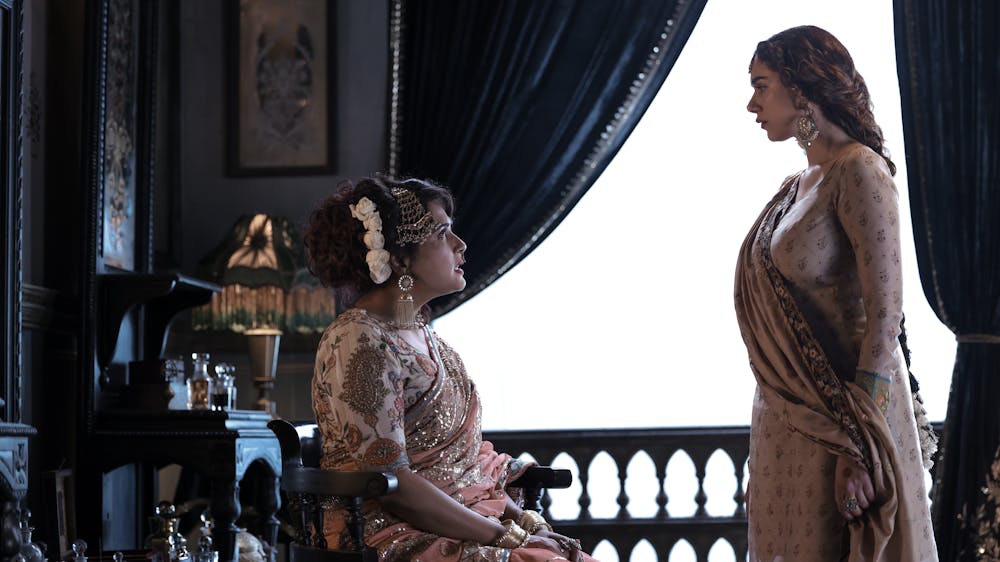
Indian director Sanjay Leela Bhansali is known for his big-budget Bollywood production, featuring grand sets, star casts, meticulously choreographed dance sequences and lavish costumes, jewellery and furnishings. His new series for Netflix, Heeramandi: The Diamond Bazaar, lives up to these expectations.
Against this visually rich backdrop emerge the scheming, menacing and murderous courtesans of Heeramandi.
The series is set in Heeramandi, a historical red-light district of Lahore in present-day Pakistan. It unfolds against the backdrop of the Indian freedom struggle against British rule.
The show is an entanglement of plot lines – a murder investigation, a war of succession, a budding love story and a courtesan’s secret involvement in a rebellion against British rule.
Eventually, all characters and storylines converge around the central theme of anti-colonial nationalism. Driven by nationalist fervour, the courtesans call themselves “patriots” and willingly sacrifice their careers and lives for the country.
But who were the real courtesans?
Role models for female independence
The show takes creative liberties by distorting the lives and timelines of the historical courtesans.
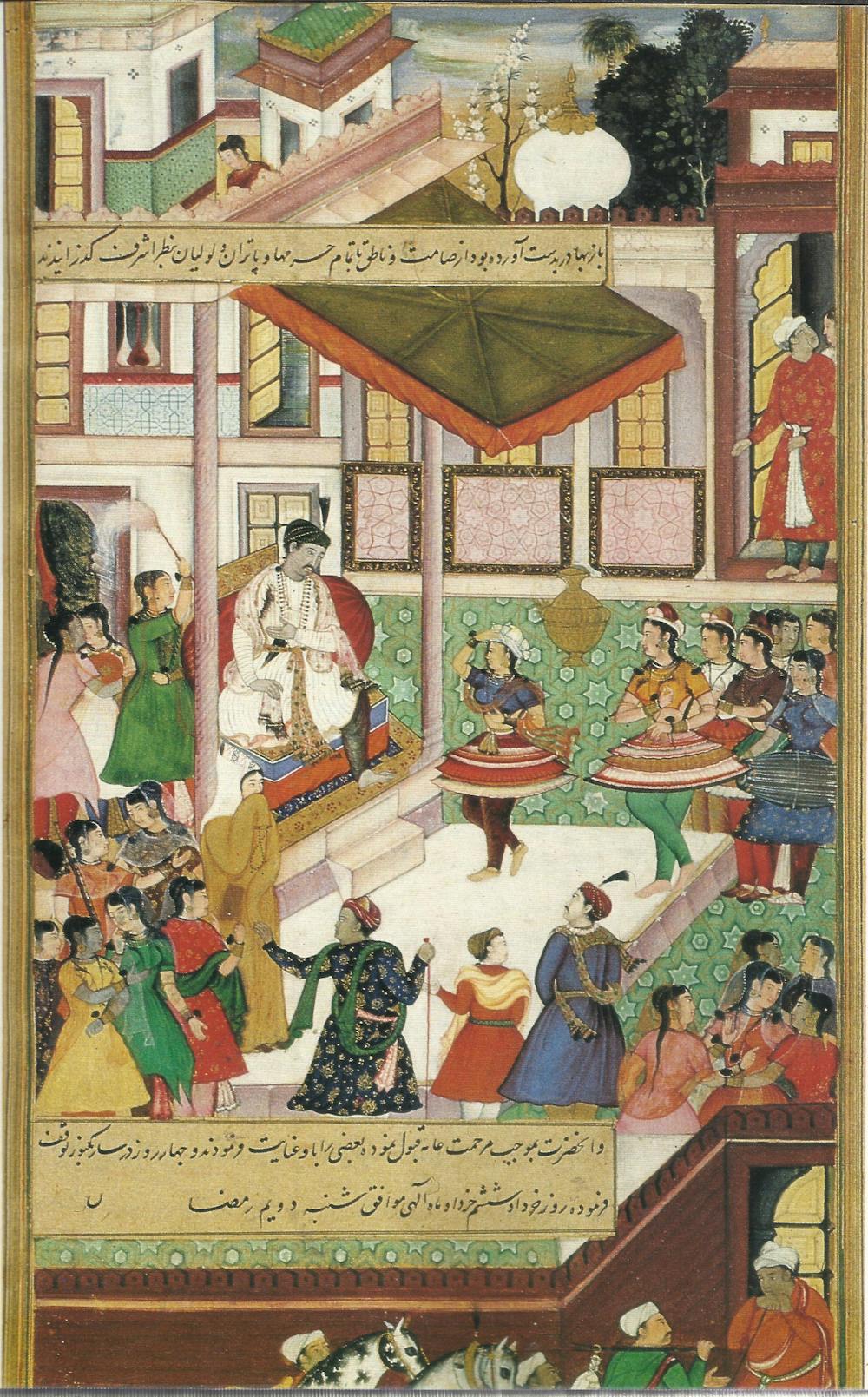
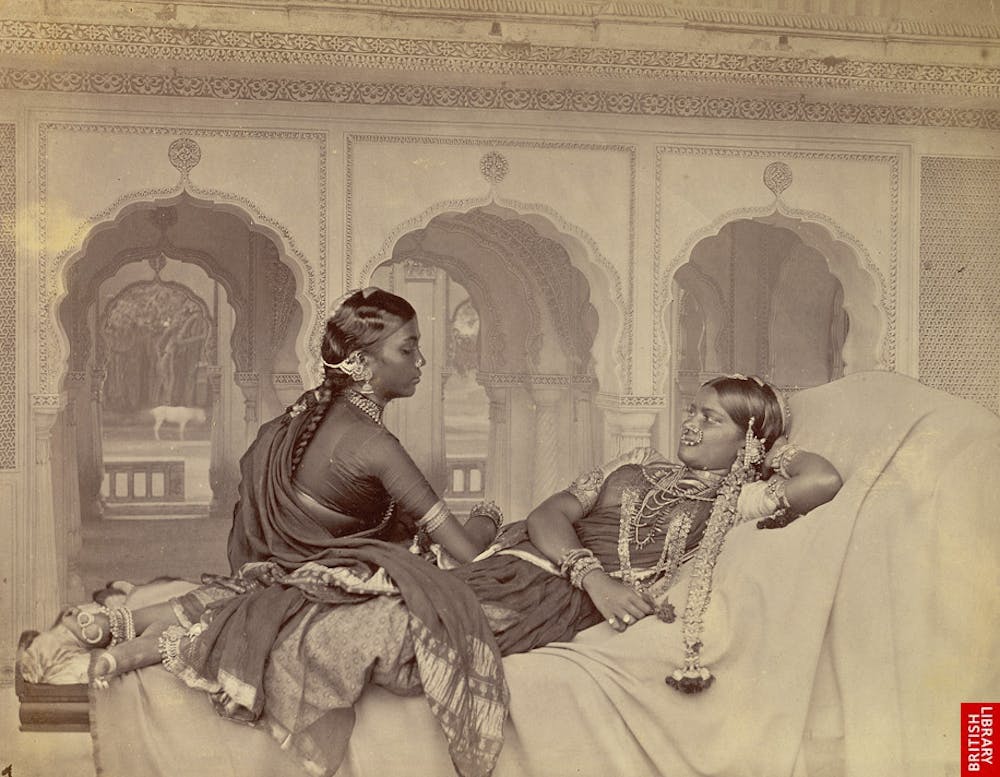
The North Indian tawa’ifs (courtesans), or nautch-girls (dancing girls, as the British called them), were cultural idols, female intellectuals and entrepreneurs.
Dating back to ancient India, these women were trained in music, dance, fashion, poetry, repartee, etiquette, languages and literature from a young age. Typically following a system of matrilineal inheritance, courtesans passed down their professional knowledge and skills to talented daughters of the household.
Once trained, courtesans attracted patronage from royal courts, feudal aristocrats and colonial officers.
This unique class enjoyed privileges not afforded to most women in Indian society, such as education and personal income. They led glamorous lifestyles, wielded power and wealth, and paid taxes.
As independent professionals, they contributed to Indian arts and culture, travelled extensively, made connections with chosen kin and often embraced gender fluidity.
Their financial, political and sexual independence challenged patriarchal gender norms and restrictive Hindu moral laws that dictated the lives of women from upper-middle-class families.
Complicated relationships
In Heeramandi, the courtesans turn patriotic to avenge the British police officers for raping and killing the natives. While these actions are dramatic, the historical relationship between courtesans, the British empire and Indian nationalism was more complex.
The politically engaged Bibbojaan (Aditi Rao Hydari) mirrors Azizan Bai, a courtesan from Kanpur who is said to have financially supported the 1857 mutiny against the British East India Company.
While the mutiny was one of the most widespread anti-colonial revolts of the 19th century, Indian nationalism was not its primary aim, but a consequence. Azizan’s interest was in maintaining her patronage from the native rulers for her social and economic wellbeing.
After 1857, India’s governance shifted from the East India Company to the Crown, leading to the spread of British rule across India alongside Western education and Victorian morality. Meanwhile, nationalist leaders envisioned a nation as a pure land of sacred Hindu ancestors and valued chastity in women.
Both the imperial and nationalist ideals clashed with the courtesans’ sexual freedom.
In the 1890s, Hindu reformers and bourgeois nationalists joined Christian missionaries in organising anti-nautch campaigns that advocated boycotting them to “rescue” art and culture from perceived immorality. This led to the downfall of the courtesan class.
In Heeramandi, patronage diminishes and the women’s dreams of marriage fade. The courtesans shut down their salons, give up their careers and sacrifice their lives for the nation.
But historical courtesans were quick to reinvent themselves in the face of declining patronage and social stigma.
They turned to the power of modern technology. Gauhar Jaan, a famous courtesan, became a celebrated concert singer and gramophone artist, earning the title of “India’s Melba” in the international press.
In 1921, Gandhi asked Gauhar Jaan to perform for the Swaraj Fund. Aware of the ambiguous position courtesans held in nationalist discourse, she agreed on the condition that Gandhi attend her performance. When Gandhi failed to show up, she contributed only half of the raised amount to the cause.
Courtesans contributed significantly to the founding of the Indian film industry through their artistry, star power and capital investment. The first generation of female film stars came from courtesan backgrounds: Jaddan Bai, Kajjan Bai, Akhtaribai Faizabadi and Naseem Banu entered the industry as actors, singers, composers, directors and studio owners.
Later, some acted as managers and costume designers for their daughters, the emerging actors of the next generation.
By becoming modern-day artists, the courtesans preserved their art. They remained visible and relevant in a society that was increasingly obliterating women’s cultural contributions and diminishing their role as citizens in an emerging nation.
Patriarchal nationalism
In the show, a woman’s value is judged by her respectability, marital status and the presence of a male guardian controlling her sexuality. Courtesans refer to themselves as “birds in gilded cages” and dream of freedom from their courtesan lifestyle.
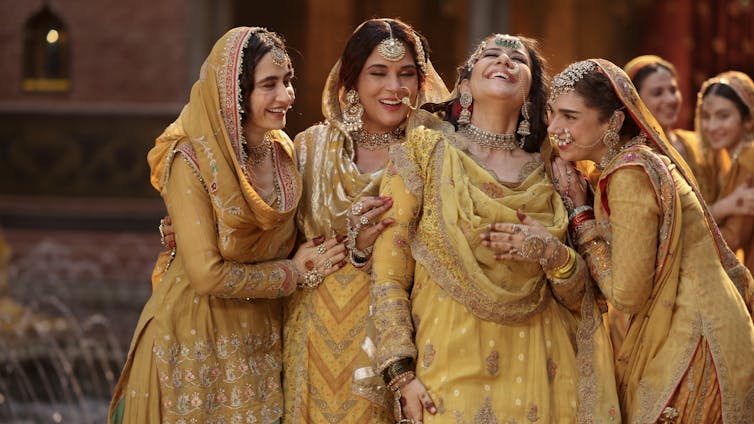
Heeramandi oversimplifies the multilayered persona of tawa’ifs. Netflix
Here, the courtesans’ nationalism resonates with present-day far-right Hindu nationalists, seemingly promising women empowerment in nationalism but, in reality, reserving only regressive roles for women.
Heeramandi oversimplifies the multilayered persona of tawa’ifs. The series portrays them as melancholic victims yearning for patriarchal married bliss, while remaining marginalised in respectable society. But these women should be remembered as celebrated figures filled with joie-de-vivre, gusto and spiritedness.
They should be honoured for their strategies of self-representation and processes of self-determination, as they turned resilience into a way of life.
Toy Story 4, which opened in theaters this June, became the biggest box office animated film blockbuster yet—and it’s no wonder, with beloved toys like Mr. Potato Head playing a starring role.
Toys that engage the body, mind, and imagination, still hold the #1 place in the hearts of children, despite the pervasiveness of digital devices.
In fact, Mr. Potato Head and Play Doh are the top vintage toys that have withstood the test of time, according to new a study of 2,000 American parents.
Other toys that are still starring in American homes and continue to enchant kids after decades of familiarity include trolls, toy phones, teddy bears, and plastic dinosaurs.
Board games have proven to be timeless, as well. Whether you grew up in the ’70s, ’80s, or 90s, families can’t get enough of classic board games—particularly, Scrabble, Monopoly, Candy Land, the Game of Life, and Mouse Trap. They all ranked in the top 30 of toys that were played with by both parents and, later, their children.
Conducted by OnePoll on behalf of Mr. Potato Head, who has undergone several iterations of his own, the survey revealed that adults are still kids-at-heart who love playing with these toys.
Nearly half of parents said their favorite childhood toy is still on the market—and 84% have purchased, or plan to purchase, that toy for their own child.
When it comes to buying any toy for a child, parents are on the look out for a certain set of qualities. Three in five parents want a toy that’s educational, but just behind that is a toy’s ability to make their kid laugh (60%). Fifty-nine percent are on the hunt for a toy that’s colorful, while 56% look for something interactive.
TOP TIMELESS TOYS (ENJOYED OVER MULTIPLE GENERATIONS)
1. Play Doh
2. Mr. Potato Head
3. Trolls
4. My Little Pony
5. Furby
6. Puzzles
7. Toy phone
8. Bop It
9. Building blocks
10. Bicycle
11. Yoyo
12. Guess Who?
13. Water blasters
14. Teddy bear
15. Scrabble
16. Tricycle
17. Candy Land
18. Game Boy
19. Spinning tops
20. Toy cash register
21. Plastic animals
22. Monopoly
23. Mouse Trap
24. Game of Life
25. Transformers
26. Clue
27. Baby Alive
28. Plastic food/kitchen supplies
29. Scattergories
30. Perfection
ALSO CHECK OUT THE TOP TOYS LOVED BY ADULTS WHEN THEY WERE KIDS
Six promising new stars in 2024. Photo: Raindrop Media
Each year has its share of newcomers, and many of them also make a mark, regardless of whether they have film connections and bloodlines or not. Here’s looking at six new promising faces to watch for in 2024.
Ibrahim Ali Khan: Saif Ali Khan’s and Amrita Singh’s son and Sara Ali Khan’s brother, Ibrahim Ali Khan has been the talk of the town ever since his debut film was announced. Ibrahim is entering the glamorous world of cinema with Sarzameen, which is being directed by Boman Irani’s son Kayoze Irani and will also star Kajol.
Shanaya Kapoor: Sanjay Kapoor’s and Maheep Kapoor’s daughter Shanaya Kapoor makes heads turn with her looks. Shanaya is set to make a pan-Indian debut with Vrushabha and will be seen alongside Mohanlal. Shanaya is also starring in Karan Johar’s Bedhadak. It was in 2022 that she took to her social media handle to announce the film and also share her first look.
Ansh Duggal: Coming from a non-film background, Ansh Duggal is making his debut with Aanand L. Rai’s Nakhrewaalii. Directed by Rahul Shanklya, the movie is now in post-production.
Rasha Thadani: Internet sensation Rasha Thadani is actress Raveena Tandon Thadani’s daughter. She will be seen making her debut alongside Ajay Devgn and his nephew Aaman Devgan in an action adventure project directed by Abhishek Kapoor, who had launched names like Sara Ali Khan and Sushant Singh Rajput. Though the film is yet to be titled, it has raised the bar of anticipation among the audience a notch higher. According to reports, she will also be seen with Ram Charan in his next film, tentatively titled RC16.
Pragati Srivastava: Aanand L Rai chose to launch Pragati as a welcome addition to Hindi cinema’s new faces in and as Nakhrewaalii. Pragati enjoys a massive fan following on social media.
Pashmina Roshan: Hrithik Roshan’s cousin and composer Rajesh Roshan’s daughter, Pashmina Roshan, will be seen making her debut in the Ishq Vishq sequel titled Ishq Vishq Rebound. She will be seen alongside Rohit Saraf, Jibraan Khan and Naila Grewal. Six newcomers that promise to light up 2024
Shah Rukh Khan in Jawan. Photo: Trailer Video Grab
Business calculations for Indian cinema, especially Hindi cinema, have always been dicey propositions. And yet, some credibility can be hopefully given for neutral bodies that have their own (trustfully authentic and well-researched) figures let out. And Ormax is one such.
Ormax started in 1985 as a specialist Qualitative Research company, the first of its kind in India. Today Ormax has evolved into a full Consumer Knowledge firm that operates worldwide. It amalgamates decades of experience, knowledge and understanding with the latest concepts in research, bringing a holistic approach to understanding consumers and their relationship with brands.
They state, “It is important to appreciate that all our work is rooted in a direct interaction with the consumer through various research techniques. As, in today’s competitive environment, it is no longer enough to rely on intuition or gut feel alone. The real consumer is frequently (and dangerously), very different from what we think he or she is. An essential and distinctive aspect of our work is that we do not see ourselves as mere suppliers of data but get actively involved in strategy formulation and planning.”
As per their media release, reported by Bollywoodhungama.com, the gross collection figures of Indian cinema for the last nine years are as follows:
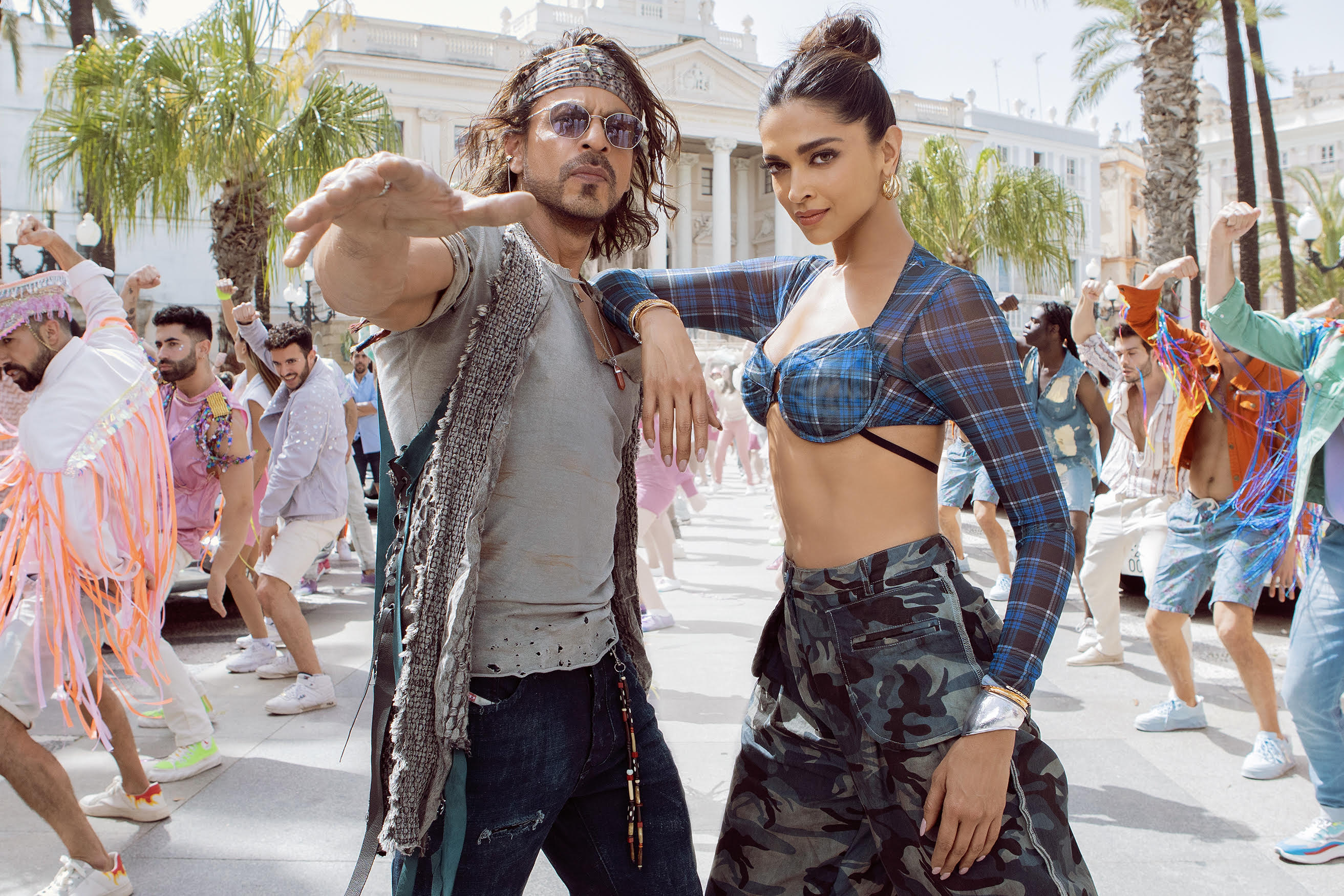
Shah Rukh Khan and Deepika Padukone in Pathaan. Photo: Yash Raj Films
India gross box-office in crore:
2015 – Rs. 8,315 cr.
2016 – Rs. 8,649 cr.
2017 – Rs. 9,630 cr.
2018 – Rs. 9,810 cr.
2019 – Rs. 10,948 cr.
2020 – Rs. 2,056 cr.
2021 – Rs. 3,772 cr.
2022 – Rs. 10,637 cr.
2023 – Rs. 12,226 cr.
A study:
The results clearly seem to show that Indian Cinema had its best year in 2023, belying the many prophets of doom, who had predicted that Cinema on big-screen as a community-viewing experience would be dead after the pandemic eased. Obviously, the figures had been alarmingly low during 2020, which saw the bulk of the lockdown, and even 2021, which saw a partial lifting in some parts of the country for short phases.
The point to note here are that these figures apply to Indian cinema and not Hindi alone, with the South chunk (especially Telugu, followed by Tamil) being huge as well, as those films frequently equal or often surpass all-India collections of Hindi cinema. Another fact: these are gross figures, which mean theatrical incomes, and so they do not take into account revenues from streaming and satellite rights et al or overseas collections, which may not be synchronous with Indian ones.
Also, no allowance is made for increased admission rates and the discrepancy between single-screens and multiplexes, small towns and metros and so on, apart from the omnipresent inflation.
However, what is more significant, relevant and important is that the value of Rs. 100 in 2015 was Rs. 150 in 2023 as per inflation calculators. And by those standards, the value of Rs, 8,315 crore then is equal to Rs. 12, 473 crore in 2023! And this, in the final analysis, means that recovery is almost complete but there is no actual improvement!!
Having said that, since 2015 itself, some South films and some Hindi films have shown mammoth collections. Wikipedia presents the following highest domestic earners in South films:
1 Bahubali 2: The Conclusion Rs.1,811 crore Telugu / 2017
16 Enthiran Rs. 320 crore Tamil / Way back in 2010
17 Kabali Rs. 305 crore Tamil / 2016
In Hindi cinema, sadly, the worldwide box-office figures are more readily available instead of Indian, and so we must consider the highest nett collections, which include the 500-crore club of Pathaan, Jawan, Gadar 2 and Animal (as reported in 2023), Bahubali2—The Conclusion, which collected Rs. 510 in Hindi alone in 2017, followed by Dangal, Tiger Zinda Hai, Sultan, Bajrangi Bhaijaan, PK, Sanju and Padmaavat, all of which netted above Rs. 300 crore between 2015 and 2019 and so had much higher Indian gross collections.
Quotes Bollywoodhungama, “These numbers (in 2023) were possible mainly as Hindi cinema bounced back with a bang. Shah Rukh Khan starrers Pathaan and Jawan, Sunny Deol starrer Gadar 2 and Ranbir Kapoor starrer Animal were huge blockbusters as their collections exceeded expectations. Salaar: Part 1 – Ceasefire was the biggest Telugu hit while Leo and Jailer were the biggest grossers in Tamil cinema. These 7 films contributed nearly 30 percent of the total domestic collections of all films of Indian cinema in 2023.”Last but not least, we sincerely hope that similar figures will be attained in 2024. As of now, Fighter is no longer proving a hit proposition. So we can only pray for a figure that is not just more but also higher considering the vital aspect of inflation. And that means a minimum Rs. 13,000 crore !2023 was best-ever year for Indian cinema
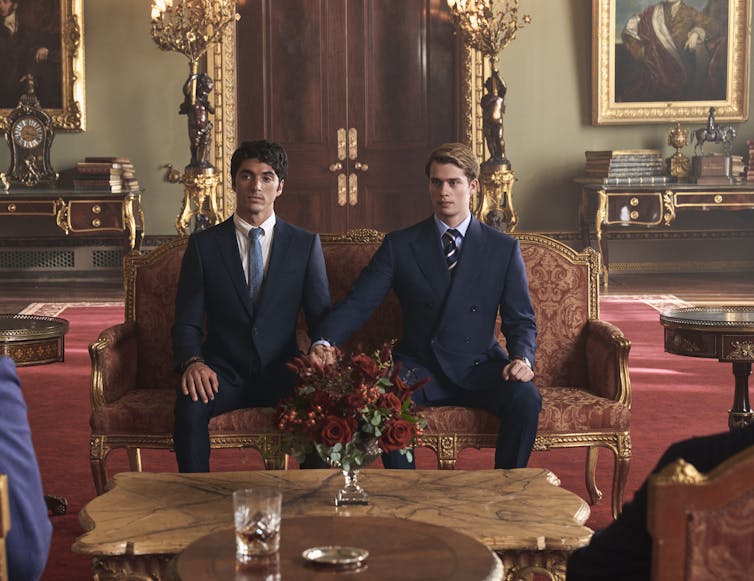
Alex (Taylor Zakhar Perez) and Henry (Nicholas Galitzine) in the film of Casey McQuiston’s Red, White and Royal Blue. Amazon Prime Elizabeth Little, Deakin University
A royal romance is once again trending on social media.
This time, it’s a queer royal romance. And it even has its own hashtag: #firstprince
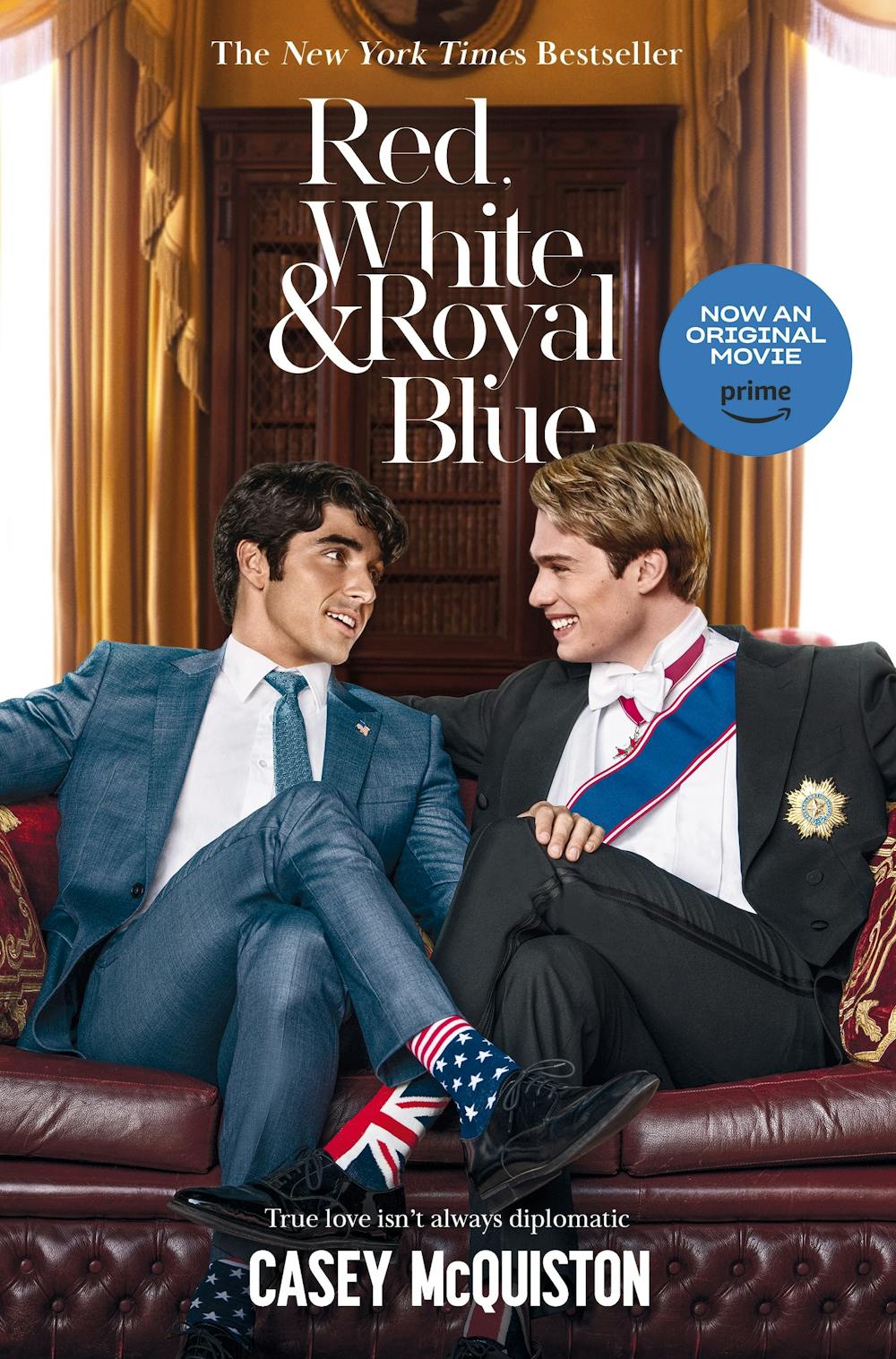
Casey McQuiston’s beloved, bestselling 2019 young adult novel, Red, White and Royal Blue, has just launched as a movie, on Amazon Prime. And fans are excited. The story follows Alex Claremont-Diaz, son of the first female American president, and his developing relationship with Henry, the Prince of Wales.
As a genre, “royal romance” follows many of the regular romance conventions, but must include a member of a royal family or peerage as one of the love interests. Book blogs and Goodreads are full of suggestions for getting your Prince (or Princess) Charming fix.
Until recent years, the royal romance hasn’t reflected the desires of LGBTQIA+ youth. But that is changing.
The queer injection into the young adult royal romance reflects a broader shift in what’s being published and read. Last year, research showed LGBTQ fiction sales in the US jumped 39% from the same period in the previous year. And young adult fiction grew in particular, with 1.3 million more books sold than the previous year.
Alice Oseman’s Heartstopper, a queer teen (graphic novel) love story, adapted for Netflix, is reported to have sold more than eight million copies to date – and even to have “helped keep bookshops afloat” in recent hard times.
A book industry analyst said the young adult queer fiction growth “mirrors a generational shift toward a more open and inclusive attitude toward gender diversity and sexual orientation”.
The popularity – and acceptance – of texts like Red, White and Royal Blue means the desires and fantasies of queer youth are being normalised.
Royal romance tropes
The key to royal romance is it offers readers possibility and transformation on a grand scale: by getting that crown, the main character does not just become royal, they become their best selves – on the world stage.
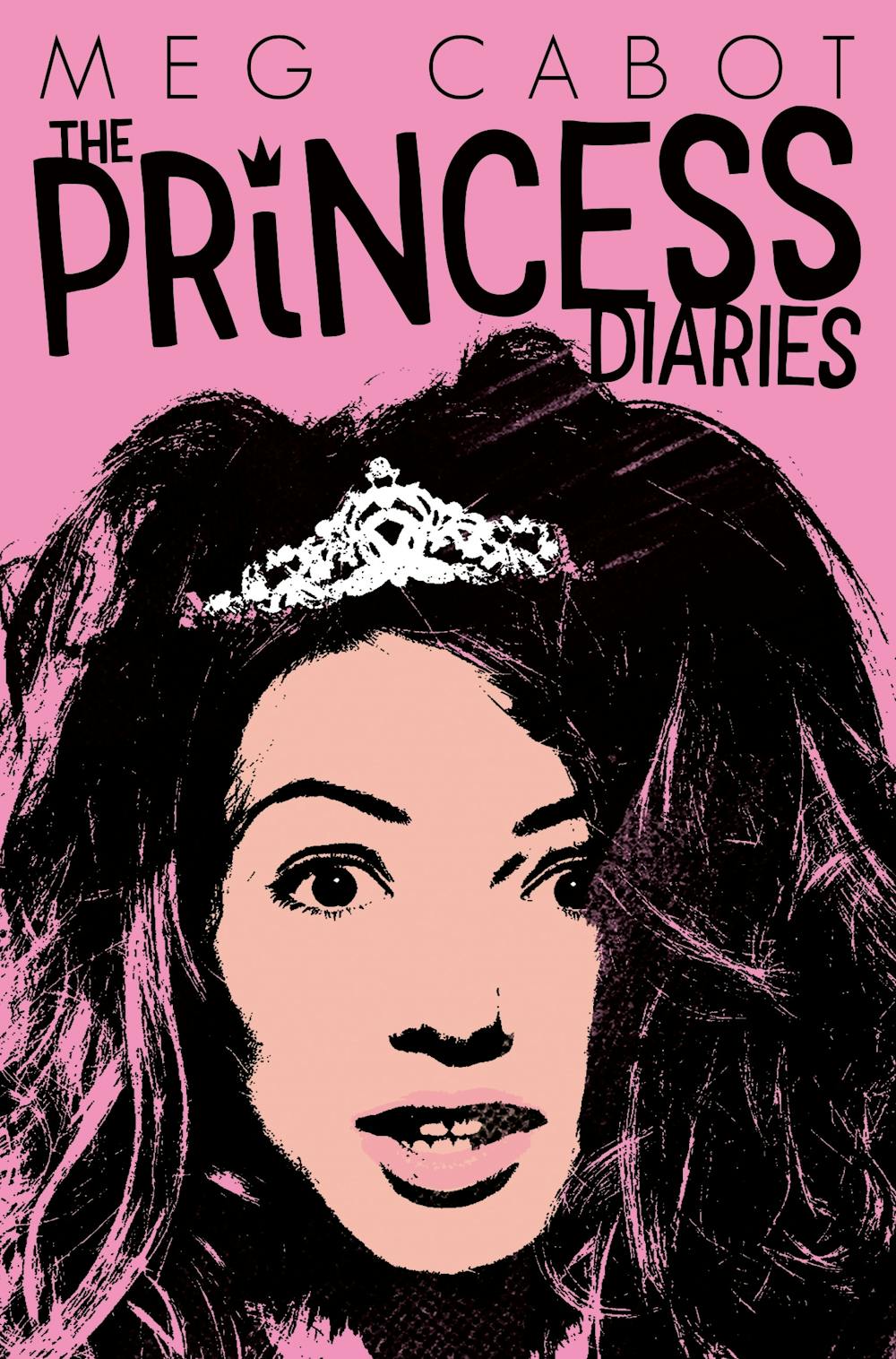
It’s been more than 20 years since Anne Hathaway graced our screens in the film adaptation of Meg Cabot’s young adult royal romance The Princess Diaries (2001).
The book follows a familiar narrative, where a girl who discovers she is in fact royalty has to be transformed into a princess. Princess Mia grows into herself as she prepares to lead Genovia.
Other familiar tropes of the royal romance include the “surprise reveal”, where one half of a couple’s royal identity is uncovered, like in Netflix’s The Princess Switch.
A viral success
Released in 2019, Casey McQuiston’s book quickly went viral, becoming an instant New York Times bestseller, winning awards and making best books lists. The classic “enemies-to-lovers” romance trope takes on international significance with the offspring of two world leaders involved.
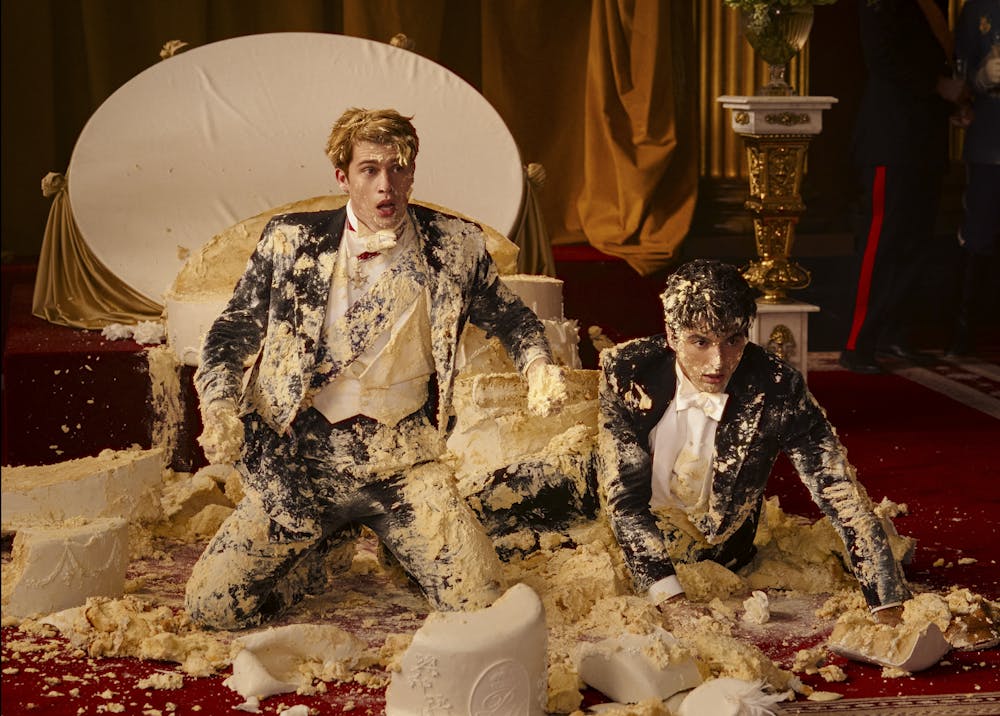
Alex and Henry’s initial dislike for each other boils over and catches media attention after they ruin the cake at a royal wedding. To try to limit the diplomatic and media fall-out, the two have to pretend to be friends – which leads to their budding romance, and discovering their sexuality together. (Alex is bisexual and Henry is gay.)
Alex and Henry’s ‘enemies’ stage climaxes when they ruin a cake at a royal wedding. Prime
Casey McQuiston, who identifies as nonbinary, has talked about how straight literature has suggested it’s statistically unlikely for more than one queer person to exist in a story. In Red, White and Royal Blue, multiple queer people not only exist: they include the children of the most powerful people of the world, and become romantically involved.
The social media response to Red, White and Royal Blue clearly demonstrates young people want to see queer romance that reflects their own lives, and their own desires for transformation.
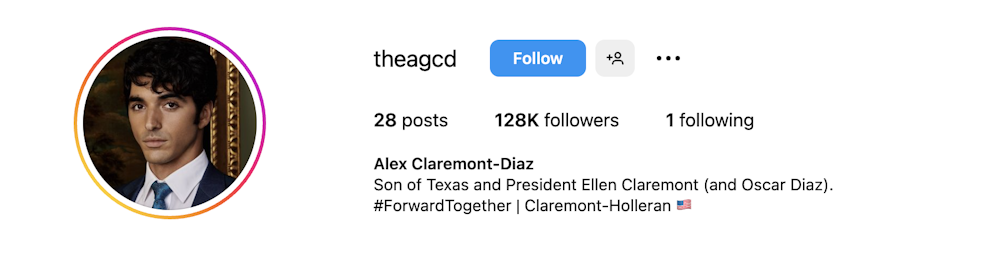
Just in the past week, Prime launched individual Instagram accounts for Prince Henry and Alex. The comments sections have thousands of interactions already.
Historically in romance, queer characters have been unhappy, or even killed off. But in Red White and Royal Blue, queerness leads to happiness.
“Alex you bisexual icon,” wrote one Goodreads reviewer, who described it as “comforting” to read the book while “having my own bisexual panic”. “It has meant so much to me as a queer individual,” wrote another, cited in the same study.
Interestingly, that study found many readers were willing to forgive the book for other things they didn’t like, because they were so excited by the queer representation.
More royal romances that explore difference
Other popular young adult royal romances explore queer relationships, too. Her Royal Highness, by Rachel Hawkins, is set in a university in Scotland, where American Millie discovers her roommate Flora is a Scottish princess. The trope of “surprise royal” gets its queer retelling when Millie falls for Princess Flora.
Her Royal Highness is a companion story to Hawkins’ first (heteronormative) royal romance novel, Prince Charming (originally titled “Royals”). Hawkins’ choice to explore queer romance was, she says, a response to what fans wanted. And she was keen to “restore balance” and write a tropey rom-com, but with lesbians.
Other young adult royal romances have maintained the focus on boy-girl couples, but engaged with contemporary audiences in other ways, by exploring concerns around class, wealth and gendered expectations.
In Katharine McGee’s American Royals, the House of Washington are the royal family, with Princess Beatrice the heir to the throne. Beatrice, who is in love with her personal bodyguard, goes on a journey of transformation that ends with her choosing her royal duties of love, and seemingly growing up. An important aspect of American Royals is how Beatrice will cope with being the first female monarch, introducing feminist concerns about leadership.
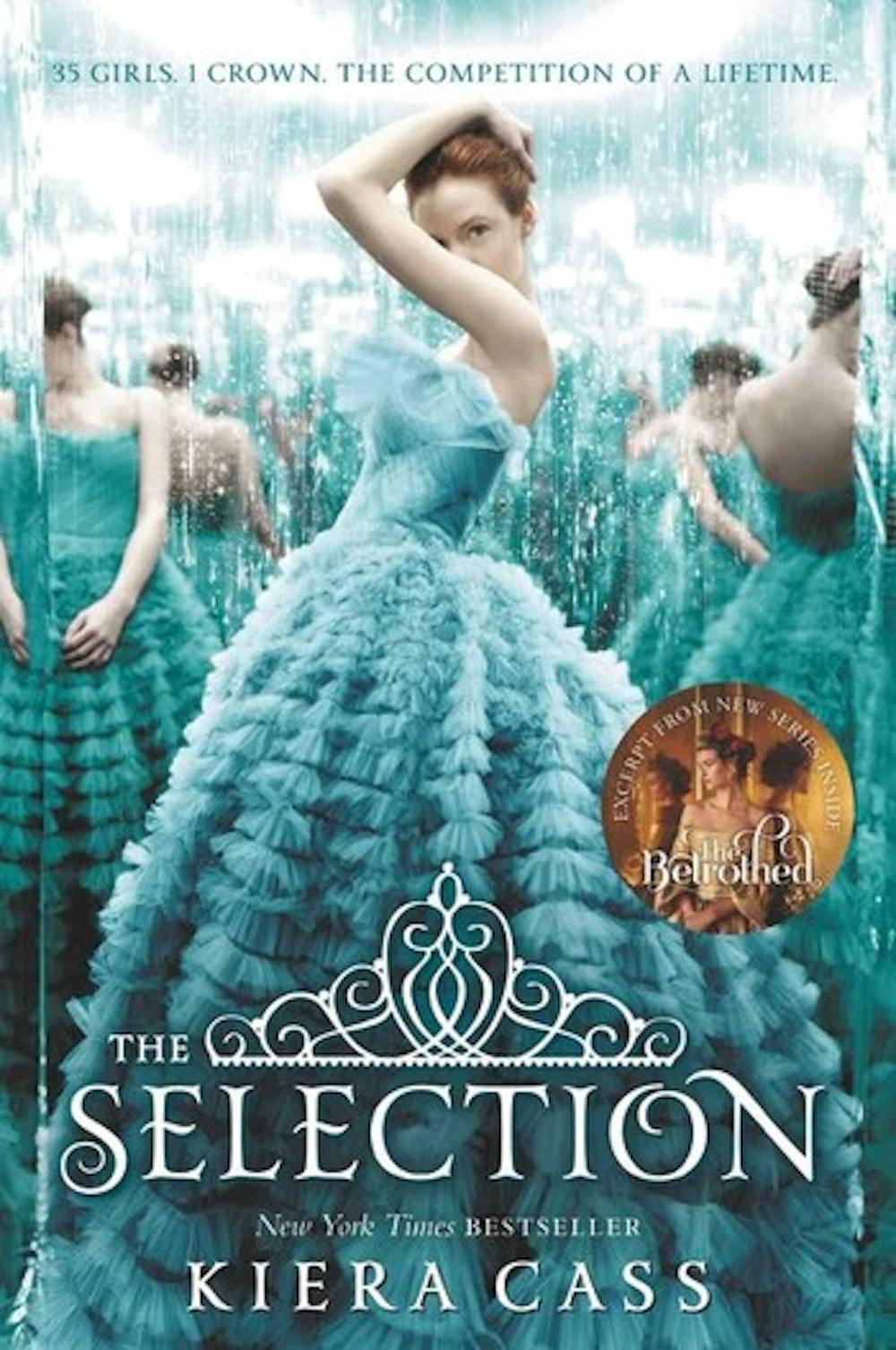
In Kiera Cass’s The Selection, the young adult royal romance meets a dystopian setting, where in a post-apocalyptic world, girls (and boys) vie for the attention of royals, so they can escape rigid caste systems and live in a palace. It’s been described as The Bachelor meets The Hunger Games. In texts like The Selection, the concerns of young people are not limited to romantic tensions, but include body image and status, conflict and poverty.
Even as young adult romances have shifted to include queer perspectives, one key aspect remains the same – teenage love, in all its forms, has the possibility of bringing about true individual transformation.
The young adult royal romance is about so much more than just love-interests-meet-and-get-crown. It’s about young people desiring to be something more, and undergoing a clear transformative journey.
While Mia Thermopolis lost her bushy eyebrows and gained a sleek tiara, her journey was about discovering her true worth.
In Red, White and Royal Blue, Alex and Henry don’t just avoid an international diplomatic disaster by falling in love: they give voice to the desires of queer and diverse youth who want to see a happily-ever-after that looks like them represented on the page, and the screen.
Luckily, these days, there are increasingly more options to choose from.
The Writers Guild of America (WGA) strike has been going for over 130 days. Joined by the Screen Actors Guild-American Federation of Television and Radio Artists (SAG-AFTRA), Hollywood writers are protesting several issues.
Among other demands, the WGA is calling for explicit regulations on the use of AI in media production, in what Time Magazine called “a pivotal moment” in film history.
Although Barbie and Oppenheimer received most attention this summer, Tom Cruise’s latest instalment in the Mission: Impossible series (Dead Reckoning Part One), reveals more about the future of movies.
Cruise’s nemesis is an AI program called the Entity. Created as a cyberweapon, the Entity achieves sentience to become both agent and object in the ensuing global competition for power.
With computational omniscience in a digitally networked and reliant world, the Entity can manipulate digital and physical infrastructure, such as mobile phones and transit systems, and thus also control the humans who rely on digital interfaces.
Recognizing the Entity as a fundamental threat to humanity, Ethan Hunt (Cruise) of the Impossible Missions Force goes rogue (again) to acquire and destroy the AI.
Immersive experience
The film’s plot is a vivid reminder of how little agency humans have in digital environments, even as the cinematic environment relies on contemporary technologies to immerse its audience.
Like Cruise’s previous summer 2022 blockbuster, Top Gun: Maverick, Mission: Impossible — Dead Reckoning is designed to be cinema as experience more than story, using drone cinematography and sophisticated sound editing.
Director Christopher McQuarrie explained his approach as dedicated to “a fully immersive big screen experience,” including high-definition video and sound technologies that allow editors to create the sensation of sound in the audience’s physical environment.
Human acting, star power
As a Hollywood movie star, Cruise is similarly devoted to creating visceral audience experiences.
Even as computer-generated imagery (CGI) and digital effects have overtaken big-budget films, Cruise insists on doing all of his own stunts. He explicitly compared his approach to classic film performances, saying: “No one asked Gene Kelly, ‘Why do you dance? Why do you do your own dancing?”
Unsurprisingly, McQuarrie decided against using a digitally de-aged Cruise, instead focusing attention on the physical fitness of a movie star who appears far younger than his 61 years.
All of Mission: Impossible – Dead Reckoning recalls earlier eras of cinema. The film’s title is taken, at least in part, from the 1947 film with Humphrey Bogart.
The early desert sequence recalls big-screen desert epics like Lawrence of Arabia (1962), while the submarine introduction to the Entity’s power echoes The Hunt for Red October (1990), among others.
Classic car, train chases
A 20-minute car chase through the streets of Rome features an imperilled baby carriage on steps, a reference to the same scenario in director Sergei Eisenstein’s influential Battleship Potemkin from 1925.
Cruise is handcuffed to costar Hayley Atwell, a trick used in various films, including the James Bond film Tomorrow Never Dies (1997), while driving a small yellow Fiat, reminiscent of both The Italian Job (1965) and The Bourne Identity (2002).
The numerous cinematic references are to films that predate the era of streaming and social media.
Physical presence: a luxury?
Writers and actors are right to be worried. With so many processes in commercial media already routinized, the industry appears particularly vulnerable to generative AI.
The current circumstances recall earlier transitions such as the effect when films introduced sound technologies, a threat to silent-film actors dramatized in the Gene Kelly film, Singin’ in the Rain. More recently, movie theatres moved from celluloid to digital projection, largely eliminating projectionists.
Overt resistance to new technologies is rarely successful in the long term. Business professor and pundit Scott Galloway has compared the writers’ strike to the 1980s National Union of Mineworkers strike in Northern England.
With so much digital content available, physical presence and proximity becomes rarer and therefore more of a luxury item.
Return to live experiences
Certainly, audiences have returned robustly to live music concerts. (Just try getting a Taylor Swift ticket in Toronto.)
For now, we will all have to wait and see how it ends for cinema and those who make it. Part two of Mission: Impossible — Dead Reckoning isn’t due out until next summer.
Hopefully, it will be a Hollywood ending for all of us.
‘KGF’ actor Harish Roy, who played the role of Khasim Chacha in the movie, has been diagnosed with cancer. The actor recently revealed this information in an interview.
Harish said he noticed a small swelling in the throat about a year ago. However, he was not in a condition to undergo surgery at that time. “My children are very young and I was scared to undergo throat surgery. So, I wanted to finish the KGF movie. Then got a lot of fame and took a risk. but that cancer spread to my lungs and water accumulated in my lungs,” he told the interviewer.
Harish Roy often suffered from shortness of breath during the shooting of the movie ‘KGF’. He then tested and realized that he need to get treated quickly. But he did not have the money to get treatment in a private hospital. Later, on the advice of a friend, he started treatment at Kidwai Cancer Institute, Bangalore. But this did not improve his condition. The doctor said that he is in the “fourth stage” of cancer. Later, they started treating him again.
It is learned that the actor spends Rs 3 lakh on medicines every month. Besides, he has already undergone surgery once. “The doctor told me that it is possible to recover. After the treatment, I feel better than before,” he said.
Harish said that a star actor extended a helping hand to him. Not only this, many Kannada cinema actors and filmmakers have already pledged their support to him.
Harish Roy acted as Khasim Chacha in the ‘KGF’ movie series. The first movie of this series was released in 2018. ‘KGF 2’ was released this year. This movie earned 1000 crore rupees at the box office.DailyBangladesh/AS, ‘Source: https://www.daily-bangladesh.com
In Chinese comedy-mystery movie "Detective Chinatown 2," a detective duo takes on the Big Apple to hunt down the killer of grisly serial murders by using feng shui (also known as geomancy) as clues.
With the infusion of Chinese color into the plot, the movie was shot largely in New York City, including many landmark locations like Times Square, Fifth Avenue and the Brooklyn Bridge, making it attractive and intriguing to home and international audiences alike.
Not only was the movie shot in a U.S. city which is home to the largest Chinatown in the country, it was also the first Chinese-language film shot in the United States in collaboration with the unions.
The movie starring Wang Baoqiang and Liu Haoran is the sequel to 2015's "Detective Chinatown" and the second franchise of action comedies to be shot in Chinatown around the world. It was opened into 115 theaters in North America on Feb. 16 in a day-and-date limited release with its wide opening in China.
"Detective Chinatown 2" has grossed over 1.98 million U.S. dollars in North America and 531.9 million dollars worldwide as of its close date, April 5, marking it the fourth-highest-grossing ever in China, according to studio figures collected by boxofficemojo.com.
"This is a funny and exciting film," said David Li, an American Chinese man in his 50s, who came to see the movie with his wife in an AMC theatre in Monterey Park, one of the majority Asian American cities in Los Angeles County.
"We have watched 'Detective Chinatown 2' and 'Operation Red Sea' recently. Those films are popular in China and many my friends are talking about the plots," he said.
"Chinese filmmakers have already learned a lot from Hollywood and begun to make films with more Chinese characteristics. But it's interesting that this film is actual a Chinese film with American element," he added.
"With a combined 1 billion dollars plus in box office for 'Operation Red Sea' and 'Detective Chinatown 2' already earned in China, both are smash hits and clearly massively popular with moviegoers in the home country," said movie analyst Paul Dergarabedian at comScore.
In the first quarter of 2018, China's box office overtook North America to become the biggest in the world for the first time, as Chinese films perform stronger and stronger led by "Operation Red Sea" and "Detective Chinatown 2" and so on. Grosses for China in the first quarter totaled more than 3.1 billion dollars, compared to 2.89 billion dollars in the same period in North America.
"The question remains as to whether English language versions of such films could break out and find mainstream success in North America," Dergarabedian told Xinhua.
Zhu Yifan, storyboard artist of the "Detective Chinatown 2", told Xinhua that she believed the Chinese blockbuster already made some breakthrough as it is the first Chinese movie filmed with a unionized crew in the United States.
The American way of work in the film industry is very streamlined and standard while the Chinese way focuses on efficiency and creative collaboration, Zhu said. "When the two teams worked side by side to fulfill a challenging task during the shooting, that created a fantastic chemistry. We became very good friends by the end of the 45-day shooting in New York."
"And this is just a beginning. As Chinese film industry grew, more overseas collaborations are bound to come," Zhu added. Source: China.org.cn
A still from the movie The Hitchhiker's Guide To The Galaxy in which two prominent characters (right) of the novel can be seen carrying a towel — the most massively useful thing an interstellar hitchhiker can have.
When the Galactic Hyperspace Planning Council was all set to demolish Earth to build a hyperspatial express, Arthur Dent was busy hyperventilating. Just earlier in the day, he was lying in front of a big yellow bulldozer in a vain bid to protect his house from being demolished to build a bypass. It was the town council’s idea to come up with the said structure. Ford Prefect, on the other hand, was succeeding in maintaining a semblance of calm as all this was transpiring.
Prefect was from Betelgeuse. And he had his towel with him. “The towel”,) The Hitchhiker’s Guide to the Galaxy, says, “is about the most massively useful thing an interstellar hitchhiker can have.” It goes on to expound that other than wrapping it around yourself for warmth, you can use the towel to wave as a distress signal when, for instance, you are trying to escape from the Earth in a hurry.
May 25 is celebrated the world over as Towel Day. This is the day when froods carry with them their towel for all the universe to see, and proclaim categorically what amazingly put together people they are. These are fans of Douglas Adams and his enormously intelligent and supremely witty oeuvre. Ask them what is the secret of life, the universe and everything, and they’ll unabashedly answer: 42. I know, because I do the same.
Douglas Noel Adams was born on March 11, 1952, in Cambridge, UK. He famously joked that he was the first DNA to come out of Cambridge, referring to Watson and Crick’s discovery, and subsequent anno-uncement of the structure of deoxyribonucleic acid (DNA) in 1953.
Douglas Adams was tall. Even as a young boy atte-nding Brentwood School in Essex, he was nearly six feet tall. He often remarked that on class trips, his tea-chers wouldn’t say, “Meet under the clock tower,” or “Meet under the war mem-orial,” but, “Meet under Adams.”
In 1971, an 18-year-old Douglas Adams was lying drunk in the fields of Innsbruck, Austria. He was travelling through Europe with a stolen copy of The Hitchhikers Guide to Europe. “I hadn’t read Europe in Five Dollars a Day,” he confessed years later, “I wasn’t in that financial league.” Enervated, looking up at the night sky, he thought someone ought to write The Hitchhiker’s Guide to the Galaxy and then promptly forgot about it.
Until six years later. He was then at Cambridge, ostensibly studying for a degree in English, but mainly trying rather unsuccessfully to get a foot into Footlights. He missed a lot of deadlines on assignments, a trait which would be his for the rest of his life. “I love deadlines. I love the whooshing noise they make as they go by,” he once remarked.
Slowly and unsteadily, after a string of unsuccessful jobs (chicken shed cleaner, lift operator to a wealthy Saudi businessman), his writing career took off in the same fashion: slowly and unsteadily. The drunken thought that he first had while lying stargazing in Innsbruck revisited him, and he wrote The Hitchhiker’s Guide to the Galaxy as a BBC Radio Series. People loved it, and gradually enough it was adapted into various formats, including stage shows, novels, TV series, a computer game, and a feature film.
Not just a brilliant mind, Douglas Adams had a compassionate heart as well. He was a gallant crusader for Save The Rhino International, and once climbed Mt. Kilimanjaro in a rhino suit (while missing some deadlines) to raise awareness for the cause. The aye-aye lemur, the Chinese dolphin baiji, and the kakapo from New Zealand are the other animals that Douglas Adams travelled far to see and wrote about in The Last Chance to See.
A larger-than-life man, Douglas Adams died of a heart attack in 2001. He was 49. Two weeks after his death, on May 25, 2001, Towel Day was organised for the first time. Descri-bing the choice of the day to pay tribute to the much-loved writer, towelday.org states: As the universe that Douglas Adams created was full of absurdity and randomness, it may be a fitting choice after all. Every year since then, Douglas Adams-o-philes openly carry their towels with them to work, to libraries, and just about anywhere. Notably, last year, astronaut Samantha Cristoforetti read aloud a section from The Hitchhik-er’s Guide to the Galaxy from the International Sp-ace Station, and tweeted an image of her carrying her towel and wearing a T-shi-rt with the slogan, “Don’t Panic and carry a towel.”
Towels are a good thing. Roosta knows. He’s accompanying Zaphod Beeblebrox to Frogstar — the most totally evil place in the Universe. The yellow stripes on his towel are rich in protein, the green ones have Vitamins B and C, and the pink flowers in it have wheat germ extracts. The brown stains are Bar-B-Q sauce. And the other end of the towel has antidepressants. Needless to say, he spends quite some time in routine towel maintenance.
So there you have it. The nitty-gritty of Towel Day. Bring out yours, and wave it around. Who knows, you might just hitch a hike on a passing flying saucer. Or at the very least you’ll let the world know what a hoopy person you are. Which in hitchhiking slang translates to: There’s a frood who really knows where his towel is.
The Cinema Travellers is a 96-minute film on Maharashtra’s tent cinemas
Saibal ChatterjeeThe focus of Indians attending the 69th Cannes Film Festival (May 11 to 22) will be on Directors’ Fortnight, a parallel section that has reinvigorated itself in the recent years under artistic director Edouard Waintrop. After the critical and commercial debacle of Bombay Velvet, Anurag Kashyap returns to the quinzaine with a film that is far more in keeping with the spirit of his kind of cinema — Raman Raghav 2.0, a neo-noir thriller starring Nawazuddin Siddiqui and Vicky Kaushal. Kashyap was in Directors’ Fortnight in 2012 with the two-part Gangs of Wasseypur and in 2013 with Ugly. Lead actor Nawazuddin Siddiqui believes that Raman Raghav 2.0, about a real-life serial killer who shook Bombay in the mid-1960s, could be Kashyap’s best film to date. Wouldn’t that be fantastic? Raman Raghav 2.0 is among a bunch of keenly anticipated films by iconic Chilean filmmaker Alejandro Jodorowsky (Endless Poetry), his maverick compatriot Pablo Larrain (Neruda), and veteran American writer-director Paul Schrader (Dog Eat Dog), starring Nicolas Cage and Willem Dafoe. If Raman Raghav 2.0 does indeed mark a return to form for Kashyap, it would only add to the robustness of the selection. Directors’ Fortnight promises to be one of the more happening sections at the 69th edition of the Cannes Film Festival. It kicks off on May 12 with Marco Bellocchio’s Sweet Dreams, which was widely tipped to be in the official selection but has settled for a sidebar slot. Among other films in the parallel section are Laura Poitras’ Julian Assange documentary, Risk; and 26-year-old Afghan filmmaker Shahrbanoo Sadat’s debut feature, Wolf and Sheep, which represents a major breakthrough for cinema from the war-torn country. Wolf and Sheep is the first arthouse film made by an Afghan woman. India may have drawn a blank this year in the Competition line-up and Un certain regard, where the country had two films (Masaan and Chauthi Koot) in 2015, but it does have a couple of titles elsewhere in the official programme. In Cannes Classics, Mumbai-based researcher Shirley Abraham and photographer Amit Madheshiya’s The Cinema Travellers, a 96-minute film continued from p1 on Maharashtra’s tent cinemas, will be part of a nine-film package of documentaries exploring different aspects of the history of the medium. That apart, Gudh (Nest), a 28-minute film by Saurav Rai, a student of the Satyajit Ray Film and Television Institute (SRFTI), has made it to the Cinefondation competition for film schools. Among the restored prints to be screened in Cannes Classics is Pakistani writer-director Aaejay Kardar’s critically acclaimed 1959 film Jago Hua Savera (The Day Shall Dawn). Kardar, who passed away in 2002 at the age of 75, was a first cousin of Indian filmmaker Abdur Rashid Kardar. Jago Hua Savera, the result of a unique subcontinental collaboration, won a gold medal at the Moscow Film Festival and was Pakistan’s nomination for the best foreign language film Oscar in 1959, the year Satyajit Ray’s Apur Sansar, the third part of the famed Apu trilogy, represented India at the Academy Awards. Adapted from a novel by Bengali litterateur Manik Bandopadhyay by Urdu poet Faiz Ahmed Faiz, Jago Hua Savera was filmed in and around Dhaka in what was then East Pakistan. Its plot revolved around impoverished fishermen struggling to survive against all odds. The cast of Jago Hua Savera was led by Indian actress Tripti Mitra and Bangladeshi actor Khan Ata-ur-Rahman “Anis”. Calcutta’s Timir Baran composed music for the film. The film was shot by Oscar-winning German-born British cinematographer Walter Lassally, who worked frequently with British director Tony Richardson, Greek filmmaker Michael Cacoyannis and James Ivory. Kabul-based writer and director Shahrbanoo Sadat figures in Directors’ Fortnight with the Danish-produced feature film Wolf and Sheep. Wolf and Sheep is set in the rural community in which the filmmaker grew up. It is woven around a story that blends realism and magic and alludes to the myth of the Kashmir wolf, a fearsome creature that walks on two legs and, underneath its fur, is a tall, green and enchanting fairy. Although she filmed in Tajikistan, Shahrbanoo has largely cast young actors drawn from an Afghan village. In Semaine de la critique (Critics Week), a Singaporean entry, K Rajagopal’s A Yellow Bird, a Tamil-Mandarin-English film, is among seven films competing for prizes. It is about an Indian-origin man who returns after serving a jail sentence for possessing contraband goods. The man’s mother, played by Seema Biswas, refuses to forgive him, so he goes looking for his wife and daughter even as he finds solace in the company of a Chinese prostitute. The Atelier, also a part of Cinefondation, has an Indian project — Aditya Vikram Sengupta’s Memories and My Mother — among a total of 15 participants in a section that facilitates co-production partnerships. The Bengali-language Memories and My Mother is proposed to be shot in Kolkata this year. The 69th Cannes Film Festival opens on May 11 with an out-of-competition screening of Woody Allen’s Café Society. Over the next 10 days, a formidable array of world cinema masters, including Cannes favourites like Pedro Almodovar (Julieta), Ken Loach (I, Daniel Blake), Jim Jarmusch (Paterson), Olivier Assayas (Personal Shopper), Nicolas Winding Refn (Neon Demon) and the Dardenne brothers (The Unknown Girl), will premiere their new films on the Croisette. Could a film enthusiast ask for more? Source: http://www.tribuneindia.com/
Springs native Director Amy Scott. Documentarians bring truth into focus at the Rocky Mountain Women's Film Festival
By Indy staff: Nov. 13-15, Forty-seven films in three days. Tackling the 28th annual Rocky Mountain Women's Film Festival can feel daunting, even for a film fanatic. That's why we recommend pacing yourself. This year's lineup includes 35 documentaries on topics ranging from homelessness and poverty to racism and suicide. But this is hardly new territory for RMWFF. As Executive Director Linda Broker explains, the festival's feature programming is traditionally dominated by documentaries. The selection committee includes community and board members in the process of whittling down the final lineup, Broker says, with quality and diversity as top priorities. But Broker is quick to clarify on the latter, saying that maintaining an open mind is key to ensuring that quality is not trumped by ideology: "It can't just be the diversity that we want to reflect." A case in point for this year's festival might be A Courtship by Amy Kohn. While typical RMWFF attendees may disagree with Kohn's point of view, "that doesn't make it a bad film," Broker says. "It's an excellent film and one that will hopefully expand people's mindsets." That said, camaraderie is always welcome in such situations, which is why it's important to take advantage of the filmmaker access RMWFF provides — about a dozen will be on-site this year. Through forums and Q&A roundtables, you have an opportunity to process what you've viewed by learning the story after the stories. — Vanessa Martinez
From Oyler: One School, One Year by Springs native Amy Scott.
Stories like those of filmmaker Amy Scott. Scott, who was born and raised in Colorado Springs, is a Baltimore, Maryland-based reporter for American Public Media's Marketplace radio show, and she stumbled on her topic while covering education in Cincinnati. Scott's documentary Oyler: One School, One Year (produced in association with Marketplace) tells the tale, she says, "of a public school principal fighting for his job, and one of his students fighting to be the first in her family to graduate from high school." More generally, though, it's about a public school trying to break the cycle of poverty in its urban Appalachian neighborhood.
Amy Kohn, A Courtship.
Oyler School is part of a national movement of what are called "community schools," loaded with services beyond academics, Scott explains. Within Oyler's walls, community members will find a health center, a vision clinic, a dental clinic, a food bank, parenting classes, and a preschool serving kids from 6 weeks to 5 years old. "The idea is that in order to help close the achievement gap for kids growing up in poverty, you really need to address the effects of poverty itself."Scott admits that it's kind of cliché, but making this film taught her the cold hard fact that "there really are no silver bullets in education." Despite tremendous progress in this neighborhood, it became obvious to her that the obstacles are enormous and that it'll take a generation or more to learn if this model really works. "The principal really sets out to take on, not only a school that's in the bottom 5 percent of schools in the state, but also the streets surrounding the school, the crime, and the poverty. And that's a lot to bite off." She admits her film is a little discouraging because it shows just how hard it is for any one person, or even a set of people to really make change in a system. "But they keep trying, so I hope there's a hopeful message as well." If you're a savvy film festivalgoer, you'll ply the visiting filmmakers with questions about the stories behind the stories as well — like those of Amy Kohn, filmmaker of A Courtship. (The festival will be your last opportunity to see the film before nationwide distribution via Video-On-Demand, beginning on Nov. 17.) The New York City-based reality television producer was researching the topic of arranged marriage for a possible new series when she read an article that mentioned the concept of Christian courtship, or the process of a woman turning over responsibility for finding her husband to her parents and God's will. "I'd never heard of anything like it before," Kohn says. But she thought it had a lot of themes — like vulnerability, how we look for love, and what constitutes a deal breaker in a relationship — that would appeal to both a Christian and a non-Christian audience. People she contacted were skeptical of a secular filmmaker, but her research finally led her to Ron White of beforethekiss.com. He and his wife Dawn agreed to share their story of acting as spiritual parents for Kelly, the 33-year-old woman featured in the film. The story behind the story? Kohn was dating at the same time Kelly was seeking love, but Kohn was going about it in about as different a way as possible ... online. "Kelly would never Internet date," Kohn says. "She believes that God is going to bring the person to her, and that doesn't mean going out and searching for him on the Internet." Even though online dating worked for Kohn (right after she finished shooting she met her now-husband), she said doing this film gave her the chance to reflect a lot on the pros and cons of the secular experience of dating — as well as the pros and cons of Christian courtship. "There's something relatable to the idea of, well, what if I could give somebody else this responsibility, and take away the work, and take away some of the pain or the vulnerability or the challenges. "It's a very complicated process, finding the right person," Kohn says. "Whatever you think about what they're doing, the reason they're doing this is that they think it's the right thing for their kids and their lives, and they actually think it's going to lead to better relationships. ... People may take something different away from [the film], depending on where they are on the political spectrum, but ... everybody finds her story relatable. They're rooting for her." — Kirsten Akens. Source: Article


 Netflix