Los Angeles, (IANS) The queen of pop, Madonna is celebrating the birthday of her son, David Banda. The singer-songwriter recently took to her Instagram, and shared a bunch of throwback pictures of herself with her son from his childhood to teenage.
The pictures show David’s progress at different stages of life, and feature him reading a book, playing guitar and posing with a horse.
The singer-songwriter also penned a note in the caption for her son, as she wrote, “Happy Birthday @senzacacona. There is nothing that you cannot do. I knew you were meant for greatness the moment I met you. Running around with no diapers, drinking Coca-Cola out of a baby bottle. Gangster”.
David was born in 2005 in Malawi, and is the adopted son of Madonna and her former husband, filmmaker Guy Ritchie. Madonna met David at an orphanage in Malawi during a humanitarian visit in 2006. Following a legal process that drew international media attention and debates about celebrity adoptions, David was formally adopted in 2008. From a young age, David displayed a strong inclination toward music, fashion, and sports.
He is particularly known for his love of football, having trained at the Benfica Youth Academy in Portugal when Madonna relocated there to support his career. In recent years, David has also gained attention for his bold fashion choices, often echoing Madonna’s own fearless sense of style. The mother-son duo is frequently spotted at public events in coordinated or striking outfits, symbolising their close bond.Madonna has often spoken about David’s charisma and talent, remarking that he has an instinctive flair for performance. While still carving his own identity, David represents Madonna’s dedication to family and philanthropy, especially in Malawi where she has supported health and education initiatives. Their relationship highlights a blend of maternal love, artistic influence, and shared humanitarian values. Madonna pens heartwarming note on son David’s birthday: I knew you were meant for greatness | MorungExpress | morungexpress.com
For a supposedly obsolete music format, audio cassette sales seem to be set on fast forward at the moment.
Cassettes are fragile, inconvenient and relatively low-quality in the sound they produce – yet we’re increasingly seeing them issued by major artists.
Is it simply a case of nostalgia?
Press play
The cassette format had its heyday during the mid-1980s, when tens of millions were sold each year.
However, the arrival of the compact disc (CDs) in the 1990s, and digital formats and streaming in the 2000s, consigned cassettes to museums, second-hand shops and landfill. The format was well and truly dead until the past decade, when it started to reenter the mainstream.
According to the British Phonographic Industry, in 2022 cassette sales in the United Kingdom reached their highest level since 2003. We’re seeing a similar trend in the United States, where cassette sales were up 204.7% in the first quarter of this year (a total of 63,288 units).
A number of major artists, including Taylor Swift, Billie Eilish, Lady Gaga, Charli XCX, the Weeknd and Royel Otis have all released material on cassette. Taylor Swift’s latest album, The Life of a Showgirl, is available in 18 versions across CDs, vinyl and cassettes.
The physical product offerings for Taylor Swift’s latest album, The Life of a Showgirl. Taylor Swift
Many news article will tell you a “cassette revival” is well underway. But is it?
I would argue what we’re seeing now is not a full-blown revival. After all, the unit sales still pale in comparison to the peak in the late 1990s, when some 83 million were reportedly sold in one year in the UK alone.
Instead, I see this as a form of rediscovery – or for young listeners, discovery.
Meanwhile, cassettes break and jam quite easily. Choosing a particular song might involve several minutes of fast forwarding, or rewinding, which clogs the playback head and weakens the tape over time. The audio quality is low, and comes with a background hiss.
Why resurrect this clunky old technology when everything you could want is a languid tap away on your phone?
Analogue formats such as cassettes and vinyl are not prized for their sound, but for the tactility and sense of connection they provide. For some listeners, cassettes and LPs allow for a tangible connection with their favourite artist.
There’s an old joke about vinyl records that people get into them for the expense and the inconvenience. The same could be said for cassette tapes: our renewed interest in them could be read as a questioning (if not rejection) of the blandly smooth, ubiquitous and inescapable digital world.
The joy of the cassette is its “thingness”, its “hereness” – as opposed to an intangible string of electrical impulses on a far-flung corporate-owned server.
The inconvenience and effort of using cassettes may even make for more focused listening – something the invisible, ethereal and “instantly there” flow of streaming doesn’t demand of us.
People may also choose to buy cassettes for the nostalgia, for their “retro” cool aesthetic, to be able to own music (instead of streaming it), and to make cheap and quick recordings.
Mix tape mania
Cassettes did (and still do) have the whiff of the rebel about them. As researcher Mike Glennon explains, they give consumers the power to customise and “reconfigure recorded sound, thus inserting themselves into the production process”.
From the 1970s, blank cassettes were a cheap way for anyone to record anything. They offered limitless combinations and juxtapositions of music and sounds.
The mix tape became an art form, with carefully selected track sequences and handmade covers. Albums could even be chopped up and rearranged according to preference.
Consumers could also happily copy commercial vinyl and cassettes, as well as music from radio, TV and live gigs. In fact, the first single ever released on cassette, Bow Wow Wow’s C30,C60,C90,Go! (1980), extolled the joys and righteousness of home taping as a way of sticking it to the man – or in this case the music industry.
Unsuprisingly, the recording industry saw cassettes and home taping as a threat to its copyright-based income and struck back.
In 1981, the British Phonographic Industry launched its infamous “home taping is killing music” campaign. But the campaign’s somewhat pompous tone led to it being mercilessly mocked and largely ignored by the public.
A chance to rewind
The idea of the blank cassette as both a symbol of self-expression and freedom from corporate control continues to persist. And today, it’s not only corporate control consumers have to dodge, but also the dominance of digital streaming platforms.
Far from being just a pleasant yearning sensation, nostalgia for older technology is layered, complex and often political.
Cassettes are cheap and easy to make, so many artists past and present have used them as merchandise to sell or give away at gigs and fan events. For hardcore fans, they are solid tokens of their dedication – and many fans will buy multiple formats as a form of collecting.
Cassettes won’t replace streaming services anytime soon, but that’s not the point. What they offer is a way of listening that goes against the grain of the digital hegemony we find ourselves in. That is, until the tape snaps.
Los Angeles, (IANS) Singer-actress Selena Gomez has talked about her desire to “one day” have children.
The actress had posted an Instagram Story celebrating her role on the Wizards of Waverly Place sequel series, Wizards Beyond Waverly Place.
“Alex Russo is a mommy,” she wrote, referring to her character.
“Hopefully one day that’ll be me.” She included a clip from her final episode on the series, reports people.com.
In the series’ two-part finale, it was revealed that Alex is the mother of Billie Russo played by Janice LeAnn Brown.
After the episode aired, Gomez and Brown spoke about their on and off-screen bond.
“It was very emotional, especially for me and her after the table read,” Brown, 15, said in an interview on Disney Channel’s YouTube page.
“We were just puddles,” Gomez said.
Before the show’s release, Gomez opened up about her connection to Alex Russo on the August 7 episode of Jake Shane’s Therapuss podcast, calling the reboot a "new, refreshing take" on the series. She reflected on what it's been like returning to "an older version of Alex."
The character "ultimately shaped who I am, because I feel like I am Alex," Gomez said.
In a March episode of the Jay Shetty Podcast, Gomez and her now-husband Benny Blanco said that they can't wait to start a family together. The couple tied the knot on September 27 in California.
"I don’t know what will happen, obviously, but I love children," Gomez said in March.
"I love making (children) laugh; they're just so sweet. So absolutely, when that day comes, I’m so excited for it.”
Blanco at that time chimed in to add that when Gomez sees children, she will “immediately go to the kids and have these conversations for hours with the kids.”"When you started doing this you were a kid and that was your way to connect to people and I feel like you still feel like you have that obligation to connect with young kids," he pointed out. You shaped so many young people’s lives, whether it was Barney, Wizards (of Waverly Place)... you’re still finding your way to do that." Selena Gomez talks about her hope to have children 'one day' | MorungExpress | morungexpress.com
The Armenian National Philharmonic Orchestra (ANPO) is launching its 100th anniversary concert season with the 17th Yerevan International Music Festival, running from September 19 to November 2. The festival is the highlight of the orchestra’s centennial celebrations.
The opening concert on September 19 at the Aram Khachaturian Concert Hall will feature world-renowned violinist Sergey Khachatryan under the baton of acclaimed Finnish conductor Pietari Inkinen. The program includes Sibelius' Violin Concerto Finlandia and Mahler’s Symphony No. 1 Titan.
Visiting Armenia for the first time, Inkinen said his main reason for coming was Khachatryan, a fellow musician with whom he once competed at the Sibelius Violin Competition. “We often talked about visiting his beautiful homeland and today it became reality,” he told reporters on Thursday, praising the orchestra’s rehearsals.
For his part, Khachatryan described the ANPO as his “cultural home”. “It's a true pleasure for me to collaborate with the National Philharmonic Orchestra and conductor Eduard Topchyan,” he added.
The festival’s rich program includes:A concert on September 20 dedicated to Armenia’s Independence Day, featuring soprano Juliana Grigoryan and pianist Armen Babakhanian.
A gala with star tenor Vittorio Grigolo at the Karen Demirchyan Sports and Concert Complex.
Appearances by leading violinists Vilde Frang and Baiba Skride, and the Borodin Quartet marking its 80th anniversary.
A tribute concert for composer Arvo Pärt’s 90th birthday with violinist Anush Nikoghosyan, pianist Hayk Melikyan and conductor Andrey Boreyko.
The world premiere of Yervand Yerkanian’s symphony “Dedication” written for the orchestra’s centenary.
A closing concert with Armenian pianist Eva Gevorgyan, led by ANPO artistic director and principal conductor Eduard Topchjan.The festival will present works by Mahler, Rimsky-Korsakov, Rachmaninoff, Shostakovich, Prokofiev, Khachaturian, Babajanyan, Bartók, Britten, Pärt and others.Source Article
Thanks to the runaway global popularity of Netflix’s new animated film, KPop Demon Hunters, cinemas around the world have picked it up and are now screening a sing-along edition.
Huntr/x, the musical girl group featured in the story, has toppedchartsworldwide with their track Golden.
As the film smashes records and captures audiences everywhere, one question lingers: what makes this animation stand out from the rest? An answer lies in how relatable the main characters are.
The film follows three K-pop girl group members who use their music and voices to protect the world from demonic forces. While the storyline centres on the fantastical notion of “demon hunters”, grounding the protagonists in the guise of K-pop idols adds on-trend authenticity. As co-director Chris Appelhans explained, the aim was “making girls act like real girls, and not just pristine superheroes”.
Rather than dwelling solely on their heroics, the film portrays the characters’ everyday moments and ordinary behaviour. Food, clothes and familiar locations in South Korea are rendered with surprising precision, to the extent that even Korean audiences are astonished at their accuracy, despite the production being based overseas.
But how closely does the film’s version of K-pop reflect the real thing?
Take the first appearance of Huntr/x members Rumi, Mira and Zoey: with only minutes to go before a performance, they are shown devouring kimbap, ramen, fish cakes and snacks – fuel for the stage. In reality, idols may often end up grabbing a quick bite of kimbap or ramen in the car between packed schedules. More commonly, however, strict diets are the norm. There are reports that sometimes trainees – aspiring K-pop idols who are part of an entertainment company’s training programme – are even forced to shed weight by agencies: one of the industry’s darker aspects.
Yet, as idols mature, many develop their own healthier routines, not simply for looks but to ensure longevity in their careers.
Meanwhile, in the case of boy group Saja Boys, the film highlights the fans’ fascination with their sculpted abs. In reality, male idols often put themselves through intense workouts to build impressive physiques, showing off toned bodies and six-packs on stage for their fans.
Then there is the question of accommodation. In the film, Huntr/x members share a luxurious penthouse overlooking Seoul’s skyline. In reality, agencies often provide dorm accommodation to facilitate scheduling and teamwork, usually near the company, and often managers live with artists. The quality varies greatly, with newcomers typically placed in modest housing.
After debut, successful idols may upgrade their accommodation as the money starts to roll in, but a penthouse, as shown in the film, is more fantasy than fact. BTS being a notable exception, progressing from sharing a converted office (not even a proper house) to one of Seoul’s most prestigious apartments. Most idols tend to strike out on their own some years after debut, balancing solo activities with personal life. By then, their choice of home usually reflects their individual earnings.
The film mirrors K-pop reality in other respects. One Huntr/x member, Zoey, is Korean-American – reflecting the industry’s trend since the 2000s towards multinational line-ups designed to create a global audience. Blackpink, for instance, includes two Korean members with overseas backgrounds and one foreign national, which has bolstered their international reach.
The right music
The film also shows Zoey writing and composing songs: many idols are now singer-songwriters. With the industry demanding constant renewal, the shelf life of an “idol” is very short. Writing and producing music has become both a way to extend careers and secure additional income streams. BTS are all credited songwriters, while figures such as BigBang’s G-Dragon, Block B’s Zico, and i-dle’s Soyeon have all built reputations – and royalties – through their creative work.
Increasingly, even K-pop trainees now learn songwriting and production before their debut. Beyond these points, the film captures a wide slice of K-pop culture as it really exists – from fan sign events to the sea of light sticks waving at concerts.
More than any other element, it’s the music that gives the film its sharpest sense of realism.
Executive music producer Ian Eisendrath teamed up with record label THEBLACKLABEL to produce K-pop tracks that sound right at home in the current charts. Blending trendy and catchy hooks with the story itself has drawn in not only animation fans but also audiences lured by the music alone.
Co-director Maggie Kang put it plainly in an interview: “We really wanted to immerse the world in K-pop.” At the same time, she noted that the film deliberately heightens certain aspects of the genre. That kind of exaggeration is only natural in animation, where drama is part of the appeal. What matters is that every flourish is still grounded in reality.
For viewers familiar with Korean culture and K-pop, that means spotting a wealth of details that might otherwise go unnoticed – and it’s this layer of discovery that may well be among the key factors driving the popularity of KPop Demon Hunters.
Los Angeles, (IANS) Grammy winning-singer Taylor Swift revealed that her 12th studio album, The Life of a Showgirl, will be released on October 3.
Swift shared the news through Instagram, as she also unveiled the cover art.
In the picture, the "Fortnight" singer is seen wearing a bedazzled one-piece featuring cut-outs as she lies in a body of water and she rests her hand on her head. Her look still features her signature red lip with edgy smokey eye make-up, reports people.com.
"And, baby, that’s show business for you. New album The Life of a Showgirl. Out October 3," she captioned the post.
The album is produced by Swift, Max Martin and Shellback.
In follow-up photos, Swift is channeling her showgirl era with rhinestones, feathers and matching headpieces.
Swift also released the track list, which revealed that Sabrina Carpenter will be featured on the title track. The other songs include "Elizabeth Taylor," "Ruin the Friendship," "Honey," "Actually Romantic," "CANCELLED!", "Eldest Daughter", "Father Figure", "Opalite" and "The Fate of Ophelia."
Swift announced her forthcoming LP in an Instagram video teaser on the New Heights podcast, which her boyfriend Travis Kelce and his brother Jason Kelce co-host.
In the video clip, Swift could be seen asking, "Can I show you something?"
"Okay. What do we got? We got a briefcase? Mint green, with T.S. on it," Jason, 37, replied, which the "Fortnight" hitmaker confirmed.
He then asked Swift what she had in the briefcase. "This is my brand new album, The Life of a Showgirl," Swift replied.
Travis then cheered, "TS 12!"
However, the actual album cover was kept under wraps at the time. Then, Swift's website began to feature blurred mint green and orange LP artwork, alongside options to purchase vinyl, cassette and CD versions. The CD edition will come with a poster.
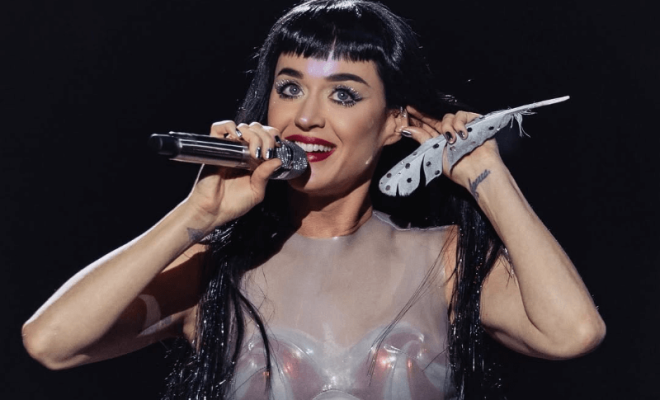
By Dr Neha Mathur: Pop superstar Katy Perry is taking fans on a futuristic, neon-lit journey with her The Lifetimes Tour. It’s part pop concert, part sci-fi adventure, built around her album 143 and a story where Katy battles an AI villain named Mainframe.
Setlist: Hits like Firework, Roar, Teenage Dream, plus new tracks from 143
Storyline: A pop star vs. AI showdown — complete with a digital villain and interactive visuals
Why Fans Are Calling It a “Must-See
”This isn’t just a concert — it’s a pop universe built for maximum fun. Think glitter, drama, dance, and pure Katy Perry magic. Whether you’re a lifelong fan or just love big stadium shows, this tour will leave you smiling for days. Katy Perry’s The Lifetimes Tour 2025 – Everything You Need to Know
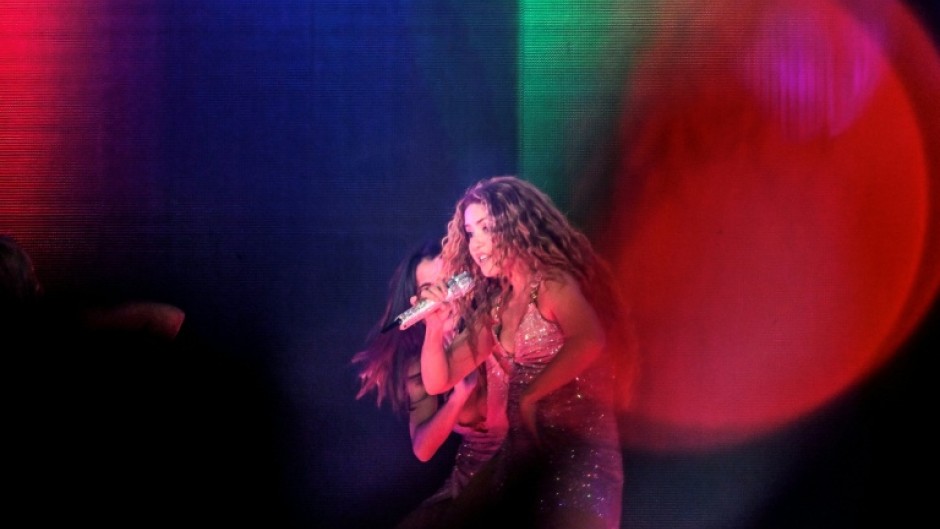
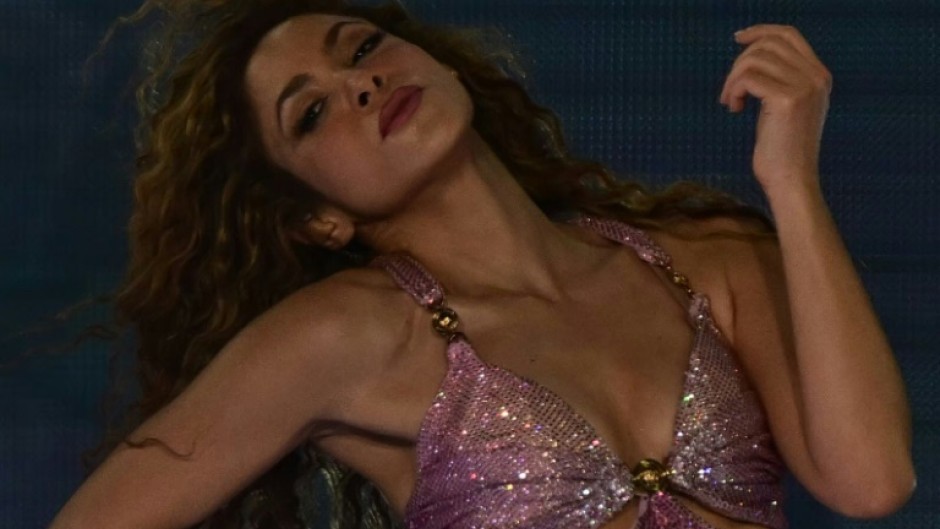
MEXICO CITY - Shakira fans flocking to see the Colombian star in concert are generating tens of millions of dollars for Mexico, according to the local chamber of commerce, underscoring the economic signicifance of major musical events.
Home to around nine million people, Mexico City is a magnet for Latin and other international musicians who attract fans from across the country and abroad.
Maria (32) flew from Honduras to see Shakira perform during her "Women Don't Cry Anymore" world tour at Mexico City's 65,000-capacity GNP Stadium.
The online marketing expert spent nearly $1,000 on the flight, hotel and concert ticket.
"Direct flights to Mexico City were full so I had several layovers," she told AFP.
Devanhi, from Chihuahua in northern Mexico, spent more than $1,000 for five days in the capital, including $400 for the concert and $200 for the plane ticket.
"Whenever we can, we make the trip," since global stars skip Chihuahua on their tours, she added.
According to the local branch of the National Chamber of Commerce, Shakira's seven concerts in Mexico City this month are expected to generate economic benefits of more than 3.2 billion pesos ($160-million).
Nearly half of that will come from the sale of around 455,000 tickets, it is estimated.
Hotels and other types of accommodation are expected to make $43.9-million, while restaurants and drink vendors will take in around $27-million, Canaco said.The boost is set to eclipse the $50-million estimated to have been generated by US superstar Taylor Swift's four concerts in Mexico City in 2023, according to the organization. Shakira concerts give multimillion-dollar boost to Mexico
Shakira has canceled a concert in Colombia, among dozens of dates on her world tour, due to a damaged stage roof that posed safety concerns, event organizers said on Friday.
The Colombian singer-songwriter is on her first world tour in seven years, with nearly 50 performances scheduled in Latin America through June, followed by more concerts in the United States and Canada.
"During the process of setting up the show scheduled for February 24, the stage roof installed by a local production company suffered damage that put the artist's safety at risk," event organizer Paramo Presenta wrote on social media on Friday.
The company added that it hoped to reschedule the concert, which was due to take place at the Atanasio Girardot Stadium in Medellin.
The 48-year-old four-time Grammy winner had already been forced to scrap a tour date in Peru after she received treatment in hospital last week for an abdominal condition.
Titled "Las mujeres ya no lloran" (Women Don't Cry Anymore), the tour kicked off in Rio de Janeiro this month just a few days after she received a Grammy for best Latin pop album.
She returned to her hometown of Barranquilla, where she was welcomed on Thursday by tens of thousands of fans at the Metropolitano stadium.
With more than 90 million records sold worldwide, Shakira is one of the most popular Latin artists of all time.She has back-to-back concerts scheduled in Bogota on Wednesday and Thursday, according to her website. Shakira cancels Colombia concert over venue safety concerns
RIO DE JANEIRO - Shakira launched her first worldwide tour in seven years from Rio de Janeiro this week for her latest Grammy-winning album "Las mujeres ya no lloran" (Women Don't Cry Anymore).
The Colombian singer-songwriter treated fans at the 46,000-capacity Nilton Santos Olympic Stadium to the top hits from her 12th album on Tuesday.
"Music heals," Shakira told the audience. "Loving somebody else is a very good thing, but it's better to love oneself."
She notably performed "Shakira: Bzrp Music Sessions, Vol. 53," a track that alludes to her highly publicized separation from former Spanish footballer Gerard Pique in June 2022.
"She has been through a very difficult time in her personal life," said Juliana Modenesi, a fan who traveled 600 kilometers (370 miles) to see her perform for the first time.
"She has reinvented herself and today, she is stronger than ever."
AFP | Pablo PORCIUNCULA
It is the first tour since 2018 for Shakira, who shot to fame with her 2001 hit song "Whenever, whenever."
She entertained the crowd with a blend of styles from pop and reggaeton to salsa and Dominican bachata during her two-and-a-half-hour performance.
The show came just a few days after she received a Grammy for best Latin pop album, which she dedicated to migrants in the United States who are facing deportation under President Donald Trump.
She also performed some of her classic hits including "Hips Don't Lie," "Chantaje" and "Waka Waka," the official song of the 2010 football world cup in South Africa.
With more than 90 million records sold worldwide and four Grammy Awards under her belt, among many other prizes, Shakira is one of the most popular Latin artists of all time.
Chandrika Tandon, 2025 Grammy award winner. PHOTO: Courtesy Chandrika Tandon
Chennai-born Indian-American businesswoman and musician Chandrika Tandon, 71, of New York, claimed a Grammy award at the 67th Annual Grammy Awards held Feb. 2, 2025 in Los Angeles, emceed by talk-show host and comedian Trevor Noah.
The singer, songwriter, and producer won the coveted award in the Best New Age, Ambient or Chant Album category for her album ‘Triveni.’ This marks her first Grammy win and second nomination, lending to her reputation in the world of spiritual and healing music.
“Music is love, music ignites the light within all of us, and, even in our darkest days, music spreads joy and laughter,” Tandon said upon receiving the award. “Congratulations to all the other nominees in our category. Thank you for the music, and thank you for each and everyone that creates and supports the music; may all our lives be enveloped in love, light, and laughter,” she added.
‘Triveni’ is a seven-track album and brings together Tandon, Grammy-winning South African flutist Wouter Kellerman, and Japanese American cellist Eru Matsumoto with the aim to create a deeply meditative musical experience. The album blends ancient mantras with the soothing sounds of flute and cello, serving as a bridge between cultures and traditions, the press release from Tandon said.
The album’s name is meant to symbolize the confluence of three rivers, which metaphorically represents the fusion of the artists’ diverse traditions.
For many years, Tandon has been melding Sanskrit chants and western musical traditions for large choral groups, and her compositions have recently been performed by her and others at the World Cultural Festival and Lincoln Center. She is Artist in Residence for the Young People’s Chorus of New York City Artist and received a New York State Council on the Arts grant to compose Sanskrit chants for choral ensembles.
Music producer George Varghese took to his Instagram handle to congratulate Chandrika Tandon and the team for the big win.
Music producer put up a group photo at the Grammys on Instagram. PHOTO: Screenshot from Instagram via ANI
Sharing a group picture from the Arena, he wrote, “And the winner is !!!!! Wouter Kellerman Chandrika Tandon and Eru Matsumoto and my sister from another mother Tholsi Pillay!!” adding, “Congratulations to the Dream Team for winning the Grammy Awards for the BEST NEW AGE album for their Album ‘TRIVENI’ . I am ever grateful and blessed to have had the opportunity to be a part of your Video Team but more than that .. always treating me as part of your family over the years.”
This year marks Tandon’s second Grammy nomination, with her first in 2010 for her album ‘Om Namo Narayana: Soul Call’.
She was nominated this year alongside some prominent names, including producer Ricky Kej, sitar player Anoushka Shankar, and Indian-origin British artist Radhika Vekaria.
In a social media post earlier, Tandon wrote, “We wouldn’t be here except for the incredible support of so many! There are such spectacular fellow musicians I met along the way — many nominees and many not — and I want to tell you ALL how much joy you created for me and the world with your artistry. Thank you.” She also gave a shout out to her collaborators Eru Matsumoto and Wouter Kellerman.\
Chennai-born Chandrika Tandon wins Grammy for Best New Age AlbuM ‘Triveni’. PHOTO: Instagram @chandrikatandon
Beyond her musical achievements, Tandon is known for her philanthropic endeavors. She is also a successful businesswoman. The first Indian-American woman elected partner at McKinsey, Tandon is the founder of Tandon Capital Associates and chairs the Krishnamurthy Tandon Foundation. She also serves as a trustee of NYU, chairs the NYU Tandon School of Engineering, and has supported numerous business and community education programs.
Among her many honors, Tandon has received the Ellis Island Medal of Honor, NYU’s Gallatin Medal, and The Town Hall’s Friend of the Arts Award.She has released six albums under Soul Chants Music and performed at prestigious venues such as the Kennedy Center, Lincoln Center, Times Square, and Washington D.C.’s National Mall. Chennai-born New Yorker Chandrika Tandon wins Grammy for Best New Age Album
Made in Korea: The K-Pop Experience is a six-part reality show following five British trainees over 100 days as they debut as a Korean-pop (K-pop) idol boy group called Dear Alice. In collaboration with SM Entertainment, a K-pop powerhouse, the show will introduce the behind-the-scenes of making a K-pop idol through an immersive training system.
Showing a glimpse of the lives of K-pop trainees, the first episode introduces K-pop as a multi-billion global phenomenon, stating: “Six of the top 20 best-selling artists in the world were K-pop and 90 billion streams were by K-pop idols.”
K-pop is becoming increasingly popular in the UK. Girl group Aespa and boy group BTS have sold out shows in the country’s largest arenas.
In 2023, the group Blackpink became the first Korean band to headline a UK festival at BST Hyde Park, where they played to an audience of 65,000. They were also awarded honorary MBEs by the king for their role in encouraging young people to engage with the global UN climate change conference at COP26 in Glasgow 2021.
There is certainly an appetite for shows about K-pop for western audiences. Netflix have released their own version of Made in Korea, Pop Star Academy: Katseye.
The docuseries follows 20 girls from Japan, South Korea, Australia and the UK going through a year of K-pop training to become the group Kasteye. It’s a collaboration between the K-pop label Hybe and US label Geffen (a subsidiary of Universal).
Generally speaking, K-pop is characterised by catchy and lively melodies and highly choreographed dance routines in perfect unison and fancy outfits. Inspired by various pop music genres – including but not limited to electronic dance, hip hop, and R&B – the genre became distinctive from the nation’s traditional music, especially after a handful of pioneers began producing idol groups in the 1990s.
I’m South Korean and I’m studying cultural industries, so it’s interesting for me to see westernerss becoming K-pop-inspired idol groups. It’s a famously competitive industry, which is already oversaturated with hopeful K-idols. Considering that the domestic market is small and highly saturated, their success will be a breakthrough for SM Entertainment and HYBE, as well as other K-pop companies, proving whether they can continue to grow beyond east Asia.
The production and delivery of this popular music genre have become more international than ever in recent years, with hundreds of choreographers, composers and producers worldwide contribute to creating K-pop songs and performances. In contrast, K-pop performers have until recently been predominantly Korean. But as the new shows demonstrate, this too is changing.
K-pop companies have hosted auditions outside the country to recruit foreign trainees to make their idols appeal to global audiences. Huge global music corporations like Sony, Universal Music Group and Virgin Records have also got in on the game, signing distribution contracts with major K-pop idols to promote their music in foreign markets.
This search isn’t because there is a lack of willing hopefuls in Korea. There were around an estimated 800 trainees waiting to debut in 2022. But Korea’s population is only around 50 million and record companies want to appeal beyond the domestic market, so they are hoping recruiting non-Korean stars will help do that.
Music agencies in the west tend to find new artists who are already gifted and then largely serve as intermediaries arranging things like tours, marketing and artists’ wider schedules. However, major K-pop companies have developed a unique system of finding and launching new artists. This involves hosting auditions with a competition of at least 1,000 to 1 odds. The winners then undergo years of of acting, vocal, and dance training before debuting.
To make the vocals flawless and the dance moves precise, trainees, known as yeonseupsaeng (연습생), are expected to spend up to 17 hours per day practising performances and training for several years – although they aren’t guaranteed to become professional artists. Even if they do become successful, their private lives – including their dating lives – are strictly controlled.
It is no exaggeration to say that the industry is labour-intensive as well as capital-intensive, built on the blood, sweat and tears of yeonseupsaeng.
The first episode of Made in Korea ends with SM’s director Hee Jun Yoon’s critique of the Britons’ first performance. It’s difficult viewing for those unfamiliar with the harsh world of K-pop. To borrow the words of BBC’s unscripted content head, Kate Phillips, it makes “Simon Cowell look like Mary Poppins.”
Some might question the prefix “K-” being used to describe these international groups but the genre will remain decidedly Korean. It is Korean companies which will lead the production mechanisms and the domestic market will continue to serve as the testbed for new artists. But the success of Dear Alice and Katseye is important if the genre is to survive and continue to grow beyond Korea.
Looking for something good? Cut through the noise with a carefully curated selection of the latest releases, live events and exhibitions, straight to your inbox every fortnight, on Fridays. Sign up here.
When a three-day music festival was called off and the organizers declined to offer a refund to pass holders, a totally different festival decided to welcome them all for free.
Now in its 12th year, the Lucidity Festival was set to kick off in Santa Barbara, California this September. But citing “unforeseen last-minute changes in requirements” imposed by Santa Barbara County, the festival had to be canceled.
To make matters worse, the circumstances lead “to a postponement that we can not financially recover from,” and so organizers announced there would be no refunds for the passes.
To be fair, Lucidity Festival’s official policy is that passes can only be transferred from one holder to another, but refunds are never offered. While hundreds of derelict pass-holders are incensed and considering a class-action lawsuit, Lucidity has warned that if they can’t find a solution for a place to host the event by April next year, they will declare bankruptcy and end the festival for good.
The end of that saga, no one can yet predict, but a totally unaffiliated festival called Same Same But Different (SSBD) heard what was happening and decided to welcome all Lucidity pass holders free of charge as a gesture of goodwill.
“We know how challenging these times can be, especially when the festival experiences we all cherish don’t go as planned,” reads a statement released by SSBD. “It’s never easy when something you’ve been looking forward to doesn’t work out, and we understand how much time, energy, and anticipation went into planning for Lucidity.”
“Featuring a big lineup of electronic music artists the likes of Big Gigantic, Ganja White Night, and LSDREAM, SSBD is making it known that they are well-positioned to welcome thousands of Lucidity ticket-holders from September 27-29,” writes EDM.com.
“The enchanting festival will also feature sunrise-to-sunset DJ sets, a Vegas-inspired casino pop-up experience, yoga sessions, mindfulness workshops, and much more.”
LONDON - David Bowie's original handwritten lyrics for the pop classic "Starman", part of an album that catapulted him to international stardom, on Tuesday sold at auction in Britain for £203,500.
Released as a single in 1972, the song about a Starman who would "like to come and meet us but he thinks he'd blow our minds" featured on the Ziggy Stardust concept album.
The handwritten lyrics sold for five times as much as the £40,000 estimate.
The winning bidder was Olivier Varenne, director of acquisitions and alliances and collections at the Museum of Old and New Art in Tasmania, on behalf of a private collector.
"We had almost unprecedented interest from around the world for this historic piece of memorabilia," said Paul Fairweather of Omega Auctions.
"We’re very pleased with the incredible price achieved and are sure the lyrics will be rightly prized and treasured by the winning bidder."
The lyrics were previously on display as part of the V&A Museum's David Bowie Is collection. They had been owned by the same person since the 1980s.
The A4 page features handwritten amendments and edits by Bowie, including corrected spelling mistakes and additions.
The lyrics were sold as part of a David Bowie and glam rock sale on Tuesday.
In 2019, the first demo of Bowie singing Starman sold for 51,000 pounds after gathering dust in a loft for nearly five decades.
Bowie can be heard telling his guitarist Mick Ronson, who died in 1993, that he has not finished singing the song when he tries to end the demo.
As the largest section of the orchestra, sitting front and centre of the stage performing memorable melodies, it’s easy for violinists to steal the limelight. Ask any violinist why there are so many in an orchestra, and we’ll often reply, tongue-in-cheek: “obviously it’s because we’re the best”.
The real answer is a bit more complex, and combines reasons both logistical and historical.
How we got the modern orchestra
During the Baroque period between around 1600 and 1750, the composition of the orchestra was not standardised, and often used instruments based on availability. Monteverdi’s opera L'Orfeo, which premiered in 1607, is one of the earliest examples of a composer specifying the desired instrumentation.
The size of the orchestra also varied. Johann Sebastian Bach wrote for and worked with ensembles of up to 18 players in Germany. At Palazzo Pamphili in Rome, Corelli directed ensembles of 50–80 musicians – and, on one notable occasion to celebrate the coronation of Pope Innocent XII, an ensemble of 150 string players.
The modern-day violin was also developed around this time, and eventually replaced the instruments of the viol family. The violin has remained a staple member of the orchestra ever since.
Music of this period was created on a smaller scale than much of the repertoire we hear today, and often placed a strong focus on string instruments. As the orchestra became more standardised, members of the woodwind family appeared, including the oboe, bassoon, recorder and transverse flute.
During the classical period from around 1730 to 1820, orchestral performances moved from the royal courts into the public domain, and their size continued to grow. Instruments were organised into sections, and bowed strings formed the majority.
Composers began to use a wider range of instruments and techniques. Beethoven wrote parts for the early double bassoon, piccolo flute, trombone (which was largely confined to church music beforehand), and individual double bass parts (where previously they had often doubled the cello part).
During the romantic period of the 19th century, composer Hector Berlioz, author of a Treatise on Instrumentation and Modern Orchestration (1841), further developed the symphony orchestra by adding instruments such as the tuba, cor anglais and bass clarinet.
By the end of the 19th century, many orchestras reached the size and proportions we recognise today, with works that require more than 100 musicians, such as Wagner’s Ring Cycle.
What’s size got to do with it?
As increasing numbers of performers and instruments became standard in orchestral repertoire, ensembles became louder, and more string players were needed to balance the sound. The violin is a comparatively quiet instrument, and a solo player cannot be heard over the power of the brass.
Having violinists at the front of the stage also helps the sound reach the audience’s ears without competing to be heard over the louder instruments.
The typical layout of the orchestra has not always been standard. First violinists (who often carry the melody) and second violinists (who typically play a supportive role) used to sit opposite each other on stage.
US conductor Leopold Stokowski rearranged the position of the first and second violinists during the 1920s so they sat next to each other on the left of the stage. This change meant the voices of each string section were arranged from high to low across the stage.
This change was widely adopted and has become a standard setup for the modern orchestra.
Stokowski is known for experimenting with the layout of the orchestra. He once placed the entire woodwind section at the front of the orchestra ahead of the strings, receiving widespread criticism from the audience and musicians. The board of the Philadelphia Orchestra allegedly said the winds “weren’t busy enough to put on a good show”.
Sound, texture and timbre
String players do not need to worry about lung capacity or breaking for air. As such, violinists can perform long melodic passages with fast finger work, and our bows allow for seemingly endless sustain. Melodies written for strings are innumerable, and often memorable.
Having several violinists play together creates a specific sound and texture that is distinct from a solo string player and the other sections of the orchestra. Not only is the sound of every violin slightly different, the rate of each string’s vibration and the movement of each player’s bow varies. The result is a rich and full texture that creates a lush effect.
Today, symphony orchestras are expected to perform an incredibly diverse range of repertoire from classical to romantic, film scores to newly commissioned works. Determining the number of violinists who will appear in any given piece is a question of balance that will change depending on the repertoire.
A Mozart symphony might require fewer than ten wind or brass players, who would be drowned out by a full string section. However, a Mahler symphony requires more than 30 non-string players – meaning far more string players are needed to balance out this sound.
Room for experimentation
Notable exceptions to the orchestra’s standard setup include Charles Ives’ 1908 The Unanswered Question for string orchestra, solo trumpet and wind quartet spread around the room; Stockhausen’s 1958 Gruppen, pour trois orchestres, in which three separate orchestras perform in a horseshoe shape around the audience; and Pierre Boulz’s 1981 Répons featuring 24 performers on a stage surrounded by the audience, who are in turn surrounded by six soloists.
Despite experimentation, the placement and number of instruments in an orchestra has remained relatively standard since the 19th century.
Many aspects of the traditional orchestra’s setup make sense. However, many of the orchestra’s habits come down to tradition and perhaps unconscious alignment with “just the way things are done”.
Los Angeles, (IANS): Global pop sensation Justin Bieber and his wife, model Hailey Bieber have welcomed their first child, a baby boy.
Justin took to Instagram and made this announcement on Saturday morning. He posted a close-up picture of his baby’s tiny foot and captioned it as “Welcome Home Jack Blue Bieber”.
His friend Kylie Jenner commented “I can’t handle this little foot Jack Blues Bieber”
Hailey shared the same picture on her Instagram stories.
Justin and Hailey Bieber, tied the knot in 2018, just two months after getting engaged. They later celebrated their wedding with a large ceremony, exchanging vows in front of family and friends.
In 2023 Hailey acknowledged to the Sunday Times that she is scared to have children as a celebrity.
In May the couple announced they were expecting a baby together. They have been sharing adorable videos and photos from Hailey’s pregnancy diaries.
A few months ago speaking to W magazine Hailey Bieber spoke about how she managed to hide her pregnancy for six months. She stated “I was honestly able to keep it quiet because I stayed small for a long time...I didn't have a belly, really, until I was six months pregnant, which was when I announced it. I was able to wear big jackets and stuff.”
Hailey, a supermodel has walked the ramp for top designers. She has been part of Paris Fashion Week, New York Fashion Week and Milan fashion week.
Los Angeles, (IANS) Singer Dua Lipa has opened up about enduring "two years of humiliation" following criticism of her dancing and revealed that it wasn't until her comeback with 'Future Nostalgia' that she regained her confidence.
The singer told the Guardian magazine: "When people took that snippet of me dancing online and just turned it into a meme, and then when I won the best new artist Grammy and people were like, ‘She’s not deserving of it, she’s got no stage presence, she’s not going to stick around.’ Those things were hurtful. It was humiliating. I had to take myself off Twitter."
She further explained, "The thing that made me the happiest -- performing and writing songs -- was also making me really upset because people were picking everything apart that I’d been working on, and I had to learn all that in front of everyone."
"In the public eye, I was figuring out who I was as an artist, as a performer. All that was happening while I was 22- 23 years old and still growing up. You have to build tough skin. You have to be resilient."
Lipa reflected on the duration of her struggle, stating, "(The humiliation lasted) until I finished writing 'Future Nostalgia' and did my first performance of 'Don’t Start Now', at the MTV Europe Music Awards. I want to say -- gosh, I don’t know -- two years."
"It never was like I couldn’t get out of bed because of what I thought people thought of me. I didn’t care to that degree. But that’s when it was most heightened for me."
Meanwhile, Lipa has released her third studio album titled 'Radical Optimism' and is set to headline Glastonbury later this summer.
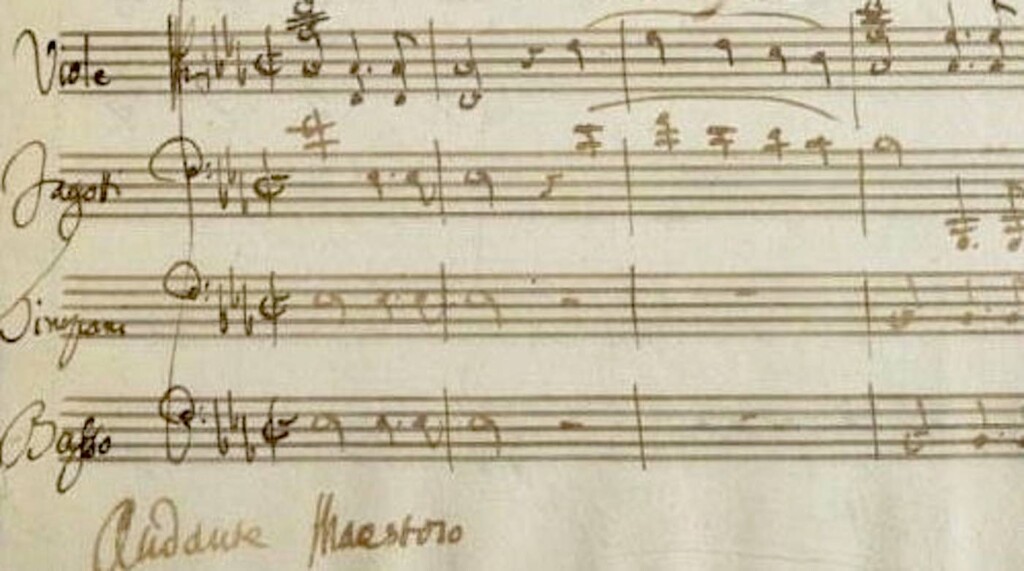
Salieri’s handwritten notes on part of the opening movement from Pafio e Mirra – SWNS / Austria National Library
Whether Bach, Beethoven, or Mozart, it’s widely recognized that classical music can affect a person’s mood.
Now, scientists are using brainwave measurements and neural imaging techniques to show exactly how Western classical music elicits its positive effects on the brain.
The discovery could lead to effective ways to use music as treatment to activate the brain in people with treatment-resistant depression.
“Ultimately, we hope to translate our research findings into clinical practice, developing convenient and effective music therapy tools and applications,” said Professor Bomin Sun, of Shanghai Jiao Tong University.
The study focused on 13 patients with treatment-resistant depression who already had electrodes implanted in their brains for the purpose of deep-brain stimulation.
The implants are placed in a circuit connecting two areas in the forebrain—the bed nucleus of the stria terminalis (BNST) and the nucleus accumbens (NAc).
Using the implants, the researchers found that music generates its antidepressant effects by synchronizing the neural oscillations between the auditory cortex, which is responsible for processing of sensory information—and the rewards circuit, responsible for processing emotional information.
“The BNST-NAc circuit, sometimes referred to as part of the ‘extended amygdala’—underscores the close relationship between this circuit and the amygdala, a central structure in emotional information processing,” said Prof. Sun, a corresponding author of the paper published in the journal Cell Reports.
“This study reveals that music induces triple-time locking of neural oscillations in the cortical-BNST-NAc circuit through auditory synchronization.”
The patients in the study were divided into two groups: low music appreciation or high music appreciation. The research team found that those in the high music appreciation group showed more significant neural synchronization and better antidepressant effects, while those in the low music appreciation group showed poorer results.
By grouping the patients, the researchers were able to study the antidepressant mechanisms of music more precisely and propose personalized music therapy plans that would improve treatment results.
For example, when inserting theta frequency noise into music to enhance BNST-NAc oscillatory coupling, those in the low music appreciation group of patients reported higher music enjoyment.
Several pieces of Western classical music that most participants had no familiarity with were used in the study, to avoid any interference that could arise from subjective experience.
“We concluded that the music choices during the formal listening process were individualized and unrelated to the music’s emotional background,” said Sun.
Integrating the fields of neuroscience, psychiatry, and neurosurgery
Now the team plans to study how the interaction between music and the deep structures of the brain play a role in depressive disorders.
They also plan to introduce other forms of sensory stimuli—including visual images—to investigate potential combined therapeutic effects of multi-sensory stimulation on depression.
“By collaborating with clinicians, music therapists, computer scientists, and engineers, we plan to develop a series of digital health products based on music therapy, such as smartphone applications and wearable devices.
“Be Free” – a testimonial song by Lemuel J Philip was released on Monday evening in his YouTube channel @LemuelJPhilip. This is Lemuel’s first song.
The debut of “Be Free” was not only a proud and emotional moment for the parents, but also an inspiring evidence of what a child can achieve on their own.
Written and composed by Lemuel when he was just six years old, his parents told The Morung Express that the song birthed during the ‘40 Days of Revival’ organised by The Lighthouse Church at different churches in and around Dimapur.
“We went to attend the ‘40 Days of Revival’ at NCRC Sumi Church, Purana Bazaar. After reaching home, he made us record and wrote the song,” his parents shared. After letting him be himself for some time, Lemuel was ready with the song. It happened on March 23, 2022.
“We did not change anything. The lyrics, song, everything… he did it on his own. Shortly, we decided to make the music video for the song,” they added.
Past two years, now Lemuel is eight years old and yet he is very clear and vivid about the vision behind “Be Free.” In a brief conversation with this newspaper, he said, “This song to me is about freedom, life and not to be scared of anything and that God always choose the right path for us. And I pray that this song will bless, heal and speak to many people.”
‘He only chooses the best path for you to be free’
This song has a story.
In his song, Lemuel writes, “It is like you are stuck in pain, death, sickness, and all the bad things. You don’t know what to do. That is when all the shame surrounds you and there is only one place you can go; that is when you go to an open place where Jesus is waiting for you.”
“Fountain is a need for us but broken fountain can’t be used. Then you go to another place where some flowers are raised while some grow. He knows everything, He knows the path. When God guides your way, He only chooses the best path for you to be free. Humans ride vehicles but God drives in unbelievable things like mountains,” the lyrics continue.
“We see with our eyes, telescopes, microscopes and other things but God sees clearer things. Jesus Himself said in the Bible that He will come again for us.” For the music video, the concept and direction were done by Ihang Lungalang, Moaren Pongen and Rongsenchila Longchar, while it was shot and produced by Yanger Imchen. Be Free: A child’s prayer for freedom and life | MorungExpress | morungexpress.com
The Donalsonville/Seminole County Chamber of Commerce is pleased to announce that this year’s 2024 Harvest Festival featured entertainment is country artist Jason Michael Carroll. So, mark your calendar for Saturday, October 19th and make plans to tap your toes to the music and more in downtown Donalsonville.
Born in Houston, Texas and raised in Youngsville, North Carolina, Carroll has been adapting to the changing landscape in country music for almost two decades with no signs of slowing down.
Breaking out with success in 2006 thanks to the heart-wrenching ballad “Alyssa Lies”, Carroll followed that first chart-topping hit quickly with a flurry of hit songs that cemented his voice and his name among the elite performers from Nashville. Hits such as “Livin’ Our Love Song,” “I Can Sleep When I’m Dead,” “Where I’m From” and many others helped fuel a string of albums and sold out live shows. Couple that with an intense connection with his fans and you can see why Nashville calls Jason a triple-threat artist to be reckoned with: Singer. Songwriter. Entertainer.
Proud of his past success but always focused firmly on his next move, the country music star launched his first major independent release since 2016 with the new song “Pass It On Around” (Jan. 27, 2023). Delivered with powerful vocals accented at times by his signature growling lyrics and laser precision, “Pass It On Around” made Nashville once again turn and take notice of Carroll. Indeed, his best days still lie firmly ahead of him. He is so excited to bring his talent to Donalsonville!
In addition to the festival’s featured entertainment, the day’s festivities will kick off with the Rejoice Run & Mom’s Mile, the annual Harvest Festival parade, a performance from local Persnickety Studios, a fine arts show, a large variety of arts and crafts vendors, children’s activities, and local shopping with numerous downtown shops.


 Unsplash,







 LONDON - David Bowie's original handwritten lyrics for the pop classic "Starman", part of an album that catapulted him to international stardom, on Tuesday sold at auction in Britain for £203,500.