Friday, 8 August 2025
Kapil Dev, Baichung Bhutia, Abhinav Bindra, Pullela Gopichand & Gagan Narang join forces to shape India’s Olympic future
Tuesday, 22 April 2025
Not just the stadium: what Brisbane Olympic organisers are planning for
Brisbane was awarded the Olympics and Paralympics more than 1,300 days ago, and much has happened in between.
On Tuesday, upbeat Queensland premier David Crisafulli revealed the 2032 Brisbane Olympic and Paralympic Games plan.
This came after a 100-day review by the Games Independent Infrastructure and Coordination Authority (GIICA).
More than 5,000 submissions were received from the general public. The review included topics such as precincts and transport systems, while evaluating topics such as demand and affordability.
So, what’s going to be happening in Queensland before, during and after the games?
The main event: venues
Get ready for the likes of Taylor Swift, Pink, Coldplay and others to finally come to Brisbane with the announcement of a new world-class 63,000 seat Olympic Stadium to be built in Victoria Park in Brisbane.
All indications are major codes, such as the Australian Football League (AFL) and cricket, are also very pleased, as they will have a new home replacing the outdated Gabba.
Other venues, both in South East Queensland and in regional areas such as the Gold Coast, Sunshine Coast, Cairns and Townsville, were also outlined.
One of these is a new 25,000-seat swimming complex at Spring Hill, making it one of the world’s best facilities.
As Australia is a swimming powerhouse with major medal hauls expected in 2032, this news was well received.
However, a few of the GIICA recommendations were not accepted. The government has announced rowing will take place in Rockhampton – and not interstate – in an existing flat water venue.
Why the delays?
There had been plenty of criticism of the decision-making delays on facilities and their locations. But the Queensland government’s 2032 Games Delivery Plan indicates there is no need to panic.
Previously, the International Olympic Committee chose a host city seven years out, but under new protocols, Los Angeles in 2028 and Brisbane in 2032 have been given 11 years to finalise planning.
Previous Australian games (Melbourne in 1956 and Sydney in 2000) only had seven years to organise their events.
In the case of Melbourne, several controversies erupted due to the costs of building a new stadium at proposed sites such as the Royal Showgrounds or Princes Park.
Eventually, politics and economics intervened, and a refurbished Melbourne Cricket Ground within an impressive Olympic Park precinct was agreed on.
In the case of Sydney, the original idea back in the 1960s was to host either the Commonwealth Games or the Olympic Games at Moore Park, an inner-city region home to the Sydney Cricket Ground, a golf course and parklands.
But many local residents were vehemently opposed to that suggestion, so other sites were sought.
Eventually, the uninhabited Homebush site was chosen in 1973. This was an unexpected decision because it was the most polluted environment in Australia and its remediation, however noble, would be an enormous challenge.
And so it proved.
When Sydney was awarded the games in 1993, timeline pressures prompted organisers to bulldoze toxic waste into mounds on site, where they were covered with clay and landscaped.
Meanwhile, the promised remediation of toxic waterways in Homebush Bay never proceeded.
All that said, the Sydney games provided tangible legacies. The Olympic Village is now the suburb of Newington, there are parklands and cycle paths for visitors, and from a sport perspective several facilities remain in use today. In 2024, more than 10 million people visited the Sydney Olympic Park precinct, attending sport, concerts, or participating in social activities.
Opportunities and hurdles
The initial hiccups associated with the Brisbane games have resulted in some interesting and healthy debate, but this major project now has a positive vibe.
There is more than enough time to build the new facilities (including the athletes’ villages), upgrade existing ones, build the necessary transport infrastructure, and ensure community engagement.
The “Queensland way” seems not only to be referring to a better games, but also the legacy that comes with it.
Generational infrastructure (for example, the upgrade of transport connectivity), housing (such as the conversion of the RNA Showgrounds and a multimillion dollar investment into grassroots clubs can enable the next generations of Queenslanders to compete.
Tourism and regionalisation of the games through a 20-year plan should ensure the impact of the games goes far beyond 2032.
Some fine-tuning is expected the next few years though, and there may be unforeseen issues that arise – here are some.
1. Beyond the 31 core sports that must feature, will new sports necessitate changes or additions to proposed venues? Host cities are now allowed to have 4-5 sports added to the program which could cause increases to the budget.
2. Will the federal government fund the games on the currently agreed 50-50 basis with the Queensland government? This currently sits at around $7 billion split two ways, but it is likely to rise based on cost over-runs on virtually all major builds across Australia.
3. Will there be some tweaking of chosen venues due to local issues, lobbying by Olympic sports, political decisions and other factors?
4. Will a global health issue (such as COVID during the Tokyo 2021 games) or a major world problem (such as the current Gaza or Ukraine conflicts) impact the games in some way?
The Brisbane games are following the footsteps of Melbourne 1956 (affectionately referred to as the “friendly games”) and Sydney 2000 (the “best games ever”).
The eventual Brisbane label has yet to be determined. But the Brisbane games will no doubt add to the Olympic folklore of Australia in their own unique way.![]()
H. Björn Galjaardt, PhD Candidate, The University of Queensland; Daryl Adair, Associate Professor of Sport Management, University of Technology Sydney, and Richard Baka, Honorary Professor, School of Kinesiology, Western University, London, Canada; Adjunct Fellow, Olympic Scholar and Co-Director of the Olympic and Paralympic Research Centre, Institute for Health and Sport, Victoria University
This article is republished from The Conversation under a Creative Commons license. Read the original article.
Saturday, 16 November 2024
Nikhat Zareen hails India's bid to host 2036 Olympics, calls for SAI centres in each state
Wednesday, 2 October 2024
American Noah Lyles wins men's Olympic 100m title in photo-finish
Monday, 16 September 2024
Paris Paralympics 2024 concludes with closing ceremony in French capital

Sunday, 15 September 2024
Olympics-Shooting-Bhaker hopes her Paris feat is just the start for India’s women athletes
Thursday, 12 September 2024
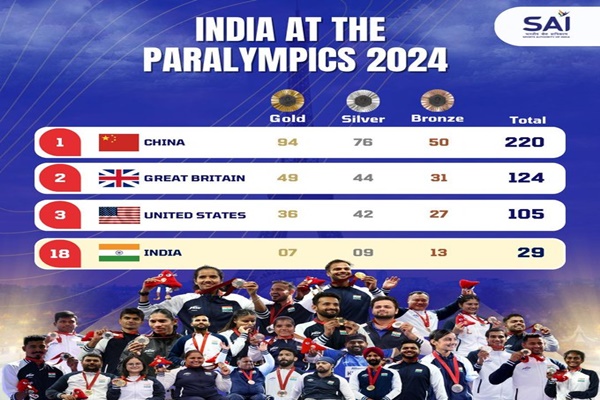
“We have made history”: PCI chief Jhajharia on India’s record-breaking performance at Paris Paralympics
Monday, 29 July 2024
Paris Olympics: Mirabai Chanu eyeing historic second medal in another lone ranger effort
Tuesday, 16 July 2024
Exhibition to commemorate India's 100 years at Olympic Games opens in Paris
Tuesday, 2 July 2024
How the Paris Olympics could become a super-spreader event for dengue
In September 2023, several people came down with dengue fever in Paris, France. The presence of this mosquito-borne disease was notable for two reasons. It was the most northerly outbreak ever recorded, and none of the people had travelled recently. This demonstrated it is now possible for dengue to be transmitted locally in northern Europe.
These facts are important in 2024 because of the Olympics. France waits in anticipation of more than 10 million athletes, spectators, officials and tourists descending on the city for the event. The French government knows there is a risk of dengue. In Paris, hundreds of sites are being regularly checked for the presence of the dengue-carrying mosquitoes. Will this be enough?
The concept of the super-spreader in infection epidemiology is not new. In essence, it means that a small fraction of a population, maybe just one person, is responsible for most of the cases. A famous historical super-spreader was “typhoid Mary”. Mary Mallon was an asymptomatic carrier of typhoid who may have infected over 100 people.
A study published in the journal Nature suggests that about 15% of people were responsible for 85% of cases of COVID in Hunan Province, China. In terms of dengue, one analysis from Peru of super-spreading suggests 8% of human-occupied spaces are responsible for over half of cases. (It should be noted that dengue cannot be caught directly from another human, only from the bite of a dengue-carrying mosquito.)
This is not the first time the Olympics has been identified as a risk factor for viral epidemics. The 2016 Olympics in Brazil were almost postponed because of fears about Zika - another virus transmitted by the Aedes mosquito.
In the end, any worries were put to bed, because there were no reported cases.
Fear about COVID spreading via the Tokyo Olympics brought about drastic measures to limit transmission. At that event, few infections occurred inside the Olympic bubble, but there was an increase in cases among the general population.
So what is different about Paris?
Aedes has spread considerably further than in 2016, and the number of dengue cases worldwide has increased dramatically in the same period. In 2016 there were 5.2 million cases reported worldwide. Halfway through 2024, there have already been 7.6 million cases.
Visitors from more than 200 countries are expected in France for the Olympics. Many of those countries are already experiencing dengue this year.
For the Paris Olympics to become a super-spreader event, several factors must overlap. There needs to be enough mosquitoes, enough susceptible and already-infected people, enough time and enough mosquito bites.
Perfectly adapted
The tiger mosquito is perfectly adapted to the urban Paris environment. It needs just the smallest amount of water in a small container to lay its eggs. It preferentially feeds on humans, at dawn and dusk. The eggs themselves can withstand dry conditions for months. Once wet again, the eggs will hatch.
What makes this situation potentially dangerous for Paris is that some of these mosquitoes may have dengue already inside them, passed down from their mother. This could significantly reduce the number of bites needed to start an epidemic.
Within the time frame of the Olympics, an infected athlete or spectator could be bitten once by a mosquito and seed an epidemic in a week or so. Each female mosquito can lay up to 200 eggs at a time.
Most dengue cases are asymptomatic. People infected before or during the Olympics may have no idea they are carrying the virus. They might take the virus back home and seed an epidemic there without ever knowing it.
Whether people get sick or not, they are carrying the virus and can transmit the infection onwards if they get bitten by an Aedes mosquito.
At the Rio Carnival this year, a dengue outbreak just days before the event led to a public health emergency being called, but the event wasn’t cancelled.
There will be no public health emergency in Paris because the event itself is the risk factor. Anyone living, working, visiting, competing, volunteering or even just passing through Paris during the Olympic period is going to be part of a huge natural experiment – whether they know it or not.![]()
Mark Booth, Senior Lecturer in Parasite Epidemiology, School of Natural and Environmental Sciences, Newcastle University
This article is republished from The Conversation under a Creative Commons license. Read the original article.
Sunday, 16 June 2024
Olympics-Nervous is necessary for India’s boxer Nikhat Zareen
Friday, 26 April 2024
How breakdancing became the latest Olympic sport
“Breaking” is the only new sport making its debut at the Paris 2024 Olympics. Breaking is probably better known to most of us as breakdancing. So why is the sport officially called breaking, and how is something so freestyle and subjective going to play out as a scored sport in Paris this summer?
The origins of breaking are somewhat debatable, although most agree its roots can be traced to 1970s house parties in the Bronx area of New York hosted by DJ Kool Herc, the founder of hip-hop. Breaking was performed on the dance floor by so-called B-boys and B-girls when the music tracks were “breaking” – meaning all that could be heard was the percussion track.
Throughout the 1980s the phenomenon garnered international exposure via music videos and movies such as Flashdance (1983), Breakin’ (1984) and Beat Street (1984). This is also when the media started to use the term “breakdancing”. However, breakers never add “dance” on the end, as this term came from outsiders rather than the hip-hop community, as one of the breaking pioneers Crazy Legs has pointed out.
While the idea of testing each other in format-free “cyphers” (when people gather in a circle and somebody freestyles in the middle) has always been fundamental to breakers, the importance and the number of organised breaking competitions has steadily grown with commercialisation and codification of the activity.
There have always been two main formats: crew competitions and one-on-one solo battles, which have manifested the individualism, creativity and self-expression of breakers. Still, as with many alternative activities evolving into sports, like skateboarding or surfing, the governance and competition frameworks have remained fragmented until recently.
It was not until 2018 that breaking became officially governed by the World DanceSport Federation. However, major competitions still exist outside the official governance, such as Red Bull BC One and the Battle of the Year, that arguably carry more credibility within the breaking community.
Why the Olympics?
Since the Olympic Agenda 2020 – a road map for the Olympic movement based on the three pillars of credibility, sustainability and youth – the IOC has continued to modernise the Olympic programme to make it more attractive to a wider and younger audience.
Undoubtedly, the inclusion of breaking fits well with that overall strategy – there has been nothing similar to breaking on the programme in terms of its creativity, affordability (no tools or equipment needed) and its urban nature. It is also fair to say though that breaking made it to Paris 2024 thanks to the insistence of the host country.
Apart from the usual core Olympic programme, the host country of each Olympics has five additional slots that they can fill with the sports of their preference. I analysed the Tokyo 2020 Games to find that when it came to its medal tally, Japan benefited from local favourites like karate, skateboarding, baseball and softball.
Los Angeles 2028 will add flag football (a variant of American football), lacrosse, cricket and squash. Bizarrely, Paris 2024 may well be the only time we will see breaking in the Olympics in the foreseeable future, although the World DanceSport Federation (WDSF) is determined to ensure it returns in Brisbane 2032.
What we will see in Paris?
There are a lot of odd new terms to learn if you have never watched a breaking contest, such as “turtle freeze”, “six-steps” and “coin drop”. However, the format of Olympic competition is very straightforward: 16 B-boys and 16 B-girls will battle it out head-to-head under the lights of the Place de la Concorde.
There is a three-part qualifier for the games, so no doubt each of those qualifying athletes will be in the history books. Already qualified through WDSF World and continental championships are some heavy favourites, such as B-boys Victor (US) and Danny Dan (France), and B-girls India (Netherlands) and Nicka (Lithuania).
The last 14 will be decided by the top-ranked 80 breakers at the dedicated Olympic qualifier series in Shanghai in May and Budapest in June. To make the competition diverse, the IOC has limited each country to a maximum of two B-boys and two B-girls, while introducing two universal places that provide opportunities to smaller and emerging nations.
As in any creative sport, there are inevitable questions about scoring in breaking. Indeed, there is always going to be a substantial degree of subjectivity, but not drastically more than in established Olympic sports like gymnastics, synchronised swimming or figure skating.
Traditionally, three or five judges have been used in major breaking contests. However, this number has increased to nine in the Olympic framework, presumably to minimise subjectivity and risk of errors.
The trivium judging system that will be used in Paris was developed by influential B-boy Storm and DJ Renegade for the 2018 Youth Olympics, and has been fine-tuned through the series of WDSF events since.
It is based on six criteria to decide the winner of each battle: creativity, personality, technique, variety, performativity and musicality – this means connecting to a musical track that is not known in advance.
The breaking community has always been very close and informal, and some breakers and judges might find the new formalities of sporting frameworks unusual. However, there is still one unique feature that will hopefully survive the formalisation – it is the only sport where the judges have to perform for the athletes and spectators.
This usually happens before the competition starts and is called “the judges’ showcase”. University lecturer Rachael Gunn, aka B-girl Raygun, (who won the Oceania Breaking Championships and qualified for the Olympics) sees this unique practice as a symbolic gesture, a demonstration that underscores the unity and shared passion between contestants and those judging them.
So don’t forget to tune in early on August 9 and 10 to witness this special celebration before following this exciting contest when we will see the first-ever Olympic breaking champions crowned.
Mikhail Batuev, Lecturer in Sport Management, Department of Sport, Exercise and Rehabilitation, Northumbria University, Newcastle
This article is republished from The Conversation under a Creative Commons license. Read the original article.
Monday, 15 April 2024
Olympics-India’s Zareen ready to step out of Mary Kom’s shadow, says coach
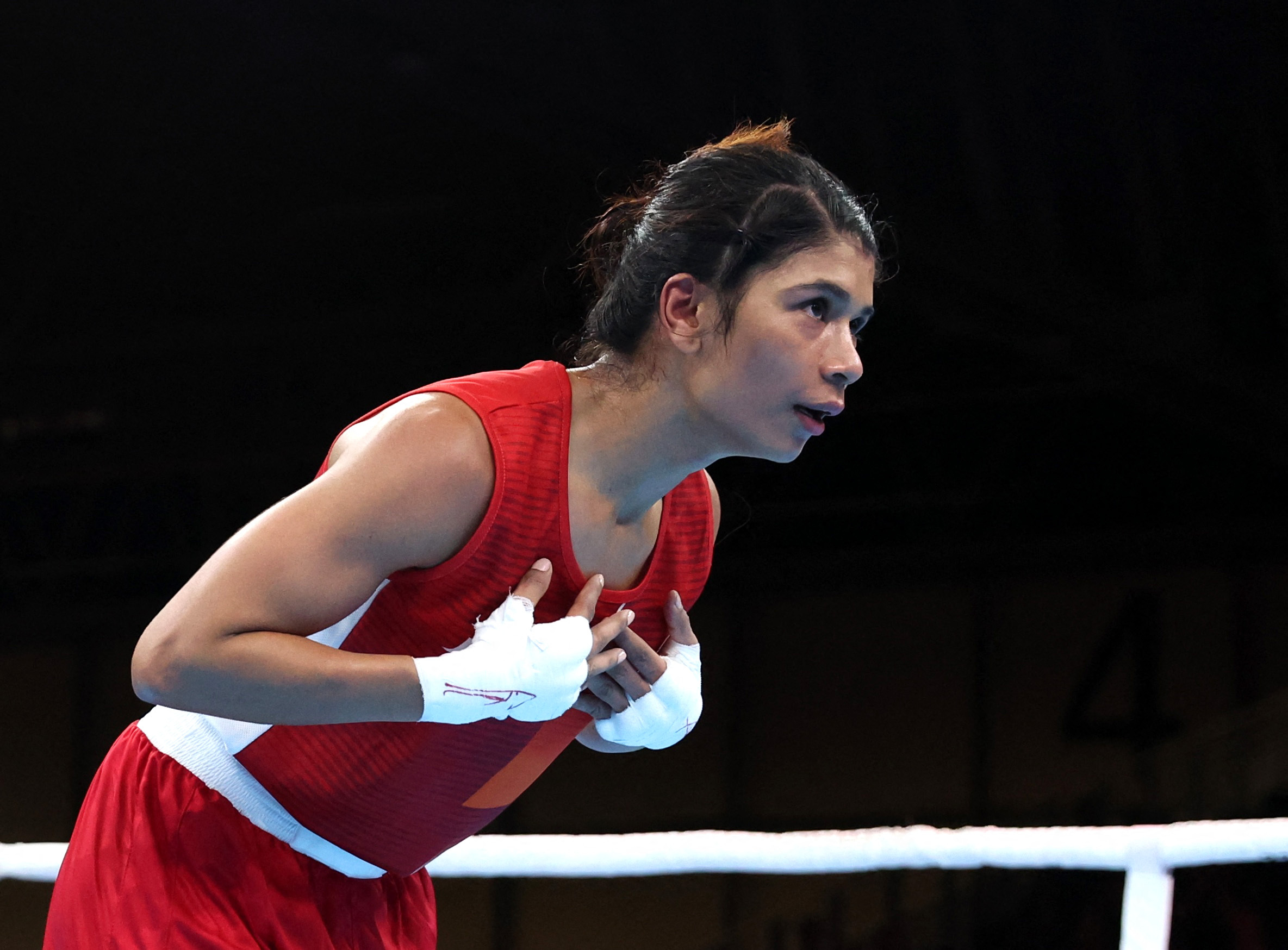
Commonwealth Games – Boxing – Women’s Over 48kg-50kg Light Fly – Round of 16 – The NEC Hall 4, Birmingham, Britain – July 31, 2022 India’s Zareen Nikhat reacts during her round of 16 fight with Mozambique’s Helena Ismael Bagao REUTERS/Phil Noble/File PhotoMonday, 30 October 2023
What the David Beckham documentary tells us – and what it doesn’t – about controlling parents in sport
I was able to handle being abused by the fans […] because of the way my dad had been to me.
A poignant scene shows Beckham’s mother Sandra struggling with how hard his father Ted was on their son. Ted’s shouting often brought David to tears. When asked if he was too tough on David, Ted says:
No […] if I told him how good he was, then he’s got nothing to work at.
Throughout the documentary, Ted’s behaviour is rationalised by Ted and even Beckham himself as necessary to support David’s sporting trajectory. But David also said he was scared of his father’s feedback and felt compelled to practise for hours every day.
Other athletes with similar stories include Tiger Woods, Andre Agassi and Australian Jelena Dokic.
Too often, controlling behaviour by parents is portrayed as necessary for success as an athlete. But the evidence shows this idea is false. In fact, such an approach can be detrimental to both a child’s chances of sporting success and their wellbeing.
And it’s not just a problem with elite sport; our research shows it’s also occurring with community sport.
What we found
Our research found about one in three people we surveyed said they’d experienced abuse by a parent during their time in Australian community sport.
Psychological abuse by parents was reported by just under a third of our respondents, and included behaviours such as:
excessive criticism
insults and humiliation
excessively training to extreme exhaustion/vomiting
ignoring a child following a sport performance.
The controlling and abusive behaviours described above have been consistently normalised by parents, coaches and sporting organisations as being necessary to create “mentally tough” athletes ready for high-level competition.
However, there is no evidence abusive and controlling behaviours have a positive impact on performance.
Instead, there is ample evidence to indicate it:
harms children’s confidence and self-esteem
is associated with depression and anxiety.
Research shows when adults in community sport use what’s known as an “autonomy-supportive approach” – in which young people are empowered to make their own decisions and have their feelings validated – children can be more self-motivated.
An experiment at the 2012 Olympic Games found coaches with a more supportive approach achieved higher medal tallies than those who did not.
Most of this evidence has focused on coaching, but given many parents act as coaches for their children, these findings remain relevant.
There is no evidence that controlling or abusive practices improve children’s performance in sport. But even if there was, sport performance should not be valued above a child’s health and wellbeing.
These behaviours would not be tolerated in different environments, such as workplaces or schools.
It’s time to move on from this debate in sport. So where to from here?
The sport system is complex, and while it’s easy to think it’s just a few problematic people, the reality is these practices have been normalised for generations.
Parents are repeating patterns from their own experiences and mirroring practices they see as normal in elite sport. There is no quick fix.
But we can all play a part by reflecting on our own behaviours and considering how we can prioritise children’s experiences and wellbeing.
Parents should focus on fun, learning new skills, enjoying the moment, and being part of a team so their kids can get the most out of the games they love.
Despite Beckham himself suggesting it was all worth it, the evidence suggests he was successful in spite of the high-pressure home environment, not because of it. ![]()
Mary Woessner, Lecturer in Clinical Exercise and Research Fellow, Institute for Health and Sport (iHeS), Victoria University, Victoria University; Alexandra Parker, Professor of Physical Activity and Mental Health, Victoria University, and Aurélie Pankowiak, Research Fellow, Institute for Health and Sport, Victoria University
This article is republished from The Conversation under a Creative Commons license. Read the original article.
Thursday, 10 August 2023
One year to go: Will the Paris 2024 Olympics see a return to normalcy?
Angela Schneider, Director, International Centre for Olympic Studies, Western University; Alan C Oldham, PhD Student, International Centre for Olympic Studies, Western University, and Richard Baka, Adjunct Fellow, Olympic Scholar and Co-Director of the Olympic and Paralympic Research Centre, Institute for Health and Sport, Victoria University This article is republished from The Conversation under a Creative Commons license. Read the original article.Wednesday, 2 September 2015
What is Dreamfuel?

There is an assumption that all Olympians, Olympic hopefuls and elite athletes have sponsors. This is far from the case, as 85% of Olympic hopefuls’ income is less than 15k USD / year. Dreamfuel is the premier high-level crowd-funding platform specifically designed by and for athletes. We work with each athlete or athletic organization to tap into the community that surrounds them, thereby engaging new fans and supporters along the way. As a result, we are able to create and enhance a global community that will benefit the athlete’s direct needs as well as help to build a long- term fan base. Our goal is to provide athletes with a new revenue stream to support their incredible efforts outside of or in addition to the traditional means of sponsorship's and governing body stipends. Courtesy: www.dreamfuel.me/, Open Images In browser To Find Its Source Of Sharing.


Saturday, 8 February 2014
U S wins first gold medal of 2014 Sochi Olympics