Ahead of the United Nations climate summit in Belém last month, Brazil’s President Lula da Silva urged world leaders to agree to roadmaps away from fossil fuels and deforestation and pledge the resources to meet these goals.
After failing to secure consensus, COP president Andre Corrêa do Lago announced these roadmaps as a voluntary initiative. Brazil will report back on progress at next year’s UN climate summit, COP31, when it hands the presidency to Turkey and Australia chairs the negotiations.
Why now?
These goals originate in the outcomes of the first global stocktake of the world’s progress towards the Paris Agreement goals, undertaken in 2023.
At the COP28 talks in Dubai in that year, there was an agreement to transition away from fossil fuels and to halt and reverse deforestation and forest degradation by 2030.
Yet achieving these goals relies on a “just transition”, where no country is left behind in the transition to a low-carbon future, including a “core package” of public finance to address climate adaptation, and loss and damage. The Belém outcome fell short.
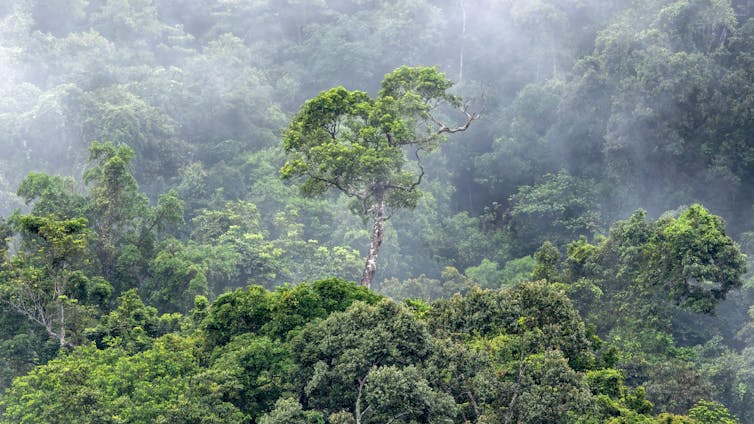
Forests need urgent protection
Forest loss and degradation is continuing, at an average rate of 25 million hectares a year over the last decade, according to the Global Forest Watch. This is 63% higher than the rate needed to meet existing targets to halt and reverse forest loss by 2030. Yet the climate pledges submitted for the Belém COP remain far off track from this goal.
In the 2025 Land Gap Report, my colleagues and I calculated the scale of this “forest gap” – the gap between 2030 targets and the plans countries are putting forward in their climate pledges.
We show the pledges submitted up until this year’s climate summit would cut deforestation by less than 50% by 2030, meaning forests spanning almost 4 million hectares would still be cut down. The pledges would lead to forest degradation – where the ecological integrity of a forest area is diminished – of almost 16 million hectares. This is only a 10% reduction on current rates.
Together, this equates to an anticipated “forest gap” of around 20 million hectares expected to be lost or degraded each year by 2030. That’s about twice the size of South Korea.
While this underscores the inadequacy of commitments, the analysis is based on pledges submitted up to the start of November 2025, at which point only 40% of countries had submitted an updated plan. Major pledges submitted during COP31, such as from the European Union and China, don’t change this analysis.
A new fund for forest conservation called the Tropical Forests Forever Facility was launched in Brazil, attracting $US6.7 billion in pledges ($A9.9 billion).
The forest fund focuses on tropical deforestation, the leading cause of emissions from forest loss. But it has a key weakness: the limited monitoring of forest degradation, which could allow countries to receive payments while still logging primary forests.
The fund will establish a science committee and plans to revise monitoring indicators over the next three years, creating an opportunity to strengthen its ability to protect tropical forests.
The COP30 leaders’ summit also saw the launch of a historic pledge of $US1.8 billion ($A2.7 billion) to support conservation and recognition of 160 million hectares of Indigenous Peoples’ and local communities’ territories in tropical forest countries.
But global action on forests needs to extend beyond the tropics. Across both deforestation and forest degradation, countries in the global north are responsible for over half of global tree cover loss over the past decade.
Beyond tropical forests
A global accountability framework on forests is needed to increase ambition on climate action, including in countries and regions with extensive forests outside of the tropics, such as Australia, Canada and Europe.
In these regions, industrial logging is a major driver of tree-cover loss but receives far less political attention than tropical deforestation. Wide gaps in reporting – between deforestation and degradation – mean logging-related degradation often goes unreported.
In a recent report, only 59 countries said they monitor forest degradation. Of these, almost three-quarters are tropical forest countries.
The IUCN World Conservation Congress which convened in Abu Dhabi this year prior to the climate talks, passed a motion on delivering equitable accountability and means of implementation for international forest protection goals. This arose from a recognised need to promote greater equity between forest protection standards across countries.
All of this points to an urgent need to tackle accountability in global forest governance. The forest roadmap to be developed for COP31 in Turkey could help drive stronger alignment and transparency across UN processes – from the UN Forum on Forests’ 2017–2030 plan to the Kunming–Montreal Global Biodiversity Framework’s 2030 target to halt and reverse biodiversity loss.
Australia could lead on forests
Australia could help shape global forest ambition in the year ahead. It is currently the only country whose emissions pledge promises to halt and reverse deforestation and degradation by 2030 – a clear signal that developed countries must lead.
As President of Negotiations at COP31, Australia can also work to bring Brazil’s fossil-fuel and forest roadmaps into formal negotiations. But this depends on two things: credible leadership from developed countries and long-overdue climate finance. As a deforestation hotspot with ongoing native forest logging, Australia has considerable work to do to meet this responsibility.
Thousands of the most popular passenger aircraft in the world need immediate maintenance to protect from a problem that injured passengers and caused an emergency landing last month, CNN reported.
Airbus found intense solar storms, like solar flares, could cause pilots to lose control of the Airbus A320 series of planes, including A319, A320, and A321s. About 6,000 of the single-aisle planes, which are the bestselling passenger aircraft in the world, need the repairs.
“Analysis of a recent event involving an A320 Family aircraft has revealed that intense solar radiation may corrupt data critical to the functioning of flight controls,” Airbus said in a statement.
On October 30, JetBlue Flight 1230 - an A320 - was flying from Cancun, Mexico, to Newark, New Jersey when it suddenly dove down in altitude. The pilots made an emergency landing in Tampa, Florida, where about 15 people were taken to the hospital.
Airbus investigated the incident and on Friday told airlines in an “Alert Operators Transmission” that the fix was needed. The company believes it is the only time this specific problem has happened, but says it “proactively worked with aviation authorities… keeping safety as our number one and overriding priority.”
The Airbus A320 series has what’s called fly-by-wire controls: physical movements from the pilot run through computers which, in turn, adjust the plane’s control surfaces.
An airworthiness directive from the European Union requires airlines to make the repairs before the planes can carry passengers again.
Noida: Commuters wear face masks to protect themselves amid smog and pollution on Bhangel Road, in Noida on Thursday, November 20, 2025. (Photo: IANS)
New Delhi, (IANS) Delhi woke up to yet another day of toxic air on Friday, recording an Air Quality Index (AQI) of 385, firmly in the “very poor” category. Air pollution across Delhi-NCR continues to remain hazardous, offering little respite to residents already struggling with a cold wave.
The spike in pollution comes barely a day after authorities lifted the Graded Response Action Plan (GRAP) Stage-III restrictions, which are enforced to curb severe pollution levels. However, the relief was short-lived, as air quality deteriorated rapidly once again. On Thursday, the city’s overall AQI rose sharply to 377, up from 327 the previous day, marking a significant decline in air quality within 24 hours.
Despite the worsening conditions, the Commission for Air Quality Management (CAQM) has clarified that Stage-III curbs will only be reinstated if the AQI crosses 400, which falls under the “severe” category. Until then, authorities plan to continue monitoring the situation without reimposing stricter curbs.
According to the Central Pollution Control Board (CPCB), pollution levels surged steadily throughout the day on Thursday due to persistently low wind speeds. The AQI, recorded at 351 at 8 am, escalated to 381 by 7 pm, indicating continuous accumulation of pollutants over the region.
Meteorologists suggest that the winds remained almost stagnant for most of the day, with only brief movements at 4–5 kmph, insufficient to disperse particulate matter. Forecasts suggest the national Capital is likely to stay in the “very poor” category over the next few days.
Meanwhile, the ongoing cold wave gripping Delhi and nearby cities is compounding the crisis. The combination of low temperatures, fog, and high pollution levels is worsening public health conditions.
In Delhi-NCR and several cities across North India, temperatures have dropped to minimum levels of 8 to 12 degrees Celsius.
A thick layer of haze blanketed the city from morning hours and returned in the evening, significantly reducing visibility on roads and contributing to slower traffic movement.Health experts warn that breathing in such polluted air can have severe consequences, especially for children, the elderly, and individuals with respiratory or cardiac conditions. They advise residents to stay indoors as much as possible, avoid strenuous outdoor activities, and step out only when necessary.Delhi’s air quality deteriorates again, AQI climbs to 385 as cold wave deepens pollution crisis | MorungExpress | morungexpress.com
This is the second in a two-part series. Read part one here.
Globalisation has always had its critics – but until recently, they have come mainly from the left rather than the right.
In the wake of the second world war, as the world economy grew rapidly under US dominance, many on the left argued that the gains of globalisation were unequally distributed, increasing inequality in rich countries while forcing poorer countries to implement free-market policies such as opening up their financial markets, privatising their state industries and rejecting expansionary fiscal policies in favour of debt repayment – all of which mainly benefited US corporations and banks.
This was not a new concern. Back in 1841, German economist Friedrich List had argued that free trade was designed to keep Britain’s global dominance from being challenged, suggesting:
When anyone has obtained the summit of greatness, he kicks away the ladder by which he climbs up, in order to deprive others of the means of climbing up after him.
By the 1990s, critics of the US vision of a global world order such as the Nobel-winning economist Joseph Stiglitz argued that globalisation in its current form benefited the US at the expense of developing countries and workers – while author and activist Naomi Klein focused on the negative environmental and cultural consequences of the global expansion of multinational companies.
Mass left-led demonstrations broke out, disrupting global economic meetings including, most famously, the World Trade Organization (WTO) in 1999. During this “battle of Seattle”, violent exchanges between protesters and police prevented the launch of a new world trade round that had been backed by then US president, Bill Clinton. For a while, the mass mobilisation of a coalition of trade unionists, environmentalists and anti-capitalist protesters seemed set to challenge the path towards further globalisation – with anti-capitalism “Occupy” protests spreading around the world in the wake of the 2008 financial crash.
A documentary about the 1999 ‘batte of Seattle’, directed by Jill Friedberg and Rick Rowley.
In the US, a further critique of globalisation centred on its domestic consequences for American workers – namely, job losses and lower pay – and led to calls for greater protectionism. Although initially led by trade unions and some Democratic politicians, this critique gradually gained purchase in radical right circles who opposed giving any role to international organisations like the WTO, on the grounds that they impinged on American sovereignty. According to this view, only by stopping foreign competition whose low wages undercut American workers could prosperity be restored. Immigration was another target.
Under Donald Trump’s second term as US president, these criticisms have been transformed into radical, deeply disruptive economic and social policies – with tariffs and protectionism at their heart. In so doing, Trump – despite all his grandstanding on the world stage – has confirmed what has long been clear to close observers of US politics and business: that the American century of global dominance, with the dollar as unrivalled no.1 currency, is drawing rapidly to a close.
Even before Trump first took office in 2017, the US had begun to withdraw from its leadership role in international economic institutions such as the WTO. Now, the strongest part of its economy, the hi-tech sector, is under intense pressure from China, whose economy is already bigger than the US’s by one key measure of GDP. Meanwhile, the majority of US citizens are facing stagnant incomes, higher prices and more insecure jobs.
In previous centuries, when first France and then Great Britain reached the end of their eras of world domination, these transitions had painful impacts beyond their borders. This time, with the global economy more closely integrated than ever before and no single dominant power waiting in the wings to take over, the impacts could be felt even more widely – with very damaging, if not catastrophic, results.
Why no one is ready to take the US’s place
When it comes to taking over from the US as the world’s leading hegemonic power, the only viable candidates with big enough economies are the European Union and China. But there are strong reasons to doubt that either could take on this role – notwithstanding the fact that in 2022, then US president Joe Biden’s National Security Strategy called China: “The only competitor with both the intent to reshape the international order and, increasingly, the economic, diplomatic, military and technological power to do so.”
At times Biden’s successor, President Trump, has sounded almost jealous of the control China’s leaders exert over their national economy, and the fact they do not face elections and limits on their terms in office. But a one-party, authoritarian political system which lacks legal checks and balances is a key reason China will find it hard to gain the cultural and political dominance among democratic nations that is part of achieving world no.1 status – despite the influence it already wields in large parts of Asia and Africa.
China still faces big economic challenges too. While it is already the global leader in manufactured goods (rapidly moving into hi-tech products) and the world’s largest exporter, its economy is still very unbalanced – with a much smaller consumer sector, a weak property market, many inefficient state industries that are highly indebted, and a relatively small financial sector restricted by state ownership. Nor does China possess a global currency, despite its (limited) attempts to make the renminbi a truly international currency.
The Insights section is committed to high-quality longform journalism. Our editors work with academics from many different backgrounds who are tackling a wide range of societal and scientific challenges.
As I found on a reporting trip to Shanghai in 2007 to investigate the effects of globalisation, there are also enormous differences between China’s prosperous coastal megacities – whose main thoroughfares rival New York and Paris – and the relative poverty in the interior, especially in rural areas. But nearly two decades on from that visit, with the country’s growth rate slowing, many university-educated young people are also finding it hard to find well-paid jobs now.
Meanwhile Europe – the only other contender to take the US’s place as global no.1 – is deeply politically divided, with smaller, weaker economies to the east and south far more sceptical about the benefits of globalisation, and increasingly divided on issues such as migration and the Ukraine war. The challenges of achieving broad policy agreement among all member states, and the problem of who can speak for Europe, make it unlikely that the EU as currently constituted could initiate and enforce a new global world order on its own.
The EU’s financial system also lacks the heft of the US’s. Although it has a common currency (the euro) managed by the European Central Bank, its financial system is far more fragmented. Banks are regulated nationally, and each country issues its own government bonds (although a few eurobonds now exist). This makes it hard for the euro to replace the dollar as a store of value, and reduces the incentive for foreigners to hold euros as an alternative reserve currency.
Meanwhile, any future prospects of a renewal of US global leadership look similarly unpromising. Trump’s policy of cutting taxes while increasing the size of the US government debt – which now stands at US$38 trillion, or 120% of GDP – threatens both the stability of the world economy and the ability of the US to finance this mind-boggling deficit.US national debt hits record high. Video: The Economic Times.
Tellingly, the Trump administration shows no interest in reviving, or even engaging with, many of the international financial institutions which America once dominated, and which helped shape the world economic order – as US trade representative Jamieson Greer expressed disdainfully in the New York Times recently:
Our current, nameless global order, which is dominated by the WTO and is notionally designed to pursue economic efficiency and regulate the trade policies of its 166 member countries, is untenable and unsustainable. The US has paid for this system with the loss of industrial jobs and economic security, and the biggest winner has been China.
While the US is not, so far, withdrawing from the IMF, the Trump administration has urged it to call out China for running such a large trade surplus, while abandoning its concern about climate change. Greer concluded that the US has “subordinated our country’s economic and national security imperatives to a lowest common denominator of global consensus”.
World without a global no.1
To understand the potential dangers ahead, we must go back more than a century to the last time there was no global hegemon. By the time the first world war officially ended with the signing of the Treaty of Versailles on June 28 1919, the international economic order had collapsed. Britain, world leader over the previous century, no longer possessed the economic, political or military clout to enforce its version of globalisation.
The UK government, burdened by the huge debts it had taken out to finance the war effort, was forced to make major cuts in public spending. In 1931, it faced a sterling crisis: the pound had to be devalued as the UK exited from the gold standard for good, despite having yielded to the demands of international bankers to cut payments to the unemployed. This was a final sign that Britain had lost its dominant place in the world economic order.
The 1930s were a time of deep political unease and unrest in Britain and many other countries. In 1936, unemployed workers from Jarrow, a town in north-east England with 70% unemployment after its shipyards closed, organised a non-political “hunger march” to London which became known as the Jarrow crusade. More than 200 men, dressed in their Sunday best, marched peacefully in step for over 200 miles, gaining great support along the way. Yet when they reached London, prime minister Stanley Baldwin ignored their petition – and the men were informed their dole money would be docked because they had been unavailable for work over the past fortnight.
Europe was also facing a severe economic crisis. After Germany’s government refused to pay the reparations agreed in the 1919 Versailles treaty, saying they would bankrupt its economy, the French army occupied the German industrial heartland of the Ruhr and German workers went on strike, supported by their government. The ensuing struggle fuelled hyperinflation in Germany. By November 1923, it took 200,000 million marks to buy a loaf of bread, and the savings and pensions of the German middle class were wiped out. That month, Adolf Hitler made his first attempt to seize power in the failed “Beer hall putsch” in Munich.
In contrast, across the Atlantic, the US was enjoying a period of postwar prosperity, with a booming stock market and explosive growth of new industries such as car manufacturing. But despite emerging as the world’s strongest economic power, having financed much of the Allied war effort, it was unwilling to grasp the reins of global economic leadership.
The Republican US Congress, having blocked President Woodrow Wilson’s plan for a League of Nations, instead embraced isolationism and washed its hands of Europe’s problems. The US refused to cancel or even reduce the war debts owed it by the Allied nations, who eventually repudiated their debts. In retaliation, the US Congress banned all American banks from lending money to these so-called allies.
Then, in 1929, the affluent American “jazz age” came to an abrupt halt with a stock market crash that wiped off half its value. The country’s largest manufacturer, Ford, closed its doors for a year and laid off all its workers. With a quarter of the nation unemployed, long lines for soup kitchens were seen in every city, while those who had been evicted camped out wherever they could – including in New York’s Central Park, renamed “Hooverville” after the hapless US president of that time, Herbert Hoover.
In rural areas where the collapse in agricultural prices meant farmers could no longer make a living, armed farmers stopped food and milk trucks and destroyed their contents in a vain attempt to limit supply and raise prices. By March 1933, as President Franklin D. Roosevelt took office, the entire US banking system had ground to a standstill, with no one able to withdraw money from their bank account.
With its focus on this devastating Great Depression, the US refused to get involved in attempts at international economic cooperation. With no notice, Roosevelt withdrew from the 1933 London Conference which had been called to stabilise the world’s currencies – sending a message denouncing “the old fetishes of the so-called international bankers”.
With the US following the UK off the gold standard, the resulting currency wars exacerbated the crisis and further weakened European economies. As countries reverted to mercantilist policies of protectionism and trade wars, world trade shrank dramatically.
The situation became even worse in central Europe, where the collapse of the huge Credit-Anstalt bank in Austria in 1931 reverberated around the region. In Germany, as mass unemployment soared, centrist parties were squeezed and armed riots broke out between communist and fascist supporters. When the Nazis came to power, they introduced a policy of autarky, cutting economic ties with the west to build up their military machine.
The economic rivalries and antagonisms which weakened western economies paved the way for the rise of fascism in Germany. In some sense, Hitler – an admirer of the British empire – aspired to be the next hegemonic economic as well as military power, creating his own empire by conquering and ruthlessly exploiting the resources of the rest of Europe.
Troubled by rampant hyperinflation, Germans queue up with large bags to withdraw money from Berlin’s Reichsbank in 1923. Bundesarchiv/Wikimedia, CC BY-NC-SA
Nearly a century later, there are some disturbing parallels with that interwar period. Like America after the first world war, Trump insists that countries the US has supported militarily now owe it money for this protection. He wants to encourage currency wars by devaluing the dollar, and raise protectionist barriers to protect domestic industry. The 1920s was also a time when the US sharply limited immigration on eugenic grounds, only allowing it from northern European countries which (the eugenicists argued) would not “pollute the white race”.
Clearly, Trump does not view the lack of international cooperation that could amplify the damaging economic effects of a stock or bond market crash as a problem that should concern him. And in today’s unstable world, for all the US’s past failings as a global leader, that is a very worrying proposition.
How the US responded to the last financial crisis
Once again, the rules of the international order are breaking down. While it is possible that Trump’s approach will not be fully adopted by his successor in the White House, the direction of travel in the US will almost certainly remain sceptical about the benefits of globalisation, with limited support for any worldwide economic rules or initiatives.
We see similar scepticism about the benefits of globalisation emerging in other countries, amid the rise of rightwing populist parties in much of Europe and South America – many backed by Trump. Fuelling these parties’ support are growing concerns about income inequality, slow growth and immigration which are not being addressed by the current political system – and all of which would be exacerbated by the onset of a new global economic crisis.
With the global economy and financial system far bigger than ever before, a new crisis could be even more severe than the one that occurred in 2008, when the failure of the banking system left the world teetering on the brink of collapse.
The scale of this crisis was unprecedented, but key US and UK government officials moved boldly and swiftly. As a BBC reporter in Washington, I attended the House of Representatives’ Financial Services Committee hearing three days after Lehman Brothers went bankrupt, paralysing the global financial system, to find out the administration’s response. I remember the stunned look on the face of the committee’s chairman, Barney Frank, when he asked US Treasury secretary Hank Paulson and US Federal Reserve chairman Ben Bernanke how much money they might need to stabilise the situation:
“Let’s start with US$1 trillion,” Bernanke replied coolly. “But we have another US$2 trillion on our balance sheet if we need it.”
Documentary on the collapse of Lehman Brothers bank in September 2008.
Shortly afterwards, the US Congress approved a US$700 billion rescue package. While the global economy has still not fully recovered from this crisis, it could have been far worse – possibly as bad as the 1930s – without such intervention.
Around the world, governments ended up pledging US$11 trillion to guarantee the solvency of their banking systems, with the UK government putting up a sum equivalent to the country’s entire yearly GDP. But it was not just governments. At the G20 summit in London in April 2009, a new US$1.1 trillion fund was set up by the International Monetary Fund (IMF) to advance money to countries that were getting into financial difficulty.
The G20 also agreed to impose tougher regulatory standards for banks and other financial institutions that would apply globally, to replace the weak regulation of banks that had been one of the main causes of the crisis. As a reporter at this summit, I recall widespread excitement and optimism that the world was finally working together to tackle its global problems, with the host prime minister, Gordon Brown, briefly glowing in the limelight as organiser of that summit.
Behind the scenes, the US Federal Reserve had also been working to contain the crisis by quietly passing on to the world’s other leading central banks nearly US$600 billion in “currency swaps” to ensure they had the dollars they needed to bail out their own banking systems. The Bank of England secretly lent UK banks £100 billion to ensure they didn’t collapse, although two of the four major banks, Royal Bank of Scotland (now NatWest) and Lloyds, ultimately had to be nationalised (to different extents) to keep the financial system stable.
However, these rescue packages for banks, while much needed to stabilise the global economy, did not extend to many of the victims of the crash – such as the 12 million US households whose homes were now worth less than the mortgage they had taken out to pay for them, or the 40% of households who experienced financial distress during the 18 months after the crash. And the ramifications of the crisis were even greater for those living in developing countries.
A few months after the 2008 financial crisis began, I travelled to Zambia, an African country totally dependent on copper exports for its foreign exchange. I visited the Luanshya copper mine near Ndola in the country’s copper belt. With demand for copper (used mainly in construction and car manufacturing) collapsing, all the copper mines had closed. Their workers, in one of the few well-paid jobs in Zambia, were forced to leave their comfortable company homes and return to sharing with their relatives in Lusaka without pay.
Zambia’s government was forced to shut down its planned poverty reduction plan, which was to be funded by mining profits. The collapse in exports also damaged the Zambian currency, which dropped sharply. This hit the country’s poorest people hard as it raised the price of food, most of which was imported.
The ripple effects of the 2008 global financial crisis soon hit Luanshya copper mine in Zambia. Nerin Engineering Co., CC BY-SA
I also visited a flower farm near Lusaka, where Dutch expats Angelique and Watze Elsinga had been growing roses for export for over a decade – employing more than 200 workers who were given housing and education. As the market for Valentine’s Day roses collapsed, their bankers, Barclays South Africa, suddenly ordered them to immediately repay all their loans, forcing them to sell their farm and dismiss their workers. Ultimately, it took a US$3.9 billion loan from the IMF and World Bank to stabilise Zambia’s economy.
Should another global financial crisis hit, it is hard to see the Trump administration (and others that follow) being as sympathetic to the plight of developing countries, or allowing the Federal Reserve to lend major sums to foreign central banks – unless it is a country politically aligned with Trump, such as Argentina. Least likely of all is the idea of Trump working with other countries to develop a global trillion-dollar rescue package to help save the world economy.
Rather, there is a real worry that reckless actions by the Trump administration – and weak global regulation of financial markets – could trigger the next global financial crisis.
What happens if the US bond market collapses?
Economic historians agree that financial crises are endemic in the history of global capitalism, and they have been increasing in frequency since the “hyper-globalisation” of the 1970s. From Latin America’s debt crisis in the 1980s to the Asia currency crisis in the late 1990s and the US dotcom stock market collapse in the early 2000s, crises have regularly devastated economies and regions around the world.
Today, the greatest risk is the collapse of the US Treasury bond market, which underpins the global financial system and is involved in 70% of global financial transactions by banks and other financial institutions. Around the world, these institutions have long regarded the US bond market, worth over $30 trillion, as a safe haven, because these “debt securities” are backed by the US central bank, the Federal Reserve.
Increasingly, the unregulated “shadow banking system” – a sector now larger than regulated global banks – is deeply involved in the bond market. Non-bank financial institutions such as private equity, hedge funds, venture capital and pension funds are largely unregulated and, unlike banks, are not required to hold reserves.
Bond market jitters are already unnerving global financial markets, which fear its unravelling could precipitate a banking crisis on the scale of 2008 – with highly leveraged transactions by these non-bank financial institutions leaving them exposed.US bonds play a key role in maintaining the stability of the global economy. Video: Wall Street Journal.
Buyers of US bonds are also troubled by the Trump administration’s plan to raise the US deficit even higher to pay for tax cuts – with the national debt now forecast to rise to 134% of US GDP by 2035, up from 120% in 2025. Should this lead to a widespread refusal to buy more US bonds among jittery investors, their value would collapse and interest rates – both in the US and globally – would soar.
The governor of the Bank of England, Andrew Bailey, recently warned that the situation has “worrying echoes of the 2008 financial crisis”, while the head of the IMF, Kristalina Georgieva, said her worries about the collapse of private credit markets sometimes keep her awake at night.
A bad situation would grow even worse if problems in the bond market precipitate a sharp decline in the value of the dollar. The world’s “anchor currency” would no longer be seen as a safe store of value – leading to more withdrawals of funds from the US Treasury bond market, where many foreign governments hold their reserves.
A weaker dollar would also hit US exporters and multinational companies by making their goods more expensive. Yet extraordinarily, this is precisely the course advocated by Stephen Miran, chair of the US president’s Council of Economic Advisors – who Trump appears to want to be the next head of the Federal Reserve.
One example of what could happen if bond markets become destabilised occurred when the shortest-lived prime minister in UK history, Liz Truss, announced huge unfunded tax cuts in her 2022 budget, causing the value of UK gilts (the equivalent of US Treasury bonds) to plummet as interest rates spiked. Within days, the Bank of England was forced to put up an emergency £60 billion rescue fund to avoid major UK pension funds collapsing.
In the case of a US bond market crash, however, there are growing fears that the US government would be unable – and unwilling – to step in to mitigate such damage.
A new era of financial chaos
Just as worrying would be a crash of the US stock market – which, by historic standards, is currently vastly overvalued.
Huge recent increases in the US stock market’s overall value have been driven almost entirely by the “magnificent seven” hi-tech companies, which alone make up a third of its total value. If their big bet on artificial intelligence is not as lucrative as they claim, or is overshadowed by the success of China’s AI systems, a sharp downturn, similar to the dotcom crash of 2000-02, could well occur.
Jamie Dimon, head of the US’s biggest bank JPMorgan Chase, has said he is “far more worried than other [experts]” about a serious market correction, which he warned could come in the next six months to two years.
Big tech executives have been overoptimistic before. Reporting from Silicon Valley in 2001 as the dotcom bubble was bursting, I was struck by the unshakeable belief of internet startup CEOs that their share prices could only go up.
Furthermore, their companies’ high stock valuations had allowed them to take over their competitors, thus limiting competition – just as companies such as Google and Meta (Facebook) have since used their highly valued shares to purchase key assets and potential rivals including YouTube, WhatsApp, Instagram and DeepMind. History suggests this is always bad for the economy in the long run.
With the business and financial worlds now ever more closely linked, not only has the frequency of financial crises increased in the last half-century, each crisis has become more interconnected. The 2008 global financial crisis showed how dangerous this can be: a global banking crisis triggered stock market falls, collapses in the value of weak currencies, a debt crisis in developing countries – and ultimately, a global recession that has taken years to recover from.
The IMF’s latest financial stability report summarised the situation in worrying terms, highlighting “elevated” stability risks as a result of “stretched asset valuations, growing pressure in sovereign bond markets, and the increasing role of non-bank financial institutions. Despite its deep liquidity, the global foreign exchange market remains vulnerable to macrofinancial uncertainty.”The IMF has warned about instability in the global financial system. Video: CGTN America.
I believe we may be entering a new era of sustained financial chaos during which the seeds sown by the death of globalisation – and Trump’s response to it – finally shatter the world economic and political order established after the second world war.
Trump’s high and erratically applied tariffs – aimed most strongly at China – have already made it difficult to reconfigure global supply chains. Even more worrying could be the struggle over the control of key strategic raw materials like the rare earth minerals needed for hi-tech industries, with China banning their export and the US threatening 100% tariffs in return (as well as hoping to take over Greenland, with its as-yet-untapped supply of some of these minerals).
This conflict over rare earths, vital for the computer chips needed for AI, could also threaten the market value of high-flying tech stocks such as Nvidia, the first company to exceed US$4 trillion in value.
The battle for control of critical raw materials could escalate. There is a danger that in some cases, trade wars might become real wars – just as they did in the former era of mercantilism. Many recent and current regional conflicts, from the first Iraq war aimed at the conquest of the oilfields of Kuwait, to the civil war in Sudan over control of the country’s goldmines, are rooted in economic conflicts.
The history of globalisation over the past four centuries suggests that the presence of a global superpower – for all its negative sides – has brought a degree of economic stability in an uncertain world.
In contrast, a key lesson of history is that a return to policies of mercantilism – with countries struggling to seize key natural resources for themselves and deny them to their rivals – is most likely a recipe for perpetual conflict. But this time around, in a world full of 10,000 nuclear weapons, miscalculations could be fatal if trust and certainty are undermined.
The challenges ahead are immense – and the weakness of international institutions, the limited visions of most governments and the alienation of many of their citizens are not optimistic signs.
This is the second in a two-part series. In case you missed it, read part one here.
To hear about new Insights articles, join the hundreds of thousands of people who value The Conversation’s evidence-based news. Subscribe to our newsletter.
The economic consequences of the current federal government shutdown hinge critically on how long it lasts. If it is resolved quickly, the costs will be small, but if it drags on, it could send the U.S. economy into a tailspin.
That’s because the economy is already in a precarious state, with the labor market struggling, consumers losing confidence and uncertainty mounting.
As an economist who studies public finance, I closely follow how government policies affect the economy. Let me explain how a prolonged shutdown could affect the economy – and why it could be a tipping point to recession.
Direct impacts from a government shutdown
The partial government shutdown began on Oct. 1, 2025, as Democrats and Republicans failed to reach a deal on funding some portion of the federal government. A partial shutdown means that some funding bills have been approved, entitlement spending continues since it does not rely on annual appropriations, and some workers are deemed necessary and stay on the job unpaid.
While most of the 20 shutdowns that occurred from 1976 through 2024 lasted only a few days to a week, there are signs the current one may not be resolved so quickly. The economy would definitely take a direct hit to gross domestic product from a lengthy shutdown, but it’s the indirect impacts that could be more harmful.
The most recent shutdown, which extended over the 2018-2019 winter holidays and lasted 35 days, was the longest in U.S. history. After it ended, the Congressional Budget Office estimated the partial shutdown delayed approximately US$18 billion in federal discretionary spending, which translated into an $11 billion reduction in real GDP.
Most of that lost output was made up later once the shutdown ended, the CBO noted. It estimated that the permanent losses were about $3 billion – a drop in the bucket for the $30 trillion U.S. economy.
The indirect and more lasting impacts
The full impact may depend to a large extent on the psychology of the average consumer.
If the shutdown drags on, the psychological effects may lead to a larger loss of confidence among consumers and businesses. Given that consumer spending accounts for 70% of economic activity, a fall in consumer confidence could signal a turning point in the economy.
These indirect effects are in addition to the direct impact of lost income for federal workers and those that operate on federal contracts, which leads to reductions in consumption and production.
The risk of significant government layoffs, beyond the usual furloughs, could deepen the economic damage. Extensive layoffs would shift the losses from a temporary delay to a more permanent loss of income and human capital, reducing aggregate demand and potentially increasing unemployment spillovers into the private sector.
In short, while shutdowns that end quickly tend to inflict modest, mostly recoverable losses, a protracted shutdown – especially one involving layoffs of a significant number of government workers – could inflict larger, lasting impacts on the economy.
US economy is already in distress
This is all occurring as the U.S. labor market is flashing warnings.
Payrolls grew by only 22,000 in August, with July and June estimates revised down by 21,000. This follows payroll growth of only 73,000 in July, with May and June estimates revised down by 258,000.
In addition, preliminary annual revisions to the employment data show the economy gained 911,000 fewer jobs in the previous year than had been reported.
Long-term unemployment is also rising, with 1.8 million people out of work for more than 27 weeks – nearly a quarter of the total number of unemployed individuals.
At the same time, AI adoption and cost-cutting could further reduce labor demand, while an aging workforce and lower immigration shrink labor supply. Fed Chair Jerome Powell refers to this as a “curious kind of balance” in the labor market.
In other words, the job market appears to have come to a screeching halt, making it difficult for recent graduates to find work. Recent graduate unemployment – that is, those who are 22 to 27 years old – is now 5.3% relative to the total unemployment rate of 4.3%.
The latest data from the ADP employment report, which measures only private company data, shows that the economy lost 32,000 jobs in September. That’s the biggest decline in 2½ years. While that’s worrying, economists like me usually wait for the official Bureau of Labor Statistics numbers to come out to confirm the accuracy of the payroll processing firm’s report.
The government data that was supposed to come out on Oct. 3 might have offered a possible counterpoint to the bad ADP news, but due to the shutdown BLS will not be releasing the report.
Problems Fed rate cuts can’t fix
This will only increase the uncertainty surrounding the health of the U.S. economy. And it adds to the uncertainty created by on-again, off-again tariffs as well as the newly imposed tariffs on lumber, furniture and other goods.
Against this backdrop, the Fed is expected to lower interest rates at least two more times this year to stimulate consumer and business spending following its September quarter-point cut. This raises the risk of reigniting inflation, but the cooling labor market is a more immediate concern for the Fed.
The question now is not will the Fed cut rates, because it likely will, but whether that cut will help, particularly if the shutdown lasts weeks or more. Monetary policy alone cannot overcome the uncertainty created by tariffs, the lack of fiscal restraint, companies focused on cutting costs by replacing people with technology, the impact of the shutdown and the fears of consumers about the future.
Lower interest rates may buy time, but they won’t solve these structural problems facing the U.S. economy.
Endless economic expansion isn’t sustainable. Scientists are telling us our planet is already beyond its limits, with the risks to communities and the economy made clear in the federal government’s recent climate risk assessment.
Sustainability is a hot topic in Australian business schools. However, teaching about the possible need to limit economic growth – whether directly or indirectly related to sustainability – is uncommon.
Typically, business school teaching is based on concepts of sustainable development and “green growth”.
Under these scenarios, we can continue to grow gross domestic product (GDP) globally without continuing to grow emissions – what is known as “decoupling”. It’s a “have your cake and eat it too” promise for sustainability.
Our new research published in the journal Futures shows business students themselves are interested in learning the skills they would need under an alternative post-growth future.
Emerging alternatives to ‘growth is good’
There is mounting evidence of the difficulty of “decoupling” economic growth from emissions growth. The United Nations goals of sustainable development are “in peril”.
This has led to increased interest in no-growth or post-growth economic models and to the movement towards degrowth. Degrowth means shrinking economic production to use less of the world’s resources and avoid climate crisis.
Explicit teaching of degrowth rejects the belief in endless growth. This presents a challenge to traditional concepts in business education, including profit maximisation, competition and the notion of “free markets”.
The issue, and one that degrowth invites students to consider, is that green growth and sustainable development are underpinned by the need for continued economic growth and development. This “growth obsession” is pushing the planet and society to its limits.
Students are keen
Our new study provides a snapshot of students’ interest in alternative systems. It reveals 90% of respondents are open to learning about different economic models.
The study found 96% of students believe business leaders must understand alternative models to continued economic growth. Yet only 15% were aware of any alternatives that may exist. Most (71%) believed viable alternatives exist, but they admitted to lacking sufficient knowledge.
The study had 61 participants currently studying a masters of business administration (MBA) in a top Australian institution.
The research raises the question: if future business leaders are not made aware of alternatives, won’t they continue to assume growth is “inherently good”, and perpetuate the business practices that have pushed humanity beyond planetary boundaries?
Degrowth proposes scaling back the consumption of resources as part of a transition to post-growth economies. Their aim is what economist Tim Jackson calls prosperity without growth. This entails businesses sharing value with communities, and reducing production of things like fast fashion, fast food and fast tech.
It is a rejection of maximising profit in favour of maximising value, based around meeting real needs like housing, food and essential services. Some industries would grow, such as care, education, public transport and renewables. Others may shrink or vanish.
Degrowth and post-growth aren’t alien concepts. There are grassroots movements such as minimalism. Social media abounds with lists of “things I no longer buy”, social enterprises, the right-to-repair movement and community-supported agriculture.
Business schools are doing great work teaching students about changing consumer preferences for green alternatives, new global standards for reporting environmental and social impact, and ways businesses can reduce their environmental impact.
The Australian Business Deans Council in March this year detailed these efforts in its Climate Capabilities Report. This highlighted the need for business schools to produce graduates capable of “balancing business and climate knowledge”.
Our study of Australian business school students shows they are open to learning about degrowth. It challenges the assumption that ideas critical of endless growth would be unwelcome in business schools in Australia.
There is an argument for making explicit degrowth teaching in business schools more accessible because business schools have been criticised for not doing enough to address climate change and social inequality.
Globally, degrowth is starting to be taught explicitly in business schools in Europe, the UK and even the US.
Business schools have long been criticised for a culture of greed and cutthroat competition. As one distinguished professor from the University of Michigan recently put it, “today’s business schools were designed for a world that no longer exists”.
The introduction of no growth or degrowth scenarios to business schools in Australia may go some way to ensuring they are preparing leaders for the future – not priming students for a world that no longer exists.
Posted by Harry Baldock, New research from Neos Networks suggests that 82% of data centre operators in the UK have delayed deployment due to a lack of connectivity infrastructure
Access to fibre connectivity could be a significant bottleneck for the UK’s data centre ambitions, suggests a new study commissioned by Neos Networks.
The study, conducted by Censuswide, surveyed 100 data centre decision-makers, 100 large enterprise tech/IT decision-makers, and 100 local government stakeholders, asking them about fibre availability, AI, and their data centre projects.
The results showed that the lack of fibre network availability remains a key factor in hampering data centre deployments and AI implementation. It found that 82% of the data centre representatives had had a deployment or expansion delayed due to the lack of available fibre. In addition, 89% of the local government representatives said infrastructure projects in their region had been similarly delayed by fibre gaps, with 46% saying the region’s fibre networks were not ready to support AI data centres.
Part of the issue here, as Neos Network’s CEO Lee Myall points out, is that the UK’s ‘backbone’ fibre network – the high-capacity, long-distance infrastructure that connects major cities, data centres, internet exchanges, and service providers across the country – is at risk of becoming inadequate.
This is largely an issue of geography; data centre projects are increasingly being planned for rural areas with access to affordable land, water, and power, but fibre network access at these locations is often missing.
“Over the past decade, we’ve seen a huge amount of investment in last-mile fibre builds, but core fibre networks across the country have received much less attention. Without them, workloads cannot move between data centres, data cannot be trained, and investments stall,” said Myall. “The UK has the ambition, the demand and the regional readiness to lead in AI, but if we don’t address fibre gaps, we risk losing out on one of the greatest economic opportunities of our generation.”
The good news here is that the government’s AI Growth Zone strategy, part of its AI Opportunities Action Plan, appears to be working as intended, helping lure data centre developments away from existing deployments in metro areas. These AI Growth Zones will receive significant planning and regulatory support, aimed at removing barriers to AI data centre deployments.
While 23% of data centre operators still expect new investment in Greater London, a greater share pointed to the North of England and the Midlands (39%) for new deployments. According to the report, 96% of the data centre respondents were influenced by the AI Growth Zones when considering site selection, with 44% saying they were influenced ‘strongly’.
At the start of the year, Culham, Oxfordshire, was announced as the UK’s first AI Growth Zone, largely due to the availability of land, power, and its proximity to the UK Atomic Energy Authority’s headquarters, which carries conducts complex energy research. This was followed up last month when the Northeast announced it had secured government backing to become the country’s second AI Growth Zone, expanding existing deployments at Cobalt Park Data Centres in North Tyneside and QTS Cambois Data Centre Campus in Blyth.More of these zones are expected to be developed in future, all of which will rely on the availability of high-quality backbone connectivity.Lack of fibre is putting the brakes on UK’s data centre expansion, says study | Total Telecom
Myopia in children is on the rise. The condition – also known as shortsightedness – already affects up to 35% of children across the world, according to a recent review of global data. The researchers predict this number will increase to 40%, exceeding 740 million children living with myopia by 2050.
So why does this matter? Many people may be unaware that treating myopia (through interventions such as glasses) is about more than just comfort or blurry vision. If left unchecked, myopia can rapidly progress, increasing the risk of serious and irreversible eye conditions. Diagnosing and treating myopia is therefore crucial for your child’s lifetime eye health.
Here is how myopia develops, the role screen time plays – and what you can do if think your child might be shortsighted.
What is myopia?
Myopia is commonly known as nearsightedness or shortsightedness. It is a type of refractive error, meaning a vision problem that stops you seeing clearly – in this case, seeing objects that are far away.
A person usually has myopia because their eyeball is longer than average. This can happen if eyes grow too quickly or longer than normal.
A longer eyeball means when light enters the eye, it’s not focused properly on the retina (the light-sensing tissue lining the back of the eye). As a result, the image they see is blurry. Controlling eye growth is the most important factor for achieving normal vision.
Myopia is on the rise in children
The study published earlier this year looked at how the rate of myopia has changed over the last 30 years. It reviewed 276 studies, which included 5.4 million people between the ages of 5–19 years, from 50 countries, across six continents.
Based on this data, the researchers concluded up to one in three children are already living with shortsightedness – and this will only increase. They predict a particular rise for adolescents: myopia is expected to affect more than 50% of those aged 13-19 by 2050.
Their results are similar to a previous Australian study from 2015. It predicted 36% of children in Australia and New Zealand would have myopia by 2020, and more than half by 2050.
The new review is the most comprehensive of its kind, giving us the closest look at how childhood myopia is progressing across the globe. It suggests rates of myopia are increasing worldwide – and this includes “high myopia”, or severe shortsightedness.
What causes myopia?
Myopia develops partly due to genetics. Parents who have myopia – and especially high myopia – are more likely to have kids who develop myopia as well.
But environmental factors can also play a role.
One culprit is the amount of time we spend looking at screens. As screens have shrunk, we tend to hold them closer. This kind of prolonged focusing at short range has long been associated with developing myopia.
Reducing screen time may help reduce eye strain and slow myopia’s development. However for many of us – including children – this can be difficult, given how deeply screens are embedded in our day-to-day lives.
Green time over screen time
Higher rates of myopia may also be linked to kids spending less time outside, rather than screens themselves. Studies have shown boosting time outdoors by one to two hours per day may reduce the onset of myopia over a two to three year period.
We are still unsure how this works. It may be that the greater intensity of sunlight – compared to indoor light – promotes the release of dopamine. This crucial molecule can slow eye growth and help prevent myopia developing.
However current research suggests once you have myopia, time outdoors may only have a small effect on how it worsens.
What can we do about it?
Research is rapidly developing in myopia control. In addition to glasses, optometrists have a range of tools to slow eye growth and with it, the progression of myopia. The most effective methods are:
orthokeratology (“ortho-K”) uses hard contact lenses temporarily reshape the eye to improve vision. They are convenient as they are only worn while sleeping. However parents need to make sure lenses are cleaned and stored properly to reduce the chance of eye infections
atropine eyedrops have been shown to successfully slow myopia progression. Eyedrops can be simple to administer, have minimal side effects and don’t carry the risk of infection associated with contact lenses.
What are the risks with myopia?
Myopia is easily corrected by wearing glasses or contact lenses. But if you have “high myopia” (meaning you are severely shortsighted) you have a higher risk of developing other eye conditions across your lifetime, and these could permanently damage your vision.
These conditions include:
retinal detachment, where the retina tears and peels away from the back of the eye
glaucoma, where nerve cells in the retina and optic nerve are progressively damaged and lost
myopic maculopathy, where the longer eyeball means the macula (part of the retina) is stretched and thinned, and can lead to tissue degeneration, breaks and bleeds.
What can parents do?
It’s important to diagnose and treat myopia early – especially high myopia – to stop it progressing and lower the risk of permanent damage.
Uncorrected myopia can also affect a child’s ability to learn, simply because they can’t see clearly. Signs your child might need to be tested can include squinting to see into the distance, or moving things closer such as a screen or book to see.
Regular eye tests with the optometrist are the best way to understand your child’s eye health and eyesight. Each child is different – an optometrist can help you work out tailored methods to track and manage myopia, if it is diagnosed.
New Delhi, (IANS): Increased exposure to carcinogens in the air is increasing the incidence of cancers of the lungs, bladder, breast, prostate, and blood, said health experts on National Cancer Awareness Day on Thursday.
National Cancer Awareness Day is observed on November 7 every year in India to raise awareness about the growing cancer burden in the country and inspire action towards prevention, early detection, and treatment.
India is home to over 1.4 billion people. Lifestyle changes, tobacco use, poor dietary habits, and inadequate physical activity are leading to a rapid surge in cancer cases.
About 800,000 new cancer cases are expected each year, with tobacco-related cancers accounting for as much as 35-50 per cent of all cancers in men and 17 per cent in women, According to estimates from the Health Ministry.
“Cancer rates are rising in India and have seen an upward trend in annual incidence rate. Currently, India records more than 14 lakh new cancer patients every year, and close to 9 lakh people die of it annually,” Dr. Abhishek Shankar, Assistant Professor, Department of Radiation Oncology, Dr BR Ambedkar Institute Rotary Cancer Hospital at AIIMS, Delhi, told IANS.
He attributed this rise to an increase in the "use of tobacco, alcohol, infections like HPV, Hepatitis virus and Helicobacter pylori, lifestyle changes, environmental factors, poor diets, and sedentary lifestyles".
While lifestyle factors play a major role, environmental changes -- particularly rising air pollution -- are also significant.
“India’s high levels of air pollution, especially PM2.5 exposure, are linked to rising lung cancer rates, including cases in non-smokers. Water and soil contamination from industrial pollutants increase risks for various cancers, impacting communities in industrial areas,” Shankar said.
The air quality in Delhi-NCR remained alarmingly poor on Thursday. As per the Central Pollution Control Board (CPCB), the average Air Quality Index (AQI) in the city was recorded at 362.
There is also substantial evidence from studies of humans and experimental animals as well as mechanistic evidence to support a causal link between outdoor (ambient) air pollution, especially PM 2.5 in outdoor air, with lung cancer and breast cancer incidence and mortality.
“It has a risk for other cancer types, such as bladder cancer, prostate cancer, leukaemia (blood cancer) but in limited numbers. Outdoor air pollution may also be associated with poorer cancer survival, although further research is needed,” Shankar said.
The World Health Organization (WHO) has classified outdoor air pollution as a Group 1 carcinogen, meaning there is sufficient evidence to conclude that it causes cancer in humans.
Air pollution in India is primarily caused by emissions from vehicles, industrial activities, and burning of biomass.
Dr Sajjan Rajpurohit, Senior Director - Medical Oncology, Max Super Speciality Hospital, told IANS that these pollutants contain carcinogenic substances such as benzene, formaldehyde, and polycyclic aromatic hydrocarbons (PAHs). Prolonged exposure to these substances can lead to cellular mutations and the development of cancer.
“Particulate Matter (PM2.5) is also one of the most harmful components of air pollution. The tiny particles can penetrate deep into the lungs and enter the bloodstream,” Rajpurohit said.
The health expert noted that children, the elderly, and individuals with pre-existing health conditions are particularly vulnerable to the effects of air pollution. Their increased susceptibility can lead to higher cancer rates in these groups, exacerbating the public health crisis.
Shankar called for a healthy lifestyle, including a balanced diet, regular exercise, and avoiding tobacco and alcohol along with reducing PM-2.5 exposure.


 David Clode/Unsplash, CC BY
Kate Dooley, The University of Melbourne
David Clode/Unsplash, CC BY
Kate Dooley, The University of Melbourne This graph shows that deforestation will only slightly decline to 2030. The Land Gap Report, author supplied., CC BY-ND

.png)


.jpg)

