Tuesday, 30 December 2025
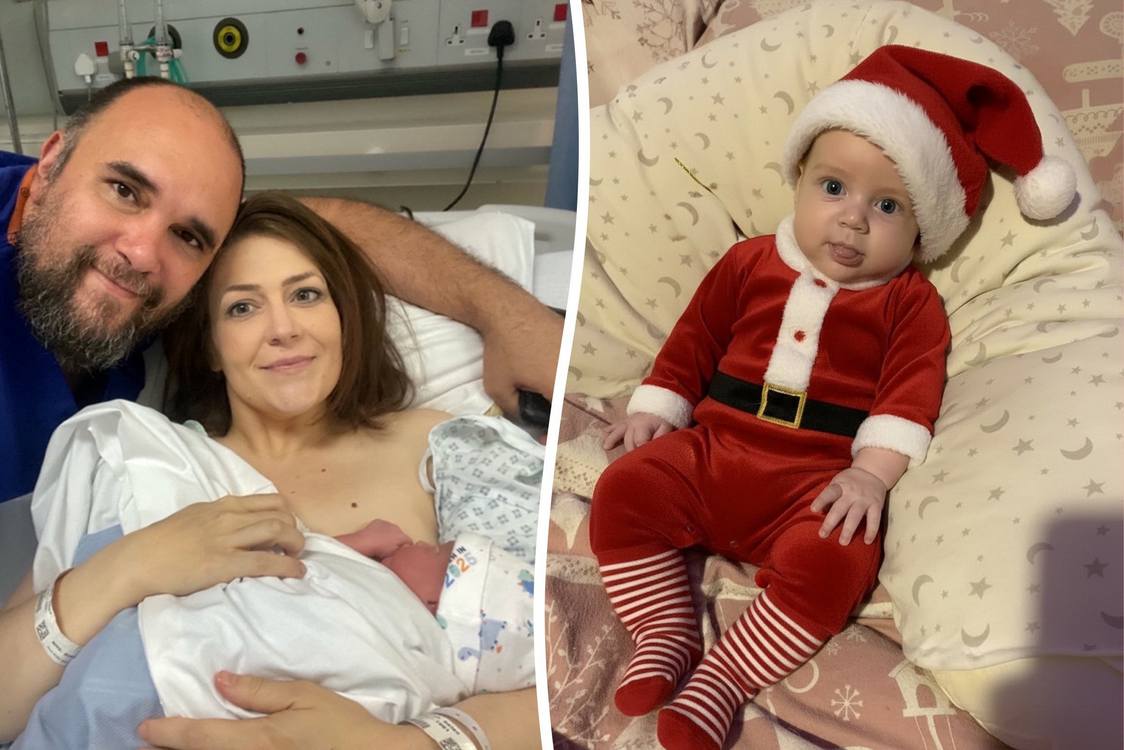
Couple Who Started IVF Last Christmas Day Welcomed a Baby After 11 Year Battle

Tuesday, 23 September 2025
School Invests $150,000 to Help Low Income Parents, Buying New Uniforms and Laptops for Every Student


Wednesday, 27 March 2024
Despite Living in the Digital Age, Kids Are Still Playing With Their Parents’ Favorite Childhood Toys
- 1. Play Doh
- 2. Mr. Potato Head
- 3. Trolls
- 4. My Little Pony
- 5. Furby
- 6. Puzzles
- 7. Toy phone
- 8. Bop It
- 9. Building blocks
- 10. Bicycle
- 11. Yoyo
- 12. Guess Who?
- 13. Water blasters
- 14. Teddy bear
- 15. Scrabble
- 16. Tricycle
- 17. Candy Land
- 18. Game Boy
- 19. Spinning tops
- 20. Toy cash register
- 21. Plastic animals
- 22. Monopoly
- 23. Mouse Trap
- 24. Game of Life
- 25. Transformers
- 26. Clue
- 27. Baby Alive
- 28. Plastic food/kitchen supplies
- 29. Scattergories
- 30. Perfection
- 1. Mr. Potato Head
- 2. Trolls
- 3. Play-Doh
- 4. My Little Pony
- 5. Toy phones
- 6. Furby
- 7. Puzzles
- 8. Building blocks
- 9. Yoyo
- 10. Bicycles
- 11. Bop It
- 12. Teddy bears
- 13. Baby dolls
- 14. Spinning tops
- 15. Candy Land
- 16. Guess Who?
- 17. Tricycle
- 18. Scrabble
- 19. Plastic animals
- 20. Toy cash register
- 21. Yahtzee!
- 22. Monopoly
- 23. Rubber duck
- 24. Clue
- 25. Mouse Trap
- 26. Game of Life
- 27. Plastic food/kitchen supplies
- 28. Perfection
- 29. Scattergories
- 30. Hungry, Hungry Hippos
- 31. Scooter
- 32. Bead maze
- 33. Sorry!
- 34. Operation
- 35. GI Joe
- 36. Super Soakers
- 37. Chutes + Ladders
- 38. Taboo
- 39. Trouble
Tuesday, 19 March 2024
Former UFC Heavyweight Champ Mark Coleman Saves Parents from House Fire, Fans Raise $121k for Hospital Bills

Monday, 30 October 2023
What the David Beckham documentary tells us – and what it doesn’t – about controlling parents in sport
I was able to handle being abused by the fans […] because of the way my dad had been to me.
A poignant scene shows Beckham’s mother Sandra struggling with how hard his father Ted was on their son. Ted’s shouting often brought David to tears. When asked if he was too tough on David, Ted says:
No […] if I told him how good he was, then he’s got nothing to work at.
Throughout the documentary, Ted’s behaviour is rationalised by Ted and even Beckham himself as necessary to support David’s sporting trajectory. But David also said he was scared of his father’s feedback and felt compelled to practise for hours every day.
Other athletes with similar stories include Tiger Woods, Andre Agassi and Australian Jelena Dokic.
Too often, controlling behaviour by parents is portrayed as necessary for success as an athlete. But the evidence shows this idea is false. In fact, such an approach can be detrimental to both a child’s chances of sporting success and their wellbeing.
And it’s not just a problem with elite sport; our research shows it’s also occurring with community sport.
What we found
Our research found about one in three people we surveyed said they’d experienced abuse by a parent during their time in Australian community sport.
Psychological abuse by parents was reported by just under a third of our respondents, and included behaviours such as:
excessive criticism
insults and humiliation
excessively training to extreme exhaustion/vomiting
ignoring a child following a sport performance.
The controlling and abusive behaviours described above have been consistently normalised by parents, coaches and sporting organisations as being necessary to create “mentally tough” athletes ready for high-level competition.
However, there is no evidence abusive and controlling behaviours have a positive impact on performance.
Instead, there is ample evidence to indicate it:
harms children’s confidence and self-esteem
is associated with depression and anxiety.
Research shows when adults in community sport use what’s known as an “autonomy-supportive approach” – in which young people are empowered to make their own decisions and have their feelings validated – children can be more self-motivated.
An experiment at the 2012 Olympic Games found coaches with a more supportive approach achieved higher medal tallies than those who did not.
Most of this evidence has focused on coaching, but given many parents act as coaches for their children, these findings remain relevant.
There is no evidence that controlling or abusive practices improve children’s performance in sport. But even if there was, sport performance should not be valued above a child’s health and wellbeing.
These behaviours would not be tolerated in different environments, such as workplaces or schools.
It’s time to move on from this debate in sport. So where to from here?
The sport system is complex, and while it’s easy to think it’s just a few problematic people, the reality is these practices have been normalised for generations.
Parents are repeating patterns from their own experiences and mirroring practices they see as normal in elite sport. There is no quick fix.
But we can all play a part by reflecting on our own behaviours and considering how we can prioritise children’s experiences and wellbeing.
Parents should focus on fun, learning new skills, enjoying the moment, and being part of a team so their kids can get the most out of the games they love.
Despite Beckham himself suggesting it was all worth it, the evidence suggests he was successful in spite of the high-pressure home environment, not because of it. ![]()
Mary Woessner, Lecturer in Clinical Exercise and Research Fellow, Institute for Health and Sport (iHeS), Victoria University, Victoria University; Alexandra Parker, Professor of Physical Activity and Mental Health, Victoria University, and Aurélie Pankowiak, Research Fellow, Institute for Health and Sport, Victoria University
This article is republished from The Conversation under a Creative Commons license. Read the original article.
Tuesday, 17 October 2023
Parents make mistakes. So what does ‘good enough parenting’ look like?
There is a huge amount of pressure on parents today – from feeding babies the “best organic purees” to making sure older children get all the developmental opportunities they could possibly need, while of course documenting the whole thing on Instagram.
There is also no shortage of advice about how to go about this. Just as there is no shortage of debate about the “best way” to parent your child.
But what if parents just focused on being a “good enough parent” instead? You do not have to be perfect in order to do a good job of raising a child. In fact, it may be better if you are not.
What is ‘good enough parenting’?
We know parenting matters in a child’s life. Research tell us parents influence their child’s development, resilience and expectations of themselves and others. This in turn determines their behaviour and wellbeing.
“Good enough parenting” theory was developed by UK paediatrician and psychoanalyst Donald Winnicott in the 1950s.
He found children actually benefit from mothers who “fail” them in some ways.
This does not mean parents can neglect or minimise their role in making sure children are safe where they live, learn and play. Children also need to have their emotional needs met. They need to know they are loved and feel a sense of belonging.
But good enough parenting recognises parental failure is an inevitable part of life. Experiencing sadness, tears and anger are part of childhood and parents should allow children to gradually tolerate some frustration. The good enough parent realises it is not possible to be available and immediately responsive all of the time.
What does it involve?
Winnicott noted when babies are very little, their needs are attended to almost immediately. If a baby cries, the parent will feed or change them.
But as the child grows, they do not necessarily have to have their needs met immediately. Parents can allow them to develop a tolerance for some uncertainty – or things not going the way they wanted – while still caring and responding to their basic needs.
This is important because life does not always go as we expect it to and children need to develop resilience.
What does good enough parenting look like everyday?
As a starting point, ask yourself “what does my child need from me?”
Good enough parenting focuses on tuning in to and responding to your child’s emotions and needs. These needs will change over time. For example, a good enough parent realises they need to respond quickly to their baby’s hunger cry. Whereas a teenager is learning to navigate life. A good enough parent will at times have to allow their child to face consequences of their choices.
At the same time, don’t try to “stop” emotions. Good enough parenting is about being there for your child if they are sad or angry, but not preventing them from being sad or angry in the first place. It can be helpful to think about suffering as not caused from emotional pain but from avoidance of uncomfortable emotions.
And don’t set unrealistic standards for your child. For example, if it’s dinner time and they are tired and hungry, don’t expect them to tidy their room.
Being a good enough parent also means accepting your child for who they are. Children need unconditional love from a parental figure to develop a healthy sense of self. So, if you have a child who is more interested in soccer than maths (or vice versa) don’t try to change them.
At the same time, do set boundaries – such as “please don’t interrupt me when I’m talking” or “I’d like you to knock before you come into my room” – and try to be consistent about enforcing them. Not only does this help define your relationships (as a parent and child, not two friends), it also teaches your child about healthy boundaries in any relationship.
Things won’t always go to plan
As we know, things won’t always go as we want or expect. So if you feel angry with your child, model how to emotionally regulate and try to talk to them as calmly as you can. If you make a mistake – such as raising your voice or losing your temper – apologise.
But also find ways to give yourself a break. This means you will have the energy and capacity to parent tomorrow and into the future.
And ask for help when you need it. This could be from your partner, family or professionals, such as a GP, family counsellor or psychologist. Remember, this is about being good enough, not super human.![]()
Cher McGillivray, Assistant Professor Psychology Department, Bond University
This article is republished from The Conversation under a Creative Commons license. Read the original article.
Thursday, 29 August 2013
Are IVF clinics hiding the risks of PGD from parents?
Thursday, 16 August 2012
How do parents name their kids?
Tuesday, 5 June 2012
80kg 8-year-old taken from parents
Saturday, 17 December 2011
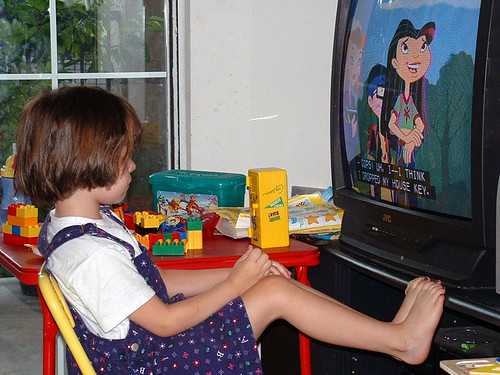
Parents urged to turn off TV, iPhones to improve relationships with kids
| Image Link Flickr |
| Image Link Flickr |
Wednesday, 30 November 2011
Grandparents embrace loosening of one-child policy - China
Image Link Flickr
Image Link Flickr
offspring with more bliss. But hope emerged around 2000 when local governments began to allow an additional child for parents who both came from single-child families.Today, all 31 provinces, autonomous regions and municipalities on the Chinese mainland have loosened their policies. The last province to do so is also the most populous, Henan, which announced Friday it will allow parents from single-child families to have another child. Grandparents have celebrated the news, yet the reaction of some young parents has been tepid. Read Full: Grandparents embrace loosening of one-child policy - China.org.cn
Sunday, 16 October 2011
Soon, Internet providers to offer 'porn block' to parents
Image Link Flickr
whether they want explicit sites to be viewable on family computers.Other moves will include restrictions on billboards plastered with images of scantily clad models and aggressive advertising campaigns.There will also be a new website called Parentport on which parents can complain about any TV programme, advertisement, product or service they feel is inappropriate for children.Read Full: Soon, Internet providers to offer 'porn block' to parents
Monday, 10 October 2011
TV ads have bigger impact on kids' food choices than parents