bloggggg

Home  |  Live  |  Science  |  Lifestyle  |  Entertainment  |  Broadcast  |  Games  |  eBooks  |  Astounds  |  Adbite  |  Cricbell  |  Cyber  |  Idea  |  Digital  |  Privacy  |  Publish  |  ePaper  |  Contact  .Subscribe.Subscribe.Subscribe.Subscribe.Subscribe.Subscribe.Subscribe.Subscribe.Subscribe
Subscribe

Saturday, 29 June 2024

Formula One is moving towards hybrid engines and renewable fuel. Major environmental progress or just ‘greenwashing’?

For the millions of fans who tune into every race, Formula One (F1) is more than just a sport – it’s the apex of aerodynamics, skill and strategy.

Behind the scenes, a quieter but more crucial race against carbon emissions is unfolding.

Given the sport’s substantial carbon footprint, F1 has faced criticism from society and even from its own drivers.

For example, Sebastian Vettel, a four-time F1 world champion, expressed his concerns by stating:

When I get out of the car, of course I’m thinking as well, ‘is this something that we should do, travel the world, wasting resources?‘

In the pursuit of speed and sustainability, F1 teams committed in 2019 to achieving a net zero emissions goal by 2030.

As part of this goal, every team has expressed their intention to use 100% renewable fuel by 2026. F1 has also just announced it will mandate hybrid engines with a 50-50 split between electric and combustion power.

However, it is crucial to consider whether these promises to go greener are achievable or if this commitment is just an attempt to greenwash the sport.

Formula One is trying to make the sport more environmentally responsible.

Just how big is F1’s environmental footprint?

According to a report from F1, the sport releases around 256,000 tons of carbon dioxide into the atmosphere every season.

While cars are often the focus, in reality, the behind-the-scenes activities have a larger environmental impact, as a Grand Prix event involves much more than just the cars on the track.

This includes everything from the transportation of teams and equipment to various international venues, to the energy used in setting up and operating the event and waste management.

A Grand Prix event features ten teams, each operating two cars, which results in a total of 20 cars in each race.

F1 cars actually contribute the least to the sport’s emissions, accounting for only about 0.7%.

In 2013, each car used about 160kg of fuel per Grand Prix race. By 2020, this was reduced to 100kg. F1 is now committed to use as little as 70kg of fuel per car by 2026.

Are hybrid engines a potential solution?

The foremost priorities of hybrid engines in Formula One are efficiency and environmental sustainability.

They integrate an internal combustion engine, batteries and an energy recovery system.

Compared to conventional internal combustion engines, the inclusion of batteries allows F1 cars to deliver rapid power more efficiently. The instantaneous torque provided by electric power significantly enhances acceleration out of corners, contributing to overall performance improvements.

Hybrid engines also reduce fuel consumption compared to traditional engines.

The hybrid system includes the Motor Generator Unit-Kinetic (MGU-K) and the Motor Generator Unit-Heat (MGU-H). The MGU-K converts kinetic energy from braking into electrical energy and stored in the battery, which boosts acceleration and speed. The MGU-H uses heat energy from exhaust gases to increase engine power.

This configuration not only conserves fuel but also maximises energy use, thereby reducing carbon emissions and enhancing environmental sustainability.

Will these changes reduce the sport’s environmental impact?

To reduce the environmental impact of F1 cars, fuel plays a major role. F1 started with 10% sustainable fuel (“E10”) – a blend of 10% renewable ethanol and 90% fossil fuel.

From 2026, they are determined to shift from 10% to 100% renewable fuel, which is synthesised by municipal waste or non-food biomass.

However, renewable fuels still produce carbon emissions – burning renewable fuel does release carbon dioxide but the emissions are offset by the carbon dioxide absorbed from the atmosphere during the fuel’s production, rendering it carbon neutral overall.

While the hybrid system will remain in place in 2026, given the complexities and cap on engine-specific costs, modern F1 cars will scrap the MGU-H and solely rely on the MGU-K.

Moreover, F1 is committed to increasing the energy efficiency of MGU-K to harvest more braking energy. Consequently, it aims to increase power output of MGU-K from 120kW to 350kW by 2026, nearly tripling it.

As for its broader carbon footprint, F1 has also pledged to incorporate re-purposing and recycling options for race weekend materials, batteries, and MGU-K. This will help minimise waste and the sport’s carbon footprint.

Because the carbon footprint of F1 cars is relatively small, the sport should focus its efforts on reducing emissions in transportation, logistics and fan activities.

Likewise, hosting Grand Prix races in various countries across different continents requires extensive logistical arrangements and travel. For instance, the F1 racing series in 2023 visited 20 countries across five continents, resulting in significant carbon emissions.

Consequently, F1 should consider hosting races within a single country or at least within a single continent.

Can F1 cars go fully electric?

For the sustainability of the sport, a transition to 100% electric cars is likely in the future. This transition can benefit from the experiences gained with Formula E, which employs fully electric vehicles.

However, several factors must be considered before fully electrifying F1 cars, including regulation changes, battery weight, battery safety and charging infrastructure.The Conversation

Yasir Arafat, Senior Research Associate (Batteries for EVs and Batteries Recycling), Edith Cowan University; Muhammad Rizwan Azhar, Lecturer of Chemical Engineering, Sustainable Energy and Resources, Edith Cowan University, and Waqas Uzair, Research associate, Edith Cowan University

This article is republished from The Conversation under a Creative Commons license. Read the original article.

Tuesday, 4 June 2024

Waste Heat Generated from Electronics to Warm Finnish City in Winter Thanks to Groundbreaking Thermal Energy Project

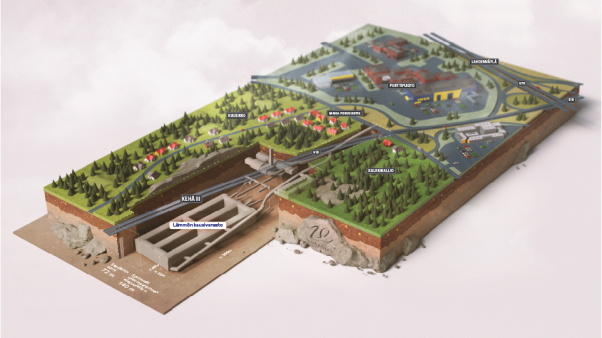
An illustration of Varanto’s seasonal energy storage facility – credit, Varanto Energy, released

Heat stored underground in caverns can be set aside in Finland’s summer months to be re-used during frigid winters thanks to a state-of-the-art ‘seasonal energy’ storage facility.

Slated for construction this summer near Helsinki, it will be the largest in the world by all standards and contain enough thermal energy to heat a medium-sized city all winter.

Thermal exchange heating systems, like those built underground, or domestic heat pumps, are seen as the most effective way available of reducing the climate-impact of home heating and cooling.

Their function relies on natural forces or energy recycling to cool down or heat up water and then using it to radiate hot or cold energy into a dwelling.

In Vantaa, Finland’s fourth largest city neighboring the capital of Helsinki, the ambitious Varanto seasonal energy storage project plans to store cheap and environmental friendly waste heat from datacenters, cooling processes, and waste-to-energy assets in underground caverns where it can be used to heat buildings via the district heating network whenever it is needed.

In Finland and other Nordic countries, the heat consumption varies significantly between seasons. Heat consumption in the summertime is only about one-tenth of the peak load consumption during the cold winter months.

Varanto will utilize underground caverns equal in space to two Maddison Square Gardens—over a million cubic meters—filled with water heated by this waste heat and pressure that will allow the water to reach temperatures of up to 300 degrees Fahrenheit without the water boiling or evaporating.

“The world is undergoing a huge energy transition. Wind and solar power have become vital technologies in the transition from fossil fuels to clean energy,” says Vantaa Energy CEO Jukka Toivonen.

“The biggest challenge of the energy transition so far has been the inability to store these intermittent forms of energy for later use. Unfortunately, small-scale storage solutions, such as batteries or accumulators, are not sufficient; large, industrial-scale storage solutions are needed. Varanto is an excellent example of this, and we are happy to set an example for the rest of the world.”

The total thermal capacity of the fully charged seasonal thermal energy storage is 90 gigawatt-hours. This capacity could heat a medium-sized Finnish city for as long as a year. Broken down into smaller energy units, this amount of energy is equivalent to 1.3 million electric car batteries.

“Two 60-MW electric boilers will be built in conjunction with Varanto,” adds Toivonen. “These boilers will be used to produce heat from renewable electricity when electricity is abundant and cheap. Our heat-producing system will work like a hybrid car: alternating between electricity and other forms of production, depending on what is most advantageous and efficient at the time.”

The project cost is estimated to be around $217 million (€200 million,) and it has already been awarded a €19-million investment grant from Finland’s Ministry of Economic Affairs and Employment. Construction of the storage facility’s entrance is expected to start in summer 2024, while it could be operational as early as 2028.

District heating is by far the most popular form of heating for buildings and homes in Finland.

In district heating networks, the thermal energy produced in production plants is transmitted to customers as hot water in a closed, two-pipe system. In these pipelines, the hot water flows to the buildings, and the water that has released its heat flows back to the production plant for reheating. The heat is always transferred to the building via heat exchangers, so the district heating water itself does not circulate in the heating networks of the buildings.

There are more than 600 kilometers of underground district heating networks in Vantaa, and around 90% of Vantaa residents live in a home heated by district heating.

In 2023, a total of 37.3 terawatt-hours of district heat was produced in Finland. Of this, 53% was produced from renewable heat sources and 14% from waste heat. Waste Heat Generated from Electronics to Warm Finnish City in Winter Thanks to Groundbreaking Thermal Energy Project

Saturday, 18 May 2024

Virgin Media O2 reaches plastic waste milestone 


The plastic waste removed is the equivalent weight of five double decker buses

UK mobile operator Virgin Media O2 (VMO2) has announced that it has successfully removed 65 tonnes of single-use plastic from its operations and products since 2021.

The effort is part of the company’s Better Connections Plan, which broadly commits to ensuring the business operates in a sustainable and ethical way. One of the plan’s primary aims to achieve zero waste operations and products by the end of 2025.

In partnership with engineering company Technetix, VMO2 has removed almost 18 tonnes of single-use plastic from the equipment and tools used by engineers. This includes eliminating plastic bags, foam, blister packs, and plastic straps from packaging. The company has also replaced plastic ties with paper ties on cables.

Collaborating with logistics firm GXO, the company has also reduced single-use plastic from packaging containing products sent to cable customer by 94%.

Additionally, adopting plastic-free packaging for product delivery and returns has allowed the company to prevent approximately 22 tonnes of single-use plastic going to waste each year.

“GXO and Virgin Media O2 are working together to create a supply chain that is as environmentally responsible as it is efficient and reliable,” said Meagan Fitzsimmons, GXO’s Chief Compliance and ESG Officer in a press release.

“Companies have to reduce single use plastics from their supply chain to meet regulatory requirements and environmental goals. These results show what’s possible with a best-in-class partnership,” she continued.

In related news, this week it was revealed that VMO2 was one of three operators (in addition to Three and Vodafone), who had their plea for a deadline extension of the first phase of the Shared Rural Network (SRN) denied by the UK government.

Dean Creamer, the head of Building Digital UK (the government body overseeing the project) confirmed this week that the authority has denied a request by the three mobile operators to delay the first phase deadline by 18 months.

The current deadline to remove all ‘partial not-spots’ is in June. Only EE, the UK’s largest operator, met this deadline so far, doing so in January. Last October, The Telegraph reported that Vodafone and Three in particular were operators were “miles behind” in the project, according to unnamed sources, Virgin Media O2 reaches plastic waste milestone | Total Telecom

Tuesday, 26 March 2024

French reactor using full core of recycled uranium fuel

The Cruas-Meysse plant (Image: EDF)

Unit 2 of the Cruas-Meysse nuclear power plant in south-eastern France was recently restarted with its first full core of recycled uranium fuel. The move marks a major milestone in France's efforts to revive its domestic uranium reprocessing industry.

Reprocessed uranium (RepU) is derived from used fuel from nuclear reactors that has been processed at Orano's La Hague reprocessing plant. Once enriched, this uranium can be used again to fuel nuclear power reactors.

In France, only the four reactors at the Cruas-Meysse plant in Auvergne-Rhône-Alpes are certified to use Enriched Reprocessed Uranium (ERU).

Historically, the enrichment process, requiring centrifuges solely dedicated to RepU, was carried out for industrial and economic reasons by Russia's Rosatom at its Seversk site. However, the new geopolitical situation since the onset of the war in Ukraine may lead to a reevaluation of these contracts.

For many years, EDF's Fuel Division has been developing a strategy for the management, recycling and reprocessing of used nuclear fuel assemblies, as well as the diversification of sources of supply, to ensure energy independence and the preservation of natural resources.

On 5 February, Cruas 2 was restarted with its first entirely recycled uranium fuel load.

"A decade-long effort has been made to revive a uranium reprocessing sector, which was suspended in 2013 (and resumed in 2018), and has just reached a historic milestone," Cédric Lewandowski, Senior Executive Vice-President, Nuclear and Thermal at EDF, said on LinkedIn.

He noted: "Reprocessing spent fuel to extract the energy-potential material (which constitutes 96% of the spent fuel's mass composition), namely uranium, for its second use is a circular economy approach that will save 25% of natural resources in the coming decades. Moreover, this sector emits 30% less CO2 than the natural uranium sector and reduces environmental impact."

Fuel containing RepU has the same general characteristics as natural uranium fuels. Worldwide, 75 reactors have used, or currently use, RepU.

Lewandowski said EDF's goal was to be able to reuse RepU in certain 1300 MWe reactors by 2027, aiming for over 30% RepU usage in the French nuclear fleet by the 2030s.

In May 2018, Framatome signed a contract to design, fabricate and supply fuel assemblies using enriched reprocessed uranium to EDF between 2023 and 2032. The fuel assemblies were to be produced at Framatome's facility at Romans-sur-Isère in the Drôme region of France.

EDF studied the possibility of recycling reprocessed uranium in pressurised water reactors in the early 1980s. The utility has demonstrated the use of reprocessed uranium in its 900 MWe power plants. The first enriched reprocessed uranium manufacturing campaign took place at Romans in 1987 on behalf of EDF. Precursor fuel assemblies were loaded into Cruas unit 4 from 1987 to 1990 and a first enriched reprocessed uranium fuel reload was introduced in the same reactor in 1994. EDF used RepU between 1994 and 2013 in the four Cruas reactors, allowing 4000 tonnes of RepU to be recycled.

EDF has made provision to store reprocessed uranium for up to 250 years as a strategic reserve. Currently, reprocessing of 1100 tonnes of EDF used fuel per year produces 11 tonnes of plutonium (immediately recycled as mixed-oxide fuel) and 1045 tonnes of reprocessed uranium converted into stable oxide form for storage.

According to Orano, there are currently nearly 34,000 tonnes of RepU being held in interim storage on the Tricastin site.Researched and written by World Nuclear News. French reactor using full core of recycled uranium fuel : Waste & Recycling - World Nuclear News

Monday, 30 November 2020

Scottish- and Indian researchers develop wastewater treatment, recycling system


A team of interdisciplinary researchers from Scotland in collaboration with Indian Institute of Science (IISc) have developed an efficient decentralised wastewater treatment and recycling system at Berambadi Primary School situated in a remote village in Karnataka's Chamarajnagar district. About 200km southwest of Bengaluru is Berambadi, a village nestled between mountains, swathes of agricultural fields, the Hirikere lake, and the Bandipur National Park.

This verdant countryside with tidy roads that borders Karnataka's neighbours Kerala and Tamil Nadu is spellbinding. However, Berambadi, located in the rain shadow side of the Western Ghats, has been hit by drought several times in the last few years.

A study, published in the Journal of Water Process Engineering and carried out in collaboration with researchers in Scotland, shows how the system has, over the past year, enabled the reuse of wastewater and reduced dependence on freshwater resources, IISc said in a statement.

The project, funded by the Scotland government, is a collaboration between IISc, the Ashoka Trust for Research in Ecology and the Environment, Bengaluru, the James Hutton Institute, Scotland, and the University of Glasgow.

"We have demonstrated for the first time that decentralised wastewater treatment systems can be economically put into practice in a rural setting," the Centre for Sustainable Technologies, IISc, Assistant Professor and a senior author of the paper Lakshminarayana Rao said, adding that decentralised wastewater treatment system is the way to go.

According to IISc, the research team operated the greywater treatment system for a year and monitored the different physicochemical and biological characteristics of the greywater at the entry and exit points.

Rao added that the goal was to direct the treated greywater for reuse in toilet flushes and gardening.

"To do this, they designed a system where greywater is subjected to a series of steps: first is getting rid of the remnant fat and grease in the wastewater using a grease trapper.

Water free of grease is passed through a trickling bed filter (a bed made of gravels of different sizes) and an aerator, where microorganisms help remove pollutants in the wastewater. This water, after undergoing the final step of disinfection, can be reused," Rao explained.

The performance of every treatment stage was quantified in terms of removal efficiencies (REs) of turbidity, Total Suspended Solids (TSS), nitrate, total phosphorus, Biological Oxygen Demand (BOD), Chemical Oxygen Demand (COD) and faecal coliforms (FC), it said.

Overall, the system showed high REs more than 90 per cent for most of the parameters.

About 667 litres of greywater were treated daily using the system, saving around 180,000 litres of water annually, it added.

Such a robust wastewater management system can be replicated in both rural and urban settings after taking into consideration various factors such as space limitations, baseline greywater quality and daily flow rates, the authors suggested explaining how the system works.

"The people from Berambadi village are very happy with the system. Based on the success of this sustainable wastewater management project, several other schools in Karnataka have approached us to duplicate it in their schools," Rao claimed Source: https://southasiamonitor.org

Tuesday, 23 June 2020

Isotek, DOE sign legacy waste contract modification : Waste & Recycling - World Nuclear News


An aerial photo of Oak Ridge National Laboratory (Image: ORNL)
  • SNC-Lavalin's Isotek Systems, LLC business and the US Department of Energy (DOE) have signed a USD254 million contract modification to perform processing operations to dispose of uranium-233 material up until 2024 on the Uranium-233 Disposition Project at the Oak Ridge National Laboratory (ORNL) in Tennessee. This contract modification, SNC-Lavalin said, is aligned with the company's new strategy to move towards engineering services and greater growth.
  • The uranium-233 was created as an alternative fuel source for nuclear reactors but was found not to be viable. The material is now stored in secure vaults in Building 3019, which was built in the 1940s at ORNL. Removing the waste could allow ORNL to relax its overall security posture, which will reduce costs, eliminate nuclear safety issues and make the campus more conducive to collaborative science, according to a US Senate Appropriations Committee report published in July 2017.
  • Since 2003, Isotek - a wholly owned subsidiary of Atkins Nuclear Secured - has been contracted by the DOE to safely and securely oversee the inventory of uranium-233 and prepare its removal from ORNL's Building 3019, the USA's oldest operating nuclear facility. SNC-Lavalin acquired WS Atkins in July 2017.
  • Isotek in October 2019 began processing canisters of uranium-233 in Building 2026 and shipping the processed material for safe permanent disposal. During the processing of uranium-233, Isotek is extracting thorium-229. This rare man-made isotope is being used to support cancer treatment research. Isotek is using the proceeds from the sale of the thorium-229 to privately fund portions of the Uranium-233 Disposition Project.
  • The contract modification continues the partnership between Isotek and the DOE and authorises USD254 million to fund and continue Isotek's mission to safely dispose of more than 80% of the remaining uranium-233 inventory. To date, about half of the inventory has been removed from Building 3019 and directly disposed of.
  • "This contract modification reflects DOE's trust and confidence in Isotek to carry out this very important mission," said Isotek President Jim Bolon.
  • Sandy Taylor, president of SNC-Lavalin's nuclear business, added: "The successful partnership we have formed with DOE to accelerate this vital work is a proud achievement for our company."Source: https://www.world-nuclear-news.org:\

Friday, 27 April 2018

IAEA assesses waste management in France and Spain

France has demonstrated a comprehensive commitment to safety with a responsible approach to the management of used nuclear fuel and radioactive waste, a mission from the International Atomic Energy Agency (IAEA) has concluded. Preparations are under way for missions to Spain later this year.

At the request of the French government, the IAEA has conducted an integrated review service for radioactive waste and used fuel management, decommissioning and remediation programmes, referred to as Artemis. Artemis missions provide independent expert opinion and advice, drawn from an international team of specialists convened by the IAEA. Reviews are based on the IAEA safety standards and technical guidance, as well as international good practices.

The mission to France aimed to help the country meet European Union obligations that require an independent peer review of national programmes for the safe and responsible management of used fuel and radioactive waste. These assessments must be carried out at least every ten years. It is the second Artemis carried out to meet EU obligations, following a mission to Poland last October.

The 11-day mission concluded on 24 January and comprised 13 experts from Belgium, Canada, Cuba, Finland, Germany, the Netherlands, Spain and the UK, as well as three IAEA staff members. The mission was hosted by the Directorate General of Energy and Climate (DGEC) with the participation of officials from several organisations, including the French National Radioactive Waste Agency (Andra) and the Nuclear Safety Authority (ASN).

The Artemis team said France is "well positioned to continue meeting high standards of safety". The mission noted a number of good practices to be shared with the global waste management community. These included a clear government commitment to the national strategy and programme for waste management, including safe disposal. France, the team found, has developed a transparent national waste inventory and has made deliberate efforts towards maintaining a high level of professional, competent staff.

The mission also made suggestions for France to further enhance its waste management programme. It suggests France facilitates implementation of the requirement for decommissioning to take place in the shortest time possible and also to optimise management of very low level waste. The team suggests the country considers mechanisms to address disposal liabilities for small waste producers.

ASN said the team's suggestions will be taken into account in the preparation of the next National Radioactive Material and Waste Management Plan, which will be subject to in-depth consultation with the stakeholders and the public.

Artemis team leader Peter De Preter said: "On the basis of the review, the team concluded that France's waste management programme is comprehensive and coherent in fostering safety. Our review highlights France's commitment to safety." De Preter is a senior advisor at Ondra/Niras, the Belgian agency for the management of radioactive waste.

Aurelien Louis, head of DGEC's nuclear industry department, said the peer review represented "an important element in our efforts to ensure the safety of the French waste management programme, establish greater public confidence and respond to the EU waste directive". Louis added: "The outcome of the mission was very positive while also providing us with suggestions that will be a good basis for future enhancements."

Missions to Spain

On 25-26 January, Spain's Nuclear Safety Council (CSN) hosted a preparatory meeting for IAEA to carry out combined Artemis and Integrated Regulatory Review Service (IRRS) missions in October.

IRRS missions are designed to strengthen the effectiveness of the national radiation safety regulatory infrastructure, while recognising the responsibility of each member state to ensure nuclear and radiation safety. The missions compare regulatory technical and policy issues with IAEA safety standards and, where appropriate, good practices elsewhere. The regulatory review process also draws directly upon the wide-ranging international experience and expertise of the regulatory review team members.

At the meeting, representatives from the IAEA, the Ministry of Energy, Tourism and Digital Agenda, the Ministry of Foreign Affairs and Cooperation and decommissioning firm Enresa discussed what their respective roles will be during both missions.

Researched and written: by World Nuclear News, Source: http://www.world-nuclear-news.org/

Thursday, 2 April 2015

Apple launches iPhone recycling plan in China


.Subscribe
Fans can trade in their old iPhones and iPads with Apple's latest products such as iPhone 6, 6 Plus and ipad Air 2. Others can also trade in their PCs for latest Mac computers. But consumers can only enjoy the service in Apple Stores. Specialists in the Apple Stores will give their advice on the concrete depreciation price. Media reports say one iPhone 4s is worth around 80 US dollars. Apple has seen a soaring market in China in recent years, with the reservations for the Apple Watch to begin on April 10, and official sales on April 25. Source: China.org.cn

Sunday, 17 March 2013

Solar Car with Secret Weapon


The solar-powered car's computer collects data from its telemetry system and makes adjustments in real time to improve performance. Built by the Cambridge University Eco Racing Team, this solar car was
redesigned using a supercomputer and workstation computers donated by Intel. The more efficient design and new technology inside the car is given the CUER team.

Monday, 14 January 2013

Newspapers no more, and online you realise it's about knowledge

Front page authority ... killed off by the 24-hour news cycle.
By Graham Beattie: When I told people what I'd done, they were aghast. "I could never give them up," was the most common reaction. "I like the touch and feel, the smell." "How are you going to clean your barbecue?" one friend asked. Indeed, I found I did not know how to dispose safely of a glass that smashed during our Christmas lunch. Or what to do with the recently shelled prawn-heads. Plastic just doesn't do it. It's not until you get rid of them that you appreciate all the things that newspapers are good for. And I am not even talking about the contents. Nor were my friends. Just before Christmas I cancelled all our newspapers. For someone who has had a four newspaper a day habit for most of her adult life this was a huge decision, taken with considerable trepidation. There were practical reasons for this drastic action. Our newsagent changed hands resulting in irregular deliveries. This was due partly to "production problems" at both News Ltd and Fairfax but there was also the mysterious disappearance of our papers, 
particularly on Sundays, despite assurances that they had been delivered. Wouldn't happen with the iPad, I muttered to myself. And we were also having problems getting the papers taken away. The vagaries of the City of Sydney's recycling collection policy sat uneasily with a household that had 28 newspapers a week to dispose of and where there was no backyard to store the wheelie bins mandated by the council. For a while we benefited from a personally negotiated solution that allowed us to use black plastic crates that could be stacked on our back balcony. But council workers would collect the crates as well as their contents and, the last time this happened, we decided it was time to jump on board the digital express. I took out digital subscriptions to the Fairfax papers, The Sydney Morning Herald, The Age and The Australian Financial Review, and to News Ltd's The Australian. Now we sit down to breakfast with iPads open. Unlike the printed papers, you can't scan the front pages to decide which one to read first so you have to randomly choose - then the frustrations begin. Printed papers are the same format. With digital, every publication is different. Learning the different formats and, navigating them takes time. There are moments as I stumble around this strange environment I feel a bit like the monk in the hilarious Norwegian YouTube clip, ''Medieval Help Desk''. The middle-aged monk was having trouble adjusting from scrolls to books and needs help from a geeky young brother in learning how to turn pages Source: Beattie's Book Blog 

Saturday, 24 November 2012

US Navy to test of bio-fuel-mixed marine, jet fuel in Pacific Rim


The US Navy plans to move ships and aircraft from Hawaii to the Pacific Rim to test the performance of a 50/50 bio-fuel-blended fuel, according to the Truman National Security Project, a national security leadership institute based in Washington, D.C. The mission will begin 17 July, continue for six weeks, and include the participation of 25,000 sailors and Marines, the institute said, calling the endeavor "the Navy's most ambitious energy plan yet." Over the course of the test, which is part of the Navy's larger, "Great Green Fleet" project, the fleet will mix 450,000 gallons of bio-fuel made from advanced algae oils and recycled cooking oil with traditional, petroleum-based marine diesel and aviation fuel. The Navy has ramped up funding for home-grown renewable fuels over the past year, making $30 million available last month for companies planning to build or retrofit a commercial-scale bio-refinery. During a forum hosted by the institute on Thursday, several former military members spoke in favor of the use of bio-fuels, the consensus being that the military, of all things, should not be dependent on fossil fuels from regions given to conflict. *** Source: Renewable Energy Magazine

Tuesday, 2 October 2012

New Photos and Details of Peugeot's Onyx Supercar Concept, gets a 680HP V8 Diesel-Hybrid Powertrain

Set to be one of the most impressive concepts at this year's edition of the Paris Motor Show, the Onyx is Peugeot's vision of what a 21st century supercar should be. The concept's sharply styled body features wings and doors that are handmade from pure copper sheet, and whose appearance Peugeot says will change over time gaining a patina, while the other panels are from carbon fibre painted matte black. The Onyx incorporates  some design references to the RCZ such as the ‘double-bubble’ roof and aluminium arches, but overall, it's a unique looking model. "The silhouette of the Onyx is sculpted softly, sensuously, but it is also alive and technological," explains Sandeep Bhambra, Onyx Exterior Stylist. "From the first sketches I wanted to create a showcase for technological excellence and craftsmanship by combining elements  demonstrating high 
aerodynamic performance, Black Diamond lamps and copper bodywork panels fashioned by hand." The study is 4.65m long, 2.20m wide and 1.13m tall, and according to Peugeot, has a drag coefficient of 0.30 and tips the scales at just 1,100kg (2,425 pounds). The Onyx is built around a carbon fiber central structure that consists of 12 parts and weighs only 100kg (220  pounds). Power comes from a diesel-hybrid drivetrain comprising a 3.7-litre V8 hybrid HDi FAP engine (and not a 1.6-liter unit as previously rumored) capable of delivering 600-horses to the rear wheels via a 6sp sequential gearbox and a kinetic energy system that turns braking power to electricity that is stored in a set of lithium-ion batteries and which can offer an
additional 80hp. The concept features double wishbone and an in-board controlled suspension on both ends, while braking power is provided by four carbon discs, 380mm at the front and 355mm at the rear. It is fitted with tires specially developed by Michelin, size 275/30 at the front and 345/30 at the rear, with 20-inch lightweight alloy rims. The passenger compartment of the Onyx sports a minimalistic design and plenty of light thanks to the glass roof. Unusually, the concept doesn't feature traditional seats but two separated areas with Peugeot using foam under the felt, in the areas of contact with the body. "For the interior, I was inspired by an everyday object, the egg box. With remarkable economy of material, it protects very fragile items. I adapted the concept into an intuitive space, with a minimum of connected parts, to become one with the car," explained Julien Cueff, Onyx Interior Stylist. Other highlights include the materials used in the interior such as the dashboard that is made from recycled newspapers that are compressed to create new ‘logs’ from which the parts are made. Peugeot says this material is named "Newspaper Wood". Needless to say, Peugeot has no plans to produce the Onyx. Source: Carscoop

Sunday, 2 September 2012

Miranda Kerr becomes Earth Hour ambassador

Victoria's Secret model Miranda Kerr has been named the Earth Hour global ambassador for the second year running. The 28-year-old Australian supermodel is famed for her views on environmental issues and has her own range of organic beauty products. She has joined the 2012 campaign, which encourages the public to switch off their lights for 60 minutes on March 31 to help save energy and highlight sustainability, reported Contactmusic. Kerr, who has a 14-month-old son, Flynn, with husband Orlando Bloom, also pledged to teach yoga to 500 fans if they get involved with the campaign. "I hope my first challenge inspires my friends, family and fans to make their own promise for the environment. This year I've made the commitment to reduce my footprint by offsetting all of my travel. "If we all adopt simple practices like recycling, switching to energy efficient lighting or paperless banking then we can make a difference together," Kerr said.The yoga class will take place in Sydney, Australia. Source: Screen India, ***

Thursday, 26 July 2012

Air Canada to conduct first flight with sustainable bio-fuel


Air Canada has undertaken its first flight with bio-fuel to highlight the airline's commitment to the environment. Flight AC991 from Toronto to Mexico City was expected to generate at least 40 percent fewer emissions by using jet fuel derived from recycled cooking oil and through other fuel-saving measures, making it the most environmentally-friendly flight ever flown by Air Canada. The flight was supported by Airbus and was part of an environmental demonstration by the International Civil Aviation Organization (ICAO) to coincide with the Rio +20 United Nations Conference on Sustainable Development. "Air Canada fully accepts its responsibility to reduce its footprint and our first flight using biofuel tangibly demonstrates our ongoing commitment to the environment," said Duncan Dee, Executive Vice President and Chief Operating Officer at Air Canada. "Since 1990 our airline has become 30 per cent more fuel efficient and we are determined to increase these gains through cutting-edge measures such as those being showcased with this Toronto-Mexico City flight, our greenest ever," Dee continued. "The flight, supported by Airbus, will link with other biofuel flights from Canada to Rio de Janeiro arranged under the auspices of ICAO to underscore the aviation industry's commitment to the environment at the UN sustainability conference," he said. Fabrice Brégier, Airbus President and CEO, said the flight by Air Canada proves that the aviation industry is in a strong position to reduce emissions. "To make this a day-to-day commercial reality, it requires now a political will to foster incentives to scale up the use of sustainable biofuels and to accelerate the modernization of the air-traffic-management system. We need a clear endorsement by governments and all aviation stakeholders to venture beyond today's limitations," Brégier said. The AC991 was a normal revenue flight operated with an Airbus A319 aircraft using a 50/50 mix of regular and bio-fuel derived from recycled cooking oil. This blend produced by SkyNRG has been recertified to normal jet fuel standards and can be safely used without modifying the aircraft's systems.  Source: Renewable Energy Magazine, ***

Tuesday, 21 February 2012

Going Green by Design: Bangkok exhibit shows future of nature-sustainable products

RTSea: Green or nature-sustainable thinking in design and products is not just a hot topic among major industrial nations in the West; it's also finding its way into countries like Thailand, as evidenced by the exhibit "Everything Forever Now: Designs for a sustainable future" currently on display at the Thailand Creative & Design Center (TCDC) in Bangkok. Some of the exhibit's many highlights include a bicycle made from nylon powder, a lamp powered by moss, benches made from seaweed, and artificial leather made from leather tannery discards.
"In recent years there has been a shift in the way that designers approach the idea of sustainable design. Now they view it less as a problem, and more as a fact of life – and certainly as an opportunity to rethink what and how we make things, and how we might go about our lives in a more effective and positive way," explained the TCDC website. A bike, made primarily from nylon powder that is formed into a resin, streamlines the manufacturing process with less raw materials involved and is 65% lighter than an aluminum bicycle with less maintenance required. The manufacturing technique was actually borrowed from space satellite construction, called additive layer manufacturing, whereby all the components are formed as a unit at the same time. Biophotovoltaics is the science behind a small, glass-topped table designed by Cambridge University which can power a small lamp. The table contains living moss which, through energy produced by the plant's photosynthesis during the day, can charge a small battery that powers the lamp in the evening hours.
To further make a point regarding recycling what would normally be discarded materials, many of the walls surrounding the exhibit are made from discarded milk cartons, processed into a building material that is toxin-free,  flame - retardant,  and  resistant  to  moisture and termites. The TCDC 
exhibit is an example of science working its way into the design and manufacturing world where the economics and practicality of new processes and products could very well shape our future into a more nature-friendly one. "Whether designing for longevity, building self-sufficient communities, improving the efficiency of infrastructures or developing new materials, the new guard of green designers quietly promises one thing: to deepen and improve our relationship with the environment, both now and well into the future," said TCDC. Source: TCDC website, Source: Thailand's Source: RTSea

Friday, 3 February 2012

Butterflies are the new Pirates

Magpie&WhiskeyjackBy Minouette (scientist by vocation artist by avocation): Yes, indeed. There has been an undercurrent of butterflies fluttering through our culture for some time, and soon they will be as omnipresent as pirates. They appear in art, crafts, fashion. Tell me this installation by Japanese
artist  / designer / stylist  Kiroshi  Kuroda is not piratical? or that  the  graphic impact of this black and white will not catch on:
Consider the hypnotic effect of French artist Phillipe Caillaud's spirals of butterflies;

Aurores 1 and detail I love how he incorporates ephemera, including vintage photographs, playing cards and especially, maps. Some works are made of dragon or damsel flies, rather than butterflies. Full marks for elegance and simplicity of his web portfolio design! Flash-addicted artists, please take note.
Cramoisis
Vulcains
Mars (detail)
Piérides de la route (detail)
This reminds me of work of the previously-blogged Elsita (Elsa Moro). She had a show in 2007 which involved a lot of flying things. The work "One Hundred Butterflies" also involves a spiral of butterflies (& moths & dragonflies & damselflies). Each one represents a famous woman:
Interesting that there is a sub-theme of spirals of multimedia butterflies. Speaking of multimedia butterflies, check out these knit papillons by Chevalier-Masson (Belgian duo Anne Masson & Eric Chevalier):
"Les deux font la paire" , 2006 (Galerie Les Drapiers, Liège). {The title means 'the two make a pair'}
Of course, there is the gorgeous work of British printmaker, book and multimedia artist John Dilnot, many of which feature butterflies or moths. His work captures the magic of the microcosm and the Wunderkammer. 
Moths Collection (26 x 19x 7cm)
U.S. sculptor "Michelle Stitzlein creates found object art / sculpture from recycled materials, including piano keys, broken china, license plates, rusty tin cans, electrical wire, bottlecaps, and other miscellaneous items." These include enormous (check the dimensions!), amazing butterflies and moths.
I could go on.... {Though familiar with many of these artists, the archives at dear ada were a great resource for finding many of these butterflies in contemporary art.} Courtesy: Magpie & whiskeyjack

Sunday, 18 December 2011

London streets ‘paved with precious metals like platinum’

StreetLondon: A waste management company has revealed that it is planning to collect tens of thousands of dust from the city’s pavements to turn it into cash. According to the Sunday Times, Veolia Environment has said that it can extract precious metals such as platinum, palladium and rhodium to recycle them. “The precious metals are in trace amounts but they are quite  valuable,”  the  Daily  Mail  quoted  Richard
Street
A waste management firm is planning to collect tens of thousands of dust from London’s pavements to turn it into cash. Reuters
Kirkman, Head of technology and waste as saying.“We have brought together two technologies — conventional soil washing, which removes plastics and metals and glass from street sweepings, and a technique that we use to remove palladium from the fine dust that is left after we have washed the soil,” he stated.Read Full: London streets ‘paved with precious metals like platinum’ - Indian Express

Friday, 12 August 2011

Earth ‘recycles’ itself four times faster than thought

The volcanic recycling of the Earth's crust that sinks deep into the earth due to the movement of tectonic plates happens much faster than scientists had previously thought, a new research has found. Researchers from the Max Planck Institute for Chemistry in Mainz say that the rock of the oceanic crust re-emerges through volcanic eruptions after around 500 million years. Previously, geologists thought this process would take about two billion years. Hot rock rises in cylindrical columns, the so-called mantle plumes, from a depth of nearly 3000 kilometres. Near the surface, it melts, because the pressure is reduced, and forms volcanoes. The plume originates from former ocean crust, which early in the Earth's history, sank to the bottom of the mantle. Previously, scientists had assumed that this recycling took about two billion years. The chemical analysis of tiny glassy inclusions in olivine crystals from basaltic lava on Mauna Loa volcano in Hawaii has now surprised geologists: the entire recycling process requires at most half a billion years, four times faster than previously thought. Researchers found residues of sea water with an unexpected strontium isotope ratio in lava samples from Hawaiian volcanoes, which suggested an age of less than 500 million years for the inclusions. "Apparently strontium from sea water has reached deep in the Earth's mantle, and re-emerged after only half a billion years, in Hawaiian volcano lavas," says Klaus Peter Jochum, co-author of the publication. "This discovery was a huge surprise for us," he added.Source: Indian Express