bloggggg

Home  |  Live  |  Science  |  Lifestyle  |  Entertainment  |  Broadcast  |  Games  |  eBooks  |  Astounds  |  Adbite  |  Cricbell  |  Cyber  |  Idea  |  Digital  |  Privacy  |  Publish  |  ePaper  |  Contact  .Subscribe.Subscribe.Subscribe.Subscribe.Subscribe.Subscribe.Subscribe.Subscribe.Subscribe
Subscribe

Wednesday, 10 April 2024

Supermarkets need to change the way they operate in Australia. But how do we get them to do this?

Australia’s big supermarkets have been put on notice.

A Treasury-commissioned review recommends making the existing voluntary food and grocery code of conduct mandatory.

The voluntary code sets standards for wholesalers, retailers and suppliers to try and ensure fair negotiations over prices for products. While prescribed under federal legislation, signing up is optional and there are no penalties for breaches.

The review recommends a complaints mechanism, action to deal with retribution against suppliers, obligations for supermarkets to act in good faith and penalties of up to A$10 million for non-compliance.

But will this be enough to change the way supermarkets operate in Australia?

Why we need more action

Government intervention is long overdue. It is well documented that dominance by major players Coles and Woolworths has resulted in unfavourable terms for suppliers, commercial retribution, high levels of food waste and price gouging.

There have been other inquiries into Australia’s big supermarkets. But these have not led to effective change, because previous governments have stuck with voluntary forms of regulation.

We should not be surprised voluntary self-regulation has failed. There is little evidence this approach is effective, especially without a credible threat of enforcement.

Do the recommendations go far enough?

This latest review was commissioned by the federal government and led by former Labor trade minister Craig Emerson. This week, the interim report was released, with a final report due at the end of June.

The recommendations are a step in the right direction but will not deal with the central issue of market dominance.

The review has not recommended forced divestiture laws, despite the Greens calling for them.

Divestiture is the partial or full disposal of part of a business, not considered central to a company’s core operations, through sale, exchange, closure, or bankruptcy.

However, the interim report’s call for a mandatory code is a positive step, although we need to be careful about how it is implemented.

Making the code mandatory would mean the Australian Competition and Consumer Commission (ACCC) can fine supermarkets for breaches. Giving the commission powers to issue substantial penalties goes some way to responding to criticisms it is toothless.

But fines might not be enough when supermarkets may be “too big to care”. A $10 million fine for Coles in 2014 did not appear to result in corporate behaviour change.

The interim report also proposes allowing suppliers to request independent mediation if, for example, they believe they are not receiving fair payment for their goods, and, if agreed by both parties, arbitration.

On paper this recommendation seeks to ensure “quick, low-cost dispute-resolution pathways for suppliers”. However, greater clarity is needed on how mediators would be independent.

While the report notes a “list of independent mediators and arbitrators would be maintained by the code supervisor”, elsewhere it is noted mediators “would be engaged by the supermarkets” and an “advantage of these code mediators is they would be very familiar with the supermarkets that engaged them”.

Without having a truly independent process, the fear of retribution will remain a significant weakness of the code.

How do we punish those who don’t comply?

If Australia is going to have a mandatory code, we need think about how less obvious retribution will be handled. This could involve instances where a complaint results in supermarkets avoiding certain suppliers but not stating why.

The code allows for confidential complaints, but how investigations will be able to maintain anonymity is unclear.

Added to this, the notion of “good faith”, which underpins the recommendations in the interim report, is highly subjective, and assumes supermarkets can stop their buying teams from acting against suppliers.

It will also be important to ensure the code is unambiguous, to stop supermarkets from using loopholes to exercise market power in other ways. For example, by buying only part of a previously agreed upon order.

What next?

Government regulation of supermarket power is long overdue, following years assuming markets will self-regulate. These recommendations should be seen as a win in theory, however the ACCC will need proper resourcing to effectively regulate a sector used to a free rein.

It is yet to be seen whether these reforms will mean consumers could ultimately be paying less for their food groceries without driving down prices for growers.

The recommendations at this interim stage focus mainly on supply chains and fairer trading. Market share and the dominance of the two major supermarkets is not being addressed which may ultimately mean business as usual for pricing, for now.

With market concentration and anti-competitive behaviour now being scrutinised, it is likely other sectors will seek similar reforms.The Conversation

Carol Richards, Professor, Queensland University of Technology; Bree Hurst, Associate Professor, Faculty of Business and Law, QUT, Queensland University of Technology; Hope Johnson, ARC DECRA Fellow, Queensland University of Technology, and Rudolf Messner, Postdoctoral research fellow, Queensland University of Technology

This article is republished from The Conversation under a Creative Commons license. Read the original article.

Monday, 11 March 2024

QANTAS pays women 37% less, Telstra and BHP 20%. Fifty years after equal pay laws, we still have a long way to go

Men continue to outstrip women in the salary stakes, with men’s median annual salary $11,542 greater than women’s, according to newly released data for Australian private companies. It’s a gap of 14.5%, down from last year’s 15.4%.

Men’s median annual base salary in 2022-23 of $79,613 compares to $68,071 for women.

When bonuses and overtime are added - common for high-paying jobs mostly held by men - the gap in total remuneration widens to $18,461, equivalent to 19% and hardly budging from the previous year’s 19.8%).

This is the first time that the Workplace Gender Equality Agency, which annually reports gender pay gaps by industry, has released the names of actual companies and the differences in what they pay male and female employees.

In this year’s snapshot released on Tuesday, the difference is largest in male-dominated industries (including mining, construction and utilities), with a gender gap in base salaries of 17.5%.


The WGEA data is based on the median of workers’ annual salaries in all large private companies in Australia. The agency includes all workers and converts the numbers into full-time equivalent earnings.

The gap, highlighted in these figures, is the difference between what men and women in each company earn overall, as opposed to the differences between what they are paid for doing the same job.

While the latest ABS figures for average weekly earnings released last week show women’s wages are improving, they are still lagging behind men.

Which industries and companies?

Companies have been required to report their gender pay gap to the WGEA for the past decade, but until now, these statistics relating to individual businesses have not been made public.

New laws mandating the publication of numbers mean we can now dive deeper into company spreadsheets and find out the size of the gender pay gap for every private organisation in Australia.


This data reveals that we can’t typify companies by industry. There are bad performing companies - as well as good performers - across all industries.

Among Australia’s biggest employers, the retailers had relatively low gaps in total remuneration, with Woolworths reporting 5.7%, Coles 5.6%, and Wesfarmers 3.5%.

The mining companies had much bigger gaps, with BHP Group reporting 20.3%, and Rio Tinto 13.5%.

Qantas reported 37% and Telstra Group 20.2%.

This new transparency is part of reforms passed last year to the Workplace Gender Equality Act 2012, designed to spur companies to take more action on gender equity.

Of the almost 5,000 companies included in the WGEA report, almost 1,000 have a gender pay gap in median base earnings exceeding 20%.

About 350 of these have a gap of over 30% and for about 100, the gap is greater than 40%.

At the other end of the scale, there are about 1,000 companies where the pay gap favours women. These companies deal mainly in health, education and disability services where the high concentration of women means that senior roles are likely to be held by women.

Who does this data empower?

Pay gap transparency places public pressure on employers to do something about their gender pay inequities.

It equips employees with more information to take into their salary negotiations. This tackles the problem of “asymmetric information” where employers know where each worker sits on the pay scale, but employees don’t.

Transparency gives customers and investors more information about whether a company is an equitable employer. They can use this new knowledge to make decisions about which companies to do business with.

This data empowers the whole Australian community. Any member of the public can go to the WGEA data explorer and search for any large private sector company to see the magnitude of their gender pay gap.

Supermarkets, banks, telecommunication companies, retailers, airlines, builders and energy providers are all on the list.

But new knowledge needs to be followed by action

While evidence on the benefits of transparency for closing the gender pay gap is promising, it’s not a silver bullet.

Firstly, while this public outing aims to spark stronger pressure on companies to take action, some companies will be more driven by public perceptions than others.

Evidence of how widespread these gender pay gaps are could even normalise them, leading companies to reason they are not that out of step with others in their sector.

Secondly, there are risks in expecting individual women to use this new information try to negotiate more strongly for a pay rise.

Women still face the risk of backlash for showing assertiveness in bargaining. Being armed with extra data does not necessarily shield against these other gender biases.

Thirdly, even if women can bargain successfully, studies suggest pay transparency mostly empowers senior women. This was the outcome in UK universities where transparency led to more senior women securing a pay rise or switching to another higher-paying employer. Junior women with weaker bargaining power could not leverage this data in the same way.

Research shows that pay transparency can even worsen morale, productivity and perceptions of fairness if not also matched by clear explanations from employers on what actions they are taking to rectify inequities.

Employers and governments now have to act

With their gender pay gaps now in full view, the onus is on employers to adopt more equitable hiring, promotion and pay-setting practices.

This can even bring cost savings.

After Denmark mandated pay transparency, the gender pay gap narrowed. Not because women’s wage growth accelerated, but because men’s faster wage growth slowed down. It means pay transparency can moderate employers’ wage bill.

While greater transparency of information is empowering, it alone will not be enough. It needs to be accompanied by actions.

The fact Australia’s gender pay gap has endured, even over 50 years since equal pay was enshrined in law, reflects a combination of society-wide factors, family dynamics, organisational culture and practices, and policy settings.

Actions also need to include evidence-informed policy, such as increasing access to affordable child care and expanding paid parental leave, to close the gender pay gap for good.The Conversation

Angela Jackson, Lead Economist, Monash University and Leonora Risse, Associate Professor in Economics, University of Canberra

This article is republished from The Conversation under a Creative Commons license. Read the original article.

Thursday, 7 March 2024

Benefits of Payroll for Small Businesses

Managing payroll yourself can be tricky and take up valuable time. That’s where NRS Purple comes in. It’s a tool made to make payroll easy for small and independent retailers. With National Retail Solutions (NRS), business owners can stop worrying about complex payroll tasks and focus on growing their businesses. Whether dealing with taxes or ensuring employees get paid on time, NRS Purple covers it.

Here’s why NRS Purple is a smart choice for small businesses looking to save time and reduce headaches.
  • Time Savings & Efficiency: National Retail Solutions (NRS) payroll service turns hours of payroll work into minutes. With unlimited pay runs, automated tax calculations, and direct deposit, it’s all about efficiency. Owners get to cut down on the manual grind. More time means they can zero in on what matters most – growing their business. Automated features ensure that every payment is precise and every tax is calculated correctly. Direct deposit means employees get their pay without delays. It’s not just about doing less; it’s about achieving more with the time you save.
  • Accuracy and Compliance: NRS Purple Payroll takes the worry out of tax filings. It handles federal, state, local, and year-end forms with ease. Business owners can relax, knowing their compliance needs are in expert hands. The risk of costly errors and penalties drops significantly.
  • With NRS Purple, accuracy guarantees businesses stay on the right side of tax laws. This peace of mind is priceless for small business owners, giving them confidence that their payroll is precise and compliant.
  • Employee Satisfaction: NRS Payroll offers direct deposit for its convenience and reliability. When paychecks land on time and without errors, employee satisfaction soars. Happy employees are critical to a thriving business. With NRS Purple, small businesses can ensure their team members are paid accurately and on schedule. This attention to detail reduces payroll errors and boosts trust within the team. Ultimately, it’s all about creating a positive work environment where everyone feels valued and secure.
  • Cost-Effectiveness: NRS Purple Payroll offers transparent pricing tiers that are tailor-made for small businesses. This clarity helps owners plan expenses without fear of hidden fees. By reducing payroll errors, NRS Purple also cuts down on costly mistakes. Accurate payroll reporting can unlock additional benefits and savings for businesses. Investing in NRS Purple isn’t just an expense; it’s a wise financial decision that saves money and adds value to small businesses.
  • Ease of Use and Support: NRS Purple Payroll’s online platform is a game-changer. It offers access anytime, anywhere, ideal for on-the-go small business owners and independent retailers. Its interface is straightforward, removing the hassle of payroll management. In addition, NRS offers live multilingual customer support, providing immediate assistance to business owners and ensuring they have the help they need to tackle any payroll challenge swiftly. This combination of easy access and robust support makes NRS Purple Payroll a standout choice for businesses seeking a stress-free payroll solution.
  • Don’t Miss Out: Payroll-Based Government Assistance for Retailers: The Paycheck Protection Program (PPP) during the COVID-19 pandemic highlighted the vital role payroll data plays in accessing government assistance for small businesses. NRS Purple can help you streamline payroll processes, ensuring you’re prepared to capitalize on future government programs. Organized payroll records help you demonstrate eligibility for financial aid, tax credits, and other benefits. By simplifying payroll management, NRS Purple positions you to maximize support opportunities and reduce the stress of applying for government assistance, allowing you to focus on growing your retail business.
  • Unlock the Full Potential of Your Business with NRS Purple Payroll: NRS Purple Payroll is the ultimate solution for small business payroll needs. It saves time, reduces stress, guarantees compliance, and increases employee satisfaction. Accurate payroll management means you’re always ready for what’s next: tax credits or new assistance programs. With its user-friendly platform and exceptional support, NRS Purple makes payroll easy for small business owners. Don’t let payroll challenges slow your business down. Experience the benefits firsthand and take your business to the next level.Sign up for NRS Purple today and transform your payroll process. Call NRS at (877) 202-8112 or visit our website. Benefits of Payroll for Small Businesses

Friday, 15 September 2023

Tata Consumer Products engages in discussions to acquire majority 51% stake in Haldiram's

  • The consumer division of the Tata Group has begun negotiations to acquire a minimum of 51% ownership in the well-known Indian snack food manufacturer, Haldiram’s.
  • If the negotiations are successfully finalized, this agreement would position the Indian conglomerate in direct competition with Pepsi and billionaire Mukesh Ambani’s Reliance Retail.
  • Haldiram’s, a renowned name in Indian households, is reportedly in discussions with private equity firms, including Bain Capital, regarding the potential sale of a 10% stake, as per their statements.
  • Haldiram’s is an Indian multinational corporation specializing in sweets, snacks, and restaurants, with its headquarters situated in Noida. The company operates manufacturing facilities in diverse locations, including Nagpur, New Delhi, Gurgaon, Hooghly, Rudrapur, and Noida.
  • In addition to its manufacturing operations, Haldiram’s maintains an extensive network of retail stores and a variety of restaurants located in Pune, Nagpur, Raipur, Kolkata, Noida, and Delhi.
  • Haldiram’s, a family-run enterprise, can trace its roots to a small shop established in 1937 in Bikaner in what is today Rajasthan state1937. It The firm has gained widespread recognition for its crispy ‘bhujia’ snack, available for as low as Rs.10, rupees and widely distributed through local mom-and-pop stores as well as supermarkets.
  • Haldiram’s snacks are also available in international markets, including Singapore and the United States.
  • Additionally, tThe company operates approximately 150 restaurants, offering a diverse range of local cuisine, sweets, and Western dishes.
  • Tata Consumer Products is an Indian company specializing in fast-moving consumer goods and is a subsidiary of the Tata Group. While its registered office is situated in Kolkata, its corporate headquarters is based situated in Mumbai. The company holds the distinction of being is the world’s second-largest producer and distributor of tea, and it is also a significant player in the coffee industry.
  • Tata Consumer Products is the owner of the UK tea brand Tetley and a strategic partner of Starbucks in India.
  • According to some sources, Tata’s intention is to acquire more than 51%, but they have communicated to Haldiram’s that the latter’s ir proposed terms are considerably high.
  • Reports indicate that Haldiram’s is reported to have has set a valuation of $10 billion for the stake sought by Tata Consumer Products.
  • The prospective acquisition presents an enticing opportunity for Tata, as Tata Consumer is primarily known as a tea company, whereas Haldiram’s holds a significant presence in the consumer sector and commands a substantial market share.
  • Haldiram’s holds approximately a 13% share of India’s $6.2 billion savory snack market, as reported by Euromonitor International.
  • Whether this deal will happen or collapse will depend on the determination of both parties. Meanwhile, Haldiram’s CEO, Krishan Kumar Chutani, and Bain Capital declined to offer any comments.Haldiram’s has also officially denied any reports of negotiations with Tata Consumer Products. Tata Consumer Products engages in discussions to acquire majority 51% stake in Haldiram's

Wednesday, 22 July 2020

Dutch companies to invest in Indian retail

Meenakshi Kumar: Two Dutch companies are investing 450 million dollars (nearly Rs 3000 crores) in retail assets in India. APG Asset Management is a pension fund and Xander is an investment firm. The two firms have bought three shopping centers in the country. APG is investing 77 per cent of the funds, and Xander the rest. As per a Xander Group executive the transaction could be worth between Rs 2,000 crore and Rs 2,500 crore, making it one of the largest deals in the retail real estate segment in recent times.

In 2014, the two parties formed a venture aimed at investing in commercial office space in major Indian cities. The three shopping centers acquired by APG and Xander total about 3.5 million square feet and are in Bangalore, Chennai and Surat. The new developments will be in Mumbai, Delhi, Hyderabad and Pune.

APG’s interest in the retail real estate market comes at a time when other global investors, too, have ramped up their activity in the segment. Blackstone Group, one of the biggest owners of commercial properties in India, is now lapping up malls and has created a separate platform—Nexus Malls–to house these assets. A deal with Virtous Retail will mark APG’s debut in the retail real estate segment in India. Its real estate play so far has been limited to commercial and residential segments through joint investment platforms with local partners. In the commercial segment, it forged a joint investment platform worth 300 million dollars with Xander Group in 2014 to buy income-generating, institutional grade commercial assets across India's main office markets.

Retail rents in some malls have risen as much as 20 per cent over the past year, and shopping center yields in India are about 11 per cent compared with 4.9 per cent in Singapore and four per cent in London. Source: https://fashionunited.in/

Wednesday, 1 July 2020

Reliance Retail acquires TN department store chain for Rs152.5 cr

  • Reliance Retail Ventures Ltd, a unit of Reliance Industries Ltd, has acquired Coimbatore, Tamil Nadu-based Shri Kannan Departmental Store Pvt Ltd to expand operations in southern India.
  • “Reliance Retail Ventures Limited (RRVL), a subsidiary of Reliance Industries Limited, has acquired 7,86,191 equity shares representing 100 per cent of the equity share capital of Shri Kannan Departmental Store Private Limited (SKDS) for a consideration of Rs152.5 crore,” the company stated in a regulatory filing.
  • SKDS, incorporated on 15 September 1999, is engaged in the business of retailing fruits and vegetables, dairy, staples, home and personal care and general merchandise to consumers. SKDS currently operates 29 stores across Coimbatore and nearby areas with a retail area of over 6 lakh sq. ft.
  • SKDS reported revenue from operations of Rs415 crore, Rs450 crore and Rs481 crore and net profit of Rs2 crore, Rs3 crore and Rs4 crore in FY2018-19,
  • FY2017-18 and FY2016-17, respectively.
  • Reliance said the acquisition will further strengthen the group’s retail operations and presence in Tamil Nadu and will further enable retail and new commerce initiatives.
  • Reliance Retail Ventures is the holding company of Reliance Retail Ltd, which began operations in 2006 and is India’s largest brick-and-mortar retailer. It owns brands such as Reliance Fresh, Reliance Smart and Reliance Digital.
  • Reliance Retail Ltd emerged as the most valuable retailer in India late last year after parent Reliance Industries proposed a scheme that would allow the unit’s shareholders to exchange their stock for RIL shares. The scheme valued Reliance Retail around about Rs2,40,00 crore.
  • Reliance Industries has been snapping up companies across sectors, to expand its presence in the retail sector. Its recent acquisitions include British toymaker Hamley’s, which it bought for Rs 620 crore. Reliance Retail also in March last year acquired menswear brand John Player’s from consumer goods company ITC Ltd.
  • In March, Reliance Industries agreed to acquire an 83 per cent stake in Mumbai-based hyperlocal delivery platform Grab. The group said it would also invest Rs82.04 crore to acquire 82 per cent stake in Bengaluru-based software solutions firm C-Square. Source: https://www.domain-b.com/

Tuesday, 10 April 2018

Tata Cliq targets becoming India’s largest e-commerce retailer

Tata Group’s ecom arm, Tata Cliq is looking to be India’s biggest retailer in the online space. The etailer is rolling out major discounting initiatives and hoping to give tough competition to larger e-commerce players viz, Amazon and Flipkart. If Amazon gave the world e-commerce, Flipkart made it mainstream in India.

Tata Cliq is enhancing its online presence with spending on digital marketing and heavily discounting products. As Amazon and Flipkart continue to grow, and with Reliance Retail planning to enter the market later this year, the pressure is on the medium to large sized e-commerce firms such as Tata Cliq to stand out.

Tata Cliq sells a variety of product and brands and has a big emphasis on fashion. However, it is the electronics, home appliances, and smartphone sections that the business is most heavily discounting at present with prices lower than rivals Amazon and Flipkart in many cases. However, some worry discounting items too heavily in the hope of drawing customers could cause an unsustainable price war, as has happened before.

The CEO of Tata UniStore, Ashutosh Pandey, had earlier said while there will be discounts and it will not burn pockets. The brand will not be the cheapest but the most authentic place to shop. This suggests heavy discounting will not become the main strategy of the brand but more of a short term one.

Tata Cliq started its operation in 2016 named by Tata UniStore and reported sales of Rs 12 crore ($1.8 million) for the 2016-17 financial year, with a loss of Rs 162 crore ($24.4 million). Source: https://fashionunited.in/

Friday, 8 May 2015

A McDonald’s experiment in Australia

Jane Wardell: The tweaking indicates McDonald’s is seriously worried about tough competition from so-called fast-casual chains around the world. The Corner, a new cafe in Sydney’s trendy inner west, looks a lot like its peers — white frontage, rustic wooden seating, potted plants on the counter, quinoa on the menu and servers wearing hemp aprons. But look a little closer at the black name sign over the door and a visitor will see “McCafe, established 2014” scrawled in small type. Owner McDonald’s Corp’s is saying little about the unique cafe and a series of other “learning labs” it is opening in Australia. They include a typical McDonald’s restaurant on the outskirts of Sydney that, in addition to its usual fare, offers “build your own” burgers and table service. But market experts say they indicate McDonald’s is seriously worried about tough competition from so-called fast-casual chains around the world that offer healthier food choices and more sophisticated service such as private equity-owned Nandos, Shake Shack Inc and local chains Grill’d and Mad Mex. The fast-casual segment is outgrowing the fast-food sector. “McDonald’s globally are going through a transition,” said Rohan Miller, a business academic at Sydney University, who produces studies on the fast-food market for commercial groups. “This is clearly a soft launch being quietly managed and I imagine there’ll be some tweaking to the concept as they get more experienced.” McDonald’s would only say it had no plans to roll out The Corner nationally, but acknowledged some of the foods and concepts it is trialling may be adopted elsewhere. “While we don’t have plans at this stage to roll out The Corner concept nationally, it will be used to gauge customer feedback to enhance the offering in our McCafé’s around the country,” Chris Grant, corporate communications manager for McDonald’s Australia, said in an email. “Products and concepts that our customers love may be included in other restaurants.” Offerings at The Corner include Moroccan roast chicken breast and chipotle pulled pork and personalised salads of brown rice, lentil and eggplant. Tea and coffee orders are delivered, using crockery, direct to your table. At the more traditionally styled Castle Hill McDonald’s outlet, in the outer suburbs, “build your own” burgers are presented on wooden boards and fries in a basket. They are offered alongside menu staples such as Big Macs and Quarter Pounders. Australian Guinea Pigs: McDonald’s has around 930 restaurants in Australia, from which it serves around 1.7 million customers a day — a sizeable chunk of the 23.5 million population. The country is a perfect test bed both geographically and demographically for the outlet, experts say. “It’s got a maturing audience, it’s an educated audience, it’s an audience that is very conversant with cafe culture, the urbanisation of food, takeaway, home delivery and it’s one in which service has always been a cornerstone,” said Brian Walker, director of advisory firm the Retail Doctor Group. “And because of its isolation, McDonald’s are able to measure its performance.”McDonald’s arch rival, Yum Brands Inc, is also branching out. The owner of the KFC brand has applied for a licence to serve beer and cider at a Sydney store, following two pilot projects in Canada last year. McDonald’s is Australia’s most popular fast-food restaurant, or Quick Service Restaurant (QSR), followed by Subway and KFC. Around 42 percent of Australians visit an outlet each month, Enhanced Media Metrics Australia says. Still, moves toward healthier eating are slowing revenues for fast-food burger shops in Australia. Annualised growth of 1.2 per cent to $4.1 billion over the five years to 2014/15 includes a 0.1 per cent decline in the final year, according to business research group IBISWorld. And globally, the fast-casual sector which includes Chipotle Mexican Grill Inc and Panera Bread Co is growing more rapidly, led by the United States, where sales growth of 13.2 per cent in 2012 outpaced 4.6 per cent for quick-service outlets, according to research and consulting firm Technomic. Burger Wars: McDonald’s does not break out financial results per country, but Global Media relations director Becca Hary said Australia was a positive contributor in November 2014. Global sales at restaurants open at least 13 months, however, were down 3.3 per cent in the third quarter, and fell 1 per cent for the first nine months of 2014. Expectations for the company’s fourth-quarter results, due later this month, are low. That’s a sharp contrast with Shake Shack, which earlier this month filed for an initial public offering as it plans to expand its locations beyond its New York base. Investors and analysts are bullish on its prospects, saying there is room for more fast-casual restaurants that offer higher-quality burgers, a variety of toppings and, in some cases, beer and wine. “The changes afoot from consumers are very apparent,” said Retail Doctor’s Walker. “There’s a growing market that doesn’t want to eat in plastic chairs at plastic tables in a plastic environment.”Source: The Asian AgeImage: flickr.com

Friday, 17 April 2015

10 Ways To Win Customers For Your Business

Happy Customer
Your relationship with your customers is just as important as any part of your business. The relationship has to be nurtured and the most of it by you. If customers become unsatisfied they can spread negativity about your business and that will affect it negatively. 
Here are some tips on how to win customers over and keep them happy.
  • 1. Respect your customers: Don’t come too strong on your customers; being patient with them gives them time to air out any concerns they might have and creates an opportunity for you to help resolve the issues and make them feel comfortable.
  • 2. Give out Freebies: Freebies can be used to build tighter relationships with current customers, and give them a reason to reach out to new customers on your behalf.
  • 3. Offer ongoing support: Never slow down on satisfying your customers; make sure you do everything you can to provide excellent services to your customers on an ongoing basis.
  • 4. Treat them like partners: Make it clear that you want your customer’s feedback and that your business truly values them as a partner. Being transparent with your customers allows them to partake in improving your product for the future. 
  • 5. Start a newsletter: Some of your current customers will visit your business or website often and some won’t and you have to stay in touch with them. Put content in a newsletter or use email to communicate with them, it keeps you on top of their minds and generates new business on a regular business. 
  • 6. Testimonials: It doesn’t matter what kind of business you run, testimonials are among the best marketing materials. They demonstrate to new customers that they aren’t the first in line, others have tested the product and walked away satisfied. 
  • 7. Follow through on your word: Set realistic goals and make sure you meet them. Follow up on your promises it builds a feeling of trust and dependence with your customers. They’ll also know what to expect from you in the future. 
  • 8. The customer is always right: Create a customer service policy to show your customers they are always right. This policy will guide your business through its growth, from customer service to user experience and product development.
  • 9. Workshops: Workshops are a great opportunity to network offline, think not only what the customers want from you but what they’re interested in and what you can teach them that they don’t know already. Also sharing something that will heighten their enjoyment of what you sell.
  • 10. Always say “Thank You”: Every thank you from your business should be specific to your customer. Kindness and gratitude for a customer’s business is a great way to further a long term long relationship with them. Source: Youth Village

Wednesday, 12 November 2014

Classic Polo buoyant about demand in menswear category

Classic Polo, the popular brand from Royal Classic Group, is buoyant about increasing demand in the menswear category across India. The brand has launched its festive collection inspired from nautical elements and sailing over rough seas. The collection features innovations like super fine mercerized tees, indigo shirts, fine jacquard and dobbin’s, premium linens, Linen blends. Striving to be a leader in menswear: Launched in 1992, the Tirupur-based brand has undergone many adaptations and challenges to match the constantly changing styles and demands of the market. Today, it has evolved as a leading national brand with presence across India and holds about 10 percent share of the organized market in its category. In the last five years Classic Polo has doubled its growth rate. The product portfolio of Classic Polo includes polo tees, graphic tees, double mercerized tees, casual shirts, fashion trousers, denim, and corporate formals. Catering to a wider demography Classic Polo’s price bracket ranges from Rs 899 to Rs 1,799. The brand primarily designs for style savvy, classy young executives, mid management personnel and elderly professionals ranging from 25 to 40 years. Equipped with designing innovation and a wide variety of collections, the brand has gradually expanded its product portfolio from classic tees to trousers, denims and accessories. A major share of Classic Polo’s entire portfolio is that of casual shirts, made out of 100 percent cotton fabrics with enzyme wash. The fabric options are plain, striped, checks, jacquards. The brand also offers complete executive line collection in 100 percent cotton and cotton polyester blends. Classic Polo also has structured, formals, core trousers in its collection. Offering a complete wardrobe for men, the brand has extended its product range into slim fit and skinny fit denims, innerwear, lounge wear and accessories. The collection of accessories includes socks, belts, wallets and handkerchiefs. Soon the brand will include cuff links in its accessories range. Classic Polo is currently retailed through 73 exclusive brand outlets, 4,700 multi brands outlets and 123 large format stores across India. Source: Fashion United

Wednesday, 22 October 2014

Amazon India and Future Group tie the knot to sell fashion online

Amazon India and Future Group tie the knot to sell fashion online
In a deal announced Monday, India’s Future Group retail chain will sell its products on the dedicated Indian Amazon's site. As reported in a scoop by the ‘Economic Times’, the two companies will also partner on additional marketing and sales opportunities. “The deal is deeper than just transactional involvement with Amazon. We are exploring several synergies in data sharing, co-branding, cross promotion and distribution network sharing through the partnership,” Kishore Biyani, chief executive at Future Group, told the newspaper in an interview. The deal will reportedly facilitate Future Group´s target of “gross merchandise sales” of 60 billion rupees (1 billion dollars) in three years. Amazon chooses Future Group to tap fashion market in India: It is worth a note that in India, rules are quite restrictive in terms of allowing foreign retailers to sell directly or to invest on their own into the retail business. As Amazon is not allowed to sell directly to individual customers even as online retail is set to explode in the country, Future Group - the parent company of a myriad of businesses that sell everything from groceries to fashion apparel – seems to be the best partner for Jeff Bezos´new foray into Asian growing markets. While it will start with the fashion category, the partnership will eventually be extended to all other categories, reported the ‘Business Standard’. Moreover, Amazon India will also assist Future Group in accelerating new product development in categories that are currently not served by traditional retailers, as advanced by the Indian retailer. Future Group will utilize Amazon´s platform to sell its private labels like Lee Cooper, Converse, Indigo Nation, Scullers or Jealous21, among others from its portfolio of over 40 brands. “The bottom line in each of our retail success stories is ‘know your customer’. … Partnership with Amazon, which obsesses to be earth’s most customer centric company, will enable us to leverage their strengths, investments, and innovations in technology to reach out to wider set of consumers across India,” Future Group CEO Kishore Biyani said in a statement. The move will also be a crucial step for Amazon to grow into the much sought after fashion category. It currently lags behind Flipkart -- which recently acquired fashion e-tailer Myntra.com -- and Snapdeal in the assortment of products, number of sellers and brands. "We are excited to collaborate, leverage each other's unique strengths and serve customers across India. The product portfolio of Future Group, their innate understanding of the Indian consumer mindset and our ability to serve and deliver a convenient, easy, trusted and reliable delivery experience to a nationwide set of customers is a win-win for all," said Amit Agarwal, vice president and Country Manager, Amazon India. On the wake of the news, shares of two of the group's listed companies, Future Retail Ltd. and Future Lifestyle Fashion Ltd. jumped on the news of the Amazon partnership, in intra-day trading in Mumbai. Source: Article

Sunday, 5 October 2014

Pantaloons associates with ‘Bang Bang’

The lead pair of forthcoming Bollywood release ‘Bang Bang’, Hrithik Roshan and Katrina Kaif took to the ramp to unveil a clothing line by Pantaloons, now a part of Aditya Birla Group, inspired by the film. Dressed in a semi-casual ensembles the pair looked relaxed and in their elements. While Katrnia Kaif looked pretty in a white top paired with ripped denim and a black jacket, Hrithik Roshan flaunted a white T-shirt and blue denim paired with a military green jacket. Besides interacting with the media, they also shook a leg on the ramp. Pantaloons has been shifting its focus to private fashion labels, which it believes can bring in better margins. The retailer recently launched three new private brands exclusively for men, infants and plus size individuals. These brands include Byford, a British country inspired sport lifestyle brand for men, Moda targets plus sized individuals and Chirpie Pie is created exclusively for infants in the age group 3-24 months. Source: Fashion United

Sunday, 17 August 2014

American Swan to introduce youth focused collection

American Swan to introduce youth focused collectionAmerican Swan, a part of the Astro All Asia Networks, and a premium global fashion & lifestyle brand plans to introduce a collection for the youth with fast fashion and trend-led categories. “We already have a complete range in accessories from sunglasses, watches, belts, bags, socks, wallets, backpacks, etc. We will continue to add more styles to these categories,” says Anurag Rajpal, Director & CEO. Last fiscal, the company achieved gross merchandise volume (GMV) of Rs 45 crores. This year, it is looking to push up the GMV figure to Rs 100 crores. Expanding product basket The main theme for American Swan Fall Winter 2014 collection is an outdoors and layered look. There are three collections: the Swan Varsity (a preppy range), Fashion Country (outdoors range) and Swan Aviators (military-inspired range). The collections take up trends from international trade fairs, fashion forecasting agencies and Rajpal’s trips to fashion markets of Milan and New York along with design inputs from global design partners. American Swan is a complete smart casual wear brand with designs rooted in Americana style and European fashion. “We cater to both men and women in apparel, accessories and footwear divisions. Being a smart casual brand, we have broad level categories of tees, Polos, shirts, watches and winter wear for men. For women, at category level we have tees, among others,” says Rajpal.Understanding consumer to expand retail The consumers are aware of world trends, have a considerable exposure and awareness of international brands and luxury trends. “They aspire for western lifestyle and want to be in sync. They are willing to spend on ‘experiences’ and for a value that goes beyond price, for fashion, convenience, service, innovation or quality,” opines Rajpal. “Being an online brand, we are focusing on getting American Swan to our audience and getting brand loyalty and recall. So far the response has been positive and our products have been received well,” Rajpal asserts. However, he adds, the e-commerce market in India is driven by deals and discounts which has pushed up customer acquisition and fulfillment costs while brand loyalty is low. “American Swan, wants to alter that mindset and our differentiator is that we will offer the consumer ‘True Value’. A product that offers great style, quality and a ‘Brand Experience’ that is at par with international standards, at affordable prices,” he adds. Since its launch, the company has balanced both channels: own e-commerce portal and sales through top e-retailers like Myntra, Flipkart, Jabong, Snapdeal and others. “This approach was to get maximum visibility and exposure for the brand. We are using multiple channels not only to position the product but also to identify, engage and acquire the right audience,” sums up Rajpal. Source: Article

Saturday, 31 May 2014

Why Augmented Reality is the Future of Retail

When it comes to digital marketing and advertising; another factor which is booming is Augmented Reality in the Retail and e-Commerce sector. How it is going to be? And how it will affect the future of buying? Will augmented reality would really change the future of buying style? And more importantly, whether we will be able to implement it or not? There are enormous question which arises whenever virtual reality or cyber space come into the picture. Currently when every big company is spending huge bucks over augmented reality applications, retail sector has also started thinking over it. What is Augmented Reality? Augmented reality (AR) is a technology which creates a 3D environment with the help of computer graphics which generates an illusion of a real world around us. So, with the help of an AR the retail sector would definitely experience a better profits as it will improve the customer experience. It will definitely enhance the shopping experience of users who are opting for online or e-shopping. As now with the augmented reality you can experience the products in the virtual reality world which seems more realistic as compare to the 2D images. Therefore, it will definitely bridge the gap between an online store and a physical store. With the augmented reality coming into the picture of retail world, it will also improve the advertising style and the mode of selling. AR offers digital enhancements to the real world senses like touch, sight, smell and sound. It will not just give better product demos, sneak peeks, interactive social media, and multiple products views but also better deals and real time information too. In a study conducted in UK, both traditional print and augmented reality marketing campaigns shows that when customer can feel the product and can experience it like a real world then they feel more connected and buy more products as compared to the printed ones. 
Major Benefits of Augmented Reality are – 
  • Great Interactivity – You can feel and touch the product like you do in a real world which helps in making decision faster and accurate. 
  • Need of Less Space – It definitely helps in reducing the space which is needed for displays for those physical products.
  • Real time Information – It provides a real-time information to the users and to sellers which can help a seller to track the warehouse and product availability. 
Although this technology is still under the clouds and developers are trying to come up with something absolutely out of the box which at the end is a WIN-WIN situation for both the parties i.e. for consumers and sellers. Where everything is moving on digital environment, a virtual environment and augmented reality is always fascinating to all. Today mobile technologies are taking steps towards new dimensions and making apps with such thoughts and ideas which could definitely improve the customer satisfaction, loyalty towards the company and better purchasing decisions which will ultimately proves beneficial for the companies. The retail companies who are planning to use augmented reality are – Domino’s Pizza, Starbucks, Volvo, Cadbury, Walmart and Ikea etc. So, lastly what do you think over this technology? And what are your takes about it?  

Friday, 23 May 2014

Status Quo bets big on innovative tees

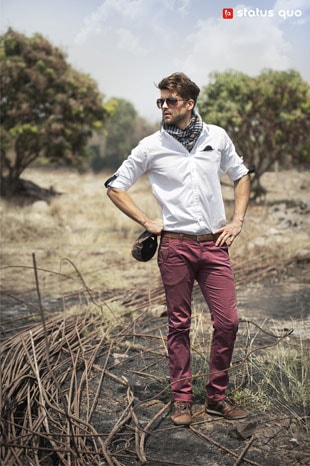
Status Quo bets big on innovative teesStatus Quo known for its knits has launched grindle yarn T-shirts that have seen good demand. “We have done checks in flannel shirts. Our styling keeps us apart from the rest. Sweat shirts are part of circular knits. We have reversible sweat shirts. We are doing jackets like biker and leather jackets Autumn/Winter season,” says Kulwant Singh Suri, VP Sales & Marketing of Status Quo says. He points out that slogan and character licensing work for T-shirts. “We are official licensees for Archie, Garfield, Mr Men Little Miss and have recently launched Comedy Central. The licensing industry is at a very interesting phase in India,” he opines. The company enjoys a strong position as a T-shirt brand. While it also manufactures and retails woven shirts and trousers. Last year, Status Quo also launched a T-shirt brand for kids called Status Quo Cubs. Emerging T-shirt trends : For Autumn/Winter, the brand has also unveiled slim jackets and a sports collection. The predominant colors are: orange, blue, red other than basic colours like white and black. In collar T-shirts, the brand is offering a rugby collection. “We are doing 65 percent fashion and 35 percent basic in knits. Fashion makes things interesting otherwise it can be boring delivering the same sample sets again and again. And the fashion element is not difficult,” says Suri. As per him polo T-shirts sell more than round neck followed by crew neck T-shirts. Moreover, innovations like linings have been introduced in tees. There are different types like reversible, mix and match in checks, use of different fabrics and so on. “For instance, we have played with circular knit and flat knit together in T-shirts. Quilting is in. We have a separate line of Lycra in our collection. We have a huge range of flat knits, where we are doing round neck and V neck,” informs Suri. Retail footprint: Status Quo is sold through 950 MBOs and 16 EBOs. The collection is available at Central, Reliance Trends, Brand Factory, Lifestyle, Shoppers Stop and Westside. While large format stores contribute 25 percent to the total sales, MBOs give 50 percent and EBOs contribute the rest. The company is now looking at expanding its reach through online media and EBOs. With a turnover of Rs 110 crores, Status Quo is looking at 25 to 30 percent growth this year. Suri says the children’s market is dominated by unorganized players but by 2017, he expects brands to contribute 50 percent to the domestic apparel market. “With FDI in retail, the industry is bound to grow. More and more people will buy original products,” he asserts, adding, “Children’s T-shirt line is similar to the adult line. People are looking for clean and neat products in kids’ Source: Article

Thursday, 1 May 2014

Festive boom perks up online sales

The e-commerce space in India is witnessing a boom and stake holders are vouching about the prospects and future this retail format in the country. A recent study by Forrester and Assocham has highlighted this. It predicted the Indian e-commerce business will grow by 350 per cent in the ongoing festive season for a variety of products like apparels, home decor, furnishings, jewellery etc. No wonder leading online shopping portals like Myntra, Jabong, Indiatimes, Flipkart, Snapdeal among others are extending their product portfolio to grab eye-balls. While Myntra experienced almost 15-20 per cent increase in sales this festive season, Jabong saw daily orders increase by 170-260 per cent. Shopclues has doubled its daily business for the past three weeks and experienced good festive season demand. Interestingly,eBay’s overall transactions almost doubled while margins were lower in most categories due to intense competition by other portals to attract festive shoppers. Indiatimes sales grew by 300 per cent on a monthly basis. Unlike the common belief that people in India don’t like buying apparels online owing to the look and feel factor, the categories that showed heightened activity during festive period were gifting and apparels category. While Shopclues saw demand across the board, especially clothing, shoes, electronics, home appliances, home decor, tablets and so on, Myntra and Jabong witnessed significant jump in sales in apparels in addition to other popular gifting items like watches, perfumes, jewellery and fashion accessories. Among other categories footwear performed well on Myntra, and jewellery, home and living items saw higher than normal demand during the festive season on Jabong. Indiatimes and eBay saw consumers splurging more on personal & home gadgets. At eBay categories such as exercise & fitness products, footwear and watches doubled transactions this festive season. Another highlight was that women customers outsmarted men with Indiatimes witnessing 70 per cent women shoppers. Most sites found maximum business coming from top 10 cities. Indiatimes urban centres accounted for 65 per cent of their shoppers while Tier II, III cities accounted for the rest. For eBay Delhi topped the rank followed by Bangalore and Mumbai. Myntra’s 50 per cent business came from the top 10 cities and the rest from Tier II, III cities. Shopclues found nearly 40 per cent of its business coming from cities with less than 1 million population whereas Jabong experienced almost equal growth in both metro and non-metros. Source: Fashion United

Saturday, 26 April 2014

Camaro plans to launch shirts and brand stores

With a Rs 50 crores plus turnover and targeting a growth of not less than 17-18 percent this fiscal, Camaro is looking to introduce a new collection of shirts by Spring/Summer 2015. Also on their agenda is opening exclusive outlets, where the brand enjoys a strong presence. “We are planning to open five more EBOs, which will focus on areas where Camaro has a strong foothold,” opines Saumar Sharma, Business Head, Bhawarlal Alok Kumar. Product expansion in focus: As of now, Camaro’s range consists of T-shirts, trousers and denim but experimentation for shirts has begun. “We have plans to launch them in Spring/Summer 2015. We will unveil a semi-formal line, which will have a lot of plains and variety in fabrics in subtle design,” explains Sharma. The brand is in the experimentation phase with its winter wear line. “With positive response, we plan to launch jackets for the coming Autumn/Winter 2014. These will be casual jackets and there will be a lot of washed, dyed, cotton jackets, with or without polyfill and with or without quilting. We started sweat shirts last winter,” says Sharma. For Autumn/Winter 2014, Camaro’s denim have become predominantly strong for the festive season, with a mix of 60 percent basic and 40 percent fashion. Blue is the core colour, however, the brand has introduced a few overdyed colours for which it has received good response over the last three seasons. In basics, a palette of 11-14 colours has been maintained, which is doing well. The focus is more on rigid denim for the season, over stretched range. In sweat shirts, the company will be launching a new range of rugby inspired themes. Exclusive stores on the anvilWith one EBO in Guwahati, the company now wants to open more outlets in places like UP, Bihar, Jharkhand and North Bengal, where it has a presence. “This will happen in the next eight months. We will stick to a 500 to 700 square foot store model. I believe retail expansion is important for building a brand,” avers Sharma. At present, Camaro is available in 1,250 MBOs. The brand was launched in markets like Mumbai, Maharashtra, Andhra, Telangana, MP and Chhattisgarh three seasons back and it has entered the Delhi market with its knitwear product. “Delhi and its adjoining areas is the next region where we will expand. We are still not present in large formats and want to work with them but not on consignment basis. Our focus is on brand building in the prevailing markets. We want to strengthen our position in these areas,” states Sharma. Positioned as a mid-segment brand, the company is adding a lot of fresh inputs to its denim and other products to gain an edge amid competitors. It also plans to launch an e-commerce platform in the next six months. “In the first phase, we will look at developing our own web store and in the next phase, we can look at expansion on other e-commerce websites,” he asserts. Source: Fashion United

Thursday, 3 April 2014

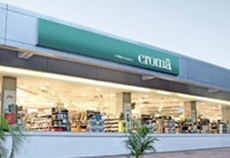
Tatas' Croma to adopt Best Buy-style sales strategy

The Tata Group's consumer electronics retail chain Croma is preparing to adopt the 'store pickup' approach adopted by American retailer Best Buy, which it sees as a huge sales booster across the country. Ajit Joshi, chief executive and managing director of Infiniti Retail Ltd, the company which runs the Croma stores, said no retailer in India offers this facility, which will act as a key differentiator for Croma stores in the country. The 'store pickup' concept allows customers to order items online and pick them up later from the store. "This is a big concept in the West, especially with Big Buy, and Croma is looking at playing on similar strengths," Joshi said at the opening of Croma's 101th retail outlet, spread across 13,500 square feet at Prabhadevi in Mumbai. "The customer chooses to buy the latest iPhone online and has paid for the product; all he has to do is collect it from the nearest store, thus reducing the transaction time. This will be a unique offering, something no other company is providing either online or in the offline space," said Joshi. The Croma staff would also help customers personalise the product being purchased in addition to transferring data, photographs, etc. With stiff competition from online retailers such as Flipkart and Snapdeal, Croma views the online-offline combo as a key strategy to increase reach/sales while also offering convenience to its customers. "People are adopting a mix of online and offline and every single dot-com company has started making noise about coming offline. Over 100 stores in the chain is a big strength and we will combine the forces of brick and mortar and offline for expansion," said Joshi. Interestingly, despite being small at the moment, the online platform gives Croma Rs1 crore worth of business every week. The company will adopt an omni channel (mix of online and offline) strategy and add 10-14 stores this year. The focus, however, will be to invest and expand in the existing cities, thereby avoiding the need for multiple distribution centres for multiple stores. The zip store (smaller stores of 2,000-3,000 square feet) format will be purely for expanding in a crowded market where finding bigger real estate (8,000-12,000 square feet) is a challenge. For every city that Croma has presence in, the management is targeting a consumer durable and information technology (CDIT) share of 20 per cent. "At the moment, we are not even close to that. But we are working on it. We are also looking at developing kiosks that can be taken to a large number of people such as station or factory," said Joshi, stressing that Croma continues to be the number one retailer as per turnover generating sales per square feet of around Rs38,000. Source: Domain-B

LG Enhances Positioning in Asia with InnoFest 2014

LG Electronics (LG) kicked off the third leg of its global Innovation Festival (InnoFest) roadshow in Seoul with a showcase of its newest products aimed at Asian consumers, which included the company’s diverse lineup of TVs, refrigerators, washing machines, air conditioners and smartphones. InnoFest Asia follows on the heels of InnoFest Middle East & Africa event in Turkey and InnoFest Europe in Italy in February and March, respectively. “LG expanded LG InnoFest to Asia this year for the first time to show our regional business partners and stakeholders LG’s diverse lineup of consumer-centered products for 2014,” said Weon-dae Kim, senior vice president and regional head of LG Electronics Asia. “The hundreds of guests who come to LG InnoFest are the first impression customers have of LG so it’s critical that they have all the tools and knowledge to be our ambassadors.” LG showcased its full lineup of TVs for Asian consumers starting with the superior picture quality of ULTRA HD TVs. LG announced the expansion of its ULTRA HD TV family from 49 to 105 inches and adding two new models ― 77 and 65 inches ― to its current 55-inch OLED TV offering. LG also introduced its newest smart TV operating system, webOS, at InnoFest Asia. Setting up, searching and viewing content and connecting to other devices are incredibly simple and intuitive with webOS. LG also showcased at InnoFest Asia its latest big capacity, energy conserving home appliances. Interest was high for LG’s top-load washing machines with Tub Clean+ which increases water temperature to 60 degrees Celsius to wash dirt and germs from inside the unit. LG’s new front-load washing machine reduces wash time to only 59 minutes with its TurboWash™ technology and removes wrinkles and odors from delicate clothes with TrueSteam. In the kitchen, LG’s refrigerators equipped with Inverter Linear Compressor and the double layered Door-in-Door™ system take energy efficiency and convenience to a whole new level. LG’s Deluxe Inverter V smart air conditioners can be adjusted to operate under four power consumption options, according to needs and conditions. Artcool Mirror Inverter V air conditioner includes LG’s proprietary Voice Mate feature enabling it to respond to vocal commands. Smart cleaning solutions such as HOM-BOT SQUARE and KOMPRESSOR RoboSense™ round out LG’s appliance lineup at LG InnoFest Asia. Other products featured at LG InnoFest Asia include LG G Flex, the ergonomic, curved smartphone designed around the human face, and the new G Pro 2, G2 mini, L Series III, as well as the company’s first wearable fitness device, Lifeband Touch. “It was very impressive to see LG Electronics’ technology leadership and innovative products right here, the country where LG was born and raised,” said Mr. Handy Sundjaja, Owner of Log-In, one of the biggest retailers in Indonesia. “I hope we can continue to help each other grow, succeed and lead the Indonesian market going forward.”Source: Article

Monday, 31 March 2014

Moustache: Kidswear the next frontier

Fashion United: With a target growth rate of 30 to 40 per cent in the next few years, Moustache, the popular denim brand from East India plans to venture into the kid’s segment. As Alok Roy, Corporate Manager-Retail of Moustache International puts it, “We introduced Moustache in 1984 with a men’s collection. Gradually we added cotton trousers, men’s casual shirts, and denim jackets to our range. Our latest addition is ladies jeans under the label ‘M-Brand’. We would like to venture into junior segment after strengthening the ladies denim range.” The brand’s collection is currently available with over 300 dealers and
the company wants to increase the count to 500. It also wants to add 100 EBOs to its current count of 47 in the next two to three years. The collection is also retailed through Large Format Stores like Shoppers Stop, Reliance Trends, Bharti Wal-Mart. “As Shoppers Stop and Reliance Trends are on an expansion spree, our collection would get noticed across the country but our focus would always be the East and some parts of South India,” Roy opines. For Spring/summer the brand has paid specific emphasis on shirts keeping the latest trends in the US and Europe in mind. It has also introduced more designs and washes in its jeans collection. Commenting on the brand’s strength area, denims, Roy elaborates that denim has undergone a sea change. “Due to urbanization and acceptance of casual wear in the corporate world jeans has become a happening apparel for both men and women’s categories,” he says. He believes the Indian denim industry’s prospects are evident from the fact that world-class players in garment the industry are venturing into the market. “So the present trend does not suggest whether the market is crowded but ultimately the growing competition will decide the fate and it would lead to survival of the fittest,” Roy sums up. Source: Fashion United