bloggggg

Home  |  Live  |  Science  |  Lifestyle  |  Entertainment  |  Broadcast  |  Games  |  eBooks  |  Astounds  |  Adbite  |  Cricbell  |  Cyber  |  Idea  |  Digital  |  Privacy  |  Publish  |  ePaper  |  Contact  .Subscribe.Subscribe.Subscribe.Subscribe.Subscribe.Subscribe.Subscribe.Subscribe.Subscribe
Subscribe

Monday, 8 December 2025

Tongue-Zapping Device Does More in 6 Months Than 4 Years of Normal Stroke Rehabilitation

PoNS Portable Neuro-modulation Stimulator tongue sensor, plugged-in

A fall from a 10 foot ladder triggered a cascade of neurological problems that might have left an Ontario man paralyzed on his right side for life.

But working with a device that delivers an electrical shock through the tongue has allowed him to recover movement and speech, and even has him looking towards a future where he can return to work.

Combined with traditional speech and movement therapy, Mark Foster uses a portable neuro-modulation stimulator, or PoNS device, to deliver a very small electrical current through his tongue to the brain. The current, controlled via a collar worn around the neck, helps form new pathways for existing skills, and can help increase the efficacy of existing therapies.

Foster has been truly impressed, and made more progress in 6 months with the PoNS device than in 4 years of traditional therapy.

“I would say that it has helped an immense amount with confidence,” Foster told London Free Press. “It hasn’t been perfect, don’t get me wrong… but I’m having an easier time getting around.”

Foster, from London, Canada, was laying electrical wire on a build site in Paris (also in Canada), when he fell onto the cement below. He stood up, dusted himself off, and after a moment, concluded he was fine.

Then, at the urging of a coworker, he went to the hospital for a CT scan and MRI. They concluded he had extensive swelling, but also an unusual formation of cells in his brain called a cavernoma that would have pre-dated the fall. A week later, unable to sleep, Foster went for a warm shower, which increased his blood pressure and led to a stroke.

Interestingly enough, he was recovering well from the stroke itself, before his wife Sonia noticed him slurring his speech and having trouble with balance. They returned to the hospital and found the swelling in his brain’s cavernoma area so extreme that the determination was to perform brain surgery immediately, as he was bleeding and experiencing something like a mini-stroke.

It erased both the progress Foster had already made, and most of the hope he had left.

“It took a long time to go from absolutely nothing,” Foster said. “It broke my heart, but at the same time, it gave me a reason to kind of push myself trying to get back into the swing of things.”

The PoNS device, built by Helius Medical Technology, was originally designed to assist in multiple sclerosis recovery, but also, recently and successfully underwent an FDA-overseen Phase 3 clinical trial for stroke rehabilitation.

Over 100 patients undergoing a double-blinded, placebo-controlled trial found significantly increased benefit from physical rehabilitation for both balance and gait when using the PoNS device.

In June, CignaHealth became the fifth major payer to authorize a claim for the PoNS mouthpiece and controller at out-of-network adjusted negotiated list price of $19,161. The average in-network contracted payment rate is $18,350.

GNN has reported on these togue-zapping therapies before, with another such device being designed for use in the curing of tinnitus.WATCH the company press release below… Tongue-Zapping Device Does More in 6 Months Than 4 Years of Normal Stroke Rehabilitation

Friday, 14 November 2025

Women at forefront of technology, leading with vision: Industry leaders

IANS Photo

New Delhi, (IANS) Leaders from the tech industry on Friday said that women are at the forefront of technology, breaking barriers and leading with vision.

In a statement to IANS, Poonam Puthran, Executive Vice President - Banking at Aurionpro, said that women play a pivotal role in shaping the landscape in the dynamic world of technology.

"With their leadership and resilience, we chart a course towards excellence, driving our organisation forward with purpose and determination," she added.

A report by AIM Research titled 'Women in Tech 2023 (India)' found that out of the total pool of tech professionals across India, the share of women tech professionals is only 29 per cent.

Anjali Sharma, Director, Global Head of L&D, Fulcrum Digital, said the ascent of women in tech in India is both a triumph and a call to action.

"Despite the challenges within the traditionally male-dominated realm, we have witnessed a remarkable shift as women rise through the ranks, particularly in cutting-edge fields like deep tech," she added.According to Sharma, the journey towards gender equality in tech is a shared responsibility, with collaboration needed from individuals, organisations, and policymakers. Women at forefront of technology, leading with vision: Industry leaders | MorungExpress | morungexpress.com

Monday, 10 November 2025

Driverless Electric Bus Eases Driver Shortages and Congestion In Madrid During Maiden Service

– Courtesy of EMT ©, released to Euronews

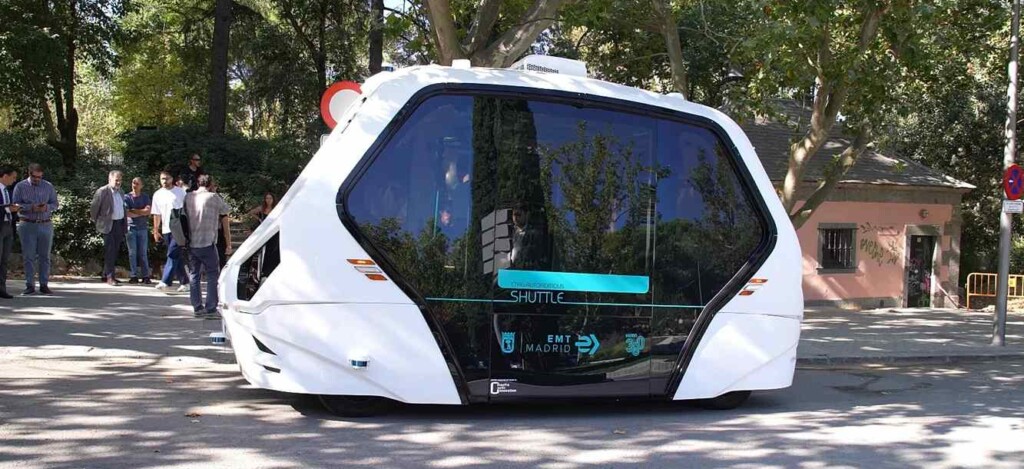
After five years of testing, an autonomous electric bus has been deployed to a park in Madrid for one final, real-world experiment in driverless vehicles for public transit.

If it succeeds, the cute little caterpillar-shaped bus may become a mainstay in the Spanish capital, ferrying passengers around Casa de Campo park and beyond.

Developed through a partnership with the Madrid transit authority (EMT) and Automotive Technology Center of Galicia (CTAG), in northern Spain, the driverless bus has been in action between the 15th of September and 24th of October.

It drove in a circuit around Casa de Campo, picking up passengers at 6 stops, and operating for five of the city’s peak hours.

The vehicle is 100% electric, and though many of its body components were manufactured abroad, the brain, eyes, ears, and other software were made at CTAG.

“This bus is one of the best I have ever tested,” César Omar Chacón Fernández, head of the EMT’s Rolling Stock Planning Division, told Euronews. “It behaves very well dynamically. Let’s say that the technology is very well integrated, it doesn’t behave erratically or robotically like other buses.”

The aim of EMT and CTAG is not replacing drivers, but providing a suitable and safe alternative for predictable, shorter routes that can help cities address a current shortage of professional bus drivers.

Though fully autonomous, and capable of detecting pedestrians, cyclists, skateboarders, scooters, animals, crosswalks, stop signs, traffic lights, and roundabouts, and making decisions over when to brake, accelerate, turn, and open/close the doors, a safety officer is always on board just in case.

“The vehicle detects any object, from a bicycle to an animal, and reacts accordingly to avoid collisions,” Chacón said. “It is a fully autonomous line, but we never leave anything to chance.”A cute little thing, it joins a growing number of miniature, electric, European automotive options that fit better into crowds of cyclists, narrow streets, and cramped parking spaces. Driverless Electric Bus Eases Driver Shortages and Congestion In Madrid During Maiden Service

Friday, 17 October 2025

Telco transformation and the AI efficiency imperative


We caught up with Joaquim Croca, Vice President at global engineering and technology company Cyient, to discuss the pressures facing telcos and their automation journey

For the most part, the 2020s have not been a kind to telco network operators, particularly in Europe. The start of the decade saw them racing to pour billions of euros into their new fibre and 5G networks, betting heavily on the ‘build it and they will come’ mantra made famous by the 1989 film Field of Dreams.

Unfortunately for telcos in 2025, the resulting environment has proven less a field of dreams than a quagmire.

Traditional revenues have remained relatively flat for years in both the fixed and mobile sectors, often bogged down by heavy-handed regulation and fierce competition. At the same time, new revenue streams at scale remain elusive, despite the vastly improved technical capabilities of these new networks.

Against this challenging backdrop, as Cyient’s Senior Vice President Joaquim Croca points out, operational efficiency has never been more important.

“Telco business is fighting not to get fully commoditized,” said Croca. “All of the operators are looking towards becoming more streamlined, more cost-efficient… It’s a matter of survival.”

AI: Unlocking efficiency

At the heart of this drive for efficiency is the rapid evolution of AI in recent years, enabling a level of automation previously unattainable. Today, advanced AI analytics can rapidly compile data from numerous siloes into actionable data points, pre-empting network incidents and triaging problems in real time. Meanwhile, specially designed AI agents can work alongside network engineers, responding to queries in plain language and autonomously making resolving issues.

“AI is no longer just a buzzword; it’s starting to prove its value,” said Croca. “The question of 2025 is really: how can I use AI to release human intelligence to go and do something else?”

“We have been using AI for many years, but now it’s at the forefront of conversations with our customers. They want to know how much AI we are bringing to help overcome their challenges,” he continued.

For Cyient, this concept of freeing engineers to perform more high value tasks is at the core of their VISMON™ platform, a suite of AI-driven tools that enable zero-touch, closed-loop network automation, from planning and deployment through to optimisation and operations. According to the company, this platform is already delivering reductions in network operation time and resources by up to 40% and saving engineers numerous hours every day through autonomous site management.

“Our VISMON platform has been around for 20 years, evolving alongside the industry,” said Croca. “We have a stream of AI-powered scripts that are looking at how the network is performing, what are the issues, what are the fake alerts… ensuring we only call in the network engineer when it’s absolutely necessary.”

Increasing market complexity

In addition to automating network operations directly, part of what makes AI-powered OSS so effective is the smoother integration of these networks within the wider telco operating environment.

In recent years, an increasingly popular monetisation strategy for telcos has been to spin off their infrastructure, aiming to offload some of the operational complexity and serving to attract fresh investment. This, the telcos argue, will allow them to streamline their service operations and better focus on their customers. However, as Croca highlights, this type of fragmentation is making the telco market even more complex.

“We’ve seen a major trend of operators splitting between infracos, netcos, surfcos, etc. It’s all driven by the financial incentive,” explained Croca. “But this approach also creates a more complicated ecosystem. In Europe there are dozens of operators, each of which can divide into two or three different entities, each with their own processes and relationships. It rapidly becomes a very complex world.”

Handling this complexity on an international scale requires careful data management, another area where AI can perform. In a partnership announced this summer, Vodafone is using VISMON for just this purpose, helping to harmonise its network operations across its numerous markets. The platform provides unified network visibility across Vodafone’s markets, enabling them to benchmark configurations, detect anomalies, and track deployments.

The benefits are significant. According to the partners, their collaboration is delivering a 70% reduction in time spent compiling cross-market reports and three times faster decision-making. They also expect to see a 50% decrease in errors caused by inconsistent configuration.

“VISMON provides the strategic foundation to oversee configuration data across all markets, enabling us to harmonize practices, identify best-performing setups, and optimize our networks more effectively than ever,” said Mostafa Noureldien, Manager, Network Development Digital Strategy at Vodafone in the company release.

“We are already deploying AI NOC (Network Operations Centre) agents and rollout agents across two of Vodafone’s operations,” added Croca. “These are fully autonomous and very intelligent. They bring a big gain not just in efficiency but in quality, in terms of First Time Right and First Time Resolved. We’re delivering much faster resolutions to network issues.”

The road towards fully autonomous networks

Of course, the long-term dream for telcos is full network autonomy, requiring the bare minimum of human oversight. For Croca, this goal remains firmly on the horizon due to challenges both technical and philosophical.

“We are still going through existential doubts around how much of the network and its operations can be handed over to AI. There are technical questions and regulatory questions to be addressed, so we will be handing over the reins gradually,” he explained.

Nonetheless, the industry is making blistering progress, with Croca highlighting the need for effective and agile leadership in this rapidly changing landscape.

“To succeed, you need to find the CEOs and CFOs that are really driving new ways of operating, as well as finding some evangelist CTOs that are very keen to look at things in a different perspective,” said Croca. “It’s not just about technological maturity, but our own mindset towards embracing it.”Find out more about Cyient and the journey towards autonomous networks here Telco transformation and the AI efficiency imperativ

Wednesday, 8 October 2025

How safe is your face? The pros and cons of having facial recognition everywhere

Joanne Orlando, Western Sydney University

Walk into a shop, board a plane, log into your bank, or scroll through your social media feed, and chances are you might be asked to scan your face. Facial recognition and other kinds of face-based biometric technology are becoming an increasingly common form of identification.

The technology is promoted as quick, convenient and secure – but at the same time it has raised alarm over privacy violations. For instance, major retailers such as Kmart have been found to have broken the law by using the technology without customer consent.

So are we seeing a dangerous technological overreach or the future of security? And what does it mean for families, especially when even children are expected to prove their identity with nothing more than their face?

The two sides of facial recognition

Facial recognition tech is marketed as the height of seamless convenience.

Nowhere is this clearer than in the travel industry, where airlines such as Qantas tout facial recognition as the key to a smoother journey. Forget fumbling for passports and boarding passes – just scan your face and you’re away.

In contrast, when big retailers such as Kmart and Bunnings were found to be scanning customers’ faces without permission, regulators stepped in and the backlash was swift. Here, the same technology is not seen as a convenience but as a serious breach of trust.

Things get even murkier when it comes to children. Due to new government legislation, social media platforms may well introduce face-based age verification technology, framing it as a way to keep kids safe online.

At the same time, schools are trialling facial recognition for everything from classroom entry to paying in the cafeteria.

Yet concerns about data misuse remain. In one incident, Microsoft was accused of mishandling children’s biometric data.

For children, facial recognition is quietly becoming the default, despite very real risks.

A face is forever

Facial recognition technology works by mapping someone’s unique features and comparing them against a database of stored faces. Unlike passive CCTV cameras, it doesn’t just record, it actively identifies and categorises people.

This may feel similar to earlier identity technologies. Think of the check-in QR code systems that quickly sprung up at shops, cafes and airports during the COVID pandemic.

Facial recognition may be on a similar path of rapid adoption. However, there is a crucial difference: where a QR code can be removed or an account deleted, your face cannot.

Why these developments matter

Permanence is a big issue for facial recognition. Once your – or your child’s – facial scan is stored, it can stay in a database forever.

If the database is hacked, that identity is compromised. In a world where banks and tech platforms may increasingly rely on facial recognition for access, the stakes are very high.

What’s more, the technology is not foolproof. Mis-identifying people is a real problem.

Age-estimating systems are also often inaccurate. One 17-year-old might easily be classified as a child, while another passes as an adult. This may restrict their access to information or place them in the wrong digital space.

A lifetime of consequences

These risks aren’t just hypothetical. They already affect lives. Imagine being wrongly placed on a watchlist because of a facial recognition error, leading to delays and interrogations every time you travel.

Or consider how stolen facial data could be used for identity theft, with perpetrators gaining access to accounts and services.

In the future, your face could even influence insurance or loan approvals, with algorithms drawing conclusions about your health or reliability based on photo or video.

Facial recognition does have some clear benefits, such as helping law enforcement identify suspects quickly in crowded spaces and providing convenient access to secure areas.

But for children, the risks of misuse and error stretch across a lifetime.

So, good or bad?

As it stands, facial recognition would seem to carry more risks than rewards. In a world rife with scams and hacks, we can replace a stolen passport or drivers’ licence, but we can’t change our face.

The question we need to answer is where we draw the line between reckless implementation and mandatory use. Are we prepared to accept the consequences of the rapid adoption of this technology?

Security and convenience are important, but they are not the only values at stake. Until robust, enforceable rules around safety, privacy and fairness are firmly established, we should proceed with caution.

So next time you’re asked to scan your face, don’t just accept it blindly. Ask: why is this necessary? And do the benefits truly outweigh the risks – for me, and for everyone else involved?The Conversation

Joanne Orlando, Researcher, Digital Wellbeing, Western Sydney University

This article is republished from The Conversation under a Creative Commons license. Read the original article.

Monday, 22 September 2025

IIVR helps grow multiple vegetables in one plant

Varanasi (UP), (IANS) Imagine planting one plant and getting multiple vegetables from it for your kitchen needs.

Scientists at ICAR-Indian Institute of Vegetable Research (IIVR), Varanasi are now working on a new single plant that will yield three vegetables simultaneously- brinjal, tomato and chilli.

The new plant is yet to be named.

The scientists had earlier developed 'Pomato' that yields potatoes and tomatoes on a single plant and 'Brimato' that yields brinjal and tomatoes together.

Using the grafting technique, the scientists at ICAR-IIVR, first developed 'Pomato'.

Under the guidance of IIVR director Dr T.K. Behera, Dr Anant Bahadur, principal scientist (vegetable) and head division of crop production at ICAR-IIVR, Varanasi is now working on developing this unique single plant to yield three veggies.

"The grafting of chilli and tomato plants has been done on the brinjal rootstock and the plant is growing well. We are quite hopeful that it will start yielding chilli, brinjal and tomatoes by the end of January 2024,” said Dr Bahadur.

He said that he would analyse the feasibility of its cultivation.

Speaking about 'Pomato', Dr Bahadur said, "Potato tubers were germinated. Then grafting of tomato plants was done on the germinated potato tubers. As per the need, the plant was irrigated from time to time. It grew well and bore tomatoes above ground and potatoes below the ground."

'Pomato', as a single plate, yielded around three kg of tomatoes and around 1.25 kg of potatoes, he added.

Thereafter, in 2019, Dr Anant Bahadur with his team grafted both the brinjal and tomato hybrids on the Brinjal root stock tolerant to waterlogging and salinity.

In 2019, his team succeeded in getting the desired result. He said the 'Brimato' is capable of surviving in waterlogged conditions for four days, whereas a normal plant wilts and gets destroyed in such conditions within 24 hours.

In October, the plant was transplanted, and brinjals and tomatoes were harvested till March.

A single plant yields around 3 kg of tomatoes and 2.5 kgs of brinjals, said Dr Bahadur.Dr Bahadur said, "The special plant, 'Brimato', yields tomatoes and brinjals. It can be grown in kitchen gardens, backyards and also in small fields." IIVR helps grow multiple vegetables in one plant | MorungExpress | morungexpress.com

Monday, 15 September 2025

Semiconductor product design leadership forum to boost innovation launched in India

(AI image/IANS)

New Delhi, (IANS) In a bid to position India as a global leader in chip design, intellectual property (IP) creation and high-value innovation, a Semiconductor Product Design Leadership Forum was launched here on Monday.

Launched by the Indian Cellular and Electronics Association (ICEA), it aims to tackle critical gaps in access to capital, advanced EDA tools, IP acquisition, global collaborations, and specialised semiconductor design talent.

The forum further aims to produce a globally dominant semiconductor design ecosystem for India by creating an enabling environment for Indian engineers to innovate and promote IP creation within the country. Thereby, the ICEA forum will complement the design-linked incentive (DLI) scheme and other policy initiatives.

"As we invest in fabs and manufacturing through the India Semiconductor Mission, it is imperative that we also strengthen the design ecosystem, for that is where true value, autonomy, and sovereignty lie,” said S. Krishnan, Secretary, MeitY, at the event.

The Forum Chair, Sandeep Kumar, said that by bringing together fabless companies, IP institutions, tool vendors, supply chains, marketing, and funding agencies, we aim to address structural gaps.

The forum brought together over 80 stakeholders, including officials from MeitY, NITI Aayog and global firms.

Stakeholders from the semiconductor ecosystem, including domestic product design companies, DLI-recognised firms, early-stage design startups, and global semiconductor ecosystem companies, attended the event.

“ICEA Semiconductor Product Design Leadership Forum reflects our conviction that India must lead not only in manufacturing but also in chip innovation. With this initiative, we envision catalysing the growth of 500 successful semiconductor product design companies over the next decade," said Pankaj Mohindroo, Chairman, ICEA.

Backed by government schemes offering up to 50 per cent fiscal support, India’s semiconductor market is projected to grow from $45-50 billion in 2024-25 to $100-110 billion by 2030.The Semiconductor Fabs Scheme and Display Fabs Scheme offer up to 50 per cent financial aid for projects falling under their respective domains. The DLI scheme offers incentives up to Rs 15 crore for each chip design startup. Semiconductor product design leadership forum to boost innovation launched in India | MorungExpress | morungexpress.com

Friday, 12 September 2025

TinyML: The Small Technology Tackling the Biggest Climate Challenge

Image by Gerd Altmann from Pixabay | For Representational Purpose Only

Tanveer Singh : As the planet struggles under the weight of 40+ billion metric tons of CO₂ emissions in 2024 alone, and an ever-rising energy demand, the search for smarter, leaner solutions has never been more urgent. There enters the TinyML, where the power of AI meets ultra-low energy computing to drive sustainability at scale.

It may be shocking, but as you are reading this, billions of sensors are tracking the planet’s health – from the air we breathe to the energy we consume. Already, more than 14 billion IoT devices are being used to monitor climate change and are projected to reach a whopping 30 billion by the end of 2030. But the concerning part is that the energy consumed by these devices is around 200 terawatt-hours of electricity annually, which is roughly equivalent to the entire energy consumption of countries like Thailand. To meet this demand, energy is produced through the traditional method of burning fuel, which further emits millions of Carbon footprints annually, that is even more than the lifetime emissions of 4 cars, just to monitor climate change. And therein lies the irony.

Furthermore, the constant transmission of data through these sensors requires millions of dollars for their deployment and maintenance. Like a large-scale smart city as big as New York, IoT networks can cost over $10–15 million per year to operate. This is exactly where TinyML comes as the solution, offering a path that enables IoT devices to process data locally, reducing energy consumption by up to 90% and significantly lowering costs.

Tiny ML bridges the gap between artificial intelligence and embedded systems, allowing machine learning activities even in sensors as small as a grain of sand. It is based on the idea of machine learning that is focused on building machine learning models on low-power devices like microcontrollers, enabling the device to process data instantly and anywhere, without depending on external internet storage to compute it. One clear example is Alexa, which uses TinyML models to send instant responses to the device for processing instead of sending through the cloud (external storage ), which will take a longer time.

Additionally, TinyML improves privacy and data security by running locally and reduces overall operational cost by 50-60% as compared to large ML models working on external storage. Take the example of Google's TinyML image classification that runs directly on devices, keeping images private while cutting storage and cloud costs by over 50%. TinyML can be best understood as having a mini robot in your pocket that can solve problems instantly, instead of always asking a big computer far away for help. It is faster, saves energy, and keeps your information private. When this field is applied to the climate, its efficiency becomes a distinguished factor.

Besides being cost-effective and having higher efficiency, it also helps in tracking air quality to predict natural disasters and, hence, supports the fight against climate change. Tiny ML sensors enable the quick detection of forest fires through heat or smoke detection, and aid in local air and water quality checks, eliminating the need for cloud computing dependency. For instance, Arduino-based air quality sensors are used to measure air quality and provide data on the temperature and humidity of an area. These models can also be used in solar or wind farms to check the performance of the solar cells and windmills through the consumption of energy, which can further help in increasing the efficiency of the farms. For example, Google’s DeepMind AI was successfully used with wind farms in the U.S. to predict wind power output 36 hours in advance, boosting the value of wind energy by around 20%. Interestingly, these sensors can also aid in monitoring birds' and whales' calls or other animals to track migration patterns and population health, as well as because of their small size and working on low power, and hence, they can help researchers to get valuable data on ecosystems without disturbing the wildlife. Moreover, TinyML sensors used in smart grids help in improving energy utilization by constantly monitoring and managing the transport of electricity so that energy is not wasted. Besides this, these devices can help in measuring the water pressure, tidal patterns, and ground movement of an area, and the data from this can be used to detect disasters earlier. For instance, in Japan, Tiny ML sensors placed along coastlines measure tidal waves and ground vibration in real time, which helps authorities to issue faster tsunami and earthquake warnings.

However, while these applications highlight the transformative impact of Tiny ML in tackling climate related problems, the integration also brings forth several challenges that need to be addressed to ensure reliability and scalability. First and foremost is the limitation of hardware, which is that there is limited storage, approximately in kilobytes or 1 to 5 megabytes, to store data compared to traditional models that have memory in gigabytes and terabytes. As a result, small models in TinyML will be less precise than the traditional models, which can be a huge challenge in models that work on reliability, for example, disaster management models. Furthermore, the harsh conditions like weather or wildlife can damage these devices, leading to malfunctioning and increasing the cost of maintenance.
Additionally, even though these devices are cost-effective, deploying billions of devices will still require huge funding, which can limit their production and scalability.

Despite these challenges, the future of TinyML is being shaped by the integration of emerging technologies, large-scale adoption, and the expanding market of AI. The combination of TinyML with the 5 G network, which provides 100 times faster speed than 4 G and the ability to connect over one million devices per square kilometer, can enable the creation of massive, interconnected sensors all over the cities that can provide faster and reliable data. Additionally, integrating it with federated learning- an ML technique that enables multiple devices to train a model together without sharing the raw data - can help in ensuring data privacy and increasing the accuracy of the models. Furthermore, Government and Research institutes are likely to adopt TinyML models in various tasks as they provide a scalable and cost-effective solution, especially in environments with limited resources. For instance, the U.S. National Aeronautics and Space Administration (NASA) has explored TinyML to process sensor data directly on satellites, reducing the need for constant communication with Earth.

It won’t be an exaggeration to say that the Tiny ML models have the potential to shape the future of the world. By offering scalable as well as energy-efficient solutions, Tiny ML stands out as the best alternative to tackle the climate change problems. From reducing the CO2 emissions to providing faster processing of data and strengthening the privacy and accuracy of the data, the Tiny ML model can be a changemaker catalyst not only in the world of climate change but in other fields, too. Undoubtedly, Tiny ML paves the way for a future where artificial intelligence works in harmony with the planet.Tanveer Singh, a first-year student at Plaksha University, has been passionate about writing articles and poems since high school. From raising public awareness of new technologies to highlighting environmental and societal issues, he has explored a wide range of themes through his work and aspires to continue making an impact in this space for the long run. TinyML: The Small Technology Tackling the Biggest Climate Challenge | MorungExpress | morungexpress.com

Thursday, 14 August 2025

Global 5G Modem Market is projected to grow at a CAGR of 12.45% from 2024 to 2032, reaching a value of USD 5.6 billion by the end of the forecast period


Posted by Harry Baldock, Press Release: The 5G modem is vital in the changing telecom landscape. It connects devices to ultra-fast, low-latency 5G networks.

Devices such as 𝐬𝐦𝐚𝐫𝐭𝐩𝐡𝐨𝐧𝐞𝐬, 𝐚𝐮𝐭𝐨𝐧𝐨𝐦𝐨𝐮𝐬 𝐜𝐚𝐫𝐬, 𝐬𝐦𝐚𝐫𝐭 𝐟𝐚𝐜𝐭𝐨𝐫𝐢𝐞𝐬, 𝐚𝐧𝐝 𝐈𝐨𝐓 𝐬𝐲𝐬𝐭𝐞𝐦𝐬 benefit from high-speed data, quick communication, and smooth connections due to 5G modems. This is why the 5G modem market is expanding rapidly.

𝐆𝐞𝐭 𝐭𝐡𝐞 𝐟𝐮𝐥𝐥 𝐫𝐞𝐩𝐨𝐫𝐭 @ https://tinyurl.com/2muufj72

Tech companies are putting significant money into 𝐀𝐈, 𝐜𝐥𝐨𝐮𝐝, 𝐚𝐧𝐝 𝐞𝐝𝐠𝐞 𝐜𝐨𝐦𝐩𝐮𝐭𝐢𝐧𝐠 to improve 𝟓𝐆 𝐦𝐨𝐝𝐞𝐦𝐬. Features like 𝐦𝐮𝐥𝐭𝐢-𝐠𝐢𝐠𝐚𝐛𝐢𝐭 𝐬𝐩𝐞𝐞𝐝𝐬, 𝐛𝐞𝐭𝐭𝐞𝐫 𝐞𝐧𝐞𝐫𝐠𝐲 𝐞𝐟𝐟𝐢𝐜𝐢𝐞𝐧𝐜𝐲, 𝐚𝐧𝐝 𝐧𝐞𝐭𝐰𝐨𝐫𝐤 𝐬𝐥𝐢𝐜𝐢𝐧𝐠 are becoming common.

The demand for 𝐬𝐦𝐚𝐫𝐭 𝐜𝐢𝐭𝐢𝐞𝐬 and 𝐜𝐨𝐧𝐧𝐞𝐜𝐭𝐞𝐝 𝐯𝐞𝐡𝐢𝐜𝐥𝐞𝐬, along with government backing for standalone 5G networks, is leading to the creation of new compact, multi-band, and mmWave-compatible modems. This greatly enhances the user experience.

𝐃𝐨𝐰𝐧𝐥𝐨𝐚𝐝 𝐬𝐚𝐦𝐩𝐥𝐞 𝐫𝐞𝐩𝐨𝐫𝐭 @ https://tinyurl.com/8nxym5my

𝐊𝐞𝐲 𝐆𝐫𝐨𝐰𝐭𝐡 𝐃𝐫𝐢𝐯𝐞𝐫𝐬:

🔸 𝐑𝐚𝐩𝐢𝐝 𝟓𝐆 𝐀𝐝𝐨𝐩𝐭𝐢𝐨𝐧: Telecom providers worldwide are launching 5G, increasing the need for high-speed modems for consumers and industries.

🔸 𝐆𝐫𝐨𝐰𝐢𝐧𝐠 𝐒𝐦𝐚𝐫𝐭𝐩𝐡𝐨𝐧𝐞 & 𝐃𝐞𝐯𝐢𝐜𝐞 𝐌𝐚𝐫𝐤𝐞𝐭: As major smartphone brands introduce 5G models, the demand for both integrated and standalone 5G modems is increasing.

🔸 𝐂𝐨𝐧𝐧𝐞𝐜𝐭𝐞𝐝 𝐕𝐞𝐡𝐢𝐜𝐥𝐞𝐬: 5G modems are essential for V2X (vehicle-to-everything) communication, offering fast and reliable connections for autonomous vehicles.

🔸 𝐈𝐨𝐓 & 𝐒𝐦𝐚𝐫𝐭 𝐂𝐢𝐭𝐲 𝐄𝐱𝐩𝐚𝐧𝐬𝐢𝐨𝐧: Billions of IoT devices, from smart meters to sensors, depend on strong 5G connections supported by efficient modems.

🔸 𝐀𝐈 & 𝐄𝐝𝐠𝐞 𝐂𝐨𝐦𝐩𝐮𝐭𝐢𝐧𝐠 𝐈𝐧𝐭𝐞𝐠𝐫𝐚𝐭𝐢𝐨𝐧: 5G modems work with edge computing to provide real-time data processing. This drives innovation in AR/VR, healthcare, and manufacturing.

𝐅𝐨𝐫 𝐦𝐞𝐝𝐢𝐚 𝐢𝐧𝐪𝐮𝐢𝐫𝐢𝐞𝐬, 𝐢𝐧𝐭𝐞𝐫𝐯𝐢𝐞𝐰𝐬, 𝐨𝐫 𝐚𝐜𝐜𝐞𝐬𝐬 𝐭𝐨 𝐭𝐡𝐞 𝐟𝐮𝐥𝐥 𝐦𝐚𝐫𝐤𝐞𝐭 𝐫𝐞𝐩𝐨𝐫𝐭, 𝐩𝐥𝐞𝐚𝐬𝐞 𝐜𝐨𝐧𝐭𝐚𝐜𝐭:

Ushmani

MarketIntel Reports


Thursday, 7 August 2025

New 3D-Printed Titanium Alloy is Stronger Than the Standard – Yet 30% Cheaper

Ryan Brooke inspects a sample of the new titanium – Photo by Michael Quin (RMIT University)

Engineers from an Australian University have produced a new type of 3D-printed titanium that’s about a third cheaper than commonly used titanium alloys.

A team of engineers at the Royal Melbourne Institute of Technology (RMIT) developed the groundbreaking alloy by replacing expensive vanadium with more accessible elements. By rethinking how titanium alloys are designed, the team created a material with improved performance and more uniform microstructure—key factors for aerospace and medical applications.

The team has filed a provisional patent on their innovative approach, which has also been outlined in a paper published in Nature Communications.

The study’s lead author Ryan Brooke, working at the university’s Centre for Additive Manufacturing, will investigate the next steps of commercializing the technology, saying the field of 3D-printed titanium alloys was ripe for innovations.

“3D printing allows faster, less wasteful and more tailorable production yet we’re still relying on legacy alloys (like Ti-6Al-4V) that doesn’t allow full capitalization of this potential. It’s like we’ve created an airplane and are still just driving it around the streets,” he said in a university press release.

“New types of titanium and other alloys will allow us to really push the boundaries of what’s possible with 3D printing and the framework for designing new alloys outlined in our study is a significant step in that direction.”

Besides being nearly 30% cheaper to manufacture, the latest study outlines a time- and cost-saving method to select elements for alloying, providing a clearer path for predicting the grain structure so the metal can print more evenly, avoiding the column-shaped microstructures that lead to uneven mechanical properties in some 3D printed alloys.

Photo credit: RMIT

“By developing a more cost-effective formula that avoids this columnar microstructure, we have solved two key challenges preventing widespread adoption of 3D printing,” said Brooke, a PhD candidate.

He recently talked to aerospace, automotive, and MedTech industry representatives about their needs.

“What I heard loud and clear from end users was that to bring new alloys to market, the benefits have to not just be minor incremental steps but a full leap forward.

“That’s what we have achieved here,” he said.

“We have been able to not only produce titanium alloys with a uniform grain structure, but with reduced costs, while also making it stronger and more ductile.”[Source: RMIT University] New 3D-Printed Titanium Alloy is Stronger Than the Standard – Yet 30% Cheaper

Tuesday, 5 August 2025

India to host AI impact summit 2026, leading global dialogue on democratising AI


New Delhi, (IANS): India is set to host the AI Impact Summit in February 2026, reinforcing its commitment to democratising Artificial Intelligence (AI) for the public good, the Parliament was informed on Wednesday.

This landmark event aligns with Prime Minister Narendra Modi’s vision of making technology accessible to all and leveraging AI to tackle real-world challenges across healthcare, education, agriculture, climate, and governance, Union Electronics and Information Technology Minister Ashwini Vaishnav told the Lok Sabha.

The IndiaAI mission, which prioritises accountability, safety, equity, and the defence of privacy and human rights, is at the core of India's AI strategy.

According to the statement, one of the main highlights is the creation of native Large and Small Language Models using Indian datasets.

Currently, startups such as Sarvam AI, Soket AI, Gnani AI, and Gan AI are developing foundational models that are suited to the linguistic and cultural diversity of India.

According to the statement, these models will be open-source, allowing other startups to create locally tailored applications.

According to Minister Vaishnaw, to support scalable innovation, the government is also enhancing AI compute capacity by ensuring GPU infrastructure access and expanding the AIKosh Datasets Platform, which currently hosts over 1,000 datasets and 208 AI models, including Text-to-Speech tools in Indian languages.

Additionally, the mission is funding 30 AI-based applications addressing public interest areas like health, climate, and governance.

Through its IndiaAI Startups Global Programme, 10 startups are being mentored at Station F and HEC Paris, including PrivaSapien Technologies (privacy-enhancing AI) and Secure Blink (AI cybersecurity).

Ensuring safe and trusted AI, India has established the IndiaAI Safety Institute to coordinate efforts on responsible AI.

Projects under this initiative include AI bias mitigation, machine unlearning, and watermarking, as per the statement A strong legal framework that addresses AI-related risks like disinformation, deepfakes, and data misuse, such as the Digital Personal Data Protection Act (2023), IT Act (2000), and IT Rules (2021), supports the tech initiatives.A techno-legal approach underpins India’s regulation, combining legislation with government-funded R&D on deepfake detection, privacy, and cybersecurity tools, according to the written reply. India's hosting of the 2026 summit further solidifies its position as a global leader in the development of AI that is inclusive, moral, and driven by innovation. India to host AI impact summit 2026, leading global dialogue on democratising AI | MorungExpress | morungexpress.com

Thursday, 31 July 2025

5G Advanced powers world’s largest fleet of driverless coal mining trucks in China


The 100-strong fleet of autonomous electric mining trucks are set to improve both safety and efficiency at the Yimin open-pit coal mine in Inner Mongolia

This month marked a significant step in the development of intelligent mining, with Chinese energy giant Huaneng Group deploying the world’s largest fleet of unmanned electric mining trucks.

The 100 cabinless vehicles have begun operations at the Yimin open-pit coal mine in Inner Mongolia, China, each capable of loading and hauling up to 90 tonnes of material across the site.

Powered by electric batteries, this new fleet is carbon neutral and can operate continuously for 24 hours a day without human intervention.

Perhaps most importantly, these autonomous vehicles remove the need to expose human workers to the mine’s inhospitable environment, where temperatures can reach as low as -48.5°C and hazardous road conditions making driving dangerous.

According to Li Shuxue, Chairman of Huaneng Inner Mongolia Eastern Energy, the truck fleet has already demonstrated operational benefits over its human-operated predecessors, increasing their overall transport efficiency by 20%.

The deployment comes as part of a joint innovation project between China Huaneng Group Co., Ltd. (China Huaneng), Xuzhou Construction Machinery Group, Huawei, and State Grid Smart Internet of Vehicles. The partners intend to further expand the truck fleet in the coming years, aiming for 300 of the vehicles to be operational over the next three years.

5G Advanced to underpin more efficient mining operations

This rollout of the autonomous vehicle fleet would not have been possible without the deployment of a 5G Advanced network, providing uplink speeds of up to 500 Mbps and latency of just 20 milliseconds, both of which are crucial for enabling autonomous vehicles to make driving decisions in real-time.

5G Advanced, sometimes known as 5.5G, boasts significant improvements in performance compared to 5G, including better efficiency, faster uplink speeds, and greater capacity.

The benefits of 5G Advanced networks for industrial operations are becoming increasingly well known. Huaneng Group itself said it first identified the need for a 5G network in 2022 and quickly began working with China Mobile Inner Mongolia to explore its deployment. By April 2023, initial autonomous vehicle tests were underway, with the first vehicles working commercial shifts in March this year.

In addition to the 5G Advanced network itself, Huaneng Ruichi’s truck fleet is also supported by a range of cloud infrastructure solutions, including Huawei’s Commercial Vehicle Autonomous Driving Cloud Service (CVADCS). This solution combines data from each vehicle and across the mining site to provide precise, real-time location information to the fleet, enabling route optimisation and increased efficiency, even in low-visibility conditions that would pose a challenge to human drivers.

Modernising China’s coal industry

The launch of this electric fleet – the world’s largest at an open pit mine – marks a significant step in China’s drive towards building a greener energy base for the nation.

Despite a surge in renewable energy projects in recent years, coal undeniably remains the backbone of China’s industrial strategy. In 2023, China announced that work was underway to build new coal power plants with a combined capacity of 70.2 GW – more than 19-times that of the rest of the world combined. As a result, in 2024 China produced 476,896 million metric tons of coal, accounting for 52.6% of the world’s total.

This rise in coal production, however, coincides with a government drive to modernise the industry, aiming to make mining more intelligent, safer, more efficient, and more sustainable. To this end, last year China’s National Energy Administration (NEA) provided guidelines for the intelligent transformation of coal mines, promoting the use of AI and the latest wireless technologies. Looking ahead, the NEA is aiming to create a series of standards for the design, well construction, production, management, O&M, and evaluation of intelligent coal mines by 2030.

These efforts are already beginning to bear fruit. According to data from the 2025 National Energy Work Conference, intelligent production capacity now accounts for over half of China’s total coal production capacity, with nearly 1,000 mines having begun their ‘intelligent construction’ transformation.

A more intelligent futureThe launch of China’s largest fleet of autonomous electric mining trucks, powered by 5G Advanced, is a significant milestone in the country’s journey towards smarter, safer, and greener coal mining. As intelligent mining becomes the norm, this initiative sets a powerful example of how traditional energy sectors can evolve for a more sustainable future. 5G Advanced powers world’s largest fleet of driverless coal mining trucks in China

Monday, 23 June 2025

AI will turn networks into ‘product factories’, says IOH boss


Speaking at DTW in Copenhagen, Vikram Sinha, CEO of Indosat Ooredoo Hutchison (IOH), called on operators to go ‘all in’ on AI transformation

As was to be expected, the topic of AI dominated discussions on the opening day of DTW this year. Numerous operators took to the stage to exhort the technologies potential to transform the telecoms world and help telcos return to growth. Chief among these AI cheerleaders was IOH CEO Vikram Sinha, who said telcos should be embracing the new technology as much as possible.

“AI is not the metaverse – it’s real today,” said Sinha. “We have to go all in. We have to get serious. We need to see how we can make 12-15% growth the norm for telcos,” he said.

Sinha explained how IOH’s AI strategy revolved around turning the network and its wealth of data into a ‘product factory’ for consumer AI use cases.

“We want to solve customer problems and we want to be with them on that journey,” he said, adding that IOH was targeting use cases across the consumer value chain.

“AI has to be for all. It cannot be only for high end customers,” he said. “We have been working on creating a product on SMS – this would touch everyone. Similarly, you can have an [AI] personal tutor. Everyone can have a personal nurse, and farmers and have AI support. If our customers start seeing a product which is helping their daily life better, that is solving their problem, the respect for you will go up. Your ARPU will really go up.”

In-house AI capabilities

IOH has been positioning itself as an AI company for a number of years now, seeing the emerging technology as a key driver of revenue growth on their journey from telco to techco. Earlier this year, the company launched a Sovereign AI Factory, powered by Sahabat-AI, a 70-billion parameter large language model that operates in Indonesian and five additional local languages. This, IOH says, will allow GenAI services to be delivered to all Indonesians, not only those that speak English. This large language model (LLM) will form the basis of numerous IOH products, expanding on their ability to create AI use cases in-house.

With digital sovereignty of ever increasing importance, being able to create these products independently and with local partners is a growing focus.

“We have created a vertical Chief Product Officer,” said Sinha. “Telco never had a product team[…] but in three years time you’ll need to have product capabilities to make sure that you don’t outsource everything.”

But while many of AI-driven use cases are already in development, both by IOH and other telcos, few are currently commercially available at scale. For Sinha, part of the challenge lies in how telcos frame these AI use cases in discussions with customers.

“Don’t talk about POC [Proof of Concept], talk about Proof of Value,” said Sinha. “Once customers talk about value, we’ll have a flywheel effect.”

“Progress is better than perfect,” he added.

A platform for AI innovation

Speaking on stage alongside Sinha, Danish telco Nuuday’s CEO Christian Thrane took a different approach to AI use cases, noting that a telcos size and the size of its target market would impact its ability to develop AI use cases alone.

“For us, it’s a lot more about creating the platform and working with partners,” he said. “I always say to partners, we’re a small market, one of the most advanced markets globally, so come and test it out.”

Perhaps more importantly, Thrane highlighted the importance of collaboration across the telco industry, working together to create solutions that only telcos can provide.

“It’s almost impossible to think about the role of AI and not be a bit nervous at times right? I think the purpose is right there, staring in our face. It’s about stepping into it and not trying to outsmart each other as an industry […] really leaning into what can we do together quickly and to make sure that AI models rely on trusted, reliable data for the customers in a private way.”“Five years from now, if we haven’t done this right. We’re toast,” Thrane concluded.  AI will turn networks into ‘product factories’, says IOH boss

Thursday, 5 June 2025

Mumbai ranks 6th globally in data centre under-construction capacity: Report


New Delhi, (IANS): Mumbai ranks sixth globally in data centre under-construction capacity, surpassing global hubs like London and Dublin while demonstrating the city’s rapidly growing status as a data centre hub, a report showed on Tuesday.

Mumbai is emerging as a significant contributor to capacity expansion in the Asia-Pacific (APAC) region.

The report by Cushman & Wakefield said that Mumbai ranks as the seventh most established data centre market in the APAC region.

At the end of 2024, the city had 335 MW of data centre capacity under construction, which, once completed, will expand its operational capacity by 62 per cent.

“India’s data centre landscape is undergoing a strategic shift. Mumbai has firmly positioned itself among the top global markets, while Pune is emerging as a key data centre hub in the APAC region. India’s data center sector has attracted prominent international operators and investors, even as domestic players continue to expand capacity,” said Gautam Saraf, Executive Managing Director–Mumbai and New Business, India, Cushman & Wakefield.

This dual momentum — global confidence and local commitment — underscores the country’s readiness to scale sustainably.

“The next few years will see India add over 2.7 GW of capacity across under-construction and planned projects, reinforcing its position as a future-ready digital infrastructure powerhouse,” he mentioned.

The report, covering 97 global markets, highlighted power access, land availability, and infrastructure as key factors shaping data centre development.

In Mumbai, the data centre growth is further supported by digital infrastructure upgrades. This year may witness the completion of three crucial undersea data cable projects landing in Mumbai.

These are expected to significantly increase India’s internet capacity and speed, enhancing inter-regional digital connectivity with Africa, Europe, the Middle East, and Asia. The completion of these projects will further elevate Mumbai’s position as a major connectivity hub in the Southeast Asian region, said the report.

Ranked 4th among APAC’s top emerging data centre markets, Pune is rapidly becoming a preferred destination for hyperscalers and enterprise-grade colocation facilities.As of Q1 2025, Pune’s operational data centre stock stands at 112 IT MW. With an additional 190 IT MW of capacity currently in the under-construction or planned stages, across key corridors such as Hinjewadi and Pimpri-Chinchwad, the city is well-positioned for accelerated growth, said the report. Mumbai ranks 6th globally in data centre under-construction capacity: Report | MorungExpress | morungexpress.com

Monday, 19 May 2025

India has highest AI skills penetration: UNDP report


New Delhi, (IANS): India has the highest self-reported AI skills penetration in the world, which reflects the country’s growing potential in the sector, according to a UNDP report released on Tuesday.

In an endorsement of India’s growing artificial intelligence (AI) capabilities, the United Nations Development Programme (UNDP) has said the country has taken rapid strides in deploying AI to empower farmers and small businesses.

It highlights how, with over five million software developers, India is poised to see continued growth in AI.

The report also mentioned how AI is being effectively integrated into critical sectors like healthcare and agriculture.

According to the report, human development progress is experiencing an unprecedented slowdown, but Artificial Intelligence (AI) could be used to reignite development.

"The choices we make in the coming years will define the legacy of this technological transition for human development," said Pedro Conceicao, Director of UNDP’s Human Development Report Office. "With the right policies and focus on people, AI can be a crucial bridge to new knowledge, skills, and ideas that can empower everyone from farmers to small business owners."

The 2025 Human Development Report -- "A matter of choice: people and possibilities in the age of Artificial Intelligence (AI)" analyses development progress across a range of indicators known as the Human Development Index (HDI), which encompasses achievements in health and education, along with levels of income. Projections for 2024 reveal stalled progress on the HDI in all regions across the world.

Beyond the alarming rate of deceleration in global development, the report finds widening inequalities between rich and poor countries. As traditional paths to development are squeezed by global pressures, decisive action is needed to move the world away from prolonged stagnation in progress.

While large disparities continue to exist, the Asia-Pacific region showed some of the fastest gains in human development since 1990 to 2023, with both East Asia and the Pacific and South Asia raising their Human Development Index value by more than 50 per cent to 0.775 and 0.672, respectively. The HDI measures the average achievement in three basic dimensions of human development: a long and healthy life, knowledge and a decent standard of living.

Relative to 2022, South Asia saw in 2023 the most rapid increase in the HDI value, increasing by 4.8 per cent. East Asia and the Pacific saw an improvement of 1.2 per cent.

“Amidst this global turmoil, we must urgently explore new ways to drive development,” Steiner said. “As Artificial Intelligence continues its rapid advance across so many aspects of our lives, we should consider its potential for development. New capabilities are emerging almost daily, and while AI is no panacea, the choices we make hold the potential to reignite human development and open new pathways and possibilities.”

The report contains the results of a new survey that showed people are realistic yet hopeful about the change AI can bring.

Half of the respondents worldwide think that their jobs could be automated. An even larger share -- six in ten -- expect AI to impact their employment positively, creating opportunities in jobs that may not even exist today.

The report advocates for a human-centred approach to AI -- which has the potential to fundamentally redesign approaches to development. The survey results show that across the world, people are ready for this kind of ‘reset’.

The report outlines three critical areas for action, which include building an economy where people collaborate with AI rather than compete against it, embedding human agency across the full AI lifecycle, from design to deployment and modernising education and health systems to meet 21st-century demands.Democratisation of AI is already underway. Around one in five of the survey respondents report already using AI. And two-thirds of respondents across lower human development countries anticipate using AI in education, health, or work within the next year, the report added. India has highest AI skills penetration: UNDP report | MorungExpress | morungexpress.com

Tuesday, 29 April 2025

Tempted to turn on the aircon? Science says use fans until it’s 27°C

Many Australians struggle to keep themselves cool affordably and effectively, particularly with rising electricity prices. This is becoming a major health concern, especially for our most vulnerable people such as the elderly, pregnant women and people with cardiovascular diseases.

Air conditioning is often seen as the only solution to this problem. But relying too heavily on aircon has major downsides. These include hefty electricity bills, increased greenhouse gas emissions, strain on an already weak electricity grid, and dumping heat from buildings to the outside – further heating the outdoor air.

Our latest research, published in the Medical Journal of Australia, highlights a simple yet effective solution: a “fan-first” cooling approach.

The approach is simple: use electric fans as your first cooling strategy, and only turn on air conditioning when the indoor temperature exceeds 27°C.

Fan-First Cooling: The Smart Way to Beat Australia’s Heat Crisis (Federico Tartarini)

The solution: ‘fan-first’ cooling

Electric fans can make you feel more comfortable on a hot day simply by moving the air around you. This helps our body release heat in two ways: improving the transfer heat from your body into the air, and increasing the evaporation of sweat from your skin.

A gentle breeze can make you feel up to 4°C cooler, even when the weather is very hot and humid.

This allows you to increase the aircon set-point (the temperature at which cooling turns on) from 23-24°C to 27-28°C. This simple change can significantly reduce the amount of time your aircon is running, leading to substantial energy savings.

For example, in our previous research we showed raising the office air conditioning set-point from 24 to 26.5°C, with supplementary air movement from desk and ceiling fans, reduced energy consumption by 32%, without compromising thermal comfort.

Don’t fans still use electricity to run?

Yes fans still use electricity, but it’s as little as 3% of the electricity used to run air conditioning. That means you can run more than 30 fans with the same amount of energy it takes to run a single aircon unit.

A basic pedestal fan is cheap to buy (A$20 to $150), requires no installation and minimal maintenance, and can be easily moved around to keep you cool in any part of your house. Simply turn on the fan as soon as you start feeling slightly warm.

Fans cool you, whereas aircon cools the whole space, which is less efficient.

We also previously showed that using fans rather than airconditioning is a more effective emissions reduction strategy than switching from old-fashioned incandescent light bulbs to LED lighting.

The problem with over-reliance on aircon

Globally, the use of air conditioning is rapidly increasing. Aircon units sales have tripled since 1990 and are projected to triple again in 2050. It is becoming the go-to solution to heat management.

Aircon is effective but is expensive to buy, run and maintain.

A recent survey showed while most people have aircon, two thirds did not use it due to cost concerns.

Beyond the financial burden, the environmental impact of aircon is substantial. In Australia, electricity mainly comes from burning fossil fuels, creating greenhouse gas emissions. Even with the growth of renewable energy, the sheer demand for aircon cooling could strain the transition and the grid.

Furthermore, the refrigerants used in most aircon units are potent greenhouse gases. It will also take time to replace older and less efficient aircon units.

Aircon units also release heat into the outdoor environment, worsening the urban heat island effect – the phenomenon where cities are significantly warmer than surrounding rural areas.

Finally, over-reliance on aircon might reduce our ability to cope with heat. If we constantly keep our indoor temperatures very low, our bodies may not acclimatise to warmer summer conditions, making us more vulnerable during power outages.

Using fans safely and effectively

While fans offer numerous benefits, it’s important to use them correctly, especially in very hot indoor conditions.

There’s a common misconception that fans should be turned off above 35°C because they might blow hot air onto the skin. This ignores the crucial role fans play in evaporating sweat.

We have established safer and more accurate temperature thresholds for fan use by conducting laboratory studies. Just remember to check the temperature indoors, not outdoors.

Electric fans can be safely used in indoor temperatures up to:

  • 39°C for young, healthy adults.
  • 38°C for older adults.
  • 37°C for older adults taking anticholinergic medications (which can impair sweating).

Above these indoor temperatures, fans could worsen heat strain by increasing cardiovascular strain and core body temperature. In such situations, alternative cooling strategies such as wetting the skin, moving to a cooler place, or turning the aircon on are essential.

Below these thresholds, we have proven, in laboratory studies, that there’s no reason to switch fans off, because they provide further thermal comfort and reduce heat stress.

Take action now

Based on our field and lab research, we suggest five simple steps to using fans for managing heat at home:

  1. consider buying pedestal or ceiling fans

  2. point the fan at your body and adjust the speed to your liking

  3. wear light clothing and stay hydrated

  4. if you have aircon, increase the set-point to 27-28°C

  5. enjoy a reduced energy bill and increased comfort.

You may also want to ask your employer to install fans at your workplace and share this “fan-first” cooling strategy with family and friends.

Let’s work together towards a more sustainable future by reducing our reliance on energy-intensive air conditioning. This will lead to lower electricity costs, reduced greenhouse gas emissions, and increased resilience to heat.The Conversation

Federico Tartarini, Senior Lecturer, School of Architecture Design and Planning, University of Sydney; Angie Bone, Associate Professor of Practice in Planetary Health, Monash Sustainable Development Institute, Monash University, and Ollie Jay, Professor of Heat & Health; Director of Heat & Health Research Incubator; Director of Thermal Ergonomics Laboratory, University of Sydney

This article is republished from The Conversation under a Creative Commons license. Read the original article.

Wednesday, 26 February 2025

AI regulation around the world


Countries and economic blocs around the world are at different stages of regulating artificial intelligence, from a relative "Wild West" in the United States to highly complex rules in the European Union.

Here are some key points about regulation in major jurisdictions, ahead of the Paris AI summit on February 10-11:

- United States -

Returning President Donald Trump last month rescinded Joe Biden's October 2023 executive order on AI oversight.

Largely voluntary, it required major AI developers like OpenAI to share safety assessments and vital information with the federal government.

Backed by major tech companies, it was aimed at protecting privacy and preventing civil rights violations, and called for safeguards on national security.

Home to top developers, the United States now has no formal AI guidelines -- although some existing privacy protections do still apply.

Under Trump, the United States has "picked up their cowboy hat again, it's a complete Wild West", said Yael Cohen-Hadria, a digital lawyer at consultancy EY.

The administration has effectively said that "we're not doing this law anymore... we're setting all our algorithms running and going for it", she added.

- China -

China's government is still developing a formal law on generative AI.

A set of "Interim Measures" requires that AI respects personal and business interests, does not use personal information without consent, signposts AI-generated images and videos, and protects users' physical and mental health.

AI must also "adhere to core socialist values" -- effectively banning AI language models from criticising the ruling Communist Party or undermining China's national security.

DeepSeek, whose frugal yet powerful R1 model shocked the world last month, is an example, resisting questions about President Xi Jinping or the 1989 crushing of pro-democracy demonstrations in Tiananmen Square.

While regulating businesses closely, especially foreign-owned ones, China's government will grant itself "strong exceptions" to its own rules, Cohen-Hadria predicted.

- European Union -

In contrast to both the United States and China, "the ethical philosophy of respecting citizens is at the heart of European regulation", Cohen-Hadria said.

"Everyone has their share of responsibility: the provider, whoever deploys (AI), even the final consumer."

The "AI Act" passed in March 2024 -- some of whose provisions apply from this week -- is the most comprehensive regulation in the world.

Using AI for predictive policing based on profiling and systems that use biometric information to infer an individual's race, religion or sexual orientation are banned.

The law takes a risk-based approach: if a system is high-risk, a company has a stricter set of obligations to fulfil.

EU leaders have argued that clear, comprehensive rules will make life easier for businesses.

Cohen-Hadria pointed to strong protections for intellectual property and efforts to allow data to circulate more freely while granting citizens control.

"If I can access a lot of data easily, I can create better things faster," she said.

- India -

Like China, India -- co-host of next week's summit -- has a law on personal data but no specific text governing AI.

Cases of harm originating from generative AI have been tackled with existing legislation on defamation, privacy, copyright infringement and cybercrime.

New Delhi knows the value of its high-tech sector and "if they make a law, it will be because it has some economic return", Cohen-Hadria said.

Occasional media reports and government statements about AI regulation have yet to be followed up with concrete action.

Top AI firms including Perplexity blasted the government in March 2024 when the IT ministry issued an "advisory" saying firms would require government permission before deploying "unreliable" or "under-testing" AI models.

It came days after Google's Gemini in some responses accused Prime Minister Narendra Modi of implementing fascist policies.

Hastily-updated rules called only for disclaimers on AI-generated content.

- Britain -

Britain's centre-left Labour government has included AI in its agenda to boost economic growth.

The island nation boasts the world's third-largest AI sector after the United States and China.

Prime Minister Keir Starmer in January unveiled an "AI opportunities action plan" that called for London to chart its own path.

AI should be "tested" before it is regulated, Starmer said.

"Well-designed and implemented regulation... can fuel fast, wide and safe development and adoption of AI," the action plan document read.

By contrast, "ineffective regulation could hold back adoption in crucial sectors", it added.

A consultation is under way to clarify copyright law's application to AI, aiming to protect the creative industry.

- International efforts -

The Global Partnership on Artificial Intelligence (GPAI) brings together more than 40 countries, aiming to encourage responsible use of the technology.

Members will meet on Sunday "in a broader format" to lay out an "action plan for 2025", the French presidency has said.

The Council of Europe in May last year adopted the first-ever binding international treaty governing the use of AI, with the US, Britain and European Union joining the signatories.

Of 193 UN member countries, just seven belong to seven major AI governance initiatives, while 119 belong to none -- mostly in the Global South.By Tom Barfield With Afp Bureaus AI regulation around the world