bloggggg

Home  |  Live  |  Science  |  Lifestyle  |  Entertainment  |  Broadcast  |  Games  |  eBooks  |  Astounds  |  Adbite  |  Cricbell  |  Cyber  |  Idea  |  Digital  |  Privacy  |  Publish  |  ePaper  |  Contact  .Subscribe.Subscribe.Subscribe.Subscribe.Subscribe.Subscribe.Subscribe.Subscribe.Subscribe
Subscribe

Saturday, 15 November 2025

Botswana gifts India eight Cheetahs, lauds India's landmark wildlife conservation initiative


PIB Photo

Gaborone, (IANS): Beginning a new chapter in India-Botswana cooperation in wildlife conservation, Botswana on Thursday donated eight cheetahs to India under Project Cheetah. The symbolic donation event took place during the visit of President Droupadi Murmu and her Botswana counterpart Duma Gideon Boko to the Mokolodi Nature Reserve during which the two leaders witnessed release of captured cheetahs originating from the Ghanzi region into the quarantine facility by experts from India and Botswana.

"This event marks Botswana’s symbolic donation of eight cheetahs to India under Project Cheetah. This event signifies the beginning of a new chapter in India-Botswana cooperation in wildlife conservation," the President's Secretariat stated.

According to Cheetah Conservation Botswana (CCB), Botswana hosts one of the world’s largest populations of cheetahs, with an estimated population of approximately 1,700 individuals. This accounts for approximately 25 per cent of the world’s remaining wild cheetahs. Due to Botswana's location in the centre of southern Africa, this population is also crucial to facilitate connectivity between other regional populations.

India's Project Cheetah is a landmark wildlife conservation initiative launched on September 17, 2022 aimed at reintroducing cheetahs to India after their extinction in the late 1940s and early 1950s. As the world's first intercontinental large wild carnivore translocation project, it operates under the umbrella of Project Tiger and aligns with the Cheetah Action Plan to restore and conserve the species. Efforts are underway to expand suitable habitats, ensuring long-term survival and ecological balance in India's grassland ecosystems.

Later, Botswana Vice President Ndaba Nkosinathi Gaolathe and Minister of International Relations Phenyo Butale called on President Droupadi Murmu in Gaborone, commending India on its notable development journey.

During the meeting, the two sides discussed strengthening the enduring collaboration of two nations in strategic sectors.

"In separate meetings, His Honor Ndaba Nkosinathi Gaolathe, Vice President of Botswana and Hon’ble Dr. Phenyo Butale, Minister of International Relations, called on President Droupadi Murmu at Gaborone," the President's Secretariat posted on X.

"They both commended India on its notable development trajectory. Several issues of mutual interest were discussed in these meetings to further strengthen and deepen the enduring collaboration of India-Botswana in strategic sectors," it added.

Earlier in the day, President Murmu addressed the members of Indian community and stressed that the ties between two nations are based on trust, respect and shared democratic values.

While addressing members of Indian community, President Murmu said, "The relationship between India and Botswana is based on trust, respect, and shared democratic values. Today, I had a very productive discussion with President Boko of Botswana. We have decided that our countries will further cooperate in areas such as trade, education, health, digital technologies, agriculture, and renewable energy."

"Human resource development is a strong pillar of our cooperation. Many Botswana citizens have received training in India under India's ITEC and ICCR schemes. They are today playing a leading role in Botswana's development – ​​a testament to the depth of our relationship. India and Botswana are also close partners in the diamond sector, and we are expanding cooperation in new areas such as technology, defence and digital connectivity," she added.

She thanked Indian community for the warm welcome in Botswana and said that the people of India living in Botswana are connected to India's soil, culture and values.

Calling Indian community as living bridge of friendship between two nations, President Murmu said, "Despite staying away, you all remain deeply connected to India's soil, culture, and values...You are living bridges of friendship between India and Botswana. I am told that nearly 10,000 Indians are active here in various fields—education, health, accounting, business, and industry.""Your hard work, honesty, and dedication have earned you respect and affection in Botswana society. You have also played a vital role in local employment and skills development. I congratulate all of you for being proud representatives of India. Your spirit of social service and philanthropy is admirable. I am told that almost every week, the Indian community in Botswana gathers to organise social service or charitable events, whether supporting schools, organising health camps, or helping those in need – your compassion embodies the spirit of 'Vasudhaiva Kutumbakam,' she added. Botswana gifts India eight Cheetahs, lauds India's landmark wildlife conservation initiative | MorungExpress | morungexpress.com

Wednesday, 9 August 2023

Insects in Textiles

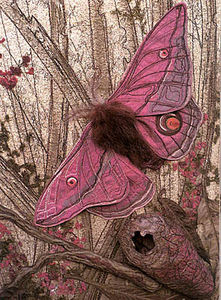
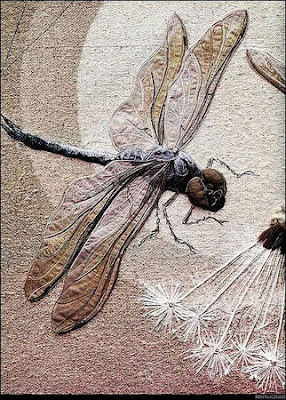
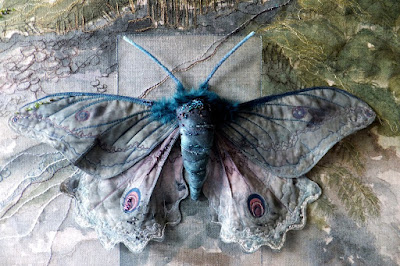
Insects have been used as adornment and recreated in textiles for centuries. sharing a smattering here of some beautiful contemporary textile art of insects. Check out the sensitive textile nature art of Dutch-born Australian artist Annemieke Mein here. She works in various media including textiles, and the textile art includes these beautiful insects:
Textile insects by Annemieke Mein
Born in England and based in Kenya, artist Sophie Standing uses textile art to portray the wildlife she sees. I absolutely love this bee:
Bee textile art by Sophie Standing
She does a lot of the African megafauna, but this dung beetle is charming:
Dung Beetle textile art by Sophie Standing
Michele Carragher is a London costume embroidery for film and TV who has done extraordinary work (for shows like Game of Thrones). Some of her insect-themed work:
Detail of Game of Thrones costume embroidery by Michele Carragher
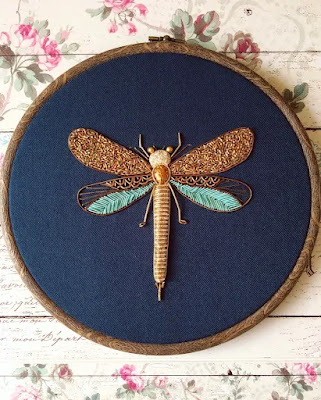
You can find the delightful work of UK embroiderer Humayrah Bint Altaf on instagram and Etsy as The Olde Sewing Room.

Friday, 11 December 2015

Pamela Anderson asks: 'What's in the middle of Russia?'


Pamela Anderson during a meeting with Sergey Ivanov in Kremlin, Moscow. Picture: Alexey Druzhinin, Ria Novosti 
By Olga Gertcyk: Hollywood celebrity plans a trip with sons to discover what lies between Moscow and Vladivostok. Feted in the Kremlin this week, the actress and model had a rare female Amur leopard named after her. Head of the presidential administration, Sergey Ivanov, presented a certificate and a photographic portrait of the big cat - previously known as Leo 38F - to her. Pamela the leopard is currently in the Land of the Leopard National Park, near Russia's border with China. This big cat has a habit of posing for wildlife camera traps in the park, like her keeper who has featured on Playboy's cover a record 14 times since 1989. 'She is rather posing for cameras instead of ignoring them,' said TASS about the leopard. Ivanov told her about the major conservation progress in keeping alive these Siberian leopards in the wild.' A few years ago, when we focused on their preservation, they really were on the edge of extinction, there were only 30-40 of them left. Now we have 80,' he said. It is the rarest big cat on the planet.
Pamela Anderson and Pamela the leopard. Pictures: Alexey Druzhinin, Ria Novosti and The Land of the Leopard Nature Reserve
Anderson said she wanted to explore Russia further, after two trips in less than half a year, both dedicated to the preservation of wild animals. Indicating she planned to cross Siberia by train, she said: 'I don't know anything about the middle of Russia. I've been to Vladivostok, I've been to Moscow, St. Petersburg. But what's in the middle?' She said: 'So I think I am going to take my kids on a train maybe and go through the whole of Russia.' Later she said she would use a train or plane 'whatever it takes'. 'I have seen some photographs, and I have seen some beautiful places,' she explained, meeting the media. Americans 'have no idea how beautiful' Russia is, she added. 'I would like to know it [Russia], I want to see it,' she said.  The 48-year-old Canadian born celebrity met Ivanov and Russian Natural Resources and Environment Minister Sergey Donskoi. In July, the actress sent a letter to President Putin asking him to block the passage of the Winter Bay cargo vessel through the Northern Sea Route. The vessel was reportedly carrying more than 1,700 tons of whale meat from Iceland to Japan. Later Anderson asked for a meeting with Putin to discuss environmental issues with him. So far she has not met the president. Pamela Anderson claims to have Russian origins on her mother's side. Her great grandmother was Russian, according to her, and she reportedly emigrated from Russia to the Netherlands and then to Canada. Source: http://siberiantimes.com/'

Wednesday, 22 October 2014

The Sundarbans: Unique Ecosystem for Wildlife

Untitled
   
  .Subscribe.Subscribe.Subscribe.Subscribe
ISikkim, Kalpana Palkhiwala: The Sundarbans is the largest single block of tidal halophytic mangrove forest in the world. It is the estuarine phase of theSundarban 2 Mammal 8x12 Chital with calf
Ganges as well as Brahmaputra river systems. It lies at the mouth of the Ganges and is spread across areas of Bangladesh and West Bengal, India,Sundarban 2 Mammal fishing cat
forming the seaward fringe of the delta. The typical littoral forests of Sundarbans comprises of a host of trees species adopted to the peculiar estuarine condition of high salinity, lack of soil erosion and daily inundation Sundarban 2 bird GOLIATH
   Image Link Flickr
by high tides. The tidal forms and the mangrove vegetation in Sundarbans are responsible for dynamic eco-system vigorous nutrient cycling both terrestrial and aquatic. The whole eco-system is sensitive to change in salinity and the continuous cycle of erosion and deposition is affecting the plant continuously adjusting to the new conditions. The great fight goes on between nature and each individual here for survival, and survival for theSundarban 1 Landscape SUNRISE
fittest. The forest covers of 4,000 sq km are on Indian Side. It has been declared as a UNESCO world heritage site in 1997. The Sundarbans are separately listed in the UNESCO world heritage list as the Sundarbans forSundarban 2 Tree GOLPATA
   Image Link Flickr
India and the Sundarbans National Park, Bangladesh, which is 6000 sq km area. Sundarbans was designated a Ramsar site on May 21, 1992. “Sundarban” literally means “beautiful jungle” or “beautiful forest” in the Bengali Language. The characteristic tree are the Sundari (Heritiera littoralis), from which the name of the tract has been derived It yields a Sundarbans
   Image Link Flickr
hard wood, used for building, and for making boats, furniture, etc. Other belief is that it is derived from “Samudraban” or “Chandra-bandhe” which was name of a primitive tribe. Read Full: The Sundarbans - Unique Ecosystem for Wildlife | iSikkim,

Saturday, 2 August 2014

Let the tiger breathe in its natural home


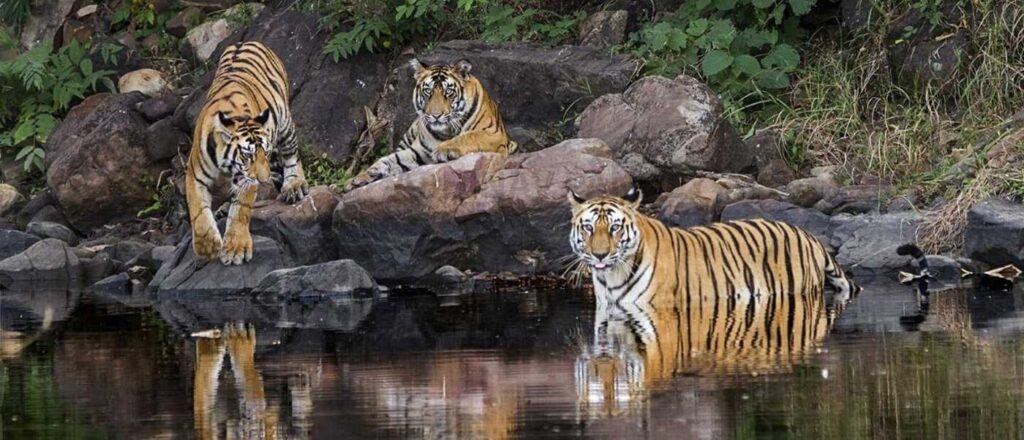
By Dharmendra Khandal: The world has been observing July 29 as International Tiger Day for the past three years, ever since heads of states of 13 countries met for a tiger summit at St Petersburg in 2010. All these countries have a significant tiger population, but India accounts for more than 50 per cent of the total tiger count. During the summit, it was pledged that the countries would work towards increasing the support for tiger conservation so as to double the world tiger population by 2022. Now, with the present threat to biodiversity across the globe, is this a possible or an impossible goal? One could say the odds are in the tiger’s favour as it is a very resilient species. Which is evident from the fact that it manages to adapt itself to all kinds of climate and many types of habitat — from minus 40 degree Celsius of Siberia to plus 48 degree Celsius of Ranthambhore; from the rainforests of the north east, marshy mangroves of Sunderbans, arid zones of Rajasthan and high uplands of Bhutan. The field director of Ranthambhore park, YK Sahu, always says that the tiger is also tolerant to the high disturbance of human beings in and around its habitat. Sahu demonstrates that with two examples — millions of pilgrims have been visiting a famous temple in Ranthambhore for scores of years now and the tiger has never created any trouble for any pilgrim. Second, recently a tiger showed amazing stamina when it traversed a distance of around 250 km from Ranthambhore in search of a habitat. It dodged many villages, farms and fields to cover such a long distance. If such ability exists in this buoyant species, why then are these tiger countries worried for this creature? The reason is the growing human population and its never ending needs and demands. An interesting research published by Prof J Blandford estimated the size of global economy and the annual average individual consumption of 1000000 BC to 2000CE. According to Blandford, for 990,000 years, human beings were stagnant in their annual average individual consumption of around Rs 5,600. In 900 years, we further increased it to Rs 40,800. But in last 100 years, the consumption has swiftly increased, it went up to about Rs 3,92,400 in the year 2000. Simultaneous to this, the tiger population chart of the last 100 years in India has decreased. It has come down from 40,000 to 1,706 tigers today while the global wild tiger population is left with just 3,200. The crux of this math is very simple, we human beings not only increased our number in the world, we also increased our consumption manifold! All the steel from mining is for our cars, cement for our houses, and energy for our use — these come from this earth. We have to dig up the homes of tigers, or for that matter the polar bear or panda’s, for maintaining this extravagant, unbalanced life style. So, though we can increase tiger numbers to double with better management and planning, to increase tiger habitat in the same manner is very difficult. It is, therefore, up to you and me to work consciously to let the tiger breathe in its natural home. All it takes is lessening our unnecessary needs. (The writer is a conservation biologist at Tiger Watch, Ranthambore). Source: mydigitalfc.comImage

Monday, 10 March 2014

Who let the dogs out, into our wilds?

By Dharmendra Khandal: Recently, I visited five different sanctuaries of Rajasthan where I saw active predators in most of these areas. But they were not natural predators, but feral dogs. Some were chasing chinkaras while others were chasing neelgai. The locals there told me that these dogs injured or killed some wild animal in their area every other day. Sometimes they would manage to rescue the wild animal and chase out the dogs, but the fact is that these canines have become a growing menace in many wildlife areas today. The bigger sanctuaries are comparatively safe because wild animals can escape inside the forest. Also, the leopards and tigers, which are the predators of these canines, restrict the intrusion of these dogs. Not so the smaller wildlife areas where there are no such big cats. The canines here are therefore more fearless and can be seen chasing wild animals even in densely forested areas. A small area of desert that is protected by the local community has 500 chinkaras and regularly some animal or the other is injured by these dogs. I also saw carcasses of domestic animals and butcher waste around the region, that are attracting the dogs to the area. I suggested to the community head that they should not throw the carcasses in the forest areas but they said waste dumping was not in their hands as people stealthily threw the garbage and carcasses at night to avoid been seen. Is there any solution to this problem? Animal lovers, however, don’t see it as a problem, presenting the argument that dogs are also part of ecosystem and these neo-predators are now balancing the ecology of our jungles too. They, therefore, have a right to live too. But the figures speak for themselves — globally, there exist about 500 million stray dogs and in India, 20 to 30,000 people die every year because of rabies. Recently, a news came to light that canine distemper virus can cause trouble to tigers too. The National Tiger Conservation Authority issued an alert letter to all reserve directors and suggested vaccination of stay dogs around the tiger reserves. Rabies and CDV can be controlled through vaccination, but what happens to the dogs who are killing wild animals directly? Possibly, we can control their population through sterilisation but that has to be ethically and legally correct. Many people say that if we want to save our wildlife areas, we have to continuously kill or remove the dogs. They say that even after sterilisation, these dogs may not infect wild animals but will still continue to kill them. They also argue that there is no fund and trained manpower available to sterilise this unbounded number of stray dogs. Dog numbers are increasing with human population and one key reason is bad garbage management. This is also an indicator of the fragmenting web of our ecosystem. We do need to get some important wild areas dog-free, but of course, after following due procedure. (The writer is a conservation biologist at Tiger Watch, Ranthambore) Source: Article

Monday, 2 December 2013

Bihar to turn village into peacock breeding centre

Pavo Real (Peacock) México
Patna, Bihar plans to turn a village into a breeding centre for the Indian national bird peacock, forest officials officials said Friday. Madhopur-Gobind village in East Champaran district, home to around 500 peacocks, is popularly known as 'mor gaon' or peacock village. "The government has decided to set up a breeding centre for the national bird in the village. It is common to spot over a dozen peacocks in any part of the village, which is a rare thing," said L.B. Manjhi, a forest official. State Chief Wildlife Conservator B.N. Jha last week directed the district forest department to prepare a blueprint for developing the village as a peacock breeding centre. "Forest officials have already begun work in this regard," Manjhi said. According to the official, the forest department is likely to use a vacant plot of land belonging to the water resources department for this purpose. "A wide picket fence would be developed and a pond dug in the area," he said. Another official said plantation of saplings within the area and around the pond is also being planned so that peacocks could hatch their eggs there. Last year, Chief Minister Nitish Kumar had visited the village, spread over 700 acres, and directed the authorities to take steps to protect peacocks and facilitate their safe breeding. A couple of peacocks were first brought to the village in 1950 by one Chandrika Singh, according to a forest official. "The number of the birds has swelled over the years. Since there are restrictions against their domestication, the villagers have jointly provided a number of shelters for the birds," the official added. The villagers have also taken the responsibility of protecting the birds from animals and poachers. A pond has been dug in the village especially for the use of peacocks. Most of the birds have become friendly with the humans and they co-exist peacefully. Source: Article, Image: flickr.com

Saturday, 30 November 2013

Wildlife smuggler nabbed

A Czech national is under travel restriction orders in the Argentine capital Buenos Aires after being nabbed at the airport as he was trying to smuggle out almost 250 live animals including venomous snakes. The illicit cargo came to light on one of the airport’s X-ray screening machines.The smuggler has already paid a heavy fine. (AFP),Tags: animals, Czech Republic , smuggling , Argentina, News, Society, World, Читать далее, Source: Voice of Russia

Wednesday, 6 November 2013

New national park with Amur tigers to open in Primorye

A new national park where Amur tigers are going to be bred will be opened in Primorye, the Putin administration informed. At the moment, the largest population of this species lives in the Russian Far East. Indigenous people residing in Primorsky Krai will take part in managing the park and reducing extinction of the Amur tiger species included on the the IUCN Red List.
The Amur tiger is the strongest felid and the only one managed to adapt oneself to life in the taiga snows. However, over the last century its population reduced by dozens of times. Today around 90 percent of Amur tigers, which is almost 500 individuals, live In the Far Eastern taiga in Russia. The local authorities and residents do their best to increase a breeding adult population. Starting 1992, a federal program of Amur tiger conservation was introduced. Thanks to the program extinction of the predator was stopped, Sergei Aramylev, the coordinator of the Biodiversity
Conservation Program, says. "A series of measures was planned and approved by the government. There are several general directions. First of all, we should put an end to direct extermination of Amur tigers and to any kind of illegal hunting and poaching. We should also increase the ungulates population and conserve natural habitats and their quality as there should be many oaks and cedars growing in the forests," Aramylev adds. The largest untouched area of cedar broad-leafed forests is situated in the Bikin River basin in Primorsky Krai. The area of more than 4,000 km2 is listed as
a UNESCO World Heritage Site. It was decided to create a new national park in this unique territory, Mikhail Kreidlyn, the head of the Natural Areas Conservation Program, says. "The south of Far East and Primorsky Krai are very valuable. It’s a unique natural area. The Bikin basin is unique because people have never farmed there. Lumbermen, gold-miners attempted to occupy these territories but we managed to save them," Mikhail Kreidlyn notes. The native population, Udege, who have been living on the Bikin River
banks since  the dawn of time, stood up actively for the forests. That’s why the Udege will be taking part in managing the park. In order to coexist peacefully with tigers, the taiga will be divided into three areas, Sergei Aramylev says. "Udege are forest people who since the dawn of time have been living near the tigers, ungulates and woods. The main purpose of the park is not to prohibit to these people to live there or to ban their activities 
but to conserve the habitat. It goes without saying that we should come to an agreement on all the conditions with people who live in this territory. Areas, where the Udege farm, will be mapped and a list of what is permitted and prohibited there will be created. One can’t cut down trees there but can hunt in a traditional way. Areas, where people don’t farm, are named protected areas. In areas like these everything is forbidden," Aramylev concludes. At the moment, there is no direct threat to the Amur tiger population extinction but we still should protect it. Maria BalyabinaSource: Article

Thursday, 28 March 2013

Snakes in Florida Everglades

.Subscribe
By Kim Brown, In the Florida Everglades there is a problem with snakes and not just any snakes but the Burmese Pythons. Not a native species to North America the snakes have been released to Florida Everglades and are flourishing tremendously with the numbers. This is causing a big problem and disruption within the natural balance of the ecosystem in the Everglades. And to discuss this we are joined by Michael Dorcas, he is the Professor of Biology at Davidson College in North Carolina.Tags: snake, animals, US, Commentary, Society, World,Читать далее, Source: Voice of Russia

Wednesday, 14 November 2012

Russia to create Arctic nature park


01.08.2012 Россия Архангельск Арктика заповедник \'Русская Арктика\' Росссия
Russia will create the Russian Arctic nature park in the western area of the Arctic coast, the country’s Prime Minister Dmitry Medvedev stated Thursday. He signed a decree in this respect after a meeting on the Far East development. The new nature preserve will spread over a territory of 600,000 ha. Interfax, Source: Voice of Russia

Wednesday, 5 September 2012

Elephant football in Nepal seeks tourist attention

A match of elephant football took place in Nepal as part of the annual Chitwan Elephant Festival aimed to attract more tourists into the country. Each team comprised four animals guided by their trainers sitting on the elephants` backs. The event traditionally attracts crowds willing to see anunusual show. (RBK) A match of elephant football took place in Nepal as part of the annual Chitwan Elephant Festival aimed to attract more tourists into the country.Each team comprised four animals guided by their trainers sitting on the elephants` backs. Source: Voice of Russia

Monday, 3 September 2012

Wildlife News: 12 peacocks found dead in Bhilwara

1 June 2011, Twelve peacocks were found dead in a farm near the forest area at Hamirgarh at Bhilwara district on Tuesday. The reason behind the deaths are not clear. A team of forest officials have reached the spot to inquire in to, said a forest official. State president of People for Animals Babulal Jaju has demanded strong action against the guilty. Jaju approached the superintendent of police & officers of the forest department to bring the guilty to book. "The rising cases of poaching of peacocks in the district is due to the lackadaisical attitude of the police & the forest department. The head of forest forces & the CMO ought to take up the matter urgently," they said. The Wildlife Conservation Act 1972 provides for six years confinement & a fine of Rs 50,000 for killing the national bird. But in Rajasthan the crime seems unabated. The state has been seeing the poaching of peacocks in places like Haler, Ojaira, Jahajpur etc. "It is the incapability of the police & the forest department that the criminals have not been caught so far while the poaching of the national bird continues," they said. Recently, the Union surroundings minister Jairam Ramesh, concerned over the rise in peacock poaching, ordered a study to evaluate their number in the country. The ministry has asked the Bombay Natural History Society to get the study done.Read Full: Wildlife News: 12 peacocks found dead in Bhilwara:

Sunday, 2 September 2012

Natasha, 'Genius Chimp,' Aces Intelligence Tests

Natasha, a chimp at the Ngamba Island Chimpanzee Sanctuary in Uganda, has always seemed different from her peers. She's learned to escape from her enclosure, teases human caretakers, and scores above other chimps in communication tests. Now, Natasha has a new title: genius. In the largest and most in-depth survey of chimpanzee intelligence, researchers found that Natasha was the smartest of the 106 chimps they tested—a finding that suggests that apes have their geniuses, too. "Natasha was really much better than other chimps," says biologist and first author of the new study Esther Herrmann of the Max Planck Institute for Evolutionary Anthropology in Leipzig, Germany. Herrmann and her colleagues had previously tested chimps in a study designed to compare the skills of the animals with those of human children. During the study, they noticed a wide range of skills among the chimps and wondered whether they could measure this variation in ability—and whether there were studies that could predict the chimps’ overall performance in all areas, like an IQ test in humans. So they gave a battery of physical and social tests to 106 chimps at Ngamba Island and the Tchimpounga chimpanzee sanctuary in the Republic of the Congo, and to 23 captive chimpanzees and bonobos in Germany. In one experiment, chimps were asked to find food in a container after it had been shuffled around with empty containers. In another, they had to use a stick to get food placed on a high platform. The researchers analyzed the data to determine if the scores in some tests helped predict performance in others. "In general, we don’t find any kind of general intelligence factor that can predict intelligence in all areas," Herrmann says. "But we did find a big variation overall, and this one outstanding individual." The stand-out individual, Natasha, was the chimp that caretakers—who don’t administer tests to the chimps but do feed them, clean their cages, and accompany them on walks—consistently ranked as the smartest based on only the way she interacted with them. But there's nothing about Natasha's life—extra attention or time spent with humans, for example—that explains how she became so astute. "Motivation and temperament probably play a role," Herrmann says. "That's something that we want to look more into."Source: Sam Daily Times

Friday, 31 August 2012

A kiss for daddy, and then perhaps a scratch too far: Heartwarming pictures of a lion cub meeting his father for the first time

Lion cub meets his dad for the first time on Kenya, a kiss for dad in head
Hi dad: The seven-week-old was hesitant as he approached his parent for the first time, but quickly overcame his shyness. The cute cub even appeared to plant a kiss on his father's head in this touching photograph
He is one of the world's most dangerous predators. But meeting his newborn cub for the first time, this fearsome lion appears as gentle as a tabby cat. The heartwarming first encounter between the adorable lion cub and his father was captured on camera in a series of stunning images. At first the 7-week old cub appeared nervous as he approached his father, but the youngster quickly forgot his initial shyness & began playfully scratching & biting the adult lion, before appearing to reach up and plant a kiss on his head.Lion cub meets his dad for the first time on Kenya, Father and son lay eyes on one another for the first time
Nice to meet you: Father and son lay eyes on one another for the first time, as the cub's protective mother keeps a close watch nearby
Photographer Suzi Eszterhas spent months tracking the pride of lions on the Masai Mara National Reserve in Kenya in order to capture the touching first meeting between father and son. After catching sight of the newborn cub and his two siblings at around three weeks old, she followed them as they grew. When they reached seven weeks the lioness decided her cubs were old enough to be introduced to the rest of the pride - including their father - and the 36-year-old Californian was there to capture the special moment.Lion cub meets his dad for the first time on Kenya, nice to meet you dad
Fatherly pride: The adult lion places a protective paw on his cub's back as the pair meet for the first time on the Masai Mara National Reserve, Kenya
The photographer said the protective lioness kept a close watch on all interactions between the cubs and their father to ensure the adult lion was not too rough with her brood. But the breathtaking shots show the mighty lion was tender in his treatment of the vulnerable cub. 'Newborn animals are always difficult to photograph,' said Miss Eszterhas. 'You spend a lot of time just waiting while they are tucked away, completely hidden in long grass, deep brush, or a cave. 'But if you put in enough hours, you will be there whenLion cub meets his dad for the first time on Kenya, playing with dad
Playful: The excitable cub may have been a little too eager with his claws judging by the expression on his father's face
the mother brings them out into the open. ''In this case, I followed the pride for three months, every day from sunrise to sunset, from the time the cubs were only three weeks old. 'In these scenes the mother brought them out of the den to meet the pride for the first time, including their father.' Miss Eszterhas said of the first meeting between father and son: 'The cub was a bit shy and apprehensive but the father was very gentle. 'In the other photos, the cubs are more familiar with the father and are playing with him. 'The father reactedLion cub meets his dad for the first time on Kenya, playful cubs
Ouch: The adult lion bares his impressive teeth as the cub appears to playfully bite his father, watched by a sibling
by gently playing with them  and often growling. 'In both situations, the mother was sitting nearby, watching very closely, ready to pounce on the father if he got a bit too rough with her cubs.' The photographs have been published in a children's book series, Eye on the Wild. 'In total, I worked with two different prides for about six months to get the material from the book,' said Miss Eszterhas. 'And seeing the cubs meet their father for the first time is one of the most memorable wildlife experiences I have ever had. 'Working with lions means that you are coping with a lot of downtime, since they sleep about 20 hours a day. 'But it makes it all worthwhile when you get to witness and capture incredible moments like this.'Source: Travelfwd+

Saturday, 18 August 2012

Honey ice-creams keep pandas cool in French heatwave


TWO Chinese pandas in a French zoo are chilling out in the current summer heatwave with the help of honey and apple ice creams. With temperatures set to touch 40 degrees Celsius in central France this weekend, Yuan Zi and Huan Huan have been enjoying the home-made treats as a supplement to their normal bamboo-based diet. "Since Thursday we've been giving them ice cream that we make ourselves three times a day," said Rodolphe Delord, the director of Beauval Zoo. "We also use cooling sprays and if it gets really hot they can go into their compound where the air conditioning is set at 20 degrees." The two pandas have increased visitor numbers at the zoo by 50 per cent since their arrival from China in mid-February. But the star attractions are not getting special treatment: all the other bears in the zoo are also enjoying daily ice creams. Source: Sam  Daily Times

Thursday, 9 August 2012

Tiger cub spotted in Sariska

Tiger Cubs
Jaipur, Aug 8 (IANS) A tigress in Rajasthan's Sariska Tiger Reserve has reportedly delivered a cub. On Tuesday, the tigress and the cub were captured on camera. This is encouraging news, Minister of Forest and Environment Bina Kak said here. The tigress has been spotted at Kalighati and Slopka areas of the sanctuary. Wild life officials are trying to secure more photographs of the animal. The Sariska reserve now has five adult tigers, of which three are females and two males. With a cub spotted now, the total number is now six. In 2004-05, the forest department and the Rajasthan government faced all-round criticism over the disappearance of tigers from Sariska. The state government then decided to relocate tigers from the Ranthambore National Park in Sawai Madhopur district to Sariska. The Sariska reserve, originally a hunting preserve of the erstwhile princely state of Alwar, was declared a wildlife reserve in 1955. It got the status of a National Park in 1979. Source: News Track IndiaImage: flickr.com

Wednesday, 27 June 2012

State Tourism to establish Sikkim as delight for bird-watchers

ISikkim, Gangtok: Sikkim Tourism, in brand new flavor of ‘Eco tourism’ now offers abundant options for the tourists (both locals and non locals) such as mountain biking, paragliding, river rafting, skiing, home stays etc, along with older alternatives as sightseeing, trekking, tour and expedition. The recent add on to the list is bird watching tour. Gradually, bird tourism is setting its foot firmly in Sikkim. Bird walks are being organized every morning for those who are interested. Credit for popularizing bird watching goes to ‘Sikkim Birds’, a much talked group on social networking
site. This group has provided an immensely rich learning platform for its members as they carve up as well as gain knowledge about different species of birds. In order to promote bird tourism, Travel Agent Association of Sikkim (TAAS) and Sikkim Ornithological Society (SOS), along with State Tourism Department is organizing Bird Watching on February 26. Though, on February 19 they already had organized it for the first group of tourists. But the number of spectators appeared less than the expected number. During an interaction with Sikkim Mail the, Executive member of TAAS and also the in charge of ongoing Sikkim Snow & Culture Fest, Madan Gurung informed that in the previous lot only seven tourists and three locals participated. Second group is expected to have more tourists and locals. Further he informed that the birding tour covers an area of 10 km radius which starts from Raj Bhawan and further proceeds to Circuit House Area, then Bulbuley and ends at Selep Tank Area. Though the birding troop starts off from Gangtok at 6:30 early morning, the main bird watching starts at 12 noon since the birds come out of their nests for the evening sun, he added. He also mentioned that the organizers are trying to introduce birding in Dzongu; North Sikkim but e dates have not been fixed yet. They are also planning to set up Bird Clubs in various schools of the state so that the students can gain knowledge about the birds. Not only bird watching is an additional attraction to the state’s tourism, but it also provides an employment opportunity for the locals, Gurung said. Slowly the locals have started realizing that even through bird watching one can earn a decent income by being birding guides. “One does not need to take anything from nature to gain something; instead one can be well aware of the flora and fauna while birding and help conserve them”, he stated. Lastly he appealed public to be more aware about the flora and fauna of the state and to publicly participate in such kind of tours for the benefit of the both. Sikkim is considered to be a paradise for the avid bird lovers. It is an abode for almost 550 species of birds. Apart from East Sikkim, other districts offer great birding opportunities such as Barsey and Khecheopheri Lake in West Sikkim, Maenam Wildlife Sanctuary and Bhaledhunga in South and Tholung valley in North District. Some important species of birds which can be found in the state are Maroon-Backed Accentor, Red-faced Liocichla, Black- necked and Black- tailed crane, Blood Pheasant, Himalayan Monal Pheasant, Brown Parotbill, Fire-tailed Myzornis, Cutia, Sapphire flycatcher, White browned Bush Robin, Grandala, Rufous – breasted Accentors, White winged and collared Grosbeaks, Spot-winged Rosé finch, Satyr Tragopan, Kalij pheasant, rusty-bellied Shortwing, Minivet, Yuhina, flycatchers, Little Cormorant, Crested Serpent Eagle, Black Eagle, Common Kestrel, Himalayan Monal, Kalij Pheasant, Spotted Dove, Grey Headed Parakeet, White Rumped Needletail, Himalayan Woodpecker, Greater Yellownape, Lesser Yellownape, Black Drongo, Long tailed Shrike and many more. Though bird tours were organized earlier it was not frequent and popular among the tourists as well as the locals. Source: ISikkim