Ahead of the United Nations climate summit in Belém last month, Brazil’s President Lula da Silva urged world leaders to agree to roadmaps away from fossil fuels and deforestation and pledge the resources to meet these goals.
After failing to secure consensus, COP president Andre Corrêa do Lago announced these roadmaps as a voluntary initiative. Brazil will report back on progress at next year’s UN climate summit, COP31, when it hands the presidency to Turkey and Australia chairs the negotiations.
Why now?
These goals originate in the outcomes of the first global stocktake of the world’s progress towards the Paris Agreement goals, undertaken in 2023.
At the COP28 talks in Dubai in that year, there was an agreement to transition away from fossil fuels and to halt and reverse deforestation and forest degradation by 2030.
Yet achieving these goals relies on a “just transition”, where no country is left behind in the transition to a low-carbon future, including a “core package” of public finance to address climate adaptation, and loss and damage. The Belém outcome fell short.
Forests need urgent protection
Forest loss and degradation is continuing, at an average rate of 25 million hectares a year over the last decade, according to the Global Forest Watch. This is 63% higher than the rate needed to meet existing targets to halt and reverse forest loss by 2030. Yet the climate pledges submitted for the Belém COP remain far off track from this goal.
In the 2025 Land Gap Report, my colleagues and I calculated the scale of this “forest gap” – the gap between 2030 targets and the plans countries are putting forward in their climate pledges.
We show the pledges submitted up until this year’s climate summit would cut deforestation by less than 50% by 2030, meaning forests spanning almost 4 million hectares would still be cut down. The pledges would lead to forest degradation – where the ecological integrity of a forest area is diminished – of almost 16 million hectares. This is only a 10% reduction on current rates.
Together, this equates to an anticipated “forest gap” of around 20 million hectares expected to be lost or degraded each year by 2030. That’s about twice the size of South Korea.
While this underscores the inadequacy of commitments, the analysis is based on pledges submitted up to the start of November 2025, at which point only 40% of countries had submitted an updated plan. Major pledges submitted during COP31, such as from the European Union and China, don’t change this analysis.
A new fund for forest conservation called the Tropical Forests Forever Facility was launched in Brazil, attracting $US6.7 billion in pledges ($A9.9 billion).
The forest fund focuses on tropical deforestation, the leading cause of emissions from forest loss. But it has a key weakness: the limited monitoring of forest degradation, which could allow countries to receive payments while still logging primary forests.
The fund will establish a science committee and plans to revise monitoring indicators over the next three years, creating an opportunity to strengthen its ability to protect tropical forests.
The COP30 leaders’ summit also saw the launch of a historic pledge of $US1.8 billion ($A2.7 billion) to support conservation and recognition of 160 million hectares of Indigenous Peoples’ and local communities’ territories in tropical forest countries.
But global action on forests needs to extend beyond the tropics. Across both deforestation and forest degradation, countries in the global north are responsible for over half of global tree cover loss over the past decade.
Beyond tropical forests
A global accountability framework on forests is needed to increase ambition on climate action, including in countries and regions with extensive forests outside of the tropics, such as Australia, Canada and Europe.
In these regions, industrial logging is a major driver of tree-cover loss but receives far less political attention than tropical deforestation. Wide gaps in reporting – between deforestation and degradation – mean logging-related degradation often goes unreported.
In a recent report, only 59 countries said they monitor forest degradation. Of these, almost three-quarters are tropical forest countries.
The IUCN World Conservation Congress which convened in Abu Dhabi this year prior to the climate talks, passed a motion on delivering equitable accountability and means of implementation for international forest protection goals. This arose from a recognised need to promote greater equity between forest protection standards across countries.
All of this points to an urgent need to tackle accountability in global forest governance. The forest roadmap to be developed for COP31 in Turkey could help drive stronger alignment and transparency across UN processes – from the UN Forum on Forests’ 2017–2030 plan to the Kunming–Montreal Global Biodiversity Framework’s 2030 target to halt and reverse biodiversity loss.
Australia could lead on forests
Australia could help shape global forest ambition in the year ahead. It is currently the only country whose emissions pledge promises to halt and reverse deforestation and degradation by 2030 – a clear signal that developed countries must lead.
As President of Negotiations at COP31, Australia can also work to bring Brazil’s fossil-fuel and forest roadmaps into formal negotiations. But this depends on two things: credible leadership from developed countries and long-overdue climate finance. As a deforestation hotspot with ongoing native forest logging, Australia has considerable work to do to meet this responsibility.
Global life expectancy has climbed from about 51 years in 1960 to 73.3 years in 2023, driven by advances in health care, sanitation and living standards, according to new study by the YSMU Heratsi National Research Center. Despite a brief setback during the COVID-19 pandemic, worldwide longevity has returned to its long-term upward path.
Japan remains a global leader, rising from roughly 68 years in 1960 to 84 years in 2023. Hong Kong and Monaco are the only places reporting higher figures. Italy, at 83.7 years, continues to benefit from strong health systems and diet-related habits common across much of Europe.
The United States increased from about 70 years in 1960 to 78.4 years in 2023, but its progress has been slower than that of other high-income nations due to issues including opioid misuse, obesity and health inequities. China, meanwhile, recorded one of the world’s most dramatic gains, jumping from about 33 years in 1960 to 78 years in 2023, supported by economic growth and improved medical access.
Armenia’s life expectancy reached 78.6 years in 2024, its highest in more than two decades. As in many countries, women live longer than men: women reached 81.7 years and men 75.1 years, up from 75.8 and 70.1 years respectively in 2000.
Regional differences remain stark. Africa’s average life expectancy stood at 63.8 years in 2023, ranging from 76.5 in Tunisia to 54.8 in Nigeria. Asia averaged 74.6 years, led by Hong Kong at 85.5 and Japan at 84.7, while Afghanistan recorded the lowest at 66. Europe averaged 79.1 years, with Monaco topping the list at 86.4 and Moldova lowest at 71.2. In South America, Chile led at 81.2 years, while Bolivia posted 68.6. Australia reported 83.9 years.Life expectancy is a key measure of society's well-being, reflecting the health, economic and social conditions, which is essential for shaping effective public policy. Source: https://www.panorama.am/
Thousands of the most popular passenger aircraft in the world need immediate maintenance to protect from a problem that injured passengers and caused an emergency landing last month, CNN reported.
Airbus found intense solar storms, like solar flares, could cause pilots to lose control of the Airbus A320 series of planes, including A319, A320, and A321s. About 6,000 of the single-aisle planes, which are the bestselling passenger aircraft in the world, need the repairs.
“Analysis of a recent event involving an A320 Family aircraft has revealed that intense solar radiation may corrupt data critical to the functioning of flight controls,” Airbus said in a statement.
On October 30, JetBlue Flight 1230 - an A320 - was flying from Cancun, Mexico, to Newark, New Jersey when it suddenly dove down in altitude. The pilots made an emergency landing in Tampa, Florida, where about 15 people were taken to the hospital.
Airbus investigated the incident and on Friday told airlines in an “Alert Operators Transmission” that the fix was needed. The company believes it is the only time this specific problem has happened, but says it “proactively worked with aviation authorities… keeping safety as our number one and overriding priority.”
The Airbus A320 series has what’s called fly-by-wire controls: physical movements from the pilot run through computers which, in turn, adjust the plane’s control surfaces.
An airworthiness directive from the European Union requires airlines to make the repairs before the planes can carry passengers again.
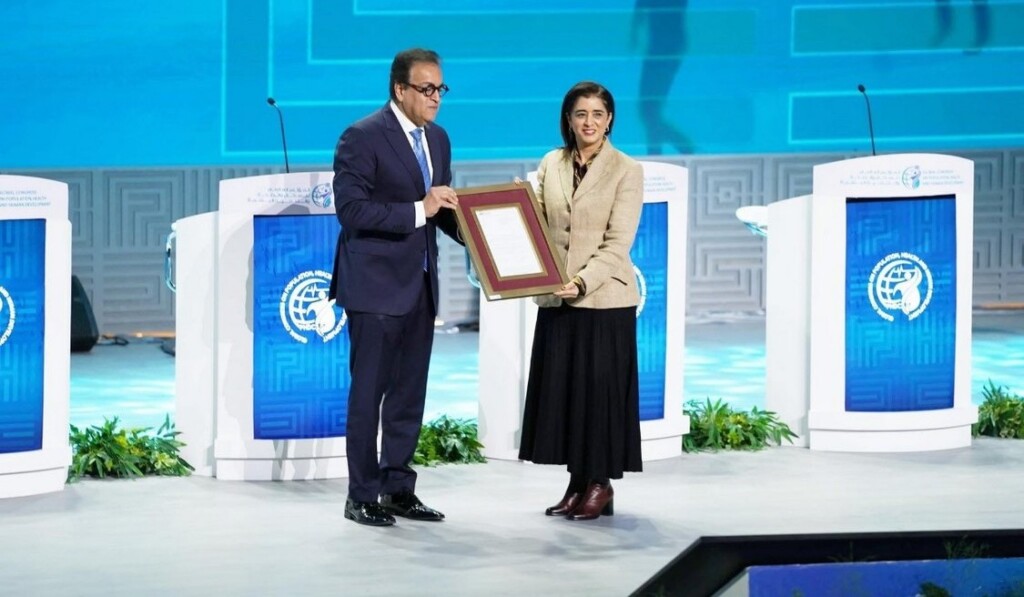
Dr. Khaled Abdel Ghaffar, Deputy Prime Minister and Minister of Health and Population of Egypt, receiving a commendation from Dr. Hanan Balkhy, Regional Director for WHO’s Eastern Mediterranean Region – credit WHO
Egypt has become the 26th country to eliminate trachoma as a public health concern, building on a steady string of triumphs over tropical diseases.
Having eliminated lymphatic filariasis, malaria, and now trachoma in the last 30 years, Egypt has emerged as a continental leader in the control and eradication of neglected tropical diseases.
Trachoma, caused by the bacteria Chlamydia trachomatis, is the world’s leading cause of infectious blindness, and has been documented in Egypt for over 3,000 years.
Public health efforts to address its burden began in the early 20th century, when pioneering ophthalmologist Arthur Ferguson MacCallan established Egypt’s first mobile and permanent eye hospitals and laid the groundwork for organized trachoma control globally. Yet by the 1980s, it still blinded many adults and affected over half of all children in some Nile Delta communities.
Since 2002, the Ministry of Health and Population of Egypt, in partnership with the World Health Organization and other national and international stakeholders, has pursued trachoma elimination through the WHO-endorsed SAFE strategy, which represents Surgery for trichiasis, Antibiotics to clear the causative organism, Facial cleanliness and Environmental improvement.
Between 2015 and 2025, extensive mapping and surveillance across all 27 of Egypt’s governorates showed steady reductions in the proportion of children aged 1–9 years affected by active (inflammatory) trachoma, and no significant burden of the blinding complications of trachoma in adults.
Both indicators are now below WHO elimination prevalence thresholds nationwide. In 2024, Egypt integrated trachoma surveillance into its national electronic disease reporting system, which should facilitate rapid response to any future cases.
“Egypt’s elimination of trachoma as a public health problem underscores the nation’s sustained commitment to equitable healthcare delivery and the transformative impact of initiatives such as Haya Karima, which have expanded access to safe water, sanitation, and primary care services in rural communities,” said Professor Dr. Khaled Abdel Ghaffar, Deputy Prime Minister and Minister of Health and Population.
“This achievement is a collective triumph for Egypt’s health workers, communities, and partners who collaborated to eradicate this ancient disease.”
The country became the seventh in the WHO’s Eastern Mediterranean region to eliminate trachoma as a public health concern, defined as 1 in 1,000 adults with trichiasis. The region includes the Near and Middle East as far as Pakistan, the Arabian Peninsula, and North Africa, including Morocco and and Somalia.
“This milestone adds to Egypt’s strong track record in eliminating communicable diseases, including polio, measles, rubella, and most recently malaria. It demonstrates what can be achieved when political commitment, strong partnerships and years of sustained public health efforts, led by the Ministry of Health and Population, come together towards a shared vision,” said Dr. Nima Abid, WHO Representative to Egypt.
“Egypt’s achievement serves as an inspiring example for other countries in the Region and beyond.”
Following Egypt’s success, trachoma remains a public health problem in 30 countries and is responsible for the blindness or visual impairment of about 1.9 million people. Blindness from trachoma is difficult to reverse. Based on April 2025 data, 103 million people live in trachoma endemic areas and are at risk of trachoma blindness.Yet even devastatingly poor countries—such as Togo, Papua New Guinea, and Mauritania, can, and in fact already have, achieved what Egypt has. Egypt Becomes 26th Country to Eliminate Leading Cause of Infectious Blindness with Triumph Over Trachoma
Ross and Hugo Turner attempting to break a record, flying a paraglider-style aircraft at 10,000ft in the French Alps – via SWNS
The ‘World’s Most Intrepid Twins’ announced they’ve broken a world record, by flying a tandem electric para-motor 8,000ft over the French Alps.
Ross and Hugo Turner, known as the Turner Twins, took the custom-made aircraft 2,438 meters high, floating over the mountains.
The British siblings have submitted the information on an application to FAI—the World Air Sports Federation—to claim a world record for tandem electric altitude.
The brothers based in Devon, England, have already set a world record while becoming the first twins to row the Atlantic Ocean.
For this recent flight, the twins had to wait months for the “perfect weather conditions.”
“It was great to get the weather we finally needed for the record and having waited months for perfect conditions we had the perfect flight,” said Hugo.
“The flight was smooth, which was surprising as we were expecting turbulent conditions, and the battery lasted much longer than we expected—probably due to the colder conditions keeping the battery cooler.”
Ross said their official observer for the record didn’t think the electric battery would be able to do it.
“He said we won’t have enough power, this won’t work. Thankfully, we proved him wrong.”
Ross and Hugo, the Turner Twins, on a para-motor flying over French Alps breaking altitude record – via SWNS
Their quest for adventure was born following a terrible auto accident in which Hugo broke his neck at age 17 and narrowly missed paralysis. In the mix of heightened emotions came a drive to follow their passion for exploration—always guided by their values and “always doing them together”.
The daring duo made headlines at age 21 when they rowed the Atlantic in just 41 days. They also helped set a world record as part of the youngest crew ever to complete that challenge.
Since then they have climbed Mt. Elbrus and they cycled 1,550 miles (2500km) across South American to reach another goal, traveling through deserts and jungles in the searing heat. The pair also used bikes to ride 2.6K across North America, cycling across mountains, desserts, and national parks.
They also attempted a hike across the Greenland and Iceland wearing kit and clothing worn by early polar explorers like Sir Ernest Shackleton.
The Turner Twins making final preparations for a world altitude record in a tandem electric paramotor – SWNS
During many of their missions they’re testing new technology, like driving the Cyberster EV car from MG Motors on a 10,000-mile drive from London to China, posting videos about their adventures in the red convertible electric sports car.
New Delhi, November 2 (IANS): India has emerged as the second-largest exporter of honey globally with shipments of around 1.07 lakh metric tonnes (MT) of natural honey worth $177.55 million in FY 2023-24, rising steadily from the 9th rank in 2020, an official statement said on Sunday.
The National Beekeeping and Honey Mission (NBHM) is a Central Sector Scheme launched by the government for the overall promotion and development of scientific beekeeping and the production of quality honey and other beehive products.
Implemented through the National Bee Board (NBB), the scheme was announced under the banner of Atmanirbhar Bharat with a total budget outlay of Rs 500 crore for three years (FY 2020–21 to 2022–23). It has since been extended for another three years (FY 2023–24 to 2025–26) with a remaining budget of ₹370 crore from the original allocation, according to the statement.
The Madhukranti portal has been launched for the online registration and traceability of the source of honey and other bee products.
India’s diverse agro-climatic conditions offer vast potential for beekeeping, honey production, and export. Recognising its importance in rural development and agricultural sustainability, the Centre launched the NBHM as part of the “Sweet Revolution”, an ambitious initiative aimed at promoting apiculture to accelerate the production of quality honey and boost farmers’ income through scientific and organised beekeeping.
Beekeeping, an agro-based activity undertaken by farmers and landless labourers in rural areas, forms an integral part of the Integrated Farming System. It plays a crucial role in pollination, thereby enhancing crop yields and farmers’ income while providing honey and other high-value beehive products such as beeswax, bee pollen, propolis, royal jelly, bee venom, etc., all of which serve as important sources of livelihood for rural communities.The NBHM is being implemented through 3 Mini Missions. Under Mini Mission-I, the thrust is being given on production & productivity improvement of various crops through pollination assisted by the adoption of scientific beekeeping. Mini Mission-II concentrates on post-harvest management of beekeeping/beehive products, including collection, processing, storage, marketing, value addition, etc., with a thrust to develop requisite infrastructural facilities for these activities, while Mini Mission-III focuses on research & technology generation for different regions, the statement added. 'Sweet Revolution': India becomes world’s 2nd largest honey exporter | MorungExpress | morungexpress.com
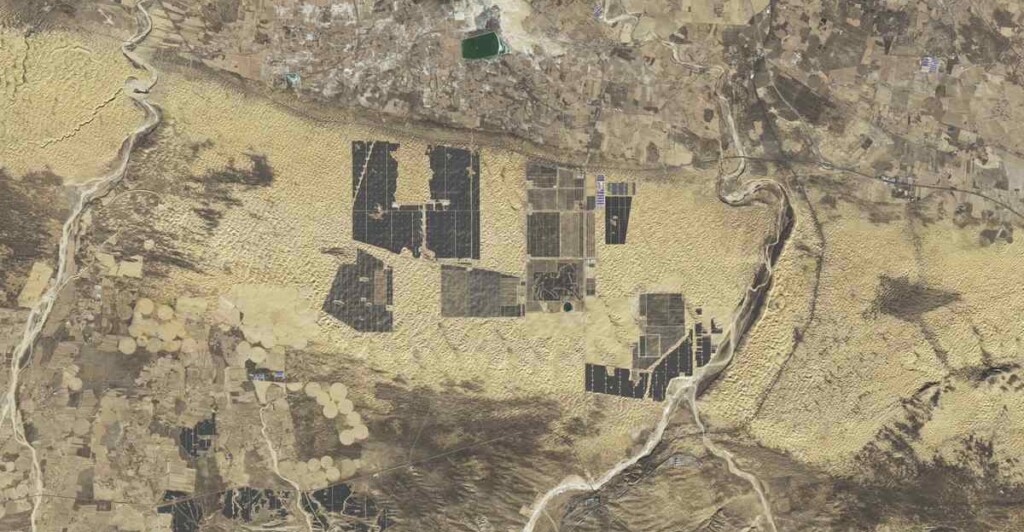
The solar arrays at the Kubuqi Desert, 2024 – credit: NASA’s Earth Observatory.
Renewable energy sources like solar and wind produced more electricity during the first half of the year than any other energy resource, including coal.
To bullet another massive accomplishment in the clean energy transition, of the cumulative demand for new power worldwide, renewables met 100% of it.
Coal has been the world’s most-consumed energy resource for the last 50-and-a-bit years. It held that position up until last year. But with costs in the solar energy market falling 99.9% since 1975, it’s becoming so much more feasible to use as an energy source for low and middle-income countries.
China continued its full-throttle deployment of renewable energy resources, adding more clean energy than the whole world combined last year, reducing its fossil fuel consumption by 2% even as it adds to its fleet of coal power plants.
This data comes from the energy think tank Ember, whose senior analyst Malgorzata Wiatros-Motyka said 2025 marked “the beginning of a shift where clean power is keeping pace with demand growth.”
Most solar generation (58%) is now in lower-income countries. Now that solar power in particular is cheaper, it’s much faster to install new grid capacity at scale rather than investing in the 10, 20, 30-year time horizons that the financing and construction of thermal power plants require.
Most countries don’t produce fossil fuels, but all have access to the Sun and winds, and so by relying on renewable energy they’re also not required to enter foreign currency markets to then be able to import coal, oil, or natural gas.
“Pakistan, for example, imported solar panels capable of generating 17 gigawatts (GW) of solar power in 2024,” writes the BBC on that notion, “double the previous year and the equivalent of roughly a third of the country’s current electricity generation capacity.”
South Africa, Algeria, and Botswana have all taken advantage of the solar boom as well.Wind turbines and associated infrastructure have not come down in price anywhere near as much as solar, which likely presents headwinds to so-called “Wind Belt” nations like the UK and Norway. Renewables Overtake Coal as World’s Biggest Source of Electricity
Navi Mumbai: India’s players celebrate with the trophy during the presentation ceremony after winning the ICC Women’s World Cup 2025 at DY Patil Stadium in Navi Mumbai on Monday, November 3, 2025. (Photo: IANS)
New Delhi, (IANS) In a watershed moment for Indian cricket, the national women’s team etched their name in history by winning their first-ever ICC Women’s World Cup title, defeating South Africa by 52 runs in a pulsating final at the DY Patil Stadium on Sunday night.
Celebrations erupted across the country as BCCI Secretary Devajit Saikia reportedly announced a ₹51 crore reward for the players and support staff, hailing the victory as a “monumental achievement that will take Indian women’s cricket to a new level.”
Meanwhile, IPL chairman Arun Dhumal lauded the team’s historic feat, drawing parallels with India’s iconic 1983 men’s World Cup triumph.
“It’s a red-letter day for Indian women’s cricket. What the men’s team achieved in 1983, the Indian women have recreated today in Mumbai. This historic triumph will give a tremendous boost to women’s cricket in the country, and I’m confident our game will now reach new heights,” Dhumal told IANS.
Earlier, batting first, India posted a commanding 298/7, powered by Shafali Verma’s fluent 87, Deepti Sharma’s composed 58, and valuable contributions from Smriti Mandhana (45) and Richa Ghosh (34). A solid 100-run opening stand between Mandhana and Verma set the platform for a big total before South Africa clawed back late to keep India just under the 300-mark.
Chasing 299, South Africa began confidently as Tazmin Brits and Laura Wolvaardt put together a brisk fifty-run opening partnership. But a sharp direct hit from Amanjot Kaur ended Brits’ stay, and from there, India seized control of the contest.
Young pacer Sree Charani struck in her first over, trapping Anneke Bosch LBW, before Shafali Verma — shining with the ball as well — produced a game-turning spell, removing Sune Luus and Marizanne Kapp in quick succession.
Deepti Sharma then delivered a dream performance, claiming 5 for 39 to crush South Africa’s middle order. Despite Wolvaardt’s fighting 101, the Proteas fell short, bundled out for 246 in 45.3 overs, as India sealed a famous 52-run victory amid roaring home support.
As the tricolour soared high and the players embraced in tears of joy, the moment marked not just a World Cup triumph — but the dawn of a new era for Indian women’s cricket.
Sydney: India’s Virat Kohli and Rohit Sharma celebrate their team’s win after the third ODI against Australia at the Sydney Cricket Ground, in Sydney, on Saturday, October 25, 2025. (Photo: IANS)
New Delhi, October 26 (IANS) Former Indian chief selector MSK Prasad has expressed confidence in Virat Kohli and Rohit Sharma's continued value to the Indian team, saying the veteran duo will be huge assets for the Men in Blue in the 2027 ODI World Cup.
The two batting stalwarts were at their free-flowing best, delivering a formidable display to help guide India to a nine-wicket win in the third ODI against Australia to avoid a series whitewash.
Rohit (121 not out) picked up from his impressive outing in Adelaide and played an even chanceless knock, notching his 33rd ODI hundred. The former India skipper is third in the tally for most hundreds in the format behind Kohli (51) and Sachin Tendulkar (49).
Meanwhile, Kohli, who had been dismissed for successive ducks in the first two ODIs, got back among the runs with a valuable unbeaten 74. Kohli’s unbeaten knock of 74 saw him leap past Kumar Sangakkara to become the second-highest run-getter in Men’s ODIs history. Currently boasting 14255 runs from 305 matches, Kohli is only behind Sachin Tendulkar in the all-time tally.
"I am extremely happy —I was really looking forward to their performances in the last two matches. Unfortunately, that did not happen, but I am thrilled that it finally happened, and it is very important. As you head towards the World Cup, you need their services. People like Virat and Rohit Sharma will be big assets for the side," Prasad told IANS.
"I don't really see people looking at them based on their current form. What they have done in the past, Rohit has become fit, and Virat is fit as always. So testing those people is, like, hah, very difficult to answer! They have got 83 or 84 hundreds between them, and if you want to test them, it is something surprising to me," he said.
Rohit and Kohli, who have retired from Test cricket earlier this year, had announced their retirements from the T20Is following India Men's T20 World Cup winning campaign, with star allrounder Ravindra Jadeja also hanging his boots from the shorter format.
Prasad further praised the trio for gracefully passing the baton to the next generation at the right time. "Rohit, Virat, and Jadeja: one good thing they've done is hand the baton to the next generation once they won the T20 World Cup. That's a wonderful thing that has happened, and eventually these kids started flourishing and establishing themselves. We have a very good side," he said.
Prasad also highlighted India’s depth in the shortest format, noting that even players like Shreyas Iyer have struggled to find a place in the squad, underscoring the strength of the current talent pool."In fact we have so many players waiting in the wing. Shreyas has not found a place in the T20 squad, which speaks volumes about the talent pool we have. It is definitely debatable whether he is there or not, but I think he should be there. That's the secondary thing. We have enough firepower in our T20 side and have a solid team," the former chief selector said.Rohit, Kohli will be big assets for India in 2027 WC: MSK Prasad | MorungExpress | morungexpress.com
This is the second in a two-part series. Read part one here.
Globalisation has always had its critics – but until recently, they have come mainly from the left rather than the right.
In the wake of the second world war, as the world economy grew rapidly under US dominance, many on the left argued that the gains of globalisation were unequally distributed, increasing inequality in rich countries while forcing poorer countries to implement free-market policies such as opening up their financial markets, privatising their state industries and rejecting expansionary fiscal policies in favour of debt repayment – all of which mainly benefited US corporations and banks.
This was not a new concern. Back in 1841, German economist Friedrich List had argued that free trade was designed to keep Britain’s global dominance from being challenged, suggesting:
When anyone has obtained the summit of greatness, he kicks away the ladder by which he climbs up, in order to deprive others of the means of climbing up after him.
By the 1990s, critics of the US vision of a global world order such as the Nobel-winning economist Joseph Stiglitz argued that globalisation in its current form benefited the US at the expense of developing countries and workers – while author and activist Naomi Klein focused on the negative environmental and cultural consequences of the global expansion of multinational companies.
Mass left-led demonstrations broke out, disrupting global economic meetings including, most famously, the World Trade Organization (WTO) in 1999. During this “battle of Seattle”, violent exchanges between protesters and police prevented the launch of a new world trade round that had been backed by then US president, Bill Clinton. For a while, the mass mobilisation of a coalition of trade unionists, environmentalists and anti-capitalist protesters seemed set to challenge the path towards further globalisation – with anti-capitalism “Occupy” protests spreading around the world in the wake of the 2008 financial crash.
A documentary about the 1999 ‘batte of Seattle’, directed by Jill Friedberg and Rick Rowley.
In the US, a further critique of globalisation centred on its domestic consequences for American workers – namely, job losses and lower pay – and led to calls for greater protectionism. Although initially led by trade unions and some Democratic politicians, this critique gradually gained purchase in radical right circles who opposed giving any role to international organisations like the WTO, on the grounds that they impinged on American sovereignty. According to this view, only by stopping foreign competition whose low wages undercut American workers could prosperity be restored. Immigration was another target.
Under Donald Trump’s second term as US president, these criticisms have been transformed into radical, deeply disruptive economic and social policies – with tariffs and protectionism at their heart. In so doing, Trump – despite all his grandstanding on the world stage – has confirmed what has long been clear to close observers of US politics and business: that the American century of global dominance, with the dollar as unrivalled no.1 currency, is drawing rapidly to a close.
Even before Trump first took office in 2017, the US had begun to withdraw from its leadership role in international economic institutions such as the WTO. Now, the strongest part of its economy, the hi-tech sector, is under intense pressure from China, whose economy is already bigger than the US’s by one key measure of GDP. Meanwhile, the majority of US citizens are facing stagnant incomes, higher prices and more insecure jobs.
In previous centuries, when first France and then Great Britain reached the end of their eras of world domination, these transitions had painful impacts beyond their borders. This time, with the global economy more closely integrated than ever before and no single dominant power waiting in the wings to take over, the impacts could be felt even more widely – with very damaging, if not catastrophic, results.
Why no one is ready to take the US’s place
When it comes to taking over from the US as the world’s leading hegemonic power, the only viable candidates with big enough economies are the European Union and China. But there are strong reasons to doubt that either could take on this role – notwithstanding the fact that in 2022, then US president Joe Biden’s National Security Strategy called China: “The only competitor with both the intent to reshape the international order and, increasingly, the economic, diplomatic, military and technological power to do so.”
At times Biden’s successor, President Trump, has sounded almost jealous of the control China’s leaders exert over their national economy, and the fact they do not face elections and limits on their terms in office. But a one-party, authoritarian political system which lacks legal checks and balances is a key reason China will find it hard to gain the cultural and political dominance among democratic nations that is part of achieving world no.1 status – despite the influence it already wields in large parts of Asia and Africa.
China still faces big economic challenges too. While it is already the global leader in manufactured goods (rapidly moving into hi-tech products) and the world’s largest exporter, its economy is still very unbalanced – with a much smaller consumer sector, a weak property market, many inefficient state industries that are highly indebted, and a relatively small financial sector restricted by state ownership. Nor does China possess a global currency, despite its (limited) attempts to make the renminbi a truly international currency.
The Insights section is committed to high-quality longform journalism. Our editors work with academics from many different backgrounds who are tackling a wide range of societal and scientific challenges.
As I found on a reporting trip to Shanghai in 2007 to investigate the effects of globalisation, there are also enormous differences between China’s prosperous coastal megacities – whose main thoroughfares rival New York and Paris – and the relative poverty in the interior, especially in rural areas. But nearly two decades on from that visit, with the country’s growth rate slowing, many university-educated young people are also finding it hard to find well-paid jobs now.
Meanwhile Europe – the only other contender to take the US’s place as global no.1 – is deeply politically divided, with smaller, weaker economies to the east and south far more sceptical about the benefits of globalisation, and increasingly divided on issues such as migration and the Ukraine war. The challenges of achieving broad policy agreement among all member states, and the problem of who can speak for Europe, make it unlikely that the EU as currently constituted could initiate and enforce a new global world order on its own.
The EU’s financial system also lacks the heft of the US’s. Although it has a common currency (the euro) managed by the European Central Bank, its financial system is far more fragmented. Banks are regulated nationally, and each country issues its own government bonds (although a few eurobonds now exist). This makes it hard for the euro to replace the dollar as a store of value, and reduces the incentive for foreigners to hold euros as an alternative reserve currency.
Meanwhile, any future prospects of a renewal of US global leadership look similarly unpromising. Trump’s policy of cutting taxes while increasing the size of the US government debt – which now stands at US$38 trillion, or 120% of GDP – threatens both the stability of the world economy and the ability of the US to finance this mind-boggling deficit.US national debt hits record high. Video: The Economic Times.
Tellingly, the Trump administration shows no interest in reviving, or even engaging with, many of the international financial institutions which America once dominated, and which helped shape the world economic order – as US trade representative Jamieson Greer expressed disdainfully in the New York Times recently:
Our current, nameless global order, which is dominated by the WTO and is notionally designed to pursue economic efficiency and regulate the trade policies of its 166 member countries, is untenable and unsustainable. The US has paid for this system with the loss of industrial jobs and economic security, and the biggest winner has been China.
While the US is not, so far, withdrawing from the IMF, the Trump administration has urged it to call out China for running such a large trade surplus, while abandoning its concern about climate change. Greer concluded that the US has “subordinated our country’s economic and national security imperatives to a lowest common denominator of global consensus”.
World without a global no.1
To understand the potential dangers ahead, we must go back more than a century to the last time there was no global hegemon. By the time the first world war officially ended with the signing of the Treaty of Versailles on June 28 1919, the international economic order had collapsed. Britain, world leader over the previous century, no longer possessed the economic, political or military clout to enforce its version of globalisation.
The UK government, burdened by the huge debts it had taken out to finance the war effort, was forced to make major cuts in public spending. In 1931, it faced a sterling crisis: the pound had to be devalued as the UK exited from the gold standard for good, despite having yielded to the demands of international bankers to cut payments to the unemployed. This was a final sign that Britain had lost its dominant place in the world economic order.
The 1930s were a time of deep political unease and unrest in Britain and many other countries. In 1936, unemployed workers from Jarrow, a town in north-east England with 70% unemployment after its shipyards closed, organised a non-political “hunger march” to London which became known as the Jarrow crusade. More than 200 men, dressed in their Sunday best, marched peacefully in step for over 200 miles, gaining great support along the way. Yet when they reached London, prime minister Stanley Baldwin ignored their petition – and the men were informed their dole money would be docked because they had been unavailable for work over the past fortnight.
Europe was also facing a severe economic crisis. After Germany’s government refused to pay the reparations agreed in the 1919 Versailles treaty, saying they would bankrupt its economy, the French army occupied the German industrial heartland of the Ruhr and German workers went on strike, supported by their government. The ensuing struggle fuelled hyperinflation in Germany. By November 1923, it took 200,000 million marks to buy a loaf of bread, and the savings and pensions of the German middle class were wiped out. That month, Adolf Hitler made his first attempt to seize power in the failed “Beer hall putsch” in Munich.
In contrast, across the Atlantic, the US was enjoying a period of postwar prosperity, with a booming stock market and explosive growth of new industries such as car manufacturing. But despite emerging as the world’s strongest economic power, having financed much of the Allied war effort, it was unwilling to grasp the reins of global economic leadership.
The Republican US Congress, having blocked President Woodrow Wilson’s plan for a League of Nations, instead embraced isolationism and washed its hands of Europe’s problems. The US refused to cancel or even reduce the war debts owed it by the Allied nations, who eventually repudiated their debts. In retaliation, the US Congress banned all American banks from lending money to these so-called allies.
Then, in 1929, the affluent American “jazz age” came to an abrupt halt with a stock market crash that wiped off half its value. The country’s largest manufacturer, Ford, closed its doors for a year and laid off all its workers. With a quarter of the nation unemployed, long lines for soup kitchens were seen in every city, while those who had been evicted camped out wherever they could – including in New York’s Central Park, renamed “Hooverville” after the hapless US president of that time, Herbert Hoover.
In rural areas where the collapse in agricultural prices meant farmers could no longer make a living, armed farmers stopped food and milk trucks and destroyed their contents in a vain attempt to limit supply and raise prices. By March 1933, as President Franklin D. Roosevelt took office, the entire US banking system had ground to a standstill, with no one able to withdraw money from their bank account.
With its focus on this devastating Great Depression, the US refused to get involved in attempts at international economic cooperation. With no notice, Roosevelt withdrew from the 1933 London Conference which had been called to stabilise the world’s currencies – sending a message denouncing “the old fetishes of the so-called international bankers”.
With the US following the UK off the gold standard, the resulting currency wars exacerbated the crisis and further weakened European economies. As countries reverted to mercantilist policies of protectionism and trade wars, world trade shrank dramatically.
The situation became even worse in central Europe, where the collapse of the huge Credit-Anstalt bank in Austria in 1931 reverberated around the region. In Germany, as mass unemployment soared, centrist parties were squeezed and armed riots broke out between communist and fascist supporters. When the Nazis came to power, they introduced a policy of autarky, cutting economic ties with the west to build up their military machine.
The economic rivalries and antagonisms which weakened western economies paved the way for the rise of fascism in Germany. In some sense, Hitler – an admirer of the British empire – aspired to be the next hegemonic economic as well as military power, creating his own empire by conquering and ruthlessly exploiting the resources of the rest of Europe.
Troubled by rampant hyperinflation, Germans queue up with large bags to withdraw money from Berlin’s Reichsbank in 1923. Bundesarchiv/Wikimedia, CC BY-NC-SA
Nearly a century later, there are some disturbing parallels with that interwar period. Like America after the first world war, Trump insists that countries the US has supported militarily now owe it money for this protection. He wants to encourage currency wars by devaluing the dollar, and raise protectionist barriers to protect domestic industry. The 1920s was also a time when the US sharply limited immigration on eugenic grounds, only allowing it from northern European countries which (the eugenicists argued) would not “pollute the white race”.
Clearly, Trump does not view the lack of international cooperation that could amplify the damaging economic effects of a stock or bond market crash as a problem that should concern him. And in today’s unstable world, for all the US’s past failings as a global leader, that is a very worrying proposition.
How the US responded to the last financial crisis
Once again, the rules of the international order are breaking down. While it is possible that Trump’s approach will not be fully adopted by his successor in the White House, the direction of travel in the US will almost certainly remain sceptical about the benefits of globalisation, with limited support for any worldwide economic rules or initiatives.
We see similar scepticism about the benefits of globalisation emerging in other countries, amid the rise of rightwing populist parties in much of Europe and South America – many backed by Trump. Fuelling these parties’ support are growing concerns about income inequality, slow growth and immigration which are not being addressed by the current political system – and all of which would be exacerbated by the onset of a new global economic crisis.
With the global economy and financial system far bigger than ever before, a new crisis could be even more severe than the one that occurred in 2008, when the failure of the banking system left the world teetering on the brink of collapse.
The scale of this crisis was unprecedented, but key US and UK government officials moved boldly and swiftly. As a BBC reporter in Washington, I attended the House of Representatives’ Financial Services Committee hearing three days after Lehman Brothers went bankrupt, paralysing the global financial system, to find out the administration’s response. I remember the stunned look on the face of the committee’s chairman, Barney Frank, when he asked US Treasury secretary Hank Paulson and US Federal Reserve chairman Ben Bernanke how much money they might need to stabilise the situation:
“Let’s start with US$1 trillion,” Bernanke replied coolly. “But we have another US$2 trillion on our balance sheet if we need it.”
Documentary on the collapse of Lehman Brothers bank in September 2008.
Shortly afterwards, the US Congress approved a US$700 billion rescue package. While the global economy has still not fully recovered from this crisis, it could have been far worse – possibly as bad as the 1930s – without such intervention.
Around the world, governments ended up pledging US$11 trillion to guarantee the solvency of their banking systems, with the UK government putting up a sum equivalent to the country’s entire yearly GDP. But it was not just governments. At the G20 summit in London in April 2009, a new US$1.1 trillion fund was set up by the International Monetary Fund (IMF) to advance money to countries that were getting into financial difficulty.
The G20 also agreed to impose tougher regulatory standards for banks and other financial institutions that would apply globally, to replace the weak regulation of banks that had been one of the main causes of the crisis. As a reporter at this summit, I recall widespread excitement and optimism that the world was finally working together to tackle its global problems, with the host prime minister, Gordon Brown, briefly glowing in the limelight as organiser of that summit.
Behind the scenes, the US Federal Reserve had also been working to contain the crisis by quietly passing on to the world’s other leading central banks nearly US$600 billion in “currency swaps” to ensure they had the dollars they needed to bail out their own banking systems. The Bank of England secretly lent UK banks £100 billion to ensure they didn’t collapse, although two of the four major banks, Royal Bank of Scotland (now NatWest) and Lloyds, ultimately had to be nationalised (to different extents) to keep the financial system stable.
However, these rescue packages for banks, while much needed to stabilise the global economy, did not extend to many of the victims of the crash – such as the 12 million US households whose homes were now worth less than the mortgage they had taken out to pay for them, or the 40% of households who experienced financial distress during the 18 months after the crash. And the ramifications of the crisis were even greater for those living in developing countries.
A few months after the 2008 financial crisis began, I travelled to Zambia, an African country totally dependent on copper exports for its foreign exchange. I visited the Luanshya copper mine near Ndola in the country’s copper belt. With demand for copper (used mainly in construction and car manufacturing) collapsing, all the copper mines had closed. Their workers, in one of the few well-paid jobs in Zambia, were forced to leave their comfortable company homes and return to sharing with their relatives in Lusaka without pay.
Zambia’s government was forced to shut down its planned poverty reduction plan, which was to be funded by mining profits. The collapse in exports also damaged the Zambian currency, which dropped sharply. This hit the country’s poorest people hard as it raised the price of food, most of which was imported.
The ripple effects of the 2008 global financial crisis soon hit Luanshya copper mine in Zambia. Nerin Engineering Co., CC BY-SA
I also visited a flower farm near Lusaka, where Dutch expats Angelique and Watze Elsinga had been growing roses for export for over a decade – employing more than 200 workers who were given housing and education. As the market for Valentine’s Day roses collapsed, their bankers, Barclays South Africa, suddenly ordered them to immediately repay all their loans, forcing them to sell their farm and dismiss their workers. Ultimately, it took a US$3.9 billion loan from the IMF and World Bank to stabilise Zambia’s economy.
Should another global financial crisis hit, it is hard to see the Trump administration (and others that follow) being as sympathetic to the plight of developing countries, or allowing the Federal Reserve to lend major sums to foreign central banks – unless it is a country politically aligned with Trump, such as Argentina. Least likely of all is the idea of Trump working with other countries to develop a global trillion-dollar rescue package to help save the world economy.
Rather, there is a real worry that reckless actions by the Trump administration – and weak global regulation of financial markets – could trigger the next global financial crisis.
What happens if the US bond market collapses?
Economic historians agree that financial crises are endemic in the history of global capitalism, and they have been increasing in frequency since the “hyper-globalisation” of the 1970s. From Latin America’s debt crisis in the 1980s to the Asia currency crisis in the late 1990s and the US dotcom stock market collapse in the early 2000s, crises have regularly devastated economies and regions around the world.
Today, the greatest risk is the collapse of the US Treasury bond market, which underpins the global financial system and is involved in 70% of global financial transactions by banks and other financial institutions. Around the world, these institutions have long regarded the US bond market, worth over $30 trillion, as a safe haven, because these “debt securities” are backed by the US central bank, the Federal Reserve.
Increasingly, the unregulated “shadow banking system” – a sector now larger than regulated global banks – is deeply involved in the bond market. Non-bank financial institutions such as private equity, hedge funds, venture capital and pension funds are largely unregulated and, unlike banks, are not required to hold reserves.
Bond market jitters are already unnerving global financial markets, which fear its unravelling could precipitate a banking crisis on the scale of 2008 – with highly leveraged transactions by these non-bank financial institutions leaving them exposed.US bonds play a key role in maintaining the stability of the global economy. Video: Wall Street Journal.
Buyers of US bonds are also troubled by the Trump administration’s plan to raise the US deficit even higher to pay for tax cuts – with the national debt now forecast to rise to 134% of US GDP by 2035, up from 120% in 2025. Should this lead to a widespread refusal to buy more US bonds among jittery investors, their value would collapse and interest rates – both in the US and globally – would soar.
The governor of the Bank of England, Andrew Bailey, recently warned that the situation has “worrying echoes of the 2008 financial crisis”, while the head of the IMF, Kristalina Georgieva, said her worries about the collapse of private credit markets sometimes keep her awake at night.
A bad situation would grow even worse if problems in the bond market precipitate a sharp decline in the value of the dollar. The world’s “anchor currency” would no longer be seen as a safe store of value – leading to more withdrawals of funds from the US Treasury bond market, where many foreign governments hold their reserves.
A weaker dollar would also hit US exporters and multinational companies by making their goods more expensive. Yet extraordinarily, this is precisely the course advocated by Stephen Miran, chair of the US president’s Council of Economic Advisors – who Trump appears to want to be the next head of the Federal Reserve.
One example of what could happen if bond markets become destabilised occurred when the shortest-lived prime minister in UK history, Liz Truss, announced huge unfunded tax cuts in her 2022 budget, causing the value of UK gilts (the equivalent of US Treasury bonds) to plummet as interest rates spiked. Within days, the Bank of England was forced to put up an emergency £60 billion rescue fund to avoid major UK pension funds collapsing.
In the case of a US bond market crash, however, there are growing fears that the US government would be unable – and unwilling – to step in to mitigate such damage.
A new era of financial chaos
Just as worrying would be a crash of the US stock market – which, by historic standards, is currently vastly overvalued.
Huge recent increases in the US stock market’s overall value have been driven almost entirely by the “magnificent seven” hi-tech companies, which alone make up a third of its total value. If their big bet on artificial intelligence is not as lucrative as they claim, or is overshadowed by the success of China’s AI systems, a sharp downturn, similar to the dotcom crash of 2000-02, could well occur.
Jamie Dimon, head of the US’s biggest bank JPMorgan Chase, has said he is “far more worried than other [experts]” about a serious market correction, which he warned could come in the next six months to two years.
Big tech executives have been overoptimistic before. Reporting from Silicon Valley in 2001 as the dotcom bubble was bursting, I was struck by the unshakeable belief of internet startup CEOs that their share prices could only go up.
Furthermore, their companies’ high stock valuations had allowed them to take over their competitors, thus limiting competition – just as companies such as Google and Meta (Facebook) have since used their highly valued shares to purchase key assets and potential rivals including YouTube, WhatsApp, Instagram and DeepMind. History suggests this is always bad for the economy in the long run.
With the business and financial worlds now ever more closely linked, not only has the frequency of financial crises increased in the last half-century, each crisis has become more interconnected. The 2008 global financial crisis showed how dangerous this can be: a global banking crisis triggered stock market falls, collapses in the value of weak currencies, a debt crisis in developing countries – and ultimately, a global recession that has taken years to recover from.
The IMF’s latest financial stability report summarised the situation in worrying terms, highlighting “elevated” stability risks as a result of “stretched asset valuations, growing pressure in sovereign bond markets, and the increasing role of non-bank financial institutions. Despite its deep liquidity, the global foreign exchange market remains vulnerable to macrofinancial uncertainty.”The IMF has warned about instability in the global financial system. Video: CGTN America.
I believe we may be entering a new era of sustained financial chaos during which the seeds sown by the death of globalisation – and Trump’s response to it – finally shatter the world economic and political order established after the second world war.
Trump’s high and erratically applied tariffs – aimed most strongly at China – have already made it difficult to reconfigure global supply chains. Even more worrying could be the struggle over the control of key strategic raw materials like the rare earth minerals needed for hi-tech industries, with China banning their export and the US threatening 100% tariffs in return (as well as hoping to take over Greenland, with its as-yet-untapped supply of some of these minerals).
This conflict over rare earths, vital for the computer chips needed for AI, could also threaten the market value of high-flying tech stocks such as Nvidia, the first company to exceed US$4 trillion in value.
The battle for control of critical raw materials could escalate. There is a danger that in some cases, trade wars might become real wars – just as they did in the former era of mercantilism. Many recent and current regional conflicts, from the first Iraq war aimed at the conquest of the oilfields of Kuwait, to the civil war in Sudan over control of the country’s goldmines, are rooted in economic conflicts.
The history of globalisation over the past four centuries suggests that the presence of a global superpower – for all its negative sides – has brought a degree of economic stability in an uncertain world.
In contrast, a key lesson of history is that a return to policies of mercantilism – with countries struggling to seize key natural resources for themselves and deny them to their rivals – is most likely a recipe for perpetual conflict. But this time around, in a world full of 10,000 nuclear weapons, miscalculations could be fatal if trust and certainty are undermined.
The challenges ahead are immense – and the weakness of international institutions, the limited visions of most governments and the alienation of many of their citizens are not optimistic signs.
This is the second in a two-part series. In case you missed it, read part one here.
To hear about new Insights articles, join the hundreds of thousands of people who value The Conversation’s evidence-based news. Subscribe to our newsletter.
New Delhi, (IANSlife): In recent years, there has been a remarkable shift in the perception and expression of gender identity, both globally and in India. One powerful aspect of this movement is the rise of gender-neutral clothing, which enables individuals to dress in a way that aligns with their own unique identity, rather than conforming to societal expectations.
The market demand for gender-neutral clothing has been steadily rising. According to a report by GlobalData, the global gender-neutral fashion market was valued at $27 billion in 2019 and is expected to grow at a compound annual growth rate (CAGR) of 15.5 percent from 2020 to 2027. No wonder, many mainstream fashion brands have started to incorporate gender-neutral collections into their offerings
We have all witnessed the evolving landscape of fashion, where our wives, daughters, and women, in general, are breaking free from the confines of gender-specific clothing. They proudly showcase their prowess in un-gendering fashion and embrace a more fluid and inclusive approach to their attire. Let us take a serious look at how gender-neutral clothing is revolutionizing the fashion industry and creating a more inclusive world for the global LGBTQA+ community, including the vibrant community in India.
Breaking Free from Gender Stereotypes
For far too long, fashion has been confined by rigid gender norms, dictating what is considered appropriate attire for men and women. Gender-neutral clothing defies these stereotypes by offering a more fluid and versatile approach to personal style. It encourages individuals to express themselves authentically without the fear of judgment or exclusion based on societal expectations. By rejecting the idea that clothing should be limited to specific genders, we open the doors to a world where self-expression is celebrated and diversity is embraced.
Empowering Self-Expression
Gender-neutral clothing empowers individuals to define their own sense of style, free from the constraints of gender norms. It provides a platform for creative expression, allowing people to mix and match different styles, colours, and silhouettes without feeling restricted by the gender binary. This freedom to experiment with fashion not only enhances personal expression but also encourages self-acceptance and boosts self-confidence. It enables individuals to present themselves authentically, fostering a sense of belonging within the LGBTQA+ community and beyond.
Gender Neutral Clothing Ensures Inclusivity for All
The impact of gender-neutral clothing extends far beyond the LGBTQA+ community. It promotes inclusivity for people of all genders, including those who identify as non-binary, genderqueer, or genderfluid. By challenging the notion that clothing should be limited to masculine or feminine designs, fashion becomes a more accessible and welcoming space for everyone. This revolution is gradually dismantling the barriers that have long separated fashion by gender, allowing people to wear what they love and feel comfortable in, regardless of societal expectations.
How to Further Generate Education and Awareness?
Social media platforms have played a significant role in popularizing gender-neutral fashion. Influencers and activists on platforms like Instagram and TikTok have created a space for discussions, fashion inspiration, and sharing of gender-neutral outfits. This online community has contributed to the normalisation and acceptance of gender-neutral clothing. Thus, now it comes to basic education - schools, media, and communities can play a vital role in providing comprehensive information about gender diversity and celebrating individuality. By incorporating these topics into curricula, workshops, and public discussions, we can create a generation that is more accepting and understanding of different gender expressions.
What is the Fashion Industry's Role?
The fashion industry plays a pivotal role in driving societal change and fostering inclusivity. In recent years, many designers, brands, and retailers have embraced the concept of gender-neutral clothing. They are not only creating collections that cater to diverse gender identities but also challenging the existing norms by featuring genderqueer models and dismantling traditional fashion presentations. This industry-wide support is instrumental in breaking down stereotypes and promoting acceptance on a global scale.
Design Innovation Amid Gender-Inclusive Sizing and Retail
Fashion designers will continue to push boundaries and explore innovative designs that cater to diverse gender identities. Materials and technologies will advance, allowing for garments that are both stylish and adaptable, accommodating different body types and preferences. Customisable and modular clothing will become more prevalent, enabling individuals to express their unique identities through personalized fashion choices. The fashion industry will move away from the traditional binary sizing system, recognizing the need for gender-inclusive measurements.
Inclusive Representation at Fashion Events
The future of fashion will embrace greater diversity and representation. Designers, brands, and retailers will prioritize inclusivity in their campaigns, fashion shows, and advertisements. Unlike a handful of Rainbow Fashion shows today, the future will have a wider range of LGBTQA+ models who will showcase diverse gender identities, body types, ages, and cultural backgrounds. This inclusive representation will foster a sense of belonging and promote self-acceptance within the LGBTQA+ community and beyond.Gender-neutral clothing represents a significant step towards challenging societal norms and fostering inclusivity. By breaking free from traditional gender expectations, individuals can express themselves authentically and confidently. Let us continue to support and embrace the global LGBTQA+ community, advocating for a world where everyone can dress and live without fear of judgment or exclusion. Gender-neutral clothing challenging societal norms | MorungExpress | morungexpress.com
New Delhi, (IANS): In a remarkable development, India’s presence in the UNESCO World Heritage Sites has seen a spike with seven natural and picturesque locations making it to the tentative list, thus paving the way for their formal inclusion in the final list.
With these additions, the country’s count in the tentative list has risen from 62 to 69 properties. The Ministry of Culture informed that after this inclusion, India now has 49 cultural, 17 natural, and three mixed heritage properties listed on the UNESCO list.
The newly listed sites include the Deccan Traps at Panchgani and Mahabaleshwar in Maharashtra, the geological heritage of St Mary’s Island in Karnataka, Meghalayan Age caves, Naga Hill Ophiolite in Nagaland, Erra Matti Dibbalu in Andhra Pradesh, the natural heritage of Tirumala Hills in Andhra Pradesh and the Varkala Cliffs in Kerala.
Notably, the inclusion in the tentative list is a precursor to its nomination in the prestigious World Heritage List.
“The addition of the new sites to the UNESCO list reaffirms India’s unwavering commitment to preserving and promoting its extraordinary natural and cultural legacy,” said a government statement.
Notably, India recently hosted the 46th Session of the World Heritage Committee in New Delhi in July 2024, which saw the participation of more than 2,000 delegates from over 140 countries.
Brief details of India’s seven picturesque locations:
Deccan Traps at Panchgani and Mahabaleshwar, Maharashtra
They are home to some of the best-preserved and among the world’s most studied lava flows. These volcanic formations lie within the Koyna Wildlife Sanctuary, already a UNESCO World Heritage site, thereby showcasing India’s geological marvels.
St Mary’s Island Cluster, Karnataka
These island clusters are famous for striking columnar basalt formations and date back to 85 million years to the Late Cretaceous period, making them a rare geological treasure.
Meghalayan Age Caves, Meghalaya
The spectacular cave systems named Mawmluh Cave serve as the global reference point for the Meghalayan Age, reflecting key climate and geological shifts.
Naga Hill Ophiolite, Nagaland
These unique hills offer clear and detailed insight into plate tectonics, ocean ridge dynamics, and Earth’s deep geological past.